
Data Privacy in AI Smart Contracts: Balancing Intelligence with Confidentiality


Welcome to Blockchain Trends, your compass in the rapidly evolving landscape of decentralized technology.
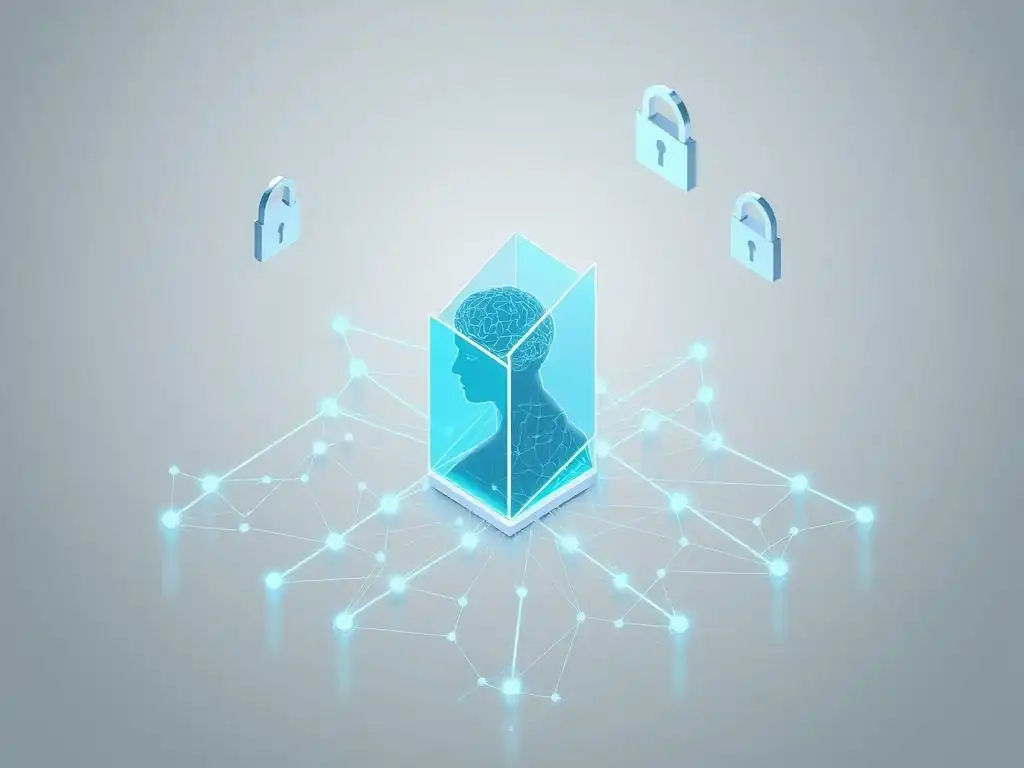
Ever wondered how to harness the power of AI within smart contracts without compromising sensitive data? This article delves into the critical intersection of artificial intelligence and blockchain, focusing on AI smart contract privacy. Discover the innovative solutions and emerging best practices that are shaping the future of secure and intelligent decentralized applications, and learn how we can balance the capabilities of AI with the need for robust data confidentiality. Let's explore!
Data Privacy in AI Smart Contracts: Balancing Intelligence with Confidentiality
- Introduction: The Intersection of AI, Smart Contracts, and Data Privacy
- Understanding the Challenges of AI Smart Contract Privacy
-
Techniques for Enhancing AI Smart Contract Privacy
- Federated Learning for Privacy-Preserving AI Model Training in Smart Contracts
- Differential Privacy: Adding Noise for Data Protection in AI Smart Contracts
- Homomorphic Encryption: Secure Computation on Encrypted Data for AI Smart Contracts
- Zero-Knowledge Proofs for Data Verification in AI-Enhanced Smart Contracts
- Blockchain Solutions for AI and Data Privacy
- Use Cases: Applying Privacy-Preserving AI Smart Contracts
- Overcoming the Barriers to Adoption of Privacy-Preserving AI Smart Contracts
- Future Trends in AI Smart Contract Privacy
- Conclusion: Navigating the Future of AI Smart Contracts with a Focus on Data Privacy
-
Frequently Asked Questions
- What are the primary data privacy concerns when integrating AI with smart contracts?
- How can blockchain technology enhance data privacy within AI smart contracts?
- What role does AI smart contract privacy play in the adoption of decentralized applications (dApps)?
- What are some regulatory challenges surrounding AI smart contract privacy?
- What is the future outlook for balancing AI capabilities with data privacy in smart contracts?
- Final Reflection: Navigating the Ethical Frontier of AI Smart Contracts
- Unleash the Power of Private AI: Secure Your Smart Contracts Now!
Introduction: The Intersection of AI, Smart Contracts, and Data Privacy
The Growing Importance of AI-Powered Smart Contracts
The evolution of smart contracts, self-executing agreements written in code and stored on a blockchain, is rapidly progressing towards incorporating artificial intelligence (AI). AI-powered smart contracts promise to revolutionize numerous industries by introducing enhanced decision-making capabilities, automation, and predictive analytics directly into contractual agreements. Imagine smart contracts that can dynamically adjust terms based on real-time data analysis, predict potential breaches based on historical patterns, or even negotiate and optimize contract parameters autonomously.
This fusion of AI and smart contracts is not just theoretical; early applications are emerging in sectors like finance, supply chain management, and insurance, demonstrating the potential for increased efficiency, reduced costs, and improved contract performance. The integration of AI into smart contracts represents a significant leap forward, moving beyond simple deterministic execution to create truly intelligent and adaptive agreements.
The rise of AI-powered smart contracts is driven by the increasing availability of sophisticated AI models and the growing need for more complex and dynamic contractual arrangements. Traditional smart contracts, while offering transparency and immutability, are limited by their pre-programmed nature. They lack the adaptability and learning capabilities necessary to handle intricate scenarios and evolving conditions.
AI addresses this limitation by enabling smart contracts to learn from data, adapt to changing circumstances, and make intelligent decisions, thereby unlocking a new era of smart contract applications. For instance, in decentralized finance (DeFi), AI can be used to optimize lending rates, manage risks in automated market makers (AMMs), and personalize investment strategies within smart contract frameworks. This capability significantly expands the scope and utility of smart contracts across diverse domains, making AI integration a crucial step in their maturation and wider adoption.
Data Privacy Concerns in Traditional Smart Contracts
Even before the advent of AI, traditional smart contracts presented inherent data privacy challenges due to the transparent and immutable nature of blockchain technology. By design, blockchain networks are often public and distributed ledgers, meaning that data recorded on the blockchain, including the code and execution details of smart contracts, is potentially visible to all participants.
While the use of cryptographic techniques like hashing and encryption can obfuscate data, the fundamental transparency of the blockchain platform raises concerns about exposing sensitive information. For example, transaction details, contract terms, and even user addresses, though often pseudonymous, can be analyzed and potentially linked to real-world identities, especially when combined with off-chain data sources.
Furthermore, the immutability of blockchain, while a core strength for ensuring data integrity and preventing tampering, becomes a liability when dealing with sensitive personal or confidential data. Once data is written to a blockchain through a smart contract, it is exceedingly difficult, if not impossible, to modify or remove. This poses significant problems in complying with data privacy regulations like GDPR or CCPA, which grant individuals the right to be forgotten or to rectify inaccurate personal data.
Traditional smart contracts, therefore, often require careful consideration of what data is stored on-chain and necessitate strategies like data minimization and off-chain data storage solutions to mitigate privacy risks. The inherent transparency and immutability of blockchain, while beneficial for trust and security, present a fundamental tension with data privacy principles in the context of smart contracts.
Why AI Amplifies Data Privacy Risks in Smart Contracts
The integration of AI into smart contracts significantly amplifies existing data privacy risks and introduces new challenges that demand careful consideration. AI algorithms, particularly machine learning models, are inherently data-hungry. They require vast amounts of data for training to achieve accuracy and effectiveness.
In the context of AI smart contracts, this translates to a need to feed these contracts with substantial datasets, which often contain sensitive personal or business information. The more data an AI smart contract processes, the greater the potential for privacy breaches and data misuse. Unlike traditional smart contracts that may execute based on limited, predefined inputs, AI-driven contracts are designed to learn from and adapt to data, increasing the surface area for privacy vulnerabilities.
Moreover, AI algorithms themselves can be opaque "black boxes," making it difficult to understand exactly how they process data and arrive at decisions. This lack of transparency, combined with the immutable nature of blockchain, creates a complex challenge for ensuring data privacy and accountability in AI smart contracts. It becomes harder to audit and verify that AI algorithms are processing data in a privacy-preserving manner, especially when dealing with sensitive information.
For instance, if an AI smart contract is used for credit scoring, understanding how the AI model uses individual data points and whether it introduces biases becomes crucial for both fairness and privacy compliance. The increased data dependency and algorithmic complexity of AI smart contracts, therefore, necessitate advanced privacy-enhancing technologies and robust governance frameworks to mitigate the amplified data privacy risks.
Understanding the Challenges of AI Smart Contract Privacy
Data Collection and Processing in AI Smart Contracts: A Privacy Minefield
The data collection and processing stages within AI smart contracts represent a significant privacy minefield. AI algorithms, the engine of these intelligent contracts, rely heavily on data to learn, adapt, and make informed decisions. This data often originates from diverse sources, including user inputs, sensor readings, IoT devices, and external databases, creating a complex web of information flow.
The sheer volume and variety of data processed by AI smart contracts increase the risk of inadvertently collecting and storing sensitive personal information. For example, in a decentralized insurance application using AI smart contracts, data collected might include user demographics, health records, financial details, and even location data, all potentially sensitive and subject to stringent privacy regulations.
Furthermore, the processing of this data within AI smart contracts often involves complex transformations and analyses performed by machine learning models. These models, while powerful, can inadvertently reveal sensitive information through techniques like model inversion or membership inference attacks if not carefully designed and implemented with privacy in mind.
The challenge lies in ensuring that AI models learn effectively from data to provide intelligent contract functionalities while simultaneously preventing the leakage of private information during both training and execution phases. This requires careful consideration of data minimization principles, anonymization techniques, and the adoption of privacy-preserving AI methodologies throughout the entire lifecycle of data within AI smart contracts, from collection to processing and storage.
The Difficulty of Anonymizing Data Used in AI Training for Smart Contracts
Anonymizing data used for training AI models within smart contracts presents a considerable challenge, often proving more complex than traditional data anonymization efforts. While techniques like pseudonymization, generalization, and suppression are commonly employed to mask personally identifiable information (PII), they may not be sufficient in the context of AI, particularly when dealing with high-dimensional or complex datasets.
AI models are adept at identifying patterns and correlations within data, and seemingly anonymized datasets can still be vulnerable to re-identification attacks, especially when combined with auxiliary information. For example, even if names and addresses are removed from a healthcare dataset, unique combinations of medical conditions, demographics, and treatment history might be sufficient to re-identify individuals using linkage attacks with publicly available datasets or social media information.
Moreover, the very nature of AI training often relies on extracting intricate relationships and features from data. This process can inadvertently preserve or even amplify subtle traces of personally identifiable information that were not explicitly removed during anonymization. Differential privacy, a more robust anonymization technique, aims to address this by adding noise to the data or the learning process itself.
However, implementing differential privacy in the context of complex AI models and smart contract environments requires careful calibration and can sometimes lead to a trade-off between privacy and model accuracy. Therefore, achieving truly effective anonymization for AI training in smart contracts necessitates a multi-layered approach, combining advanced anonymization techniques with privacy-preserving AI algorithms and robust data governance frameworks to minimize the risk of re-identification and ensure compliance with data privacy regulations.
Regulatory Landscape: GDPR and AI Smart Contracts
The regulatory landscape surrounding data privacy, particularly regulations like the General Data Protection Regulation (GDPR) in Europe, significantly impacts the development and deployment of AI smart contracts. GDPR, with its emphasis on data minimization, purpose limitation, and data subject rights (including the right to be forgotten and the right to access), poses substantial compliance challenges for AI smart contracts that inherently rely on data processing.
The GDPR's broad definition of personal data and its extraterritorial reach mean that even AI smart contracts operating on decentralized, global blockchain networks must adhere to its principles if they process the data of EU residents. Failing to comply with GDPR can result in hefty fines, reputational damage, and legal liabilities, making it a critical consideration for any organization developing or deploying AI smart contracts.
Specifically, the principles of data minimization and purpose limitation under GDPR require developers of AI smart contracts to carefully consider what data is collected, why it is collected, and how long it is retained. AI models, by nature, often benefit from larger datasets, which can clash with the data minimization principle.
Similarly, the immutable nature of blockchain poses a direct challenge to the "right to be forgotten" enshrined in GDPR. While techniques like off-chain data storage and encryption can help mitigate some of these challenges, they add complexity to the design and implementation of AI smart contracts.
Furthermore, the requirement for data controllers to provide transparency and explainability regarding automated decision-making processes under GDPR raises concerns about the "black box" nature of some AI algorithms. Navigating the GDPR compliance landscape for AI smart contracts requires a proactive approach, incorporating privacy by design principles, employing privacy-enhancing technologies, and establishing clear data governance policies from the outset.
Techniques for Enhancing AI Smart Contract Privacy
Federated Learning for Privacy-Preserving AI Model Training in Smart Contracts
Federated learning emerges as a promising technique for privacy-preserving AI model training within the context of smart contracts. Traditional centralized machine learning approaches require aggregating data from multiple sources into a central location for training, which raises significant privacy risks, particularly when dealing with sensitive user data distributed across various devices or organizations. Federated learning, in contrast, allows AI models to be trained directly on decentralized data sources without requiring the raw data to be shared or centralized.
Instead, local models are trained on each participating device or node, and only model updates (e.g., gradients or model weights) are aggregated and exchanged to build a global model. This approach significantly reduces privacy risks as raw data remains on the user's device or within the organization's control, minimizing data exposure and enhancing data confidentiality.
In the context of AI smart contracts, federated learning can be particularly valuable for applications involving sensitive user data, such as decentralized healthcare or personalized finance. Imagine a decentralized healthcare platform using AI smart contracts to predict patient risks based on medical data from various hospitals. Using federated learning, each hospital can train a local AI model on its patient data, and only model updates are shared with a central smart contract to aggregate them into a global risk prediction model.
This way, patient data remains within each hospital's secure environment, and the global model benefits from the collective knowledge of all participating hospitals without compromising individual patient privacy. Federated learning offers a compelling pathway to build powerful AI models for smart contracts while upholding stringent data privacy standards and minimizing the risks associated with centralized data aggregation.
Differential Privacy: Adding Noise for Data Protection in AI Smart Contracts
Differential privacy is a rigorous mathematical framework for quantifying and limiting the disclosure of private information when analyzing datasets or training AI models. It achieves privacy by adding carefully calibrated statistical noise to the data or the results of computations, ensuring that the output of an analysis is not significantly affected by the presence or absence of any single individual's data.
This noise injection makes it statistically difficult for an adversary to infer whether a specific individual's data was used in the computation, thereby providing strong privacy guarantees. Differential privacy offers a quantifiable and provable level of privacy protection, making it a valuable tool for enhancing data privacy in AI smart contracts.
In the realm of AI smart contracts, differential privacy can be applied in various stages of the AI lifecycle. For instance, when training AI models on sensitive data within a smart contract environment, differential privacy can be incorporated into the training algorithm to ensure that the learned model does not inadvertently memorize or leak individual data points.
Similarly, when querying or accessing data stored within a smart contract, differential privacy mechanisms can be used to add noise to query results, limiting the amount of information revealed about individual data entries. Consider a decentralized voting system using AI smart contracts for fraud detection.
Differential privacy could be applied to the analysis of voting patterns to detect anomalies without revealing individual voting preferences. By adding noise to aggregate statistics, differential privacy can enable valuable data analysis and AI model training while providing strong, provable privacy guarantees for users interacting with AI smart contracts.
Homomorphic Encryption: Secure Computation on Encrypted Data for AI Smart Contracts
Homomorphic encryption (HE) represents a groundbreaking cryptographic technique that enables computations to be performed directly on encrypted data without requiring decryption. This means that data can remain encrypted throughout the entire computation process, and only the final result is decrypted, ensuring data confidentiality even during processing.
Homomorphic encryption holds immense potential for enhancing data privacy in AI smart contracts, as it allows AI algorithms to operate on sensitive encrypted data within the smart contract environment, eliminating the need to expose raw data at any stage. This technology addresses a critical privacy challenge in AI, where data often needs to be decrypted for processing, creating a window of vulnerability.
Within the context of AI smart contracts, homomorphic encryption can be applied to enable privacy-preserving AI functionalities across various applications. For example, in decentralized finance (DeFi), homomorphic encryption could be used to perform risk assessments or credit scoring on encrypted user financial data within a smart contract. The AI model can process the encrypted data, generate an encrypted risk score, and the smart contract can execute actions based on this encrypted score without ever decrypting the user's sensitive financial information. Similarly, in secure multi-party computation scenarios involving AI smart contracts, homomorphic encryption can allow multiple parties to contribute encrypted data to an AI computation, and the smart contract can orchestrate the computation and deliver an encrypted result without any party revealing their raw data to others. While computationally intensive, advancements in homomorphic encryption are making it increasingly practical for real-world applications, paving the way for truly privacy-preserving AI smart contracts.
Zero-Knowledge Proofs for Data Verification in AI-Enhanced Smart Contracts
Zero-knowledge proofs (ZKPs) are cryptographic protocols that allow one party (the prover) to convince another party (the verifier) that a statement is true without revealing any information beyond the validity of the statement itself. In the context of AI-enhanced smart contracts, zero-knowledge proofs offer a powerful mechanism for verifying the integrity and correctness of AI computations and data inputs without disclosing the underlying sensitive data or the details of the AI algorithms.
This is particularly valuable for enhancing privacy and trust in AI smart contracts, as it allows parties to ensure the reliability of AI-driven decisions without compromising data confidentiality.
Consider an AI smart contract used for supply chain management that relies on AI to predict potential disruptions based on various data inputs, such as weather patterns, geopolitical events, and sensor readings. Zero-knowledge proofs can be used to verify that the AI model used by the smart contract is indeed the intended model and that the data inputs used for prediction are valid and authentic without revealing the specifics of the AI model or the sensitive data itself.
For instance, a supplier could use a ZKP to prove to a buyer, via a smart contract, that their product meets certain quality standards verified by an AI-powered quality control system, without revealing the proprietary details of their quality control process or the specific data collected.
Zero-knowledge proofs enhance transparency and trust in AI smart contracts by enabling verifiable computations and data integrity while preserving confidentiality, making them a crucial tool for building privacy-centric AI-powered decentralized applications.
Blockchain Solutions for AI and Data Privacy
Privacy-Focused Blockchains for AI Smart Contract Deployment
The choice of blockchain platform for deploying AI smart contracts significantly impacts the level of data privacy that can be achieved. While public blockchains like Ethereum offer transparency and decentralization, they inherently expose all smart contract code and data to the public ledger, posing significant privacy risks for applications dealing with sensitive information. Privacy-focused blockchains, such as Zcash, Monero, and Secret Network, offer alternative architectures and cryptographic techniques specifically designed to enhance data confidentiality and transaction privacy. These platforms often incorporate technologies like zero-knowledge proofs, ring signatures, and secure enclaves to enable private transactions and confidential smart contract execution.
Deploying AI smart contracts on privacy-focused blockchains can provide a foundational layer of data privacy protection. For instance, Secret Network allows for "secret contracts," which are smart contracts that can operate on encrypted data within secure enclaves, ensuring that data remains confidential even from the network nodes. This enables the development of AI-powered decentralized applications that require strong privacy guarantees, such as confidential DeFi platforms or secure data marketplaces.
Zcash and Monero, while primarily focused on private transactions, can also be leveraged for building privacy-preserving AI smart contracts by ensuring that transaction details and contract interactions are shielded from public view. Selecting a privacy-focused blockchain infrastructure is a crucial first step for developers aiming to build AI smart contracts that prioritize data confidentiality and comply with stringent privacy regulations.
Data Governance Protocols for AI Smart Contracts
Establishing robust data governance protocols is essential for ensuring data privacy and responsible AI usage within AI smart contract ecosystems. Data governance encompasses the policies, procedures, and mechanisms that define how data is collected, processed, stored, and used within a system. For AI smart contracts, effective data governance protocols are crucial for addressing privacy concerns, ensuring compliance with regulations like GDPR, and fostering trust among users and stakeholders. These protocols should address key aspects such as data minimization, purpose limitation, data access control, data retention policies, and mechanisms for data subject rights management.
Within AI smart contract environments, data governance can be implemented through a combination of on-chain and off-chain mechanisms. Smart contracts themselves can enforce data access control policies, limit data retention periods, and log data usage for auditability. Off-chain governance frameworks can define the overall data governance policies, establish data ethics guidelines for AI development, and provide mechanisms for data subjects to exercise their rights, such as data access requests or data deletion requests.
For example, a decentralized autonomous organization (DAO) governing an AI-powered DeFi platform could establish data governance protocols that specify the types of data collected, the purposes for data collection, and the privacy-enhancing technologies employed to protect user data. Implementing comprehensive data governance protocols is critical for building trustworthy and privacy-respecting AI smart contract applications.
Decentralized Identity (DID) and Verifiable Credentials for AI Smart Contract Privacy
Decentralized Identity (DID) and Verifiable Credentials (VCs) offer powerful tools for enhancing data privacy and user control within AI smart contract systems. DID allows individuals to own and control their digital identities without relying on centralized authorities. VCs are digitally signed and tamper-proof credentials that allow individuals to selectively share verified information about themselves with relying parties. Combining DID and VCs with AI smart contracts can empower users with greater control over their data and enable privacy-preserving data sharing and access management within decentralized AI applications.
In the context of AI smart contracts, DID and VCs can be used to implement fine-grained data access control and consent management. Users can use their DIDs to authenticate with AI smart contracts and selectively share VCs containing verified attributes or permissions.
For example, in a decentralized healthcare application, a patient could use their DID and a VC issued by a medical institution to grant an AI smart contract access to their anonymized medical data for specific research purposes, while retaining control over what data is shared and for how long. VCs can also be used to verify the credentials of AI models or data providers, ensuring that AI smart contracts interact with trusted and reputable entities.
By leveraging DID and VCs, AI smart contracts can move towards a more user-centric and privacy-preserving data ecosystem, where individuals have greater agency over their personal information and can participate in decentralized AI applications with enhanced privacy guarantees.
Use Cases: Applying Privacy-Preserving AI Smart Contracts
Secure Healthcare Data Sharing with AI Smart Contracts
The healthcare sector is rife with sensitive patient data, making privacy paramount. AI smart contracts, when combined with privacy-enhancing technologies, can revolutionize secure healthcare data sharing for research, diagnostics, and personalized treatment. Imagine a scenario where hospitals and research institutions can collaboratively train AI models on patient data to improve disease prediction and treatment outcomes, without directly sharing raw patient records.
Federated learning, deployed via AI smart contracts on a privacy-focused blockchain, enables this. Each hospital trains AI models locally, shares only model updates, and the smart contract aggregates these updates into a global model, ensuring patient data remains within hospital boundaries.
Furthermore, homomorphic encryption could allow AI algorithms within smart contracts to analyze encrypted patient data for diagnostics. For instance, an AI-powered smart contract could analyze encrypted medical images to detect anomalies, providing diagnostic insights without ever decrypting the images, maintaining patient confidentiality. Zero-knowledge proofs could verify the integrity of AI-driven diagnostic results or the credentials of healthcare providers accessing patient data through smart contracts. These privacy-preserving AI smart contract applications can unlock the vast potential of healthcare data for improving patient care and advancing medical research while upholding the highest standards of data privacy and security.
Financial Fraud Detection with Privacy-Enhanced AI Smart Contracts
Financial institutions grapple with the constant threat of fraud, necessitating sophisticated detection mechanisms. AI excels at identifying complex fraud patterns, but traditional centralized systems raise privacy concerns when dealing with sensitive financial transaction data. Privacy-preserving AI smart contracts offer a decentralized and secure approach to financial fraud detection.
Multiple banks or financial institutions could collaboratively train AI fraud detection models using federated learning via AI smart contracts. Each institution trains a local model on its transaction data, shares only model updates through the smart contract, and a global, more robust fraud detection model emerges without sharing sensitive transaction details across institutions.
Differential privacy can be used to add noise to transaction data before feeding it into AI models within smart contracts, further obfuscating individual transaction details while still enabling effective fraud detection. Homomorphic encryption could allow AI algorithms within smart contracts to analyze encrypted transaction data for fraud patterns, ensuring that sensitive financial information remains protected throughout the analysis process. By deploying privacy-preserving AI smart contracts on blockchain, financial institutions can enhance fraud detection capabilities, collaborate securely on threat intelligence, and comply with stringent data privacy regulations in the financial sector.
Supply Chain Transparency with Confidential AI Smart Contracts
Supply chain transparency is increasingly critical for businesses and consumers alike, demanding visibility into product origins, ethical sourcing, and logistical efficiency. However, supply chain data often contains sensitive business information, such as supplier details, pricing, and inventory levels, requiring confidentiality. Confidential AI smart contracts can enable enhanced supply chain transparency while preserving business-critical data privacy. AI algorithms within smart contracts can analyze encrypted supply chain data to optimize logistics, predict potential disruptions, and verify product authenticity, without revealing sensitive data to all supply chain participants.
For example, homomorphic encryption could allow AI smart contracts to analyze encrypted data from various supply chain actors (manufacturers, distributors, retailers) to optimize delivery routes and inventory management, without revealing individual companies' sensitive operational data to competitors. Zero-knowledge proofs could be used to verify product provenance or ethical sourcing claims within a supply chain smart contract, allowing consumers and businesses to verify claims without requiring full disclosure of sensitive supplier details.
Privacy-focused blockchains like Secret Network can host confidential AI smart contracts, ensuring that supply chain data remains encrypted and accessible only to authorized parties. By leveraging privacy-preserving AI smart contracts, businesses can achieve greater supply chain transparency, improve efficiency, and build trust with consumers, all while safeguarding sensitive business information.
Overcoming the Barriers to Adoption of Privacy-Preserving AI Smart Contracts
Computational Overhead and Scalability Challenges
One significant barrier to the widespread adoption of privacy-preserving AI smart contracts is the computational overhead associated with many privacy-enhancing technologies. Techniques like homomorphic encryption, zero-knowledge proofs, and differential privacy often introduce significant computational costs compared to traditional non-private AI and smart contract operations. Homomorphic encryption, in particular, can be computationally intensive, requiring substantial processing power and time for encryption and computation on encrypted data.
Zero-knowledge proofs, while offering strong privacy guarantees, can also be computationally expensive to generate and verify, especially for complex statements and large datasets. Differential privacy, while less computationally demanding than HE or ZKPs, still introduces overhead due to noise injection and algorithm modifications.
These computational overheads can impact the scalability of privacy-preserving AI smart contracts, particularly in blockchain environments where computational resources are often limited and transaction processing times are crucial. Executing complex AI computations within smart contracts, especially when combined with privacy-enhancing technologies, can lead to increased gas costs on platforms like Ethereum or slower transaction confirmation times on other blockchains.
Overcoming these computational and scalability challenges requires ongoing research and development in more efficient privacy-preserving algorithms, optimized cryptographic implementations, and blockchain infrastructure improvements. Layer-2 scaling solutions for blockchain, such as rollups and sidechains, may also play a role in mitigating computational bottlenecks and enhancing the scalability of privacy-preserving AI smart contracts.
Complexity of Implementing Privacy-Enhancing Technologies
The implementation of privacy-enhancing technologies in AI smart contracts introduces significant technical complexity, posing a barrier to adoption for many developers. Techniques like homomorphic encryption, zero-knowledge proofs, federated learning, and differential privacy are not trivial to implement and require specialized cryptographic expertise and a deep understanding of both AI and blockchain technologies.
Integrating these technologies into smart contract development workflows often involves using complex cryptographic libraries, adapting existing AI algorithms, and carefully designing system architectures to ensure both privacy and functionality. The learning curve for developers to effectively utilize these privacy-enhancing technologies can be steep, requiring significant time and resources for training and experimentation.
Furthermore, the combination of multiple privacy-enhancing technologies to achieve comprehensive privacy protection in AI smart contracts can further amplify implementation complexity. For example, combining federated learning with differential privacy and homomorphic encryption in a smart contract environment requires careful coordination and integration of these techniques to ensure they work synergistically and provide the desired level of privacy without compromising performance or functionality.
Addressing this complexity barrier requires the development of user-friendly development tools, libraries, and frameworks that abstract away the underlying cryptographic complexities and provide developers with easier-to-use interfaces for building privacy-preserving AI smart contracts. Education and training initiatives are also crucial to equip developers with the necessary skills and knowledge to effectively implement these advanced privacy technologies.
The Need for Standardized Frameworks and Auditing
The lack of standardized frameworks and auditing methodologies for privacy-preserving AI smart contracts poses a significant challenge to their wider adoption and trustworthiness. Currently, there are no widely accepted standards or best practices for designing, implementing, and verifying the privacy properties of AI smart contracts.
This lack of standardization makes it difficult for developers to ensure they are building privacy-respecting systems and for users to assess the privacy guarantees offered by AI smart contracts. The absence of robust auditing methodologies also makes it challenging to independently verify the privacy claims of AI smart contract deployments and to detect potential privacy vulnerabilities or flaws in their design or implementation.
Establishing standardized frameworks and auditing methodologies for privacy-preserving AI smart contracts is crucial for building trust and fostering wider adoption. Standardized frameworks could define common privacy requirements, security best practices, and evaluation metrics for AI smart contracts. Auditing methodologies could provide guidelines for conducting independent privacy audits of AI smart contract code, data handling practices, and cryptographic implementations.
These standards and auditing processes would provide developers with clearer guidance, enable users to make informed decisions about privacy risks, and facilitate regulatory compliance. Collaboration among industry stakeholders, researchers, and regulatory bodies is essential to develop and promote these standardized frameworks and auditing methodologies, paving the way for more trustworthy and widely adopted privacy-preserving AI smart contracts.
Future Trends in AI Smart Contract Privacy
Advancements in Cryptography for AI Smart Contracts
The future of AI smart contract privacy is heavily reliant on ongoing advancements in cryptography, particularly in areas relevant to privacy-enhancing technologies. Significant research and development efforts are focused on improving the efficiency and practicality of homomorphic encryption, making it more computationally feasible for complex AI computations within smart contracts.
New homomorphic encryption schemes with improved performance and reduced computational overhead are continually being developed, promising to make HE a more viable option for real-world AI smart contract applications. Similarly, research into more efficient zero-knowledge proof systems is crucial for reducing the computational cost of ZKPs and enhancing their scalability for use in privacy-preserving AI smart contracts.
Furthermore, advancements in multi-party computation (MPC) techniques are also highly relevant to AI smart contract privacy. MPC allows multiple parties to jointly compute a function on their private inputs without revealing their inputs to each other. More efficient and scalable MPC protocols are being developed, which could be integrated into AI smart contracts to enable secure collaborative AI computations among multiple participants without compromising data privacy.
Post-quantum cryptography is another critical area of research, as quantum computers pose a potential threat to current cryptographic algorithms used in blockchain and privacy-enhancing technologies. Developing quantum-resistant cryptographic schemes is essential to ensure the long-term security and privacy of AI smart contracts in the face of emerging quantum computing capabilities.
Emergence of New Privacy-Preserving AI Algorithms
Beyond cryptographic advancements, the future of AI smart contract privacy will also be shaped by the emergence of new privacy-preserving AI algorithms. Traditional machine learning algorithms are often not designed with privacy in mind, and adapting them for privacy-preserving contexts often involves trade-offs in accuracy or performance. Researchers are actively developing novel AI algorithms that are inherently privacy-preserving by design, incorporating privacy principles directly into the learning process. These privacy-preserving AI algorithms include techniques like federated learning, differential privacy-preserving machine learning, secure aggregation methods, and privacy-preserving model architectures.
For example, research is focusing on developing federated learning algorithms that are more robust to data heterogeneity and communication constraints in decentralized environments, making federated learning more practical for AI smart contracts deployed on blockchain networks. Differential privacy-preserving machine learning techniques are being refined to minimize the trade-off between privacy and model utility, enabling the training of accurate AI models while providing strong privacy guarantees. The development of new privacy-preserving AI algorithms tailored to the specific challenges and requirements of smart contract environments is crucial for building truly privacy-centric AI-powered decentralized applications.
Increased Regulatory Scrutiny and Compliance Requirements
As AI smart contracts become more prevalent and handle increasingly sensitive data, increased regulatory scrutiny and stricter compliance requirements are inevitable. Data privacy regulations like GDPR and CCPA are already shaping the landscape of data processing and AI development, and their impact on AI smart contracts will only grow stronger. Regulators are increasingly focusing on the ethical and societal implications of AI, including data privacy, fairness, and accountability. AI smart contract developers will need to navigate a complex and evolving regulatory landscape, ensuring their applications comply with relevant data privacy laws and ethical guidelines.
This increased regulatory scrutiny will drive the adoption of privacy-enhancing technologies in AI smart contracts, as organizations seek to demonstrate compliance and mitigate legal and reputational risks associated with data breaches and privacy violations. The need for transparency and explainability in AI decision-making will also become more critical, requiring AI smart contract developers to implement mechanisms for auditing and explaining the behavior of their AI algorithms.
Standardization efforts and industry collaborations will be crucial in developing frameworks and best practices for privacy compliance in AI smart contracts, helping developers navigate the regulatory landscape and build trustworthy and responsible AI-powered decentralized applications.
Key Takeaways: Balancing AI Intelligence with Data Confidentiality
The integration of AI into smart contracts offers immense potential for creating more intelligent, dynamic, and automated contractual agreements. However, this synergy also introduces significant data privacy challenges that must be addressed proactively. Balancing the intelligence and capabilities of AI with the need for data confidentiality is paramount for the responsible and sustainable development of AI smart contracts.
Traditional smart contracts already presented privacy concerns due to blockchain transparency, and AI integration amplifies these risks through increased data dependency and algorithmic complexity. Understanding these challenges, including data collection risks, anonymization difficulties, and regulatory pressures like GDPR, is crucial for developers and organizations venturing into AI smart contracts.
Fortunately, a range of techniques and blockchain solutions are emerging to enhance AI smart contract privacy. Federated learning enables privacy-preserving model training, differential privacy adds noise for data protection, homomorphic encryption allows computation on encrypted data, and zero-knowledge proofs enable verifiable computations without revealing sensitive information. Privacy-focused blockchains, robust data governance protocols, and decentralized identity solutions further contribute to building privacy-centric AI smart contract ecosystems. Use cases in healthcare, finance, and supply chain demonstrate the practical applicability of these privacy-preserving AI smart contracts, showcasing their potential to unlock value while safeguarding data confidentiality.
The Importance of Proactive Privacy Measures in AI Smart Contract Development
Proactive privacy measures are not merely an afterthought but a fundamental requirement for the successful development and adoption of AI smart contracts. Privacy by design principles should be embedded from the outset, guiding the architecture, implementation, and deployment of AI smart contracts. This proactive approach involves carefully considering data minimization, purpose limitation, data access control, and the integration of privacy-enhancing technologies throughout the entire lifecycle of AI smart contract applications. Addressing privacy concerns early in the development process is significantly more effective and cost-efficient than attempting to retrofit privacy features later on.
Furthermore, fostering a privacy-conscious culture within development teams and organizations is essential. This involves educating developers about data privacy principles, providing them with the necessary tools and training to implement privacy-enhancing technologies, and establishing clear data governance policies and ethical guidelines for AI development and deployment.
Proactive privacy measures not only mitigate legal and reputational risks but also build trust with users and stakeholders, fostering a more sustainable and responsible ecosystem for AI smart contracts. Embracing a privacy-first approach is not just a matter of compliance; it is a strategic imperative for unlocking the full potential of AI smart contracts while upholding fundamental values of data protection and user trust.
The Future of Blockchain and AI Synergy: A Privacy-First Approach
The future of blockchain and AI synergy hinges on a privacy-first approach. As AI smart contracts evolve and become increasingly integrated into various aspects of our digital lives, prioritizing data privacy will be paramount for ensuring their responsible and ethical development. Advancements in cryptography, the emergence of new privacy-preserving AI algorithms, and increased regulatory scrutiny are all driving forces towards a more privacy-centric future for AI smart contracts. Overcoming the barriers to adoption, such as computational overhead and implementation complexity, requires ongoing innovation, standardization efforts, and collaborative initiatives across the industry.
The ultimate vision for the future of blockchain and AI synergy is one where intelligent, automated, and decentralized systems can operate effectively and efficiently while upholding the highest standards of data privacy and user control. This privacy-first approach will not only foster trust and wider adoption but also unlock new possibilities for innovation in decentralized applications, empowering individuals and organizations to leverage the combined power of blockchain and AI in a secure, transparent, and privacy-respecting manner.
The journey towards this future requires a continuous commitment to research, development, and collaboration, ensuring that the transformative potential of AI smart contracts is realized in a way that prioritizes data privacy and benefits society as a whole.
Frequently Asked Questions
What are the primary data privacy concerns when integrating AI with smart contracts?
The primary concerns revolve around data exposure and unauthorized access. AI models often require vast datasets for training, raising the risk of sensitive information being compromised if used directly within or alongside smart contracts.
How can blockchain technology enhance data privacy within AI smart contracts?
Blockchain enables secure data storage and access control through encryption and permissioned networks. Techniques like zero-knowledge proofs allow verification without revealing the underlying data itself, crucial for AI model training.
What role does AI smart contract privacy play in the adoption of decentralized applications (dApps)?
AI smart contract privacy is crucial for user trust and adoption. Without it, users are hesitant to share sensitive data with dApps, hindering their growth and limiting the potential applications of decentralized systems.
What are some regulatory challenges surrounding AI smart contract privacy?
Regulations like GDPR and CCPA impose strict requirements on data handling and consent. Ensuring AI smart contract privacy compliance requires novel approaches to data governance and auditability within decentralized environments.
What is the future outlook for balancing AI capabilities with data privacy in smart contracts?
The future involves advancements in federated learning, homomorphic encryption, and differential privacy. These technologies will enable AI models to learn from decentralized data while preserving user privacy and promoting wider adoption.
The exploration of data privacy within AI smart contracts reveals a critical juncture in technological advancement. The convergence of artificial intelligence and decentralized ledger technology demands a renewed focus on ethical considerations, lest we sacrifice individual rights at the altar of innovation. The challenges outlined throughout this article underscore the urgent need for robust privacy-preserving mechanisms within these powerful, yet potentially intrusive, systems.
The ongoing debate surrounding AI smart contract privacy profoundly influences our perception of trust and security in the digital age. The ability to control and protect personal data within these automated agreements is not merely a technical problem, but a fundamental human right. It shapes how we interact with technology and with each other, determining whether we embrace a future of empowered autonomy or one of pervasive surveillance. Privacy is not an option, and it shouldn't come with a price tag; it's a fundamental requirement.
- Sundar Pichai
As we stand on the cusp of widespread AI smart contract adoption, let us not forget the lessons learned. Consider how you can advocate for and implement privacy-enhancing technologies in your own sphere of influence. Reflect on the power you hold as a consumer, a developer, or a policymaker to shape a future where intelligence and confidentiality coexist harmoniously. The responsibility to build a more ethical and privacy-respecting digital world rests with each of us.
Unleash the Power of Private AI: Secure Your Smart Contracts Now!
Thank you for exploring the critical balance between AI innovation and data privacy in smart contracts. Now that you understand the challenges and opportunities, it's time to take action!
Here's how you can move forward:
- Research and implement privacy-preserving techniques in your upcoming smart contract designs. This will have an immediate impact!
- Investigate the use of encryption methods that enable AI processing on encrypted data, enhancing data security.
- Share this article with your network on social media. How can we collectively improve privacy standards in AI-driven smart contracts?
What privacy-enhancing technology are you most excited to explore for future smart contracts? Share your thoughts below!
Leave a Reply