
Precision Agriculture: Improving Farming Practices with Blockchain and AI Data

Welcome to Blockchain Trends, your guide to understanding the revolutionary impact of blockchain beyond the hype. Are you ready to discover how this technology is reshaping industries?
This week, we dive into the fascinating synergy of blockchain and AI, exploring how blockchain agriculture data solutions are transforming farming practices. Imagine a future where traceability, efficiency, and sustainability are seamlessly integrated into every stage of food production. Intrigued? Keep reading to uncover how blockchain and AI are cultivating a more transparent and efficient agricultural landscape.
Precision Agriculture: Enhancing Sustainability and Efficiency with Data-Driven Technologies
- Introduction: Transforming Agriculture Through Data and Technology
- Challenges in Modern Agriculture
- Precision Agriculture Defined
- Blockchain for Secure and Transparent Agricultural Data
- AI-Powered Analytics for Agricultural Optimization
- Integrated Blockchain and AI Solutions for Agriculture
- Benefits of Integrated Blockchain and AI in Agriculture
- Addressing Implementation Challenges
- Future Trends in Blockchain and AI for Agriculture
- Conclusion: Towards a Sustainable and Efficient Agricultural Future
-
Frequently Asked Questions
- How can blockchain technology improve data management in agriculture?
- What are "Blockchain Agriculture Data Solutions" and what problems do they solve?
- How does the combination of blockchain and AI benefit precision agriculture?
- Beyond supply chain tracking, where else can blockchain be applied in agriculture?
- What are the major challenges hindering the widespread adoption of blockchain in agriculture?
- Final Reflection: Cultivating a Data-Driven Future
- Ignite Your Farm's Future: Embrace Data-Driven Agriculture!
Introduction: Transforming Agriculture Through Data and Technology
Agriculture, the bedrock of civilization, is undergoing a significant transformation driven by technological advancements. Precision agriculture, at the forefront of this revolution, leverages the power of data and technology to optimize farming practices. This approach moves away from traditional, generalized methods towards data-driven, site-specific management, aiming to enhance productivity, sustainability, and efficiency within the agricultural sector. The integration of advanced technologies like Artificial Intelligence (AI) and blockchain is proving to be particularly transformative, offering unprecedented opportunities to improve crop yields, manage resources effectively, and ensure food security for a growing global population.
This article explores the synergistic potential of blockchain and AI in precision agriculture, focusing on how these technologies can address key challenges facing modern farming. We will delve into the specific applications of blockchain for secure and transparent data management, and AI for advanced analytics and predictive modeling. Furthermore, we will examine real-world examples and case studies to illustrate the practical benefits and future potential of integrated blockchain and AI solutions in shaping a more sustainable and efficient agricultural future.
Challenges in Modern Agriculture
Resource Optimization and Environmental Impact
Modern agriculture faces mounting pressures to increase productivity while simultaneously minimizing its environmental footprint. Traditional farming practices often lead to inefficient resource utilization, including excessive water consumption, fertilizer runoff, and pesticide overuse. According to the Food and Agriculture Organization of the United Nations (FAO), agriculture accounts for approximately 70% of global freshwater withdrawals and is a significant contributor to greenhouse gas emissions. Optimizing the use of resources like water, fertilizers, and pesticides is crucial not only for environmental sustainability but also for the long-term economic viability of farming operations.
Furthermore, the environmental impact of agriculture extends beyond resource consumption. Soil degradation, biodiversity loss, and pollution from agricultural runoff pose serious threats to ecosystems and human health. Addressing these challenges requires a shift towards more sustainable and data-driven approaches that can optimize resource allocation, reduce waste, and minimize the negative environmental consequences of farming practices. Precision agriculture, with its emphasis on data-driven decision-making, offers a promising pathway to mitigate these environmental concerns and promote more responsible agricultural practices.
Demand for Transparency and Traceability
Consumers are increasingly demanding greater transparency and traceability in the food supply chain. Concerns about food safety, ethical sourcing, and environmental impact are driving a demand for more information about the origin, production methods, and journey of food products from farm to table. Traditional agricultural supply chains often lack transparency, making it difficult to trace products back to their source and verify claims about quality, sustainability, or ethical production. This opacity can erode consumer trust and create opportunities for fraud and mislabeling.
Moreover, businesses throughout the food supply chain, from processors to retailers, are also seeking enhanced traceability to improve operational efficiency, manage risks, and comply with increasingly stringent regulations. The ability to track and trace agricultural products throughout the supply chain is essential for ensuring food safety, preventing foodborne illnesses, and effectively managing recalls in case of contamination or other issues. Blockchain technology, with its inherent transparency and immutability, offers a powerful solution to address the growing demand for traceability and build trust within the agricultural and food industries.
Precision Agriculture Defined
Data-Driven Optimization in Agriculture
Precision agriculture, also known as smart farming, represents a paradigm shift in agricultural management. It is characterized by the use of advanced technologies to collect, analyze, and interpret data about various aspects of the farming environment. This data-driven approach enables farmers to make more informed and precise decisions regarding planting, irrigation, fertilization, pest control, and harvesting. Instead of applying uniform treatments across entire fields, precision agriculture allows for site-specific management, tailoring interventions to the unique needs of different areas within a field.
The core principle of precision agriculture is to optimize inputs and outputs based on real-time data and analysis. Sensors, drones, satellites, and other data collection tools gather information about soil conditions, weather patterns, crop health, and other relevant factors. This data is then processed and analyzed using sophisticated software and algorithms to provide farmers with actionable insights. By leveraging these insights, farmers can optimize resource utilization, improve crop yields, reduce environmental impact, and enhance the overall efficiency and profitability of their operations.
Key Technologies: AI, IoT, and Blockchain Integration
The effectiveness of precision agriculture hinges on the integration of several key technologies, including Artificial Intelligence (AI), the Internet of Things (IoT), and blockchain. IoT devices, such as sensors and drones, play a crucial role in collecting vast amounts of data from the field. AI algorithms are then used to analyze this data, identify patterns, and generate predictive models to support decision-making. Blockchain technology, in turn, provides a secure and transparent platform for managing and sharing agricultural data across the supply chain.
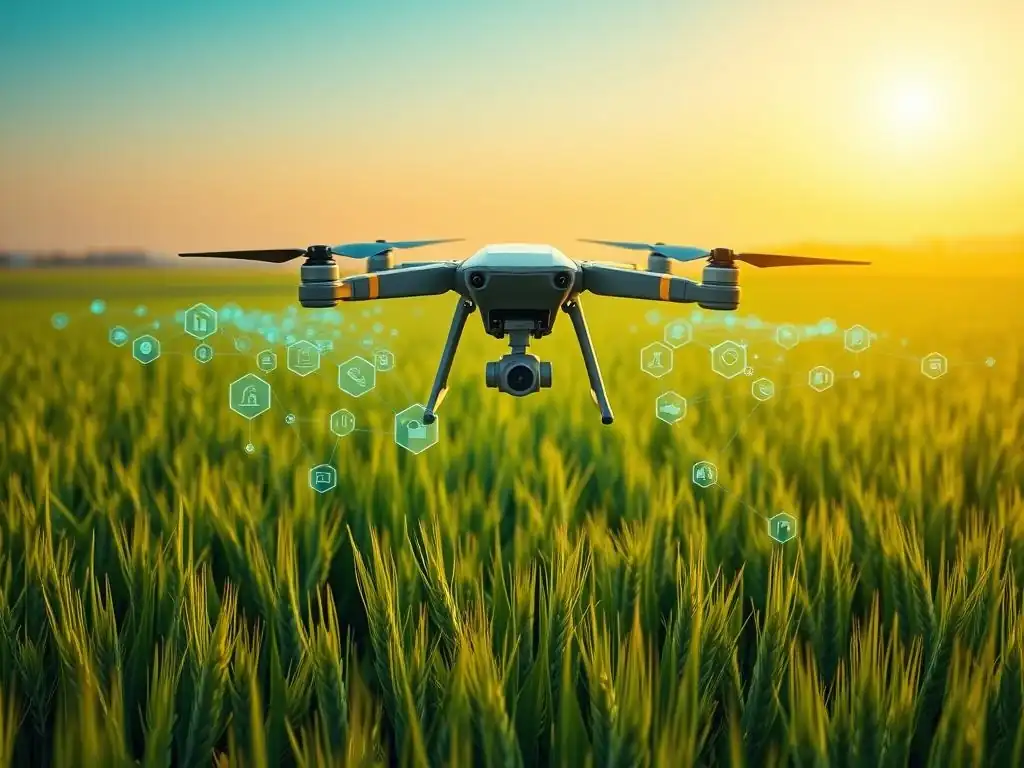
The synergistic combination of these technologies unlocks new possibilities for optimizing agricultural practices. For example, IoT sensors can monitor soil moisture levels, and AI algorithms can use this data to optimize irrigation schedules, minimizing water waste. Similarly, drones equipped with cameras and sensors can capture images of crop fields, and AI-powered image analysis can detect early signs of disease or pest infestations, enabling targeted interventions. Blockchain ensures the integrity and traceability of this data, building trust and transparency throughout the agricultural ecosystem.
Blockchain for Secure and Transparent Agricultural Data
Immutable Data Collection and Provenance Tracking
Blockchain technology offers a revolutionary approach to data management in agriculture by providing an immutable and transparent ledger for recording and tracking agricultural data. Once data is recorded on a blockchain, it cannot be altered or deleted, ensuring data integrity and preventing fraudulent activities. This immutability is particularly valuable in agriculture, where data related to crop yields, soil conditions, and farming practices is crucial for verifying product provenance and building trust among stakeholders.
Blockchain enables the creation of a transparent and auditable record of a product's journey from farm to consumer. Every stage of the agricultural process, from planting and harvesting to processing and distribution, can be recorded on the blockchain, creating a comprehensive and verifiable provenance trail. This provenance tracking capability is essential for verifying the origin and authenticity of agricultural products, combating food fraud, and enhancing consumer confidence in the food system. Solutions leveraging blockchain agriculture data offer a powerful tool for ensuring data integrity and traceability.
Supply Chain Transparency and Traceability
One of the most significant applications of blockchain in agriculture is enhancing supply chain transparency and traceability. Traditional agricultural supply chains are often complex and fragmented, involving numerous intermediaries and lacking end-to-end visibility. Blockchain provides a shared and immutable ledger that can be accessed by all authorized participants in the supply chain, creating a single source of truth for product information and movement.
By recording key events and data points on the blockchain at each stage of the supply chain, from farm to retailer, stakeholders gain real-time visibility into the product's journey. This enhanced transparency allows for efficient tracking of products, identification of bottlenecks or inefficiencies, and rapid response to food safety incidents or recalls. Furthermore, blockchain-based traceability systems can empower consumers with access to detailed information about the origin, production methods, and journey of their food, fostering greater trust and informed purchasing decisions.
Verifying Product Authenticity and Reducing Fraud
Food fraud is a significant problem in the global food industry, costing billions of dollars annually and undermining consumer trust. Blockchain technology offers a powerful tool to combat food fraud and verify the authenticity of agricultural products. By recording key product attributes and certifications on the blockchain, consumers and businesses can easily verify the authenticity and provenance of food items, ensuring they are genuine and meet claimed standards.
For instance, blockchain can be used to verify the authenticity of organic certifications, geographical indications, and fair trade labels. Consumers can scan a QR code on a product to access blockchain-based information verifying its organic status or origin, providing assurance against fraudulent labeling. This capability is particularly important for high-value agricultural products where fraud is more prevalent, such as premium wines, specialty coffees, and organic produce. Blockchain-based solutions for verifying product authenticity contribute to building a more trustworthy and transparent food marketplace.
AI-Powered Analytics for Agricultural Optimization
Predictive Modeling for Crop Management
Artificial Intelligence (AI) is revolutionizing crop management by enabling predictive modeling based on vast datasets collected from various sources, including sensors, weather stations, and historical records. AI algorithms can analyze these datasets to identify patterns and predict future outcomes, such as crop yields, disease outbreaks, and pest infestations. These predictive models empower farmers to make proactive and data-driven decisions regarding planting schedules, irrigation strategies, fertilization regimes, and pest control measures.
For example, AI can analyze weather data, soil conditions, and historical yield data to predict optimal planting dates for specific crops in different regions. Predictive models can also forecast the likelihood of disease outbreaks based on environmental conditions and historical disease patterns, allowing farmers to implement preventative measures proactively. By leveraging AI-powered predictive modeling, farmers can optimize crop management practices, minimize risks, and enhance overall productivity and efficiency.
Resource Optimization and Yield Improvement Through AI
AI plays a crucial role in optimizing resource utilization and improving crop yields in precision agriculture. AI algorithms can analyze data from soil sensors, weather stations, and plant health monitoring systems to optimize irrigation, fertilization, and pesticide application. By precisely tailoring resource inputs to the specific needs of different areas within a field, AI minimizes waste, reduces environmental impact, and maximizes crop yields.
For instance, AI-powered irrigation systems can automatically adjust water application based on real-time soil moisture levels and weather forecasts, ensuring that crops receive the optimal amount of water without overwatering or underwatering. Similarly, AI can analyze soil nutrient levels and crop nutrient requirements to optimize fertilizer application, reducing fertilizer runoff and maximizing nutrient uptake by plants. These AI-driven resource optimization strategies contribute to both environmental sustainability and improved agricultural productivity.
Early Disease Detection and Targeted Intervention
Early detection of plant diseases and pest infestations is crucial for minimizing crop losses and preventing widespread outbreaks. AI-powered image recognition and analysis techniques are proving highly effective in detecting plant diseases and pests at early stages, often before they become visible to the naked eye. Drones equipped with cameras and sensors can capture high-resolution images of crop fields, and AI algorithms can analyze these images to identify subtle signs of disease or pest stress.
Once diseases or pests are detected, AI can also guide targeted interventions, such as precise application of pesticides or localized removal of infected plants. This targeted approach minimizes the use of pesticides and reduces environmental impact compared to broad-spectrum applications. Early disease detection and targeted intervention enabled by AI contribute to healthier crops, reduced crop losses, and more sustainable pest management practices.
Integrated Blockchain and AI Solutions for Agriculture
Data-Driven Decision Making Through Integration
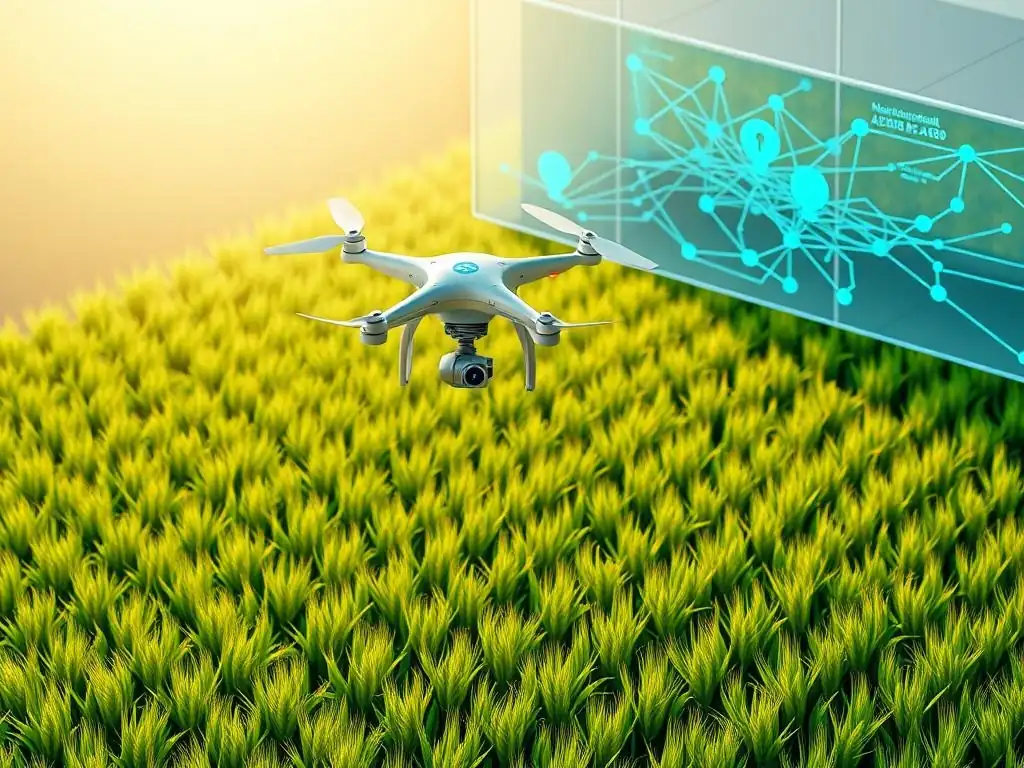
The true power of blockchain and AI in agriculture is realized when these technologies are integrated to create comprehensive data-driven solutions. Integrating blockchain and AI enables the creation of a secure, transparent, and intelligent agricultural ecosystem where data is seamlessly collected, analyzed, and utilized to optimize decision-making at every stage of the value chain. Blockchain provides the secure and transparent infrastructure for managing agricultural data, while AI provides the analytical capabilities to extract valuable insights from this data.
This integrated approach allows for more informed and efficient decision-making across the agricultural sector, from farmers to processors to consumers. Farmers can use AI-powered analytics based on blockchain-verified data to optimize their farming practices. Processors can leverage blockchain-traceable data to ensure the quality and authenticity of their ingredients. Consumers can access blockchain-verified information about the origin and production of their food, building trust and transparency in the food system.
Use Cases: Practical Applications of Blockchain and AI
The integration of blockchain and AI is opening up a wide range of practical applications in agriculture, addressing various challenges and opportunities across the value chain. One prominent use case is in supply chain management, where blockchain provides traceability and transparency, while AI optimizes logistics and predicts demand. For example, AI can analyze blockchain-tracked data on product movement and sales patterns to forecast demand and optimize inventory management, reducing waste and improving efficiency.
Another important use case is in agricultural financing and insurance. Blockchain can provide a secure and transparent platform for recording and verifying agricultural transactions, facilitating access to financing for farmers. AI can analyze blockchain-verified data on crop yields and weather patterns to assess risks and develop more accurate and efficient crop insurance products. These are just a few examples of the diverse and growing applications of integrated blockchain and AI solutions in agriculture.
Case Studies: Successful Implementations of Integrated Solutions
Several successful case studies demonstrate the practical benefits of integrating blockchain and AI in agriculture. For instance, some companies are using blockchain and AI to track and trace coffee beans from farm to cup, providing consumers with verifiable information about the origin, processing methods, and quality of their coffee. This integrated solution enhances transparency, builds trust, and potentially commands premium prices for ethically sourced and high-quality coffee.
In another case study, blockchain and AI are being used to optimize irrigation and fertilization in vineyards. IoT sensors collect data on soil moisture, weather conditions, and vine health, which is recorded on a blockchain for transparency and immutability. AI algorithms analyze this blockchain-verified data to optimize irrigation schedules and fertilizer application, resulting in improved grape yields, reduced water consumption, and enhanced wine quality. These real-world examples showcase the tangible benefits of integrated blockchain and AI solutions in transforming agricultural practices.
Benefits of Integrated Blockchain and AI in Agriculture
Increased Operational Efficiency and Output
The integration of blockchain and AI in agriculture leads to significant increases in operational efficiency and output. AI-powered optimization of resource utilization, such as water, fertilizers, and pesticides, reduces waste and maximizes the efficiency of farming operations. Blockchain-enabled supply chain transparency streamlines logistics, reduces paperwork, and improves coordination among stakeholders, further enhancing operational efficiency.
By optimizing farming practices and supply chain processes, integrated blockchain and AI solutions contribute to increased agricultural output. Higher crop yields, reduced post-harvest losses, and more efficient distribution networks result in greater overall productivity and contribute to food security. For example, precision irrigation guided by AI and verified by blockchain can lead to significant water savings and yield improvements, enhancing both efficiency and output.
Cost Reduction and Waste Minimization
Cost reduction and waste minimization are key benefits of integrated blockchain and AI solutions in agriculture. Optimizing resource utilization through AI reduces input costs for water, fertilizers, and pesticides. Blockchain-enabled supply chain transparency reduces transaction costs, minimizes fraud, and optimizes logistics, leading to further cost savings. Waste is minimized throughout the agricultural value chain through improved resource management, reduced post-harvest losses, and more efficient supply chain operations.
For instance, AI-driven predictive maintenance of agricultural equipment can reduce downtime and repair costs. Blockchain-based traceability systems can minimize food waste by enabling efficient recall management and reducing spoilage through improved supply chain visibility. These cost reductions and waste minimization benefits contribute to the economic sustainability of agricultural operations and the overall efficiency of the food system.
Enhanced Sustainability and Reduced Environmental Footprint
Integrated blockchain and AI solutions promote enhanced sustainability and reduce the environmental footprint of agriculture. AI-powered optimization of resource utilization minimizes the use of water, fertilizers, and pesticides, reducing environmental pollution and conserving natural resources. Blockchain-enabled traceability can incentivize sustainable farming practices by providing consumers with verifiable information about the environmental impact of their food choices.
For example, blockchain can be used to track and verify sustainable farming practices, such as reduced tillage or water conservation methods. Consumers can then choose to support products from farms that adopt these sustainable practices, creating market incentives for environmentally responsible agriculture. By promoting sustainable practices and reducing environmental impact, integrated blockchain and AI solutions contribute to a more environmentally friendly and resilient agricultural sector.
Increased Trust and Transparency in the Food System
Perhaps one of the most significant benefits of integrating blockchain and AI in agriculture is the increased trust and transparency they bring to the food system. Blockchain's immutable and transparent ledger builds trust among stakeholders by providing verifiable information about product origin, quality, and journey. AI-powered analytics enhance transparency by providing data-driven insights into agricultural processes and supply chain operations.
This increased trust and transparency benefits consumers, farmers, and businesses throughout the food value chain. Consumers gain greater confidence in the safety, authenticity, and sustainability of their food choices. Farmers can build trust with consumers and potentially access premium markets for their products. Businesses can improve operational efficiency, reduce risks, and enhance their reputation by embracing transparent and data-driven agricultural practices. Ultimately, integrated blockchain and AI solutions contribute to a more trustworthy, efficient, and sustainable food system.
Addressing Implementation Challenges
Data Security and Privacy Protocols
Implementing integrated blockchain and AI solutions in agriculture requires careful consideration of data security and privacy protocols. Agricultural data, including farm locations, crop yields, and farming practices, can be sensitive and commercially valuable. Robust data security measures are essential to protect this data from unauthorized access, cyberattacks, and misuse. Blockchain technology itself offers inherent security features, but additional security protocols may be necessary to ensure comprehensive data protection.
Furthermore, privacy concerns must be addressed, particularly regarding farmer data. Farmers need to have control over their data and be assured that their privacy will be respected. Data privacy regulations, such as GDPR, must be considered when designing and implementing blockchain and AI solutions in agriculture. Striking a balance between data transparency and data privacy is crucial for building trust and encouraging widespread adoption of these technologies.
Interoperability and Data Standardization
Interoperability and data standardization are critical challenges for the widespread adoption of blockchain and AI in agriculture. Different agricultural systems and platforms often use incompatible data formats and communication protocols, hindering data sharing and integration. Lack of interoperability can create data silos and limit the effectiveness of integrated solutions. Standardizing data formats and protocols is essential to enable seamless data exchange and interoperability across different systems and platforms.
Industry-wide collaboration and standardization efforts are needed to address this challenge. Developing common data standards and APIs (Application Programming Interfaces) will facilitate data exchange and integration, enabling the development of interoperable blockchain and AI solutions for agriculture. Addressing interoperability and data standardization will unlock the full potential of these technologies to transform the agricultural sector.
Infrastructure Development and Scalability
Infrastructure development and scalability are important considerations for implementing blockchain and AI solutions in agriculture, particularly in developing regions. Access to reliable internet connectivity, affordable sensors, and computing infrastructure is essential for data collection, processing, and analysis. In many rural agricultural areas, infrastructure limitations can hinder the adoption of these technologies.
Scalability is also a key consideration. Blockchain and AI solutions need to be scalable to handle the vast amounts of data generated by the agricultural sector and to accommodate the needs of diverse farming operations, from smallholder farms to large-scale agricultural enterprises. Investing in infrastructure development and ensuring scalability are crucial for making these technologies accessible and beneficial to farmers worldwide.
Training and Expertise Development
Successful implementation of blockchain and AI in agriculture requires adequate training and expertise development. Farmers and agricultural professionals need to be trained on how to use these technologies effectively, interpret data insights, and make informed decisions. Developing the necessary skills and expertise within the agricultural workforce is essential for realizing the full potential of these technologies.
Training programs and educational initiatives are needed to equip farmers and agricultural professionals with the skills and knowledge required to adopt and utilize blockchain and AI solutions. These programs should cover topics such as data collection, data analysis, blockchain technology, AI algorithms, and precision agriculture practices. Investing in training and expertise development is crucial for ensuring the successful and sustainable adoption of these technologies in agriculture.
Future Trends in Blockchain and AI for Agriculture
Emerging Technologies and Innovations
The field of blockchain and AI in agriculture is rapidly evolving, with numerous emerging technologies and innovations on the horizon. Advancements in sensor technology, drone technology, and satellite imagery are providing increasingly detailed and real-time data about agricultural environments. New AI algorithms and machine learning techniques are enabling more sophisticated data analysis and predictive modeling. The development of more efficient and scalable blockchain platforms is further enhancing the capabilities of these technologies in agriculture.
One promising emerging trend is the use of edge computing in agriculture. Edge computing involves processing data closer to the source of data generation, such as on farms or in agricultural processing facilities. This reduces latency, minimizes data transmission costs, and enables real-time decision-making in remote or resource-constrained environments. Edge computing, combined with blockchain and AI, has the potential to further enhance the efficiency and effectiveness of precision agriculture.
Potential of Decentralized Systems and Automation
Decentralized systems and automation are key trends shaping the future of blockchain and AI in agriculture. Blockchain's decentralized nature aligns well with the distributed nature of agricultural systems, enabling more equitable and transparent data sharing and governance. Automation, driven by AI and robotics, is transforming various aspects of agriculture, from planting and harvesting to crop monitoring and pest control.
The combination of decentralized systems and automation has the potential to create more resilient, efficient, and sustainable agricultural ecosystems. Decentralized autonomous organizations (DAOs) could be used to manage agricultural cooperatives or supply chains, enabling more democratic and transparent governance. Automated farming systems, guided by AI and secured by blockchain, could optimize resource utilization and minimize human intervention, leading to increased efficiency and productivity.
Advanced Analytics and Predictive Modeling
Advanced analytics and predictive modeling will play an increasingly important role in the future of blockchain and AI in agriculture. As more data becomes available from diverse sources, AI algorithms will become even more sophisticated and accurate in predicting crop yields, disease outbreaks, and market trends. Advanced analytics will enable farmers to make more proactive and data-driven decisions, optimizing their operations and mitigating risks.
Predictive modeling will also be crucial for adapting agriculture to climate change. AI can analyze climate data and predict the impact of climate change on crop yields and agricultural regions. This information can be used to develop climate-resilient farming practices, optimize crop selection, and plan for future agricultural challenges. Advanced analytics and predictive modeling will be essential tools for ensuring the long-term sustainability and resilience of the agricultural sector in the face of a changing climate.
Conclusion: Towards a Sustainable and Efficient Agricultural Future
The integration of blockchain and AI is ushering in a new era of precision agriculture, promising to transform farming practices and create a more sustainable and efficient agricultural future. By leveraging the power of data, these technologies empower farmers with the insights and tools needed to optimize resource utilization, improve crop yields, enhance supply chain transparency, and build trust in the food system. While implementation challenges remain, the benefits of integrated blockchain and AI solutions in agriculture are undeniable.
As these technologies continue to evolve and mature, their adoption in agriculture is expected to accelerate, driving innovation and creating new opportunities across the value chain. Embracing blockchain and AI is not just about adopting new technologies; it is about embracing a data-driven, collaborative, and sustainable approach to agriculture. By harnessing the synergistic potential of blockchain and AI, we can pave the way towards a more resilient, efficient, and environmentally responsible agricultural sector that can feed a growing global population while protecting our planet for future generations.
Frequently Asked Questions
How can blockchain technology improve data management in agriculture?
Blockchain provides a secure and transparent way to track agricultural data from farm to consumer. This immutable ledger ensures data integrity and prevents tampering, fostering trust within the supply chain. It improves traceability and accountability.
What are "Blockchain Agriculture Data Solutions" and what problems do they solve?
These solutions leverage blockchain to create decentralized systems for managing agricultural data. They address issues like lack of transparency, data silos, and difficulties in verifying the origin and quality of agricultural products.
How does the combination of blockchain and AI benefit precision agriculture?
AI algorithms can analyze the blockchain-secured data to optimize farming practices. This synergy enables data-driven decisions regarding irrigation, fertilization, and pest control, leading to increased efficiency and yields. AI provides predictive analytics.
Beyond supply chain tracking, where else can blockchain be applied in agriculture?
Blockchain can facilitate smart contracts for agricultural insurance, enabling automated payouts based on predefined conditions. It can also support peer-to-peer trading platforms, connecting farmers directly with consumers and reducing intermediaries. It also helps with land registry.
What are the major challenges hindering the widespread adoption of blockchain in agriculture?
Key challenges include the complexity of the technology, the need for interoperability between different systems, and the lack of awareness among farmers about the benefits of blockchain. Regulatory uncertainty is also a significant hurdle.
Final Reflection: Cultivating a Data-Driven Future
The journey we've explored through precision agriculture, blockchain, and AI culminates in a powerful realization: the future of farming hinges on the intelligent application of data. What was once a field rooted in tradition is rapidly transforming into a technologically advanced industry, capable of feeding a growing population more efficiently and sustainably. The convergence of these technologies isn't just about increasing yields; it's about creating a more resilient and equitable food system for all.
This transformation is profoundly impacting the cultural landscape of agriculture, shifting perceptions from a purely labor-intensive practice to one that embraces innovation and data-driven decision-making. The ability to trace food from farm to table, ensuring transparency and building consumer trust, is a game-changer. It empowers farmers, consumers, and businesses alike. The goal is to not only improve yields but also to create a more sustainable and resilient food system that benefits everyone from the farmer to the consumer.
This sentiment underscores the importance of embracing these technologies responsibly and ethically.
As we stand on the cusp of this agricultural revolution, let us reflect on the potential of blockchain agriculture data solutions to reshape our world. Consider how you, as a consumer, a farmer, a technologist, or simply a concerned citizen, can contribute to this future. Embrace the power of data, advocate for transparency, and support initiatives that promote sustainable and equitable farming practices. The seeds of change have been sown; now it's up to us to cultivate a future where technology and agriculture work in harmony to nourish the world.
Ignite Your Farm's Future: Embrace Data-Driven Agriculture!
Thank you for exploring the exciting intersection of precision agriculture, blockchain, and artificial intelligence. You've gained insight into how these technologies can transform farming practices, making them more efficient and sustainable. Now, it's time to take action!
Here are some ways to begin harnessing the power of blockchain and AI in agriculture today:
- Join a community of agricultural innovators: Participate in online forums to share ideas, learn from experts, and collaborate on innovative projects.
- Explore open-source datasets: Analyze agricultural data using AI tools to identify opportunities for improving crop yields and resource management.
- Start a pilot project: Partner with a technology provider to implement blockchain-based traceability for a specific crop or product, demonstrating how transparency and trust can be strengthened in your supply chain.
What is one small change you can make this week to start exploring data-driven agriculture on your farm or in your community?
Leave a Reply