
Revolutionizing Logistics Tracking: Blockchain & AI for RealTime Visibility and Optimization


Welcome to Blockchain Trends, your compass in the rapidly evolving world of decentralized technology!
Are you ready to unlock the hidden potential of blockchain beyond the buzz? This week, we delve into the powerful synergy of blockchain and AI, specifically exploring the blockchain logistics tracking optimization benefits that are reshaping supply chains worldwide. Discover how this innovative combination is driving unprecedented real-time visibility, security, and efficiency, and ask yourself: is your business ready to capitalize on this revolution? Let's explore the future, together.
Revolutionizing Logistics Tracking: Blockchain & AI for Real-Time Visibility and Optimization
- Introduction: The Future of Supply Chain Management with Blockchain and AI
- Understanding the Current Logistics Landscape: Challenges and Inefficiencies
- Blockchain Technology: A Foundation for Transparent and Secure Logistics
- Artificial Intelligence (AI): Driving Efficiency and Predictability in Logistics
- The Synergy of Blockchain and AI: Real-Time Visibility and Optimization
- Blockchain Logistics Tracking Optimization Benefits: A Deep Dive
- Real-World Applications and Case Studies
- Overcoming Challenges in Implementing Blockchain and AI in Logistics
- The Future of Logistics: A Vision of Autonomous and Intelligent Supply Chains
- Conclusion: Embracing the Blockchain and AI Revolution in Logistics
-
Frequently Asked Questions
- What are the main benefits of using blockchain in logistics tracking?
- How does blockchain integrate with AI to optimize logistics tracking?
- What are some real-world applications of blockchain for logistics tracking optimization?
- What are the regulatory challenges associated with using blockchain in logistics?
- How does blockchain contribute to reducing costs in logistics operations?
- Final Reflection: Embracing the Transparent Future of Logistics
- Unlock the Future of Your Supply Chain
Introduction: The Future of Supply Chain Management with Blockchain and AI
The global logistics and supply chain industry, a cornerstone of modern commerce, is undergoing a significant transformation driven by the convergence of blockchain and artificial intelligence (AI). For decades, supply chains have grappled with inefficiencies, opacity, and vulnerabilities. However, the emergence of these disruptive technologies offers a pathway to unprecedented levels of real-time visibility, security, and optimization. This article delves into how blockchain and AI are not just incremental improvements but are fundamentally revolutionizing logistics tracking, promising a future of seamless, transparent, and efficient supply chain management.
This technological synergy is poised to address long-standing challenges within the logistics sector. From fragmented data and lack of trust among stakeholders to costly delays and inefficiencies, the limitations of traditional systems are becoming increasingly apparent in today's fast-paced, interconnected world.
By leveraging the strengths of blockchain's decentralized and secure ledger system and AI's analytical and predictive capabilities, businesses can unlock new levels of operational excellence, enhance customer satisfaction, and build more resilient and agile supply chains. The integration of these technologies is not merely about streamlining processes; it's about creating a fundamentally new paradigm for how goods are tracked, managed, and delivered across the globe.
Understanding the Current Logistics Landscape: Challenges and Inefficiencies
-
Lack of Real-Time Visibility in Traditional Supply Chains
Traditional supply chains often suffer from a critical lack of real-time visibility, hindering proactive decision-making and responsiveness to disruptions. Many systems rely on manual data entry and disparate platforms, creating information silos that prevent a holistic view of goods in transit. For instance, a 2023 study by Gartner revealed that approximately 60% of supply chain professionals reported limited or no real-time visibility beyond their tier-1 suppliers. This opacity leads to significant delays in identifying bottlenecks, predicting potential disruptions, and reacting effectively to unforeseen events like weather delays or port congestion.
This limited visibility translates into tangible operational inefficiencies. Imagine a shipment of temperature-sensitive pharmaceuticals delayed due to unforeseen customs hold-ups. Without real-time tracking and alerts, the manufacturer may only learn about the delay hours or even days later, potentially compromising the integrity of the goods and leading to significant financial losses and reputational damage. In contrast, real-time visibility empowers stakeholders to proactively manage such situations, rerouting shipments, adjusting delivery schedules, and communicating transparently with customers, minimizing disruptions and maintaining operational continuity.
-
Inefficiencies and Delays in Logistics Operations
Inefficiencies and delays are endemic to traditional logistics operations, stemming from a combination of manual processes, fragmented communication, and suboptimal route planning. A report by the World Bank in 2020 estimated that inefficiencies in logistics contribute to approximately 10-15% of the final cost of goods. These inefficiencies manifest in various forms, including excessive paperwork, redundant data entry across different systems, and reliance on phone calls and emails for critical updates, all of which contribute to slower processing times and increased error rates.
Consider the process of international shipping documentation. Traditionally, this involves a complex exchange of physical documents between multiple parties – shippers, freight forwarders, customs brokers, and consignees. Each handoff introduces potential delays, risks of document loss, and opportunities for errors.
A study by the International Chamber of Commerce (ICC) found that processing trade documents can take up to 10 days and cost businesses hundreds of dollars per shipment. These delays not only increase lead times but also tie up working capital and reduce overall supply chain agility. Addressing these operational inefficiencies is crucial for businesses to improve competitiveness and meet the demands of increasingly demanding global markets.
-
The Problem of Data Silos and Lack of Transparency
Data silos and a lack of transparency are major impediments to efficient and trustworthy logistics operations. In traditional supply chains, data is often fragmented across various systems and stakeholders, including manufacturers, distributors, carriers, and retailers. This siloed approach makes it difficult to achieve a unified view of the entire supply chain, hindering collaboration, and impeding informed decision-making. A survey conducted by Deloitte in 2022 highlighted that over 70% of companies struggle with data integration across their supply chain networks. This lack of interoperability leads to duplicated efforts, inconsistencies in data, and difficulties in tracing products across the entire journey.
This lack of transparency also erodes trust among stakeholders. For consumers, it becomes challenging to verify the origin and authenticity of products, raising concerns about ethical sourcing and product safety. For businesses, the inability to track goods seamlessly and transparently increases the risk of fraud, counterfeiting, and disputes. In the food industry, for example, the lack of transparency in origin and handling can lead to food safety scares and recalls, damaging brand reputation and consumer confidence. Building trust and enabling transparency through technology is paramount for fostering collaboration and ensuring the integrity of global supply chains.
-
Rising Costs and the Need for Optimization
Rising operational costs and the constant pressure to optimize are critical challenges facing the logistics industry. Fuel price volatility, increasing labor costs, and growing customer expectations for faster and cheaper deliveries are all contributing to escalating expenses. According to the Council of Supply Chain Management Professionals (CSCMP), total U.S. business logistics costs reached \$1.85 trillion in 2021, representing 8% of the U.S. GDP. This substantial figure underscores the significant impact of logistics costs on overall business profitability.
Furthermore, the increasing complexity of global supply chains, driven by globalization and e-commerce, exacerbates the need for optimization. Businesses are constantly seeking ways to reduce transportation costs, optimize warehouse operations, and improve inventory management to maintain competitiveness. For example, optimizing delivery routes can lead to significant fuel savings and reduced delivery times. Similarly, efficient warehouse management systems can minimize storage costs and improve order fulfillment accuracy. The imperative to reduce costs and optimize operations is a continuous driver for innovation and the adoption of new technologies in the logistics sector.
Blockchain Technology: A Foundation for Transparent and Secure Logistics
Blockchain technology, at its core, provides a revolutionary mechanism for creating immutable and shared data records, ideally suited for enhancing transparency and security in logistics. Blockchain operates as a distributed ledger, meaning data is replicated across multiple computers in a network, rather than being stored in a centralized location. This decentralized architecture makes it incredibly difficult to tamper with or alter recorded data, ensuring data integrity and immutability. Once a transaction is recorded on the blockchain, it becomes a permanent and auditable record, verifiable by all participants in the network.
In the context of logistics, this immutability is crucial for establishing trust and accountability. Imagine tracking a shipment of high-value electronics using a blockchain-based system. Every step of the journey, from origin to destination, including changes in custody, temperature readings, and customs clearances, can be recorded as transactions on the blockchain.
Because these records are immutable and shared across the network of stakeholders (manufacturers, carriers, customs officials, etc. ), any attempt to tamper with the data or introduce fraudulent information would be immediately detectable. This shared and immutable nature of blockchain data provides a solid foundation for building transparent and secure logistics ecosystems.
-
Enhancing Trust and Accountability in the Supply Chain
Blockchain technology significantly enhances trust and accountability among supply chain stakeholders by establishing a shared, transparent, and auditable record of transactions and product journeys. In traditional supply chains, trust is often built on established relationships and intermediaries, which can be time-consuming and costly to verify. Blockchain, however, replaces the need for central authorities with a decentralized system where trust is embedded in the technology itself. The cryptographic security and consensus mechanisms inherent in blockchain ensure that all participants have access to the same verified information, fostering a higher degree of trust and reducing the potential for disputes.
For example, in the diamond industry, blockchain is being used to track diamonds from mine to market, providing consumers with verifiable proof of origin and authenticity. Companies like De Beers are using blockchain to create a digital ledger of diamonds, tracking each stone's journey through the supply chain. This initiative enhances consumer confidence by providing transparency into the diamond's provenance and helps to combat the trade in conflict diamonds. By enabling verifiable and transparent tracking, blockchain empowers stakeholders to operate with greater confidence and accountability throughout the logistics process.
-
Blockchain's Role in Verifying Product Origin and Authenticity
Blockchain technology plays a vital role in verifying product origin and authenticity, addressing growing concerns about counterfeiting and ethical sourcing in global supply chains. Counterfeit goods represent a significant economic problem, estimated by the OECD to be worth hundreds of billions of dollars annually, and also pose risks to consumer safety, particularly in industries like pharmaceuticals and food.
Blockchain's immutable ledger can be used to create a digital identity for products, recording their origin, manufacturing process, and journey through the supply chain. This digital provenance can be easily verified by consumers and businesses, ensuring the authenticity of goods and combating counterfeiting.
Consider the luxury goods industry, which is heavily impacted by counterfeiting. Brands are increasingly exploring blockchain solutions to track and authenticate their products. For example, luxury watchmakers are using blockchain to issue digital certificates of authenticity that are linked to each watch's unique serial number. Consumers can scan a QR code on the watch to verify its authenticity and access its provenance information stored on the blockchain. This application of blockchain provides a powerful tool for brands to protect their intellectual property, enhance brand reputation, and build consumer trust by ensuring the authenticity of their products.
-
Smart Contracts for Automated Logistics Processes
Smart contracts, self-executing contracts with the terms of the agreement directly written into code, are a key feature of blockchain technology that can automate and streamline various logistics processes. These contracts automatically execute predefined actions when specific conditions are met, eliminating the need for intermediaries and reducing manual intervention. In logistics, smart contracts can be used to automate payments, trigger notifications, and manage complex workflows based on real-time data and predefined agreements.
For instance, imagine a smart contract designed to manage payment for a shipment of goods. The contract could be programmed to automatically release payment to the carrier once the shipment reaches its destination and proof of delivery is recorded on the blockchain. This eliminates the need for manual invoice processing and payment reconciliation, reducing administrative overhead and accelerating payment cycles.
Smart contracts can also automate other logistics processes, such as triggering customs clearance procedures upon arrival at a border or initiating insurance claims based on predefined conditions. By automating these processes, smart contracts enhance efficiency, reduce errors, and accelerate the overall logistics workflow.
Artificial Intelligence (AI): Driving Efficiency and Predictability in Logistics
-
AI-Powered Predictive Analytics for Demand Forecasting
Artificial intelligence, particularly predictive analytics, is revolutionizing demand forecasting in logistics, enabling businesses to anticipate future demand patterns with greater accuracy and optimize inventory levels. Traditional forecasting methods often rely on historical data and simplistic statistical models, which may not capture the complexities of modern markets and rapidly changing consumer behavior. AI algorithms, including machine learning models, can analyze vast datasets from diverse sources – including historical sales data, market trends, weather patterns, social media sentiment, and economic indicators – to identify complex patterns and predict future demand with significantly improved accuracy.
For example, a major retailer can use AI-powered predictive analytics to forecast demand for specific products in different geographic regions based on weather forecasts, local events, and online search trends. This allows them to proactively adjust inventory levels in their distribution centers and stores, ensuring they have the right products in the right place at the right time.
Accurate demand forecasting reduces stockouts, minimizes excess inventory, and optimizes resource allocation, leading to significant cost savings and improved customer satisfaction. Studies have shown that companies leveraging AI for demand forecasting can achieve up to 20-30% improvements in forecast accuracy compared to traditional methods.
-
AI for Route Optimization and Delivery Management
AI algorithms are transforming route optimization and delivery management in logistics, enabling carriers to plan more efficient routes, reduce transportation costs, and improve delivery times. Traditional route planning often relies on static maps and basic optimization algorithms, which may not account for real-time traffic conditions, road closures, or dynamic delivery schedules. AI-powered route optimization systems can analyze real-time data from GPS sensors, traffic monitoring systems, weather forecasts, and delivery constraints to dynamically adjust routes and optimize delivery sequences.
Consider a last-mile delivery company operating in a congested urban environment. AI-powered route optimization software can take into account real-time traffic conditions, delivery time windows, vehicle capacity, and driver availability to dynamically plan the most efficient routes for each delivery vehicle. This not only reduces fuel consumption and vehicle wear and tear but also improves on-time delivery rates and enhances customer satisfaction. AI-driven route optimization is particularly crucial in e-commerce logistics, where efficient and timely last-mile delivery is a key competitive differentiator.
-
Automated Inventory Management with AI Algorithms
AI algorithms are automating and optimizing inventory management, moving beyond traditional methods to create more responsive and efficient inventory control systems. Traditional inventory management often relies on manual stock counts, periodic reviews, and rule-based ordering systems, which can be inefficient, error-prone, and lead to either stockouts or excessive inventory holding costs. AI-powered inventory management systems can continuously monitor inventory levels, analyze demand patterns, predict potential stockouts, and automatically trigger replenishment orders.
For example, a large distribution center can utilize AI algorithms to optimize inventory levels for thousands of different products. AI systems can analyze historical sales data, lead times, supplier reliability, and storage costs to dynamically adjust safety stock levels and optimize reorder points for each item. This automated inventory management reduces the need for manual intervention, minimizes the risk of stockouts and overstocking, and optimizes working capital utilization. AI-driven inventory management is particularly valuable in industries with complex supply chains and fluctuating demand, such as retail, manufacturing, and pharmaceuticals.
-
AI Chatbots for Enhanced Customer Service in Logistics
AI-powered chatbots are enhancing customer service in logistics by providing instant, 24/7 support and automating routine customer interactions. Traditional customer service in logistics often relies on call centers and email support, which can be slow, costly, and inefficient, especially during peak periods. AI chatbots, integrated into websites, mobile apps, and messaging platforms, can handle a wide range of customer inquiries, including shipment tracking, delivery status updates, order inquiries, and issue resolution.
Imagine a customer wanting to track their shipment. Instead of calling a customer service representative and waiting on hold, they can simply interact with an AI chatbot on the logistics provider's website or mobile app. The chatbot can instantly provide real-time tracking information, answer frequently asked questions, and even initiate issue resolution processes if needed.
AI chatbots improve customer satisfaction by providing faster and more convenient support, reduce customer service costs by automating routine tasks, and free up human agents to focus on more complex issues. The adoption of AI chatbots is transforming customer service in logistics, making it more efficient, responsive, and customer-centric.
The Synergy of Blockchain and AI: Real-Time Visibility and Optimization
-
Combining Blockchain's Transparency with AI's Analytical Power
The true transformative potential in logistics lies in the synergy of combining blockchain's inherent transparency and security with AI's powerful analytical capabilities. Blockchain provides a trusted and immutable data foundation, while AI leverages this data to extract valuable insights, automate processes, and drive optimization. Individually, each technology offers significant benefits, but their combined power unlocks a new level of efficiency, visibility, and resilience in supply chain management. This synergistic approach addresses the limitations of traditional systems by creating a unified, intelligent, and transparent logistics ecosystem.
For example, consider a pharmaceutical supply chain. Blockchain can be used to track the provenance and temperature history of temperature-sensitive drugs, ensuring their authenticity and integrity. AI algorithms can then analyze this blockchain data, along with external factors like weather patterns and transportation routes, to predict potential risks to shipment integrity, such as temperature excursions or delays.
This proactive risk management, enabled by the combination of blockchain and AI, allows for timely interventions to prevent spoilage and ensure the safe delivery of critical medications. This integrated approach demonstrates how the synergy of these technologies can create more robust and reliable logistics operations.
-
Enhanced Traceability and Provenance of Goods
The combination of blockchain and AI significantly enhances the traceability and provenance of goods throughout the supply chain, providing unprecedented visibility into product journeys and origins. Blockchain's immutable ledger records every step of a product's journey, while AI algorithms can process and analyze this data to provide detailed insights into product provenance, handling conditions, and chain of custody. This enhanced traceability is crucial for verifying product authenticity, ensuring regulatory compliance, and building consumer trust, especially in industries like food, pharmaceuticals, and luxury goods.
For instance, in the food industry, the synergy of blockchain and AI can create a transparent "farm-to-fork" traceability system. Blockchain can record data at each stage of the food supply chain – from farm origin and processing to distribution and retail – while AI can analyze this data to verify food safety standards, detect potential contamination risks, and provide consumers with detailed information about the origin and journey of their food.
This level of traceability not only enhances food safety and consumer confidence but also enables faster and more targeted recalls in case of contamination, minimizing the impact on public health and brand reputation.
-
Improved Risk Management and Fraud Detection
The synergy of blockchain and AI significantly improves risk management and fraud detection capabilities in logistics operations. Blockchain's transparent and immutable record-keeping makes it more difficult to introduce fraudulent data or tamper with records, while AI algorithms can analyze vast datasets on the blockchain to identify anomalies, predict potential risks, and detect fraudulent activities. This proactive approach to risk management and fraud detection strengthens supply chain security and resilience, reducing losses and protecting stakeholders from potential threats.
For example, in combating cargo theft, a major concern in logistics, blockchain can be used to record the location and custody of shipments in real-time, creating an auditable trail. AI algorithms can then analyze this blockchain data, combined with historical theft patterns and external risk factors, to identify high-risk shipments and predict potential theft attempts.
This allows for proactive security measures, such as enhanced surveillance or route adjustments, to be implemented, reducing the risk of cargo theft and associated financial losses. The combination of blockchain and AI provides a powerful arsenal for mitigating risks and combating fraud in the logistics industry.
-
Streamlined Logistics Operations and Reduced Costs
The combined implementation of blockchain and AI leads to streamlined logistics operations and significant cost reductions across various aspects of the supply chain. By automating processes, improving visibility, optimizing routes, and enhancing inventory management, these technologies work synergistically to eliminate inefficiencies, reduce errors, and lower operational expenses. The automation capabilities of smart contracts and AI-driven systems minimize manual intervention, reducing labor costs and accelerating workflows. Improved visibility allows for better resource allocation and proactive problem-solving, preventing costly delays and disruptions.
For instance, consider the impact on administrative costs. Blockchain-based documentation and smart contracts can automate invoice processing, payment reconciliation, and customs clearance procedures, significantly reducing paperwork and manual administrative tasks. AI-powered route optimization and delivery management can reduce fuel consumption and vehicle maintenance costs. AI-driven inventory management minimizes stockouts and overstocking, optimizing inventory holding costs. Collectively, these efficiencies translate into substantial cost savings and improved profitability for logistics operators and businesses throughout the supply chain.
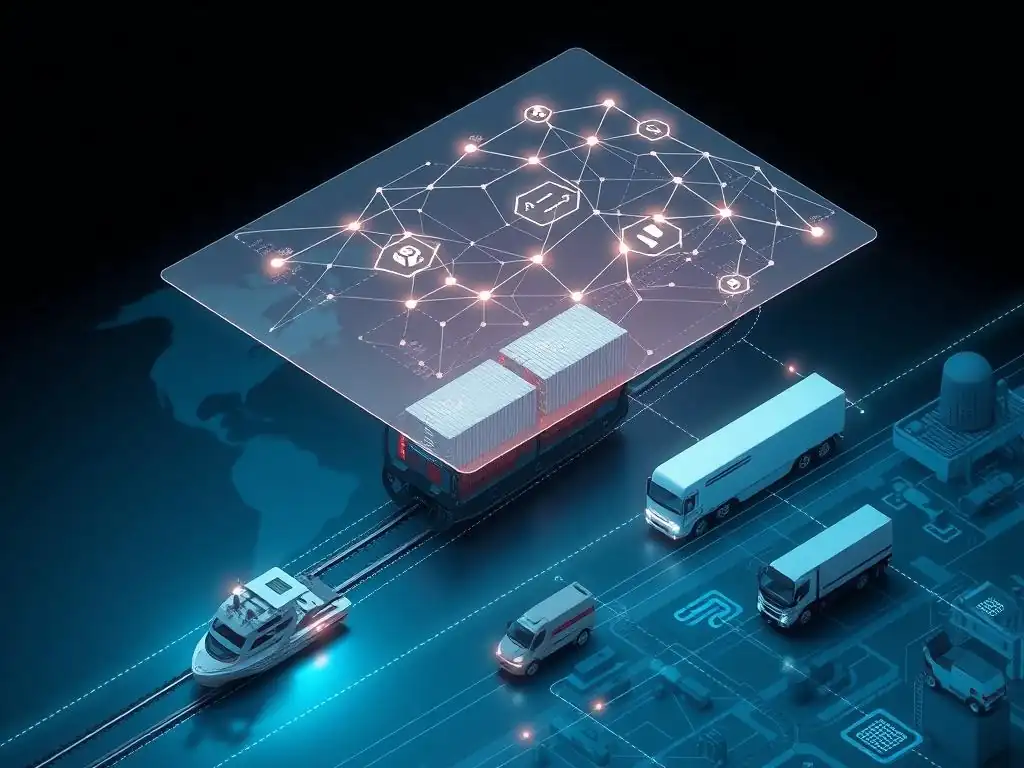
Blockchain Logistics Tracking Optimization Benefits: A Deep Dive
-
Increased Efficiency Through Automation and Smart Contracts
One of the key blockchain logistics tracking optimization benefits is the significant increase in efficiency achieved through automation and smart contracts. Smart contracts, executed automatically when predefined conditions are met, eliminate manual intervention in numerous logistics processes. For example, payment settlements can be automated upon proof of delivery being recorded on the blockchain, drastically reducing processing times and minimizing the potential for human error. This automation extends beyond payments, encompassing tasks like triggering customs clearances, initiating insurance claims, and managing documentation workflows.
This automation directly translates to faster throughput and reduced operational bottlenecks. A study by Maersk and IBM, exploring blockchain in shipping, estimated that streamlining documentation processes alone could reduce shipping times by up to 40%. By minimizing manual tasks and optimizing workflows, blockchain and smart contracts contribute to a more agile and efficient logistics ecosystem, directly realizing blockchain logistics tracking optimization benefits through enhanced operational speed.
-
Enhanced Transparency and Trust Among Stakeholders
Enhanced transparency and trust are fundamental blockchain logistics tracking optimization benefits, fostering stronger collaboration and reducing disputes among supply chain participants. Blockchain's immutable ledger provides a single, shared version of truth, accessible to authorized stakeholders. This eliminates data silos and information asymmetries, creating a transparent environment where all parties have access to the same verified information about a shipment's status, location, and condition.
This transparency builds trust as all stakeholders operate from a common information base, reducing the potential for miscommunication and disagreements. For instance, in case of delays or discrepancies, all parties can refer to the blockchain record to quickly identify the source of the issue and resolve it efficiently. This enhanced trust, a direct blockchain logistics tracking optimization benefit, leads to smoother operations, improved relationships among stakeholders, and a more collaborative supply chain environment.
-
Improved Security and Reduced Risk of Counterfeiting
Improved security and a reduced risk of counterfeiting are critical blockchain logistics tracking optimization benefits, particularly valuable in industries dealing with high-value or sensitive goods. Blockchain's cryptographic security and decentralized nature make it extremely resistant to tampering and cyberattacks. The immutable record of product provenance and chain of custody, stored on the blockchain, provides a robust defense against counterfeiting and fraud.
For example, in the pharmaceutical industry, where counterfeit drugs pose a serious threat to public health, blockchain can be used to track medications from manufacturing to dispensing, ensuring authenticity and preventing the entry of fake drugs into the supply chain. This enhanced security and reduced risk of counterfeiting, a significant blockchain logistics tracking optimization benefit, protects businesses, consumers, and brand reputation, especially in sectors vulnerable to product piracy.
-
Real-Time Visibility and Enhanced Decision-Making Capabilities
Real-time visibility is a cornerstone blockchain logistics tracking optimization benefit, empowering businesses with the data needed for proactive and informed decision-making. Blockchain-based tracking systems provide continuous, up-to-the-minute information on the location, condition, and status of goods in transit. This real-time visibility enables stakeholders to monitor shipments in detail, identify potential disruptions early on, and take corrective actions proactively.
This enhanced visibility translates directly into better decision-making. For instance, if a shipment is delayed due to unforeseen circumstances, real-time tracking alerts stakeholders, allowing them to reroute shipments, adjust delivery schedules, and communicate proactively with customers. This proactive approach, enabled by real-time visibility, a core blockchain logistics tracking optimization benefit, minimizes disruptions, improves responsiveness, and enhances overall supply chain agility.
-
Reduced Operational Costs and Improved Profitability
Ultimately, the accumulation of all the aforementioned blockchain logistics tracking optimization benefits culminates in reduced operational costs and improved profitability for businesses. Increased efficiency through automation reduces labor costs and processing times. Enhanced transparency and trust minimize disputes and administrative overhead. Improved security reduces losses from theft and counterfeiting. Real-time visibility enables better resource allocation and proactive problem-solving, preventing costly delays and disruptions.
These cost reductions span across various aspects of logistics operations, from transportation and warehousing to administration and customer service. By streamlining processes, improving efficiency, and mitigating risks, blockchain and associated optimization strategies contribute directly to a leaner and more profitable logistics operation. The cumulative effect of these blockchain logistics tracking optimization benefits results in a significant positive impact on the bottom line for businesses adopting these technologies.
Real-World Applications and Case Studies
-
Case Study 1: Blockchain and AI in Food Supply Chain Tracking
Problem: The global food industry faces significant challenges in traceability and transparency, leading to food safety concerns, difficulties in verifying organic certifications, and consumer distrust. Traditional food supply chains often lack end-to-end visibility, making it difficult to track the origin, journey, and handling of food products.
Solution: Walmart, in partnership with IBM Food Trust, implemented a blockchain-based system to track mangoes from farms in Mexico and other produce. This system utilizes blockchain to record data at each stage of the supply chain, from farm to store shelf, including information on farm origin, processing dates, transportation details, and temperature logs. AI algorithms are integrated to analyze this blockchain data, providing insights into supply chain efficiency, predicting potential spoilage, and ensuring compliance with food safety regulations.
Results: Walmart reported that blockchain reduced the time it took to trace mangoes from farm to store from days or weeks to just seconds. This rapid traceability is crucial for quickly identifying and removing contaminated products in case of foodborne illness outbreaks. Furthermore, the system enhanced transparency for consumers, allowing them to scan a QR code on the packaging to access detailed information about the mango's origin and journey, building trust and confidence in the product's safety and authenticity. This case demonstrates the practical application of blockchain and AI in enhancing food supply chain transparency and safety.
-
Case Study 2: Optimizing Pharmaceutical Logistics with Blockchain and AI
Problem: The pharmaceutical industry faces stringent regulatory requirements, high risks of counterfeiting, and the critical need to maintain product integrity, especially for temperature-sensitive medications. Traditional pharmaceutical supply chains often struggle with fragmented data, lack of real-time visibility, and inefficient processes for tracking and managing sensitive drugs.
Solution: Merck, a leading pharmaceutical company, explored blockchain and AI to optimize its pharmaceutical logistics. They piloted a blockchain-based platform to track and trace pharmaceutical products throughout the supply chain, from manufacturing to distribution. Temperature sensors integrated with IoT devices recorded temperature data, which was immutably logged on the blockchain. AI algorithms analyzed this temperature data, along with location and shipment information, to predict potential temperature excursions and ensure the cold chain integrity of temperature-sensitive drugs.
Results: Merck's pilot demonstrated the potential of blockchain and AI to enhance visibility and control over pharmaceutical supply chains. The real-time temperature monitoring and predictive analytics enabled proactive interventions to prevent temperature excursions, ensuring the efficacy and safety of medications. The blockchain-based system also improved traceability and reduced the risk of counterfeit drugs entering the supply chain. This case illustrates the value of blockchain and AI in addressing the specific challenges of pharmaceutical logistics, particularly in maintaining cold chain integrity and combating counterfeiting.
-
Case Study 3: Enhancing International Trade with Blockchain-Based Logistics
Problem: International trade is often characterized by complex documentation processes, lengthy delays, and a lack of transparency, increasing costs and hindering efficiency. Traditional trade processes involve significant paperwork, manual data entry, and multiple intermediaries, leading to inefficiencies and increased risks of errors and fraud.
Solution: TradeLens, a blockchain platform developed by IBM and Maersk, is designed to digitize and streamline global trade processes. The platform utilizes blockchain to create a shared, immutable record of shipping documentation, customs declarations, and shipment milestones. AI algorithms are integrated to automate document processing, predict potential delays, and optimize shipping routes. The platform connects various stakeholders in international trade, including shippers, freight forwarders, customs authorities, and port operators, enabling seamless information exchange and collaboration.
Results: TradeLens has been adopted by numerous major shipping lines, port operators, and customs authorities worldwide. Early adopters have reported significant reductions in documentation processing times, improved visibility into shipment status, and enhanced efficiency in customs clearance. A study by Maersk estimated that TradeLens could reduce documentation processing costs by up to 20% and shorten transit times by several days. This case demonstrates the transformative potential of blockchain-based logistics platforms in streamlining international trade, reducing costs, and improving efficiency for global supply chains.
Overcoming Challenges in Implementing Blockchain and AI in Logistics
-
Addressing Scalability Issues in Blockchain Networks
Scalability remains a significant challenge for blockchain networks, particularly in high-throughput logistics applications. Public blockchains, while offering decentralization and security, often have limitations in transaction processing speeds and capacity, potentially hindering their ability to handle the massive data volumes generated by global supply chains. As the number of transactions and participants increases, blockchain networks can experience performance bottlenecks and increased transaction fees.
To address scalability concerns, various solutions are being explored. Layer-2 scaling solutions, such as sidechains and payment channels, aim to offload transaction processing from the main blockchain, improving throughput. Consortium blockchains, which are permissioned networks with a limited number of participants, can offer better scalability and performance compared to public blockchains. Furthermore, ongoing research and development efforts are focused on improving the underlying consensus mechanisms and network architectures of blockchain to enhance scalability and meet the demands of large-scale logistics applications. Choosing the right type of blockchain and implementing appropriate scaling solutions are crucial for successful deployment in logistics.
-
Ensuring Data Privacy and Security Compliance
Ensuring data privacy and security compliance is paramount when implementing blockchain and AI in logistics, particularly given the sensitive nature of supply chain data. Logistics data often includes confidential business information, customer details, and proprietary data that must be protected in accordance with data privacy regulations like GDPR and CCPA. While blockchain offers inherent security features, careful consideration must be given to data access control, encryption, and compliance with relevant regulations.
Permissioned blockchains, which control access to data and network participation, are often preferred for logistics applications to address data privacy concerns. Data encryption techniques can be used to protect sensitive data stored on the blockchain. Furthermore, organizations must establish clear data governance policies and procedures to ensure compliance with data privacy regulations. Striking a balance between transparency and privacy is crucial for building trust and ensuring the responsible use of blockchain and AI in logistics.
-
Integrating Blockchain and AI with Existing Systems
Integrating blockchain and AI technologies with existing legacy systems poses a significant challenge for many logistics organizations. Many companies rely on established enterprise resource planning (ERP), warehouse management systems (WMS), and transportation management systems (TMS) that may not be easily interoperable with new blockchain and AI platforms. Seamless integration is essential to avoid data silos, ensure data consistency, and maximize the benefits of these new technologies.
API-based integrations and middleware solutions can facilitate data exchange and interoperability between blockchain/AI platforms and legacy systems. However, complex integrations may require significant customization and development efforts. A phased approach to implementation, starting with pilot projects and gradually expanding integration scope, can help mitigate risks and ensure a smooth transition. Standardization efforts and the development of open APIs are also crucial for promoting interoperability and simplifying integration processes in the long term.
-
The Need for Industry Collaboration and Standardization
The successful widespread adoption of blockchain and AI in logistics requires strong industry collaboration and standardization efforts. The fragmented nature of the logistics industry, with numerous stakeholders operating across different geographies and systems, necessitates collaboration to establish common standards, protocols, and data formats. Interoperability between different blockchain platforms and AI solutions is crucial for creating seamless and efficient logistics ecosystems.
Industry consortia and standards organizations play a vital role in driving collaboration and standardization. Initiatives like the Blockchain in Transport Alliance (BiTA) and GS1 are working to develop industry standards for blockchain and data exchange in logistics. Collaboration among technology providers, logistics operators, and regulatory bodies is essential to address interoperability challenges, promote best practices, and accelerate the adoption of these transformative technologies. Standardization and collaboration are key enablers for unlocking the full potential of blockchain and AI to revolutionize the logistics industry.
The Future of Logistics: A Vision of Autonomous and Intelligent Supply Chains
-
The Role of IoT in Connecting Physical Assets to the Blockchain
The Internet of Things (IoT) plays a crucial role in connecting physical assets and real-world data to blockchain networks, creating a more comprehensive and dynamic logistics ecosystem. IoT sensors and devices embedded in goods, vehicles, and infrastructure can collect real-time data on location, temperature, humidity, and other critical parameters. This data can be securely transmitted and recorded on the blockchain, providing a verifiable and auditable record of the physical conditions and journey of goods.
For example, temperature sensors in refrigerated containers can continuously monitor the temperature of perishable goods during transit, with data automatically recorded on the blockchain. GPS trackers on trucks can provide real-time location updates, enhancing visibility and security. IoT-enabled smart pallets can track the movement and handling of goods within warehouses. The integration of IoT and blockchain creates a powerful combination, bridging the gap between the physical and digital worlds and enabling a new level of transparency and intelligence in logistics operations.
-
The Potential of Autonomous Vehicles and Drones in Logistics
Autonomous vehicles and drones hold immense potential to transform logistics operations, particularly in transportation and last-mile delivery. Self-driving trucks can optimize long-haul transportation, improve fuel efficiency, and reduce driver fatigue. Delivery drones can provide faster and more cost-effective last-mile delivery, especially in urban areas and remote locations. The integration of autonomous vehicles and drones with blockchain and AI can further enhance efficiency and automation.
Blockchain can be used to manage the identity, location, and maintenance records of autonomous vehicles and drones, ensuring secure and auditable operations. AI algorithms can be used to optimize routing and dispatching of autonomous vehicles and drones, taking into account real-time traffic conditions and delivery schedules. The combination of autonomous vehicles, drones, blockchain, and AI is paving the way for a future of fully autonomous and intelligent logistics networks, driving down costs and improving delivery times.
-
The Impact of 5G on Real-Time Data Transmission
The rollout of 5G networks is poised to significantly impact real-time data transmission in logistics, enabling faster, more reliable, and higher-bandwidth connectivity for IoT devices and blockchain networks. 5G's low latency and high data transfer speeds will facilitate the seamless transmission of large volumes of data generated by IoT sensors and devices in real-time, enhancing the responsiveness and efficiency of logistics operations.
For example, 5G will enable real-time video monitoring of cargo in transit, providing enhanced security and visibility. It will facilitate the real-time tracking of thousands of IoT-enabled packages in a distribution center. 5G's improved connectivity will also enhance the performance and scalability of blockchain networks, enabling faster transaction processing and data synchronization. The enhanced connectivity provided by 5G is a crucial enabler for the widespread adoption of IoT, blockchain, and AI in logistics, accelerating the transition towards real-time and data-driven supply chains.
-
The Evolution of the Supply Chain towards a Decentralized and Autonomous Model
The convergence of blockchain, AI, IoT, and 5G is driving the evolution of the supply chain towards a more decentralized and autonomous model. Decentralized blockchain networks are replacing centralized intermediaries, fostering greater transparency and trust among stakeholders. AI algorithms are automating decision-making processes and optimizing operations across the supply chain. IoT devices are providing real-time data from physical assets, enabling dynamic and responsive supply chain management.
This evolution is leading to a vision of autonomous supply chains that can self-optimize, self-heal, and self-regulate, minimizing human intervention and maximizing efficiency. Smart contracts can automate workflows and execute transactions autonomously. AI-powered predictive analytics can anticipate disruptions and proactively adjust operations. This decentralized and autonomous model promises to create more resilient, efficient, and transparent supply chains, transforming the future of logistics and global trade.
Conclusion: Embracing the Blockchain and AI Revolution in Logistics
The integration of blockchain and AI is not just an incremental improvement but a fundamental revolution in logistics tracking and supply chain management. By addressing the core challenges of visibility, efficiency, security, and cost optimization, these technologies are poised to reshape the future of how goods are moved and managed globally. The blockchain logistics tracking optimization benefits are undeniable, ranging from enhanced transparency and trust to reduced operational expenses and improved decision-making capabilities.
As real-world applications and case studies demonstrate, the synergy of blockchain and AI is already delivering tangible results across diverse industries. While challenges remain in terms of scalability, data privacy, and integration, ongoing technological advancements and industry collaboration are paving the way for wider adoption. Embracing this technological revolution is not just an option but a necessity for logistics operators and businesses seeking to thrive in an increasingly complex and interconnected global marketplace. The future of logistics is intelligent, transparent, and autonomous, driven by the transformative power of blockchain and AI.
Frequently Asked Questions
What are the main benefits of using blockchain in logistics tracking?
Blockchain offers enhanced transparency, improved security, and increased efficiency in tracking goods across the supply chain. This leads to better visibility and reduced risks of fraud.
How does blockchain integrate with AI to optimize logistics tracking?
AI can analyze the blockchain data in real-time to predict delays, optimize routes, and automate decision-making. This combination provides proactive optimization and efficiency gains.
What are some real-world applications of blockchain for logistics tracking optimization?
Examples include tracking pharmaceuticals to prevent counterfeiting, tracing food products for safety compliance, and managing global shipping containers with increased accuracy.
What are the regulatory challenges associated with using blockchain in logistics?
Regulatory uncertainty and the lack of standardized frameworks pose challenges to widespread adoption. Interoperability standards are also needed for seamless integration across different systems.
How does blockchain contribute to reducing costs in logistics operations?
By automating processes, reducing paperwork, and preventing fraud, blockchain can significantly lower administrative and operational costs. This leads to improved profitability for logistics companies.
Final Reflection: Embracing the Transparent Future of Logistics
The journey through the potential of blockchain and AI in revolutionizing logistics tracking culminates in a powerful realization: real-time visibility and optimization are no longer futuristic ideals, but tangible realities within our grasp. The convergence of these technologies promises not just efficiency gains, but a fundamental shift in how we understand and interact with the global supply chain.
This transformation extends far beyond mere cost savings; it touches upon the very fabric of trust and accountability in international trade. The ability to trace goods from origin to destination with immutable accuracy fosters a new era of transparency, empowering consumers and businesses alike. The best way to predict the future is to create it.
– Peter Drucker. This quote resonates deeply as we consider the proactive role we can all play in shaping a more efficient and ethical logistics landscape.
As we stand at the cusp of this technological revolution, I invite you to reflect on the implications of enhanced transparency and optimized processes in your own sphere of influence. How can you leverage these advancements to build more resilient, sustainable, and ultimately, more human-centric supply chains? The future of logistics is not just about algorithms and ledgers; it's about building a world where goods move with integrity and purpose.
Unlock the Future of Your Supply Chain
Thank you for exploring how blockchain and AI are transforming logistics. You’ve gained valuable insights into achieving real-time visibility and optimization. Now, it’s time to apply that knowledge and discover how these innovative technologies can enhance your operations.
Are you ready to move forward?
- Start by mapping your current supply chain processes to identify areas where blockchain and AI could make the most impact. Focus initially on tracking high-value or time-sensitive goods.
- Investigate open-source blockchain platforms tailored for supply chain management. Compare different solutions to determine which best suits your specific needs and technical capabilities.
- Share this article with your network of logistics professionals. Let’s work together to foster innovation and create more transparent, efficient supply chains.
What are the top three data points you would want to track using blockchain and AI in your logistics operations? Share your thoughts in the comments below!
Leave a Reply