
The Rise of Autonomous Organizations: Blockchain and AI Powering DAOs


Welcome to Blockchain Trends, your compass in the rapidly evolving world of decentralized technologies. Beyond the hype of cryptocurrency, we delve into the real-world applications of blockchain, from revolutionizing finance with DeFi to reshaping industries with enterprise solutions. Curious about how this technology is empowering a new era of self-governance? Discover the immense decentralized autonomous organization benefits and how they're being realized through the innovative synergy of blockchain and AI, explored in detail in our feature article. Prepare to unlock the potential of decentralized systems and explore the future of collaboration.
- Understanding Decentralized Autonomous Organizations (DAOs)
- Blockchain and AI: The Synergistic Powerhouse Behind DAOs
- Exploring Decentralized Autonomous Organization Benefits
- Real-World Applications of Blockchain and AI-Powered DAOs
- Challenges and Considerations for DAO Implementation
- The Future of Autonomous Organizations: Trends and Predictions
- Case Study: MakerDAO - A Blockchain and AI Success Story
-
Frequently Asked Questions
- What are the primary decentralized autonomous organization benefits highlighted in the context of blockchain and AI integration?
- How does blockchain technology specifically contribute to the decentralized autonomous organization benefits?
- Beyond cryptocurrencies, what are some real-world applications where decentralized autonomous organization benefits are being explored?
- What are the potential regulatory challenges that could impact the realization of decentralized autonomous organization benefits?
- How is the integration of AI further enhancing the decentralized autonomous organization benefits and capabilities?
- Final Reflection: Embracing the Decentralized Future
- Dive Deeper into the Future of Decentralized Autonomy!
Understanding Decentralized Autonomous Organizations (DAOs)
What is a DAO? Defining Autonomous Organizations
A Decentralized Autonomous Organization, or DAO, represents a novel organizational structure that leverages blockchain technology to operate autonomously and transparently. Unlike traditional organizations with hierarchical management and centralized control, DAOs are governed by code, specifically smart contracts, and operated by a community of members. These members collectively make decisions based on rules encoded into the DAO's protocol, often through token-based voting mechanisms. This innovative approach aims to eliminate the need for intermediaries and traditional hierarchical structures, fostering a more democratic and efficient operational framework.
Think of a DAO as a digitally native organization that exists on the internet and is collectively owned and managed by its members. Imagine a cooperative, but instead of relying on paperwork and human managers, its rules and operations are encoded in transparent and immutable code on a blockchain.
This code dictates everything from how funds are managed to how decisions are made, ensuring that the organization functions according to pre-defined rules agreed upon by its community. This shift toward code-based governance is a fundamental departure from traditional organizational models and offers a potentially more equitable and efficient way to organize and coordinate groups around shared goals.
The Core Principles of Decentralized Governance
Decentralized governance is the bedrock upon which DAOs are built. This principle fundamentally shifts power away from centralized authorities and distributes it among the DAO's members. In a DAO, decisions are not made by a CEO or a board of directors, but rather through a collective voting process, where token holders typically have the right to participate and influence the organization's direction. This approach promotes inclusivity and empowers individuals who contribute to the DAO's ecosystem.
Transparency is another core tenet of decentralized governance within DAOs. All transactions, proposals, and voting processes are typically recorded on the blockchain, making them publicly auditable and verifiable. This radical transparency fosters trust among members and reduces the potential for corruption or manipulation.
For example, consider a traditional charity where donors have limited visibility into how funds are managed. In a DAO-based charity, all financial transactions and operational decisions could be transparently tracked on the blockchain, increasing donor confidence and accountability. This level of transparency is a significant advantage over traditional organizational structures, building trust and fostering a more accountable environment.
The Role of Smart Contracts in DAO Functionality
Smart contracts are the essential building blocks that enable the functionality of DAOs. These self-executing contracts, written in code and deployed on a blockchain, automatically enforce the rules and agreements of the DAO. Once deployed, smart contracts operate autonomously, without the need for intermediaries or human intervention. They handle critical functions such as managing the DAO's treasury, executing voting results, and enforcing governance rules, ensuring the organization operates as intended.
Imagine a smart contract as a digital vending machine for organizational functions. You input a proposal (like inserting coins), and based on pre-programmed rules (the vending machine's logic), the smart contract automatically executes the outcome (dispenses the desired item or, in a DAO's case, enacts a decision). For instance, a smart contract could automatically distribute profits to token holders based on a predetermined schedule or execute a community-approved investment strategy. This automation and pre-defined logic encoded within smart contracts are crucial for ensuring the consistent, predictable, and trustless operation of DAOs.
Blockchain and AI: The Synergistic Powerhouse Behind DAOs
How Blockchain Enables Decentralized Trust and Transparency
Blockchain technology is the foundational layer that provides the decentralized trust and transparency necessary for DAOs to function effectively. By utilizing a distributed ledger system, blockchain eliminates the need for a central authority to validate transactions and maintain records. Instead, a network of nodes collectively verifies and records every action within the DAO, creating an immutable and transparent audit trail. This inherent transparency is critical for building trust and accountability within decentralized organizations.
The immutability of blockchain ensures that once data is recorded, it cannot be altered or tampered with. This feature is crucial for maintaining the integrity of DAO operations, from voting records to financial transactions. For example, in a traditional online voting system, there are concerns about potential manipulation or fraud. However, when voting is conducted on a blockchain, every vote is recorded immutably, and the process is transparently auditable, significantly enhancing trust in the outcome. This inherent trust and transparency provided by blockchain are fundamental to the viability and appeal of DAOs as a new form of organization.
The Integration of Artificial Intelligence for Enhanced DAO Capabilities
While blockchain provides the foundational trust and transparency, the integration of Artificial Intelligence (AI) is poised to significantly enhance the capabilities and efficiency of DAOs. AI can be leveraged to automate complex tasks, analyze vast amounts of data, and optimize decision-making processes within DAOs. This integration moves DAOs beyond basic rule-based automation and towards more intelligent and adaptive organizational structures.
Consider the potential for AI in risk management within a DAO. AI algorithms can analyze market data, on-chain activity, and other relevant information to identify potential risks and proactively alert the DAO community. This proactive risk management is far more sophisticated than relying solely on human analysis and can significantly improve the resilience and stability of DAOs. Furthermore, AI can be used to personalize user experiences within DAOs, automate community moderation, and even generate content, freeing up human members to focus on higher-level strategic decisions and community building.
AI-Driven Decision-Making in Decentralized Organizations
The convergence of AI and blockchain in DAOs opens up exciting possibilities for AI-driven decision-making. AI algorithms can be trained on historical data and real-time information to provide data-driven insights and recommendations to DAO members, supporting more informed and efficient decision-making. This can range from optimizing investment strategies to streamlining operational processes, enhancing the overall effectiveness of decentralized organizations.
Imagine a DAO managing a decentralized investment fund. AI algorithms could analyze market trends, assess project risks, and even predict the potential success of different investment opportunities. By providing these data-driven insights to DAO members, AI can empower them to make more informed investment decisions, potentially leading to higher returns and reduced risk. Moreover, AI can assist in proposal evaluation, sentiment analysis within the DAO community, and even in drafting proposals, further streamlining the governance process and enhancing the collective intelligence of the decentralized organization.
Exploring Decentralized Autonomous Organization Benefits
Increased Transparency and Accountability in DAO Operations
One of the primary decentralized autonomous organization benefits is the unprecedented level of transparency and accountability they offer. Because DAOs operate on blockchains, all transactions, governance proposals, and voting records are publicly accessible and auditable. This radical transparency eliminates the information asymmetry often present in traditional organizations, where decision-making processes can be opaque and accountability can be limited. Members of a DAO can readily verify how funds are being used, how decisions are being made, and whether the organization is adhering to its stated rules.
This enhanced transparency directly translates to increased accountability. In traditional organizations, it can be difficult to hold individuals or groups responsible for their actions. However, in a DAO, because all actions are recorded on the blockchain, it becomes much easier to track and verify accountability. For example, if a DAO member proposes a budget allocation, the proposal, the voting process, and the subsequent execution of the budget are all transparently recorded. This inherent accountability mechanism reduces the potential for mismanagement, fraud, and self-serving behavior, making DAOs potentially more trustworthy and reliable than traditional organizational structures.
Enhanced Efficiency and Automation Through DAOs
Another significant advantage and key decentralized autonomous organization benefit is the potential for enhanced efficiency and automation. By utilizing smart contracts to automate core organizational functions, DAOs can streamline operations, reduce administrative overhead, and eliminate the need for numerous intermediaries. Tasks that traditionally require manual intervention and bureaucratic processes can be automated through code, leading to faster execution and reduced costs.
Consider the process of distributing rewards or payments within a traditional organization. This often involves manual payroll processing, accounting, and approvals. In a DAO, these processes can be automated through smart contracts. For example, a DAO could automatically distribute tokens to contributors based on predefined rules and contributions, eliminating the need for manual payroll administration. This automation not only saves time and resources but also reduces the potential for human error and delays, leading to significantly improved operational efficiency and a core decentralized autonomous organization benefit.
Democratized Governance and Community Participation in DAOs
Democratized governance and enhanced community participation represent another crucial set of decentralized autonomous organization benefits. DAOs empower community members by giving them a direct voice in the organization's decision-making processes. Through token-based voting mechanisms, members can propose, debate, and vote on key decisions, ensuring that the organization is governed by the collective will of its community rather than by a select few. This participatory approach fosters a sense of ownership and shared responsibility among members.
This democratization of governance can lead to more inclusive and representative decision-making. In traditional organizations, decisions are often made by a small group of executives or board members, potentially overlooking the needs and perspectives of the broader community.
DAOs, on the other hand, are designed to be more inclusive, allowing a wider range of stakeholders to participate in shaping the organization's direction. For instance, a DAO managing a decentralized social media platform could allow users to vote on content moderation policies or feature development, giving them a direct say in the platform's evolution and ensuring it better serves the needs of its community, a clear decentralized autonomous organization benefit.
Decentralized Autonomous Organization Benefits: A Summary
The decentralized autonomous organization benefits are multifaceted and transformative. DAOs offer increased transparency and accountability by operating on public blockchains, ensuring all actions are auditable and verifiable. They enhance efficiency and automation by utilizing smart contracts to streamline operations and reduce manual processes. Furthermore, DAOs democratize governance and empower community participation, allowing members to directly shape the organization's direction. These benefits collectively position DAOs as a potentially superior organizational model for a wide range of applications, offering a more transparent, efficient, and democratic approach to coordination and collaboration. The combination of these advantages highlights the significant disruptive potential of DAOs across various sectors and industries.
Real-World Applications of Blockchain and AI-Powered DAOs
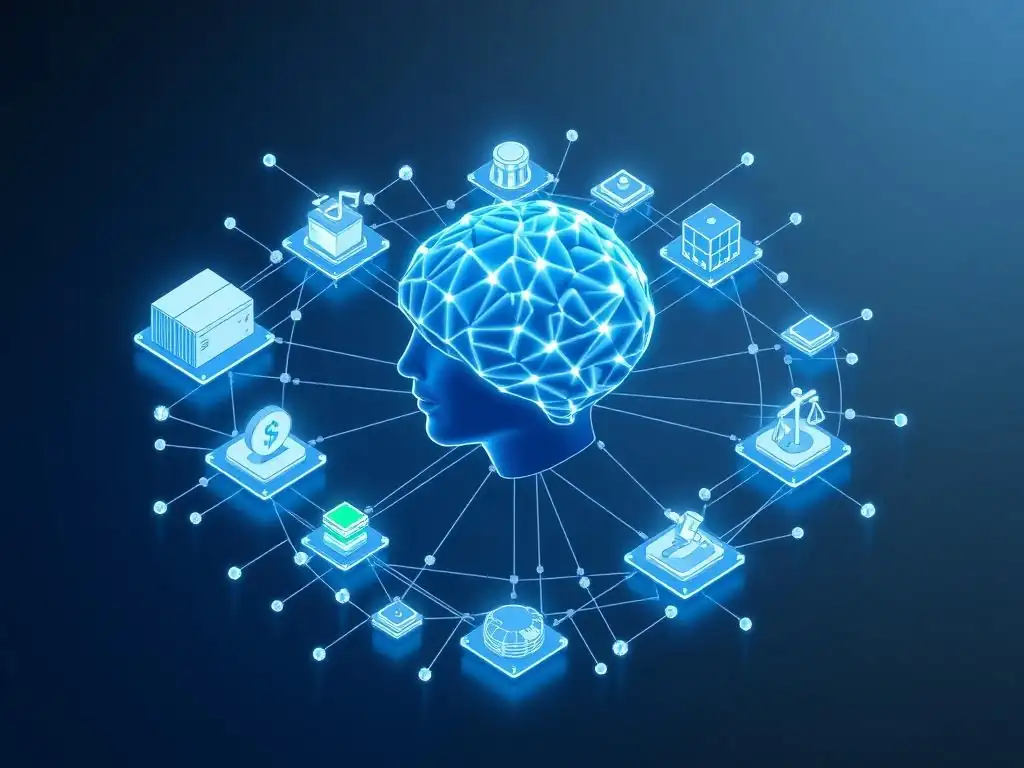
DAOs in Decentralized Finance (DeFi)
Decentralized Finance (DeFi) is arguably the most prominent sector where DAOs are currently making a significant impact. Many DeFi protocols, such as MakerDAO and Uniswap, are governed by DAOs, allowing token holders to control protocol upgrades, manage risk parameters, and allocate treasury funds. In DeFi, DAOs are crucial for ensuring decentralization and community ownership, aligning incentives between protocol developers and users. The total value locked in DeFi protocols governed by DAOs is estimated to be in the tens of billions of dollars, demonstrating the real-world scale and impact of DAOs in this sector.
For example, MakerDAO, a leading DeFi lending platform, utilizes a DAO to govern the DAI stablecoin and the Maker protocol. MKR token holders vote on critical parameters such as stability fees, debt ceilings, and supported collateral types. This decentralized governance ensures that the Maker protocol evolves in a community-driven manner, adapting to changing market conditions and user needs.
Similarly, Uniswap, a decentralized exchange, is governed by a DAO that allows UNI token holders to propose and vote on protocol upgrades and treasury management decisions. These examples highlight how DAOs are fundamental to the operation and evolution of major DeFi protocols, showcasing their practical application and effectiveness in managing complex financial systems.
DAOs in Supply Chain Management
Beyond DeFi, DAOs are also being explored for applications in supply chain management, offering the potential to enhance transparency, efficiency, and traceability across complex supply networks. A DAO could be used to govern a supply chain consortium, allowing participating companies to collaboratively manage data, track goods, and automate processes. Blockchain's inherent transparency and immutability, combined with DAO governance, can create more resilient and trustworthy supply chains.
Imagine a global food supply chain managed by a DAO. Farmers, distributors, retailers, and consumers could all be members of the DAO, with transparent access to data about product provenance, quality, and logistics. Smart contracts within the DAO could automate payments, track shipments, and verify certifications, reducing paperwork, minimizing disputes, and improving overall efficiency. Furthermore, AI could be integrated to optimize logistics, predict demand fluctuations, and identify potential bottlenecks in the supply chain. This application demonstrates how DAOs can bring greater transparency and efficiency to complex supply chains, benefiting all stakeholders involved.
DAOs in Intellectual Property Management
DAOs are also emerging as a novel approach to managing intellectual property (IP) rights in a decentralized and collaborative manner. A DAO could be formed to collectively own and manage a portfolio of patents, trademarks, or copyrights, allowing creators and stakeholders to share ownership and participate in the IP's governance and monetization. This model offers an alternative to traditional centralized IP management systems, potentially fostering greater innovation and fairer distribution of value.
Consider a DAO established to manage the IP rights for a new open-source software project. Developers, contributors, and users could become members of the DAO, collectively owning and governing the software's IP. Decisions about licensing, commercialization, and future development could be made through DAO governance, ensuring that the IP is managed in a way that benefits the entire community. This approach could be particularly beneficial for fostering collaborative innovation and open-source projects, providing a decentralized and transparent framework for managing and sharing intellectual property assets.
Challenges and Considerations for DAO Implementation
Security Risks and Vulnerabilities in DAOs
Despite their potential benefits, DAOs are not without challenges, and security risks are a significant concern. DAOs are governed by code, and vulnerabilities in smart contracts can be exploited by malicious actors, potentially leading to loss of funds or disruption of operations. The early history of DAOs includes notable security breaches, such as the infamous "The DAO" hack in 2016, which resulted in the theft of millions of dollars worth of Ether due to a smart contract vulnerability.
While smart contract security has improved significantly since then, DAOs remain susceptible to various security risks, including coding errors, economic exploits, and governance attacks. Rigorous auditing of smart contracts, robust security practices, and proactive monitoring are crucial for mitigating these risks. Furthermore, the nascent nature of DAO technology means that best practices and security standards are still evolving, requiring ongoing vigilance and adaptation to emerging threats. Addressing security concerns is paramount for the long-term viability and adoption of DAOs.
Regulatory Uncertainty Surrounding Decentralized Autonomous Organizations
Regulatory uncertainty is another significant challenge facing DAOs. The legal status of DAOs is still unclear in many jurisdictions, and regulators are grappling with how to classify and regulate these novel organizational structures. Issues such as liability, taxation, and compliance with existing regulations are still being debated and clarified. This regulatory uncertainty can create risks for DAO participants and hinder broader adoption.
Different jurisdictions are taking varying approaches to regulating DAOs, ranging from permissive to restrictive. Some jurisdictions are exploring creating new legal frameworks specifically for DAOs, while others are attempting to fit DAOs into existing legal categories, which may not be well-suited to their decentralized and autonomous nature. Navigating this complex and evolving regulatory landscape requires careful legal consideration and proactive engagement with regulators to ensure compliance and mitigate legal risks. Clarity and harmonization in DAO regulations are essential for fostering a conducive environment for their growth and development.
Scalability and Performance Limitations of DAOs
Scalability and performance limitations are technical challenges that DAOs currently face, particularly as they grow in size and complexity. Many DAOs are built on blockchains with inherent scalability constraints, which can impact transaction processing times and governance participation, especially when dealing with a large number of members and proposals. As DAOs scale, ensuring efficient and responsive governance processes becomes increasingly important.
Current blockchain technologies often face limitations in terms of transaction throughput and consensus mechanisms, which can affect the performance of DAOs operating on these platforms. Solutions such as layer-2 scaling solutions and alternative blockchain architectures are being explored to address these scalability challenges. Furthermore, optimizing DAO governance mechanisms and decision-making processes is crucial for maintaining efficiency and responsiveness as DAOs grow and evolve. Overcoming scalability and performance limitations is essential for enabling DAOs to handle large-scale operations and achieve wider adoption.
The Future of Autonomous Organizations: Trends and Predictions
The Evolution of DAO Governance Models
The governance models of DAOs are expected to evolve significantly in the coming years. Current DAO governance often relies on simple token-weighted voting, which can be susceptible to whale manipulation and low participation rates. Future DAO governance models are likely to incorporate more sophisticated mechanisms, such as quadratic voting, conviction voting, and liquid democracy, to enhance fairness, participation, and resilience.
Quadratic voting, for example, aims to reduce the influence of large token holders by making voting power non-linear. Conviction voting allows members to express their long-term conviction for proposals, rather than just casting a single vote. Liquid democracy enables token holders to either vote directly or delegate their voting power to trusted representatives. These and other innovative governance mechanisms are being actively researched and experimented with, with the goal of creating more robust, representative, and efficient DAO governance systems. The evolution of DAO governance models is crucial for addressing current limitations and unlocking the full potential of decentralized decision-making.
The Expanding Role of AI in DAO Automation
The role of AI in DAO automation is predicted to expand dramatically in the future. Beyond basic task automation, AI will likely play an increasingly critical role in complex decision-making, risk management, and proactive optimization of DAO operations. AI-powered agents could assist DAOs in analyzing data, identifying opportunities, and even autonomously executing certain tasks based on pre-defined rules and community consensus.
Imagine AI agents within a DAO that continuously monitor market conditions, assess project performance, and automatically rebalance portfolios based on predefined strategies approved by the DAO community. AI could also be used to personalize member experiences, automate community moderation at scale, and even generate proposals and reports, freeing up human members to focus on higher-level strategic thinking and community building. The integration of AI will likely transform DAOs from rule-based organizations to more intelligent, adaptive, and efficient autonomous entities.
The Impact of DAOs on Traditional Organizational Structures
DAOs are poised to have a significant impact on traditional organizational structures, potentially disrupting established business models and reshaping the future of work. As DAOs mature and become more sophisticated, they may offer a compelling alternative to traditional corporations and hierarchical organizations, particularly for projects and initiatives that benefit from decentralization, transparency, and community ownership. The rise of DAOs could lead to a more distributed, collaborative, and equitable organizational landscape.
While DAOs are unlikely to completely replace traditional organizations in the near future, they are expected to carve out a significant niche, particularly in areas such as open-source software, decentralized finance, creator economies, and community-driven initiatives. Traditional organizations may also adopt elements of DAO governance and decentralized decision-making to enhance transparency, engagement, and agility. The long-term impact of DAOs on traditional organizational structures is likely to be profound, driving innovation and fostering new models of collaboration and value creation.
Case Study: MakerDAO - A Blockchain and AI Success Story
Background and Objectives of the MakerDAO Project
MakerDAO stands out as a prominent example of a successful blockchain and DAO project, particularly within the Decentralized Finance (DeFi) space. Launched in 2017, MakerDAO's primary objective was to create a decentralized stablecoin, DAI, pegged to the US dollar, and a decentralized lending platform built on the Ethereum blockchain. The project aimed to provide a more transparent, accessible, and censorship-resistant financial system compared to traditional centralized finance.
MakerDAO sought to achieve decentralization through DAO governance, empowering MKR token holders to manage the protocol's risk parameters and guide its evolution. The objectives included creating a stable and reliable stablecoin, facilitating decentralized lending and borrowing, and fostering a thriving DeFi ecosystem. Unlike many early blockchain projects, MakerDAO focused on building a practical and functional financial infrastructure, rather than just speculative value creation. Its ambitious goals and early success have made it a pioneer and leader in the DeFi and DAO space.
Implementation of Blockchain and AI Technologies
MakerDAO extensively utilizes blockchain technology, specifically the Ethereum blockchain, as the foundation for its operations. Smart contracts are the core engine of the Maker protocol, automating the minting and burning of DAI, managing collateralized debt positions (CDPs), and enforcing governance rules. The transparency and immutability of the blockchain are crucial for maintaining trust and accountability within the MakerDAO ecosystem.
While not explicitly labeled as "AI," MakerDAO incorporates sophisticated algorithms and data-driven models for risk management and stability mechanisms. For example, the protocol employs algorithms to dynamically adjust stability fees and liquidation ratios based on market conditions and risk assessments. These algorithmic mechanisms, while not AI in the machine learning sense, represent a form of automated, data-driven decision-making that enhances the protocol's stability and resilience. Furthermore, the DAO governance process itself leverages data analysis and community input to inform decisions, reflecting a form of collective intelligence and data-driven governance.
Results and Impact of the MakerDAO Implementation
MakerDAO has achieved significant results and impact in the DeFi space. DAI has become one of the most widely used and trusted decentralized stablecoins, consistently maintaining its peg to the US dollar and playing a crucial role in the DeFi ecosystem. The Maker protocol has facilitated billions of dollars in decentralized lending and borrowing, empowering users to access financial services without relying on traditional intermediaries.
The DAO governance model of MakerDAO has also proven to be largely successful, enabling the protocol to adapt to changing market conditions, upgrade its features, and manage risks in a decentralized and community-driven manner. The project has demonstrated the viability of DAOs for governing complex financial systems and has served as an inspiration and model for other DeFi projects and DAOs across various sectors. MakerDAO's success story highlights the transformative potential of blockchain and DAO technologies to create more transparent, efficient, and accessible organizational and financial systems.
Frequently Asked Questions
What are the primary decentralized autonomous organization benefits highlighted in the context of blockchain and AI integration?
DAOs offer increased transparency due to their blockchain foundation, enhanced efficiency through AI-driven automation, and greater community participation in decision-making.
How does blockchain technology specifically contribute to the decentralized autonomous organization benefits?
Blockchain ensures immutable record-keeping of all DAO transactions and decisions, fostering trust and accountability among members. This also provides secure and transparent governance.
Beyond cryptocurrencies, what are some real-world applications where decentralized autonomous organization benefits are being explored?
DAOs are being explored in areas like supply chain management, research funding, and community governance of local resources, leveraging their transparent and efficient structure.
What are the potential regulatory challenges that could impact the realization of decentralized autonomous organization benefits?
Regulatory uncertainty surrounding legal status and liability of DAO participants presents a significant hurdle. Clarification on tax implications is also crucial for wider adoption.
How is the integration of AI further enhancing the decentralized autonomous organization benefits and capabilities?
AI can automate repetitive tasks, improve decision-making processes through data analysis, and enhance overall operational efficiency, making DAOs more scalable and effective.
Final Reflection: Embracing the Decentralized Future
The exploration of Decentralized Autonomous Organizations (DAOs) reveals more than just a technological advancement; it unveils a fundamental shift in how we perceive organizational structures and collaborative governance. The potential of DAOs to revolutionize industries, empower communities, and foster unprecedented transparency is not just a future possibility, but a present-day reality. As we've seen, the convergence of blockchain and AI is already laying the groundwork for a more equitable and efficient world, one where decision-making is distributed, and power is shared.
The impact of DAOs extends far beyond the technical realm, influencing the very fabric of our social and economic interactions. Witnessing the emergence of these self-governing entities has been a profound reminder of the human capacity for innovation and the enduring desire for autonomy. DAOs challenge traditional hierarchies and offer a glimpse into a future where individuals can collectively shape their own destinies. The future of work is not about finding a job, it's about creating one, together.
This sentiment perfectly encapsulates the spirit of DAOs, where participation and contribution are valued above all else.
As we stand on the cusp of this decentralized revolution, it's crucial to consider the implications of these technologies and actively participate in shaping their development. What role will you play in this evolving landscape? How can you leverage the principles of transparency, collaboration, and autonomy to build a more just and equitable future? The power to create a decentralized future lies within each of us. Let us embrace the potential of DAOs and work together to build a world where everyone has a voice and a stake in the decisions that affect their lives.
Dive Deeper into the Future of Decentralized Autonomy!
Thank you for exploring the exciting potential of Autonomous Organizations with Blockchain Trends! We hope you've gained valuable insights into how blockchain and AI are converging to reshape the future of organizational structures. Now, it's time to put that knowledge into action.
Here are a few steps you can take to further explore this groundbreaking field:
- Immediately research and identify a DAO that aligns with your interests and values. Actively participate in its governance and contribute to its growth. This is the most direct way to experience the power of decentralized autonomy firsthand.
- Explore the smart contract code powering a DAO on platforms like Etherscan. Understanding the underlying technology is crucial for navigating this emerging landscape.
- Share this article with your network and start a conversation! Let's collectively brainstorm the potential societal impact of DAOs and explore ethical considerations.
What specific DAO project are you most excited about, and what contribution do you envision making to it? Share your thoughts in the comments below!
Leave a Reply