
Smart Manufacturing: AIPowered Smart Contracts for Automated Production Lines

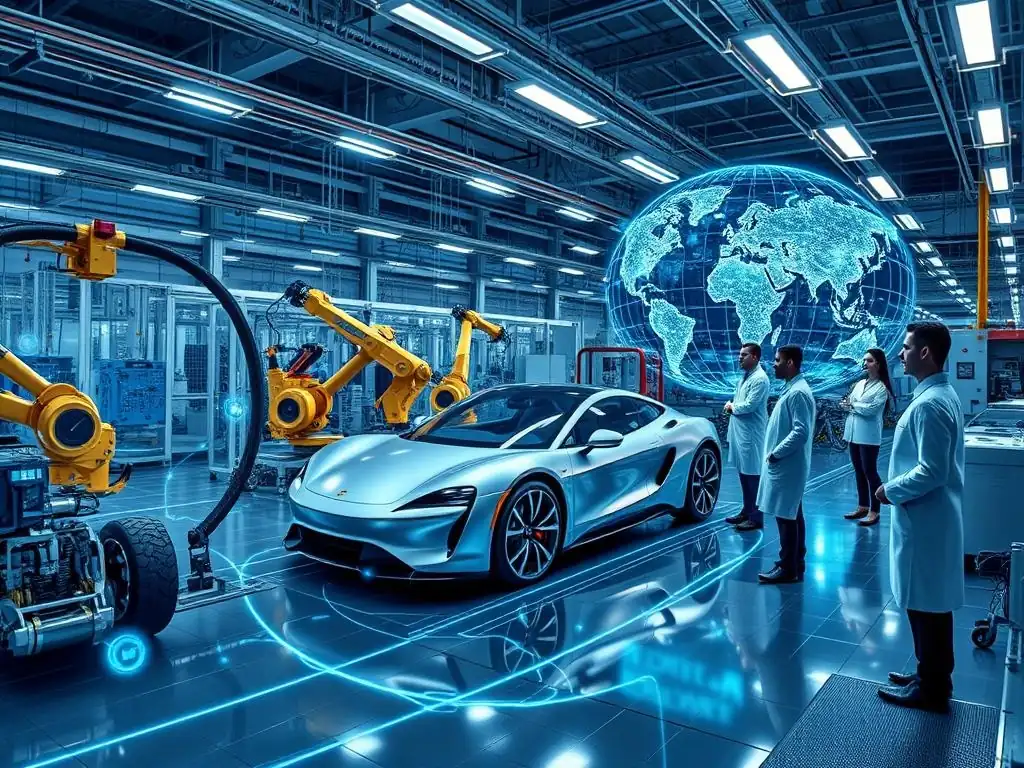
Welcome to Blockchain Trends, your go-to source for unraveling the transformative power of blockchain!
Intrigued by how blockchain technology is revolutionizing industries beyond just cryptocurrencies? Dive in and discover the cutting-edge applications in DeFi, enterprise solutions, and the evolving regulatory landscape. Our latest exploration focuses on Blockchain smart contracts automation, specifically how AI-powered smart contracts are poised to redefine manufacturing. Could this be the key to unlocking truly automated production lines? Read on to find out and delve into the future of blockchain and AI synergy!
Smart Manufacturing: AI-Powered Smart Contracts for Automated Production Lines
- Introduction to Smart Manufacturing and Blockchain Technology
- Blockchain Smart Contracts Automation: Revolutionizing Production Lines
- AI-Powered Smart Contracts: Enhancing Efficiency and Transparency
-
Use Cases: AI and Blockchain Smart Contracts in Manufacturing
- Case Study 1: Automating Quality Control with AI-Driven Smart Contracts [Automotive Component Manufacturing]
- Case Study 2: Streamlining Supply Chain Management Using Blockchain [Pharmaceutical Production]
- Case Study 3: Enhancing Predictive Maintenance Through AI-Powered Smart Contracts [Aerospace Manufacturing]
-
Implementing AI-Powered Smart Contracts in Production: A Step-by-Step Guide
- Step 1: Assessing Current Manufacturing Processes and Identifying Automation Opportunities
- Step 2: Selecting the Right Blockchain Platform and Smart Contract Framework
- Step 3: Integrating AI Algorithms for Real-Time Data Analysis and Decision-Making
- Step 4: Testing and Deployment of AI-Enhanced Smart Contracts
- Challenges and Considerations for AI-Driven Blockchain Automation
- The Future of Smart Manufacturing: AI, Blockchain, and Beyond
- Conclusion: Embracing the Power of Blockchain Smart Contracts Automation
-
Frequently Asked Questions
- What is the role of AI in enhancing blockchain smart contracts for manufacturing?
- How can blockchain smart contracts automate production lines in manufacturing?
- What are the benefits of using AI-powered smart contracts in smart manufacturing?
- How does blockchain technology contribute to data security and transparency in manufacturing?
- What are the regulatory considerations for implementing blockchain smart contracts in manufacturing?
- Final Reflection: Embracing the Autonomous Future
- Revolutionize Your Production: Embrace the Future of Smart Manufacturing!
Introduction to Smart Manufacturing and Blockchain Technology
The Evolution of Manufacturing: From Automation to Smart Systems
Manufacturing has undergone a dramatic transformation over the centuries, evolving from manual labor to sophisticated automated systems. The initial phases of automation focused primarily on mechanizing tasks to increase production speed and reduce human effort. Think of the assembly line pioneered in the early 20th century – a revolutionary step that dramatically increased efficiency but was largely based on rigid, pre-programmed processes. This era of automation laid the groundwork for what we now consider “smart manufacturing.”
The current evolution, often termed Industry 4.0, moves beyond simple automation to embrace interconnected, data-driven systems. This involves integrating technologies like the Internet of Things (IoT), cloud computing, and Artificial Intelligence (AI) to create manufacturing environments that are not only automated but also intelligent and adaptive. Smart systems can monitor production in real-time, predict potential issues, and even self-adjust to optimize performance. This shift is crucial for manufacturers seeking to enhance efficiency, improve product quality, and respond dynamically to market demands in an increasingly complex global landscape.
Understanding Blockchain's Role in Modern Manufacturing
Blockchain technology, initially known for its role in cryptocurrencies, is now recognized for its potential to revolutionize various industries, including manufacturing. At its core, blockchain is a decentralized, distributed ledger that records transactions securely and transparently across multiple computers. This inherent security and transparency are highly valuable in manufacturing contexts where trust and data integrity are paramount.
In manufacturing, blockchain can be applied to enhance supply chain management by providing an immutable record of product provenance, tracking materials from origin to consumer. It can also improve security by verifying the authenticity of components and preventing counterfeiting. Furthermore, blockchain facilitates secure data sharing among different stakeholders in the manufacturing ecosystem, fostering collaboration and streamlining processes. Its decentralized nature reduces reliance on central authorities, making manufacturing operations more resilient and less vulnerable to single points of failure.
The Promise of AI-Powered Smart Contracts in Production
The confluence of AI and blockchain, particularly through AI-powered smart contracts, holds immense promise for the future of production lines. Smart contracts are self-executing agreements written in code and stored on a blockchain. They automatically enforce the terms of a contract when predefined conditions are met, eliminating the need for intermediaries and reducing the risk of disputes. When augmented with AI, these smart contracts become even more powerful and adaptable.
AI can enhance smart contracts by enabling them to process and analyze vast amounts of real-time data from production lines, making intelligent decisions and triggering automated actions. This integration can lead to significant improvements in production efficiency, quality control, and supply chain management. The combination of AI’s analytical capabilities with the secure and automated execution of smart contracts creates a robust framework for blockchain smart contracts automation in manufacturing, paving the way for truly intelligent and autonomous production systems.
Blockchain Smart Contracts Automation: Revolutionizing Production Lines
What are Smart Contracts and How Do They Work?
Smart contracts are essentially digital agreements encoded as computer programs and stored on a blockchain network. Unlike traditional contracts written in natural language, smart contracts are written in code, making them self-executing and tamper-proof. They operate on an "if-this-then-that" logic, automatically triggering actions when predetermined conditions are met. This automation is enabled by the decentralized nature of blockchain, ensuring that once deployed, a smart contract executes as programmed without the need for intermediaries or manual intervention.
The functionality of smart contracts hinges on the blockchain's inherent characteristics: immutability, transparency, and security. Once a smart contract is deployed on a blockchain, its code cannot be altered, ensuring that all parties can trust its execution. Every transaction and execution of the smart contract is recorded on the blockchain, providing a transparent and auditable history. This mechanism ensures that blockchain smart contracts automation is not only efficient but also secure and reliable, critical for sensitive manufacturing processes.
Advantages of Automating Production with Smart Contracts
Automating production lines with smart contracts offers a multitude of advantages, significantly enhancing efficiency and reducing operational costs. One primary benefit is the reduction of manual processes and paperwork. Smart contracts automate tasks such as order processing, payment settlements, and quality verification, minimizing the need for human intervention and the associated errors. This leads to faster transaction times and quicker turnaround in production cycles.
Furthermore, smart contracts enhance transparency and trust among stakeholders in the manufacturing process. All parties involved have access to the contract terms and execution history on the blockchain, fostering accountability and reducing disputes. The automated nature of smart contracts also minimizes the risk of fraud and manipulation, as the contract terms are enforced by code, not by subjective interpretations. In essence, blockchain smart contracts automation creates a more streamlined, transparent, and trustworthy production environment, leading to improved efficiency and profitability.
Key Features of AI-Enhanced Smart Contracts for Manufacturing
While standard smart contracts offer significant automation, integrating AI elevates their capabilities to address the complexities of modern manufacturing. AI-enhanced smart contracts can process and analyze vast datasets generated by production lines in real-time. This capability allows for dynamic decision-making and adaptive responses to changing conditions, moving beyond pre-programmed rules to intelligent automation.
One key feature is predictive analytics. AI algorithms can analyze historical and real-time data to predict potential equipment failures, quality issues, or supply chain disruptions. This predictive capability enables proactive maintenance and timely interventions, minimizing downtime and optimizing resource allocation. Another crucial feature is automated quality control. AI-powered vision systems can integrate with smart contracts to automatically assess product quality, triggering actions like rejection or rework based on predefined parameters, all without manual oversight. These features demonstrate how AI enhances blockchain smart contracts automation, creating a more intelligent and responsive manufacturing system.
AI-Powered Smart Contracts: Enhancing Efficiency and Transparency
Real-Time Data Analysis and Predictive Maintenance with AI
The integration of AI with smart contracts enables real-time data analysis within manufacturing operations, transforming reactive maintenance into proactive, predictive maintenance. Modern production lines are equipped with sensors that generate massive amounts of data on machine performance, environmental conditions, and product quality. AI algorithms can process this data in real-time to identify patterns and anomalies that might indicate potential equipment failures or process inefficiencies.
For example, in a large-scale automotive plant, sensors on robotic arms can continuously monitor vibration, temperature, and motor current. AI models can analyze this data to predict when a component is likely to fail, triggering a smart contract to automatically schedule maintenance before a breakdown occurs. This predictive approach significantly reduces unplanned downtime, extends equipment lifespan, and optimizes maintenance schedules, leading to substantial cost savings and increased production efficiency through blockchain smart contracts automation. A study by McKinsey indicated that predictive maintenance can reduce maintenance costs by up to 40% and unplanned downtime by as much as 50%.
Improved Supply Chain Traceability Through Blockchain Integration
Supply chain traceability is critical in modern manufacturing, especially in industries like pharmaceuticals and food production where provenance and authenticity are paramount. Blockchain integration with AI-powered smart contracts provides an unprecedented level of transparency and accountability throughout the supply chain. Each step in the manufacturing and distribution process, from raw material sourcing to final delivery, can be recorded on the blockchain, creating an immutable and auditable record.
Imagine a pharmaceutical company using blockchain to track a batch of vaccines. From the initial ingredient sourcing to manufacturing, quality checks, storage, and distribution, every stage is recorded on the blockchain. AI-powered smart contracts can automatically verify each step against predefined criteria, ensuring compliance and quality standards are met.
If a temperature sensor in a shipment container detects a temperature breach, a smart contract can automatically flag the batch for further inspection or rejection, enhancing product safety and reducing the risk of counterfeit drugs entering the market. This level of traceability and automated verification, facilitated by blockchain smart contracts automation, builds trust and efficiency in complex supply chains.
Minimizing Errors and Maximizing Output with Automated Processes
Human error is a significant factor in manufacturing defects and inefficiencies. Automating processes with AI-powered smart contracts directly addresses this challenge by minimizing manual intervention and ensuring consistent execution of predefined protocols. By automating quality checks, process adjustments, and material handling, manufacturers can significantly reduce the occurrence of errors and improve overall product quality.
Consider a food processing plant where precise ingredient ratios and cooking times are crucial for product consistency. AI-powered sensors can monitor ingredient dispensing and oven temperatures in real-time. Smart contracts, triggered by AI analysis, can automatically adjust dispensing rates or oven settings to maintain optimal conditions. If deviations from predefined parameters are detected, the system can automatically halt the production line or trigger corrective actions, minimizing waste and ensuring product quality. This level of precision and automated control, enabled by blockchain smart contracts automation, leads to maximized output, reduced waste, and consistently high-quality products.
Use Cases: AI and Blockchain Smart Contracts in Manufacturing
Case Study 1: Automating Quality Control with AI-Driven Smart Contracts [Automotive Component Manufacturing]
In automotive component manufacturing, maintaining stringent quality standards is paramount for safety and performance. A leading automotive parts supplier implemented an AI-driven smart contract system to automate quality control for critical engine components. The system utilized AI-powered vision systems integrated into the production line to inspect each component for defects in real-time. These vision systems, trained on vast datasets of component images, can identify minute flaws undetectable by human inspectors.
Upon inspection, the AI system automatically assesses the component's quality against predefined parameters. If a component meets the quality standards, the AI system triggers a smart contract to automatically approve it for the next stage of assembly and record the quality data on a private blockchain.
If a defect is detected, the smart contract automatically rejects the component, flags it for rework or disposal, and updates the production inventory system. This automated quality control process, powered by blockchain smart contracts automation, has reduced defect rates by approximately 30% and significantly decreased manual inspection time, leading to substantial cost savings and improved product reliability for the automotive supplier.
Case Study 2: Streamlining Supply Chain Management Using Blockchain [Pharmaceutical Production]
A major pharmaceutical company faced challenges in tracking and verifying the authenticity of its drugs throughout its complex global supply chain. To address this, they implemented a blockchain-based supply chain management system utilizing smart contracts. Each batch of medication is assigned a unique digital identity on the blockchain as it enters the production process. Throughout the supply chain, from manufacturing to distribution and delivery to pharmacies, every transaction and location update is recorded on the blockchain.
Smart contracts are programmed to automatically trigger various actions based on predefined conditions. For instance, upon delivery of a shipment to a verified distributor, a smart contract automatically releases payment to the manufacturer. Furthermore, temperature sensors in shipping containers continuously monitor the conditions of temperature-sensitive medications. If a temperature breach occurs during transit, a smart contract automatically flags the batch for quarantine and quality re-evaluation, preventing potentially compromised drugs from reaching patients. This blockchain smart contracts automation system has significantly improved supply chain transparency, reduced the risk of counterfeit drugs, and enhanced patient safety for the pharmaceutical company.
Case Study 3: Enhancing Predictive Maintenance Through AI-Powered Smart Contracts [Aerospace Manufacturing]
The aerospace industry demands extremely high levels of reliability and safety, making predictive maintenance crucial for aircraft components. An aerospace manufacturer implemented an AI-powered predictive maintenance system using smart contracts to monitor critical components in aircraft engines. Sensors embedded in engines collect data on parameters such as vibration, temperature, oil pressure, and performance metrics during flight. This data is continuously streamed and analyzed by AI algorithms to predict potential component failures or maintenance needs.
When the AI system predicts an impending failure or detects a deviation from normal operating parameters, it triggers a smart contract to automatically schedule maintenance. The smart contract can also initiate the procurement of necessary replacement parts and allocate maintenance crew resources. By proactively addressing maintenance needs based on AI-driven predictions and automated through smart contracts, the aerospace manufacturer has significantly reduced unexpected engine failures, minimized aircraft downtime, and improved overall operational efficiency. This application of blockchain smart contracts automation has enhanced safety and reduced maintenance costs in a highly regulated and safety-critical industry.
Implementing AI-Powered Smart Contracts in Production: A Step-by-Step Guide
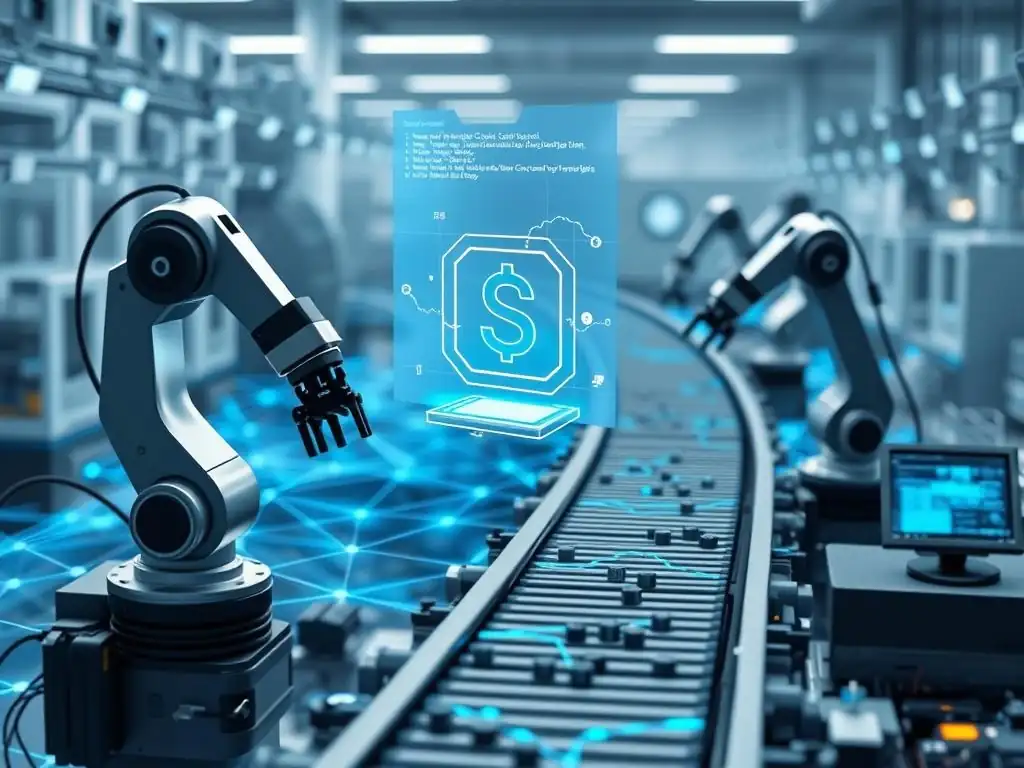
Step 1: Assessing Current Manufacturing Processes and Identifying Automation Opportunities
The first step in implementing AI-powered smart contracts is a thorough assessment of existing manufacturing processes. This involves mapping out the entire production流程, from raw material input to finished product output, identifying key stages and potential bottlenecks. Manufacturers should analyze each stage to pinpoint areas where automation can bring the most significant improvements in efficiency, quality, and cost reduction.
This assessment should focus on identifying repetitive tasks, data-intensive processes, and areas prone to human error. Look for opportunities to automate quality control checks, supply chain interactions, equipment maintenance scheduling, and inventory management. For example, processes involving manual data entry, paper-based approvals, or reactive maintenance are prime candidates for blockchain smart contracts automation. A detailed process mapping exercise and a critical analysis of inefficiencies will lay the foundation for successful implementation.
Step 2: Selecting the Right Blockchain Platform and Smart Contract Framework
Choosing the appropriate blockchain platform and smart contract framework is crucial for the success of AI-powered smart contract implementation. Several blockchain platforms are suitable for manufacturing applications, each with its own strengths and weaknesses. Options include public blockchains like Ethereum, known for its mature smart contract ecosystem, and private or permissioned blockchains like Hyperledger Fabric, favored for enterprise applications requiring greater control and privacy.
The selection should be based on factors such as the scale of operations, data sensitivity, required transaction speed, and integration needs with existing systems. Consider the smart contract development tools and programming languages supported by each platform. For example, Ethereum uses Solidity, while Hyperledger Fabric supports Go and Java. Choosing a platform that aligns with the organization's technical capabilities and security requirements is essential for seamless blockchain smart contracts automation. Factors like transaction costs, scalability, and community support should also be carefully evaluated.
Step 3: Integrating AI Algorithms for Real-Time Data Analysis and Decision-Making
Integrating AI algorithms is the core of creating intelligent and adaptive smart contracts. This step involves selecting and developing AI models that can process the relevant data streams from the manufacturing environment. This could include data from IoT sensors, machine performance metrics, quality control systems, and supply chain data. The AI algorithms should be designed to perform specific tasks such as predictive maintenance, quality anomaly detection, demand forecasting, and process optimization.
The integration process requires establishing robust data pipelines to feed real-time data to the AI models. The output from the AI algorithms, such as predictions, classifications, or recommendations, then needs to be seamlessly integrated with the smart contract logic. This integration often involves APIs and middleware to bridge the gap between the AI system and the blockchain platform. Ensuring data accuracy, model reliability, and secure data transfer is critical for effective blockchain smart contracts automation.
Step 4: Testing and Deployment of AI-Enhanced Smart Contracts
Thorough testing is paramount before deploying AI-enhanced smart contracts in a live manufacturing environment. Testing should encompass functional testing, performance testing, security testing, and integration testing. Functional testing verifies that the smart contracts execute as intended under various scenarios and conditions. Performance testing assesses the system's scalability and responsiveness under peak loads. Security testing identifies and mitigates potential vulnerabilities. Integration testing ensures seamless interaction with existing manufacturing systems and data sources.
Testing should be conducted in a simulated environment that mirrors the real production setting as closely as possible. After successful simulation testing, a phased deployment approach is recommended. Start with a pilot project in a limited area of the manufacturing process to validate performance and identify any unforeseen issues in a real-world setting. Continuous monitoring and iterative improvements are crucial during and after deployment to optimize the performance and effectiveness of the blockchain smart contracts automation system.
Challenges and Considerations for AI-Driven Blockchain Automation
Data Security and Privacy Concerns in a Connected Manufacturing Environment
In a connected manufacturing environment driven by AI and blockchain, data security and privacy become paramount concerns. The interconnected nature of smart factories, with numerous sensors, machines, and systems exchanging data, creates a larger attack surface for cyber threats. Protecting sensitive manufacturing data, including proprietary processes, product designs, and operational data, is crucial.
Blockchain itself offers inherent security features through cryptography and decentralization, but the broader ecosystem needs robust security measures. This includes securing IoT devices, network infrastructure, and AI algorithms against unauthorized access and data breaches. Furthermore, data privacy regulations, such as GDPR and CCPA, need to be considered, especially when dealing with data that might indirectly identify individuals. Implementing strong encryption, access controls, and data anonymization techniques is essential to mitigate security and privacy risks in blockchain smart contracts automation. Regular security audits and vulnerability assessments are also vital.
Regulatory Compliance and Legal Frameworks for Smart Contracts
The legal and regulatory landscape surrounding smart contracts is still evolving, presenting challenges for widespread adoption in manufacturing. The legal enforceability of smart contracts, particularly in complex cross-border manufacturing operations, is not yet fully established in all jurisdictions. Clarity is needed on issues such as contract interpretation, dispute resolution, and liability in the context of smart contracts.
Manufacturers must navigate varying regulatory requirements across different countries and industries. Compliance with industry-specific regulations, such as those in the pharmaceutical or aerospace sectors, needs to be integrated into the design and implementation of smart contracts. Furthermore, data governance regulations, environmental compliance, and labor laws all have implications for blockchain smart contracts automation. Engaging legal experts and staying abreast of evolving regulations are crucial steps to ensure compliance and mitigate legal risks associated with smart contract deployments.
Scalability and Interoperability of Blockchain Solutions
Scalability and interoperability are critical considerations for deploying blockchain solutions in large-scale manufacturing environments. Many current blockchain platforms face limitations in transaction throughput and processing speed, which can be bottlenecks in high-volume manufacturing operations. As manufacturing systems generate vast amounts of data and require rapid decision-making, blockchain solutions need to be able to scale to meet these demands.
Interoperability is another significant challenge. Manufacturing ecosystems often involve diverse systems, platforms, and stakeholders, potentially using different blockchain technologies. Ensuring seamless communication and data exchange between different blockchain networks and legacy systems is crucial for realizing the full potential of blockchain smart contracts automation. Efforts are underway to develop interoperability standards and solutions, but this remains an ongoing area of development. Manufacturers need to carefully evaluate the scalability and interoperability of chosen blockchain platforms to ensure they can support their operational needs and future growth.
The Future of Smart Manufacturing: AI, Blockchain, and Beyond
Emerging Trends in AI-Powered Manufacturing Automation
The future of smart manufacturing is being shaped by several emerging trends in AI-powered automation. Digital twins, virtual representations of physical assets or processes, are gaining traction. AI-powered digital twins can simulate production scenarios, optimize processes, and predict equipment performance, enhancing the effectiveness of smart contracts. AI-driven robotics is another key trend, with robots becoming more intelligent and adaptable, capable of performing complex tasks with minimal human supervision.
Personalized manufacturing, enabled by AI and flexible automation systems, is also on the rise, allowing manufacturers to cater to individual customer needs and produce customized products efficiently. Edge computing, bringing data processing closer to the source of data generation, is becoming increasingly important for real-time decision-making in manufacturing, further enhancing the responsiveness of blockchain smart contracts automation systems. These trends point towards a future of manufacturing that is more flexible, efficient, and customer-centric.
The Potential of Decentralized Autonomous Organizations (DAOs) in Manufacturing
Decentralized Autonomous Organizations (DAOs) represent a potentially transformative model for manufacturing governance and operations. DAOs are organizations governed by rules encoded in smart contracts and executed autonomously on a blockchain, without traditional hierarchical management structures. In manufacturing, DAOs could facilitate decentralized decision-making, transparent resource allocation, and automated supply chain management.
Imagine a manufacturing consortium governed by a DAO, where decisions about production schedules, resource procurement, and profit sharing are made through transparent, community-driven processes encoded in smart contracts. DAOs could foster greater collaboration and trust among manufacturing partners, reduce reliance on intermediaries, and create more resilient and efficient manufacturing ecosystems. While DAOs are still in their early stages of development, their potential to revolutionize manufacturing governance and operations in conjunction with blockchain smart contracts automation is significant.
Blockchain and AI: Towards a More Efficient and Resilient Industrial Ecosystem
The synergy between blockchain and AI is poised to drive the evolution of a more efficient and resilient industrial ecosystem. Blockchain provides the foundation for secure data sharing, transparent transactions, and automated contract execution, while AI brings intelligence, predictive capabilities, and adaptive decision-making to manufacturing processes. Together, these technologies can create manufacturing systems that are not only highly efficient but also more resilient to disruptions, more responsive to market changes, and more sustainable.
The combination of blockchain and AI can optimize resource utilization, reduce waste, improve product quality, and enhance supply chain visibility across the entire industrial ecosystem. This synergy has the potential to transform traditional linear supply chains into more collaborative and circular ecosystems, fostering greater sustainability and resilience. As blockchain and AI technologies mature and become more widely adopted, they will play an increasingly crucial role in shaping the future of a more efficient and robust industrial landscape, driven by blockchain smart contracts automation.
Conclusion: Embracing the Power of Blockchain Smart Contracts Automation
Key Takeaways: The Benefits of AI-Powered Smart Contracts for Production Lines
AI-powered smart contracts offer a compelling value proposition for manufacturers seeking to optimize their production lines. The key benefits include enhanced efficiency through automation of processes, improved quality control through AI-driven inspections, reduced costs through predictive maintenance and minimized downtime, and increased transparency and traceability across the supply chain. Blockchain smart contracts automation empowers manufacturers to create more agile, responsive, and resilient production systems.
By leveraging AI's analytical capabilities and blockchain's secure and automated execution, manufacturers can move beyond traditional automation to truly intelligent and autonomous operations. The integration of these technologies leads to reduced human error, optimized resource allocation, and enhanced overall productivity. Embracing AI-powered smart contracts is a strategic imperative for manufacturers looking to gain a competitive edge in the rapidly evolving landscape of Industry 4.0.
The Path Forward: Accelerating the Adoption of Blockchain in Smart Manufacturing
Accelerating the adoption of blockchain in smart manufacturing requires a multi-faceted approach. Education and awareness are crucial to dispel misconceptions and highlight the tangible benefits of blockchain smart contracts automation to manufacturers. Industry collaborations and pilot projects are essential to demonstrate real-world applications and build confidence in the technology. Standardization efforts are needed to promote interoperability and facilitate wider adoption across different manufacturing sectors.
Governments and regulatory bodies can play a supportive role by creating favorable regulatory frameworks and incentivizing innovation in blockchain and AI for manufacturing. Addressing challenges related to scalability, security, and legal clarity will further pave the way for broader adoption. The path forward involves a collaborative effort from technology providers, manufacturers, researchers, and policymakers to unlock the full potential of blockchain and AI in transforming the future of manufacturing and building a more efficient and resilient industrial world.
Frequently Asked Questions
What is the role of AI in enhancing blockchain smart contracts for manufacturing?
AI algorithms can analyze real-time data from production lines and automatically adjust smart contract parameters. This allows for dynamic adaptation to changing conditions and optimized performance.
How can blockchain smart contracts automate production lines in manufacturing?
Smart contracts can trigger automated actions based on predefined conditions, such as component delivery or quality control checks. This reduces manual intervention and streamlines the production process.
What are the benefits of using AI-powered smart contracts in smart manufacturing?
Key benefits include increased efficiency, reduced costs, and improved transparency in the supply chain. This leads to better product quality and faster time-to-market.
How does blockchain technology contribute to data security and transparency in manufacturing?
Blockchain provides an immutable ledger for recording all transactions and data related to the production process. This ensures data integrity and enhances trust among stakeholders.
What are the regulatory considerations for implementing blockchain smart contracts in manufacturing?
Manufacturers need to comply with regulations related to data privacy, contract law, and industry-specific standards. Understanding these requirements is crucial for successful implementation.
Final Reflection: Embracing the Autonomous Future
The convergence of Artificial Intelligence and blockchain smart contracts, as explored throughout this article, is not merely a technological advancement; it represents a fundamental shift in how we approach manufacturing. The potential for truly autonomous production lines, driven by AI-powered smart contracts, is no longer a distant dream but a rapidly approaching reality. This transformation promises unprecedented efficiency, transparency, and resilience in global supply chains, impacting everything from product quality to environmental sustainability.
The implications of this technology extend far beyond the factory floor. The ability to create self-executing agreements, validated and secured by the blockchain, fosters a new level of trust and collaboration between stakeholders. This paradigm shift encourages innovation and empowers smaller businesses to participate in global markets with greater confidence. The future of manufacturing is not just about automation; it's about creating intelligent, interconnected ecosystems that can adapt and evolve in real-time.
This quote encapsulates the transformative power of AI-powered smart contracts in building a more dynamic and responsive industrial landscape.
As we stand on the cusp of this technological revolution, let us consider the ethical and societal implications of widespread automation. Let us strive to develop and implement these powerful tools responsibly, ensuring that the benefits are shared equitably and that the workforce is equipped with the skills needed to thrive in this new era. The future of smart manufacturing is not predetermined; it is a future we must actively shape. Let us embrace the potential of AI-powered smart contracts to build a more efficient, sustainable, and equitable world, one automated production line at a time.
Revolutionize Your Production: Embrace the Future of Smart Manufacturing!
Thank you for exploring the potential of AI-powered smart contracts to transform manufacturing processes. You've learned how these technologies can improve operational efficiency, increase transparency, and drive innovation. Now, it's time to take action!
Here's how you can get started:
- Begin by integrating a simple smart contract into a pilot production process. Start small, learn quickly! This is the first step toward embracing smart manufacturing.
- Share this article with colleagues and industry peers to spark discussions about applying AI and smart contracts in manufacturing. Help spread awareness!
- Connect with industry-specific blockchain consortia or networks focused on smart manufacturing. Collaborating with others can open new opportunities.
What is one small step you can take this week to explore the use of AI-powered smart contracts in your production environment? Share your ideas in the comments!
Leave a Reply