
The Technical Deep Dive: Understanding Blockchain & AI for Data Integrity


Welcome to Blockchain Trends, your go-to source for understanding the real-world impact of blockchain technology. Forget just cryptocurrencies! Are you ready to explore how blockchain is revolutionizing data security? This week, we're diving deep into Blockchain data integrity solutions – uncovering how the synergy of blockchain and AI is forging a new era of unshakeable trust. Discover the technical intricacies and innovative applications that are shaping the future of decentralized data. Curious how it all works? Let's begin...
- Introduction: A Synergistic Approach to Data Integrity
- Blockchain Fundamentals for Data Integrity
- AI's Contribution to Blockchain Data Integrity
- Blockchain Data Integrity Solutions: Practical Applications
- Implementing Blockchain & AI for Data Integrity: A Technical Overview
- Challenges and Future Trends in Blockchain and AI-Driven Data Integrity
- Case Studies: Real-World Examples
- Conclusion: The Transformative Potential
-
Frequently Asked Questions
- What is the core benefit of using blockchain and AI together for data integrity?
- How does blockchain contribute to data integrity in a system also utilizing AI?
- What are some specific examples of "Blockchain data integrity solutions" in enterprise applications?
- What are the potential regulatory challenges associated with implementing blockchain and AI for data integrity?
- What is the future outlook for "Blockchain data integrity solutions" and the role of AI within them?
- Final Reflection: Securing the Future with Intelligent Integrity
- Ignite Your Data Revolution!
Introduction: A Synergistic Approach to Data Integrity
The Growing Need for Robust Data Integrity Solutions
In today's data-driven world, the integrity of information is paramount. Businesses and organizations across all sectors rely heavily on data for decision-making, operational efficiency, and maintaining trust with stakeholders. Compromised data, whether through accidental errors, malicious attacks, or system failures, can lead to significant financial losses, reputational damage, and even legal repercussions.
According to a study by IBM, the average cost of a data breach in 2023 reached $4.45 million globally, highlighting the critical financial implications of inadequate data protection and integrity measures. Furthermore, with increasing regulatory scrutiny, such as GDPR and HIPAA, ensuring data integrity is not just a matter of best practice but a legal imperative.
The escalating volume and velocity of data, coupled with the complexity of modern data systems, further exacerbate the challenges of maintaining data integrity. Traditional centralized systems are often vulnerable to single points of failure and internal manipulation. As organizations expand their digital footprint and embrace cloud computing, the need for decentralized, resilient, and verifiable data integrity solutions becomes increasingly urgent. This demand is driving innovation in technologies that can guarantee data accuracy, authenticity, and reliability throughout its lifecycle, making robust data integrity solutions a top priority for businesses worldwide.
Exploring the Intersection of Blockchain, AI, and Data Validation
The convergence of blockchain and Artificial Intelligence (AI) presents a powerful synergy for revolutionizing data integrity. Blockchain, with its inherent characteristics of immutability, transparency, and decentralization, provides a foundational layer for securing data and establishing provenance. AI, on the other hand, offers advanced capabilities in data analysis, anomaly detection, and automated validation. When combined, these technologies create a robust ecosystem for ensuring data integrity that surpasses the limitations of traditional approaches. Blockchain acts as the secure and auditable ledger, while AI acts as the intelligent guardian, continuously monitoring and verifying the data recorded on the blockchain.
This intersection is particularly relevant for enhancing blockchain data integrity solutions. AI algorithms can be trained to analyze blockchain data for inconsistencies, fraudulent activities, and security vulnerabilities in real-time. For instance, machine learning models can detect unusual transaction patterns that might indicate data manipulation or unauthorized access. Conversely, blockchain can enhance the trustworthiness of AI models by providing an immutable audit trail of data used for training and decision-making, addressing concerns about AI bias and explainability. This synergistic approach not only strengthens data integrity but also unlocks new possibilities for data validation and security across diverse applications.
Article Overview: A Deep Dive into Technical Implementations
This article embarks on a technical deep dive into the practical implementations of blockchain and AI for enhancing data integrity. We will explore the fundamental principles of blockchain technology and how its core features contribute to data immutability and transparency, essential components of robust data integrity. We will then delve into the specific ways AI technologies, particularly machine learning, can be leveraged to augment blockchain's capabilities, focusing on areas like anomaly detection, smart contract auditing, and performance optimization.
Furthermore, we will examine real-world applications where blockchain data integrity solutions are making a significant impact, spanning industries from supply chain management and healthcare to finance. The article will also provide a technical overview of the implementation process, discussing key considerations for selecting the right blockchain platform and integrating AI models into blockchain architectures. Finally, we will address the challenges and future trends in this rapidly evolving field, highlighting the transformative potential of blockchain and AI in shaping the future of data security and trust.
Blockchain Fundamentals for Data Integrity
Understanding Blockchain's Core Principles: Immutability and Transparency
Blockchain technology's power to ensure data integrity stems from its core principles: immutability and transparency. Immutability, in the context of blockchain, refers to the inability to alter or delete data once it has been recorded on the chain. This is achieved through cryptographic hashing and a distributed consensus mechanism. Each block in the chain contains a hash of the previous block, creating a chronological and tamper-evident record. Any attempt to modify data in a previous block would require recalculating the hashes of all subsequent blocks, a computationally infeasible task in a well-established blockchain network.
Transparency, another cornerstone of blockchain, means that all participants in the network have access to the ledger of transactions. While the identities of participants can be pseudonymized, the transaction history is publicly auditable. This transparency fosters trust and accountability, as any unauthorized modification or fraudulent activity would be readily detectable by the network participants. These principles of immutability and transparency are fundamental to building blockchain data integrity solutions, providing a robust foundation for secure and verifiable data management across various applications.
How Cryptographic Hash Functions Secure Blockchain Data
Cryptographic hash functions are the backbone of blockchain security and data integrity. These functions take an input of any size and produce a fixed-size, unique output called a hash. Crucially, hash functions are designed to be one-way, meaning it is computationally impossible to reverse the process and derive the original input from the hash. Furthermore, even a minor change in the input data will result in a drastically different hash output, known as the avalanche effect. This sensitivity is vital for detecting even the slightest data alteration.
In blockchain, hash functions are used to create a digital fingerprint of each block of data, including the hash of the previous block. This creates a chain of blocks linked together by their cryptographic hashes, hence the term "blockchain." If anyone attempts to tamper with the data in a block, the hash of that block will change, and it will no longer match the hash recorded in the subsequent block, instantly revealing the data manipulation.
This cryptographic linkage, secured by hash functions, is a core mechanism for ensuring data integrity and forms the basis of many blockchain data integrity solutions. For example, SHA-256, a widely used cryptographic hash function, is commonly employed in blockchain technologies like Bitcoin.
The Role of Consensus Mechanisms in Maintaining Data Integrity
Consensus mechanisms are algorithms that enable distributed blockchain networks to agree on the validity of transactions and the state of the ledger. In a decentralized system, there is no central authority to validate data; therefore, a consensus mechanism is essential to ensure that all participants agree on a single, consistent version of the truth. These mechanisms prevent malicious actors from manipulating the blockchain and ensure data integrity by requiring a majority of network participants to verify and validate each transaction before it is added to the blockchain.
Different types of consensus mechanisms exist, each with its own trade-offs in terms of security, scalability, and energy efficiency. Proof-of-Work (PoW), used by Bitcoin, requires participants (miners) to solve complex computational puzzles to validate transactions. Proof-of-Stake (PoS), an alternative, selects validators based on the amount of cryptocurrency they hold and are willing to "stake."
Byzantine Fault Tolerance (BFT) mechanisms, often used in private blockchains, are designed to tolerate failures and malicious behavior from a certain proportion of network nodes. Regardless of the specific mechanism, the fundamental role of consensus is to maintain data integrity by preventing unauthorized modifications and ensuring that the blockchain reflects a collectively agreed-upon and verifiable record of data, crucial for effective blockchain data integrity solutions.
AI's Contribution to Blockchain Data Integrity
AI-Powered Anomaly Detection in Blockchain Networks
Artificial Intelligence, particularly machine learning, significantly enhances blockchain data integrity solutions by providing advanced anomaly detection capabilities. Blockchain's inherent transparency allows AI algorithms to analyze vast amounts of transactional data in real-time, identifying patterns and deviations that might indicate fraudulent activities, security breaches, or system anomalies. Traditional anomaly detection methods often rely on pre-defined rules and thresholds, which can be easily circumvented by sophisticated attackers. AI-powered systems, however, can learn from historical data to establish baseline behaviors and dynamically adapt to evolving threat landscapes.
For example, machine learning models can be trained to detect unusual transaction volumes, suspicious account activities, or deviations from established network traffic patterns within a blockchain. If an anomaly is detected, the AI system can trigger alerts, initiate automated security protocols, or flag transactions for further investigation.
This proactive approach to anomaly detection significantly strengthens the security and reliability of blockchain networks, ensuring the ongoing integrity of the data stored within them. According to a report by Chainalysis, AI and machine learning are increasingly being used to combat cryptocurrency-related crime, demonstrating the practical application of AI in enhancing blockchain security and data integrity.
Machine Learning for Smart Contract Auditing and Security
Smart contracts, self-executing agreements written in code and deployed on blockchains, automate processes and eliminate intermediaries. However, vulnerabilities in smart contract code can lead to significant financial losses and compromise data integrity. Machine learning offers powerful tools for automated smart contract auditing and security analysis, enhancing the robustness of blockchain data integrity solutions. Traditional manual auditing of smart contracts is time-consuming, expensive, and prone to human error. AI-powered auditing tools can analyze smart contract code for common vulnerabilities, such as reentrancy attacks, integer overflows, and logic flaws, with greater speed and accuracy.
Machine learning models can be trained on datasets of known smart contract vulnerabilities to identify similar patterns in new contracts. These tools can also perform static and dynamic analysis of smart contract code, simulating various attack scenarios to identify potential weaknesses. By automating the auditing process, AI significantly reduces the risk of deploying vulnerable smart contracts, thereby safeguarding the integrity of the data and assets managed by these contracts. Several companies are now developing AI-powered smart contract auditing platforms, reflecting the growing recognition of AI's crucial role in securing blockchain applications.
Using AI to Optimize Blockchain Performance and Scalability
While not directly related to data integrity in the core sense, optimizing blockchain performance and scalability through AI indirectly contributes to the overall robustness and reliability of blockchain data integrity solutions. Blockchain networks, particularly public blockchains, often face scalability challenges, leading to slow transaction processing times and high fees. AI can be applied to optimize various aspects of blockchain performance, such as transaction routing, block propagation, and consensus mechanism efficiency.
For instance, AI algorithms can analyze network congestion patterns and dynamically optimize transaction routing to reduce latency and improve throughput. Machine learning can also be used to predict network demand and adjust resource allocation accordingly, enhancing the overall scalability of the blockchain. Furthermore, AI can assist in optimizing consensus mechanisms, making them more energy-efficient and faster without compromising security. By improving blockchain performance and scalability, AI contributes to the long-term viability and effectiveness of blockchain-based data integrity solutions, ensuring they can handle increasing data volumes and transaction loads while maintaining data integrity.
Blockchain Data Integrity Solutions: Practical Applications
Supply Chain Management: Ensuring Traceability and Authenticity
Supply chain management is a prime example of where blockchain data integrity solutions offer transformative benefits. Complex global supply chains involve numerous stakeholders and handoffs, creating opportunities for inefficiencies, fraud, and data discrepancies. Blockchain provides a shared, immutable ledger to track products and materials as they move through the supply chain, from origin to consumer. This enhanced traceability improves transparency, reduces counterfeiting, and ensures the authenticity of goods.
By recording key information such as product origin, manufacturing dates, certifications, and ownership transfers on a blockchain, all stakeholders have access to a verifiable and auditable record. AI can further enhance these solutions by analyzing supply chain data for anomalies, predicting potential disruptions, and optimizing logistics. For example, AI-powered sensors can monitor product conditions like temperature and humidity during transit, recording this data on the blockchain to ensure product quality and integrity. Real-world examples include pharmaceutical companies using blockchain to track drugs and prevent counterfeit medications from entering the supply chain, thereby safeguarding patient safety and brand reputation.
Healthcare Records: Protecting Patient Data with Secure Solutions
The healthcare industry handles highly sensitive patient data, making data integrity and security paramount. Blockchain data integrity solutions offer a powerful approach to securing electronic health records (EHRs) and protecting patient privacy. Traditional EHR systems are often centralized and vulnerable to breaches and data manipulation. Blockchain provides a decentralized and secure platform for storing and sharing patient data, ensuring data integrity and patient control.
Using blockchain, patients can have greater control over their health records, granting access to authorized healthcare providers while maintaining data ownership. The immutable nature of blockchain ensures that EHRs cannot be tampered with, providing a reliable and trustworthy record of patient medical history. AI can enhance these solutions by analyzing EHR data for diagnostic insights, personalized treatment recommendations, and fraud detection.
For instance, AI algorithms can identify patterns in patient data to predict potential health risks or detect fraudulent insurance claims. Several healthcare organizations are exploring blockchain and AI to build secure and patient-centric EHR systems, aiming to improve data integrity, patient privacy, and healthcare outcomes.
Financial Transactions: Enhancing Security and Preventing Fraud
The financial industry is constantly battling fraud and seeking to enhance the security and efficiency of transactions. Blockchain data integrity solutions offer significant advantages in this domain by providing secure, transparent, and auditable transaction records. Traditional financial systems often rely on intermediaries and are vulnerable to fraud and cyberattacks. Blockchain's decentralized and immutable nature reduces the reliance on intermediaries and makes it significantly harder to tamper with transaction data.
Cryptocurrencies, built on blockchain technology, demonstrate the potential for secure and transparent financial transactions. Beyond cryptocurrencies, blockchain can be used to enhance the security and efficiency of traditional financial systems. AI can play a crucial role in detecting and preventing financial fraud by analyzing transaction patterns and identifying suspicious activities in real-time.
Machine learning models can be trained to detect fraudulent transactions with high accuracy, significantly reducing financial losses. Financial institutions are increasingly exploring blockchain and AI to build more secure and efficient payment systems, improve fraud detection, and enhance regulatory compliance, leveraging the power of blockchain data integrity solutions.
Implementing Blockchain & AI for Data Integrity: A Technical Overview
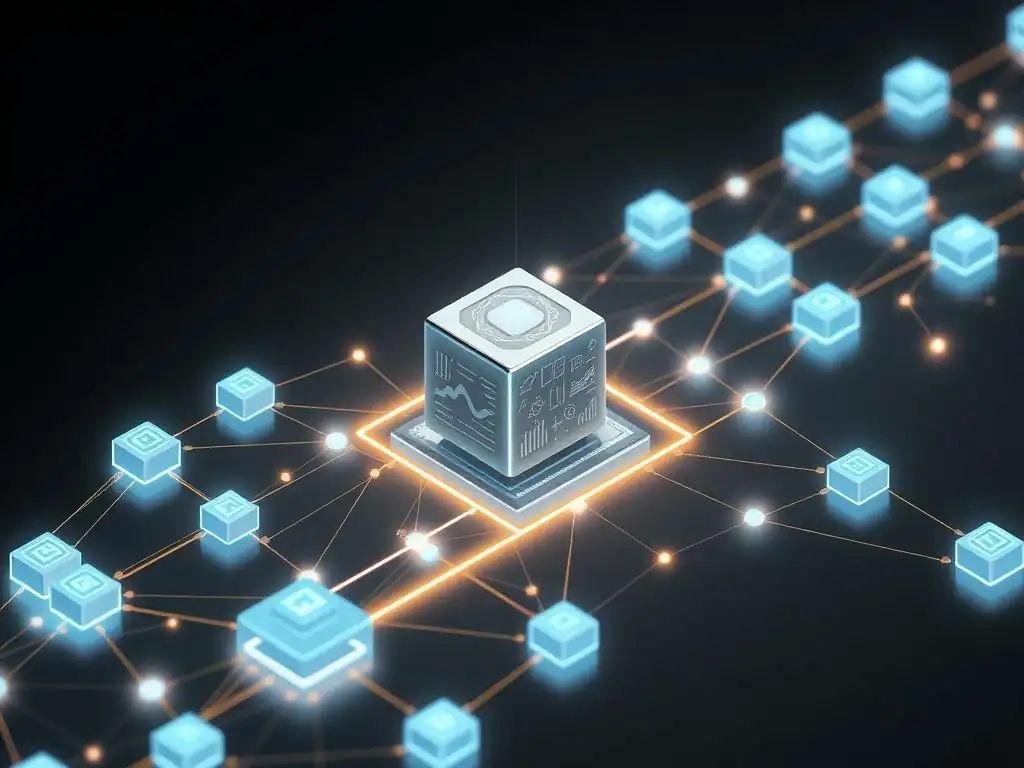
Selecting the Right Blockchain Platform for Specific Needs
Implementing blockchain data integrity solutions requires careful consideration of the underlying blockchain platform. There is no one-size-fits-all blockchain solution, and the choice of platform depends on the specific needs and requirements of the application. Key factors to consider include whether a permissioned or permissionless blockchain is more suitable. Permissionless blockchains, like Bitcoin and Ethereum, are public and decentralized, offering high levels of transparency and security but potentially lower scalability and transaction speeds. Permissioned blockchains, on the other hand, are private or consortium-based, offering greater control over access and potentially higher scalability but less transparency.
Other factors to consider include the blockchain platform's consensus mechanism, smart contract capabilities, scalability, security features, and development tools. For applications requiring high transaction throughput and low latency, platforms designed for enterprise use, such as Hyperledger Fabric or R3 Corda, might be more appropriate. For applications prioritizing decentralization and transparency, public blockchains might be preferred. Careful evaluation of these factors is crucial for selecting the right blockchain platform that aligns with the specific data integrity requirements and business objectives of the implementation.
Integrating AI Models into Blockchain Architecture: Technical Considerations
Integrating AI models into a blockchain architecture to enhance blockchain data integrity solutions presents several technical considerations. One key aspect is determining where and how AI models will interact with the blockchain. AI models can be integrated on-chain, off-chain, or in a hybrid approach. On-chain integration involves deploying AI logic directly within smart contracts, allowing for automated and decentralized data validation and decision-making. However, on-chain computation can be expensive and resource-intensive.
Off-chain integration involves running AI models outside the blockchain network and using the blockchain to store and verify the results of AI analysis or to trigger actions based on AI insights. This approach offers greater flexibility and scalability for AI processing but requires careful design of the interface between the AI system and the blockchain. Hybrid approaches combine on-chain and off-chain components, leveraging the strengths of both.
Technical considerations also include data privacy, data security, and the computational resources required for AI model training and deployment within the blockchain ecosystem. Secure APIs and data oracles are often used to facilitate communication and data exchange between AI systems and blockchain networks.
Data Governance and Compliance within Systems
Data governance and compliance are critical aspects of implementing blockchain data integrity solutions, particularly when dealing with sensitive data or operating in regulated industries. Blockchain's inherent transparency and immutability can enhance data governance by providing an auditable and verifiable record of data access and modifications. However, careful consideration must be given to data privacy regulations, such as GDPR and CCPA, which mandate specific requirements for data handling and user consent.
Implementing blockchain-based data integrity solutions requires establishing clear data governance policies and procedures that address data access control, data retention, and data security. Compliance with relevant regulations requires careful design of the blockchain system and the integration of privacy-enhancing technologies, such as zero-knowledge proofs or homomorphic encryption, where appropriate. Furthermore, organizations need to establish clear roles and responsibilities for data management and ensure ongoing monitoring and auditing of the system to maintain compliance and data integrity. A robust data governance framework is essential for building trustworthy and compliant blockchain data integrity solutions.
Challenges and Future Trends in Blockchain and AI-Driven Data Integrity
Addressing Scalability Limitations
Scalability remains a significant challenge for widespread adoption of blockchain data integrity solutions. Many existing blockchain platforms, particularly public blockchains, struggle to handle high transaction volumes and maintain fast transaction processing times. This scalability limitation can hinder the deployment of blockchain in applications requiring high throughput, such as large-scale supply chain management or high-frequency financial transactions.
Various approaches are being explored to address blockchain scalability, including layer-2 solutions, such as state channels and rollups, which process transactions off-chain and periodically commit them to the main blockchain. Sharding, another promising technique, divides the blockchain into smaller, more manageable shards, allowing for parallel transaction processing. Furthermore, advancements in consensus mechanisms, such as more efficient Proof-of-Stake variations, are also contributing to improved scalability. Overcoming scalability limitations is crucial for enabling the widespread adoption of blockchain and AI-driven data integrity solutions across diverse industries and applications.
Overcoming Data Privacy Concerns
Data privacy is another key challenge in the context of blockchain data integrity solutions. While blockchain offers transparency and immutability, these characteristics can raise concerns about the privacy of sensitive data stored on the blockchain. Public blockchains, in particular, are inherently transparent, meaning transaction data is publicly accessible. Even in permissioned blockchains, data privacy considerations are essential, especially when dealing with personal or confidential information.
To address data privacy concerns, various privacy-enhancing technologies are being integrated with blockchain, including zero-knowledge proofs, which allow for verifying information without revealing the underlying data, and homomorphic encryption, which enables computations on encrypted data. Differential privacy techniques can also be used to anonymize datasets while preserving their utility for analysis. Furthermore, regulatory frameworks, such as GDPR, are driving the development of privacy-preserving blockchain solutions that comply with data protection requirements. Balancing data transparency and data privacy is a critical challenge that needs to be addressed for the broader adoption of blockchain and AI-driven data integrity solutions.
The Future of Decentralized Data Validation: Convergence
The future of blockchain data integrity solutions is likely to be characterized by increasing convergence and sophistication, particularly in the area of decentralized data validation. As blockchain and AI technologies mature, we can expect to see more integrated and automated data validation processes. Decentralized autonomous organizations (DAOs) could play a greater role in governing data validation and ensuring data integrity in blockchain networks.
AI-powered oracles, which are external data sources that provide information to smart contracts, will become more sophisticated and reliable, enhancing the accuracy and trustworthiness of data used in blockchain applications. The convergence of blockchain, AI, and the Internet of Things (IoT) will also lead to new possibilities for real-time data validation and integrity monitoring in various industries.
For example, IoT sensors can collect data from physical assets, which is then validated and recorded on a blockchain using AI-powered analytics. This convergence will drive the evolution of decentralized data validation towards more efficient, secure, and autonomous systems, further solidifying the role of blockchain and AI as cornerstones of data security and trust.
Case Studies: Real-World Examples
Case Study 1: Pharmaceutical Supply Chain Tracking
A leading pharmaceutical company, let's call it PharmaTrust, implemented a blockchain data integrity solution to track its drugs throughout the supply chain, from manufacturing to dispensing. PharmaTrust partnered with a blockchain platform provider specializing in supply chain solutions. The solution utilizes a permissioned blockchain to ensure data privacy and control, involving key stakeholders such as manufacturers, distributors, pharmacies, and regulatory bodies. Each batch of drugs is assigned a unique identifier and tracked at every stage of the supply chain, recording information such as manufacturing date, batch number, location, temperature, and custody transfers on the blockchain.
AI-powered sensors are integrated to monitor temperature and humidity conditions during transit, ensuring drugs are stored within optimal parameters. Machine learning algorithms analyze the supply chain data for anomalies, such as deviations from expected routes or temperature excursions, triggering alerts for potential quality issues or counterfeit products. This blockchain-based tracking system has significantly improved PharmaTrust's supply chain transparency, reduced the risk of counterfeit drugs entering the market, and enhanced patient safety. The company reported a 20% reduction in supply chain discrepancies and a 15% improvement in drug recall efficiency after implementing the solution.
Case Study 2: Secure Electronic Health Records Management
HealthSecure, a consortium of hospitals and healthcare providers, collaborated to develop a blockchain data integrity solution for managing electronic health records (EHRs). The consortium aimed to create a patient-centric and secure EHR system that addresses data privacy and interoperability challenges. They deployed a permissioned blockchain network where each participating hospital operates a node, ensuring data decentralization and control. Patient EHRs are stored on the blockchain, encrypted and accessible only with patient consent. Patients have full control over their data and can grant access to authorized healthcare providers.
AI is integrated to enhance data security and provide clinical decision support. Machine learning algorithms analyze EHR data to identify potential health risks, predict patient readmission rates, and personalize treatment recommendations. AI-powered anomaly detection systems monitor EHR access logs for suspicious activities, such as unauthorized access attempts, enhancing data security and patient privacy. HealthSecure reported a 30% reduction in data breaches and a 25% improvement in patient satisfaction with data control after implementing the blockchain-based EHR system, showcasing the benefits of blockchain data integrity solutions in healthcare.
Key Takeaways and Lessons Learned
These case studies highlight the practical benefits and lessons learned from implementing blockchain data integrity solutions in real-world scenarios. Key takeaways include the importance of choosing the right blockchain platform based on specific application requirements, the value of integrating AI to enhance data analysis and anomaly detection, and the critical role of data governance and compliance in ensuring data privacy and regulatory adherence. Both case studies demonstrate that blockchain and AI, when synergistically applied, can significantly improve data integrity, security, and efficiency across diverse industries.
Furthermore, these examples underscore the importance of collaboration and stakeholder engagement in successful blockchain implementations. The pharmaceutical supply chain case highlights the need for collaboration across the supply chain ecosystem, while the healthcare EHR case emphasizes the value of consortium-based approaches. These real-world examples provide valuable insights for organizations considering adopting blockchain and AI-driven data integrity solutions, demonstrating the transformative potential and practical feasibility of these technologies.
Conclusion: The Transformative Potential
Recap of Key Benefits: Security, Transparency, and Efficiency
The synergistic application of blockchain and AI offers a transformative approach to enhancing data integrity. Blockchain data integrity solutions leverage the inherent security, transparency, and immutability of blockchain technology, while AI augments these capabilities with advanced data analysis, anomaly detection, and automation. Key benefits include enhanced data security through cryptographic protection and decentralized architecture, improved data transparency and auditability through blockchain's immutable ledger, and increased operational efficiency through AI-powered automation and optimization.
These combined technologies address critical data integrity challenges across various industries, from ensuring supply chain authenticity and securing healthcare records to preventing financial fraud and improving data governance. The case studies presented demonstrate the practical impact of these solutions, showcasing tangible improvements in security, efficiency, and trust. The convergence of blockchain and AI represents a significant advancement in data management, providing organizations with powerful tools to safeguard data integrity in an increasingly data-driven and interconnected world.
The Importance of Continued Innovation
Continued innovation in both blockchain and AI technologies is crucial to unlock the full potential of blockchain data integrity solutions. Ongoing research and development efforts are needed to address scalability limitations, enhance data privacy, and improve the interoperability of blockchain platforms. Further advancements in AI algorithms, particularly in areas like federated learning and explainable AI, will also contribute to more robust and trustworthy data integrity solutions.
The blockchain and AI landscape is rapidly evolving, with new protocols, tools, and applications emerging continuously. Organizations need to stay abreast of these developments and embrace a culture of innovation to leverage the latest advancements in blockchain data integrity solutions. Investing in research, development, and talent acquisition in these areas will be essential for organizations seeking to maintain a competitive edge and build resilient, secure, and data-centric operations in the future.
The Future Outlook: Cornerstones of Data Security
Looking ahead, blockchain and AI are poised to become cornerstones of data security and trust in the digital age. As data becomes increasingly valuable and vulnerable, the need for robust data integrity solutions will only intensify. The decentralized and intelligent nature of blockchain and AI makes them ideally suited to address these challenges, providing a foundation for building secure, transparent, and trustworthy data ecosystems.
The future outlook for blockchain data integrity solutions is promising, with continued adoption across industries and increasing integration into critical infrastructure. As these technologies mature and become more accessible, they will empower organizations to build more resilient and secure systems, fostering greater trust and confidence in the digital economy. Blockchain and AI are not just technologies; they represent a paradigm shift in how we approach data security and integrity, paving the way for a more secure and trustworthy digital future.
Frequently Asked Questions
What is the core benefit of using blockchain and AI together for data integrity?
The core benefit is enhancing data security and reliability. AI helps detect anomalies and vulnerabilities, while blockchain provides an immutable and auditable record of data changes.
How does blockchain contribute to data integrity in a system also utilizing AI?
Blockchain's distributed and tamper-proof nature ensures that data remains unaltered. AI can be used to validate data inputs before they are permanently recorded on the blockchain.
What are some specific examples of "Blockchain data integrity solutions" in enterprise applications?
Examples include supply chain tracking, where blockchain ensures the origin and movement of goods are verifiable, and healthcare records, guaranteeing patient data is unaltered and securely accessible.
What are the potential regulatory challenges associated with implementing blockchain and AI for data integrity?
Regulatory challenges often involve data privacy compliance, particularly regarding GDPR and similar laws, and ensuring AI algorithms don't introduce bias or discrimination in data validation processes.
What is the future outlook for "Blockchain data integrity solutions" and the role of AI within them?
The future involves greater integration of AI for enhanced threat detection and automated data validation, leading to more robust and scalable blockchain-based data integrity systems.
Final Reflection: Securing the Future with Intelligent Integrity
The journey through the intricate landscapes of blockchain and AI reveals a powerful synergy, one that is increasingly vital in today's data-driven world. The convergence of these technologies offers not just enhanced security, but a fundamental shift in how we perceive and trust data integrity. As we grapple with ever-growing volumes of information, the solutions explored in this article become less of a futuristic concept and more of a present-day necessity.
The impact of blockchain and AI on data integrity is already being felt across various sectors, from supply chain management to healthcare. The potential for increased transparency and accountability is transformative, offering a pathway to rebuild trust in systems often plagued by opacity and manipulation. This isn't just about technology; it's about empowering individuals and organizations to take control of their data narrative. Data is the new oil, but only if it's refined with integrity.
This quote encapsulates the essence of our exploration, highlighting the critical need for robust and reliable data integrity solutions.
As you consider the implications of blockchain and AI for data integrity, I encourage you to reflect on your own role in this evolving landscape. How can you leverage these technologies to build more trustworthy systems? How can you contribute to a future where data is not just abundant, but also reliable and secure? The power to shape this future lies within each of us. Embrace the challenge, explore the possibilities, and become a champion of intelligent integrity.
Ignite Your Data Revolution!
Thank you for exploring the world of blockchain and AI! We hope this technical overview has highlighted how these technologies can enhance data integrity. Ready to apply this knowledge and transform your data practices?
Here are some next steps:
- Start a small project this week using blockchain or AI tools to experiment and learn. This could be creating a simple smart contract or analyzing data with an AI platform.
- Join the conversation! Share your most insightful moment from the article on social media, mentioning us at @BlockchainTrendsOrg. Let’s build a community dedicated to maintaining data integrity!
- Discover something new! Investigate how blockchain and AI are used in industries different from your own—you might find the next big breakthrough!
What is the most important data integrity challenge you feel inspired to address with blockchain and AI? Share your thoughts in the comments below!
Leave a Reply