
Article Authenticity: Leveraging Blockchain for Provenance in Journalism and Publishing

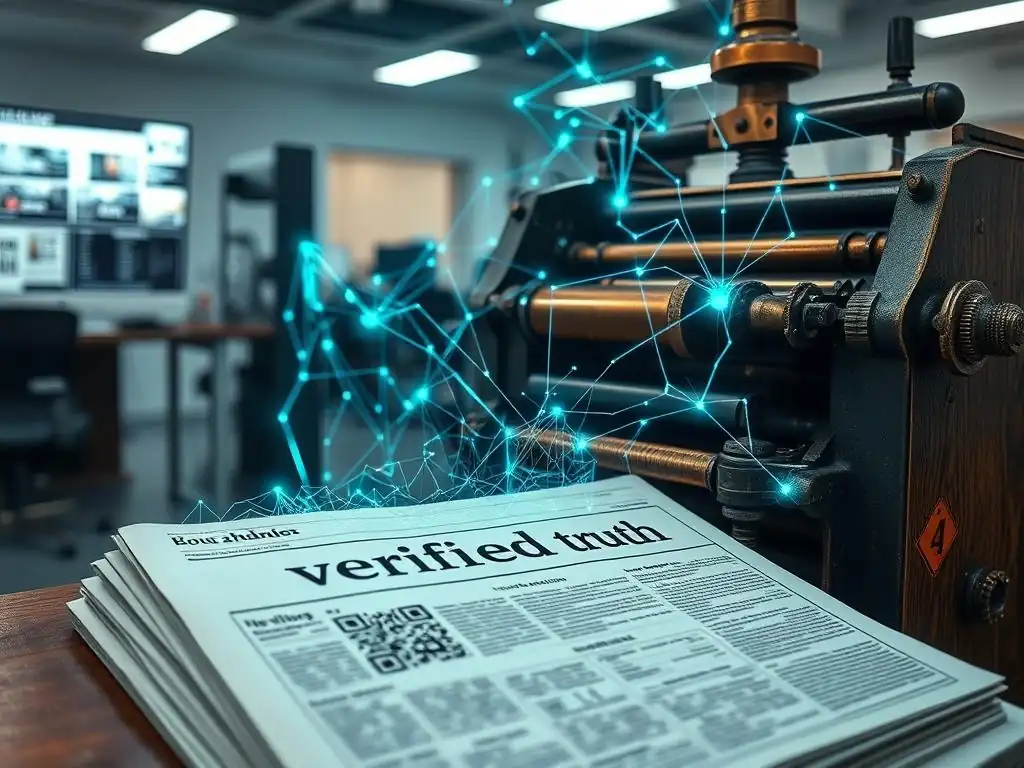
Welcome to Blockchain Trends, your guide to understanding the revolutionary impact of blockchain beyond the hype. Are you ready to uncover how this technology is reshaping industries?
In this article, we dive deep into an exciting application: Blockchain Provenance Journalism Publishing. Imagine a world where the authenticity of news is guaranteed, and misinformation becomes a relic of the past. Curious how blockchain is being used to establish irrefutable article provenance and transform journalism? Keep reading to explore the innovative solutions and challenges that lie ahead.
Article Authenticity: Leveraging Blockchain for Provenance in Journalism and Publishing
- Introduction: The Growing Need for Provenance in Journalism and Publishing
- Understanding Blockchain Provenance and its Applications in Content
- Blockchain Provenance in Journalism: Restoring Trust and Combating Fake News
- Blockchain Provenance in Publishing: Protecting Intellectual Property and Author Rights
- How Blockchain Enhances Transparency in the Content Supply Chain
- Benefits of Implementing Blockchain Provenance for Publishers and Readers
- Challenges and Considerations for Blockchain Adoption in Media
- Future Trends in Blockchain Provenance for Content Creation
- Conclusion: Blockchain as a Cornerstone for Trustworthy Journalism and Publishing
-
Frequently Asked Questions
- How can blockchain technology help establish article authenticity in journalism?
- What is "provenance" in the context of blockchain and journalism?
- What are some potential enterprise applications of blockchain in the publishing industry, beyond just verifying authenticity?
- How might blockchain impact the regulation of journalism and publishing?
- What does the future of decentralized systems look like for journalism and publishing, considering the adoption of blockchain?
- Final Reflection: Embracing Trust in a Decentralized World
- Unveil the Future of Trust: Secure Journalism Today!
Introduction: The Growing Need for Provenance in Journalism and Publishing
The Crisis of Trust in Media: Misinformation and Disinformation
The contemporary media landscape is grappling with an unprecedented crisis of trust. Fuelled by the proliferation of misinformation and disinformation, public confidence in traditional news sources and publishing houses has eroded significantly. Studies from institutions like the Reuters Institute for the Study of Journalism consistently show declining trust in news, with some countries experiencing levels as low as 26%.
This erosion is exacerbated by the speed and scale at which false narratives can spread online, often amplified through social media platforms and echo chambers. The ease of manipulating digital content, from simple text alterations to sophisticated deepfakes, further contributes to this challenging environment, making it increasingly difficult for audiences to discern credible information from fabricated content.
This crisis is not just a matter of public perception; it has tangible consequences for societal discourse and democratic processes. Misinformation campaigns can sway public opinion on critical issues, influence elections, and even incite social unrest. For journalism and publishing, the stakes are particularly high. If audiences lose faith in their ability to deliver accurate and reliable information, the very foundation of these industries is threatened. The need for solutions that can restore and reinforce trust in media content has become paramount, driving the exploration of innovative technologies like blockchain to address the root causes of this crisis.
Why Blockchain Provenance Matters for Content Integrity
In this climate of distrust, the concept of provenance—the documented history and origin of something—becomes critically important for content integrity. Provenance allows audiences to understand the journey of a piece of information, from its creation to its consumption. Knowing who created the content, when it was created, and whether it has been altered along the way are essential factors in assessing its credibility and trustworthiness. Without clear provenance, it becomes nearly impossible to distinguish authentic journalism and publishing from manipulated or fabricated content, further fueling the cycle of misinformation.
Blockchain technology offers a powerful and novel approach to establishing and verifying provenance in the digital realm. Its inherent characteristics, such as immutability and transparency, make it uniquely suited to track and secure the history of content. By leveraging blockchain for provenance, journalists and publishers can provide verifiable proof of the authenticity and integrity of their work.
This capability is not merely about combating fake news; it's about fundamentally rebuilding trust in media by giving audiences the tools to independently verify the information they consume. Blockchain provenance, therefore, represents a proactive step towards fostering a more informed and discerning public.
Overview of Blockchain's Role in Content Creation
Blockchain technology, initially recognized for its role in cryptocurrencies, is now being recognized for its broader applications across various industries, including content creation and media. Its decentralized and distributed nature, coupled with cryptographic security, allows for the creation of tamper-proof records and transparent systems. In the context of content creation, blockchain can act as a digital ledger, recording key information about a piece of content at each stage of its lifecycle. This can include authorship, timestamps, modifications, and distribution history, all securely stored and verifiable by anyone with access to the blockchain.
The integration of blockchain into content creation workflows offers a paradigm shift in how content authenticity is managed and perceived. Instead of relying on centralized authorities or proprietary systems, blockchain empowers a decentralized approach where provenance is inherent in the content itself. This has significant implications for journalism and publishing, enabling them to establish a new standard of transparency and accountability. By embedding provenance information directly into the content through blockchain, these industries can take a proactive stance against misinformation and empower audiences with the ability to validate the information they encounter.
Understanding Blockchain Provenance and its Applications in Content
What is Blockchain Provenance? A Definition
Blockchain provenance, in the context of content, refers to the application of blockchain technology to establish and verify the origin, history, and ownership of digital assets. It's essentially a digital record-keeping system that provides an immutable and transparent audit trail for content, from its creation to its various iterations and uses. Think of it as a digital birth certificate and historical logbook for a piece of content, securely recorded and accessible to authorized parties. This definition extends beyond simple authorship to encompass the entire lifecycle of the content, including any modifications, distribution channels, and licensing agreements.
Unlike traditional provenance methods that often rely on centralized databases and are susceptible to manipulation, blockchain provenance leverages the inherent security and decentralization of blockchain networks. This means that once information about content provenance is recorded on the blockchain, it becomes virtually impossible to alter or delete, ensuring the integrity of the historical record. This definition highlights the crucial distinction of blockchain provenance: it is not just about tracking content; it's about creating a verifiable and trustworthy record of its entire journey, providing irrefutable proof of its authenticity and history.
How Blockchain Technology Ensures Content Authenticity
Blockchain technology ensures content authenticity through a combination of cryptographic techniques, decentralization, and consensus mechanisms. When content provenance information is recorded on a blockchain, it is cryptographically hashed and linked to the previous block in the chain, creating an immutable and tamper-proof record. This cryptographic hashing ensures that any alteration to the content or its provenance data would be immediately detectable, as it would change the hash and break the chain of linked blocks.
Furthermore, the decentralized nature of blockchain networks means that the provenance information is not stored in a single, vulnerable location, but rather distributed across multiple nodes. This distributed storage makes it extremely difficult for malicious actors to tamper with the data, as they would need to compromise a vast majority of the network simultaneously – a computationally infeasible task in most established blockchains.
Consensus mechanisms, such as Proof-of-Work or Proof-of-Stake, further enhance security by requiring multiple nodes to validate each transaction before it is added to the blockchain, ensuring the integrity and accuracy of the provenance record. This multi-layered approach to security is what makes blockchain a robust solution for ensuring content authenticity in journalism and publishing.
Key Features of Blockchain Provenance Solutions: Immutability, Transparency, and Traceability
Blockchain provenance solutions are characterized by three key features: immutability, transparency, and traceability. Immutability, as discussed, is the cornerstone of blockchain security, ensuring that once provenance information is recorded, it cannot be altered or deleted. This feature provides a permanent and reliable record of content history, crucial for establishing trust and combating misinformation. Transparency, another core characteristic, stems from the open and distributed nature of many blockchains. While access to specific provenance data can be controlled through permissions, the underlying blockchain ledger is often auditable, allowing stakeholders to verify the integrity of the system and the recorded information.
Traceability is the ability to follow the complete journey of a piece of content from its origin to its current state. Blockchain provenance solutions enable detailed tracking of content creation, modifications, distribution, and ownership. For example, in journalism, this could mean tracing an article from its initial draft to its final published version, including details of the journalist, editors, and any revisions made along the way.
In publishing, it could track a book from manuscript submission to publication and distribution, including copyright information and licensing agreements. These three features – immutability, transparency, and traceability – collectively provide a powerful framework for establishing and verifying content authenticity, addressing the growing need for trust in media and publishing industries.
Blockchain Provenance in Journalism: Restoring Trust and Combating Fake News
The Problem of "Deepfakes" and Misleading Content in News
The rise of sophisticated technologies like "deepfakes" has significantly exacerbated the problem of misleading content in news. Deepfakes, AI-generated videos or images that convincingly depict individuals saying or doing things they never did, pose a serious threat to journalistic integrity and public trust. These fabricated media can be easily disseminated online, often indistinguishable from genuine content to the untrained eye.
For instance, in 2020, a deepfake video of a prominent political figure went viral, causing widespread confusion and highlighting the potential for manipulation during critical events like elections. The speed and reach of social media amplify the impact of deepfakes, making it challenging to debunk them before they cause significant damage to reputations and public discourse.
Beyond deepfakes, simpler forms of manipulated content, such as altered images and out-of-context quotes, also contribute to the spread of misinformation in news. These forms of misleading content, while less technologically advanced than deepfakes, are equally pervasive and damaging. The challenge for journalism is not only to identify and debunk fake news but also to proactively demonstrate the authenticity of their own reporting. Blockchain provenance offers a potential solution by providing tools to verify the origin and integrity of news content, helping to rebuild trust in a media landscape increasingly saturated with fabricated information.
Using Blockchain to Verify Journalist Identity and Source Credibility
Blockchain technology can be effectively used to verify journalist identity and source credibility, adding a layer of trust to news reporting. By issuing journalists with verifiable digital identities anchored on a blockchain, news organizations can provide a tamper-proof way for audiences to confirm the authenticity of the author of a news piece. This digital identity could contain verified credentials, professional affiliations, and even a history of published work, all immutably recorded on the blockchain. When a journalist publishes an article, their digital identity can be cryptographically linked to the content, providing verifiable proof of authorship.
Similarly, blockchain can be used to enhance source credibility. While protecting source anonymity remains crucial in many journalistic contexts, blockchain can facilitate a system for verifying the credentials or expertise of sources without necessarily revealing their identities. For example, anonymized credentials or certifications could be associated with a source on the blockchain, allowing news organizations to demonstrate that their sources possess relevant expertise without compromising their anonymity. This approach can help combat the issue of unreliable or fabricated sources often used to spread misinformation, strengthening the credibility of journalistic reporting and fostering greater trust with the audience.
Real-World Examples: Blockchain Initiatives in News Organizations
Several news organizations are already exploring and implementing blockchain initiatives to enhance content provenance and combat misinformation. One notable example is the BBC's experimentation with blockchain-based systems for tracking content and combating copyright infringement. While specific details of their implementations are proprietary, their public statements indicate an active interest in leveraging blockchain for content verification and rights management.
Another example is the Civil Media Foundation, which aimed to create a blockchain-based platform for journalism, although it faced operational challenges and eventually closed down. Despite its closure, Civil's initiative highlighted the potential of blockchain to create more transparent and accountable news ecosystems.
Furthermore, projects like the "News Provenance Project" are emerging, focusing specifically on developing open-source blockchain solutions for news provenance. These initiatives often involve collaborations between technology companies, news organizations, and academic institutions, aiming to create standardized protocols and tools for verifying news content using blockchain. While widespread adoption is still in its early stages, these real-world examples demonstrate a growing recognition within the news industry of the potential of blockchain to address the challenges of misinformation and restore trust in journalism through enhanced content provenance.
The Challenge of Copyright Infringement and Plagiarism in Digital Publishing
Digital publishing faces significant challenges related to copyright infringement and plagiarism. The ease with which digital content can be copied and distributed online makes it difficult for publishers and authors to protect their intellectual property rights. Traditional methods of copyright enforcement often prove to be cumbersome, expensive, and ineffective in the digital age.
Plagiarism, the act of presenting someone else's work or ideas as one's own, is also rampant in digital publishing, further undermining author rights and the integrity of published content. Studies estimate that copyright infringement costs the publishing industry billions of dollars annually, highlighting the significant financial and creative impact of this issue.
The decentralized and borderless nature of the internet exacerbates these challenges. Content can be easily copied and disseminated across geographical boundaries, making it difficult to track and enforce copyright violations across different jurisdictions. Furthermore, identifying and proving plagiarism in the vast ocean of online content can be a time-consuming and resource-intensive process. Blockchain technology offers a potential solution by providing a transparent and immutable record of content ownership and authorship, enabling more effective digital rights management and combating copyright infringement and plagiarism in digital publishing.
Implementing Blockchain for Digital Rights Management (DRM)
Blockchain technology can revolutionize Digital Rights Management (DRM) in publishing by creating a more transparent, efficient, and secure system for managing and protecting intellectual property. Traditional DRM systems often rely on centralized servers and proprietary technologies, which can be vulnerable to hacking and circumvention. Blockchain-based DRM, on the other hand, leverages the decentralized and cryptographic nature of blockchain to create a more robust and resilient system. By registering content and its associated rights on a blockchain, publishers can establish an immutable record of ownership and usage permissions.
This blockchain-based DRM can enable granular control over content access and distribution. For example, publishers could use smart contracts to automatically grant or revoke access to content based on pre-defined rules, such as subscription status or licensing agreements. This can streamline the process of managing digital rights, reducing administrative overhead and improving efficiency. Furthermore, the transparency of blockchain can provide authors and publishers with a clear and auditable record of content usage, ensuring fair compensation and protecting their intellectual property rights in the digital publishing landscape.
Smart Contracts for Automated Royalty Payments and Content Licensing
Smart contracts, self-executing contracts with the terms of the agreement directly written into code, are a powerful tool for automating royalty payments and content licensing in publishing through blockchain. Traditional royalty payment systems often involve complex manual processes, leading to delays and potential disputes between publishers and authors.
Smart contracts can automate this process by automatically triggering royalty payments when certain conditions are met, such as content usage or sales. For instance, when a digital book is sold through a blockchain-based platform, a smart contract can automatically distribute royalties to the author based on pre-agreed terms, ensuring timely and transparent payments.
Similarly, smart contracts can streamline content licensing by automating the process of granting and managing usage permissions. Publishers can define licensing terms within a smart contract, specifying permitted uses, duration, and geographical restrictions.
When a user wants to license content, they can interact with the smart contract, and if the conditions are met, the license is automatically granted, and payment is processed. This automated and transparent approach to royalty payments and content licensing can significantly reduce administrative costs, improve efficiency, and foster greater trust and fairness in the publishing ecosystem, while leveraging the provenance capabilities of blockchain to ensure the integrity of licensing agreements.
How Blockchain Enhances Transparency in the Content Supply Chain

Tracking Content Creation from Origin to Publication
Blockchain technology provides an unprecedented level of transparency in tracking content creation from its very origin to final publication. In traditional content supply chains, information about content creation and modifications is often fragmented and stored in disparate systems, making it difficult to trace the complete history of a piece of content. Blockchain, with its immutable ledger, offers a unified and transparent platform to record each stage of the content creation process. This can include timestamps of creation, authorship details, editorial contributions, and any modifications made throughout the workflow.
For example, in journalistic articles, blockchain can track the initial drafting of an article, its review by editors, fact-checking processes, and final publication details. In publishing, it can track the manuscript submission, editing stages, typesetting, and final publication of a book. This detailed tracking provides a comprehensive and verifiable audit trail of content creation, enhancing accountability and transparency throughout the content supply chain. This level of transparency is crucial for building trust in published content and demonstrating the rigor and integrity of the content creation process.
Verifying Content Modifications and Amendments
Blockchain's immutable nature makes it ideal for verifying content modifications and amendments, ensuring that any changes made to a piece of content are transparently recorded and auditable. In traditional systems, tracking modifications can be challenging, and there is always a risk of unauthorized or undocumented changes being made to content. With blockchain, every modification to a piece of content can be recorded as a new transaction on the chain, creating a clear and chronological history of all changes. This allows stakeholders to easily verify what changes were made, when they were made, and by whom.
This capability is particularly important in journalism and publishing, where accuracy and integrity are paramount. For instance, if an error is discovered in a published article and needs to be corrected, the correction can be recorded on the blockchain, along with the reason for the amendment and the timestamp. This provides a transparent record of the correction process, demonstrating accountability and commitment to accuracy.
Similarly, in publishing, any revisions made to a manuscript during the editorial process can be tracked on the blockchain, providing a clear audit trail of the content's evolution. This verification of content modifications enhances trust and confidence in the published material.
Building a Transparent Audit Trail for Journalistic Articles and Publications
By combining the capabilities of tracking content creation and verifying modifications, blockchain enables the construction of a comprehensive and transparent audit trail for journalistic articles and publications. This audit trail provides a complete and immutable record of the entire lifecycle of a piece of content, from its inception to its final published form. It includes information about authorship, timestamps, editorial contributions, modifications, and publication details, all securely recorded on the blockchain. This transparent audit trail serves as a powerful tool for demonstrating the provenance and integrity of published content.
This level of transparency is not only beneficial for readers seeking to verify the authenticity of information but also for publishers and journalists themselves. It provides them with a verifiable record of their work, protecting their intellectual property and demonstrating their commitment to journalistic ethics and accuracy. In an era of increasing scrutiny and distrust in media, a blockchain-based transparent audit trail can be a valuable asset for rebuilding trust and fostering greater accountability in journalism and publishing. This audit trail, built on blockchain provenance, offers a new standard for content integrity and transparency in the media landscape.
Benefits of Implementing Blockchain Provenance for Publishers and Readers
Enhancing Trust and Credibility with Verified Content
The most significant benefit of implementing blockchain provenance for publishers and readers is the enhancement of trust and credibility in content. In a media landscape plagued by misinformation and disinformation, verifiable content provenance becomes a crucial differentiator. By leveraging blockchain to provide immutable proof of content origin, authorship, and history, publishers can demonstrate their commitment to accuracy and transparency, fostering greater trust among their readership. Readers, in turn, are empowered to independently verify the authenticity of the information they consume, allowing them to make informed decisions based on credible sources.
This enhanced trust translates directly into increased credibility for publishers. In a competitive media market, credibility is a valuable asset. Publishers who adopt blockchain provenance can differentiate themselves by offering demonstrably trustworthy content, attracting and retaining readers who are increasingly discerning and skeptical of online information. This virtuous cycle of trust and credibility strengthens the relationship between publishers and readers, creating a more sustainable and healthy media ecosystem.
Improving Content Discovery and Search Engine Ranking
Implementing blockchain provenance can also indirectly improve content discovery and search engine ranking for publishers. Search engines like Google are increasingly prioritizing authoritative and trustworthy content in their rankings. While blockchain provenance is not a direct ranking factor currently, it can contribute to signals of trustworthiness that search engines consider. For example, verified authorship and content history can be seen as indicators of content quality and reliability. Publishers who can demonstrate the provenance of their content through blockchain may indirectly benefit from improved search engine visibility.
Furthermore, blockchain provenance can facilitate new forms of content discovery. Decentralized content platforms built on blockchain can leverage provenance data to curate and recommend content based on verified sources and authorship. This can lead to more relevant and trustworthy content recommendations for readers, improving content discoverability beyond traditional search engine algorithms. As blockchain technology matures and becomes more integrated into the web ecosystem, its potential to enhance content discovery and search engine ranking is likely to grow further.
Empowering Readers with Access to Verifiable Information
Ultimately, blockchain provenance empowers readers by providing them with direct access to verifiable information about the content they consume. In traditional media models, readers often rely on the reputation of the publisher or the perceived authority of the source to assess credibility. Blockchain provenance shifts this paradigm by giving readers the tools to independently verify the authenticity and history of content. This empowers them to become more active and discerning consumers of information, rather than passive recipients.
By providing access to provenance data, blockchain fosters media literacy and critical thinking skills. Readers are encouraged to question the origin and history of information, promoting a more informed and engaged citizenry. This empowerment is particularly crucial in combating misinformation and disinformation, as readers equipped with verification tools are less likely to be misled by fabricated content. Blockchain provenance, therefore, represents a significant step towards a more democratic and trustworthy information ecosystem, where readers are empowered to make informed decisions based on verifiable facts.
Challenges and Considerations for Blockchain Adoption in Media
Scalability and Performance of Blockchain Networks
One of the primary challenges for blockchain adoption in media is the scalability and performance of blockchain networks. Many existing blockchain platforms, particularly those using Proof-of-Work consensus mechanisms, face limitations in transaction throughput and speed. In the context of media, where large volumes of content are created and distributed daily, scalability is crucial. If blockchain networks cannot handle the transaction load required to record provenance information for all published content, adoption will be limited.
While newer blockchain technologies and scaling solutions, such as layer-2 networks and sharding, are emerging to address these limitations, they are still under development and may not yet be mature enough for widespread media adoption. Furthermore, the performance characteristics of different blockchain platforms vary significantly, and publishers need to carefully consider these factors when choosing a blockchain solution for provenance. Ensuring that the chosen blockchain network can scale to meet the demands of the media industry is a critical consideration for successful adoption.
Regulatory Landscape and Compliance Issues
The regulatory landscape surrounding blockchain technology is still evolving and varies significantly across jurisdictions. This regulatory uncertainty poses challenges for media organizations considering blockchain adoption. Issues such as data privacy, intellectual property rights, and cross-border data transfer need to be carefully considered in the context of blockchain provenance. For example, regulations like GDPR in Europe have implications for how personal data is stored and processed on blockchain networks, even if pseudonymized.
Publishers need to ensure that their blockchain provenance solutions comply with relevant regulations in the jurisdictions where they operate and where their content is consumed. This may require careful legal analysis and potentially adaptations to blockchain implementations to ensure compliance. Furthermore, the lack of standardized regulations across different countries can create complexity and uncertainty for media organizations with global reach. Navigating the evolving regulatory landscape is a key challenge for blockchain adoption in media, requiring ongoing monitoring and adaptation to ensure compliance.
User Adoption and Education for Blockchain-Based Platforms
Another significant challenge is user adoption and education for blockchain-based platforms and provenance verification tools. Blockchain technology is still relatively new to many users, and understanding its concepts and functionalities can be challenging. For blockchain provenance to be effective, both publishers and readers need to adopt and utilize blockchain-based solutions. Publishers need to integrate blockchain into their content creation and publishing workflows, and readers need to be educated on how to use provenance verification tools to assess content authenticity.
This requires significant effort in user education and interface design. Blockchain-based platforms need to be user-friendly and intuitive, abstracting away the technical complexities of blockchain technology. Education initiatives are needed to raise awareness among both publishers and readers about the benefits of blockchain provenance and how to use it effectively. Overcoming the user adoption hurdle and ensuring widespread understanding of blockchain provenance is crucial for its successful implementation in the media industry.
Future Trends in Blockchain Provenance for Content Creation
Integration with AI and Machine Learning for Content Analysis
The future of blockchain provenance for content creation is likely to see increasing integration with Artificial Intelligence (AI) and Machine Learning (ML) technologies. AI and ML can enhance blockchain provenance solutions in several ways, particularly in content analysis and automated verification. For example, AI algorithms can be used to analyze content metadata and identify potential discrepancies or anomalies that might indicate manipulation or fabrication. This can automate the process of content verification, making it more efficient and scalable.
Furthermore, AI can be used to analyze content similarity and detect plagiarism more effectively. By combining AI-powered content analysis with blockchain's immutable record of provenance, publishers can create robust systems for ensuring content originality and protecting intellectual property rights. The integration of AI and ML with blockchain provenance has the potential to significantly enhance the capabilities of content verification and authenticity assurance in the future.
Decentralized Content Platforms and Autonomous Journalism
Blockchain technology is also paving the way for the emergence of decentralized content platforms and autonomous journalism models. Decentralized platforms, built on blockchain, can offer alternatives to traditional centralized media platforms, empowering content creators and fostering greater transparency and censorship resistance. These platforms can leverage blockchain provenance to ensure content authenticity and reward content creators directly through cryptocurrency-based payment systems.
Autonomous journalism, a concept enabled by blockchain and smart contracts, envisions news organizations operating in a more decentralized and transparent manner. Smart contracts can automate various aspects of journalistic workflows, such as content distribution, fact-checking, and royalty payments, reducing reliance on centralized intermediaries. Blockchain provenance is a fundamental building block for these decentralized and autonomous models, providing the necessary infrastructure for content verification and trust in a distributed media ecosystem.
The Role of NFTs in Content Ownership and Monetization
Non-Fungible Tokens (NFTs), unique digital assets recorded on a blockchain, are emerging as a significant trend in content ownership and monetization, particularly in conjunction with blockchain provenance. NFTs can be used to represent ownership of digital content, such as articles, images, videos, or music, providing a verifiable and tradable proof of ownership. When combined with blockchain provenance, NFTs can create a comprehensive system for managing content ownership, provenance, and monetization.
For example, journalists or publishers can mint NFTs for their content, establishing clear and verifiable ownership on the blockchain. These NFTs can then be traded or licensed, allowing content creators to monetize their work directly and retain greater control over their intellectual property. Blockchain provenance ensures the authenticity and history of the content associated with the NFT, adding value and trust to the digital asset. The integration of NFTs with blockchain provenance is likely to play an increasingly important role in shaping the future of content ownership and monetization in the digital age.
Conclusion: Blockchain as a Cornerstone for Trustworthy Journalism and Publishing
Recap of Blockchain's Potential for Content Provenance
Blockchain technology holds immense potential as a cornerstone for establishing content provenance in journalism and publishing. Its inherent features of immutability, transparency, and traceability provide a robust framework for verifying content authenticity, combating misinformation, and restoring trust in media. From verifying journalist identities and source credibility to protecting intellectual property rights and automating royalty payments, blockchain provenance offers a wide range of applications that can transform the media landscape. While challenges remain in terms of scalability, regulation, and user adoption, the benefits of blockchain provenance for enhancing trust and transparency are undeniable.
The media industry is at a critical juncture, facing a growing crisis of trust fueled by misinformation and disinformation. Blockchain provenance offers a viable and powerful solution to address this crisis. We encourage news organizations, publishers, technology developers, and policymakers to actively explore and adopt blockchain solutions for content provenance. Further research, development, and collaboration are needed to overcome existing challenges and realize the full potential of blockchain in fostering a more trustworthy and transparent media ecosystem. The time to act is now to build a future where audiences can confidently rely on verified and authentic information.
The Future of Media: A Decentralized and Trustworthy Ecosystem
The future of media, empowered by blockchain provenance, envisions a decentralized and trustworthy ecosystem. In this future, content authenticity is verifiable, intellectual property rights are protected, and readers are empowered with access to credible information. Blockchain technology can facilitate a shift away from centralized and opaque media models towards more transparent and accountable systems.
While the transition may take time and effort, the potential rewards – a more informed public and a more sustainable and trustworthy media landscape – are significant. By embracing blockchain provenance, journalism and publishing can pave the way for a future where trust and authenticity are once again the hallmarks of quality media.
Frequently Asked Questions
How can blockchain technology help establish article authenticity in journalism?
Blockchain provides a tamper-proof and transparent record of an article's creation and modification. This allows for verifying the original source and tracking any changes, enhancing trust.
What is "provenance" in the context of blockchain and journalism?
Provenance refers to the documented history and ownership of an article. Blockchain enables establishing a clear and verifiable record of an article's origin, authorship, and any subsequent edits.
What are some potential enterprise applications of blockchain in the publishing industry, beyond just verifying authenticity?
Beyond authenticity, blockchain can facilitate micropayments for content, rights management for authors, and decentralized content distribution networks, reducing reliance on intermediaries.
How might blockchain impact the regulation of journalism and publishing?
Blockchain could lead to new regulatory frameworks addressing issues like digital identity, data privacy, and content ownership, as well as potentially streamlining copyright enforcement.
What does the future of decentralized systems look like for journalism and publishing, considering the adoption of blockchain?
The future may involve decentralized news platforms, where journalists and publishers have more control over their content and revenue, fostering greater transparency and reduced censorship.
Final Reflection: Embracing Trust in a Decentralized World
The exploration of blockchain's potential to revolutionize journalism and publishing, as detailed in this article, is not merely a theoretical exercise; it's a critical response to the erosion of trust in information sources that plagues our digital age. The promise of blockchain provenance offers a tangible solution, a way to re-establish verifiable authenticity and combat the spread of misinformation that undermines informed public discourse.
The impact of this technology extends far beyond the newsroom. It touches upon the very fabric of our society, influencing how we perceive truth and engage with information. The ability to trace the origin and evolution of a piece of content, ensuring its integrity from creation to consumption, is paramount in a world saturated with manipulated narratives. The truth is rarely pure and never simple.
- Oscar Wilde. This quote resonates deeply, reminding us that uncovering and preserving the truth requires diligent effort and robust tools, precisely what blockchain provenance offers.
As we stand at the cusp of this technological shift, I invite you to consider your role in shaping a more transparent and trustworthy information ecosystem. Embrace the potential of blockchain provenance, not just as a technological solution, but as a catalyst for critical thinking and responsible engagement with the information that shapes our world. Let us collectively strive to build a future where truth prevails, and authenticity is not a privilege, but a fundamental right.
Unveil the Future of Trust: Secure Journalism Today!
Thank you for exploring how blockchain can revolutionize trust and authenticity in journalism. We hope this article has provided you with valuable insights into the future of verifiable content. Now, it's time to put that knowledge into action!
You can help create a more trustworthy media landscape by:
- Championing Provenance: Support platforms that utilize blockchain technology to verify the origin of articles and share their content to promote transparency.
- Deepen your understanding: Investigate innovative blockchain solutions aimed at combating misinformation and authenticating content, then share your discoveries with your network.
- Join the Conversation: Engage in discussions about blockchain’s role in journalism on forums and social media, contributing your perspective to this important movement.
What steps will you take to help build a more transparent and verifiable information ecosystem? Share your ideas in the comments below!
Leave a Reply