
How Blockchain is Influencing the Future of Content Curation


Welcome to Blockchain Trends, your go-to source for understanding the real impact of blockchain technology beyond the headlines. Are you ready to discover how this groundbreaking technology is revolutionizing content? This week, we dive deep into blockchain content curation strategies, exploring how they're reshaping the media landscape and empowering creators. Intrigued? Keep reading to uncover the future of decentralized content!
How Blockchain is Influencing the Future of Content Curation
- Introduction: The Convergence of Blockchain and Content Curation
- The Current State of Content Curation: Challenges and Opportunities
- Blockchain Content Curation Strategies: A New Paradigm
- Key Blockchain Technologies Enabling Content Curation
- Use Cases of Blockchain in Content Curation
- Benefits of Blockchain Content Curation
- Challenges and Limitations of Blockchain Content Curation
- The Future of Content Curation with Blockchain
- Implementing Blockchain Content Curation: A Practical Guide
- Conclusion: Empowering Content Creators and Consumers with Blockchain
-
Frequently Asked Questions
- How is blockchain technology impacting content curation?
- What are some benefits of using blockchain for content curation?
- Can blockchain help combat misinformation in content curation?
- What are some real-world applications of blockchain in content curation?
- What are the potential challenges of using blockchain for content curation?
- Final Reflection: Decentralizing the Information Landscape
- Unlock the Future: Start Curating with Blockchain Today!
Introduction: The Convergence of Blockchain and Content Curation
Addressing Bias and Centralization in Content Curation
Content curation in the digital age is predominantly controlled by centralized entities. These platforms, often driven by proprietary algorithms, dictate what information users see, creating filter bubbles and echo chambers. Studies have shown that algorithms on platforms like Facebook and YouTube can reinforce existing biases, leading to skewed perceptions of reality.
For example, a Pew Research Center study in 2020 revealed that 64% of Americans believe social media companies have too much control over the news people see. This centralization not only raises concerns about algorithmic bias but also about censorship and the lack of transparency in content ranking and moderation processes. Blockchain technology offers a compelling alternative by decentralizing content curation, potentially mitigating these issues and fostering a more open and equitable information ecosystem.
Blockchain Trends: Exploring Decentralized Media and Web3
The rise of Web3 and decentralized media is intrinsically linked to the transformative potential of blockchain. Blockchain's inherent characteristics – transparency, immutability, and decentralization – are ideal for reshaping how content is curated and consumed. Current trends indicate a growing user demand for greater control over their data and online experiences.
According to a report by ConsenSys in 2021, interest in Web3 technologies surged by over 200% in the past year, signaling a significant shift towards decentralized solutions. This trend is particularly relevant to content curation, where blockchain can empower users to participate more directly in the process, moving away from the top-down approach of centralized platforms. Blockchain content curation strategies are emerging as a key component of this decentralized media landscape, promising to revolutionize how information is discovered, verified, and valued online.
The Current State of Content Curation: Challenges and Opportunities
Centralized Platforms: Algorithmic Bias and Data Privacy Concerns
Centralized content curation platforms, while offering convenience and scale, are fraught with challenges. Algorithmic bias is a pervasive issue, often unintentionally amplifying certain viewpoints while suppressing others. For instance, research from Northeastern University in 2019 demonstrated how YouTube's recommendation algorithm can lead users down "rabbit holes" of increasingly extreme content. Data privacy is another significant concern.
Centralized platforms collect vast amounts of user data to personalize content feeds, raising ethical questions about data ownership and exploitation. Cambridge Analytica's scandal, involving the misuse of data from millions of Facebook users, serves as a stark reminder of the risks associated with centralized data control. These challenges highlight the urgent need for alternative content curation models that prioritize user autonomy and data privacy.
The Spread of Misinformation: Combating Fake News in the Digital Age
The rapid dissemination of misinformation and fake news is a critical challenge in the current digital age. Centralized platforms often struggle to effectively combat the spread of false information, with algorithms sometimes inadvertently amplifying sensationalist or misleading content. A study by MIT in 2018 found that false news stories spread six times faster on Twitter than true stories.
This issue is exacerbated by the lack of transparency in content moderation policies and the difficulty in verifying the authenticity of information online. Blockchain content curation strategies offer potential solutions by enabling decentralized fact-checking mechanisms and creating tamper-proof records of content provenance. By empowering communities to collaboratively verify information, blockchain can contribute to building a more trustworthy and reliable online information environment.
Blockchain Content Curation Strategies: A New Paradigm
Decentralized Content Verification: Community-Driven Fact-Checking
Decentralized content verification, powered by blockchain, introduces a paradigm shift in how online information is assessed for accuracy. Instead of relying on centralized fact-checking organizations, blockchain enables community-driven fact-checking mechanisms. Platforms like Civil, for example, utilize blockchain to create a decentralized news registry where journalists and the community can verify the integrity of news articles.
This approach leverages the wisdom of the crowd and distributes the responsibility of fact-checking across a network of participants. By incentivizing accurate reporting and flagging misinformation through tokenized rewards and reputation systems, blockchain content curation strategies can foster a more reliable and transparent information ecosystem.
Tokenized Incentives: Rewarding Curators and Creators for Quality Content
Tokenized incentive systems are a cornerstone of blockchain content curation strategies, offering a novel approach to rewarding both content creators and curators for their contributions. Platforms utilizing blockchain can distribute tokens to users who contribute valuable content, accurately curate information, or participate in content verification processes. Steemit, a blockchain-based social media platform, pioneered this model by rewarding users with cryptocurrency for posting and curating content.
This system incentivizes the creation and discovery of high-quality content, as users are directly compensated for their efforts. Tokenized incentives can also foster a more equitable distribution of value within the content ecosystem, shifting away from the platform-centric model to a creator and curator-centric one.
Smart Contracts: Automating Content Licensing and Revenue Sharing
Smart contracts, self-executing agreements encoded on the blockchain, offer powerful tools for automating content licensing and revenue sharing in content curation. These contracts can automatically enforce copyright terms, distribute royalties to content creators, and manage content access permissions. For instance, platforms can use smart contracts to ensure that content creators receive a fair share of revenue generated from their work, without relying on intermediaries.
Ujo Music, a blockchain-based music platform, explored using smart contracts to streamline royalty payments to musicians. By automating these processes, smart contracts can reduce administrative overhead, increase transparency in revenue distribution, and empower content creators with greater control over their intellectual property rights.
Key Blockchain Technologies Enabling Content Curation
Distributed Ledger Technology (DLT): Ensuring Transparency and Immutability
Distributed Ledger Technology (DLT) is the foundational technology underpinning blockchain content curation strategies. DLT provides a transparent and immutable record of all content-related transactions and activities. Every content submission, verification, and reward distribution can be recorded on the blockchain, creating an auditable and tamper-proof history. This transparency enhances trust and accountability within the content curation process. The immutability of blockchain ensures that once content information is recorded, it cannot be altered or deleted, providing a permanent and verifiable record of content provenance. This feature is crucial for combating misinformation and ensuring the integrity of curated content.
Decentralized Storage Solutions: IPFS and Arweave for Content Preservation
Decentralized storage solutions, such as IPFS (InterPlanetary File System) and Arweave, are essential components for preserving content in blockchain-based curation systems. Unlike traditional centralized storage, these solutions distribute content across a network of nodes, making it more resilient to censorship and single points of failure. IPFS utilizes content addressing, where content is identified by its cryptographic hash, ensuring content integrity and preventing tampering. Arweave offers permanent storage, ensuring that content remains accessible indefinitely. By integrating decentralized storage, blockchain content curation strategies can safeguard content against censorship and ensure its long-term availability, fostering a more robust and resilient information ecosystem.
Cryptographic Tools: Digital Signatures and Hashing for Content Authentication
Cryptographic tools, including digital signatures and hashing, are vital for content authentication and verification in blockchain content curation. Digital signatures provide a mechanism to verify the authenticity and integrity of content, ensuring that it originates from a known source and has not been tampered with. Hashing algorithms generate unique fingerprints for content, allowing for quick and efficient content verification. By utilizing these cryptographic tools, blockchain content curation strategies can establish verifiable content provenance and combat the spread of misinformation. These tools are fundamental for building trust and ensuring the integrity of information within decentralized content ecosystems.
Use Cases of Blockchain in Content Curation
Decentralized social media platforms like Steemit and Minds exemplify early use cases of blockchain in content curation. Steemit, built on its own blockchain, rewards users with cryptocurrency for creating and curating content. Minds, while initially centralized, has integrated blockchain for tokenized rewards and decentralized governance. These platforms demonstrate how blockchain can incentivize user participation and foster more equitable content ecosystems compared to traditional social media. While facing challenges in scaling and mainstream adoption, these platforms showcase the potential of blockchain content curation strategies to disrupt the social media landscape by prioritizing user empowerment and content quality.
Decentralized News Aggregators: Civil and NewsChain
Decentralized news aggregators like Civil and NewsChain are exploring blockchain to address issues of trust and transparency in news distribution. Civil aimed to create a journalist-owned news platform using blockchain for governance and content integrity, although it faced operational challenges. NewsChain is developing a blockchain-based platform to track news provenance and combat misinformation. These initiatives illustrate the application of blockchain content curation strategies in the news industry to enhance trust in journalism and provide verifiable information sources. By leveraging blockchain's transparency and immutability, these platforms aim to create more reliable and trustworthy news ecosystems.
NFT-Based Content Ownership: Digital Art and Collectibles
NFTs (Non-Fungible Tokens) are emerging as a significant use case for blockchain in content curation, particularly in the realm of digital art and collectibles. NFTs provide a mechanism to establish verifiable ownership and provenance for digital assets. Platforms like SuperRare and Nifty Gateway utilize NFTs to curate and sell digital art, empowering artists with greater control over their work and enabling verifiable scarcity for digital collectibles. This application of blockchain content curation strategies is transforming the digital art market and creating new opportunities for creators to monetize their work directly, bypassing traditional intermediaries.
Benefits of Blockchain Content Curation
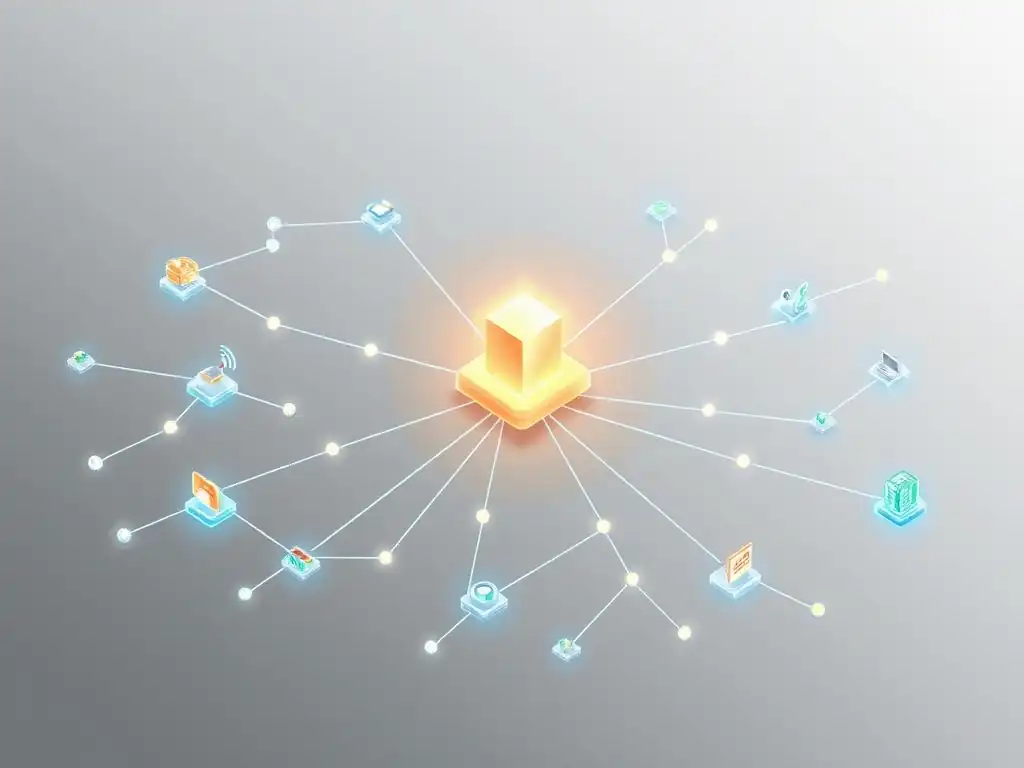
Enhanced Transparency and Trust: Verifiable Content Provenance
Blockchain content curation inherently enhances transparency and trust by providing verifiable content provenance. Every action, from content creation to curation and verification, is recorded on the immutable blockchain, creating a transparent audit trail. This transparency allows users to trace the origin and history of content, increasing trust in the information presented. By verifying content provenance, blockchain content curation strategies can combat misinformation and build more trustworthy information ecosystems. This enhanced transparency is a key differentiator from centralized content curation models, where algorithms and moderation policies are often opaque.
Increased Creator Control: Direct Monetization and Ownership
Blockchain content curation empowers content creators with increased control over their work, particularly in terms of monetization and ownership. Through tokenized incentive systems and smart contracts, creators can directly monetize their content and retain ownership rights. Platforms utilizing blockchain can enable direct payments from consumers to creators, bypassing intermediaries and reducing platform fees. NFTs further enhance creator ownership in the digital art and collectibles space. This shift towards creator-centric models contrasts sharply with traditional platforms, where creators often have limited control over their content and revenue streams.
Reduced Censorship: Greater Access to Diverse Perspectives
Blockchain's decentralized nature inherently reduces censorship in content curation, fostering greater access to diverse perspectives. With no single point of control, blockchain-based platforms are less susceptible to censorship by governments or corporations. Decentralized storage solutions further enhance censorship resistance by distributing content across a network. This reduced censorship allows for a wider range of voices and perspectives to be heard, potentially mitigating filter bubbles and echo chambers prevalent in centralized content ecosystems. Blockchain content curation strategies can contribute to a more open and inclusive information landscape.
Challenges and Limitations of Blockchain Content Curation
Scalability Issues: Transaction Throughput and Network Congestion
Scalability remains a significant challenge for blockchain content curation strategies. Many blockchains, particularly early generations like Ethereum, face limitations in transaction throughput and network congestion. Processing large volumes of content submissions, verifications, and rewards can strain blockchain networks, leading to slow transaction times and high fees. While newer blockchains like Solana and Polkadot offer improved scalability, further advancements are needed to handle the demands of large-scale content curation platforms. Scalability solutions are crucial for the widespread adoption of blockchain content curation strategies.
Regulatory Uncertainty: Legal Compliance and Data Protection
Regulatory uncertainty poses a considerable challenge to the development and adoption of blockchain content curation strategies. The legal and regulatory landscape surrounding blockchain technology and cryptocurrencies is still evolving in many jurisdictions. Issues related to data protection, intellectual property rights, and content moderation in decentralized systems are subject to legal interpretation and may vary across regions. Navigating this regulatory uncertainty and ensuring legal compliance is crucial for the long-term sustainability of blockchain content curation platforms. Clearer regulatory frameworks are needed to foster innovation and responsible development in this space.
User Adoption: Overcoming Technical Barriers and Onboarding
User adoption presents a significant hurdle for blockchain content curation strategies. Blockchain technology can be complex for non-technical users, creating barriers to entry and hindering mainstream adoption. Onboarding processes, including wallet setup and cryptocurrency management, can be cumbersome for average users. Simplifying user interfaces, improving user experience, and providing educational resources are crucial for overcoming these technical barriers and facilitating broader user adoption of blockchain-based content curation platforms. Focusing on user-friendliness is key to bridging the gap between blockchain technology and mainstream users.
The Future of Content Curation with Blockchain
Predicting the Evolution of Decentralized Media Ecosystems
The future of content curation with blockchain points towards the evolution of decentralized media ecosystems. As blockchain technology matures and scalability improves, we can expect to see more robust and user-friendly decentralized platforms emerge. These ecosystems will likely feature a greater emphasis on user ownership, data privacy, and community governance. Predictions suggest a shift away from centralized gatekeepers towards more distributed and participatory models of content curation. The growth of Web3 and the increasing demand for decentralized solutions indicate a promising trajectory for blockchain content curation strategies in shaping the future of media.
AI and Machine Learning: Enhancing Content Discovery and Moderation
The integration of AI and machine learning (ML) with blockchain content curation strategies holds significant potential for enhancing content discovery and moderation. AI and ML algorithms can be used to improve content recommendation systems, filter out spam and malicious content, and automate certain aspects of content verification. Combining AI's analytical capabilities with blockchain's transparency and immutability can create more efficient and trustworthy content curation systems.
For example, AI can assist in identifying potential misinformation, which can then be further verified by a decentralized community through blockchain-based mechanisms. This synergy between AI and blockchain can lead to more intelligent and scalable content curation solutions.
Decentralized Autonomous Organizations (DAOs) in Content Governance
Decentralized Autonomous Organizations (DAOs) are poised to play a crucial role in the future of content governance within blockchain content curation ecosystems. DAOs are community-governed organizations that operate based on rules encoded in smart contracts. They can be used to decentralize decision-making processes related to content moderation, platform development, and resource allocation within blockchain-based platforms. DAOs can empower users to participate in platform governance and ensure that content curation policies are aligned with community values. This decentralized governance model can foster greater transparency, accountability, and user participation in shaping the future of content curation.
Implementing Blockchain Content Curation: A Practical Guide
Integrating Blockchain: APIs and SDKs for Existing Platforms
Implementing blockchain content curation does not necessarily require building entirely new platforms from scratch. Existing content platforms can integrate blockchain functionalities through APIs (Application Programming Interfaces) and SDKs (Software Development Kits). Various blockchain platforms and service providers offer tools and resources to facilitate integration. For instance, platforms can use APIs to record content metadata on a blockchain, implement tokenized reward systems, or integrate decentralized storage solutions. This approach allows existing platforms to incrementally adopt blockchain content curation strategies without requiring a complete overhaul of their infrastructure.
Choosing a Blockchain: Ethereum, Solana, or Polkadot for Content Curation
Choosing the right blockchain platform is a critical step in implementing blockchain content curation strategies. Ethereum, while being the most established blockchain ecosystem, can face scalability challenges and higher transaction fees. Solana offers significantly higher transaction throughput and lower fees, making it suitable for high-volume content platforms. Polkadot provides interoperability and scalability through its parachain architecture, offering flexibility for building customized blockchain solutions. The choice of blockchain depends on the specific needs and priorities of the content curation platform, considering factors such as scalability, cost, security, and developer ecosystem.
Conclusion: Empowering Content Creators and Consumers with Blockchain
The Transformative Potential: Shaping the Future of Media
Blockchain content curation strategies possess transformative potential to reshape the future of media. By decentralizing content curation, these strategies address critical issues of bias, censorship, and misinformation prevalent in centralized platforms. Blockchain empowers content creators with greater control over their work and enables more equitable monetization models. For consumers, blockchain offers enhanced transparency, trust, and access to diverse perspectives. While challenges remain in terms of scalability, regulation, and user adoption, the trajectory points towards a significant shift towards decentralized media ecosystems.
Towards a Trustworthy and Equitable Information Landscape
Ultimately, blockchain content curation strategies contribute to building a more trustworthy and equitable information landscape. By fostering transparency, decentralization, and community participation, blockchain can help create online environments where information is more reliable, creators are fairly compensated, and users have greater control over their digital experiences. As blockchain technology continues to evolve and mature, its impact on content curation is poised to grow, shaping a future of media that is more democratic, transparent, and beneficial for both creators and consumers.
Frequently Asked Questions
How is blockchain technology impacting content curation?
Blockchain is revolutionizing content curation by offering solutions for verifying content authenticity, rewarding creators directly, and establishing transparent content provenance. This fosters trust and combats misinformation.
What are some benefits of using blockchain for content curation?
Key benefits include enhanced transparency regarding content origins, increased creator compensation through micropayments and tokenization, and improved resistance to censorship due to decentralized storage.
Can blockchain help combat misinformation in content curation?
Yes, blockchain's immutable ledger allows for verifiable content provenance, making it easier to trace the origin and history of content. This helps in identifying and flagging misinformation more effectively.
What are some real-world applications of blockchain in content curation?
Examples include platforms that reward users for curating valuable content with cryptocurrency tokens, systems that verify news sources on a blockchain, and decentralized social media platforms.
What are the potential challenges of using blockchain for content curation?
Challenges include scalability issues related to blockchain transaction speeds, the complexity of integrating blockchain technology, and the need for user education to understand and utilize decentralized systems.
Okay, here's a final reflection designed to close your article "How Blockchain is Influencing the Future of Content Curation," optimized for the keyword "Blockchain content curation strategies," and following the requested structure:
Final Reflection: Decentralizing the Information Landscape
The exploration of blockchain content curation strategies reveals a paradigm shift in how we discover, value, and share information. No longer solely reliant on centralized algorithms and gatekeepers, the future of content curation is being reshaped by the principles of decentralization, transparency, and community ownership that blockchain technology enables. This shift is not merely theoretical; it's actively influencing the way creators are rewarded, and consumers are empowered to filter and prioritize the content that truly matters to them.
The potential of blockchain to revolutionize content curation extends far beyond simple efficiency. It promises to foster a more equitable and trustworthy information ecosystem. The implications for combating misinformation and promoting diverse voices are profound, and personally, I find the prospect of a more democratized internet incredibly inspiring. The power of the blockchain is not just in its technology, but in its ability to redistribute power and create new forms of value exchange.
This quote encapsulates the essence of what blockchain can bring to content curation: a system where creators are directly rewarded for their contributions, and users are empowered to shape the information landscape.
As we stand on the cusp of this new era, I invite you to consider your role in shaping the future of content. How can you leverage blockchain content curation strategies to support creators you believe in, to amplify voices that deserve to be heard, and to build a more informed and connected world? The power to curate a better future, one block at a time, is now in your hands.
Unlock the Future: Start Curating with Blockchain Today!
Thank you for exploring the exciting possibilities of blockchain and content curation! We hope this article highlighted how decentralized technologies are transforming the digital content landscape. Now, it's time to take the next step and become part of this revolutionary movement.
Here are a few ways you can get involved and contribute:
- Explore decentralized content platforms! Discover platforms like Mirror or Steemit and try curating content using blockchain-based tools. This hands-on experience is the best way to understand the advantages of blockchain in content curation.
- Share this article with your network! Help spread awareness about how blockchain is changing content curation and spark conversations about the future of information.
- Join our community! Subscribe to our newsletter for exclusive insights, connect with us on social media, and participate in discussions about all things blockchain.
What type of content are you most excited to see curated on the blockchain? Share your thoughts in the comments below!
Leave a Reply