
Building Provenance Apps: Developing Blockchain Solutions for Content Verification


Welcome to Blockchain Trends, your compass in the rapidly evolving world of decentralized technologies!
Delve into the transformative potential of blockchain beyond the headlines. Are you ready to explore how blockchain is revolutionizing content creation and media? In this article, we unpack the intricacies of building effective solutions and how Blockchain Content Verification Apps are poised to reshape the landscape of digital trust. Discover the key strategies and challenges in developing these applications and understand why they are vital for a more transparent and verifiable future. Intrigued? Let's begin!
- Introduction: The Rise of Blockchain Content Verification Apps
- Understanding Blockchain for Content Provenance
-
Developing Blockchain Content Verification Applications: A Step-by-Step Guide
- Step 1: Defining the Scope and Requirements of your Provenance App
- Step 2: Choosing the Right Blockchain Platform for Content Provenance
- Step 3: Designing the User Interface (UI) and User Experience (UX)
- Step 4: Implementing Smart Contracts for Content Provenance
- Step 5: Integrating with Existing Content Management Systems (CMS)
- Use Cases and Examples of Blockchain Content Verification Apps
- Addressing Challenges and Future Trends in Blockchain Content Verification
- Conclusion: The Potential of Blockchain Content Verification Apps
-
Frequently Asked Questions
- What are blockchain content verification apps?
- How do these apps enhance SEO?
- What are the key benefits of using blockchain for content verification?
- Are there any challenges in implementing blockchain solutions for content verification?
- What is the future of decentralized systems in content verification?
- Final Reflection: Embracing Trust in the Digital Age
Introduction: The Rise of Blockchain Content Verification Apps
The Problem of Content Authenticity in the Digital Age
In today's digital landscape, the proliferation of online content is staggering. From news articles and social media posts to videos and images, information is constantly being created and disseminated at an unprecedented rate. However, this ease of creation and distribution has also given rise to a significant challenge: the erosion of content authenticity. The ability to manipulate and fabricate digital content has become increasingly sophisticated, leading to a widespread problem of misinformation, fake news, and copyright infringement.
Consider the rise of deepfakes, AI-generated synthetic media that can convincingly mimic real people and events. These technologies, while holding potential for creative applications, are also being weaponized to spread disinformation and manipulate public opinion, highlighting the urgent need for robust content verification mechanisms. The sheer volume of content makes manual verification impractical, demanding automated and reliable solutions.
The lack of verifiable content authenticity undermines trust in online information. Consumers struggle to discern genuine content from manipulated or fabricated content, impacting their decision-making and potentially leading to real-world consequences. For businesses and content creators, the inability to prove the origin and integrity of their work can result in financial losses and reputational damage due to copyright theft and unauthorized use.
A 2023 study by the Pew Research Center found that 50% of US adults believe fabricated news and information is a "very big problem," demonstrating the public's growing concern about online content authenticity. This erosion of trust necessitates innovative approaches to re-establish confidence in the digital information ecosystem, making content verification a critical area of focus.
How Blockchain Technology Offers a Solution for Provenance
Blockchain technology, initially recognized for its role in cryptocurrencies, offers a compelling solution to the challenges of content authenticity and provenance. At its core, blockchain is a distributed, immutable ledger that records transactions across a network of computers. This decentralized and tamper-proof nature makes it exceptionally well-suited for establishing a verifiable record of content origin and history. Unlike traditional centralized systems, where data can be easily altered or manipulated by a single entity, blockchain's distributed consensus mechanism ensures that once information is recorded, it cannot be changed or deleted. This immutability is fundamental to building trust in content provenance.
By leveraging blockchain, content creators can register their work and create a permanent, verifiable record of its creation and ownership. Each piece of content can be assigned a unique digital fingerprint, or hash, which is then recorded on the blockchain along with relevant metadata such as timestamps and creator information. Any subsequent modifications or attempts to tamper with the content would result in a different hash, immediately invalidating the verification.
This provides an auditable and transparent trail of content provenance, enabling anyone to verify the authenticity and origin of a digital asset. The inherent security and transparency of blockchain make it an ideal technology for building robust blockchain content verification apps.
Defining Blockchain Content Verification Apps: A New Paradigm
Blockchain content verification apps represent a new paradigm for establishing and maintaining trust in digital content. These applications utilize blockchain technology to create a secure and transparent system for tracking content provenance, ensuring authenticity, and combating issues like plagiarism and misinformation. Unlike traditional methods that often rely on centralized authorities and manual processes, blockchain content verification apps offer a decentralized, automated, and cryptographically secure approach. They empower content creators to assert ownership and control over their work, while providing consumers with the tools to verify the authenticity of the information they encounter online.
These apps go beyond simple timestamping. They can incorporate sophisticated features such as smart contracts to automate content licensing and rights management, and decentralized identity solutions to further enhance the verification process. Imagine a photographer registering their images on a blockchain-based platform.
Every time their image is used online, the platform can automatically verify its origin and ensure proper attribution and licensing, protecting their intellectual property rights. Blockchain content verification apps are not just about verifying content after it's created; they are about building a more trustworthy and transparent digital content ecosystem from the ground up, addressing critical needs in media, journalism, intellectual property protection, and beyond.
Understanding Blockchain for Content Provenance
The Core Principles of Blockchain and its Application to Content
Blockchain technology operates on several core principles that make it particularly well-suited for content provenance. Firstly, decentralization is paramount. Instead of relying on a single central authority, blockchain distributes data across a network of participants, making it resistant to single points of failure and censorship. This distributed nature is crucial for maintaining the integrity of content provenance records, as no single entity can unilaterally alter or control the information.
Secondly, immutability is a defining characteristic. Once data is recorded on a blockchain, it is cryptographically secured and virtually impossible to tamper with. This ensures the permanence and reliability of content verification records over time.
Thirdly, transparency is a key aspect. While blockchains can offer privacy features, the core ledger of transactions is generally transparent and auditable by all participants in the network. This transparency allows for public verification of content provenance, fostering trust and accountability.
For content applications, this means that anyone can independently verify the origin and history of a piece of content recorded on the blockchain. Finally, consensus mechanisms are essential for maintaining the integrity of the blockchain. These mechanisms, such as Proof-of-Work or Proof-of-Stake, ensure that all participants agree on the validity of new transactions before they are added to the chain, further strengthening the security and reliability of the system for blockchain content verification applications.
Immutability, Transparency, and Decentralization: Key Benefits for Content Verification
Immutability, transparency, and decentralization are not just technical features of blockchain; they are the core benefits that directly address the challenges of content verification. Immutability ensures that once a content's provenance is recorded on the blockchain, it becomes a permanent and unalterable record. This eliminates the risk of tampering or retroactive manipulation of content history, providing a robust and reliable basis for verification. For instance, in news media, immutable records of articles can help combat the spread of altered or fabricated news stories by providing a verifiable original source.
Transparency, enabled by blockchain's public ledger, allows anyone to independently verify the provenance of content. This open access to verification data empowers consumers and researchers to trace the origin and history of digital assets, promoting accountability and trust. Decentralization removes the reliance on single authorities, mitigating the risks of censorship and single points of failure.
This is particularly important for sensitive or politically charged content where centralized control could be abused. By distributing the verification process across a network, blockchain ensures greater resilience and trustworthiness for blockchain content verification apps, making them a powerful tool in the fight against misinformation and content fraud.
Smart Contracts and Automated Content Provenance Tracking
Smart contracts, self-executing contracts with the terms of the agreement directly written into code, further enhance the automation and efficiency of blockchain content verification apps. These contracts can be programmed to automatically execute specific actions when predefined conditions are met, streamlining various aspects of content provenance tracking. For example, a smart contract can be triggered to automatically record content metadata and hashes on the blockchain upon content creation or upload. This eliminates the need for manual data entry and reduces the potential for human error in the verification process.
Furthermore, smart contracts can automate the process of content licensing and rights management. When content usage rights are defined in a smart contract, the contract can automatically track usage, enforce licensing terms, and even facilitate micropayments to content creators. This automation simplifies complex workflows and ensures that content creators are fairly compensated for their work.
Smart contracts can also be used to implement automated alerts and notifications in case of unauthorized content usage or modifications, providing an additional layer of security and proactive content protection. By automating key processes, smart contracts make blockchain content verification apps more efficient, scalable, and user-friendly.
Developing Blockchain Content Verification Applications: A Step-by-Step Guide
Step 1: Defining the Scope and Requirements of your Provenance App
Developing a successful blockchain content verification app begins with clearly defining its scope and requirements. This initial step is crucial for ensuring that the application effectively addresses the specific needs and challenges it aims to solve. It involves identifying the target audience, the types of content to be verified, and the specific functionalities required. A well-defined scope will guide the development process and prevent feature creep, ensuring a focused and efficient development effort.
Consider the intended users of the app. Are they content creators seeking to protect their intellectual property? Are they consumers wanting to verify the authenticity of news articles or social media posts? Understanding the target user base will inform the design and features of the application. Similarly, clearly defining the types of content to be verified – images, videos, documents, audio, or a combination – will influence the choice of blockchain platform, metadata requirements, and verification processes. A thorough understanding of these foundational aspects is essential for building a relevant and impactful blockchain content verification app.
Identifying Target Content Types: Images, Videos, Documents, and Audio
The first crucial step in defining the scope is to identify the specific types of digital content that the blockchain content verification app will handle. Different content types present unique verification challenges and may require tailored approaches. For instance, image verification might focus on detecting manipulations and alterations, while document verification might prioritize ensuring document integrity and preventing tampering with text or data. Video verification may involve analyzing video and audio components for authenticity, while audio verification could focus on detecting synthetic or manipulated audio.
For each target content type, consider the specific verification needs and potential threats. For images, this could involve verifying the authenticity of photographs used in news articles or online marketplaces to combat misinformation or fraud. For videos, it might be crucial to verify the origin and integrity of footage used in legal proceedings or investigative journalism.
For documents, the focus could be on ensuring the authenticity of legal contracts or academic papers. Defining the target content types precisely allows for the development of specialized verification functionalities and ensures the app effectively addresses the intended use cases for blockchain content verification apps.
Defining Metadata Requirements for Content Verification
Metadata, or "data about data," plays a critical role in content verification. It provides contextual information that enhances the verification process and allows for more comprehensive provenance tracking. Defining the metadata requirements for your blockchain content verification app is crucial for ensuring that the application captures and stores the necessary information for effective verification. This involves identifying the specific metadata fields that are relevant to the target content types and use cases.
Examples of relevant metadata include: creation timestamp, author or creator information, content description, location data (if applicable), copyright information, licensing terms, and any relevant identifiers or tags. For images, metadata might include camera model, GPS coordinates, and date taken. For documents, it could include author, creation date, and document version. Carefully selecting and defining these metadata fields ensures that the blockchain record provides a rich and informative context for content verification, enabling users to gain a deeper understanding of the content's origin and history within the blockchain content verification apps.
Step 2: Choosing the Right Blockchain Platform for Content Provenance
Selecting the appropriate blockchain platform is a critical decision in the development of a blockchain content verification app. The choice of platform will significantly impact the app's performance, scalability, security, and cost. Several blockchain platforms are available, each with its own strengths and weaknesses. Factors to consider include the platform's consensus mechanism, transaction speed, smart contract capabilities, community support, and development tools. The platform should align with the specific requirements of the content verification app and the intended use cases.
Public blockchains like Ethereum offer broad accessibility and decentralization but can face scalability challenges and higher transaction fees. Permissioned blockchains like Hyperledger Fabric provide greater control over access and permissions, offering improved scalability and potentially lower costs, making them suitable for enterprise applications.
Layer-2 scaling solutions like Polygon built on top of Ethereum offer a compromise, aiming to improve scalability and reduce transaction costs while still leveraging the security and decentralization of the underlying Ethereum network. A thorough evaluation of different blockchain platforms is essential to identify the best fit for the specific needs of the blockchain content verification application.
Evaluating Different Blockchain Platforms: Ethereum, Hyperledger Fabric, Polygon
When evaluating blockchain platforms for blockchain content verification apps, Ethereum, Hyperledger Fabric, and Polygon are often considered strong contenders, each offering distinct advantages. Ethereum, the second-largest cryptocurrency by market capitalization, is a public, permissionless blockchain with a robust smart contract ecosystem. Its strengths lie in its strong community support, extensive tooling, and high level of decentralization. However, Ethereum's mainnet can experience network congestion and higher gas fees, particularly during periods of high demand, which might impact the cost-effectiveness for high-volume content verification.
Hyperledger Fabric, on the other hand, is a permissioned, enterprise-grade blockchain framework hosted by the Linux Foundation. It is designed for building private and consortium blockchains, offering modularity, scalability, and fine-grained access control. Fabric is well-suited for applications where data privacy and performance are paramount, such as supply chain management or enterprise content management.
Polygon, a Layer-2 scaling solution for Ethereum, aims to address Ethereum's scalability limitations by providing faster and cheaper transactions while maintaining compatibility with the Ethereum Virtual Machine (EVM). Polygon offers a balance between decentralization, scalability, and cost-effectiveness, making it an attractive option for many blockchain content verification apps.
Considerations for Scalability, Security, and Cost
Scalability, security, and cost are crucial considerations when choosing a blockchain platform for content verification. Scalability refers to the platform's ability to handle a growing volume of transactions and data without compromising performance. For blockchain content verification apps dealing with large amounts of content, scalability is paramount to ensure efficient and responsive verification processes. Consider the expected number of content uploads and verification requests the app will need to handle, and assess the platform's transaction throughput and capacity.
Security is non-negotiable for any blockchain content verification app. The chosen platform must provide robust security mechanisms to protect the integrity of provenance records and prevent unauthorized access or manipulation. Evaluate the platform's consensus mechanism, cryptographic algorithms, and security audits to ensure it meets the required security standards. Cost is another significant factor, especially for applications with budget constraints. Transaction fees, deployment costs, and ongoing operational expenses can vary significantly between different blockchain platforms. Carefully analyze the cost implications of each platform and choose one that aligns with the project's budget and long-term sustainability.
Step 3: Designing the User Interface (UI) and User Experience (UX)
A well-designed User Interface (UI) and User Experience (UX) are essential for the adoption and usability of any blockchain content verification app. Even with a robust blockchain backend, a poorly designed UI/UX can hinder user engagement and limit the app's effectiveness. The UI should be intuitive, user-friendly, and visually appealing, making it easy for users to navigate the app and perform content verification tasks. The UX should be seamless and efficient, minimizing friction and ensuring a positive user experience throughout the content verification process.
Consider the target users when designing the UI/UX. If the app is intended for content creators, the UI should facilitate easy content uploading and registration. If it's for consumers, the verification process should be straightforward and easily understandable. Prioritize clarity, simplicity, and accessibility in the design. Conduct user testing and gather feedback throughout the design process to iterate and refine the UI/UX based on user needs and preferences. A user-centric approach to UI/UX design is crucial for the success of blockchain content verification apps.
Creating an Intuitive Interface for Content Upload and Verification
The content upload and verification interface should be designed with simplicity and intuitiveness in mind. For content creators, the upload process should be straightforward, allowing them to easily upload their content and associated metadata. Drag-and-drop functionality, clear instructions, and progress indicators can enhance the upload experience. For content verification, the interface should provide a clear and concise display of verification results, indicating the content's authenticity status and provenance information.
Visual cues, such as icons and color-coding, can be used to clearly communicate verification status (e.g., green for verified, red for unverified). The interface should also provide access to detailed provenance information, allowing users to explore the content's history and origin. Search and filtering functionalities can be implemented to enable users to quickly find and verify specific content. A clean, uncluttered layout and consistent design language contribute to an intuitive and user-friendly interface for both content upload and verification within blockchain content verification apps.
Implementing Secure User Authentication and Authorization
Security is paramount for blockchain content verification apps, and secure user authentication and authorization are critical components of a robust security framework. User authentication verifies the identity of users accessing the app, while authorization controls their access to specific features and data based on their roles and permissions. Implementing strong authentication mechanisms, such as multi-factor authentication (MFA), significantly enhances security by requiring users to provide multiple forms of verification.
Role-based access control (RBAC) can be used to define different user roles (e.g., content creator, verifier, administrator) and assign specific permissions to each role. This ensures that users only have access to the features and data necessary for their tasks, minimizing the risk of unauthorized access or actions. Consider using decentralized identity (DID) solutions for user authentication to further enhance privacy and user control over their identity data within the blockchain content verification app. Regular security audits and penetration testing are essential to identify and address potential vulnerabilities in the authentication and authorization system.
Step 4: Implementing Smart Contracts for Content Provenance
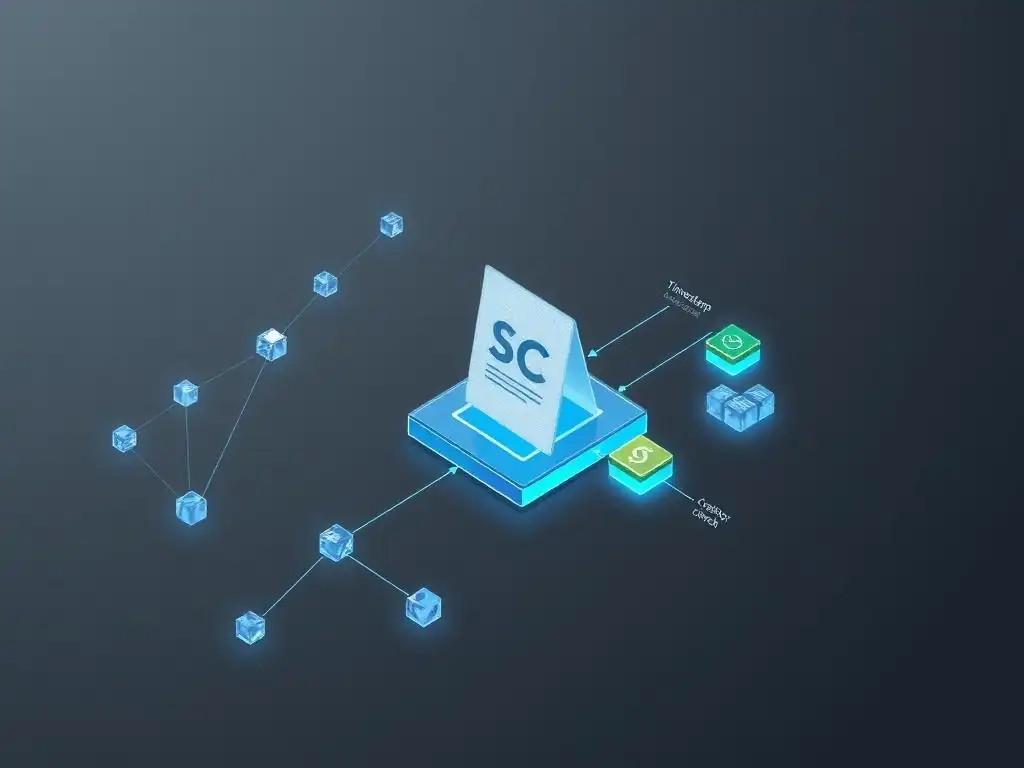
Smart contracts are the engine that drives automated content provenance tracking on the blockchain. Implementing smart contracts for a blockchain content verification app involves writing, deploying, and testing these self-executing contracts. Smart contracts define the logic for recording content hashes, metadata, and provenance information on the blockchain. They also automate various processes, such as content registration, verification, and potentially rights management. The smart contract code should be written in a secure and efficient programming language compatible with the chosen blockchain platform, such as Solidity for Ethereum or Chaincode for Hyperledger Fabric.
Careful planning and design of the smart contract logic are crucial to ensure that it accurately reflects the desired content provenance workflow and meets the application's requirements. Thorough testing and auditing of the smart contracts are essential to identify and fix any vulnerabilities or bugs before deployment to the live blockchain network. Well-designed and securely implemented smart contracts are the foundation for a reliable and automated blockchain content verification app.
Writing Smart Contracts to Record Content Hash and Metadata
The core functionality of smart contracts in a blockchain content verification app is to securely record content hashes and associated metadata on the blockchain. When content is uploaded to the app, its cryptographic hash (e.g., SHA-256) is generated. This hash acts as a unique digital fingerprint of the content. The smart contract is designed to take this hash, along with relevant metadata such as content creator, timestamp, and description, and record them as a transaction on the blockchain.
The smart contract should include functions for adding new content records, retrieving existing records based on content hash or other identifiers, and potentially updating metadata if necessary (while maintaining a history of changes). Consider using data structures within the smart contract to efficiently store and manage content provenance information. Well-written smart contracts ensure that content hashes and metadata are securely and immutably recorded on the blockchain, forming the basis for content verification.
Ensuring Smart Contract Security and Auditability
Smart contract security is paramount, as vulnerabilities in smart contracts can lead to significant financial losses or data breaches. Thorough security audits are essential before deploying smart contracts for a blockchain content verification app. Security audits involve having independent experts review the smart contract code to identify potential vulnerabilities, such as reentrancy attacks, integer overflows, or access control issues. Address any identified vulnerabilities and implement security best practices during smart contract development.
Auditability is also crucial for smart contracts. The code should be well-documented and easy to understand, allowing for independent verification and scrutiny. Use clear and concise variable names, comments, and modular code structure to enhance readability and maintainability. Consider using formal verification tools to mathematically prove the correctness and security of smart contracts. Regular security audits and a focus on code quality and auditability are essential for building trustworthy and secure smart contracts for blockchain content verification apps.
Step 5: Integrating with Existing Content Management Systems (CMS)
For many applications, seamless integration with existing Content Management Systems (CMS) is crucial for the practical adoption of blockchain content verification apps. Organizations and content creators often rely on CMS platforms like WordPress, Drupal, or Contentful to manage their digital content. Integrating blockchain-based verification directly into these systems can streamline workflows and make content provenance tracking more accessible and user-friendly. Integration can involve developing plugins or extensions for popular CMS platforms that enable content registration and verification directly within the CMS interface.
API integration is another common approach. Providing APIs (Application Programming Interfaces) allows developers to connect the blockchain content verification app with various CMS and other applications. This enables automated content registration and verification as part of existing content creation and publishing workflows. Integration with CMS platforms can significantly enhance the usability and adoption of blockchain content verification solutions by embedding them into familiar content management environments.
Streamlining Content Verification Workflows
Integrating blockchain content verification apps with existing CMS platforms can significantly streamline content verification workflows. Instead of requiring content creators to use separate applications for content management and verification, integration allows them to perform both tasks within a single, unified environment. For example, a CMS plugin could automatically register new content on the blockchain upon publication or update. Verification status could be displayed directly within the CMS content editor, providing content creators with immediate feedback on the provenance of their content.
Automated workflows can reduce manual effort, minimize errors, and improve efficiency. Content verification can become an integral part of the content creation and publishing process, rather than a separate, cumbersome task. Streamlined workflows enhance user experience and encourage wider adoption of blockchain-based content verification solutions within existing content management ecosystems.
API Integration for Seamless Provenance Tracking
API integration is a powerful mechanism for enabling seamless provenance tracking across different systems and applications. Providing well-documented APIs for a blockchain content verification app allows developers to integrate its functionalities into various platforms, including CMS, digital asset management systems (DAM), and custom applications. APIs can enable automated content registration, verification requests, and retrieval of provenance information from the blockchain.
For instance, a news organization could integrate the API into their publishing workflow to automatically register articles on the blockchain upon publication. Third-party verification services could use the API to verify content authenticity and access provenance data. API integration fosters interoperability and extensibility, allowing blockchain content verification apps to be seamlessly incorporated into diverse digital content ecosystems, enhancing their reach and impact.
Use Cases and Examples of Blockchain Content Verification Apps
Combating Misinformation and Fake News with Blockchain
One of the most pressing use cases for blockchain content verification apps is combating misinformation and fake news. The ability to verify the origin and authenticity of news articles, images, and videos is crucial in an era where disinformation can spread rapidly and have significant societal consequences. Blockchain's immutable ledger provides a verifiable record of content creation and history, making it difficult for malicious actors to fabricate or manipulate content without detection.
News organizations and media outlets can use blockchain to register their articles and verify their authenticity. Consumers can then use blockchain content verification apps to check the provenance of news content they encounter online, helping them distinguish between credible sources and fabricated information. By establishing a transparent and verifiable record of content origin, blockchain can contribute to a more trustworthy and reliable information ecosystem, mitigating the harmful effects of misinformation and fake news.
Protecting Intellectual Property and Copyright with Provenance
Protecting intellectual property (IP) and copyright is another significant use case for blockchain content verification apps. Content creators, artists, and businesses can use blockchain to register their digital assets and establish irrefutable proof of ownership and creation timestamps. This can help prevent copyright infringement, plagiarism, and unauthorized use of their work. By recording content hashes and metadata on the blockchain, creators can create a permanent and verifiable record of their IP rights.
In cases of copyright disputes, blockchain-based provenance records can serve as strong evidence of ownership and originality. Blockchain content verification apps can also facilitate automated licensing and rights management, allowing creators to control how their content is used and ensure they are properly compensated. For example, photographers, musicians, and writers can use blockchain to register their work and track its usage, protecting their creative output and generating revenue from their IP.
Enhancing Transparency in Supply Chain Management with Content Verification
Beyond media and content creation, blockchain content verification apps can also enhance transparency in supply chain management. Verifying the provenance of products and materials throughout the supply chain is crucial for ensuring authenticity, quality, and ethical sourcing. Blockchain can be used to track the journey of goods from origin to consumer, recording key information such as manufacturing dates, locations, and certifications. This provides consumers with greater transparency and confidence in the products they purchase.
For example, in the food industry, blockchain can be used to track the origin of ingredients and verify certifications like organic or fair trade. In the fashion industry, it can help ensure ethical sourcing of materials and combat counterfeiting. By providing a transparent and verifiable record of product provenance, blockchain content verification apps can enhance trust and accountability in supply chains, benefiting both businesses and consumers.
Case Study: OriginStamp - Timestamping and Verification
OriginStamp is a real-world example of a blockchain content verification app focused on timestamping and verification. OriginStamp uses the Bitcoin blockchain to timestamp digital data, providing irrefutable proof of data existence and integrity at a specific point in time. Users can upload files or text, and OriginStamp generates a cryptographic hash of the data, which is then immutably recorded on the Bitcoin blockchain.
This timestamp serves as verifiable evidence of the data's existence and its state at the time of timestamping. OriginStamp can be used for various use cases, including proving the originality of documents, protecting intellectual property, and ensuring data integrity for legal and compliance purposes. The platform highlights the practical application of blockchain for content verification and demonstrates the value of immutable timestamping for establishing trust and provenance in the digital realm. OriginStamp is a successful example of a blockchain content verification app addressing real-world needs for data integrity and provenance.
Addressing Challenges and Future Trends in Blockchain Content Verification
Scalability Limitations of Blockchain for Large-Scale Content Verification
While blockchain offers significant benefits for content verification, scalability remains a challenge, particularly for large-scale applications. Public blockchains like Bitcoin and Ethereum, while highly secure and decentralized, can have limitations in transaction throughput and processing speed. Verifying vast amounts of content, such as millions of images or videos, can be computationally intensive and time-consuming on these platforms. Scalability limitations can also lead to higher transaction fees, especially during periods of network congestion.
Addressing scalability challenges is crucial for the widespread adoption of blockchain content verification apps. Layer-2 scaling solutions, sidechains, and sharding techniques are being developed to improve the scalability of blockchain platforms. Optimizing smart contract code and data storage strategies can also enhance efficiency. Exploring alternative blockchain platforms with higher transaction throughput, such as permissioned blockchains or newer public blockchains designed for scalability, is another approach to mitigate scalability limitations for large-scale content verification applications.
Regulatory Considerations and Compliance
Regulatory considerations and compliance are increasingly important for blockchain content verification apps. As blockchain technology gains wider adoption, regulators are paying closer attention to its applications and potential risks. Compliance with data privacy regulations, such as GDPR or CCPA, is crucial, especially when handling personal data in content verification processes. Regulations related to intellectual property rights, digital signatures, and online content moderation may also impact the development and deployment of blockchain-based verification solutions.
Navigating the evolving regulatory landscape requires careful consideration of legal and compliance requirements. Blockchain content verification apps should be designed to comply with relevant regulations and industry standards. Working with legal experts and engaging with regulatory bodies can help ensure that applications are developed and operated in a compliant and responsible manner. Transparency, data privacy, and user consent are key principles to uphold in the development and deployment of blockchain-based content verification solutions.
The Future of Decentralized Content Provenance: AI and Blockchain Integration
The future of decentralized content provenance is likely to be shaped by the integration of Artificial Intelligence (AI) and blockchain technologies. AI can enhance the capabilities of blockchain content verification apps in several ways. AI-powered algorithms can automate content analysis and verification processes, detecting manipulated content, identifying deepfakes, and verifying content authenticity with greater accuracy and efficiency. Machine learning models can be trained to recognize patterns and anomalies that indicate content manipulation or fabrication.
Blockchain provides the secure and transparent infrastructure for recording and verifying the results of AI-powered content analysis. The combination of AI and blockchain can create a powerful synergy, enabling more robust and automated content provenance solutions. For example, AI can be used to analyze images and videos, and the verification results, along with content hashes and metadata, can be securely recorded on the blockchain. This integration can lead to more scalable, efficient, and reliable blockchain content verification apps that can effectively address the growing challenges of content authenticity in the digital age.
Conclusion: The Potential of Blockchain Content Verification Apps
Transforming Content Creation and Consumption with Blockchain
Blockchain content verification apps have the potential to transform both content creation and consumption. By providing a secure and transparent system for establishing content provenance, blockchain can empower content creators to protect their intellectual property, combat plagiarism, and assert ownership of their work. For consumers, these apps offer a means to verify the authenticity and origin of digital content, enabling them to make informed decisions and build trust in the information they encounter online.
This transformation extends beyond individual creators and consumers. It can impact entire industries, from media and journalism to e-commerce and supply chain management. By fostering a more trustworthy and transparent digital content ecosystem, blockchain can contribute to a more informed and equitable society. The potential of blockchain content verification apps lies in their ability to restore trust in digital content and empower individuals and organizations to navigate the complexities of the digital world with greater confidence.
The Future of Trust and Transparency in the Digital World
In a digital world increasingly challenged by misinformation and content manipulation, blockchain content verification apps represent a crucial step towards building a future of trust and transparency. By leveraging the inherent security, immutability, and transparency of blockchain technology, these applications offer a powerful solution to the problem of content authenticity. As blockchain technology matures and adoption grows, we can expect to see more sophisticated and widely used blockchain content verification apps emerge across various sectors.
These apps have the potential to fundamentally reshape how we create, consume, and interact with digital content. They can empower individuals to verify the information they encounter, protect content creators' rights, and enhance transparency in digital ecosystems. The future of trust and transparency in the digital world may well be built upon the foundations of blockchain-based content verification, paving the way for a more reliable and trustworthy digital future for all.
Frequently Asked Questions
What are blockchain content verification apps?
Blockchain content verification apps are tools that leverage blockchain technology to ensure the authenticity and integrity of digital content by providing a tamper-proof record of its history.
How do these apps enhance SEO?
By using blockchain content verification apps, creators can demonstrate the authenticity of their content, which can improve trustworthiness and credibility, potentially leading to better SEO rankings.
What are the key benefits of using blockchain for content verification?
The key benefits include increased transparency, reduced fraud, and the ability to trace the provenance of content, ensuring that users have access to verified information.
Are there any challenges in implementing blockchain solutions for content verification?
Yes, challenges can include scalability issues, the need for interoperability with existing systems, and navigating the regulatory landscape surrounding blockchain technology.
What is the future of decentralized systems in content verification?
The future of decentralized systems looks promising, with potential for wider adoption and innovations that could lead to enhanced security and efficiency in content verification processes.
Final Reflection: Embracing Trust in the Digital Age
The journey of building provenance apps, as we've explored, is more than just coding; it's about rebuilding trust in a digital world saturated with misinformation. The principles of blockchain content verification are no longer a futuristic concept, but a vital necessity for ensuring the integrity of information we consume daily, from news articles to creative works.
The impact of this technology extends far beyond the technical realm. It touches upon the very fabric of our society, influencing how we perceive truth and authenticity. As we navigate an increasingly complex information landscape, the ability to verify content becomes paramount. The truth is rarely pure and never simple.
- Oscar Wilde. This quote resonates deeply when we consider the challenges of discerning fact from fiction in the digital age, highlighting the crucial role of blockchain content verification.
Now, I invite you to consider your own role in fostering a more trustworthy digital environment. How can you, as a consumer or creator, advocate for and utilize tools that promote transparency and accountability? Let us all strive to be informed participants, demanding verifiable content and contributing to a future where truth prevails.
Please provide the article content so I can understand its key themes and main points. This will help me craft an effective call to action that encourages readers to engage or take the desired step.
Leave a Reply