
How to Create and Sell Your Digital Art as NFTs: A Practical StepbyStep Guide

Welcome to Blockchain Trends, your go-to source for understanding the revolutionary impact of blockchain technology.
Intrigued by the intersection of art and technology? Dive into our latest piece, an NFT art creation tutorial, and discover how you can transform your digital creations into valuable assets. Ready to unlock the world of digital ownership and decentralized marketplaces? Let's begin your journey into the exciting realm of NFTs and explore how to create and sell your own digital art.
Creating and Selling Digital Art as NFTs: A Practical Guide
- Introduction to NFT Art
- Creating Your Digital Artwork
- Selecting an NFT Marketplace
- Minting Your Digital Art as an NFT
- Promoting and Marketing Your NFT Art
- Understanding Royalties and Legal Considerations
- Managing Sales and Earnings
- Advanced NFT Strategies
- Conclusion: The Future of Digital Art
-
Frequently Asked Questions
- How much does it typically cost to mint an NFT for art creation?
- What are the best blockchain platforms for listing and selling NFT art?
- What software or tools do I need to create digital art for NFTs?
- How do royalties work when I sell my NFT art on a blockchain?
- What are the legal considerations I should be aware of when creating and selling NFT art?
- Final Reflection: Embracing the Digital Renaissance
- Unleash Your Inner Artist: Start Your NFT Journey Today!
Introduction to NFT Art
Understanding the NFT Market
The NFT (Non-Fungible Token) market has revolutionized the way digital art is bought, sold, and collected. NFTs provide a unique way to tokenize digital assets, proving ownership and authenticity of a digital artwork. Initially gaining traction in 2021, the NFT market experienced explosive growth, with marketplaces like OpenSea reporting billions of dollars in trading volume.
While market fluctuations are inherent in emerging technologies, the underlying concept of digital ownership through NFTs remains a significant paradigm shift for artists and collectors alike. For instance, in 2021, Beeple's NFT artwork "Everydays: The First 5000 Days" sold for over $69 million at Christie's, demonstrating the potential value and mainstream attention NFTs could attract. This sale not only highlighted the financial opportunities but also legitimized digital art within the traditional art world.
The NFT market operates on blockchain technology, primarily Ethereum, but also increasingly on other blockchains like Solana and Polygon, each offering different transaction speeds and costs. These blockchains act as decentralized ledgers, recording every transaction and ensuring transparency and immutability of ownership. The market is dynamic and influenced by trends in cryptocurrency, digital art, and broader technological adoption.
Understanding this landscape, including the active marketplaces, dominant art styles, and the evolving preferences of collectors, is crucial for any digital artist looking to enter the NFT space. The market is not static; it is constantly evolving with new platforms, art forms, and collector behaviors shaping its trajectory.
Benefits of Selling Digital Art as NFTs
Selling digital art as NFTs offers numerous benefits compared to traditional art sales or even selling digital art through conventional online platforms. Firstly, NFTs empower artists with direct access to a global market, bypassing traditional gatekeepers like galleries or agents. This direct connection allows artists to control their pricing, marketing, and overall sales strategy. Secondly, NFTs introduce the concept of royalties for digital art.
Unlike traditional digital art sales where artists typically receive a one-time payment, NFTs can be programmed to grant the original creator a percentage of every subsequent sale on the secondary market. This revolutionary feature allows artists to continuously benefit from the appreciation of their work over time. For example, if an artist sets a 10% royalty on their NFT, they will receive 10% of the sale price every time the NFT is resold, offering a passive income stream.
Furthermore, NFTs provide verifiable proof of authenticity and ownership, which is paramount in the digital realm where copying and replication are easily possible. Each NFT is unique and its provenance is immutably recorded on the blockchain, making it easy to verify the artwork's origin and ownership history. This significantly increases the value and collectibility of digital art.
Beyond financial gains, NFTs also foster a stronger sense of community between artists and collectors. The transparency of the blockchain allows collectors to directly support their favorite artists and participate in a digital art ecosystem that is more democratized and accessible than the traditional art world. Many artists have successfully built communities around their NFT projects, engaging directly with collectors and fostering a sense of shared ownership and appreciation for their work.
Creating Your Digital Artwork
Choosing Your Art Style and Software
The beauty of digital art lies in its boundless possibilities, and the NFT space embraces a diverse range of styles. From intricate pixel art reminiscent of early video games to highly detailed 3D renders and fluid vector illustrations, almost any digital art style can find an audience within the NFT market. Popular styles include abstract art, character design, generative art, photo manipulations, and digital paintings.
The key is to choose a style that resonates with you as an artist and aligns with the aesthetic preferences of the NFT collecting community. Researching trending styles on NFT marketplaces can provide valuable insights into what is currently popular, but authenticity and originality are ultimately crucial for long-term success.
Selecting the right software is equally important as it directly impacts your creative process and the final output of your artwork. For raster-based art like digital paintings and photo manipulations, Adobe Photoshop and Procreate (for iPad) are industry-standard choices, offering a vast array of brushes, filters, and tools. For vector-based art, Adobe Illustrator and Inkscape (a free alternative) are excellent options, allowing for scalable and crisp graphics.
For 3D art and animation, Blender (free and open-source), Cinema 4D, and Autodesk Maya are powerful tools used by professionals. For pixel art, Aseprite and Piskel are specifically designed for creating detailed pixelated graphics. Experimenting with different software and finding the tools that best suit your chosen art style and workflow is essential for a productive and enjoyable art creation process.
Digital Art Techniques for NFTs
Creating digital art specifically for NFTs often involves techniques that enhance its appeal and collectibility in the digital space. Generative art, for example, utilizes algorithms to create unique variations of an artwork, making each NFT in a collection distinct. This technique is popular for creating large collections of profile picture (PFP) NFTs.
Pixel art, with its nostalgic and retro aesthetic, has also found a strong niche in the NFT world, appealing to collectors who appreciate its simplicity and charm. Vector art, known for its scalability and clean lines, is well-suited for creating logos, characters, and illustrations that maintain quality at any resolution. Digital painting techniques, mimicking traditional painting styles with digital brushes and canvases, allow for highly expressive and detailed artworks.
Animation and motion graphics add another layer of dynamism to NFTs. Animated GIFs and short video loops can bring static artworks to life, increasing their visual appeal and engagement. Interactive art, where the NFT responds to user input or changes over time, is an emerging trend that adds utility and intrigue to digital art.
Furthermore, incorporating elements of rarity, such as limited color palettes, unique traits, or hidden details, can increase the perceived value and collectibility of NFT artworks. Artists often create "rarity charts" for generative art collections to transparently showcase the distribution of different traits and their corresponding rarity levels, influencing collector preferences and market dynamics.
Optimizing Artwork for Minting
Before minting your digital artwork as an NFT, optimization is crucial to ensure smooth transactions and optimal display on NFT marketplaces. File format is a primary consideration. For static images, JPEG and PNG are common formats. PNG is preferred for artwork with transparency, while JPEG is suitable for images with rich color palettes and can be compressed to reduce file size.
For animated NFTs, GIF and MP4 are widely supported formats. Keeping file sizes reasonable is important as large files can increase gas fees during minting and potentially slow down loading times on marketplaces. Aim for a balance between visual quality and file size.
Resolution also plays a role. While NFTs are digital, consider the intended display size. For profile pictures or smaller artworks, a resolution of 500x500 to 1000x1000 pixels might suffice. For more detailed artworks intended for larger displays, higher resolutions like 2000x2000 pixels or more may be appropriate. Ensure your artwork is visually appealing and clear at the intended display size.
Metadata preparation is another critical step. Metadata is the information associated with your NFT, including the title, description, artist name, and properties. Accurate and compelling metadata is essential for discoverability and providing context to collectors. Plan your metadata carefully, including relevant keywords and a captivating description that tells the story behind your artwork.
Selecting an NFT Marketplace
Comparing NFT Marketplaces
Choosing the right NFT marketplace is a significant decision that can impact the visibility and success of your digital art. OpenSea is currently the largest and most well-known general NFT marketplace, offering a vast selection of NFTs across various categories, including art, collectibles, and virtual worlds. It supports multiple blockchains, including Ethereum, Polygon, and Solana, and offers both auction and fixed-price selling options.
Foundation is a curated platform known for its focus on high-quality digital art. It requires artists to be invited by existing members, creating a more exclusive and curated environment. Nifty Gateway is another curated platform that partners with established artists and brands, often featuring limited-edition drops and higher-priced NFTs.
Rarible is a community-centric marketplace that emphasizes creator autonomy and governance. It allows artists to create their own branded marketplaces and offers features like royalties and decentralized governance. SuperRare focuses exclusively on single-edition, unique digital artworks, positioning itself as a premium marketplace for high-end digital art collectors.
Each marketplace has its own unique characteristics, fee structures, community, and target audience. OpenSea is suitable for beginners and artists looking for broad exposure, while curated platforms like Foundation and Nifty Gateway may be more appealing to established artists seeking prestige and higher prices. Rarible offers more control to creators, and SuperRare caters to the high-end art market.
Factors to Consider
When selecting an NFT marketplace, several factors should be carefully considered. Gas fees are a significant consideration, especially on the Ethereum blockchain. Marketplaces operating on Ethereum may have higher transaction fees compared to those on blockchains like Polygon or Solana, which offer lower gas costs. Consider the blockchain supported by the marketplace and the associated gas fees, especially if you plan to mint and sell NFTs frequently.
Curation is another important factor. Curated platforms like Foundation and Nifty Gateway have a higher barrier to entry but often attract a more discerning collector base and potentially higher prices. Open marketplaces like OpenSea and Rarible are more accessible but may require more effort in marketing and standing out from the crowd.
Community and audience are crucial. Different marketplaces attract different types of collectors. Research the community and audience of each marketplace to determine if it aligns with your art style and target collectors. Some marketplaces specialize in specific art forms or niches. Features and functionality vary across platforms.
Consider features like royalty settings, auction options, secondary market fees, and analytics dashboards. User-friendliness and customer support are also important, especially for artists new to the NFT space. Finally, marketplace fees themselves vary. Most marketplaces charge a percentage of each sale as a platform fee. Compare the fee structures of different marketplaces to optimize your earnings.
Setting Up a Crypto Wallet
To participate in the NFT ecosystem, setting up a cryptocurrency wallet is essential. A crypto wallet allows you to store, send, and receive cryptocurrencies and interact with decentralized applications (dApps), including NFT marketplaces. MetaMask is one of the most popular and user-friendly crypto wallets, particularly for interacting with Ethereum-based NFTs and marketplaces. It is available as a browser extension and a mobile app, making it easily accessible. Other popular wallet options include Trust Wallet, Coinbase Wallet, and Rainbow Wallet, each offering slightly different features and user interfaces.
When setting up a crypto wallet, security is paramount. Seed phrases are crucial for wallet recovery. Upon creating a wallet, you will be provided with a seed phrase (a series of 12 or 24 words). This seed phrase is the master key to your wallet. Store it securely offline, never share it with anyone, and consider writing it down on paper and storing it in a safe place.
Losing your seed phrase means losing access to your wallet and funds. Enable two-factor authentication (2FA) whenever possible for added security. Be cautious of phishing scams and only interact with reputable websites and marketplaces. Always double-check website addresses before connecting your wallet or signing transactions. Regularly back up your wallet and keep your software updated to ensure security and functionality.
Minting Your Digital Art as an NFT
Connecting Your Wallet
The first step in minting your digital art as an NFT is connecting your crypto wallet to your chosen NFT marketplace. Most marketplaces provide a "Connect Wallet" button, typically located in the top right corner of the website. Clicking this button will usually present a list of compatible wallets. Select your wallet (e.g., MetaMask). Your wallet extension or app will then prompt you to connect to the marketplace. Review the connection request carefully, ensuring you are connecting to the legitimate marketplace website. Grant the necessary permissions to allow the marketplace to interact with your wallet.
Once connected, your wallet address will be displayed on the marketplace interface, indicating a successful connection. This connection allows the marketplace to interact with your wallet to facilitate transactions, including minting NFTs and receiving payments. Ensure your wallet is funded with sufficient cryptocurrency (e.g., ETH, SOL, MATIC) to cover gas fees associated with minting. The amount of cryptocurrency needed will depend on the blockchain and network congestion at the time of minting. Some marketplaces provide estimates of gas fees before you initiate the minting process.
The Minting Process
The minting process typically involves navigating to a "Create" or "Mint" section on the NFT marketplace. This section will guide you through the steps to upload your digital artwork and define its properties as an NFT. You will usually be prompted to upload your artwork file (image, GIF, video, etc.). Follow the marketplace's guidelines regarding file size and format. After uploading your artwork, you will proceed to define the NFT's metadata.
This includes giving your NFT a title, writing a description, and potentially adding properties or attributes. The title should be concise and descriptive. The description provides context and details about your artwork, its inspiration, and any relevant information for collectors. Properties or attributes are specific characteristics of your artwork, often used for filtering and rarity tracking in generative art collections. For example, properties might include "Background Color: Blue," "Character: Robot," "Accessory: Hat." Accurately and comprehensively defining metadata is crucial for discoverability and providing collectors with information about your NFT.
Defining NFT Metadata
Metadata is the descriptive information embedded within your NFT, providing context and details about the artwork. Well-defined metadata is crucial for discoverability on marketplaces and for collectors to understand the artwork's characteristics and provenance. Beyond the basic title and description, consider adding relevant properties or attributes that categorize and detail specific aspects of your artwork. For example, if you are creating a series of digital portraits, metadata properties could include "Emotion," "Style," "Color Palette," or "Year Created." For generative art collections, metadata properties define the traits and their rarity levels, influencing the collectibility of individual NFTs within the collection.
Use relevant keywords in your metadata description to improve searchability on NFT marketplaces. Think about what terms collectors might use to search for art similar to yours. Consider adding details about the software used, techniques employed, or the inspiration behind the artwork. Ensure your metadata is accurate, consistent, and engaging. It serves as the primary source of information for potential buyers and helps establish the value and context of your NFT. Some marketplaces allow you to add external links to your website or social media profiles within the metadata, further enhancing discoverability and artist branding.
Setting the Price
Setting the right price for your NFT is a critical balance between attracting buyers and valuing your artwork appropriately. There is no one-size-fits-all approach, and pricing strategies vary depending on the artist's reputation, art style, marketplace, and market conditions. For artists new to the NFT space, starting with a lower price point can be a good strategy to attract initial buyers and build a collector base.
Research similar artworks by emerging artists on the marketplace to get a sense of comparable pricing. Consider the gas fees associated with minting and selling when setting your price. Ensure your asking price covers the gas fees and still provides you with a reasonable profit.
You can choose between fixed-price listings and auctions. Fixed-price listings offer a straightforward approach, where buyers can purchase your NFT immediately at the listed price. Auctions create a sense of urgency and competition, potentially driving up the price if there is high demand. Consider starting auctions with a reserve price (minimum acceptable bid) or using timed auctions to create excitement.
For established artists or highly sought-after artworks, higher prices and auction formats may be more appropriate. Regularly monitor the market and adjust your pricing strategy as needed. The NFT market is dynamic, and prices can fluctuate based on trends and overall market sentiment.
Promoting and Marketing Your NFT Art
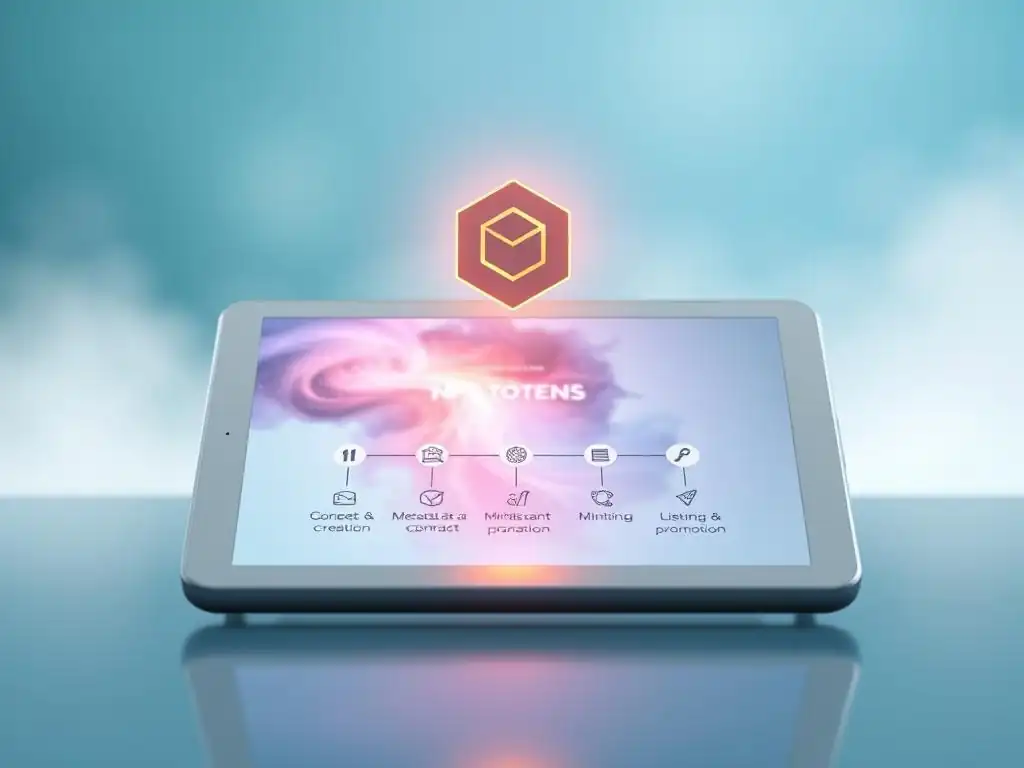
Building a Community
Building a community around your NFT art is crucial for long-term success in the NFT space. A strong community provides ongoing support, engagement, and organic marketing for your work. Start by actively engaging with other artists and collectors on social media platforms like Twitter and Discord.
Participate in NFT-related conversations, share your work, and genuinely interact with others in the community. Discord servers are particularly popular within the NFT space and provide a dedicated platform to connect with your audience, share updates, and build relationships. Create your own Discord server to foster a direct connection with your collectors and fans.
Offer exclusive benefits to your community members, such as early access to new NFT drops, behind-the-scenes content, or community-only giveaways. Host regular Q&A sessions or art workshops within your community to provide value and engagement. Collaborate with other artists or community members on projects to expand your reach and network. Actively listen to your community's feedback and incorporate it into your artistic process and community engagement strategies. A strong and engaged community not only supports your current NFT projects but also becomes a valuable asset for future endeavors.
Social media platforms are indispensable tools for promoting your NFT art and reaching a wider audience. Twitter is the primary social media platform for the NFT community. Use Twitter to share your artwork, announce new NFT drops, engage in conversations, and connect with collectors and other artists.
Use relevant hashtags like #NFTart, #cryptoart, #NFT, and hashtags related to your art style to increase discoverability. Instagram is visually driven and ideal for showcasing your artwork in an aesthetically pleasing manner. Use high-quality images or videos of your NFTs and use relevant hashtags to reach a broader audience interested in art and digital collectibles.
Consider using platforms like TikTok or YouTube to create short videos showcasing your art, your creative process, or explain the concept behind your NFTs. Engage with comments and messages on social media to build relationships with potential collectors. Run social media contests or giveaways to increase visibility and attract new followers. Collaborate with NFT influencers or promoters on social media to reach a larger audience. Consistency is key. Regularly post engaging content and actively participate in social media conversations to maintain visibility and build your online presence.
Collaborations
Collaborating with other artists, influencers, or brands in the NFT space can significantly amplify your reach and introduce your art to new audiences. Collaborations can take various forms, such as creating joint NFT artworks, co-hosting NFT drops, or participating in collaborative marketing campaigns. Collaborating with artists who have a different art style or audience can expose your work to a new segment of collectors and expand your creative horizons. Partnering with NFT influencers or promoters can leverage their established audience and credibility to promote your NFTs to a larger pool of potential buyers.
Collaborating with established brands or projects in the NFT space can add legitimacy and visibility to your work. Seek out collaboration opportunities that align with your artistic style and values. When collaborating, clearly define the roles, responsibilities, and revenue sharing arrangements upfront to ensure a smooth and mutually beneficial partnership. Cross-promote each other's work on social media and within your respective communities to maximize the impact of the collaboration. Collaborations not only expand your reach but also foster valuable connections and learning opportunities within the NFT ecosystem.
Participating in Art Events
Participating in NFT art events, both online and offline, is an effective way to showcase your artwork, network with other artists and collectors, and gain visibility in the NFT community. Online NFT art events, such as virtual galleries, online exhibitions, and Twitter Spaces events, provide accessible platforms to showcase your work to a global audience. Look for virtual galleries or online art platforms that feature NFT art and submit your work for consideration. Participate in online NFT art festivals or conferences to network and learn from industry experts.
Offline NFT art events, such as physical galleries showcasing NFT art, NFT art fairs, and blockchain conferences, offer opportunities to connect with collectors and artists in person. Research NFT art galleries in your area or in cities known for their NFT scenes. Consider participating in NFT art fairs or conferences to showcase your work and network with industry professionals.
Preparing a professional portfolio of your NFT art and having business cards or digital contact information readily available is essential for networking at art events. Participating in art events, both online and offline, can significantly enhance your visibility and credibility within the NFT art world.
Understanding Royalties and Legal Considerations
How NFT Royalties Work
NFT royalties are a revolutionary feature that allows digital artists to earn a percentage of secondary sales of their NFTs. This is a significant departure from traditional digital art sales where artists typically only receive a one-time payment upon the initial sale. When you mint an NFT, you can typically set a royalty percentage, which is programmed into the smart contract of the NFT.
This royalty percentage is automatically enforced by the marketplace's smart contracts. Whenever your NFT is resold on a participating marketplace, a percentage of the sale price, as defined by your royalty setting, is automatically sent to your wallet address.
Royalty percentages typically range from 2.5% to 10%, but some artists set higher or lower percentages depending on their preferences and market dynamics. Royalties provide a passive income stream for artists, allowing them to continuously benefit from the appreciation and trading of their work over time. Not all NFT marketplaces fully enforce royalties, and royalty enforcement mechanisms can vary across platforms and blockchains.
When choosing a marketplace, consider its royalty policies and enforcement mechanisms to ensure you receive royalties on secondary sales. Royalties are a crucial aspect of the NFT ecosystem that empowers artists and incentivizes the creation of valuable digital art.
Copyright and Intellectual Property
Copyright and intellectual property are fundamental considerations when creating and selling NFT art. As the creator of your digital artwork, you automatically own the copyright to your creation. Minting an NFT of your artwork does not transfer copyright ownership to the buyer.
The NFT represents ownership of a unique digital token linked to your artwork, but the underlying copyright remains with the artist unless explicitly transferred through a separate agreement. When selling your NFT art, it's important to clearly define the usage rights granted to the NFT buyer. Typically, NFT buyers acquire ownership of the NFT itself and the right to display the associated artwork for personal, non-commercial use.
Commercial usage rights, such as the right to reproduce, distribute, or create derivative works based on the artwork, are generally not automatically transferred with the NFT sale unless explicitly stated in the NFT's metadata or terms of sale. Be mindful of copyright infringement when creating NFT art. Avoid using copyrighted material without permission, and ensure your artwork is original and does not infringe on the intellectual property rights of others.
Consider including a copyright notice or terms of use in your NFT metadata or on your website to clarify the usage rights associated with your artwork. Protecting your intellectual property is crucial for maintaining control over your creative work and ensuring fair compensation for its use.
Legal Aspects of Selling NFTs
Selling NFTs, like any form of commerce, involves certain legal aspects that artists should be aware of. Depending on your jurisdiction and the scale of your NFT sales, you may have tax obligations on your NFT earnings. Consult with a tax professional to understand your tax responsibilities related to cryptocurrency and NFT income in your region. Be transparent and honest in your NFT listings and metadata descriptions.
Avoid making misleading claims about the rarity, value, or utility of your NFTs. Familiarize yourself with the terms of service and community guidelines of the NFT marketplaces you use. Marketplaces typically have rules regarding prohibited content, intellectual property infringement, and other aspects of NFT sales.
Consider creating terms of sale or disclaimers for your NFT art to clarify usage rights, liability limitations, and other relevant legal aspects. While the legal landscape surrounding NFTs is still evolving, adhering to general principles of fairness, transparency, and legal compliance is essential. As the NFT space matures, legal frameworks and regulations are likely to become more defined. Stay informed about legal developments in the NFT space and seek legal advice when necessary to ensure you are operating within legal boundaries and protecting your rights and interests.
Managing Sales and Earnings
Tracking Sales and Revenue
Effectively tracking your NFT sales and revenue is crucial for managing your art business and understanding your financial performance in the NFT space. Most NFT marketplaces provide dashboards or analytics sections that display your sales history, transaction details, and earnings. Utilize these marketplace tools to monitor your sales activity and track your revenue over time. Consider using spreadsheet software or dedicated financial tracking apps to organize and analyze your NFT sales data. Record details such as the NFT title, sale price, date of sale, marketplace, and any associated fees.
Tracking your sales data allows you to identify trends, analyze which artworks are performing well, and understand your overall revenue stream. This information can inform your pricing strategies, marketing efforts, and future art creation decisions. Regularly review your sales data to assess the profitability of your NFT art business and make informed decisions about your creative and financial strategies. Accurate and consistent sales tracking is essential for managing your finances and optimizing your success in the NFT market.
Converting Cryptocurrency
NFT sales are typically conducted in cryptocurrencies, such as Ether (ETH), Solana (SOL), or Polygon (MATIC). To access and utilize your earnings in traditional fiat currency, you will need to convert your cryptocurrency to your local currency. Cryptocurrency exchanges, such as Coinbase, Binance, Kraken, and others, provide platforms for converting cryptocurrencies to fiat currencies. You will need to create an account on a cryptocurrency exchange and link your crypto wallet to your exchange account. Follow the exchange's instructions for depositing cryptocurrency from your wallet to your exchange account.
Once your cryptocurrency is deposited on the exchange, you can initiate a conversion to your desired fiat currency (e.g., USD, EUR, GBP). The exchange will typically offer various conversion options, such as market orders or limit orders. Market orders execute the conversion at the current market price, while limit orders allow you to set a specific price for the conversion.
After the conversion is complete, you can withdraw the fiat currency to your bank account or other payment methods supported by the exchange. Be aware of transaction fees and withdrawal fees associated with cryptocurrency exchanges. Compare fees across different exchanges to optimize your conversion costs.
Reinvesting in Your Art
Reinvesting a portion of your NFT earnings back into your art practice is a strategic approach to sustain and grow your art business in the NFT space. Reinvesting can take various forms, such as upgrading your art software and hardware, investing in new art supplies, or taking online courses to enhance your skills. Consider reinvesting in marketing and promotion to increase the visibility of your NFT art and attract more collectors.
This could involve running social media ads, collaborating with NFT influencers, or participating in NFT art events. Reinvesting in your community engagement efforts can also strengthen your collector base and foster loyalty.
Explore reinvesting in new NFT projects or experiments to expand your artistic portfolio and explore different creative avenues within the NFT space. Consider investing in NFTs from other artists you admire to support the NFT art community and potentially diversify your digital asset portfolio. Allocate a portion of your NFT earnings for long-term savings or financial security to build a sustainable financial foundation for your art career. Strategic reinvestment in your art practice, marketing, and community building is essential for long-term growth and success as an NFT artist.
Advanced NFT Strategies
Fractionalized NFTs
Fractionalized NFTs represent a more advanced strategy that can enhance liquidity and accessibility for higher-value NFT artworks. Fractionalization involves dividing ownership of a single NFT into multiple fractional tokens, each representing a portion of ownership. This allows multiple individuals to own a share of a valuable NFT, making it more accessible to a wider range of collectors who might not be able to afford the entire NFT. Fractionalization can increase the liquidity of high-value NFTs by allowing owners to trade smaller fractions of ownership more easily.
Platforms and protocols exist that facilitate the fractionalization of NFTs, creating ERC-20 tokens (fungible tokens) that represent fractional ownership. These fractional tokens can be traded on decentralized exchanges (DEXs), providing increased liquidity and price discovery. Fractionalization can be particularly relevant for high-value digital art NFTs or collectible NFTs, allowing for shared ownership and democratized access. However, fractionalization also introduces complexities related to governance and decision-making among fractional owners. Consider the implications and potential benefits of fractionalization carefully before implementing this strategy for your NFT art.
Creating NFT Collections
Creating NFT collections, rather than single standalone NFTs, can be a powerful strategy to build a brand, engage collectors, and potentially increase the overall value of your NFT art. NFT collections are themed sets of NFTs, often sharing a common artistic style, concept, or narrative. Collections can create a sense of community and shared ownership among collectors who acquire NFTs from the same collection. Generative art projects often utilize NFT collections to release large numbers of unique but thematically related NFTs. Creating a well-defined and compelling theme for your NFT collection is crucial for attracting collectors.
Consider developing a roadmap or long-term vision for your NFT collection to maintain collector engagement and build anticipation for future releases or expansions. Offer utility or exclusive benefits to collectors who own multiple NFTs from your collection, such as access to exclusive content, community events, or future NFT drops. NFT collections can foster stronger community building, brand recognition, and long-term value creation compared to selling individual NFTs in isolation. Carefully plan the theme, design, and utility of your NFT collection to maximize its appeal and success.
Integrating Utility into NFTs
Integrating utility into NFTs beyond just digital art can significantly enhance their value and appeal to collectors. Utility refers to additional benefits or functionalities associated with owning an NFT, beyond simply owning the digital artwork itself. Utility can take various forms, such as access to exclusive content, membership in a community, voting rights in a decentralized autonomous organization (DAO), or in-game assets in a metaverse or game.
Consider adding utility to your NFT art to create additional value and incentivize collecting. For example, owning a specific NFT artwork could grant access to a private Discord channel, early access to future NFT drops, or a discount on future art purchases.
Utility can also be integrated through smart contracts, allowing NFTs to function as tickets, passes, or access keys to digital or real-world experiences. Experiment with different forms of utility to find creative ways to enhance the value proposition of your NFT art and engage your collector community. Integrating utility can transform NFTs from purely collectible digital art into functional digital assets with real-world or digital benefits, increasing their appeal and potential value.
Conclusion: The Future of Digital Art
Key Takeaways
Creating and selling digital art as NFTs presents a transformative opportunity for artists to connect directly with collectors, monetize their work, and participate in a burgeoning digital art ecosystem. NFTs empower artists with direct market access, royalty opportunities, and verifiable digital ownership. Choosing the right art style, software, and marketplace are crucial first steps. Optimizing artwork for minting and effectively defining metadata enhance discoverability and value.
Promoting your NFT art through community building, social media, collaborations, and art events is essential for reaching a wider audience. Understanding royalties, copyright, and legal considerations ensures artists operate ethically and protect their rights. Managing sales, converting cryptocurrency, and strategic reinvestment are important aspects of building a sustainable NFT art business.
Advanced strategies like fractionalized NFTs, NFT collections, and utility integration offer further avenues for innovation and value creation. The NFT market is dynamic and evolving, requiring artists to be adaptable, continuously learning, and actively engaged with the community. By embracing these practical steps and strategies, digital artists can navigate the NFT landscape successfully and unlock new possibilities for their creative careers.
The Evolving NFT Market
The NFT market, while experiencing fluctuations and evolving trends, represents a fundamental shift in how digital art is valued, owned, and interacted with. The underlying technology of blockchain and NFTs provides a foundation for verifiable digital scarcity and ownership, concepts that are increasingly relevant in a digital-first world. The market is expected to continue to evolve with new platforms, art forms, and use cases emerging.
Metaverse integration, increased utility for NFTs, and advancements in blockchain technology are likely to shape the future of the NFT market. Artists who embrace innovation, adapt to market trends, and build strong communities are well-positioned to thrive in this evolving landscape. The future of digital art is intertwined with the ongoing development and adoption of NFTs, offering exciting possibilities for artists and collectors alike.
Frequently Asked Questions
How much does it typically cost to mint an NFT for art creation?
The cost to mint an NFT can vary significantly depending on the blockchain network used and gas fees. It can range from a few dollars to hundreds of dollars, making it crucial to research current network conditions before minting. Consider gas-free options like Polygon.
What are the best blockchain platforms for listing and selling NFT art?
Several platforms are popular, including OpenSea, Rarible, and Foundation. The best platform depends on your target audience and desired features, but OpenSea is generally considered the largest marketplace. Consider platform fees and royalties before choosing.
What software or tools do I need to create digital art for NFTs?
You can use a wide range of software, from free options like Krita and GIMP to professional tools like Adobe Photoshop and Procreate. The choice depends on your skill level and desired art style. Experiment with different tools to find what suits you best.
How do royalties work when I sell my NFT art on a blockchain?
Royalties allow you to earn a percentage of future sales of your NFT artwork. The royalty percentage is set when you mint the NFT. Different platforms have different royalty structures. It's crucial to understand the royalty terms before selling.
What are the legal considerations I should be aware of when creating and selling NFT art?
Ensure you have the intellectual property rights to the artwork you're selling. Be aware of copyright laws and potential legal issues related to NFTs. Consult with a legal professional if you have any concerns about intellectual property or contract law.
Final Reflection: Embracing the Digital Renaissance
The journey of creating and selling digital art as NFTs, as outlined in this guide, is more than just a technical process; it's a participation in a burgeoning digital renaissance. The power to tokenize creativity and connect directly with collectors has democratized the art world in unprecedented ways, offering artists new avenues for recognition and financial independence. This guide aimed to provide the practical steps, but the true potential lies in the artist's vision and dedication to this exciting new frontier.
The rise of NFTs has profoundly impacted the cultural landscape, challenging traditional notions of ownership and value. This shift resonates deeply, reminding us that art is not confined to physical spaces but thrives in the digital realm, accessible to a global audience. Art is not what you see, but what you make others see.
- Edgar Degas. This quote encapsulates the essence of NFT art – the ability to share your unique perspective and connect with others who appreciate your vision, regardless of geographical boundaries.
Now, as you embark on your NFT art creation journey, remember that the technical skills are only the foundation. The true magic lies in your creativity, your passion, and your willingness to experiment. Embrace the possibilities, connect with the community, and let your art speak for itself. The digital canvas awaits your unique masterpiece. What will you create?
Unleash Your Inner Artist: Start Your NFT Journey Today!
Thank you for exploring the world of NFTs and digital art! We hope this guide has given you the confidence to begin your own creative venture. Now, it's time to take action.
Here are some steps to kickstart your NFT journey:
- Create your first NFT by selecting your best artwork, minting it on a popular platform like OpenSea or Rarible, and listing it for sale.
- Explore the work of other artists in the NFT community. Discover new styles and find inspiration within the vibrant blockchain art scene.
- Share this article with fellow artists interested in NFTs. Spreading the word helps foster a stronger, more creative decentralized community.
What type of art are you most excited to mint as an NFT, and which platform will you choose to start? Share your plans in the comments below!
Leave a Reply