
Decentralized Social Media and the Future of Online Identity Verification


Welcome to Blockchain Trends, your compass in the rapidly evolving world of decentralized technologies. Are you ready to explore how blockchain is revolutionizing industries beyond just cryptocurrencies?
This month, we delve into a fascinating intersection: the world of social media and blockchain-powered identity. Dive into our feature article to learn more about Blockchain social media verification, and how it could reshape online trust and authenticity. Could decentralized verification be the key to combating misinformation and reclaiming control of your digital identity? Let's explore the possibilities together.
Decentralized Social Media and the Future of Online Identity Verification
- Introduction: The Rise of Decentralized Social Media Platforms
- The Core Concepts of Blockchain Social Media Verification
- Benefits of Blockchain Social Media Verification for Users
- Challenges and Opportunities in Implementing Blockchain-Based Verification
- Comparing Traditional Identity Verification vs. Blockchain Social Media Verification
- Use Cases: Blockchain Verification in Action on Social Media
- The Future of Online Identity: Blockchain as the Foundation
- Overcoming Obstacles to Widespread Adoption of Blockchain Social Media Verification
- Conclusion: Blockchain Social Media Verification - A New Era of Trust and Transparency
-
Frequently Asked Questions
- What is decentralized social media verification and how does it differ from current methods?
- How can blockchain technology improve the reliability of social media profiles?
- What are the potential benefits of using blockchain for social media identity verification?
- What are some of the challenges associated with implementing blockchain-based social media verification?
- How might blockchain-based social media verification impact the future of online identity?
- Final Reflection: Embracing Trust in a Decentralized World
- Reimagine Your Online Identity!
Traditional social media platforms, while connecting billions globally, rely on centralized identity systems that present significant limitations. Users are often required to entrust their personal data to these platforms, creating honey pots of sensitive information vulnerable to breaches and misuse. Furthermore, the control over identity often rests with the platform, not the user, leading to issues like arbitrary account suspensions and a lack of portability of one's online persona.
Consider the Cambridge Analytica scandal, where data from millions of Facebook users was harvested without consent, highlighting the risks associated with centralized data storage and identity management. This lack of user autonomy and the inherent risks of centralized control are driving the search for alternative, decentralized models for social interaction online.
The current identity verification processes on platforms like Twitter, Facebook, and Instagram primarily rely on internal mechanisms, often opaque and inconsistent. Verification badges, for instance, are granted based on criteria that are not always transparent, and the process for obtaining or losing them can be unclear. This creates a system where trust is placed in the platform's judgment, rather than verifiable proof of identity or authenticity.
Moreover, these systems are susceptible to manipulation and impersonation, with fake accounts and bots proliferating despite platform efforts to combat them. The centralized nature of identity in traditional social media thus fosters a landscape ripe for misinformation and a lack of genuine user empowerment.
Blockchain's Role in Revolutionizing Online Verification
Blockchain technology offers a paradigm shift in online identity verification by enabling decentralized and user-centric systems. Its inherent properties of immutability, transparency, and cryptography provide a foundation for secure and verifiable digital identities. Unlike centralized databases, blockchain distributes identity information across a network, making it far more resistant to single points of failure and data breaches. This decentralized approach empowers users with greater control over their data and online identities, paving the way for a more trustworthy and equitable social media environment.
By leveraging cryptographic techniques, blockchain can ensure the authenticity and integrity of digital identities. Digital signatures and public-key infrastructure allow users to prove ownership of their identities without revealing sensitive personal information unnecessarily. This approach, known as self-sovereign identity, allows individuals to control their identity data and selectively share it as needed, enhancing privacy and reducing the risks associated with data centralization. Blockchain's potential to revolutionize online verification lies in its ability to create a more secure, transparent, and user-empowering system for managing digital identities in social media and beyond.
Decentralized Identity (DID) in the context of social media refers to a paradigm where individuals have complete control over their digital identities, independent of centralized authorities or social media platforms. Instead of relying on platform-specific usernames and passwords, DIDs are unique identifiers anchored on a blockchain or distributed ledger. These identifiers are cryptographically linked to the user, allowing them to manage and control their identity data, including personal information, credentials, and social connections, across various online platforms. This shift empowers users to own their digital persona and interact online with greater autonomy and security.
In a DID-based social media system, users would create and manage their own DIDs, which act as their portable digital identity. This identity can be used to access multiple decentralized social media platforms and services without the need to create separate accounts and share personal information repeatedly. DIDs enable selective disclosure of information, allowing users to share only the necessary data for each interaction, enhancing privacy and minimizing data exposure. For example, a user might share a verifiable credential proving their age without revealing their actual date of birth when accessing age-restricted content on a decentralized social media platform.
Self-Sovereign Identity (SSI) is a crucial concept underpinning blockchain social media verification. SSI empowers individuals to be the sole controllers of their digital identities. In the context of social media profiles, SSI means users, not platforms, manage their identity data, credentials, and permissions. This user-centric approach contrasts sharply with traditional social media, where platforms act as custodians of user data, often with limited user control and transparency. SSI aims to return ownership of identity to the individual, fostering greater privacy, security, and autonomy in the digital realm.
Applying SSI to social media profiles involves leveraging blockchain to create verifiable digital credentials that users can control and share. These credentials can represent various aspects of a user's identity, such as verified email addresses, professional affiliations, or even reputation scores.
Users can selectively present these credentials to social media platforms or other online services to prove their identity or qualifications without revealing unnecessary personal information. Imagine a scenario where a journalist can prove their affiliation with a reputable news organization through a verifiable credential, enhancing the credibility of their posts on a decentralized social media platform, without needing platform verification processes.
How Blockchain Technology Enables Secure and Transparent Identity Management
Blockchain technology provides the foundational infrastructure for secure and transparent identity management in decentralized social media. Its cryptographic security, distributed nature, and immutability ensure the integrity and authenticity of digital identities. Transactions on a blockchain are cryptographically secured and recorded in a transparent and auditable ledger, making it extremely difficult to tamper with identity data. This transparency and security are paramount for building trust in decentralized social media verification systems.
The use of cryptographic hash functions and digital signatures in blockchain ensures that identity data is tamper-proof and verifiable. When a user creates a DID or a verifiable credential, it is digitally signed and anchored on the blockchain. Anyone can then verify the authenticity and integrity of this identity data by checking the blockchain, without relying on a central authority.
Furthermore, the distributed nature of blockchain eliminates single points of failure, enhancing the resilience of the identity management system against attacks and censorship. This combination of security, transparency, and decentralization makes blockchain an ideal technology for building the future of online identity verification in social media.
Enhanced Privacy and Control Over Personal Data
Blockchain social media verification significantly enhances user privacy and control over personal data. In traditional social media, users often relinquish control of their data to platforms, which can be used for targeted advertising, data aggregation, or even sold to third parties. Blockchain-based verification, particularly with SSI principles, reverses this paradigm. Users maintain ownership and control over their identity data, deciding what information to share, with whom, and for how long. This user-centric approach to data management is a core benefit of decentralized social media.
With blockchain verification, users can selectively disclose verifiable credentials, revealing only the necessary information for a specific interaction. For instance, when joining a group on a decentralized social media platform, a user might only need to prove they are over 18, without sharing their birth date or full profile information. This granular control over data sharing minimizes data exposure and reduces the risk of privacy breaches. Furthermore, because identity data is not centrally stored, it is less vulnerable to large-scale data hacks that plague centralized social media platforms, safeguarding user privacy.
Blockchain social media verification offers robust mechanisms to reduce identity theft and fraud on social platforms. Traditional social media platforms are rife with fake accounts, bots, and impersonation, contributing to misinformation and scams. Blockchain's cryptographic security and verifiable credentials make it significantly harder to create and maintain fraudulent identities. Since DIDs are cryptographically linked to users and anchored on a blockchain, proving ownership of an identity becomes much more secure and reliable.
Verifiable credentials can be used to authenticate user profiles and content, making it easier to distinguish genuine users from fake accounts and bots. For example, a verified journalist can have a credential issued by a reputable organization, which can be cryptographically verified by anyone on a decentralized social media platform. This level of verifiable authenticity significantly reduces the effectiveness of impersonation and misinformation campaigns. Moreover, the transparency of blockchain transactions makes it easier to trace and identify malicious actors attempting to engage in fraudulent activities, enhancing the overall security of the social media environment.
Creating Verifiable Credentials for Online Reputation
Blockchain social media verification facilitates the creation of verifiable credentials for online reputation, offering a more trustworthy and portable system for assessing user credibility. In traditional social media, reputation is often platform-dependent and easily manipulated through likes, followers, and comments, which can be artificially inflated or deflated. Blockchain enables the creation of decentralized reputation systems where users can accumulate verifiable credentials representing their skills, achievements, or community contributions, which are not controlled by any single platform.
These verifiable reputation credentials can be issued by various sources, such as educational institutions, employers, or community organizations, and cryptographically linked to a user's DID. Users can then selectively share these credentials across different decentralized social media platforms and online services to build and showcase their reputation. For example, a developer can have a verifiable credential attesting to their coding skills, issued by a recognized coding certification body. This portable and verifiable reputation system fosters greater trust and accountability in online interactions, moving beyond platform-centric reputation metrics to a more user-centric and credible approach.
Challenges and Opportunities in Implementing Blockchain-Based Verification
Scalability is a significant challenge for implementing blockchain-based verification in decentralized social media networks. Blockchains, particularly those with robust security and decentralization, can face limitations in transaction throughput and processing speed. Social media platforms, in contrast, require handling massive volumes of interactions and data in real-time. If every social media interaction, including identity verification, were to be recorded on a blockchain, it could strain the network's capacity and lead to slow transaction times and high fees.
To address scalability, various Layer-2 solutions and blockchain scaling techniques are being explored for decentralized social media applications. These solutions aim to offload transaction processing from the main blockchain to secondary layers, enhancing throughput and reducing costs without compromising security. Examples include state channels, sidechains, and rollups. Furthermore, advancements in blockchain technology itself, such as sharding and improved consensus mechanisms, are continuously enhancing the scalability of blockchain networks. Overcoming scalability challenges is crucial for the widespread adoption of blockchain social media verification and ensuring a seamless user experience.
User Adoption and Education Regarding Blockchain Technology
User adoption and education pose considerable challenges to the mainstream implementation of blockchain social media verification. Blockchain technology, while powerful, can be complex and unfamiliar to the average user. Many individuals may not understand the concepts of DIDs, verifiable credentials, or the benefits of decentralized identity. This lack of awareness and understanding can create a barrier to adoption, even if blockchain-based social media offers superior privacy and security.
To foster user adoption, significant efforts are needed in user education and simplifying the user experience of blockchain-based social media platforms. User interfaces need to be intuitive and user-friendly, abstracting away the underlying complexities of blockchain technology. Educational resources, tutorials, and clear communication about the benefits of decentralized identity are crucial for onboarding users. Moreover, highlighting the tangible advantages of blockchain social media verification, such as enhanced privacy, control, and security, can motivate users to embrace this new paradigm. Addressing the user adoption challenge requires a focus on both education and user-centric design.
Interoperability between different blockchain social media platforms is crucial for creating a truly decentralized and user-centric online ecosystem. Currently, various blockchain platforms and decentralized identity solutions are emerging, potentially leading to fragmented identity silos if they are not interoperable. Users may end up with multiple DIDs and verifiable credentials for different platforms, undermining the goal of a unified and portable digital identity. Lack of interoperability can also hinder the network effects that are essential for the growth and success of social media platforms.
To achieve interoperability, industry standards and open protocols are needed for decentralized identity and verifiable credentials. Efforts are underway within organizations like the W3C and the Decentralized Identity Foundation (DIF) to develop these standards and promote interoperability. Adopting common standards would allow DIDs and verifiable credentials issued on one blockchain platform to be recognized and used on other platforms, creating a more seamless and interconnected decentralized social media landscape. Collaboration between blockchain developers, social media platforms, and standards organizations is essential to overcome the interoperability challenge and realize the full potential of blockchain social media verification.
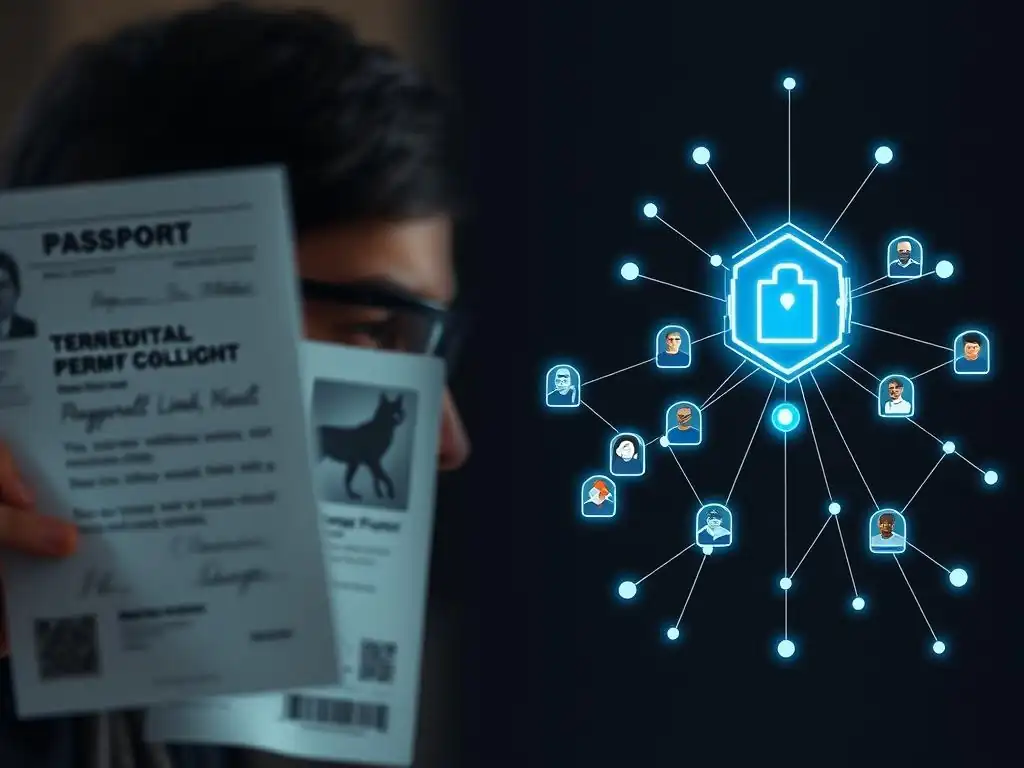
Security and Data Integrity: A Comparative Analysis
Comparing traditional identity verification with blockchain social media verification reveals significant differences in security and data integrity. Traditional methods often rely on centralized databases and password-based authentication, which are vulnerable to breaches, phishing attacks, and single points of failure. Data breaches at major social media platforms, like the Yahoo data breaches affecting 3 billion accounts, underscore the security risks of centralized systems. Data integrity can also be compromised in centralized systems due to internal errors or malicious actions.
Blockchain social media verification, leveraging decentralized and cryptographic principles, offers enhanced security and data integrity. Decentralization eliminates single points of failure, making it more resilient to attacks. Cryptographic hashing and digital signatures ensure data immutability and authenticity. Verifiable credentials provide tamper-proof proof of identity and attributes. While no system is entirely immune to security threats, blockchain's architecture inherently provides a more robust and secure foundation for identity verification compared to traditional centralized approaches. The distributed ledger and cryptographic mechanisms create a system where data is significantly harder to manipulate and compromise.
Cost-Effectiveness of Decentralized Verification Systems
The cost-effectiveness of decentralized verification systems compared to traditional methods is a complex consideration. Traditional social media platforms invest heavily in centralized identity verification infrastructure, including databases, servers, and security personnel. These costs can be substantial and are often borne by the platform and indirectly by users through data monetization. Blockchain-based verification, while potentially incurring initial development costs, can offer long-term cost advantages through reduced infrastructure needs and increased efficiency.
Decentralized systems can distribute the costs of identity verification across a network, rather than concentrating them within a single organization. The use of public blockchains can leverage existing infrastructure and consensus mechanisms, reducing the need for platforms to build and maintain their own verification systems from scratch.
Furthermore, the increased security and reduced fraud enabled by blockchain verification can lead to cost savings by minimizing the financial and reputational damage associated with data breaches and identity theft. While initial implementation costs may exist, the long-term operational costs and the potential for reduced fraud and increased efficiency suggest that decentralized verification systems can be cost-effective in the long run.
User Experience and Accessibility Considerations
User experience and accessibility are critical factors in comparing traditional and blockchain social media verification. Traditional social media platforms have refined their user experience over years, making account creation and login processes relatively seamless for most users. However, these processes often involve handing over personal data and accepting platform terms of service with limited user control. Blockchain-based verification, in its current stage, can present user experience challenges due to the novelty and complexity of the technology.
Creating user-friendly interfaces and simplifying the user journey is essential for making blockchain social media verification accessible to a wider audience. Abstracting away the technical complexities of blockchain and providing intuitive tools for managing DIDs and verifiable credentials are crucial.
Wallet management, key recovery, and understanding the implications of decentralized identity need to be made easier for non-technical users. As blockchain technology matures and user-friendly applications emerge, the user experience of decentralized verification is expected to improve, potentially surpassing the user experience of traditional systems in terms of user control, privacy, and security, once the initial learning curve is overcome.
Verified Profiles and Content Authenticity
Blockchain verification can revolutionize verified profiles and content authenticity on social media. Currently, verification badges on platforms like Twitter are often perceived as endorsements by the platform and can be inconsistently applied. Blockchain can enable a more transparent and user-controlled verification system. Users can obtain verifiable credentials from trusted sources, such as government agencies, educational institutions, or professional organizations, and link them to their DIDs. These credentials can then be cryptographically verified by anyone, providing irrefutable proof of identity and qualifications.
This approach allows for a more decentralized and trustworthy verification process. Instead of relying solely on platform-centric verification, users can present verifiable credentials to prove their identity, expertise, or affiliation. Content authenticity can also be enhanced by cryptographically signing posts and media using DIDs. This would allow users to verify that content originates from a specific verified individual or organization and has not been tampered with. For example, a news organization could cryptographically sign its articles, providing readers with verifiable proof of their authenticity and origin, combating the spread of misinformation.
Combating Bots and Fake Accounts with Blockchain Identity
Blockchain identity offers powerful tools to combat bots and fake accounts, which plague traditional social media platforms. Creating and managing thousands of fake accounts is relatively easy with current systems. Blockchain's cryptographic identity and verifiable credentials make it significantly more difficult and costly to create and maintain fraudulent identities at scale. Each DID is cryptographically linked to a user and requires cryptographic keys, making mass account creation resource-intensive and traceable.
Requiring users to possess verifiable credentials for certain social media features or interactions can further deter bot activity. For example, participating in public forums or engaging in content creation could require users to present a basic level of identity verification. This would raise the bar for bot operators and make it economically and technically challenging to deploy large-scale bot networks.
Furthermore, decentralized reputation systems built on blockchain can help identify and flag suspicious accounts and activities, contributing to a cleaner and more authentic social media environment. The inherent security and traceability of blockchain make it a potent weapon against bots and fake accounts.
Decentralized Reputation Systems and Trust Scores
Blockchain verification paves the way for decentralized reputation systems and trust scores that are more transparent, portable, and resistant to manipulation than current platform-centric systems. Traditional social media platforms use opaque algorithms to determine user reputation and content visibility, which can be biased and easily gamed. Decentralized reputation systems, built on blockchain, can leverage verifiable credentials and user interactions to create transparent and auditable reputation scores.
These reputation scores can be calculated based on various factors, such as verifiable credentials, peer reviews, content quality, and community contributions. The algorithms and data used to calculate reputation can be transparent and auditable on the blockchain, reducing bias and increasing user trust. Furthermore, reputation scores can be portable across different decentralized social media platforms, allowing users to build and maintain their reputation across the entire decentralized web. This shift towards decentralized and transparent reputation systems promotes accountability, rewards positive contributions, and fosters a more trustworthy and equitable online social environment.
The Future of Online Identity: Blockchain as the Foundation
Exploring the Potential of Zero-Knowledge Proofs for Privacy-Preserving Verification
Zero-Knowledge Proofs (ZKPs) hold immense potential for enhancing privacy-preserving verification in blockchain social media. ZKPs are cryptographic techniques that allow one party to prove to another party that a statement is true without revealing any information beyond the truth of the statement itself. In the context of identity verification, ZKPs can enable users to prove certain attributes about themselves, such as age or location, without disclosing the underlying data.
For example, a user could prove they are over 18 years old using a ZKP without revealing their actual birth date. This enhances privacy by minimizing data disclosure while still allowing for verifiable attribute-based access control. ZKPs can be integrated with DIDs and verifiable credentials to create highly privacy-preserving identity verification systems.
This technology is particularly relevant for social media platforms where users may want to control the amount of personal information they share while still participating in online communities and accessing services that require certain verifications. The adoption of ZKPs can significantly advance the development of privacy-centric decentralized social media platforms.
Decentralized social media and blockchain identity are poised to play a crucial role in shaping identity in the metaverse and virtual worlds. As virtual worlds become more immersive and interconnected, the need for portable and verifiable digital identities becomes even more critical. Users will want to carry their identities, reputations, and digital assets seamlessly across different metaverse platforms and virtual environments. Blockchain-based DIDs and verifiable credentials offer the ideal solution for managing identity in this evolving digital landscape.
DIDs can serve as universal identifiers in the metaverse, allowing users to establish a persistent digital persona that is not tied to any single platform. Verifiable credentials can represent avatars, digital assets, skills, and reputation within virtual worlds.
Imagine a user entering a virtual meeting in the metaverse and presenting a verifiable credential proving their professional affiliation, or using their DID to access different virtual social spaces and carry their digital identity and possessions with them. Decentralized social media principles and blockchain identity are fundamental for building an open, interoperable, and user-centric metaverse where individuals have control over their digital presence and interactions.
Regulatory Considerations and the Evolution of Digital Identity Standards
Regulatory considerations and the evolution of digital identity standards are crucial factors shaping the future of blockchain social media verification. As decentralized identity gains traction, governments and regulatory bodies are increasingly关注ing its implications for privacy, security, and data governance. Regulations like GDPR in Europe and similar data privacy laws globally are influencing the development and deployment of digital identity technologies. Compliance with these regulations is essential for the widespread adoption of blockchain social media verification.
Furthermore, the development of international standards for digital identity is critical for interoperability and global acceptance. Organizations like the W3C and ISO are working on standards for verifiable credentials and decentralized identifiers. These standards aim to ensure that digital identities are portable, secure, and privacy-preserving across different jurisdictions and platforms. The evolving regulatory landscape and the progress in digital identity standardization will significantly impact the trajectory of blockchain social media verification, shaping its adoption, implementation, and ultimately, its role in the future of online identity.
Addressing Data Security and Immutability Concerns Through Key Management
Addressing data security and immutability concerns through robust key management is paramount for overcoming obstacles to widespread adoption of blockchain social media verification. While blockchain offers inherent security and immutability, the security of DIDs and verifiable credentials ultimately depends on the secure management of cryptographic keys. If private keys are lost or compromised, users may lose access to their identities or become vulnerable to identity theft. Therefore, user-friendly and secure key management solutions are essential.
Developing intuitive and secure wallet technologies for managing DIDs and keys is crucial. Solutions like multi-signature wallets, social recovery mechanisms, and hardware wallets can enhance key security and mitigate the risks of key loss or compromise. Furthermore, educating users about best practices for key management and security hygiene is vital. Addressing user concerns about data security and ensuring robust key management are critical steps towards building trust and fostering the widespread adoption of blockchain social media verification. The focus must be on making key management accessible and secure for the average user, not just cryptography experts.
Simplifying user interfaces for blockchain social media platforms is essential for mainstream adoption. Currently, interacting with blockchain technology can be complex and daunting for non-technical users. User interfaces for decentralized social media platforms need to be intuitive, user-friendly, and abstract away the underlying technical complexities of blockchain. The user experience should be as seamless and familiar as possible to traditional social media platforms, while offering the added benefits of decentralization, privacy, and user control.
Designers and developers need to prioritize user-centric design principles when building blockchain social media platforms. Onboarding processes should be simple and straightforward. Wallet management and key management should be integrated seamlessly into the user interface. Technical jargon should be minimized, and clear and concise language should be used throughout the platform. Focusing on user experience and simplifying interfaces will lower the barrier to entry for non-technical users and accelerate the adoption of blockchain social media verification. The goal is to make decentralized social media as easy to use as existing centralized platforms, if not easier, while providing enhanced benefits.
Fostering collaboration between blockchain developers and social media platforms is crucial for accelerating the adoption and evolution of blockchain social media verification. Blockchain developers bring expertise in decentralized technology, cryptography, and secure identity management. Traditional social media platforms possess vast user bases, established social networks, and experience in building and scaling social applications. Collaboration between these two groups can leverage their respective strengths to create innovative and user-friendly decentralized social media solutions.
Partnerships and collaborations can facilitate the integration of blockchain verification into existing social media platforms or the development of entirely new decentralized social media platforms. Sharing knowledge, resources, and expertise can accelerate innovation and address challenges related to scalability, user experience, and interoperability. Open-source development and community-driven initiatives can also play a vital role in fostering collaboration and building a robust ecosystem for blockchain social media verification. By working together, blockchain developers and social media platforms can unlock the full potential of decentralized identity for the future of online social interaction.
The transformative potential of decentralized identity for social interaction is immense. Blockchain social media verification, powered by DIDs and verifiable credentials, promises to usher in a new era of trust and transparency online. By empowering users with control over their digital identities and data, decentralized identity can address many of the limitations and challenges of traditional social media platforms. Enhanced privacy, reduced identity theft, and verifiable reputation systems are just some of the benefits that decentralized identity can bring to social interaction online.
This paradigm shift towards user-centric identity can fundamentally change the dynamics of online social networks. It can create a more equitable and trustworthy environment where users have greater autonomy, security, and agency. Decentralized identity has the potential to mitigate misinformation, combat fraud, and foster more authentic and meaningful online interactions. As blockchain technology matures and user adoption grows, the transformative potential of decentralized identity for social interaction is poised to reshape the future of online communities and digital societies.
The future of blockchain-powered social media platforms and identity management is bright and full of potential. While challenges remain in terms of scalability, user adoption, and interoperability, the momentum behind decentralized identity and blockchain social media is growing. Innovation in blockchain technology, user-centric design, and collaborative efforts between blockchain developers and social media platforms are paving the way for a new generation of decentralized social networks.
Blockchain social media verification represents a significant step towards a more user-centric and trustworthy internet. As users become increasingly aware of the limitations of centralized platforms and the benefits of decentralized identity, the demand for blockchain-powered social media is expected to rise. The future likely holds a diverse ecosystem of decentralized social media platforms that leverage blockchain to empower users, enhance privacy, and foster a more transparent and equitable online social landscape. Blockchain is not just revolutionizing finance; it is poised to transform the very fabric of online identity and social interaction.
Frequently Asked Questions
Decentralized social media verification uses blockchain technology to create a more secure and user-controlled system. Unlike current methods reliant on centralized platforms, it gives users ownership of their digital identities and data. This reduces reliance on single points of failure.
Blockchain provides a tamper-proof ledger for storing verification data. This ensures that verified information remains accurate and cannot be easily altered, leading to more trustworthy profiles. It enables users to prove their identity without revealing sensitive personal information.
Benefits include enhanced privacy and security for users, reduced risk of fake accounts and bots, and increased transparency in online interactions. Users gain greater control over their data, diminishing the power of centralized social media companies.
Challenges include scalability limitations of some blockchain networks, the need for user adoption and education, and the potential for regulatory hurdles. Ensuring interoperability between different blockchain systems is also crucial.
It could lead to a future where individuals have sovereign control over their digital identities, enabling more secure and trustworthy online interactions. This may foster a more decentralized and democratic internet, free from the control of centralized entities.
Final Reflection: Embracing Trust in a Decentralized World
The exploration of decentralized social media and blockchain social media verification reveals a critical juncture in our digital evolution. The promise of reclaiming control over our online identities and fostering genuine connections is no longer a futuristic fantasy, but a tangible possibility. The current landscape, riddled with data breaches and algorithmic manipulation, underscores the urgent need for solutions that prioritize user autonomy and verifiable authenticity.
This movement towards decentralized platforms is more than just a technological shift; it's a cultural one, challenging the established power structures and demanding greater transparency. The ability to prove our identity without surrendering our privacy is paramount to building a more equitable and trustworthy online environment. The future of identity is decentralized, verifiable, and user-centric.
This vision fuels the ongoing innovation and experimentation within the blockchain social media verification space, pushing us closer to a reality where online interactions are grounded in trust, not blind faith.
As we stand on the cusp of this decentralized future, I invite you to consider your role in shaping it. What steps can you take to support the development and adoption of blockchain social media verification? How can you advocate for policies that protect user privacy and promote digital sovereignty? The power to build a more authentic and empowering online world lies within each of us. Let us embrace the potential of decentralized technologies and work together to create a future where trust and verification are not privileges, but fundamental rights.
Reimagine Your Online Identity!
Thank you for exploring the potential of decentralized social media with us. We hope this article has shed light on how blockchain technology can revolutionize online identity verification and give you more control over your data. Now, let's put this knowledge into action:
- Explore the decentralized web! Try out a decentralized social media platform such as Mastodon or Peepeth to experience the future of online interaction firsthand.
- Share this article with your network to foster a conversation about the importance of owning your online identity.
- Consider how blockchain-based identity solutions could address challenges within your community or industry.
What is one step you will take today to regain control of your digital identity?
Leave a Reply