
The Future of News Aggregation: Blockchain's Role in Curating Content


Welcome to Blockchain Trends, your gateway to understanding the real impact of blockchain technology! Forget just cryptocurrencies; we delve into the revolutionary potential of this technology across diverse sectors. Ever wondered how blockchain could reshape the way we consume information? Dive into our latest article and explore the fascinating world of blockchain-based news curation systems, and discover how this technology is poised to revolutionize trust and transparency in media. Intrigued? Read on to unlock the future of news aggregation!
The Future of News Aggregation: Blockchain's Role in Curating Content
- Introduction: News Aggregation in the Digital Age and its Challenges
- Blockchain and Content Curation: A Decentralized Solution
- Key Benefits of Blockchain-Based News Curation Systems
- Exploring Different Blockchain News Curation Models
- Use Cases: Real-World Applications of Blockchain in News Aggregation
- Challenges and Obstacles to Adoption
- The Future of News Aggregation: Blockchain and Beyond
- Conclusion: Blockchain-Based News Curation Systems - Empowering a More Informed Future
-
Frequently Asked Questions
- How can blockchain technology improve news curation?
- What are the potential benefits of blockchain-based news curation systems?
- How does blockchain help combat fake news in news aggregation?
- What role does DeFi (Decentralized Finance) play in the future of blockchain news curation?
- What are some challenges in implementing blockchain-based news curation systems?
- Final Reflection: Empowering Truth Through Decentralization
- Unleash the Power of Decentralized News!
Introduction: News Aggregation in the Digital Age and its Challenges
The Current State of News Aggregation Platforms
News aggregation platforms have become indispensable tools in the digital age, offering users a centralized point of access to a vast array of news from diverse sources. Platforms like Google News, Apple News, and Flipboard utilize algorithms to crawl, categorize, and present news articles based on user preferences and trending topics. These platforms have revolutionized news consumption by streamlining access and offering personalized news feeds, moving away from traditional, linear consumption patterns dictated by newspapers or broadcast schedules.
The sheer volume of information processed daily by these aggregators is staggering, with Google News, for instance, reportedly indexing tens of thousands of news sources globally and processing billions of searches daily. This accessibility has undeniably democratized information dissemination, allowing individuals to stay informed about global events with unprecedented ease.
However, the current landscape of news aggregation is heavily centralized, dominated by a few tech giants. These platforms wield significant power over content visibility and distribution, acting as gatekeepers to information for a substantial portion of the global population. This centralization raises concerns about algorithmic bias, filter bubbles, and the potential for manipulation of news narratives.
The algorithms that power these platforms, while designed to personalize user experience, are often opaque and can inadvertently reinforce existing biases or create echo chambers, limiting exposure to diverse perspectives. The reliance on advertising revenue models also incentivizes clickbait and sensationalism, potentially prioritizing engagement over journalistic integrity and factual accuracy.
Problems with Traditional News Aggregators: Bias and Misinformation
One of the most significant challenges facing traditional news aggregators is the inherent risk of bias and the spread of misinformation. Algorithms, designed by humans, can inadvertently reflect or even amplify existing societal biases, leading to skewed news feeds that disproportionately favor certain viewpoints or sources.
Studies have shown that algorithmic curation can lead to filter bubbles, where users are primarily exposed to information confirming their pre-existing beliefs, limiting their understanding of diverse perspectives and potentially exacerbating societal polarization. For example, research by the Pew Research Center consistently indicates partisan divides in news consumption habits, and algorithms can inadvertently reinforce these divides by prioritizing content that aligns with a user's political leaning, based on their past engagement.
Furthermore, the speed and scale at which news aggregators operate make them vulnerable to the rapid dissemination of misinformation and disinformation. The algorithms, while adept at identifying trending topics, are not always equipped to effectively discern between credible news and fabricated content. The incentive to maximize user engagement can sometimes prioritize sensational or emotionally charged content, regardless of its factual accuracy.
The 2016 US Presidential election and the subsequent Brexit referendum highlighted the potent impact of misinformation spread through social media and news aggregators, demonstrating the urgent need for more robust mechanisms to verify information and combat the spread of fake news. Traditional aggregators often rely on reactive measures, such as fact-checking partnerships, which, while helpful, may not be sufficient to proactively prevent the initial spread of harmful misinformation.
Blockchain and Content Curation: A Decentralized Solution
What is Blockchain-Based News Curation?
Blockchain-based news curation represents a paradigm shift in how news is aggregated and consumed. At its core, it leverages blockchain technology's inherent properties of decentralization, transparency, and immutability to create news platforms that are less susceptible to manipulation, bias, and censorship. Instead of relying on centralized algorithms controlled by a single entity, blockchain-based systems distribute content curation responsibilities across a network of participants.
This can involve tokenized incentives for users to evaluate content quality, decentralized autonomous organizations (DAOs) to govern platform rules, and smart contracts to automate content verification processes. The key innovation lies in shifting power away from centralized gatekeepers and towards a more distributed and participatory model of news aggregation.
In a blockchain-based news curation system, content provenance and authenticity can be cryptographically verified. Each piece of content can be timestamped and recorded on the blockchain, creating an immutable audit trail of its origin and any subsequent modifications. This transparency is crucial in combating misinformation, as it allows users to trace the source of information and assess its credibility more effectively.
Furthermore, blockchain enables the creation of tokenized ecosystems where users are rewarded for contributing to content curation, such as identifying high-quality news, flagging misinformation, or participating in governance decisions. This incentivized participation fosters a more engaged and responsible community around news consumption, potentially leading to more accurate and trustworthy information ecosystems.
How Blockchain Solves Existing News Aggregation Problems
Blockchain technology offers direct solutions to many of the problems inherent in traditional news aggregation platforms. Decentralization directly addresses the issue of centralized control and algorithmic bias. By distributing curation responsibilities across a network, blockchain mitigates the risk of a single entity manipulating news narratives or imposing biased algorithms.
The cryptographic nature of blockchain and the use of consensus mechanisms ensure that data, including news content and curation decisions, is tamper-proof and transparent, enhancing trust in the information presented. This immutability provides a robust defense against censorship and manipulation, as no single entity can unilaterally alter or remove content without the consensus of the network.
Furthermore, blockchain's tokenized incentive systems can address the problem of misinformation and the lack of quality control in traditional aggregators. By rewarding users for accurately identifying and flagging misinformation, and for curating high-quality content, blockchain platforms can incentivize accuracy and quality over clickbait and sensationalism.
Smart contracts can automate content verification processes, potentially leveraging decentralized fact-checking services or reputation systems to algorithmically assess the credibility of news sources and claims. This proactive approach to content verification, combined with community-driven curation, offers a more robust and resilient defense against the spread of fake news compared to the reactive measures employed by traditional aggregators.
Key Benefits of Blockchain-Based News Curation Systems
Transparency and Immutability in News Sources and Content
Transparency is a core tenet of blockchain technology, and its application to news curation brings unprecedented visibility into news sources and content provenance. Every piece of content added to a blockchain-based news platform can be permanently recorded, along with metadata about its source, timestamp, and any subsequent curation actions. This creates an immutable audit trail, allowing users to trace the origin and history of news articles, fostering trust and accountability.
For instance, if a news article undergoes revisions, these changes can be logged on the blockchain, providing a clear record of how the content evolved over time. This level of transparency is a stark contrast to traditional news aggregators, where content sources and algorithmic curation processes are often opaque and proprietary.
Immutability, another fundamental blockchain characteristic, ensures that once content is recorded on the blockchain, it cannot be altered or deleted by any single entity. This is crucial for preserving the integrity of news archives and preventing retroactive manipulation of news narratives. Imagine a scenario where a controversial news article is published and subsequently faces pressure for retraction or alteration.
On a blockchain-based platform, the original article remains permanently accessible, alongside any retractions or corrections, providing a complete and unalterable record of events. This immutability empowers readers to access the full context of news events and make informed judgments based on verifiable information, rather than relying on potentially manipulated or censored accounts.
Enhanced Trust and Verification of Information
Blockchain-based news curation systems are designed to enhance trust in information by providing tools and mechanisms for content verification. The transparent and immutable nature of the blockchain itself contributes to trust, as users can verify the source and history of news content directly. Beyond this inherent transparency, blockchain enables the integration of decentralized verification mechanisms. For example, platforms can utilize decentralized identity solutions to verify the credentials of journalists and news sources, adding a layer of authentication to content. Cryptographic signatures can further ensure that content has not been tampered with since its original publication.
Moreover, blockchain facilitates the development of community-driven fact-checking and verification processes. Tokenized incentive systems can reward users for contributing to fact-checking efforts, incentivizing the identification and flagging of misinformation. Decentralized reputation systems can track the accuracy and reliability of both news sources and individual users, providing a transparent and community-validated measure of trustworthiness. By combining cryptographic verification, decentralized identity, and community-driven fact-checking, blockchain-based platforms can create news ecosystems that are significantly more resistant to misinformation and foster greater trust in the information presented.
Decentralized Governance and Community-Driven Curation
Decentralized governance is a key differentiator of blockchain-based news curation systems, shifting control away from centralized entities and towards the community of users and stakeholders. Decentralized Autonomous Organizations (DAOs) can be implemented to manage platform rules, content curation policies, and even the allocation of resources. DAOs operate based on smart contracts, encoding governance rules into code and enabling transparent and automated decision-making processes. This ensures that platform governance is not subject to the whims of a single company or individual, but rather reflects the collective will of the community.
Community-driven curation is another essential aspect of decentralized governance. Users can actively participate in the curation process, such as voting on the relevance and quality of news content, flagging misinformation, and contributing to content categorization. Tokenized incentive systems can reward users for their contributions, further encouraging active participation and fostering a sense of ownership over the platform. This participatory model of curation can lead to more diverse and representative news feeds, reflecting the collective intelligence and perspectives of the community, rather than being solely dictated by algorithms or editorial biases.
Prevention of Censorship and Manipulation
The decentralized and immutable nature of blockchain inherently makes it resistant to censorship and manipulation, crucial benefits for news curation in an era of increasing concerns about information control. In traditional centralized systems, a single entity, whether a government, corporation, or platform owner, can exert control over content, potentially leading to censorship or manipulation of news narratives. Blockchain's distributed architecture eliminates this single point of failure. Content stored on a decentralized blockchain is replicated across multiple nodes, making it extremely difficult to censor or remove without the consensus of the entire network.
Furthermore, the cryptographic security of blockchain ensures that content is tamper-proof. Once recorded on the blockchain, news articles and curation decisions cannot be unilaterally altered or deleted, preventing manipulation of historical records or retroactive censorship. This immutability provides a powerful safeguard against attempts to distort or suppress information. By creating censorship-resistant and manipulation-proof news platforms, blockchain technology empowers individuals to access and share information freely, fostering a more open and democratic information ecosystem.
Exploring Different Blockchain News Curation Models
Tokenized Curation Systems: Incentivizing Quality Content
Tokenized curation systems are a prominent model in blockchain-based news aggregation, leveraging cryptocurrencies or platform-specific tokens to incentivize users to curate high-quality content and contribute to platform governance. These systems typically reward users for actions such as submitting valuable news articles, accurately assessing content quality, flagging misinformation, or participating in voting on platform policies. The tokens earned can often be used within the platform for premium features, access to exclusive content, or even traded on cryptocurrency exchanges, creating a tangible economic incentive for positive contributions.
For example, platforms might reward users for upvoting high-quality articles or downvoting low-quality or misleading content. The weight of a user's vote could be determined by their reputation or the amount of tokens they hold, creating a meritocratic system where informed and engaged users have a greater influence on content curation. Tokenized curation models aim to align the incentives of users with the platform's goals of delivering accurate, relevant, and high-quality news. By rewarding positive contributions and potentially penalizing negative actions, such as spreading misinformation, these systems strive to create self-regulating and sustainable news ecosystems.
Decentralized Autonomous Organizations (DAOs) for News Governance
Decentralized Autonomous Organizations (DAOs) offer a powerful model for governing blockchain-based news platforms in a transparent and community-driven manner. DAOs are organizations whose rules and operations are encoded into smart contracts on a blockchain, eliminating the need for traditional hierarchical management structures. In the context of news curation, DAOs can govern aspects such as content moderation policies, algorithm development, resource allocation, and platform upgrades. Decisions within a DAO are typically made through voting by token holders, ensuring that governance is distributed and reflects the collective will of the community.
For instance, a DAO could be responsible for setting the criteria for acceptable news sources, defining guidelines for content moderation, or allocating funds for platform development or journalistic initiatives. Proposals for changes to platform rules or policies would be submitted to the DAO, and token holders would vote to approve or reject them.
This decentralized governance model enhances transparency and accountability, as all governance processes and decisions are recorded on the blockchain and publicly auditable. DAOs can empower users to shape the direction of news platforms and ensure that they operate in a way that aligns with the community's values and interests.
Smart Contracts for Automated Content Verification
Smart contracts, self-executing contracts with the terms of the agreement directly written into code, can automate various aspects of content verification in blockchain-based news curation systems. These contracts can be programmed to perform tasks such as verifying the authenticity of news sources, cross-referencing information across multiple sources, or even analyzing content for potential biases or misinformation using AI algorithms. Smart contracts execute automatically when predefined conditions are met, ensuring consistent and transparent verification processes without the need for manual intervention.
For example, a smart contract could be designed to automatically verify the digital signature of a news organization to confirm its authenticity. Another smart contract could be programmed to check for plagiarism by comparing submitted content against a database of existing articles. Furthermore, smart contracts can integrate with decentralized fact-checking services, automatically querying these services to assess the veracity of claims made in news articles. By automating content verification processes, smart contracts can enhance the efficiency and reliability of blockchain-based news curation, reducing the reliance on manual moderation and potentially improving the speed and accuracy of fact-checking.
Civil: A Blockchain-Based Journalism Platform
Civil is a real-world example of a blockchain-based journalism platform that aimed to revolutionize news by leveraging blockchain for governance and content monetization. Launched in 2018, Civil sought to create a decentralized ecosystem where journalists could publish their work independently and be directly supported by readers, without relying on traditional media intermediaries. The platform utilized its own cryptocurrency, CVL, to incentivize participation and govern the Civil network.
Journalists could apply to join Civil and, if accepted by the community, could publish their work on the platform. Readers could subscribe to news organizations or individual journalists using CVL tokens, directly supporting their work.
Civil also implemented a decentralized governance model, where CVL token holders could vote on membership applications, platform policies, and the allocation of resources. The platform aimed to promote ethical and independent journalism by giving journalists greater control over their work and fostering a direct relationship with their audience.
While Civil faced challenges in achieving widespread adoption and ultimately ceased operations in its initial form, it served as a pioneering example of how blockchain technology could be applied to create a more decentralized and sustainable journalism ecosystem. The lessons learned from Civil continue to inform the development of other blockchain-based news initiatives.
Use Cases: Real-World Applications of Blockchain in News Aggregation
Combating Fake News and Disinformation with Blockchain
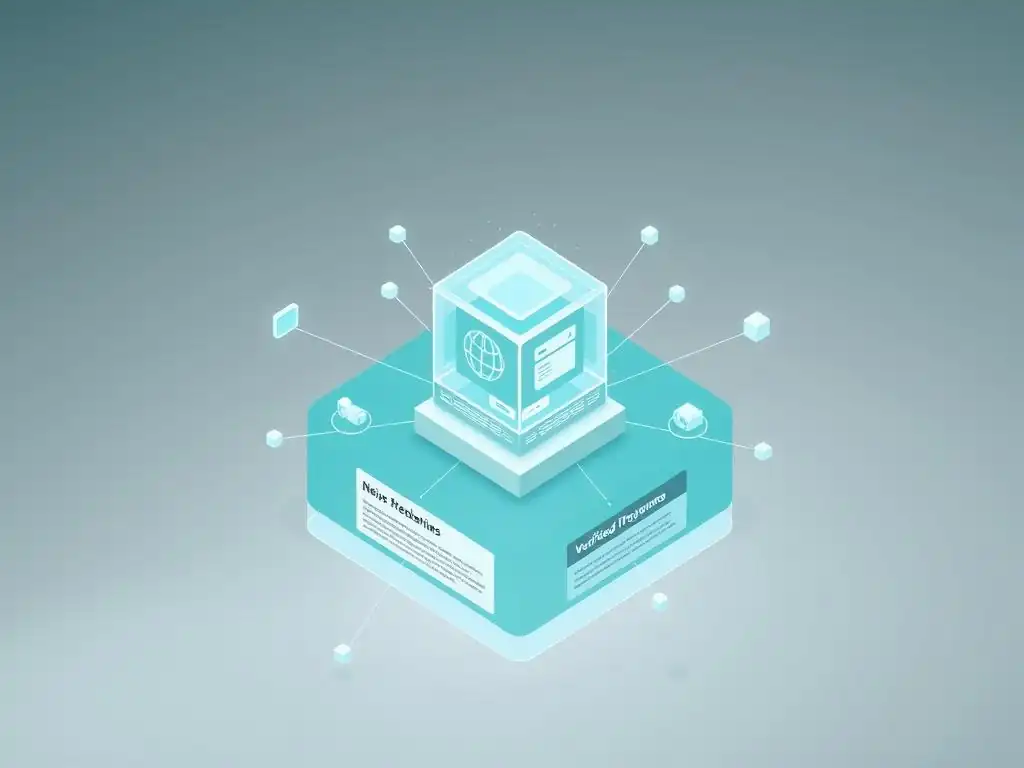
One of the most compelling use cases for blockchain in news aggregation is its potential to combat fake news and disinformation. The inherent transparency and immutability of blockchain provide powerful tools for verifying content provenance and tracking the spread of misinformation. By recording news articles and their metadata on a blockchain, platforms can create an auditable trail of information, making it easier to trace the origin of content and identify manipulated or fabricated news. Cryptographic signatures can further ensure content authenticity, preventing tampering and impersonation.
Moreover, blockchain-based systems can incentivize community-driven fact-checking and verification efforts. Tokenized reward systems can motivate users to flag misinformation and contribute to fact-checking processes. Decentralized reputation systems can track the accuracy of news sources and individual users, helping to identify and demote sources known for spreading false information. By combining these features, blockchain-based news platforms can create more resilient defenses against fake news, empowering users to discern credible information from disinformation and fostering a more trustworthy information environment.
Supporting Independent Journalism and Content Creators
Blockchain technology offers new avenues for supporting independent journalism and content creators, potentially disrupting traditional media business models and fostering a more diverse and sustainable media landscape. Traditional media outlets often rely heavily on advertising revenue, which can incentivize clickbait and sensationalism and may not adequately support in-depth investigative journalism or niche content. Blockchain-based platforms can enable alternative monetization models, such as micropayments, subscriptions, and direct donations, allowing readers to directly support the journalists and content creators they value.
Tokenized ecosystems can further empower independent journalists by giving them greater control over their content and monetization. Platforms can distribute tokens to journalists based on the quality and impact of their work, creating a more equitable and transparent reward system. Decentralized publishing platforms can reduce reliance on centralized intermediaries, allowing journalists to publish directly to their audience and retain a larger share of the revenue generated. By providing new tools and models for monetization and distribution, blockchain can help to foster a more vibrant and sustainable ecosystem for independent journalism and content creation.
Creating More Diverse and Representative News Ecosystems
Blockchain-based news curation systems have the potential to create more diverse and representative news ecosystems, moving beyond the filter bubbles and echo chambers often fostered by traditional algorithms. Decentralized governance models can ensure that platform rules and content curation policies are not solely determined by a centralized entity but reflect the collective will of the community. Community-driven curation can further diversify news feeds, as users from different backgrounds and perspectives contribute to content selection and categorization.
Algorithms used in blockchain-based platforms can be designed to prioritize diversity and inclusivity, actively seeking out and promoting content from underrepresented voices and perspectives. Tokenized reward systems can incentivize the curation of diverse content, encouraging users to engage with and promote a wider range of viewpoints. By fostering greater diversity in news sources, content, and curation processes, blockchain-based platforms can help to create more inclusive and representative news ecosystems, promoting a more comprehensive and nuanced understanding of global events and perspectives.
Challenges and Obstacles to Adoption
Scalability Issues in Blockchain Networks
Scalability remains a significant challenge for blockchain technology in general, and this challenge extends to blockchain-based news curation systems. Many existing blockchain networks, particularly those relying on proof-of-work consensus mechanisms, have limited transaction throughput and can struggle to handle high volumes of data and user activity. News aggregation platforms, by their nature, require processing vast amounts of data and supporting potentially millions of users. If the underlying blockchain network is not sufficiently scalable, it can lead to slow transaction speeds, high transaction fees, and a poor user experience.
Solutions to scalability challenges are being actively developed, including layer-2 scaling solutions like sidechains and rollups, as well as the development of more scalable layer-1 blockchains. As blockchain technology matures and scalability solutions become more robust, this challenge is expected to diminish. However, for the near future, scalability considerations remain a crucial factor in the design and deployment of blockchain-based news curation platforms, particularly for those aiming for mass adoption.
Regulatory Uncertainty Surrounding Decentralized Media
Regulatory uncertainty poses another significant obstacle to the widespread adoption of blockchain-based news curation systems. The decentralized and often borderless nature of blockchain technology challenges traditional regulatory frameworks, and governments worldwide are still grappling with how to regulate cryptocurrencies and decentralized applications. The legal status of tokens used in tokenized curation systems, the jurisdictional issues surrounding decentralized platforms, and the potential liability for content moderation in decentralized networks are all areas where regulatory clarity is still lacking.
This regulatory uncertainty can create risks and challenges for developers and users of blockchain-based news platforms. Platforms may face legal challenges or compliance burdens in different jurisdictions, and users may be uncertain about the legal implications of participating in decentralized media ecosystems. As regulatory frameworks for blockchain technology evolve, it is crucial for blockchain-based news platforms to proactively engage with regulators and adapt to emerging legal requirements to ensure compliance and foster a sustainable regulatory environment.
User Adoption and Education Barriers
User adoption presents a significant hurdle for any new technology, and blockchain-based news curation is no exception. Many users are unfamiliar with blockchain technology and cryptocurrencies, and may find the concepts and interfaces of decentralized platforms complex or intimidating. The user experience on many existing blockchain applications is often less seamless and intuitive compared to traditional web platforms, creating a barrier to entry for mainstream users.
Overcoming user adoption barriers requires a focus on user education and simplification of the user experience. Platforms need to provide clear and accessible educational resources to help users understand the benefits of blockchain-based news curation and how to use decentralized platforms. User interfaces need to be designed to be intuitive and user-friendly, abstracting away the underlying technical complexities of blockchain technology. As user education efforts increase and user interfaces improve, adoption barriers are expected to gradually decrease, paving the way for wider acceptance of blockchain-based news curation.
Data Storage Limitations on Blockchains
While blockchain excels at providing secure and immutable records of transactions and data, storing large volumes of data directly on the blockchain can be costly and inefficient. News articles, especially those with multimedia content, can be relatively large in size, and storing every piece of content directly on the blockchain could quickly become prohibitively expensive and lead to network congestion. While blockchains are excellent for storing metadata and hashes of content to ensure integrity, they are not designed for efficient storage of large files.
To address data storage limitations, blockchain-based news curation systems often employ hybrid approaches that combine on-chain and off-chain storage solutions. Metadata, content hashes, and curation decisions can be stored on the blockchain for security and immutability, while the actual news content, particularly large files, can be stored off-chain using decentralized storage networks like IPFS (InterPlanetary File System) or Arweave.
These decentralized storage solutions offer greater scalability and cost-effectiveness for storing large volumes of data while still maintaining decentralization and censorship resistance. Hybrid storage models are likely to be a common approach in blockchain-based news curation to balance the benefits of blockchain with the practical limitations of on-chain data storage.
The Future of News Aggregation: Blockchain and Beyond
Predictions for the Evolution of Blockchain News Platforms
The evolution of blockchain news platforms is likely to be characterized by increasing sophistication, user-friendliness, and integration with other emerging technologies. We can expect to see more refined tokenized curation models that effectively incentivize quality content and community participation. Decentralized governance mechanisms, such as DAOs, will likely become more prevalent and sophisticated, empowering users to actively shape platform policies and development. User interfaces will continue to improve, making blockchain-based news platforms more accessible and intuitive for mainstream users.
Furthermore, interoperability between different blockchain platforms and news ecosystems is likely to become increasingly important. Cross-chain communication and data sharing will enable users to seamlessly access and curate news from various sources across different blockchain networks, creating a more interconnected and comprehensive decentralized news landscape. As blockchain technology matures and adoption grows, we can anticipate the emergence of diverse and specialized blockchain-based news platforms catering to different niches and communities.
The Potential Impact on Journalism and Society
The widespread adoption of blockchain-based news curation systems has the potential to profoundly impact both journalism and society as a whole. For journalism, blockchain can empower independent journalists and content creators by providing new monetization models, reducing reliance on traditional media gatekeepers, and fostering a more direct relationship with their audience. Blockchain can also enhance journalistic integrity by providing tools for content verification, provenance tracking, and combating misinformation. This could lead to a more diverse, sustainable, and trustworthy journalism ecosystem.
For society, blockchain-based news platforms can contribute to a more informed and engaged citizenry. By combating fake news, promoting diverse perspectives, and fostering transparency and accountability in news dissemination, blockchain can help to create a more democratic and resilient information environment. Access to verifiable and trustworthy information is crucial for informed decision-making and civic participation. Blockchain-based news curation has the potential to empower individuals with greater control over their information consumption and contribute to a more informed and engaged society.
Future Integrations: AI and Blockchain in News Curation
The future of news curation is likely to be shaped by the convergence of blockchain and artificial intelligence (AI). AI can enhance blockchain-based news platforms in various ways, from automating content verification to personalizing news feeds while maintaining user privacy. AI algorithms can be used to analyze news content for factual accuracy, bias, and sentiment, supplementing community-driven fact-checking and improving the efficiency of content moderation. AI can also be used to personalize news recommendations based on user preferences while preserving user privacy through decentralized AI models or privacy-preserving algorithms.
Blockchain, in turn, can provide a secure and transparent infrastructure for AI-powered news curation. Blockchain can ensure the integrity and auditability of AI algorithms and training data, preventing manipulation and bias in AI-driven content curation. Decentralized AI models, deployed on blockchain networks, can enhance user privacy by processing data locally on user devices or in decentralized environments, rather than relying on centralized AI systems. The synergistic integration of AI and blockchain holds immense potential to create more intelligent, personalized, and trustworthy news curation systems in the future.
Conclusion: Blockchain-Based News Curation Systems - Empowering a More Informed Future
Blockchain-based news curation systems represent a transformative approach to news aggregation, offering a decentralized, transparent, and immutable alternative to traditional platforms. By leveraging blockchain technology, these systems address critical challenges such as bias, misinformation, censorship, and lack of trust in news media. They empower users with greater control over their information consumption, incentivize quality content and community participation, and foster a more diverse and representative news ecosystem.
While challenges related to scalability, regulation, user adoption, and data storage remain, ongoing technological advancements and growing awareness of the limitations of centralized news aggregators suggest a promising future for blockchain-based news curation. As these systems evolve and mature, they have the potential to empower a more informed and engaged citizenry, contributing to a more democratic and trustworthy information landscape for the future.
Frequently Asked Questions
How can blockchain technology improve news curation?
Blockchain offers immutable records and decentralized verification, ensuring greater transparency and combating misinformation. This allows for a more trustworthy news ecosystem.
What are the potential benefits of blockchain-based news curation systems?
These systems can promote fairer distribution of revenue to content creators, enhance user privacy through data ownership, and improve the overall quality of news.
How does blockchain help combat fake news in news aggregation?
By tracking the provenance of news articles and allowing for community-based fact-checking via distributed consensus mechanisms, blockchain makes it harder to spread false information.
What role does DeFi (Decentralized Finance) play in the future of blockchain news curation?
DeFi can enable new models of funding journalism and compensating users for contributing to the curation process through cryptocurrency rewards and micro-transactions.
What are some challenges in implementing blockchain-based news curation systems?
Scalability, regulation, and user adoption are significant hurdles. Achieving widespread acceptance and navigating the complex legal landscape are crucial for success.
Final Reflection: Empowering Truth Through Decentralization
The exploration of blockchain-based news curation systems reveals more than just a technological innovation; it unveils a potential paradigm shift in how we consume and trust information. The promise of verifiable truth and decentralized control offered by blockchain directly addresses the growing crisis of misinformation and the erosion of trust in traditional media. This is not merely a theoretical exercise; it's a crucial step towards reclaiming agency over the narratives that shape our world.
The impact of such systems extends far beyond the realm of journalism, influencing the very fabric of our social and political discourse. The ability to verify sources and track the provenance of information is paramount in an age where fabricated narratives can spread like wildfire, manipulating public opinion and undermining democratic processes. The truth is rarely pure and never simple.
- Oscar Wilde. This quote resonates deeply, reminding us that the pursuit of truth is a complex and ongoing endeavor, one that blockchain technology can significantly aid.
As we stand at the cusp of this technological revolution, let us not be passive observers. Consider how you can support and engage with initiatives that promote transparency and accountability in news dissemination. Explore blockchain-based platforms, demand verifiable sources, and champion the cause of truth in your own sphere of influence. The future of news is not predetermined; it is being shaped by the choices we make today. Let us choose to empower ourselves with knowledge and build a future where truth prevails.
Unleash the Power of Decentralized News!
Thank you for exploring how blockchain is transforming news aggregation. You've gained insight into a future where trust and transparency redefine the way we consume information. Are you ready to get involved?
Here's how you can help create a more trustworthy news environment:
- Become a Curator: Participate in platforms that leverage blockchain technology for news collection and verification. Your contributions help build a reliable and transparent information ecosystem.
- Share This Article: Spread the word! Share this on your social media channels and encourage discussions about the future of news and blockchain innovation.
- Join the Discussion: Leave your comments below and share your ideas on how blockchain can fight misinformation and empower readers. Together, we can shape a better news landscape.
Which blockchain-based news platform interests you most, and why? Share your thoughts!
Leave a Reply