
The Future of Social Interaction: Decentralized Platforms and Beyond

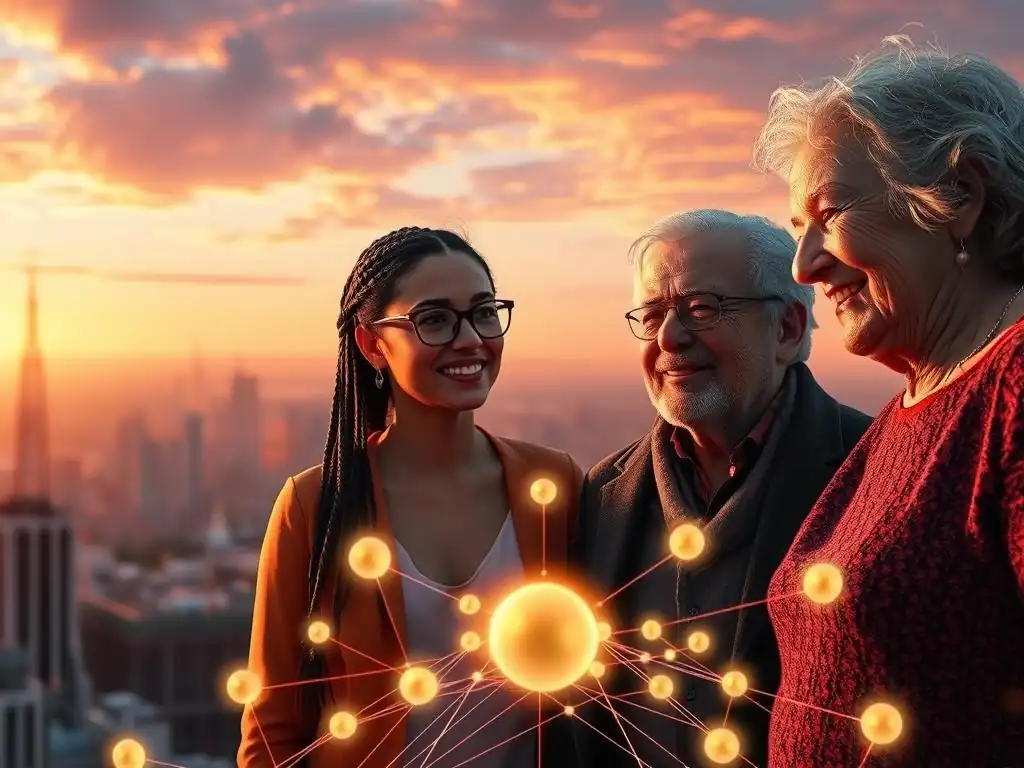
Welcome to Blockchain Trends, where we delve into the groundbreaking applications of blockchain technology.
Imagine a social media landscape free from centralized control, where your data is truly yours and censorship is a thing of the past. Our latest exploration dives deep into the rise of decentralized social media platforms, examining their potential to revolutionize how we connect, communicate, and consume content. Ready to unlock the secrets of this emerging paradigm? Let's begin…
The Future of Social Interaction: Decentralized Platforms and Beyond
- Introduction: The Evolution of Social Media and the Rise of Decentralization
- Understanding Decentralized Social Media Platforms
- Benefits of Decentralized Social Media: A New Paradigm
- Examples of Existing Decentralized Social Media Platforms
- Challenges and Opportunities in the Decentralized Social Media Space
- The Future of Social Interaction: Beyond Decentralized Platforms
- The Impact on Content Creation and Media Consumption
- Conclusion: Embracing the Decentralized Social Revolution
-
Frequently Asked Questions
- What are decentralized social media platforms, and how do they differ from traditional social media?
- What are the potential benefits of using a decentralized social media platform?
- What are some of the current challenges facing the widespread adoption of decentralized social media platforms?
- How is blockchain technology used in decentralized social media platforms?
- What is the role of regulation in the future of decentralized social media platforms?
- Final Reflection: Embracing the Decentralized Social Frontier
- Uncover the Social Revolution: Take Control of Your Connection!
The current social media landscape is dominated by centralized platforms that, while connecting billions globally, also present significant challenges. These platforms, such as Facebook (Meta), Twitter (X), and Instagram, operate under a centralized model where user data, content, and control are largely held by the platform owners.
This centralization leads to concerns regarding data privacy, as user information is often collected, analyzed, and utilized for targeted advertising and other commercial purposes. Furthermore, algorithmic curation of content, while aiming to personalize user experience, can create echo chambers and filter bubbles, limiting exposure to diverse perspectives and potentially contributing to societal polarization.
Another significant limitation of centralized social media is the issue of censorship and platform control over content. Platforms often have opaque and inconsistent content moderation policies, leading to arbitrary removal of content and account suspensions. This can stifle free speech and disproportionately affect marginalized communities or dissenting voices.
The reliance on these platforms as gatekeepers of online communication raises questions about power imbalances and the potential for manipulation or undue influence over public discourse. The very architecture of these platforms, designed for data extraction and user engagement at all costs, fosters an environment ripe for exploitation and raises fundamental questions about the future of online social interaction.
Decentralized social media platforms are emerging as a compelling alternative to the centralized giants, driven by a growing user awareness of the limitations and pitfalls of the current social media paradigm. The increasing demand for greater control over personal data is a primary driver. Decentralized platforms, often built on blockchain technology, offer users the promise of data ownership and privacy by distributing data across a network rather than storing it in centralized servers. This approach significantly reduces the risk of data breaches and misuse, appealing to users increasingly concerned about their digital footprint and privacy rights.
Furthermore, the appeal of censorship resistance is a major factor fueling the growth of decentralized social media. By leveraging blockchain's inherent immutability and distributed nature, these platforms aim to provide a space for free speech and open discourse, less susceptible to arbitrary censorship or platform manipulation. This resonates strongly with individuals and communities who have experienced censorship or believe in the importance of unrestricted online expression.
The promise of community governance and a more equitable distribution of value also contributes to the traction of decentralized social media. Many platforms are exploring models where users and creators have a greater say in platform governance and can directly benefit from their contributions, contrasting sharply with the centralized model where value primarily accrues to platform shareholders.
Blockchain technology is not merely the foundation for cryptocurrencies; it's a transformative technology impacting diverse sectors, and social media is no exception. The intersection of blockchain and social interaction represents a significant trend, driven by the potential to address the inherent flaws of centralized social media. Blockchain's decentralized, transparent, and secure nature offers a compelling toolkit for building social platforms that prioritize user empowerment, data privacy, and censorship resistance. This trend is reflected in the growing number of projects and platforms exploring decentralized social networking solutions.
Exploring blockchain trends within social interaction reveals a move towards user-centric models. Instead of platforms owning user data, blockchain enables users to control their data and decide how it's used. Smart contracts, a key feature of blockchain, can automate content moderation rules and governance mechanisms, promoting transparency and fairness. Furthermore, blockchain-based tokens can facilitate new monetization models for creators, allowing them to directly engage with their audience and earn rewards without relying on platform intermediaries. This intersection is not just about technology; it's about fundamentally rethinking the power dynamics and economic models of social interaction in the digital age.
Decentralized social media platforms, in essence, are online social networks that operate on a distributed infrastructure, typically leveraging blockchain or similar peer-to-peer technologies. Unlike traditional social media giants that control user data and platform operations centrally, decentralized platforms aim to distribute control and ownership among users or a network of participants. This shift from centralized servers to distributed networks fundamentally alters the power dynamics and the way social interactions are governed online.
Defining decentralized social media platforms requires understanding that decentralization exists on a spectrum. Some platforms may be more decentralized than others, with varying degrees of distribution in data storage, governance, and infrastructure. However, the core principle remains consistent: to reduce reliance on central authorities and empower users with greater control over their online social experiences. These platforms strive to create a more democratic and transparent social web, moving away from the monopolistic tendencies of current centralized social media.
Decentralized social networks are characterized by several key features that distinguish them from their centralized counterparts. Censorship resistance is a primary feature, achieved through the distributed nature of blockchain or peer-to-peer networks. Content posted on these platforms is typically stored across multiple nodes, making it significantly harder for any single entity, including the platform itself, to censor or remove information arbitrarily. This contrasts sharply with centralized platforms where content moderation is ultimately controlled by the platform owner.
Data ownership is another crucial feature. In decentralized social networks, users are intended to have greater control and ownership over their data. Blockchain-based platforms often employ cryptographic keys that give users exclusive control over their profiles and data. This empowers users to decide who can access their information and how it is used, shifting away from the data extraction model of centralized platforms.
Finally, community governance is a defining aspect. Many decentralized platforms explore mechanisms for community-driven governance, allowing users to participate in platform decision-making, content moderation policies, and even platform development. This can range from voting mechanisms to decentralized autonomous organizations (DAOs) managing platform operations, fostering a more democratic and participatory social media ecosystem.
Blockchain technology serves as a powerful enabler for decentralized social media, providing the underlying infrastructure and tools to realize the vision of distributed, user-centric social networks. Blockchain's inherent properties of decentralization, immutability, and transparency are directly applicable to addressing the challenges of centralized social media. The distributed ledger technology allows for data to be stored across a network of computers, rather than in a single central server, making it more resilient to censorship and single points of failure.
Smart contracts, self-executing agreements coded on the blockchain, automate various functions within decentralized social media platforms. They can be used to manage content moderation rules, enforce platform governance, and facilitate tokenized rewards for content creators and users. Cryptographic keys and blockchain-based identity solutions enable users to control their digital identity and data, enhancing privacy and data ownership. Furthermore, blockchain tokens can be used to incentivize participation, reward content creation, and govern platform resources, creating new economic models for social interaction that are more equitable and user-centric compared to traditional advertising-driven models.
Enhanced Privacy and Data Ownership for Users
Decentralized social media platforms offer a significant upgrade in privacy and data ownership for users compared to the centralized model. In the current social media landscape, user data is often collected, analyzed, and monetized by platforms without explicit user consent or control. Decentralized platforms, however, aim to reverse this trend by empowering users with greater agency over their personal information. By leveraging blockchain and cryptographic techniques, these platforms enable users to own their data, control who accesses it, and potentially even monetize their own data if they choose.
This enhanced privacy stems from the distributed nature of blockchain networks and the use of encryption. User data is not stored in centralized databases vulnerable to breaches or misuse. Instead, it can be distributed across the network or stored locally on user devices, with users holding the cryptographic keys to access and control it.
This shift towards data ownership and user control is a fundamental departure from the centralized model and represents a significant step towards a more privacy-respecting social web. For instance, platforms utilizing protocols like IPFS (InterPlanetary File System) for data storage allow users to control their data and its availability.
Freedom of speech and censorship resistance are core tenets of the decentralized social media movement. Centralized platforms, while often claiming to uphold free speech, ultimately retain the power to censor content and deplatform users based on their own terms of service, which can be inconsistently applied and lack transparency. Decentralized social networks, built on blockchain technology, aim to provide a more resilient and censorship-resistant environment for online expression.
The distributed architecture of blockchain networks makes it significantly harder to censor content. Because content is spread across multiple nodes, there is no single point of control that can be easily targeted for censorship. While content moderation may still exist in decentralized platforms, it is often implemented through community-driven mechanisms and transparent rules encoded in smart contracts, rather than being dictated by a central authority.
This approach aims to create a more open and inclusive space for diverse voices and perspectives, reducing the risk of arbitrary censorship and promoting a more robust public discourse. Platforms like Mastodon, with its federated model, showcase how distributed networks can offer greater resistance to centralized control and censorship compared to platforms like X (formerly Twitter).
Monetization Opportunities for Content Creators on Decentralized Platforms
Decentralized social media platforms are exploring new and more equitable monetization opportunities for content creators, moving away from the advertising-dominated model of centralized platforms. In the traditional social media landscape, a significant portion of the revenue generated from content is captured by the platforms themselves, while creators often receive a relatively small share, or rely on indirect monetization methods like brand sponsorships. Decentralized platforms aim to empower creators to directly monetize their content and engage with their audience, fostering a more sustainable and creator-centric ecosystem.
Blockchain-based tokens and micro-transactions facilitate direct monetization models. Creators can earn cryptocurrency tokens for their content, either through direct payments from users, tips, or platform-specific reward mechanisms. NFTs (Non-Fungible Tokens) also offer new avenues for creators to monetize digital art, collectibles, and exclusive content, allowing them to directly sell their creations to their audience.
Furthermore, decentralized platforms are exploring models that reduce or eliminate platform fees, ensuring that a larger share of the revenue goes directly to the creators. Platforms like Mirror.xyz, focused on decentralized publishing, utilize blockchain to enable creators to monetize their writing directly through NFTs and crypto payments.
Community Governance and Decentralized Decision-Making
Community governance and decentralized decision-making are central to the ethos of decentralized social media platforms. Traditional centralized platforms operate under a top-down governance model, where platform policies and decisions are made by the platform owners, often with limited input from users. Decentralized platforms, in contrast, are exploring models that empower users and communities to participate in platform governance, shaping the rules, policies, and future direction of the social network.
This community governance can take various forms, including voting mechanisms using blockchain tokens, decentralized autonomous organizations (DAOs) managing platform resources, and community-driven content moderation systems. The goal is to create a more democratic and participatory social media ecosystem, where users have a voice in platform decisions and can contribute to shaping the platform's evolution. This can lead to more transparent, fair, and user-aligned platform governance compared to the centralized model, potentially fostering stronger community ownership and engagement. Projects like Aragon are providing tools and frameworks for decentralized governance that can be integrated into social media platforms.
A Deep Dive into Mastodon: Features, Use Cases, and Federated Architecture
Mastodon stands out as a prominent example of a decentralized social media platform, showcasing a federated architecture that distinguishes it from centralized networks. Launched in 2016, Mastodon is a free and open-source microblogging platform that operates as a network of interconnected, independently run servers called "instances". Each instance is like its own social media community, with its own rules, moderation policies, and focus, yet all instances can communicate with each other, forming a decentralized social network.
Key features of Mastodon include its focus on privacy, user control, and community moderation. Users choose an instance to join based on their interests and values, giving them more agency in selecting their social environment. Mastodon instances are typically moderated by community volunteers, emphasizing community-driven governance.
Use cases for Mastodon are diverse, ranging from general social networking to niche communities focused on specific topics, like technology, art, or activism. Its federated architecture, based on the ActivityPub protocol, allows for interoperability and prevents any single entity from controlling the entire network. The decentralized nature of Mastodon makes it a compelling alternative for users seeking greater control and a less centralized social media experience, as evidenced by its growing user base, which, while smaller than giants like X, represents a significant and active community.
Exploring Lens Protocol: Innovation and Community Building
Lens Protocol is a decentralized social graph developed by the team behind Aave, a prominent DeFi platform. It represents a more recent and innovative approach to decentralized social media, focusing on creating a composable and user-owned social layer on the blockchain. Unlike platforms like Mastodon that are fully functioning social networks, Lens Protocol is designed as an open and permissionless infrastructure upon which various social media applications can be built.
Innovation is at the heart of Lens Protocol, with its focus on NFTs as core social primitives. User profiles and social connections are represented as NFTs, giving users full ownership and control over their social identity and data. This allows users to port their social graph and content across different applications built on Lens Protocol, fostering interoperability and breaking down data silos. Community building is also central to Lens Protocol's vision.
It aims to empower creators and developers to build new social experiences that are more user-centric and community-owned. The protocol's composable nature encourages experimentation and innovation in decentralized social media, attracting developers and users interested in building the future of social interaction on blockchain. The adoption of Lens Protocol by various projects and developers demonstrates its potential to become a foundational layer for a decentralized social web.
Minds is another notable example in the decentralized social media space, positioning itself as a free and open-source social network that champions internet freedom, privacy, and user rewards. Launched in 2011, Minds predates the current wave of blockchain-based social platforms but has increasingly integrated blockchain technology to enhance its decentralization and user empowerment. Minds operates as a hybrid platform, combining aspects of traditional social media with decentralized features.
Minds' case study is interesting because it showcases a gradual transition towards decentralization. While not fully blockchain-based from the outset, Minds has adopted blockchain to introduce features like tokenized rewards for users and creators, censorship-resistant content publishing, and community governance mechanisms. Users on Minds can earn tokens for their contributions and engagement, which can then be used to promote their content or support other creators.
Minds emphasizes free speech and open-source principles, aiming to provide an alternative to centralized platforms that are perceived as restrictive or privacy-invasive. Its journey highlights the evolving landscape of decentralized social media and the various approaches being taken to build more user-centric and equitable social networks. While Minds may face challenges in competing with established centralized platforms, its commitment to decentralization and user empowerment positions it as a relevant case study in the future of social networking.

Scalability Issues and Blockchain Limitations
Scalability issues and blockchain limitations represent significant challenges for the widespread adoption of decentralized social media platforms. Blockchains, particularly early generations like Bitcoin and Ethereum, were not originally designed for the high transaction throughput required by social media applications with millions or billions of users. Traditional social media platforms handle vast amounts of data and user interactions with centralized infrastructure optimized for speed and efficiency. Replicating this level of scalability on decentralized blockchains is a complex undertaking.
Blockchain's inherent limitations, such as transaction processing speeds and network congestion, can impact the user experience on decentralized social media platforms. Slow transaction times and high gas fees (transaction costs on blockchains like Ethereum) can make everyday social media interactions cumbersome and expensive.
While newer blockchain technologies and scaling solutions like layer-2 networks are emerging to address these limitations, scalability remains a key hurdle for decentralized social media to overcome to compete with the seamless user experience offered by centralized platforms. For example, achieving near real-time posting and interaction speeds comparable to X or Instagram on a fully decentralized blockchain infrastructure is still an ongoing area of development and research.
User Adoption and the Learning Curve
User adoption and the learning curve pose another significant challenge for decentralized social media platforms. Despite growing awareness of the issues with centralized social media, mainstream users are accustomed to the ease of use and familiarity of platforms like Facebook and Instagram. Decentralized platforms often require users to adopt new technologies, understand concepts like blockchain and crypto wallets, and navigate different user interfaces. This learning curve can be a barrier to entry for many users who are not technically savvy or are simply resistant to change.
The user experience on decentralized platforms is often less polished and intuitive compared to established centralized platforms that have invested heavily in user interface and user experience design. Explaining concepts like seed phrases, private keys, and blockchain transactions to average users requires significant effort and user education.
Furthermore, the network effects that benefit centralized platforms are hard to replicate for decentralized platforms, which often start with smaller user bases and less content. Overcoming the user adoption challenge requires decentralized platforms to prioritize user-friendliness, simplify the onboarding process, and provide clear value propositions that resonate with mainstream users beyond the tech-enthusiast community.
Regulatory Landscape and Legal Considerations for Decentralized Platforms
The regulatory landscape and legal considerations for decentralized platforms, including decentralized social media, are still evolving and present uncertainties. Governments and regulatory bodies worldwide are grappling with how to regulate blockchain technology and decentralized applications. The decentralized nature of these platforms, which operate across borders and without central entities, complicates traditional regulatory approaches that are designed for centralized organizations.
Legal considerations arise in areas such as data privacy, content moderation, and liability. Data privacy regulations like GDPR and CCPA may be applicable to decentralized platforms, but enforcing these regulations on distributed networks poses challenges. Content moderation on decentralized platforms raises questions about who is responsible for illegal or harmful content and how to implement effective moderation without compromising decentralization.
Liability for user-generated content and platform actions is another complex legal issue in the decentralized context. The lack of clear regulatory frameworks and legal precedents creates uncertainty for decentralized social media platforms and may hinder their growth and adoption. For instance, questions about data storage jurisdiction and cross-border data transfer become more complex in decentralized systems compared to centralized platforms operating within specific legal jurisdictions.
Overcoming the Challenges: Solutions and Innovations
Overcoming the challenges facing decentralized social media requires a combination of technological innovation, user-centric design, and proactive engagement with regulatory issues. Technological solutions are crucial to address scalability limitations. Layer-2 scaling solutions, such as rollups and sidechains, are being developed to increase transaction throughput and reduce costs on blockchains. Interoperability solutions aim to connect different blockchains and decentralized platforms, enhancing network effects and user experience. Advancements in data storage technologies, like decentralized storage networks, are also essential for handling the data demands of social media applications.
User-centric design is paramount to improve user adoption. Decentralized platforms need to prioritize user-friendliness, simplify onboarding processes, and provide intuitive interfaces that are comparable to centralized platforms. Educational resources and user support are also crucial to help users navigate the complexities of decentralized technologies.
Engaging with regulatory bodies and policymakers is important to shape a regulatory environment that fosters innovation while addressing legitimate concerns. Decentralized platforms should proactively engage in dialogue with regulators to educate them about the technology and advocate for sensible and balanced regulatory frameworks. For example, exploring privacy-preserving technologies and transparent content moderation mechanisms can help address regulatory concerns while upholding the principles of decentralization.
The metaverse, a persistent, shared virtual world, presents exciting opportunities for decentralized social experiences. As the metaverse evolves, decentralization can play a crucial role in shaping its architecture and governance, preventing it from becoming dominated by centralized corporations. Decentralized social media platforms can extend their reach into the metaverse, creating immersive and interactive social environments within virtual worlds.
Decentralized technologies can power various aspects of the metaverse, from digital identity and ownership of virtual assets to decentralized governance of metaverse spaces. NFTs can represent ownership of virtual land, avatars, and in-world items, enabling users to truly own their digital identities and possessions within the metaverse. Decentralized social platforms can facilitate social interactions, community building, and content creation within metaverse environments.
The combination of decentralized social media and the metaverse has the potential to create more open, user-owned, and interoperable virtual worlds, contrasting with centralized visions of the metaverse controlled by corporations. Projects exploring decentralized metaverse platforms, like Decentraland and The Sandbox, are examples of this trend.
The integration of Decentralized Finance (DeFi) and social media, often referred to as Social Finance (SoFi), represents a nascent but potentially transformative trend. DeFi offers a range of financial services, such as lending, borrowing, and yield farming, in a decentralized and permissionless manner. Integrating DeFi functionalities into social media platforms could create new economic models and user experiences, blurring the lines between social interaction and financial activities.
SoFi could enable users to directly monetize their social influence, content, and engagement through DeFi mechanisms. Creators could earn yield on their content or social capital, users could lend or borrow assets within social networks, and social interactions could be incentivized through tokenized rewards and micro-transactions. DeFi integrations could also foster new forms of social commerce and community-based economies within social media platforms.
For example, imagine a social media platform where users can earn interest on their social tokens, participate in decentralized investment pools within communities, or use social capital as collateral for loans. This integration has the potential to create more economically vibrant and user-empowering social ecosystems.
Decentralized Autonomous Organizations (DAOs) are emerging as a powerful tool for organizing and governing decentralized social communities. DAOs are internet-native organizations governed by code and smart contracts, rather than traditional hierarchical structures. They offer a transparent and democratic way to manage community resources, make decisions, and coordinate collective action. In the context of decentralized social media, DAOs can be used to govern platform operations, manage community funds, and make decisions about content moderation and platform development.
DAOs can empower social communities to become truly self-governing and community-owned. Token holders in a DAO can vote on proposals, allocate resources, and shape the direction of the social platform or community. This fosters a sense of ownership and participation among community members, moving away from the top-down governance models of centralized platforms.
DAOs can also facilitate transparent and accountable decision-making, as all actions and decisions are recorded on the blockchain and governed by predefined rules. The use of DAOs in decentralized social media represents a significant step towards creating more democratic and community-driven online social spaces. Platforms are experimenting with different DAO structures, like quadratic voting and token-based governance, to optimize community decision-making.
NFTs (Non-Fungible Tokens) are playing an increasingly important role in shaping social identity and interaction in the digital realm, including within decentralized social media. NFTs, unique digital assets representing ownership of items like art, collectibles, or virtual land, can be used to represent digital identities, social status, and membership in online communities. In decentralized social media, NFTs can go beyond simply representing digital collectibles; they can become integral components of social profiles and interactions.
NFT profile pictures (PFPs) have already become a prominent trend, with users showcasing their digital identities and affiliations through unique NFT avatars. NFTs can also represent membership passes to exclusive communities, access to gated content, or proof of participation in social events. Furthermore, NFTs can be used to reward content creators and users for their contributions, creating new forms of social recognition and digital status.
The use of NFTs in decentralized social media is evolving rapidly, with potential applications ranging from verifiable digital identities to tokenized social capital and community badges. This trend is shaping a future where digital identity and social interaction are increasingly intertwined with blockchain-based ownership and verifiable digital assets.
The Impact on Content Creation and Media Consumption
Empowering Creators: New Models for Content Monetization
Decentralized social media platforms are ushering in new models for content monetization that empower creators and offer alternatives to the traditional advertising-driven model. Centralized platforms often capture a significant portion of the revenue generated from content, while creators may struggle to earn a sustainable income. Decentralized platforms aim to shift this dynamic by enabling creators to directly monetize their content and engage with their audience without intermediaries.
Blockchain-based tokens and micro-transactions facilitate direct payments from users to creators. Users can tip creators directly, subscribe to exclusive content using crypto payments, or purchase NFTs representing digital creations. Decentralized platforms can also implement creator-centric revenue sharing models, where a larger percentage of the revenue generated from content goes directly to the creators.
NFTs offer new avenues for creators to monetize digital art, music, videos, and other forms of content, allowing them to sell directly to their audience and retain ownership of their creations. These new monetization models have the potential to create a more sustainable and equitable ecosystem for content creators, fostering creativity and innovation in the digital space.
Shifting Power Dynamics: From Centralized Platforms to User-Controlled Networks
Decentralized social media represents a fundamental shift in power dynamics, moving away from centralized platforms towards user-controlled networks. In the current social media landscape, power is concentrated in the hands of platform owners who control user data, content moderation policies, and platform governance. Decentralized platforms aim to redistribute this power to users and communities, creating a more democratic and participatory social web.
By leveraging blockchain and distributed technologies, decentralized platforms empower users with greater control over their data, identity, and social experiences. Community governance mechanisms and DAOs enable users to participate in platform decision-making and shape the direction of the network. Censorship resistance and data ownership reduce the power of platforms to arbitrarily control content or misuse user data.
This shift in power dynamics has the potential to create a more equitable and user-centric social media ecosystem, where users are not merely consumers of content but active participants in shaping the social web. This redistribution of power is a core value proposition of decentralized social media, appealing to users who are concerned about the concentration of power in the hands of a few tech giants.
Decentralized social media platforms hold the potential to foster more authentic and transparent social interactions online. Centralized platforms, driven by algorithms designed for engagement and data extraction, can incentivize inauthentic behavior, filter bubbles, and echo chambers. Decentralized platforms, with their focus on user empowerment and community governance, can create an environment that encourages more genuine and transparent social interactions.
Blockchain's transparency can contribute to greater accountability and trust in online interactions. Content provenance and authorship can be verified on the blockchain, reducing the spread of misinformation and fake accounts. Community-driven moderation and transparent governance mechanisms can foster a more trustworthy and less manipulated social environment.
Data ownership and privacy can empower users to be more authentic and express themselves freely without fear of data exploitation or censorship. While decentralized platforms are not a panacea for all online ills, their architecture and principles can create a foundation for more authentic, transparent, and ultimately more meaningful social interactions compared to the often-manipulated and algorithmically-driven environment of centralized social media.
The Future of Media: Decentralized News and Information
Decentralized social media is also impacting the future of media, particularly the dissemination of news and information. Centralized social media platforms have become major channels for news consumption, but they are also facing challenges related to misinformation, filter bubbles, and platform bias. Decentralized platforms offer an alternative model for news and information sharing that can potentially address these challenges and create a more open and reliable media ecosystem.
Censorship resistance on decentralized platforms can provide a space for independent journalism and diverse perspectives, less susceptible to government censorship or platform manipulation. Blockchain-based verification and provenance can help combat misinformation and fake news by providing transparent records of content authorship and origins. Tokenized rewards and direct monetization models can incentivize quality journalism and independent content creation, reducing reliance on advertising revenue and platform gatekeepers.
Decentralized platforms are exploring new models for news aggregation, curation, and distribution that prioritize user choice and community-driven filtering, potentially leading to a more diverse, transparent, and reliable media landscape. Projects focused on decentralized news and information sharing are emerging, exploring these new models and challenging the dominance of centralized social media in news dissemination.
Decentralized social media platforms represent a promising future for online social interaction, offering a compelling alternative to the limitations and challenges of centralized social media giants. While still in their early stages of adoption and development, decentralized platforms are gaining traction due to their potential to address key user concerns around privacy, censorship, data ownership, and platform power. The principles of decentralization, user empowerment, and community governance are resonating with a growing number of users seeking a more equitable and open social web.
The benefits of decentralized social media, including enhanced privacy, freedom of speech, creator monetization, and community governance, offer a compelling vision for the future of online social interaction. While challenges remain in areas like scalability, user adoption, and regulation, ongoing innovation and community efforts are actively addressing these hurdles. The decentralized social media space is dynamic and evolving, with new platforms, protocols, and use cases emerging regularly, indicating a vibrant and promising future for this transformative technology.
Key takeaways from the rise of decentralized social media include the growing user demand for data privacy and control, the increasing importance of censorship resistance and free speech online, and the potential for new economic models that empower creators and users. Decentralized technologies are not just a niche trend; they represent a fundamental shift in the architecture and governance of online social networks.
Predictions for the evolution of social interaction point towards a more decentralized, user-centric, and interoperable social web. We can expect to see continued innovation in blockchain-based social platforms, scaling solutions, and user-friendly interfaces. The integration of DeFi and NFTs into social media will likely expand, creating new social finance (SoFi) models and digital identity paradigms. Community governance and DAOs will play an increasingly important role in shaping the future of decentralized social platforms. While centralized platforms will likely remain dominant in the short term, the long-term trend points towards a more decentralized and user-empowered social media landscape.
Blockchain Trends, as a platform dedicated to exploring the transformative potential of blockchain, plays a crucial role in shaping the decentralized social landscape. By providing in-depth analysis, insights, and education on blockchain technology and its applications beyond cryptocurrencies, Blockchain Trends contributes to raising awareness and understanding of decentralized social media platforms.
By covering topics like DeFi, enterprise applications of blockchain, and the future of decentralized systems, Blockchain Trends helps to contextualize decentralized social media within the broader blockchain ecosystem. The platform's focus on exploring the transformative potential of blockchain aligns perfectly with the vision of decentralized social media, which seeks to leverage blockchain to revolutionize social interaction and content creation. By continuing to report on and analyze the latest developments in decentralized social media, Blockchain Trends can contribute to fostering innovation, driving adoption, and shaping a more decentralized and user-empowered social future.
Frequently Asked Questions
Decentralized social media platforms leverage blockchain technology to distribute control and data ownership among users, unlike traditional platforms where data is centralized under a single company. This shift aims to provide greater user privacy and control.
Key benefits include enhanced user privacy, reduced censorship risks due to the distributed nature, and potential for direct monetization of content without intermediaries taking large cuts. This fosters a more equitable ecosystem.
Challenges include scalability issues, the complexity of blockchain technology for average users, and the difficulty in moderating content effectively without centralized control. These factors hinder mainstream appeal.
Blockchain provides a secure and transparent ledger for storing user data, content, and interactions. This ensures data immutability and allows for decentralized governance through mechanisms like DAOs (Decentralized Autonomous Organizations).
Regulation is crucial to address issues like illegal content and data privacy, but overly restrictive regulations could stifle innovation. Finding the right balance is essential for the sustainable growth of these platforms.
The exploration of decentralized social media platforms reveals more than just technological innovation; it unveils a fundamental shift in how we perceive and engage with online communities. The promise of user autonomy and data sovereignty, once a distant ideal, is now a tangible possibility shaping the future of social interaction. This is not merely about escaping the confines of centralized control; it's about reclaiming ownership of our digital identities and fostering more authentic, equitable online spaces.
The rise of decentralized platforms is profoundly impacting the cultural landscape, challenging the established norms of social media giants and empowering individuals to connect on their own terms. Witnessing this evolution firsthand underscores the critical importance of understanding and participating in the decentralized movement. The future of social media is not about more connections, but about more meaningful connections.
This sentiment perfectly encapsulates the potential of decentralized platforms to cultivate genuine communities built on shared values and mutual respect, rather than algorithmic manipulation.
As we stand on the cusp of this decentralized social revolution, I invite you to consider your own role in shaping this future. Explore these platforms, engage in the conversations, and become an active participant in building a more democratic and empowering online world. The future of social interaction is not predetermined; it is being co-created by each of us, one decentralized connection at a time.
Thank you for exploring the evolving landscape of decentralized social platforms. We hope you've gained valuable insights into how blockchain technology is reshaping online interaction and empowering users like you. Now, let's put that knowledge into action!
Here are a few steps you can take to be part of this social revolution:
- Create an account on a decentralized social platform, such as Mastodon or Lens Protocol. Explore its features and start connecting with others who share your interests.
- Share this article with your network to spark conversations about the benefits and challenges of decentralized social media. Help others understand how they can regain control of their online data and interactions.
- Learn about decentralized governance by researching autonomous organizations within the social space. Understanding governance models is key to contributing to the evolution of these platforms.
Ready to embrace the future of social interaction and break free from centralized control? Which decentralized platform will you explore first?
Leave a Reply