
The LongTerm Vision for Decentralized Social Media Platforms

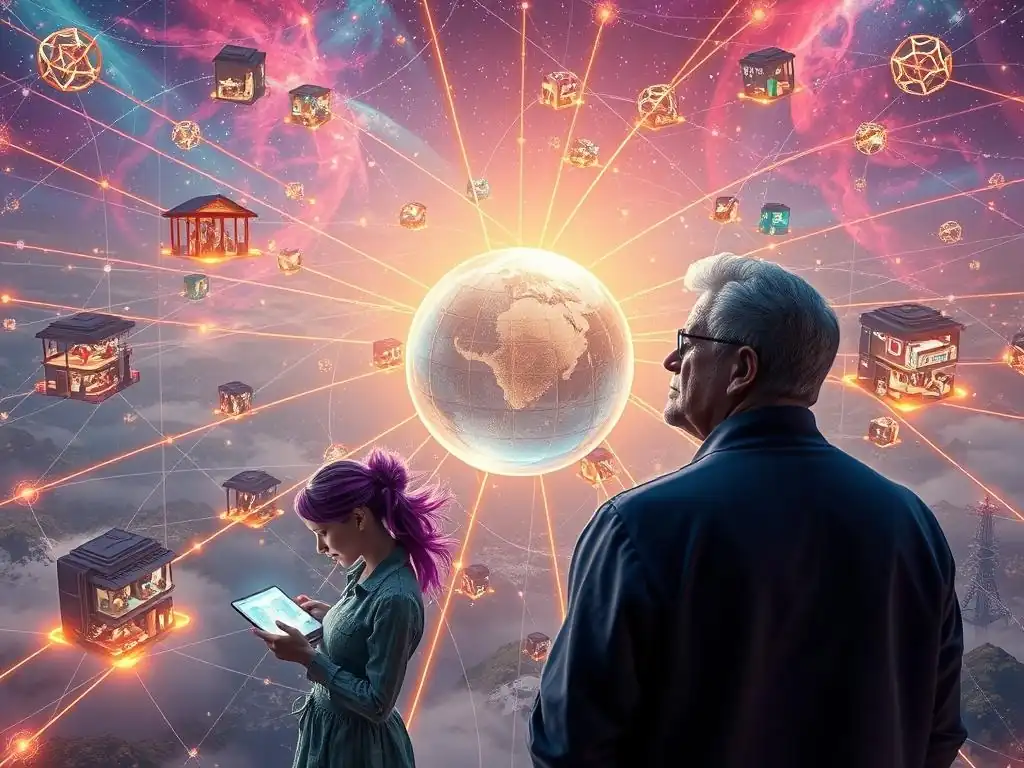
Welcome to Blockchain Trends, your compass in the rapidly evolving world of decentralized technologies!
Imagine a social media landscape free from centralized control, where your data belongs to you. This article delves into the decentralized social media benefits that are poised to reshape how we connect and communicate online. Are you ready to explore the long-term vision and potential impact of this groundbreaking shift? Dive in and discover the future of social interaction!
The Long-Term Vision for Decentralized Social Media Platforms
- Introduction: Understanding the Future of Decentralized Social Networks
- Exploring the Core Benefits of Decentralized Social Media
- Key Technologies Driving the Decentralized Social Media Revolution
- The Current Landscape of Decentralized Social Media Platforms
- Challenges and Obstacles to Mainstream Adoption
- The Long-Term Vision: What the Future Holds for Decentralized Social Media
- Conclusion: Embracing the Potential of Decentralized Social Media
-
Frequently Asked Questions
- What are the main decentralized social media benefits compared to traditional platforms?
- How does blockchain technology contribute to the decentralized social media benefits?
- What are some potential challenges in realizing the full decentralized social media benefits?
- How might regulation impact the future of decentralized social media benefits and platforms?
- Beyond content creation, what other decentralized social media benefits are emerging?
- Final Reflection: Embracing the Decentralized Future
- Ignite the Decentralized Future!
The landscape of social media is undergoing a significant transformation, moving away from centralized platforms towards decentralized alternatives. For over a decade, a handful of tech giants have dominated the social networking sphere, controlling vast amounts of user data, dictating content policies, and profiting significantly from user activity. This centralized model, while offering convenience and scale, has increasingly faced criticism regarding privacy violations, censorship concerns, and a lack of user control.
The emergence of blockchain technology and decentralized systems has paved the way for a paradigm shift, presenting a compelling alternative in the form of decentralized social media platforms. This new wave promises to redistribute power, placing users back at the center of their online interactions and fostering a more open and equitable social media ecosystem.
The shift towards decentralization is not merely a technological trend; it reflects a growing societal demand for greater transparency, control, and autonomy in the digital realm. Concerns about data breaches, algorithmic bias, and the concentration of power in the hands of a few corporations are fueling the desire for platforms that prioritize user rights and community governance.
Decentralized social media, built on blockchain and related technologies, aims to address these concerns directly by distributing data, control, and decision-making across a network of users, rather than centralizing it within a single entity. This represents a fundamental rethinking of how social networks operate and interact with their users, heralding a potentially transformative era for online communication and community building.
Decentralized social media platforms are not simply a niche alternative; they represent a fundamental shift in the power dynamics of the internet and hold the potential to reshape our online experiences in profound ways. The current centralized social media model, while connecting billions globally, has exhibited inherent limitations and drawbacks.
These range from privacy scandals, such as the Cambridge Analytica affair which impacted tens of millions of Facebook users, to concerns about algorithmic censorship and manipulation. For instance, studies have shown how algorithms on centralized platforms can create filter bubbles and echo chambers, limiting exposure to diverse perspectives and potentially exacerbating social polarization.
The importance of decentralized social media platforms stems from their capacity to address these critical issues. By leveraging blockchain technology, these platforms offer the promise of greater user privacy through data encryption and distributed storage, enhanced freedom of speech by resisting centralized censorship, and new monetization avenues for content creators, bypassing traditional intermediaries.
They are designed to empower individuals, giving them ownership of their data and control over their online presence. This shift towards user-centricity and decentralization is not just about technological innovation; it is about creating a more democratic, transparent, and equitable digital society, where users are not just products but active participants and stakeholders in the social networks they inhabit.
The advantages of decentralized social media platforms are multifaceted, addressing several key pain points of the current centralized social media landscape. One of the most significant decentralized social media benefits is enhanced user privacy. Traditional platforms often collect vast amounts of user data, which can be vulnerable to breaches and misuse. Decentralized platforms, in contrast, often utilize encryption and distributed storage, reducing the risk of large-scale data leaks and giving users greater control over their personal information. This inherent privacy focus is a crucial differentiator and a major draw for users increasingly concerned about their digital footprint.
Beyond privacy, another key decentralized social media benefit is censorship resistance. Centralized platforms often face pressure to censor content, whether from governments, advertisers, or public opinion. Decentralized platforms, by distributing control, make censorship significantly more difficult.
While content moderation is still necessary to combat illegal activities, the decentralized nature ensures that decisions about content are not solely in the hands of a single entity, fostering a more open and diverse online discourse. Furthermore, decentralized social media benefits creators through new monetization models. Traditional platforms often take a significant cut of creator revenue, whereas decentralized platforms can empower creators to earn directly from their audience through cryptocurrency payments, tokenized content, and decentralized marketplaces, leading to a more sustainable and equitable creator economy.
In the realm of centralized social media, user data is often treated as a commodity, harvested and utilized by platforms for targeted advertising and other revenue-generating activities. Users typically have limited control over how their data is collected, stored, and used, leading to widespread privacy concerns. Decentralized social networks offer a stark contrast, prioritizing user privacy and data ownership as core tenets. By employing blockchain technology and decentralized storage solutions, these platforms aim to return control of personal data to the individuals to whom it belongs.
For example, platforms built on blockchain often utilize end-to-end encryption, ensuring that only the sender and recipient can access the content of messages. Furthermore, decentralized storage solutions like IPFS (InterPlanetary File System) distribute data across a network of nodes, rather than storing it in centralized servers vulnerable to single points of failure and data breaches. This architectural shift fundamentally alters the data ownership paradigm.
Users on decentralized social networks are often given cryptographic keys that grant them sole control over their data, allowing them to decide who can access it and how it is used. This emphasis on user privacy and data sovereignty is a crucial aspect of the decentralized social media benefits proposition and a key driver of its growing appeal.
Freedom of Speech and Censorship Resistance on Blockchain-Based Platforms
The debate surrounding freedom of speech and censorship on social media platforms has become increasingly prominent. Centralized platforms, while claiming to uphold free speech principles, often face criticism for inconsistent content moderation policies, algorithmic bias, and susceptibility to external pressures that can lead to censorship. Decentralized social media platforms, leveraging the inherent properties of blockchain, offer a compelling solution by building censorship resistance directly into their architecture.
The distributed and immutable nature of blockchain makes it significantly harder to censor content on decentralized social networks compared to their centralized counterparts. Because data is distributed across a network, there is no single point of control that can be targeted for censorship. While content moderation is still a complex issue in decentralized environments, the decision-making processes are often designed to be more transparent and community-driven, reducing the risk of arbitrary or politically motivated censorship.
Furthermore, the use of cryptography and peer-to-peer networks in decentralized platforms makes it technically challenging to block or remove content entirely, ensuring a greater degree of freedom of expression. This inherent censorship resistance is a significant decentralized social media benefit, particularly for users in regions with restrictive internet environments or for those concerned about platform bias and overreach.
Traditional social media platforms have created a vast creator economy, but the distribution of value often remains skewed in favor of the platforms themselves. Creators frequently face challenges in monetizing their content effectively, with platforms taking significant cuts of advertising revenue or subscription fees. Decentralized social media platforms are disrupting this model by introducing new monetization opportunities and empowering creators to earn directly from their audience, fostering a more sustainable and equitable creator ecosystem.
Blockchain and cryptocurrency technologies are central to this shift. Decentralized platforms can enable direct payments from users to creators through microtransactions in cryptocurrencies, bypassing traditional payment processors and platform fees. Tokenization of content is another emerging model, where creators can issue their own tokens or NFTs representing ownership or access rights to their work, allowing them to monetize their content directly and build stronger relationships with their communities.
Furthermore, decentralized marketplaces integrated into social platforms can facilitate the direct sale of digital goods and services by creators. These innovative monetization mechanisms are a key decentralized social media benefit, offering creators greater control over their earnings, reducing reliance on platform algorithms and advertising revenue, and fostering a more direct and rewarding relationship between creators and their audiences.
Blockchain technology is the bedrock upon which the decentralized social media revolution is being built. Its inherent properties – decentralization, immutability, transparency, and security – make it ideally suited for creating social platforms that address the shortcomings of centralized models. Blockchain provides the distributed ledger system necessary to record interactions, manage user identities, and facilitate transactions in a transparent and tamper-proof manner, without relying on a central authority.
The decentralized nature of blockchain eliminates the single point of failure and control inherent in centralized databases, making decentralized social platforms more resilient and resistant to censorship. Immutability ensures that once data is recorded on the blockchain, it cannot be altered or deleted, providing a verifiable and auditable history of interactions. Transparency allows users to inspect the code and data on the blockchain (depending on the type of blockchain), fostering trust and accountability.
Cryptographic security mechanisms protect the integrity of the blockchain and user data. Different types of blockchains, such as public blockchains like Ethereum and Solana, and application-specific blockchains, are being utilized to build diverse decentralized social media platforms, each leveraging the core benefits of blockchain technology to create a more user-centric and equitable social networking experience.
Decentralized Storage Solutions: IPFS and Beyond
While blockchain provides the distributed ledger, decentralized storage solutions are crucial for handling the large volumes of data generated by social media platforms, such as posts, images, and videos. Traditional centralized cloud storage services are susceptible to censorship, data breaches, and single points of failure. Decentralized storage networks offer a distributed and resilient alternative, ensuring data availability, integrity, and user control. IPFS (InterPlanetary File System) is a prominent example of such a solution, designed to create a peer-to-peer distributed file system that addresses content based on its hash rather than its location.
IPFS and similar decentralized storage technologies break down data into smaller chunks, distribute them across a network of nodes, and allow users to retrieve data from the nearest available node. This distributed architecture enhances data redundancy, making it more resistant to data loss and censorship. Furthermore, decentralized storage can improve content delivery speeds and reduce bandwidth costs by leveraging peer-to-peer networks.
Beyond IPFS, other decentralized storage solutions like Arweave and Filecoin are also gaining traction in the decentralized social media space, each offering unique features and approaches to distributed data management. The integration of these technologies is essential for building robust and scalable decentralized social platforms capable of handling the demands of a global user base.
Decentralized Identity (DID) and Self-Sovereign Identity
Managing user identities securely and privately is a fundamental challenge for social media platforms. Centralized identity systems often rely on platform-controlled usernames and passwords, which can be vulnerable to breaches and create vendor lock-in. Decentralized Identity (DID) and Self-Sovereign Identity (SSI) are emerging concepts that aim to empower users with greater control over their digital identities. DIDs are globally unique identifiers that are cryptographically verifiable and controlled by the user, not by a central authority. SSI builds upon DIDs, enabling users to manage their digital credentials and personal data without relying on intermediaries.
In the context of decentralized social media, DIDs and SSI can revolutionize user onboarding and identity management. Users can create and control their own DIDs, which can be used across multiple decentralized platforms, eliminating the need to create separate accounts and passwords for each service. This enhances user privacy and reduces the risk of identity theft. Furthermore, SSI allows users to selectively share verified credentials, such as age or reputation, without revealing unnecessary personal information. This user-centric approach to identity management is a key enabler of decentralized social media, fostering greater user autonomy, privacy, and interoperability across platforms.
Smart contracts, self-executing agreements written in code and deployed on blockchain, are playing an increasingly important role in decentralized social media platforms. They enable automated governance, content moderation, and monetization mechanisms, reducing reliance on centralized intermediaries and fostering greater transparency and community participation in platform operations.
For instance, smart contracts can be used to automate content moderation rules defined by the community, ensuring consistent and transparent enforcement. They can also facilitate decentralized autonomous organizations (DAOs) for platform governance, allowing users to vote on proposals, allocate resources, and shape the platform's future direction. Smart contracts can also automate creator payouts, royalties, and revenue sharing models, ensuring fair and transparent compensation for content creators. The use of smart contracts in decentralized social media not only streamlines platform operations but also promotes decentralization of power and decision-making, fostering a more democratic and community-driven social networking environment.
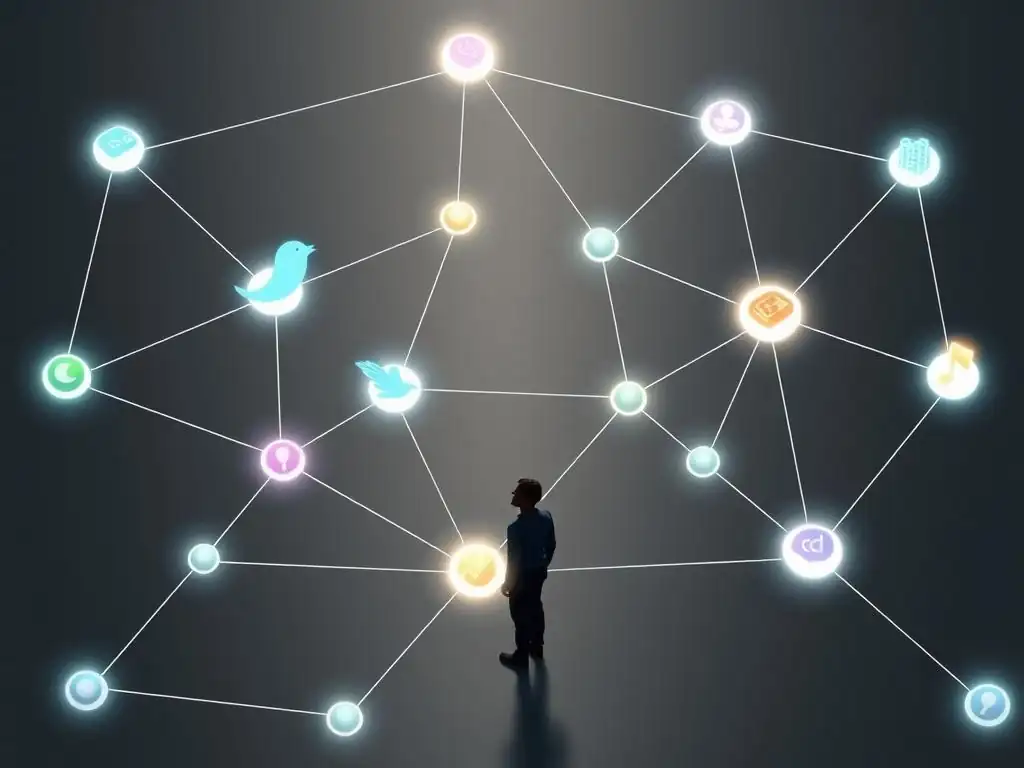
The decentralized social media landscape is rapidly evolving, with a diverse range of platforms emerging, each with its unique approach, strengths, and weaknesses. These platforms aim to address various aspects of decentralization, including data ownership, censorship resistance, and monetization, but they also face challenges in terms of scalability, user experience, and mainstream adoption. Examining existing platforms provides valuable insights into the current state and future trajectory of decentralized social media.
Platforms like Mastodon, while not strictly blockchain-based, represent an early example of decentralized social networking using the ActivityPub protocol for interoperability. Its strength lies in its federated structure, offering users greater control over their servers and communities. However, its user experience can be less intuitive for mainstream users compared to centralized platforms.
Blockchain-based platforms like Peepeth and Diaspora offer stronger censorship resistance and data ownership but may face scalability limitations and require users to understand cryptocurrency concepts. Newer platforms like Lens Protocol and Farcaster are exploring different approaches, focusing on composability and developer extensibility, but they are still in early stages of development and require further refinement to achieve mainstream appeal. Analyzing the strengths and weaknesses of these diverse platforms is crucial for understanding the current state of decentralized social media and identifying areas for improvement and innovation.
Mastodon stands out as a prominent example of decentralized social networking, albeit not directly built on blockchain technology. It operates on a federated model, where independent servers ("instances") can interoperate using the ActivityPub protocol. This architecture offers a unique blend of decentralization and community control, providing users with greater autonomy compared to centralized platforms. Launched in 2016, Mastodon has gained significant traction, particularly among users seeking alternatives to mainstream social media giants due to concerns about censorship, privacy, and algorithmic manipulation.
Mastodon's strength lies in its federated nature. Users can choose to join an instance that aligns with their interests or values, and instances are independently moderated, allowing for diverse community standards. This distributed structure makes Mastodon more resistant to censorship compared to centralized platforms.
However, Mastodon's user experience can be less seamless than that of platforms like Twitter or Facebook, and its decentralized nature can also present challenges in terms of content discovery and network effects. Despite these challenges, Mastodon's continued growth and influence demonstrate the viability of decentralized social networking and provide valuable lessons for the development of blockchain-based decentralized social media platforms. Its success highlights the user demand for alternatives that prioritize user control and community governance, paving the way for further innovation in the decentralized social media space.
Lens Protocol represents a more recent and innovative approach to decentralized social media, built on the Polygon blockchain. It is designed as a composable and permissionless social graph, allowing developers to build a wide range of decentralized social media applications on top of it. Instead of aiming to be a single, monolithic platform, Lens Protocol focuses on providing the foundational infrastructure for a decentralized social ecosystem, emphasizing interoperability and developer extensibility.
A key feature of Lens Protocol is its focus on NFTs (Non-Fungible Tokens) for representing user profiles, content, and social connections. Users own their profiles as NFTs, granting them full control over their identity and data. Content created on Lens Protocol can also be tokenized as NFTs, allowing creators to monetize their work directly and benefit from secondary market sales.
The composable nature of Lens Protocol enables developers to build diverse social media applications, ranging from traditional social networks to content curation platforms and decentralized marketplaces, all leveraging the same underlying social graph. While still in its early stages, Lens Protocol's innovative approach and focus on composability and user-owned data represent a significant step forward in the evolution of decentralized social media, offering a glimpse into a future where social networking is more open, interoperable, and user-centric.
Challenges and Obstacles to Mainstream Adoption
One of the primary challenges hindering the mainstream adoption of decentralized social media platforms is scalability. Blockchain technology, while offering numerous benefits, often faces limitations in transaction throughput and processing speed compared to centralized databases. Traditional social media platforms handle billions of interactions daily, requiring immense scalability to maintain performance and user experience. Replicating this level of scalability on decentralized platforms presents a significant technical hurdle.
While blockchain technologies are continuously evolving to improve scalability through solutions like layer-2 scaling (e.g., Polygon, Optimism), sharding, and consensus mechanism optimizations, these solutions are still under development and may not yet match the scalability of centralized systems. Decentralized storage solutions also face scalability challenges in efficiently handling the vast amounts of data generated by social media. Furthermore, the decentralized nature of these platforms can introduce latency and complexity in data processing and retrieval.
Overcoming these scalability limitations is crucial for decentralized social media to handle a large user base and compete effectively with established centralized platforms. Continued research and development in blockchain and decentralized infrastructure are essential to address these scalability bottlenecks and pave the way for wider adoption.
User Experience (UX) and Onboarding Challenges
Another significant obstacle to mainstream adoption of decentralized social media is user experience (UX) and onboarding complexity. Traditional social media platforms have invested heavily in creating intuitive and user-friendly interfaces that are accessible to users of all technical skill levels. Decentralized platforms, often being newer and technologically complex, can present a steeper learning curve for average users.
Interacting with blockchain-based platforms often requires users to understand concepts like cryptocurrency wallets, private keys, and gas fees, which can be daunting for those unfamiliar with crypto. Onboarding processes can be more complex, involving wallet setup, seed phrase management, and potentially cryptocurrency purchases. The user interfaces of some decentralized platforms may also be less polished and intuitive compared to established centralized platforms.
Improving UX and simplifying onboarding processes is critical for making decentralized social media accessible to a wider audience. Efforts are needed to abstract away the underlying technical complexities, create user-friendly interfaces, and provide clear and accessible onboarding guides to bridge the usability gap and attract mainstream users.
Content Moderation and Combating Misinformation in a Decentralized World
Content moderation is a complex and contentious issue in both centralized and decentralized social media. While decentralization offers censorship resistance, it also raises challenges in effectively moderating harmful content, such as hate speech, illegal activities, and misinformation. Centralized platforms employ large moderation teams and algorithmic tools to manage content, but these systems are often criticized for bias and inconsistency. Decentralized platforms need to develop alternative content moderation approaches that align with their decentralized ethos while effectively addressing harmful content.
Relying solely on centralized moderation in decentralized platforms undermines their core principles. Community-based moderation models, where users collectively participate in content moderation decisions, are being explored. Decentralized autonomous organizations (DAOs) can also play a role in defining and enforcing content moderation policies through smart contracts.
However, these decentralized moderation approaches face challenges in scalability, effectiveness, and preventing the formation of echo chambers or biased moderation decisions. Combating misinformation in a decentralized world is particularly challenging, as the lack of central control makes it harder to identify and remove false or misleading information. Developing effective and scalable decentralized content moderation mechanisms is crucial for ensuring the safety and trustworthiness of decentralized social media platforms and preventing them from becoming breeding grounds for harmful content and misinformation.
The regulatory landscape surrounding blockchain technology and decentralized applications, including social media platforms, is still evolving and often uncertain. Governments and regulatory bodies worldwide are grappling with how to classify and regulate these new technologies, leading to a patchwork of regulations and legal uncertainties. This regulatory ambiguity poses challenges for decentralized social media platforms in terms of legal compliance, liability, and long-term sustainability.
Issues such as data privacy regulations (e.g., GDPR), content liability laws, and financial regulations (if platforms involve cryptocurrency transactions) need to be carefully considered. The decentralized and cross-border nature of blockchain technology can make it challenging to determine jurisdiction and enforce regulations. Furthermore, the lack of central entities in some decentralized platforms raises questions about who is responsible for regulatory compliance and content moderation.
Clearer regulatory frameworks and legal guidance are needed to provide greater certainty for decentralized social media platforms and foster responsible innovation. Industry self-regulation and collaboration with policymakers can also play a crucial role in shaping a regulatory environment that supports the growth of decentralized social media while addressing legitimate concerns about user safety and legal compliance.
Interoperability and Cross-Platform Communication in Decentralized Networks
The future of decentralized social media envisions a more interconnected and interoperable ecosystem, where users can seamlessly interact across different platforms and applications without being locked into a single walled garden. Interoperability is crucial for realizing the full potential of decentralization, breaking down data silos, and empowering users with greater flexibility and control over their online social interactions.
Protocols like ActivityPub, used by Mastodon, demonstrate the potential of interoperability by enabling communication between different federated servers. Blockchain-based decentralized identity (DID) and self-sovereign identity (SSI) standards can further enhance interoperability by allowing users to carry their identities and reputations across different platforms. Composable social graphs, like Lens Protocol, are designed to be inherently interoperable, allowing developers to build applications that can access and utilize the same underlying social data.
Achieving widespread interoperability in decentralized social media will require collaboration across platforms and the adoption of open standards and protocols, fostering a more open and connected decentralized social web. This interconnected ecosystem would offer users a more seamless and user-centric social media experience, breaking free from the limitations of platform silos and promoting greater user agency.
The emergence of the metaverse, immersive virtual worlds and shared digital spaces, presents a significant opportunity for decentralized social media to play a central role in shaping the future of online social interactions. The metaverse, envisioned as a more persistent and embodied internet, requires robust and decentralized social infrastructure to support user identities, social connections, and virtual economies.
Decentralized social media platforms, with their focus on user ownership, interoperability, and censorship resistance, are well-positioned to become the social layer of the metaverse. Decentralized identities (DIDs) and self-sovereign identities (SSIs) can enable users to seamlessly transition their identities and reputations across different metaverse environments. Decentralized social graphs can facilitate social connections and interactions within and across virtual worlds.
Blockchain-based virtual economies and NFT technologies can support decentralized ownership of virtual assets and enable new forms of social commerce and creator monetization in the metaverse. The convergence of decentralized social media and the metaverse holds the potential to create more immersive, user-centric, and open virtual social experiences, shaping the next evolution of online social interaction.
Decentralized social media platforms are pioneering new models of social media governance, moving away from centralized corporate control towards community-driven and decentralized governance mechanisms. Decentralized Autonomous Organizations (DAOs) are emerging as a key tool for enabling community governance in these platforms, empowering users to participate in decision-making processes and shape the platform's future direction.
DAOs utilize smart contracts to codify governance rules and automate decision execution, ensuring transparency and immutability. Token-based governance models, where users hold tokens that grant them voting rights, are commonly used in decentralized social media platforms. These governance mechanisms can be used to make decisions on content moderation policies, platform development priorities, resource allocation, and even platform ownership.
Community-driven governance through DAOs has the potential to create more democratic and equitable social media platforms, aligning platform incentives with user interests and fostering a sense of ownership and participation among community members. The evolution of social media governance towards decentralized and community-driven models represents a fundamental shift in power dynamics and a key aspect of the long-term vision for decentralized social media.
The rise of decentralized social media is poised to have a significant impact on traditional centralized platforms, potentially disrupting the existing social media landscape and reshaping the future of online social networking. While centralized platforms currently dominate the market, the growing user demand for privacy, control, and censorship resistance, coupled with the technological advancements in blockchain and decentralized systems, creates a compelling case for the long-term growth and influence of decentralized alternatives.
Traditional platforms may face increasing pressure to adopt more decentralized features or risk losing users to decentralized competitors. We may see hybrid models emerge, where centralized platforms incorporate elements of decentralization, such as user data ownership options or blockchain-based content verification mechanisms. The competitive pressure from decentralized platforms could also drive innovation in user privacy, content moderation, and creator monetization within the centralized social media space.
While it is unlikely that decentralized platforms will completely replace centralized giants in the near future, their growing adoption and influence are likely to reshape the social media landscape, pushing towards a more user-centric, transparent, and equitable online social networking ecosystem. The long-term impact will depend on the continued development and adoption of decentralized technologies, the evolving regulatory landscape, and the ability of decentralized platforms to address challenges related to scalability, user experience, and content moderation.
Decentralized social media platforms represent a promising alternative to the dominant centralized social networks, offering a compelling vision for a more user-centric, transparent, and equitable online social experience. By leveraging blockchain technology and decentralized systems, these platforms address critical concerns surrounding data privacy, censorship, creator empowerment, and platform governance. While still in early stages of development and facing challenges in mainstream adoption, decentralized social media holds immense potential to reshape the future of social networking.
The decentralized social media benefits are increasingly apparent, as users seek greater control over their data, freedom of expression, and new monetization opportunities. The underlying technologies are rapidly evolving, addressing scalability and usability concerns. The growing community of developers, entrepreneurs, and users dedicated to building and adopting decentralized social platforms signals a strong momentum behind this movement. As awareness of the limitations of centralized social media grows and the capabilities of decentralized alternatives mature, decentralized social media is poised to become an increasingly important and influential force in the digital landscape.
Looking ahead, the future of social connection is likely to be increasingly shaped by decentralized principles. Decentralized social media platforms offer a glimpse into a future where users are not just passive consumers of social media content but active participants and stakeholders in the networks they inhabit. This decentralized perspective envisions a social web that is more open, interoperable, and resilient, where power is distributed, and users are empowered.
The long-term vision for decentralized social media extends beyond simply replicating the features of traditional platforms in a decentralized manner. It encompasses the creation of new forms of social interaction, community governance, and digital ownership, enabled by blockchain and decentralized technologies.
The convergence of decentralized social media with emerging trends like the metaverse and decentralized identity is likely to further accelerate the evolution of online social connection, ushering in a new era of user-centric and community-driven social networking. Embracing the potential of decentralized social media is crucial for building a more democratic, transparent, and equitable digital future for social interaction and online community building.
Frequently Asked Questions
Decentralized platforms offer greater user control over data, reduced censorship, and potential monetization opportunities through tokenization. They aim to shift power away from centralized corporations.
Blockchain provides a transparent and immutable ledger for content and interactions, ensuring data integrity and preventing unauthorized modifications. This enhances trust among users.
Challenges include scalability issues, complex user interfaces, and the need for effective moderation mechanisms to combat harmful content without censorship.
Regulation could either stifle innovation or provide a framework for responsible growth, depending on how governments balance user privacy, content moderation, and platform liability.
We're seeing the rise of decentralized identity solutions, tokenized reward systems, and community-governed content curation, all contributing to a more equitable and engaging user experience.
Final Reflection: Embracing the Decentralized Future
The exploration of decentralized social media platforms reveals not just a technological shift, but a fundamental reimagining of online interaction. The promise of user empowerment, data sovereignty, and censorship resistance is no longer a distant ideal, but a tangible possibility shaping the future of digital communication. The benefits outlined throughout this article highlight a clear path towards a more equitable and democratic online landscape, one where individuals reclaim control over their digital identities and content.
The impact of this movement extends far beyond mere technological innovation. Decentralized social media represents a profound cultural shift, challenging the centralized power structures that have long dominated the internet. It fosters a sense of community and ownership, encouraging users to actively participate in shaping the platforms they use. The future of social media is not about algorithms dictating what we see, but about communities curating what matters.
This sentiment underscores the potential for decentralized platforms to foster more authentic and meaningful connections.
As we stand at the cusp of this decentralized revolution, I invite you to consider your own role in shaping the future of social media. Reflect on the power you hold as a user, and the responsibility that comes with it. Embrace the opportunities presented by decentralized platforms to connect, create, and communicate in a way that is truly free, open, and empowering. The future of social interaction is in our hands; let us build it together, thoughtfully and intentionally.
Ignite the Decentralized Future!
Thank you for exploring the long-term vision of decentralized social media with us! Now that you understand the potential and possibilities, it's time to become an active participant in shaping that future. Let's move beyond theory and into action.
Here are a few ways you can contribute:
- Start building your profile on a decentralized social platform. Experience the difference firsthand and become a champion for change!
- Explore open-source projects related to decentralized social media. Contribute your skills, suggest improvements, or even launch your own innovative feature.
- Share this article with friends who are passionate about technology, privacy, or community building. Let's spread the word and grow the decentralized social movement!
What specific step will you take today to contribute to the decentralized social media revolution? Share your plans in the comments below!
Leave a Reply