
Are NFTs Bad for the Environment? Addressing the Sustainability Concerns of Digital Art

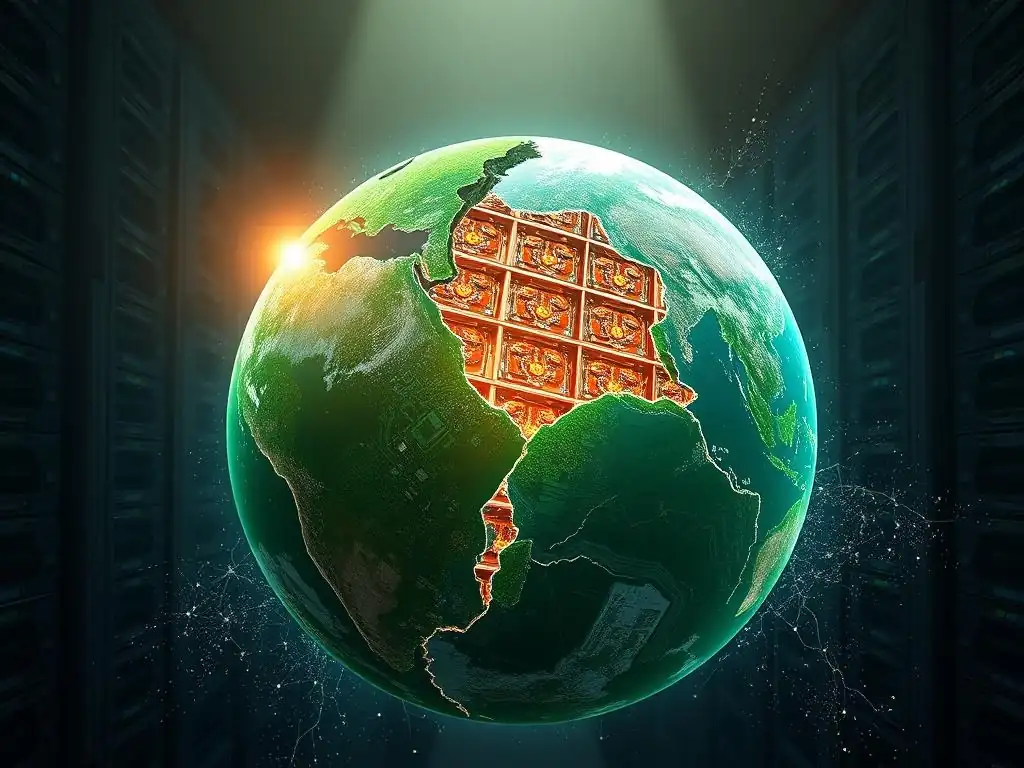
Welcome to Blockchain Trends, your guide to the revolutionary world beyond Bitcoin. Dive deep into the transformative potential of blockchain technology across DeFi, enterprise solutions, and the evolving regulatory landscape.
Curious about the darker side of digital innovation? Our lead article tackles a pressing issue: NFTs environmental impact concerns. Are these digital assets truly sustainable, or are they contributing to a growing ecological problem? Explore the facts, understand the debate, and join the conversation as we uncover the truth behind the environmental footprint of NFTs.
The Environmental Impact of Non-Fungible Tokens (NFTs)
- Introduction: NFTs and Environmental Sustainability
- Blockchain and Energy Consumption: A Detailed Analysis
- Quantifying the Carbon Footprint of NFTs
- Sustainable NFT Solutions and Alternatives
- The Role of Creators and Collectors in Sustainable NFT Practices
- Environmental Considerations Beyond Energy Consumption
- The Future of Sustainable NFTs
- Conclusion: Balancing Digital Art and Environmental Responsibility
-
Frequently Asked Questions
- Are NFTs inherently bad for the environment?
- Which blockchain networks are most responsible for the environmental concerns surrounding NFTs?
- What are some more environmentally friendly alternatives for creating and trading NFTs?
- Besides switching blockchains, what other strategies can reduce the environmental impact of NFTs?
- How can consumers make more informed choices to support environmentally friendly NFTs?
- Final Reflection: Navigating the Digital Frontier Responsibly
- Ignite Your Eco-Conscious Crypto Journey!
Introduction: NFTs and Environmental Sustainability
The Growing Popularity of NFTs and Associated Environmental Concerns
Non-Fungible Tokens (NFTs) have surged from a niche concept to a mainstream phenomenon, revolutionizing digital ownership and creator economies. Initially gaining traction in the digital art and collectibles space, NFTs have expanded into various sectors, including music, gaming, fashion, and even real estate. This rapid ascent has been fueled by high-profile sales, celebrity endorsements, and the promise of unique digital asset ownership.
For instance, Beeple's NFT artwork "Everydays: The First 5000 Days" sold for over $69 million in March 2021, catapulting NFTs into the global spotlight and demonstrating the immense value attributed to these digital tokens. This increased visibility, however, has brought with it a wave of scrutiny, particularly concerning the environmental impact associated with the underlying blockchain technology that powers NFTs.
As the NFT market burgeoned, so did concerns about their carbon footprint. Critics and environmental advocates pointed to the energy-intensive nature of certain blockchain technologies, specifically those relying on Proof-of-Work (PoW) consensus mechanisms, which were initially dominant in the NFT space. Headlines highlighting the supposed immense energy consumption of single NFT transactions began to circulate, raising alarms about the sustainability of this burgeoning digital art form.
These environmental concerns have become a significant point of contention, prompting discussions about the ethical implications of digital art and collectibles in an era of increasing climate consciousness. The debate centers on whether the benefits of NFTs, such as empowering artists and creating new digital economies, outweigh their potential environmental costs.
The Link Between Blockchain Technology and Energy Consumption
The environmental debate surrounding NFTs is intrinsically linked to the energy consumption of blockchain technology. NFTs, by their very nature, rely on blockchain networks to record ownership and transaction history, ensuring their uniqueness and provenance. These blockchains, acting as decentralized ledgers, require energy to operate, validate transactions, and maintain network security. The level of energy consumption, however, varies significantly depending on the type of blockchain and its underlying consensus mechanism. Early blockchain platforms, most notably Bitcoin and initially Ethereum (the most popular blockchain for NFTs), employed Proof-of-Work (PoW).
Proof-of-Work is an energy-intensive mechanism where network participants, known as miners, compete to solve complex cryptographic puzzles to validate transactions and add new blocks to the blockchain. This computational race demands significant processing power, which translates directly into substantial electricity consumption. The more miners competing, the greater the overall energy expenditure. This energy demand is not inherently tied to NFTs themselves but to the foundational blockchain infrastructure that many NFTs have historically utilized. Understanding this fundamental link between blockchain consensus mechanisms and energy consumption is crucial to grasping the nuances of the NFT environmental impact debate.
Blockchain and Energy Consumption: A Detailed Analysis
Proof-of-Work (PoW) vs. Proof-of-Stake (PoS) Consensus Mechanisms
The core of the environmental concerns surrounding NFTs lies in the contrasting energy profiles of different blockchain consensus mechanisms, primarily Proof-of-Work (PoW) and Proof-of-Stake (PoS). Proof-of-Work, as previously discussed, demands substantial computational power. Miners in a PoW system use specialized hardware, often Application-Specific Integrated Circuits (ASICs), to perform complex calculations.
This process not only consumes vast amounts of electricity but also generates significant heat, often requiring energy-intensive cooling systems. Bitcoin, the first and most prominent cryptocurrency, utilizes PoW, and its energy consumption has been estimated to be comparable to that of entire countries like Argentina. While Ethereum initially also used PoW, its transition to Proof-of-Stake marked a pivotal shift in the landscape.
Proof-of-Stake (PoS) offers a fundamentally different approach to blockchain consensus, drastically reducing energy consumption. In a PoS system, validators are selected to create new blocks and validate transactions based on the number of cryptocurrency tokens they "stake" or lock up in the network. Instead of computational races, PoS relies on economic incentives and penalties to secure the blockchain. Validators are rewarded for correctly validating transactions and penalized for malicious behavior.
This eliminates the need for energy-intensive mining, significantly decreasing the energy footprint of the blockchain. Estimates suggest that PoS blockchains consume a fraction of the energy compared to PoW blockchains, often cited as being over 99% more energy-efficient. This dramatic difference in energy consumption is central to understanding the potential for sustainable NFTs.
Ethereum's Transition to Proof-of-Stake: Implications for NFT Sustainability
Ethereum, the dominant blockchain for NFTs, underwent a monumental transition from Proof-of-Work to Proof-of-Stake, known as "The Merge," completed in September 2022. This upgrade was driven in large part by growing environmental concerns and the recognition that PoW was unsustainable for the long-term scalability and broader adoption of blockchain technology. The shift to PoS, specifically Ethereum's implementation called "Proof-of-Stake Beacon Chain," drastically reduced Ethereum's energy consumption.
The Ethereum Foundation estimates that the Merge reduced Ethereum's energy consumption by approximately 99.95%. This represents a massive reduction in the environmental footprint associated with NFTs minted and traded on the Ethereum network post-Merge.
The implications of Ethereum's transition to PoS for NFT sustainability are profound. NFTs created on the post-Merge Ethereum blockchain now operate on a significantly more energy-efficient infrastructure. This directly addresses a major criticism leveled against NFTs, mitigating the carbon footprint associated with their creation and trading.
While the historical environmental impact of NFTs minted on pre-Merge Ethereum remains, the shift to PoS marks a critical turning point. It demonstrates a commitment within the blockchain and NFT communities to address environmental concerns and move towards more sustainable practices. Furthermore, it encourages other blockchains and NFT platforms to consider adopting PoS or other energy-efficient consensus mechanisms.
Energy Consumption of NFT Minting, Trading, and Storage
Understanding the energy consumption associated with NFTs requires examining the different stages of their lifecycle: minting, trading, and storage. Minting an NFT, the process of creating and registering it on the blockchain, is often cited as the most energy-intensive stage, particularly on PoW blockchains. This is because minting involves writing data to the blockchain, which requires computational work for transaction validation in PoW systems. However, with the transition to PoS on Ethereum and the rise of other PoS blockchains, the energy consumption of minting has significantly decreased. On PoS blockchains, minting consumes far less energy compared to PoW.
Trading NFTs also involves blockchain transactions, as ownership is transferred and recorded on the ledger. Similar to minting, the energy consumed during trading depends on the underlying blockchain's consensus mechanism. Trading NFTs on PoS blockchains is significantly less energy-intensive than on PoW blockchains. Storage of NFTs themselves does not inherently consume a large amount of energy.
NFTs are essentially metadata records on the blockchain, pointing to the location of the digital asset, which is typically stored off-chain on services like IPFS (InterPlanetary File System) or traditional servers. While these storage solutions do consume energy, it's generally considered minimal compared to the energy consumption of PoW blockchain transactions. Therefore, the primary focus for reducing the environmental impact of NFTs should be on utilizing energy-efficient blockchains for minting and trading.
Quantifying the Carbon Footprint of NFTs
Research on the Environmental Impact of NFT Activities
Quantifying the precise carbon footprint of NFTs is complex and often debated, as it depends on various factors including the blockchain used, transaction volume, and energy sources used by miners or validators. Early research and estimations, often cited before Ethereum's Merge, frequently highlighted the high energy consumption of NFTs based on PoW Ethereum.
Some studies, for instance, estimated the carbon footprint of a single NFT transaction on PoW Ethereum to be equivalent to weeks or even months of household electricity consumption. These figures, while impactful in raising awareness, often relied on generalized estimations of Ethereum's total energy consumption distributed across all transactions, including NFTs.
More recent research, particularly post-Ethereum Merge, is focusing on the significantly reduced environmental impact of NFTs on PoS blockchains. While precise figures are still evolving, the consensus is that NFTs on PoS blockchains have a dramatically lower carbon footprint. For example, blockchains like Tezos, Solana, and Cardano, which utilize PoS from their inception, are often cited as significantly more energy-efficient platforms for NFTs.
Estimates suggest that transactions on these blockchains consume a fraction of the energy compared to pre-Merge Ethereum or still-PoW blockchains. Furthermore, studies are increasingly focusing on differentiating the environmental impact of various NFT activities, such as minting, trading, and different types of NFTs, to provide a more nuanced understanding.
Differentiating Environmental Impact Across Various NFTs
It's crucial to recognize that the environmental impact of NFTs is not uniform across all projects and platforms. A blanket statement labeling all NFTs as environmentally damaging is inaccurate and misleading. The environmental footprint varies significantly based on several key factors. The blockchain network used is the most critical differentiator. NFTs minted and traded on Proof-of-Stake blockchains inherently have a much lower environmental impact compared to those on Proof-of-Work blockchains. Therefore, choosing NFTs on PoS blockchains is a primary way to reduce environmental concerns.
Furthermore, the type of NFT and its associated activities can also influence its environmental impact. For example, a simple collectible NFT that is minted once and rarely traded might have a lower overall footprint compared to a dynamic, frequently traded NFT collection. Similarly, the creator's and platform's choices play a role.
NFT platforms that prioritize sustainability and utilize energy-efficient infrastructure contribute to a lower overall environmental impact. Some platforms are also actively exploring carbon offsetting and renewable energy initiatives to further mitigate their footprint. Therefore, assessing the environmental impact of NFTs requires a nuanced approach, considering the specific blockchain, platform, and project characteristics rather than making generalized assumptions.
The Influence of Different Blockchain Networks on NFT Sustainability
The choice of blockchain network is paramount in determining the sustainability of NFTs. Different blockchains exhibit vastly different energy consumption profiles, directly impacting the environmental footprint of NFTs minted and traded on them. Proof-of-Stake blockchains like Tezos, Solana, Cardano, Polygon (as a PoS sidechain to Ethereum), and now post-Merge Ethereum are designed for energy efficiency. These networks operate with significantly lower energy consumption compared to Proof-of-Work blockchains.
NFTs on these blockchains are often considered significantly more environmentally friendly options. For example, Tezos has been highlighted as a blockchain with a minimal carbon footprint, emphasizing its sustainability for NFT projects. Solana also boasts high transaction speeds and low energy consumption due to its unique Proof-of-History consensus mechanism combined with PoS.
In contrast, Proof-of-Work blockchains, while historically dominant, are inherently more energy-intensive. While Bitcoin remains the most prominent PoW blockchain, it is less commonly used directly for NFTs due to scalability and cost issues. However, the legacy of PoW Ethereum's early NFT ecosystem continues to contribute to the perception of NFTs as environmentally damaging.
The emergence and increasing adoption of PoS blockchains offer a clear path towards more sustainable NFTs. By selecting NFT platforms and projects built on these energy-efficient networks, creators and collectors can significantly reduce the environmental impact of their digital art and collectibles activities. The ongoing development and adoption of even more energy-efficient blockchain technologies further promise a future of increasingly sustainable NFTs.
Sustainable NFT Solutions and Alternatives
Proof-of-Stake (PoS) Blockchains for Eco-Friendly NFTs
Proof-of-Stake (PoS) blockchains stand as the most readily available and impactful solution for creating eco-friendly NFTs. As detailed previously, PoS mechanisms drastically reduce energy consumption compared to Proof-of-Work. Choosing to mint, buy, and sell NFTs on PoS blockchains like Tezos, Solana, Cardano, Polygon, or post-Merge Ethereum directly contributes to a lower environmental footprint. These blockchains offer a viable alternative for creators and collectors seeking to engage with NFTs responsibly. The lower energy consumption is not just a theoretical benefit; it translates into a tangible reduction in the carbon emissions associated with NFT activities.
The increasing popularity and adoption of PoS blockchains for NFTs demonstrate a growing awareness and demand for sustainable options within the NFT space. Many new NFT platforms and marketplaces are being built directly on PoS blockchains, explicitly promoting their eco-friendly nature. Furthermore, existing platforms are also integrating support for PoS blockchains or migrating from PoW to PoS-based solutions. This shift towards PoS is not just an environmental imperative but also a pragmatic move, as lower energy consumption can translate to lower transaction fees and improved network scalability, further benefiting users and developers in the NFT ecosystem.
Layer-2 Scaling Solutions for Reduced On-Chain Activity
Layer-2 scaling solutions offer another promising avenue for reducing the environmental impact of NFTs, particularly on blockchains like Ethereum, even post-Merge. Layer-2 solutions are protocols built on top of a base blockchain (Layer-1) that enable faster and cheaper transactions while inheriting the security of the underlying Layer-1 network. These solutions often process transactions off-chain in batches and then periodically settle them on the main Layer-1 blockchain. This reduces congestion and the number of transactions directly processed on the more energy-intensive Layer-1, leading to lower overall energy consumption.
For NFTs, Layer-2 solutions like Polygon, Arbitrum, and Optimism (for Ethereum) can significantly reduce the environmental footprint associated with trading and other on-chain activities. By conducting NFT transactions on Layer-2, users can benefit from lower gas fees and faster processing times while contributing to a more sustainable NFT ecosystem. Many NFT marketplaces and platforms are now integrating or exploring Layer-2 solutions to offer more environmentally friendly options to their users. The continued development and adoption of Layer-2 scaling solutions represent a crucial step towards making NFTs more sustainable and accessible.
Carbon Offset Programs and Renewable Energy Initiatives
Beyond choosing energy-efficient blockchains and Layer-2 solutions, carbon offset programs and renewable energy initiatives offer supplementary strategies for mitigating the environmental impact of NFTs. Carbon offsetting involves investing in projects that remove or reduce carbon dioxide emissions from the atmosphere to compensate for emissions generated by NFT activities. These projects can include reforestation, renewable energy development, or carbon capture technologies. Some NFT platforms and projects are now incorporating carbon offsetting into their operations, allowing users to purchase carbon offsets to neutralize the environmental impact of their NFT transactions.
Renewable energy initiatives involve directly supporting or transitioning to renewable energy sources for blockchain operations. This can include using data centers powered by renewable energy, supporting renewable energy projects, or purchasing renewable energy credits. While the blockchain network's energy source is often beyond the direct control of individual NFT creators or collectors, collective action and demand for renewable energy-powered blockchain infrastructure can drive positive change. Furthermore, some NFT projects are exploring innovative approaches like "proof-of-stake with renewable energy," where validators are incentivized to use renewable energy sources, further aligning NFT activities with sustainability goals.
Energy-Efficient NFT Marketplaces and Platforms
The emergence of energy-efficient NFT marketplaces and platforms is a significant positive development in addressing the environmental concerns surrounding NFTs. These platforms prioritize sustainability by building on Proof-of-Stake blockchains, utilizing Layer-2 solutions, and often implementing carbon offsetting or renewable energy initiatives. Marketplaces like Hic et Nunc (now Teia), built on Tezos, have long championed eco-friendly NFTs, demonstrating that sustainable platforms can thrive. Other platforms are increasingly highlighting their commitment to sustainability as a core value proposition, attracting environmentally conscious creators and collectors.
These energy-efficient platforms often provide transparent information about their environmental footprint and the sustainability measures they are implementing. They may also curate collections of NFTs from artists who are committed to sustainable practices. By supporting these platforms, users can actively contribute to a more sustainable NFT ecosystem and encourage further innovation in environmentally responsible NFT solutions. The growing availability of energy-efficient marketplaces makes it easier than ever for individuals to engage with NFTs in a way that aligns with their environmental values.
The Role of Creators and Collectors in Sustainable NFT Practices

Selecting Environmentally Conscious Blockchains
Creators and collectors wield significant power in shaping a more sustainable NFT ecosystem through informed choices, particularly in selecting environmentally conscious blockchains. For creators, choosing to mint NFTs on Proof-of-Stake blockchains like Tezos, Solana, Cardano, or Polygon is a fundamental step towards reducing their environmental impact. Similarly, collectors can prioritize purchasing NFTs minted on these eco-friendly blockchains. This conscious selection sends a clear market signal, incentivizing more creators and platforms to adopt sustainable practices.
Before engaging with an NFT project or platform, both creators and collectors should research the underlying blockchain and its energy consumption profile. Many blockchain networks and NFT platforms now provide information about their sustainability efforts and energy efficiency. By actively seeking out and supporting projects built on environmentally conscious blockchains, individuals can collectively drive demand for sustainable NFTs and contribute to a greener digital art landscape. This informed decision-making is crucial for shifting the NFT space towards a more sustainable trajectory.
Supporting Sustainable NFT Projects and Artists
Beyond blockchain selection, supporting sustainable NFT projects and artists is crucial for fostering a more environmentally responsible NFT community. Many artists and projects are now explicitly prioritizing sustainability in their NFT endeavors. They may choose to mint on PoS blockchains, implement carbon offsetting, or create art that raises awareness about environmental issues. Actively seeking out and supporting these projects and artists amplifies their impact and encourages others to adopt similar sustainable practices.
Collectors can support sustainable NFT projects by purchasing their artwork, participating in their communities, and promoting their work. Creators can collaborate with other environmentally conscious artists, integrate sustainability themes into their art, and advocate for sustainable practices within the NFT space. By building a community around sustainable NFTs and celebrating environmentally responsible initiatives, creators and collectors can collectively contribute to a positive shift in the NFT ecosystem and encourage wider adoption of sustainable practices.
Promoting Environmental Awareness within the NFT Community
Promoting environmental awareness within the NFT community is essential for driving lasting change and fostering a culture of sustainability. Open and honest conversations about the environmental impact of NFTs are crucial for addressing concerns and encouraging responsible practices. Educating creators and collectors about the differences between PoW and PoS blockchains, the availability of Layer-2 solutions, and carbon offsetting options empowers them to make informed choices.
NFT platforms, marketplaces, and communities can play a vital role in promoting environmental awareness by providing educational resources, hosting discussions, and highlighting sustainable projects. Social media, online forums, and community events can be used to disseminate information and encourage dialogue about NFT sustainability. By fostering a culture of environmental consciousness within the NFT community, we can collectively work towards a more sustainable future for digital art and collectibles, ensuring that the benefits of NFTs are not achieved at the expense of the environment.
Environmental Considerations Beyond Energy Consumption
E-Waste from Cryptocurrency Mining
While the energy consumption of blockchain transactions is the primary environmental concern associated with NFTs, other environmental impacts warrant consideration. E-waste generated from cryptocurrency mining, particularly Proof-of-Work mining, is a significant issue. The specialized hardware used for PoW mining, such as ASICs, becomes obsolete relatively quickly due to technological advancements and increasing mining difficulty. This leads to a substantial volume of electronic waste, often containing hazardous materials, if not properly recycled.
Although NFTs themselves do not directly generate e-waste, the historical association of NFTs with PoW blockchains, particularly Ethereum, links them indirectly to this problem. As the NFT space transitions towards PoS blockchains, the e-waste issue associated with NFT-related blockchain activities should diminish significantly. However, responsible recycling and disposal of mining hardware remain important considerations for the broader cryptocurrency and blockchain ecosystem, even as PoS becomes more prevalent. Promoting circular economy principles within the hardware manufacturing and recycling industries can help mitigate the e-waste impact of blockchain technologies.
Environmental Impact of NFT Data Storage
The environmental impact of NFT data storage is another aspect to consider, although it is generally less significant than the energy consumption of PoW blockchains. While NFTs themselves are lightweight metadata records on the blockchain, the digital assets they represent, such as images, videos, and music files, require storage. These assets are typically stored off-chain on decentralized storage networks like IPFS or centralized servers. Data storage does consume energy, although the energy footprint of storing digital assets is generally lower compared to energy-intensive blockchain transactions.
The environmental impact of data storage can be minimized through energy-efficient data centers, renewable energy-powered storage solutions, and optimized data compression techniques. Decentralized storage networks like IPFS, while offering benefits in terms of data resilience and censorship resistance, can also have energy implications depending on the network's infrastructure and energy sources. Choosing storage solutions with lower energy footprints and promoting energy efficiency in data storage practices are important considerations for a more sustainable NFT ecosystem.
Applying Circular Economy Principles to the NFT Ecosystem
Applying circular economy principles to the NFT ecosystem offers a holistic approach to minimizing its environmental impact beyond just energy consumption. Circular economy principles focus on reducing waste, reusing materials, and recycling resources to create a closed-loop system. In the context of NFTs, this can involve several strategies. Promoting the use of recycled or sustainably sourced materials in any physical products associated with NFTs (e.g., physical prints or merchandise) aligns with circular economy principles.
Encouraging the reuse or repurposing of digital assets within the NFT ecosystem can also contribute to circularity. For example, artists could create new NFTs by remixing or building upon existing digital assets, reducing the need to create entirely new content from scratch. Furthermore, promoting responsible disposal and recycling of any physical components associated with NFTs, including hardware or packaging, is essential. Adopting a circular economy mindset across the NFT ecosystem can lead to a more resource-efficient and environmentally responsible approach to digital art and collectibles.
The Future of Sustainable NFTs
Technological Innovations for Reducing Energy Use
The future of sustainable NFTs is intrinsically linked to ongoing technological innovations aimed at reducing energy use within the blockchain space. Continued advancements in Proof-of-Stake consensus mechanisms and the development of even more energy-efficient consensus algorithms are crucial for further minimizing the environmental footprint of NFTs. Research into alternative consensus mechanisms beyond PoW and PoS, such as Proof-of-History or Proof-of-Authority, may offer further energy efficiency gains.
Layer-2 scaling solutions are also expected to evolve and become even more efficient, further reducing the reliance on energy-intensive Layer-1 blockchains for NFT transactions. Technological innovations in data storage, such as more energy-efficient data compression techniques and decentralized storage solutions powered by renewable energy, will also contribute to a more sustainable NFT ecosystem. The ongoing pace of innovation in blockchain technology and related fields holds significant promise for creating increasingly sustainable and environmentally friendly NFTs in the future.
Increasing Demand for Environmentally Friendly NFTs
The increasing demand for environmentally friendly NFTs is a powerful driver for change and a key factor shaping the future of sustainable digital art. As environmental awareness grows and consumers become more conscious of the environmental impact of their choices, the demand for sustainable products and services, including NFTs, is expected to rise. This growing demand incentivizes creators, platforms, and marketplaces to prioritize sustainability and offer eco-friendly NFT options.
The market is already responding to this demand, with the emergence of energy-efficient NFT platforms, sustainable NFT projects, and initiatives promoting environmental awareness within the NFT community. This trend is likely to accelerate as more consumers actively seek out and support environmentally responsible NFTs. The increasing market demand for sustainable NFTs will further drive innovation in energy-efficient blockchain technologies and sustainable NFT practices, creating a positive feedback loop towards a greener digital art landscape.
Policy and Regulatory Frameworks for Sustainable NFTs
Policy and regulatory frameworks are likely to play an increasingly important role in shaping the future of sustainable NFTs and ensuring environmental responsibility within the blockchain space. Governments and regulatory bodies are beginning to pay closer attention to the environmental impact of cryptocurrencies and blockchain technologies, including NFTs. Future regulations could potentially incentivize or mandate the adoption of energy-efficient consensus mechanisms for blockchains used for NFTs.
Policy frameworks could also promote transparency and disclosure regarding the environmental footprint of NFT platforms and projects, enabling consumers to make informed choices. Furthermore, regulations could support the development and adoption of renewable energy-powered blockchain infrastructure and incentivize carbon offsetting initiatives within the NFT ecosystem. While the specific nature of future regulations remains to be seen, policy and regulatory frameworks have the potential to significantly accelerate the transition towards a more sustainable and environmentally responsible NFT landscape.
Conclusion: Balancing Digital Art and Environmental Responsibility
Making Informed Choices in the NFT Space
Navigating the NFT space responsibly requires making informed choices that balance the exciting potential of digital art with environmental considerations. Understanding the nuances of blockchain technology, particularly the difference between Proof-of-Work and Proof-of-Stake, is crucial for making environmentally conscious decisions. Choosing NFTs minted and traded on PoS blockchains is a fundamental step towards reducing the environmental footprint of digital collectibles. Supporting energy-efficient NFT platforms and projects further contributes to a more sustainable ecosystem.
Creators and collectors both have a role to play in driving positive change. By selecting environmentally conscious blockchains, supporting sustainable NFT initiatives, and promoting environmental awareness within the NFT community, individuals can collectively shape a more responsible and sustainable NFT future. Informed decision-making, coupled with a commitment to sustainability, is essential for ensuring that the benefits of NFTs are realized without compromising environmental responsibility.
Towards a Sustainable Future for NFTs and Blockchain
The journey towards a sustainable future for NFTs and blockchain is ongoing, but significant progress has been made and continues to be driven by technological innovation, increasing environmental awareness, and evolving market demands. The transition of Ethereum to Proof-of-Stake marks a pivotal moment, demonstrating the feasibility and impact of energy-efficient consensus mechanisms for NFTs. The growing adoption of PoS blockchains, Layer-2 solutions, and carbon offsetting initiatives signals a positive shift towards greater sustainability within the NFT space.
While challenges remain, the future of NFTs can be one where digital art and environmental responsibility coexist harmoniously. Continued technological advancements, coupled with conscious choices from creators, collectors, platforms, and policymakers, are paving the way for a sustainable future for NFTs and the broader blockchain ecosystem. By embracing innovation, promoting awareness, and prioritizing environmental considerations, we can unlock the transformative potential of NFTs while safeguarding our planet.
Frequently Asked Questions
Are NFTs inherently bad for the environment?
No, NFTs themselves are not inherently bad. The environmental impact largely depends on the underlying blockchain used to mint and trade them. Some blockchains are much more energy-intensive than others.
Which blockchain networks are most responsible for the environmental concerns surrounding NFTs?
Proof-of-Work (PoW) blockchains like the original Ethereum (before the Merge) are the primary culprits. These networks require significant computational power for transaction verification, leading to high energy consumption.
What are some more environmentally friendly alternatives for creating and trading NFTs?
Proof-of-Stake (PoS) blockchains are significantly more energy-efficient alternatives. Examples include blockchains like Solana, Tezos, and the updated Ethereum (after the Merge). They require much less energy consumption compared to PoW.
Besides switching blockchains, what other strategies can reduce the environmental impact of NFTs?
Layer-2 scaling solutions on existing blockchains can help reduce transaction fees and energy consumption. Additionally, carbon offsetting and conscious choices by artists and platforms can contribute to more sustainable practices.
How can consumers make more informed choices to support environmentally friendly NFTs?
Research the blockchain's energy consumption before purchasing NFTs. Support artists and platforms that prioritize sustainable practices, and look for certifications or initiatives that promote eco-friendly NFT creation.
The exploration of NFTs and their environmental impact reveals a critical juncture in the evolution of digital art and technology. The undeniable energy consumption associated with certain blockchain technologies demands immediate and thoughtful consideration. Ignoring this issue risks undermining the very innovation and creativity that NFTs promise to unlock, jeopardizing their long-term viability and societal acceptance.
The ongoing debate surrounding NFTs underscores the complex interplay between technological advancement and environmental responsibility. This discussion is not merely academic; it directly impacts our collective future and the legacy we leave for generations to come. The allure of digital ownership and artistic innovation must be balanced with a commitment to sustainable practices. We do not inherit the earth from our ancestors; we borrow it from our children.
This ancient proverb serves as a potent reminder of our obligation to minimize the environmental footprint of emerging technologies.
As we stand at the precipice of a new digital era, let us not be blinded by the potential gains without acknowledging the potential costs. Consider your own role in shaping a more sustainable future for NFTs. Are you supporting artists who prioritize eco-friendly minting practices? Are you advocating for the adoption of energy-efficient blockchain technologies? The power to influence this narrative lies within each of us. Let us strive to build a digital world that is not only innovative and engaging but also environmentally conscious and responsible.
Ignite Your Eco-Conscious Crypto Journey!
Thank you for exploring the environmental impact of NFTs with us. We hope this article has shed light on the sustainability concerns surrounding digital art and inspired you to make informed choices. Now, let's turn knowledge into action:
- Explore alternative, eco-friendly blockchain technologies for creating and trading NFTs. Research platforms utilizing proof-of-stake or other energy-efficient mechanisms. This is the most impactful step you can take!
- Join the conversation! Share this article with your network and encourage discussions about sustainable practices in the NFT space. Let's build awareness together.
- Consider offsetting your NFT activities by donating to environmental organizations or participating in carbon-neutral initiatives within the blockchain community.
What small change will you make today to contribute to a greener NFT future? Share your ideas in the comments below!
Leave a Reply