
Reclaiming Your Data: How Decentralized Social Media Empowers Users


Welcome to Blockchain Trends, your compass in the rapidly evolving world of decentralized technologies!
Are you ready to take back control of your digital life? In an age where privacy feels like a relic, we delve into the groundbreaking potential of blockchain to revolutionize social media. This week, we're exploring decentralized social media privacy – a concept that could redefine how we connect, share, and own our data. Discover how blockchain's transparent and secure infrastructure is paving the way for user-centric platforms and a future where your personal information truly belongs to you. Intrigued? Read on to unlock the secrets of a more private and empowered online experience...
Reclaiming Your Data: How Decentralized Social Media Empowers Users
- Introduction: The Rise of Decentralized Social Media
- Understanding Decentralized Social Media
- Data Privacy Issues in Traditional Social Media: A Critical Look
- Decentralized Social Media Privacy: A Solution?
- Benefits of Decentralized Social Media Platforms
- Exploring Decentralized Social Media Platforms: Examples and Use Cases
- The Challenges of Decentralized Social Media Adoption
- The Future of Social Media: A Decentralized Vision
- Practical Steps to Embrace Decentralized Social Media
- Conclusion: Empowering Users Through Decentralized Social Media
-
Frequently Asked Questions
- ### What is decentralized social media, and how does it differ from traditional platforms?
- ### How does decentralized social media enhance user privacy compared to platforms like Facebook or Twitter?
- ### What are the key benefits of using decentralized social media platforms, specifically regarding data privacy?
- ### Are there any potential drawbacks or challenges associated with decentralized social media regarding user privacy?
- ### How does blockchain technology contribute to the privacy aspects of decentralized social media platforms?
- Final Reflection: Embracing Digital Sovereignty
- Unleash Your Social Freedom Today!
In the current digital landscape, social media platforms have become integral to our daily lives, connecting billions globally. However, this connectivity comes at a cost, particularly concerning user data privacy. Traditional social media platforms operate on a centralized model, where vast amounts of user data are collected, stored, and utilized by the platform owners.
Users are often unaware of the extent of data collection and the implications for their privacy. Numerous studies and reports have highlighted the pervasive nature of data collection, ranging from personal information and browsing habits to location data and social interactions. This centralization of data raises significant concerns about potential misuse, unauthorized access, and the erosion of individual privacy in the digital age.
The Cambridge Analytica scandal, for instance, served as a stark reminder of the vulnerabilities inherent in centralized data systems. Data from millions of Facebook users was harvested without explicit consent and used for political advertising, sparking global outrage and regulatory scrutiny. Furthermore, routine data breaches at major social media companies expose user data to malicious actors, leading to identity theft, financial fraud, and other forms of cybercrime.
These incidents underscore the urgent need for alternative models that prioritize user data privacy and security. The increasing awareness of these risks is fueling a demand for decentralized social media platforms that promise to return control of data to the users themselves.
Blockchain Trends and the Future of Decentralized Platforms for Content Creation
The growing apprehension surrounding data privacy coincides with the rise of blockchain technology and its potential to revolutionize various sectors, including social media and content creation. Blockchain, initially known for its role in cryptocurrencies, offers a decentralized, transparent, and secure infrastructure that can address many of the data privacy issues inherent in traditional social media.
The core principles of blockchain – decentralization, immutability, and cryptographic security – are perfectly aligned with the goals of empowering users and protecting their data in the digital realm. This technological convergence is giving rise to a new wave of decentralized social media platforms, aiming to reshape how we interact online and manage our digital identities.
Blockchain trends indicate a significant shift towards decentralized solutions across industries. In the content creation space, this translates to platforms where creators have greater ownership and control over their work and audience relationships, bypassing centralized intermediaries. Decentralized platforms leverage blockchain to distribute data across a network of nodes, eliminating single points of failure and reducing the risk of data breaches.
Smart contracts, another key feature of blockchain, can automate processes related to content monetization, copyright management, and platform governance, fostering a more equitable and transparent ecosystem for both creators and users. This trend suggests a future where content creation and social interaction are increasingly governed by decentralized principles, prioritizing user privacy and data sovereignty.
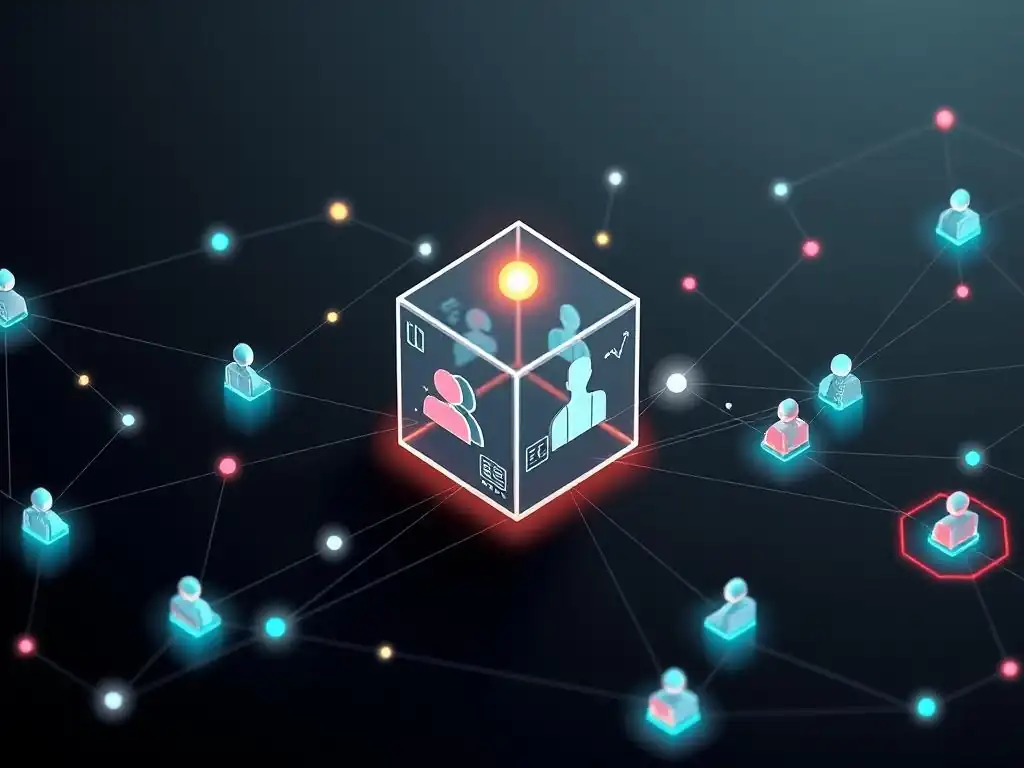
Decentralized social media represents a paradigm shift from the centralized models that dominate the current online landscape. At its core, decentralized social media leverages blockchain technology to distribute control and ownership away from a single entity and towards users. Unlike platforms like Facebook or X (formerly Twitter), which store user data on their own servers and dictate platform rules, decentralized social media platforms operate on distributed networks.
This means that user data is not held by one central authority but is instead spread across numerous computers or nodes within the network. This architectural difference is fundamental to understanding the enhanced privacy and user empowerment offered by decentralized social media.
The blockchain foundation ensures that transactions and data interactions on decentralized social media platforms are transparent, secure, and immutable. Each action, from posting content to making connections, is recorded on the blockchain as a transaction, creating a verifiable and tamper-proof history. This transparency and security are achieved through cryptographic techniques and consensus mechanisms inherent in blockchain technology. Decentralized social media platforms are not just about technology; they represent a philosophical shift towards user autonomy and data ownership, aiming to create a more democratic and equitable online environment.
Decentralized social networks are distinguished by several key features that directly address the shortcomings of traditional centralized platforms, particularly in the realm of data ownership and control. One of the primary features is user data ownership. In decentralized systems, users retain control over their data.
This means they decide what information is shared, with whom, and how it is used. Data is often stored in a way that users can access and manage directly, sometimes even on their own devices or through encrypted decentralized storage solutions. This contrasts sharply with centralized platforms where user data is essentially owned and controlled by the platform itself.
Another crucial feature is enhanced privacy. Decentralized social media platforms often employ end-to-end encryption and other privacy-preserving technologies to protect user communications and data from unauthorized access. The distributed nature of the network also makes it more resistant to censorship and single points of failure. Furthermore, decentralized platforms often promote transparency in their algorithms and governance models. Users may have a say in platform rules and development, fostering a more democratic and community-driven approach. These key features collectively contribute to a social media experience that is more user-centric, privacy-respecting, and empowering.
The Importance of User Data Privacy in the Digital Age
In the digital age, user data privacy is not merely a matter of personal preference; it is a fundamental right and a critical aspect of individual autonomy and security. The increasing digitization of our lives means that vast amounts of personal information are constantly being generated and collected online. This data, ranging from our online activities and communications to our location and personal preferences, can be incredibly valuable, but also highly sensitive and vulnerable to misuse. Protecting user data privacy is essential to prevent identity theft, financial fraud, unwarranted surveillance, and manipulation.
Beyond individual risks, the erosion of data privacy has broader societal implications. The concentration of user data in the hands of a few powerful corporations can lead to monopolies, stifle competition, and undermine democratic processes. The ability to collect and analyze vast datasets allows for targeted advertising, personalized manipulation, and even social engineering on a massive scale.
Recognizing the importance of user data privacy is crucial for fostering a healthy and democratic digital society. Decentralized social media platforms emerge as a response to these concerns, offering a technological and philosophical alternative that prioritizes user rights and empowers individuals to control their digital footprint.
How Centralized Platforms Collect and Use Your Data
Centralized social media platforms operate on business models heavily reliant on data collection and monetization. These platforms employ a wide array of techniques to gather user data, often without users fully understanding the extent or implications. Data collection starts from the moment a user creates an account, encompassing personal information such as name, email address, date of birth, and location.
Beyond initial registration, platforms track user activity extensively, monitoring posts, likes, shares, comments, messages, and even browsing history within the platform's ecosystem. This data is often supplemented with information gathered from third-party sources, including website trackers and data brokers, creating comprehensive user profiles.
The collected data is primarily used for targeted advertising, a major revenue stream for centralized social media. Algorithms analyze user profiles to deliver personalized ads, aiming to maximize engagement and click-through rates. Data is also used to personalize content feeds, recommend connections, and improve platform features, ostensibly enhancing user experience.
However, the lack of transparency regarding data usage raises concerns. Users are often unaware of the algorithms shaping their online experiences and the extent to which their data is being utilized for purposes beyond their immediate understanding or consent. This opaque data ecosystem underscores the need for more user-centric and transparent models like decentralized social media.
The Risks of Data Breaches and Privacy Violations in Centralized Systems
Centralized data storage in traditional social media platforms creates a significant vulnerability to data breaches and privacy violations. Storing massive amounts of user data in centralized servers makes these platforms attractive targets for hackers and cybercriminals. High-profile data breaches at companies like Facebook, LinkedIn, and Equifax have exposed the sensitive personal information of millions of users, resulting in identity theft, financial losses, and reputational damage. These breaches are not isolated incidents but rather a recurring problem in centralized systems, highlighting the inherent risks of concentrating vast amounts of data in single locations.
Beyond external threats, privacy violations can also stem from the platforms themselves. Incidents of platforms sharing user data with third-party developers without adequate consent, or using data in ways that users did not anticipate, have eroded public trust.
The lack of user control over data and the opaque nature of data processing practices in centralized systems contribute to a sense of vulnerability and powerlessness among users. Decentralized social media, with its distributed data storage and user-centric approach, offers a potential solution to mitigate these risks by reducing the attractiveness of data as a centralized target and empowering users with greater control over their information.
Traditional social media platforms operate on a power dynamic that heavily favors the platform owners over individual users. Users are essentially granted access to these platforms in exchange for their data, creating a relationship where users are the product being sold to advertisers. This power imbalance is reflected in the terms of service agreements, which are often lengthy, complex, and heavily skewed in favor of the platform. Users have limited recourse if their data is misused or their privacy is violated, and the platforms often operate with minimal accountability to their user base.
This imbalance extends to content moderation and platform governance. Centralized platforms have the sole authority to decide what content is allowed, which accounts are suspended, and how the platform evolves. Users have limited influence over these decisions, and concerns about censorship, bias, and lack of transparency are frequently raised. Decentralized social media aims to redress this power imbalance by distributing control and decision-making authority. By empowering users with data ownership, platform governance mechanisms, and greater transparency, decentralized platforms strive to create a more equitable and user-centric social media ecosystem.
How Blockchain Technology Enhances Data Security
Blockchain technology offers several inherent features that significantly enhance data security in decentralized social media platforms, addressing many vulnerabilities present in centralized systems. One key aspect is decentralization itself. By distributing data across a network of nodes, blockchain eliminates the single point of failure inherent in centralized servers. If one node is compromised, the rest of the network remains operational, and data integrity is preserved. This distributed architecture makes decentralized platforms more resilient to cyberattacks and data breaches compared to centralized counterparts.
Furthermore, blockchain utilizes cryptography to secure data. Cryptographic hashing and encryption techniques are employed to protect data integrity and confidentiality. Transactions on the blockchain are cryptographically signed, ensuring that they are tamper-proof and verifiable. Many decentralized social media platforms leverage end-to-end encryption for user communications, further enhancing privacy by ensuring that only intended recipients can access the content of messages. The combination of decentralization and strong cryptography makes blockchain a robust foundation for building secure and privacy-preserving social media platforms.
Encryption and Data Ownership: Putting Users in Control
Decentralized social media platforms leverage encryption and data ownership principles to fundamentally shift control back to users. End-to-end encryption, often employed in decentralized messaging and content sharing, ensures that only the sender and receiver can decrypt the content of communications. This prevents platform operators and third parties from accessing and monitoring user messages, a significant improvement over many traditional social media platforms where user communications are often stored in plaintext or are accessible to platform administrators.
Data ownership is another cornerstone of decentralized social media privacy. Users are empowered to own and control their data, deciding where it is stored, who can access it, and how it is used. Some decentralized platforms utilize personal data vaults or decentralized storage solutions, giving users direct control over their data files.
This contrasts sharply with centralized platforms where user data is owned and controlled by the platform company. By combining encryption with user data ownership, decentralized social media platforms aim to create an environment where privacy is not just a feature but a fundamental principle, empowering users to reclaim control over their digital lives.
Transparency and Auditability in Decentralized Networks
Transparency and auditability are inherent characteristics of blockchain technology that contribute significantly to the privacy and security of decentralized social media platforms. Blockchain's distributed ledger system records every transaction in a transparent and immutable manner. This means that all actions on the platform, from content posting to data interactions, are recorded on the blockchain and can be independently verified by anyone in the network. This level of transparency is in stark contrast to the opaque data processing practices of many centralized social media platforms.
Auditability is a direct consequence of blockchain's transparency. Because all transactions are recorded and verifiable, decentralized platforms are more auditable than centralized systems. Users and independent auditors can examine the platform's operations and data handling practices, fostering greater accountability and trust. Smart contracts, often used to automate platform functions in decentralized social media, are also auditable, ensuring that the platform operates according to pre-defined and transparent rules. This transparency and auditability build user confidence and contribute to a more trustworthy and privacy-respecting social media environment.
Enhanced User Privacy and Data Security
One of the most significant benefits of decentralized social media platforms is the enhanced user privacy and data security they offer compared to traditional centralized platforms. By leveraging blockchain technology, these platforms distribute data, employ strong encryption, and empower users with data ownership. This combination of features significantly reduces the risks of data breaches, unauthorized access, and privacy violations. Users have greater control over their personal information and how it is used, fostering a more privacy-respecting online environment.
Decentralized platforms often implement end-to-end encryption for communications, ensuring that messages are only readable by the intended recipients. The distributed nature of data storage makes it less attractive for hackers to target, as there is no single point of failure. Furthermore, user data ownership means that individuals are not just surrendering their information to a centralized corporation but are actively managing and controlling their digital assets. This focus on privacy and security is a core value proposition of decentralized social media, attracting users who are increasingly concerned about data protection in the digital age.
Freedom of Speech and Resistance to Censorship
Decentralized social media platforms often champion freedom of speech and resistance to censorship as core principles. Unlike centralized platforms that are subject to corporate policies, government regulations, and algorithmic biases in content moderation, decentralized platforms aim to create a more censorship-resistant environment. The distributed nature of blockchain networks makes it significantly harder for any single entity to control or censor content. While content moderation is still necessary to address harmful content, decentralized platforms often explore alternative approaches to moderation, such as community-based moderation or transparent governance mechanisms.
The emphasis on freedom of speech stems from the desire to create online spaces where diverse voices can be heard and where open dialogue is encouraged. Decentralized platforms often utilize open-source software and transparent algorithms, allowing users to understand how content moderation is implemented and to participate in platform governance. This focus on freedom of expression and resistance to censorship appeals to users who value open discourse and are concerned about the potential for bias and control in centralized social media platforms.
Monetization Opportunities for Content Creators
Decentralized social media platforms can offer new and potentially more equitable monetization opportunities for content creators. In traditional social media, creators often rely on platform-controlled advertising revenue sharing, which can be opaque and unfavorable to creators. Decentralized platforms, leveraging blockchain and cryptocurrencies, can enable direct monetization models, such as micro-payments, tokenized rewards, and direct fan support. Creators can potentially earn more directly from their audience, bypassing centralized intermediaries and platform fees.
Blockchain-based monetization mechanisms can offer greater transparency and control to creators. Smart contracts can automate payments and revenue sharing, ensuring that creators receive fair compensation for their work. Tokenized economies within decentralized social media platforms can incentivize content creation and engagement, rewarding both creators and users for their contributions to the ecosystem. This shift towards creator-centric monetization models can empower artists, writers, journalists, and other content creators to build sustainable livelihoods while maintaining greater control over their work and revenue streams.
Community Governance and Platform Development
Decentralized social media platforms often embrace community governance models, empowering users to participate in platform development and decision-making. Unlike centralized platforms where platform evolution is dictated by a corporation, decentralized platforms can involve users in shaping platform rules, features, and future direction. This can be achieved through various mechanisms, such as decentralized autonomous organizations (DAOs), token-based voting, and community forums. Community governance aims to create platforms that are more responsive to user needs and values, fostering a sense of ownership and collective responsibility among platform participants.
Open-source software is frequently used in decentralized social media, allowing developers and users to contribute to platform development, audit code, and propose improvements. Transparent governance processes ensure that decisions are made in a democratic and accountable manner. This community-driven approach can lead to more innovative and user-friendly platforms that are aligned with the values of their user base. Community governance not only empowers users but also fosters a stronger sense of community and shared purpose within the decentralized social media ecosystem.
Mastodon: Features, Functionality, and User Experience
Mastodon is a prominent example of a decentralized social media platform that emphasizes user privacy and community-driven moderation. It is a free and open-source microblogging platform, often cited as an alternative to X (formerly Twitter). Mastodon operates as a federated network, meaning it is composed of independently run servers called "instances." Users can choose to join an instance that aligns with their interests and values, and these instances can interoperate, forming a larger decentralized social network known as the "Fediverse." This federated structure distributes control and reduces the risk of platform-wide censorship or outages.
Mastodon offers familiar microblogging features, such as posting text, images, videos, and links. It prioritizes chronological feeds and offers robust privacy settings, allowing users to control who can see their posts and interact with them. User experience is generally considered similar to X, but with a stronger emphasis on community and less algorithmic manipulation of content feeds. Mastodon's user base is diverse, encompassing individuals, organizations, and communities interested in decentralized alternatives to mainstream social media. Its focus on user control, community moderation, and open-source principles makes it a significant example in the decentralized social media landscape.
Lens Protocol: Unique Value Proposition and Target Audience
Lens Protocol is a decentralized social graph built on the Polygon blockchain, offering a different approach to decentralized social media. Unlike platforms like Mastodon that are primarily focused on microblogging, Lens Protocol provides the underlying infrastructure for building a variety of decentralized social media applications. It is designed to be modular and composable, allowing developers to create diverse social media experiences on top of the protocol. Lens Protocol's unique value proposition lies in its focus on user-owned profiles and social relationships that are portable across different applications within its ecosystem.
Users on Lens Protocol own their profiles as NFTs (Non-Fungible Tokens), giving them complete control over their identity and data. Social connections and content are also recorded on the blockchain, creating a persistent and user-owned social graph. This portability allows users to move between different Lens-based applications without losing their followers, content, or social connections. Lens Protocol targets developers and creators who want to build decentralized social media applications with user-owned data and composable functionalities. Its focus on infrastructure and developer empowerment distinguishes it from platform-centric decentralized social media options.
The decentralized social media landscape is diverse, with various platforms and protocols offering different features, functionalities, and approaches to decentralization. Platforms like Mastodon prioritize federation and community-driven moderation, offering a microblogging experience similar to centralized alternatives but with enhanced user control. Lens Protocol, on the other hand, focuses on providing a decentralized social graph infrastructure, enabling developers to build a range of social media applications with user-owned data and composable features.
Other decentralized social media options include platforms focused on video sharing, content creation, or specific niche communities. Some platforms prioritize anonymity and privacy, while others emphasize open governance and community participation. When comparing different decentralized social media options, it is important to consider factors such as the underlying technology (blockchain, federated networks), the user experience, the level of decentralization, the community governance model, and the specific features and functionalities offered. The choice of platform often depends on individual user needs and preferences, as well as the specific goals and values of the community or application being considered.
Scalability and Performance Issues
One of the primary challenges facing decentralized social media platforms is scalability and performance. Blockchain technology, while offering security and decentralization, can sometimes be slower and less efficient than centralized database systems, particularly when handling large volumes of transactions and user activity. Decentralized social media platforms need to address scalability issues to accommodate a growing user base and ensure a smooth and responsive user experience. Transaction processing speeds and network congestion can become bottlenecks as platform usage increases.
Solutions to scalability challenges are being actively explored, including layer-2 scaling solutions for blockchains, sharding techniques, and optimized network architectures. Federated platforms, like Mastodon, also address scalability by distributing user load across multiple instances. Improving the scalability and performance of decentralized social media platforms is crucial for them to compete effectively with centralized platforms and achieve mainstream adoption. Ongoing research and development in blockchain and distributed systems are essential to overcome these technical hurdles.
User Interface and User Experience (UX) Considerations
User interface (UI) and user experience (UX) are critical factors for the adoption of any technology, and decentralized social media is no exception. Many decentralized platforms are still in their early stages of development, and their UIs and UXs may not be as polished or intuitive as those of established centralized platforms. Complexity in setting up accounts, managing cryptographic keys, and understanding decentralized concepts can pose barriers to entry for less technically savvy users. Improving the usability and accessibility of decentralized social media platforms is essential to attract a broader audience.
Efforts are underway to simplify the user experience in decentralized applications. Wallet integrations, user-friendly interfaces, and educational resources are being developed to make decentralized technologies more accessible to mainstream users. Focusing on intuitive design, clear onboarding processes, and seamless user flows is crucial for decentralized social media platforms to compete with the user-friendliness of centralized alternatives and encourage wider adoption.
Regulatory Uncertainty and Legal Challenges
Regulatory uncertainty and legal challenges pose significant hurdles for the growth and development of decentralized social media. The decentralized nature of these platforms, operating across borders and jurisdictions, raises complex legal and regulatory questions. Issues related to content moderation, data privacy, intellectual property, and platform liability are subject to evolving legal frameworks and interpretations in different countries. Navigating this regulatory landscape and ensuring compliance with applicable laws is a complex and ongoing challenge for decentralized social media platforms.
Governments and regulatory bodies are still grappling with how to regulate decentralized technologies and online platforms. The lack of clear legal frameworks and the potential for conflicting regulations across jurisdictions create uncertainty and can hinder innovation. Decentralized social media platforms need to proactively engage with regulators, advocate for clear and balanced regulations, and develop strategies to address legal and compliance challenges as they emerge. Regulatory clarity and a supportive legal environment are crucial for fostering the sustainable growth of decentralized social media.
Combating Misinformation and Harmful Content
Combating misinformation and harmful content is a challenge for all social media platforms, and decentralized platforms are no exception. While decentralization can enhance freedom of speech and resistance to censorship, it also presents challenges in content moderation. Decentralized platforms need to develop effective mechanisms to address misinformation, hate speech, illegal content, and other forms of harmful content without compromising their core principles of decentralization and user autonomy. Finding the right balance between content moderation and freedom of expression is a complex and ongoing debate within the decentralized social media community.
Decentralized approaches to content moderation are being explored, including community-based moderation, reputation systems, and transparent governance mechanisms. These approaches aim to empower users to participate in content moderation decisions and to create more resilient and community-driven systems for addressing harmful content. Developing effective and scalable solutions for content moderation in decentralized environments is crucial for ensuring the safety and trustworthiness of these platforms and promoting responsible online discourse.
The evolution of social networking is increasingly pointing towards a future where data ownership and user empowerment are central themes. The early days of social media were characterized by centralized platforms that prioritized growth and user acquisition, often at the expense of user privacy and data control. As awareness of data privacy issues has grown, and as blockchain technology has matured, a shift towards decentralized models is becoming evident. Users are increasingly demanding greater control over their data and a more equitable social media experience.
The future of social networking is likely to involve a spectrum of platforms, ranging from centralized to decentralized, with users choosing platforms that align with their values and privacy preferences. Decentralized social media represents a significant step in this evolution, offering a user-centric alternative that prioritizes data ownership, privacy, and community governance. The ongoing development and adoption of decentralized platforms suggest a future where social networking is more distributed, transparent, and empowering for individual users.
The Role of Blockchain in Shaping the Future of Online Interactions
Blockchain technology is poised to play a transformative role in shaping the future of online interactions, including social media, content creation, and digital identity. Its decentralized, secure, and transparent infrastructure provides a foundation for building more user-centric and equitable online ecosystems. Blockchain can enable new forms of online interactions, such as decentralized communities, tokenized economies, and self-sovereign digital identities. Its potential extends beyond social media, impacting various aspects of the digital economy and online society.
In the context of social media, blockchain can empower users with data ownership, enhance privacy, and foster more transparent and community-driven platforms. Smart contracts can automate platform functions and enable new monetization models for creators. Decentralized identity solutions built on blockchain can give users greater control over their online identities and personal data. As blockchain technology continues to evolve and mature, its role in shaping the future of online interactions is expected to become increasingly significant.
Predictions for the growth and development of decentralized social media are optimistic, albeit acknowledging the challenges that lie ahead. As concerns about data privacy and centralized control continue to grow, the demand for decentralized alternatives is expected to increase. Technological advancements in blockchain scalability, user experience, and regulatory clarity will be crucial drivers of adoption. Mainstream adoption may take time, but the underlying trend towards user empowerment and data sovereignty suggests a promising future for decentralized social media.
Analysts predict a gradual but steady growth in the user base of decentralized social media platforms in the coming years. Early adopters are likely to be privacy-conscious individuals, tech enthusiasts, and communities seeking alternatives to centralized platforms. As user experience improves and mainstream awareness grows, adoption could accelerate. The emergence of successful use cases, innovative features, and stronger network effects will be key factors in driving the growth and development of decentralized social media into a more mainstream phenomenon.
Choosing the Right Decentralized Platform for Your Needs
Embracing decentralized social media starts with choosing the right platform that aligns with your needs and preferences. The decentralized social media landscape is diverse, with platforms catering to different interests and functionalities. If you are interested in microblogging and community-driven moderation, Mastodon might be a suitable choice. If you are a developer or creator looking to build decentralized social media applications, Lens Protocol could be a more relevant option. Consider your specific needs, interests, and technical comfort level when selecting a platform.
Research different decentralized social media platforms, explore their features, communities, and user experiences. Read reviews, join online communities, and experiment with different platforms to find one that resonates with you. Consider factors such as the platform's focus (e.g., microblogging, video sharing, content creation), its community culture, its privacy features, and its ease of use. Choosing the right platform is the first step towards actively participating in the decentralized social media ecosystem.
Protecting Your Privacy on Decentralized Networks
While decentralized social media platforms offer enhanced privacy features, users still need to take proactive steps to protect their privacy online. Utilize strong passwords and enable two-factor authentication for your accounts. Be mindful of the information you share publicly, even on decentralized platforms. Review the privacy settings of the platform and customize them to your preferences. Consider using privacy-enhancing tools, such as VPNs and encrypted browsers, for an added layer of protection.
Understand the data privacy practices of the specific decentralized platform you are using. While decentralized platforms generally prioritize user privacy, it is still important to be aware of how data is handled and what privacy features are available. Stay informed about best practices for online privacy and security, and continuously adapt your privacy measures as the digital landscape evolves. Proactive privacy management is essential for maximizing the benefits of decentralized social media and protecting your personal information online.
Contributing to the growth of the decentralized social media ecosystem can take many forms, from simply using and promoting decentralized platforms to actively participating in community governance and platform development. By using decentralized social media platforms, you are directly supporting the ecosystem and helping to increase their visibility and adoption. Share your experiences with decentralized social media with others and encourage them to explore these alternatives. Engage in conversations within decentralized communities and contribute to the collective knowledge base.
If you have technical skills, consider contributing to open-source decentralized social media projects, whether through code contributions, bug reporting, or documentation. Participate in community governance discussions and vote on proposals if the platform has a governance mechanism. By actively contributing to the decentralized social media ecosystem, you are playing a role in shaping the future of online interactions and promoting a more user-centric and privacy-respecting digital world.
Reclaiming Control of Your Data and Online Identity
Decentralized social media offers a compelling vision for reclaiming control of your data and online identity in the digital age. By leveraging blockchain technology and user-centric design principles, these platforms empower individuals to own and manage their personal information, fostering a more private and secure online experience. Decentralized social media represents a departure from the centralized models that have dominated the internet, offering an alternative where users are not just products but active participants with agency over their digital lives.
The shift towards decentralized social media is driven by a growing awareness of data privacy concerns and a desire for greater control over personal information. Users are increasingly seeking platforms that prioritize privacy, security, and user empowerment over data extraction and centralized control. Decentralized social media provides a technological and philosophical framework for achieving this vision, offering a pathway to a more user-centric and equitable digital future.
The potential of decentralization to transform social media is significant, extending beyond data privacy to encompass freedom of speech, content creator monetization, and platform governance. Decentralized platforms can foster more open and censorship-resistant online spaces, empowering diverse voices and promoting free expression. They can offer fairer monetization models for content creators, enabling them to earn directly from their audience and bypass centralized intermediaries. Community governance mechanisms can create platforms that are more responsive to user needs and values, fostering a sense of ownership and collective responsibility.
Decentralization is not just a technological trend but a philosophical shift towards user empowerment and distributed control. In the context of social media, this shift has the potential to reshape how we interact online, transforming platforms from centralized data silos into user-centric ecosystems. While challenges remain in terms of scalability, user experience, and regulatory clarity, the underlying vision of decentralized social media – empowering users and transforming online interactions – holds immense promise for the future of the internet.
Frequently Asked Questions
Decentralized social media utilizes blockchain technology to distribute control away from a single entity. Unlike traditional platforms, users have greater control over their data and content ownership. This fosters a more privacy-focused environment.
Decentralized platforms often employ encryption and distributed storage, minimizing data collection and central points of failure. Users typically have more control over data sharing permissions. This drastically reduces the risk of large-scale data breaches.
The primary benefit is enhanced data privacy, allowing users to control their information. It also offers greater transparency in how data is handled, along with reduced censorship compared to centralized platforms.
Scalability and usability can be challenges. Ensuring robust privacy protocols and user-friendly interfaces is crucial. Also, mitigating spam and harmful content requires innovative moderation approaches.
Blockchain provides a secure and transparent ledger for data management. It allows for cryptographic techniques to protect user information. This creates a foundation for verifiable and tamper-proof data handling.
Final Reflection: Embracing Digital Sovereignty
The journey through decentralized social media reveals a powerful truth: our data is not a commodity to be exploited, but a fundamental aspect of our digital identity. The current landscape, dominated by centralized platforms, often leaves users feeling powerless, their privacy eroded by opaque algorithms and data-hungry corporations. This article has explored the potential of decentralized alternatives to reclaim that power, offering a glimpse into a future where users control their own information and interactions.
The shift towards decentralized social media is more than just a technological upgrade; it's a cultural revolution. It represents a growing awareness of the value of privacy and the importance of individual autonomy in the digital age. My own exploration of these platforms has underscored the urgent need for alternatives that prioritize user rights. Privacy is not an option, and it shouldn't come with a price. It's an inherent right.
- Aaron Swartz. This quote perfectly encapsulates the spirit of the decentralized movement, a movement that seeks to build a more equitable and transparent online world.
As we stand at the cusp of this digital transformation, I invite you to reflect on your own relationship with social media. Are you truly in control of your data? Are you comfortable with the trade-offs you're making? The future of the internet is not predetermined. It is being shaped by the choices we make today. Embrace the power of decentralized social media, explore the alternatives, and become an active participant in building a more private, secure, and empowering online experience for yourself and for generations to come.
Thank you for exploring how decentralized social media is transforming user empowerment. Now that you understand the importance of regaining control over your data and online identity, it's time to take action.
Here are some steps you can take right now:
- Create an account on a decentralized social media platform such as Mastodon or Peepeth to experience the benefits firsthand.
- Share this article with your friends and family to raise awareness about data ownership and digital sovereignty.
- Explore other decentralized tools, like secure messaging apps and cryptocurrency wallets, to gain full control over your digital presence.
Which decentralized platform are you most excited to try first, and what features interest you most? Share your thoughts below!
Leave a Reply