
The Role of Oracles in BlockchainBased Content Provenance Systems

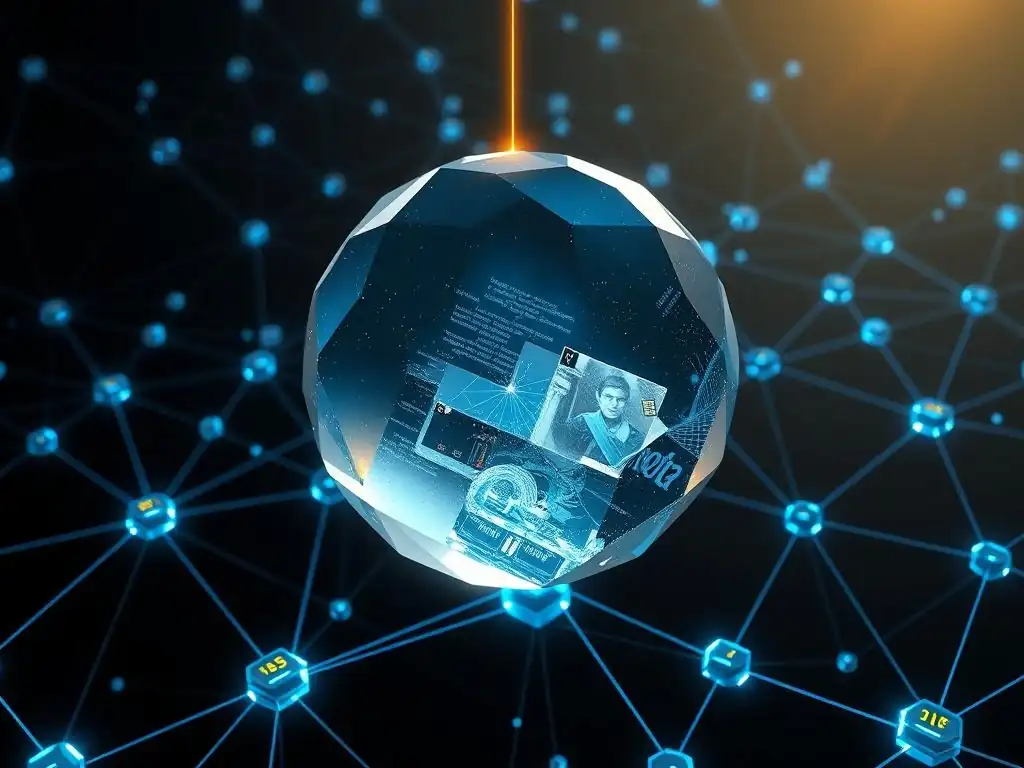
Welcome to Blockchain Trends, your go-to source for understanding the revolutionary power of blockchain beyond the buzz. Ever wondered how to definitively prove the origin and authenticity of online content in an age of deepfakes and misinformation? Our latest deep dive explores the critical role of blockchain content provenance oracles in achieving just that. Discover how these vital components are shaping the future of trust and transparency in the digital landscape, and unlock the potential of blockchain in the burgeoning world of content creation and media. Intrigued? Keep reading to learn more!
The Role of Oracles in Blockchain-Based Content Provenance Systems
- Introduction: Blockchain Content Provenance and the Oracle Problem
- What are Blockchain Oracles? A Deep Dive
- The Importance of Oracles for Content Provenance on Blockchain
- Different Types of Oracles Used in Blockchain Content Provenance
- Use Cases: Blockchain Content Provenance Oracles in Action
- Challenges and Considerations When Implementing Oracles in Content Provenance
- Future Trends in Blockchain Content Provenance Oracles
- Choosing the Right Oracle Solution for Your Content Provenance Needs
- Conclusion: The Indispensable Role of Oracles in Blockchain Content Provenance
-
Frequently Asked Questions
- What are oracles in the context of blockchain content provenance?
- Why are oracles necessary for establishing content provenance on a blockchain?
- How do oracles contribute to the trust and reliability of blockchain-based content provenance systems?
- What are some potential challenges in using oracles for blockchain content provenance, and how can they be addressed?
- How might the use of blockchain content provenance oracles impact the future of digital content creation and distribution?
- Final Reflection: Securing Truth in the Digital Age
- Unlock the Truth: Become a Provenance Pioneer!
Introduction: Blockchain Content Provenance and the Oracle Problem
Understanding Content Provenance in the Digital Age
In today's digital landscape, content provenance—the ability to trace the origin and history of digital content—has become critically important. The internet, while democratizing information sharing, has also amplified the spread of misinformation, copyright infringement, and manipulated media. From news articles to digital art, understanding the authenticity and ownership of content is paramount for creators, consumers, and platforms alike.
Consider the viral spread of AI-generated fake news during the 2020 US elections; the inability to quickly verify the source and integrity of information fueled confusion and distrust. Similarly, in the burgeoning NFT art market, establishing clear provenance is crucial to ensure the value and legitimacy of digital collectibles, protecting artists and buyers from fraud and plagiarism.
The challenge of content provenance is exacerbated by the decentralized nature of the internet and the ease with which digital content can be copied and altered. Traditional methods of content verification, relying on centralized authorities and manual processes, are often slow, inefficient, and vulnerable to manipulation.
For example, copyright claims on platforms like YouTube often rely on automated systems and takedown notices, which can be easily abused or lead to lengthy disputes. The need for a more robust, transparent, and verifiable system for content provenance is clear, and blockchain technology offers a promising solution by providing an immutable and auditable record of content history.
The Need for Trustworthy Data in Blockchain Content Provenance Verification
Blockchain technology, with its inherent immutability and transparency, provides a strong foundation for building content provenance systems. By recording content metadata, ownership details, and timestamps on a blockchain, a verifiable and auditable history of digital assets can be established. However, blockchains, in their native form, operate in a closed ecosystem. They cannot directly access or interact with data residing outside their network. This limitation presents a significant hurdle when it comes to verifying real-world information related to content provenance, such as timestamps from external sources, author identities verified against real-world registries, or the outcome of off-chain content integrity checks.
Imagine a news organization using blockchain to record the provenance of its articles. While the blockchain can securely store the article's hash and timestamp once it's on-chain, it cannot automatically verify the initial creation time from the journalist's computer or cross-reference author details with a national press registry.
Similarly, for digital art, a blockchain can record the NFT ownership history, but it cannot independently verify the artist's identity against a real-world art registry or confirm that the digital artwork hasn't been plagiarized from an off-chain source before being minted as an NFT. This is where the "oracle problem" arises in the context of blockchain-based content provenance: how to reliably and securely bring external, real-world data onto the blockchain to enrich and validate provenance records.
Introducing Blockchain Content Provenance Oracles: Bridging the Gap
Blockchain content provenance oracles emerge as the crucial bridge connecting the on-chain world of blockchain with the off-chain world of real-world data and systems. In essence, oracles are third-party services that provide external data to smart contracts running on a blockchain. For content provenance, oracles act as trusted intermediaries that fetch and verify information from external sources and relay it to the blockchain to enhance the provenance record. This data can range from simple timestamps and location data to complex information like content integrity hashes verified by external services or author identity confirmations from reputable registries.
Consider a photojournalism platform utilizing blockchain for content provenance. An oracle could be employed to securely fetch the timestamp from a trusted time authority server when a photograph is taken, ensuring an irrefutable record of when and potentially where the image was captured.
Another oracle could interact with a plagiarism detection service to verify the uniqueness of a piece of written content before its provenance is recorded on the blockchain. By integrating with these external data sources through oracles, blockchain-based content provenance systems can move beyond simply recording on-chain events and provide a more comprehensive and trustworthy picture of content origin, authenticity, and history, effectively addressing the limitations of blockchain's isolated environment.
What are Blockchain Oracles? A Deep Dive
Defining Blockchain Oracles: External Data Feeds for Smart Contracts
Blockchain oracles are essential components in extending the functionality of smart contracts beyond the confines of the blockchain itself. Smart contracts, self-executing agreements written in code and stored on a blockchain, are designed to operate deterministically based on on-chain data. However, to interact with the real world, these contracts often require information that originates off-chain.
Blockchain oracles serve as data feeds, securely and reliably transmitting external data to smart contracts, enabling them to react to real-world events and incorporate external information into their execution logic. Think of them as APIs for the blockchain, but with added layers of trust and verification mechanisms to suit the decentralized and trustless nature of blockchain technology.
In the context of content provenance, oracles are indispensable for bringing relevant off-chain data into the blockchain ecosystem. For example, a smart contract designed to manage digital content rights might need to know the current timestamp from a reliable source to accurately record the time of content creation or transfer of ownership.
Similarly, a content verification smart contract could utilize an oracle to fetch the results of a copyright check performed by an external service. Without oracles, smart contracts would be limited to reacting only to events that occur within the blockchain network, significantly restricting their utility in real-world applications like content provenance that inherently rely on external information and validation.
Types of Oracles: Centralized vs. Decentralized
Oracles can be broadly categorized into centralized and decentralized oracles, each with its own set of trade-offs in terms of security, trust, and efficiency. Centralized oracles are managed by a single entity that acts as the sole source of external data. While potentially simpler and more cost-effective to implement, they introduce a single point of failure and trust.
The reliability of the entire system hinges on the integrity and trustworthiness of this single oracle provider. If the centralized oracle is compromised or provides inaccurate data, the smart contracts relying on it will also be affected, undermining the trust in the blockchain-based content provenance system.
Decentralized oracles, also known as Decentralized Oracle Networks (DONs), aim to mitigate the risks associated with centralized oracles by distributing the data sourcing and verification process across multiple independent oracles. These networks aggregate data from various sources and employ consensus mechanisms to ensure the accuracy and reliability of the data provided to smart contracts. While more complex to set up and potentially more expensive, decentralized oracles offer enhanced security and resilience, reducing the reliance on any single point of failure.
For high-value content provenance applications, such as verifying the authenticity of high-end digital art or critical news information, the added security and trust offered by decentralized oracles often outweigh the increased complexity and cost. Examples of decentralized oracle networks include Chainlink and Band Protocol, which are increasingly being adopted in blockchain applications requiring robust and reliable external data feeds.
How Oracles Function: The Data Flow Process
The operation of a blockchain oracle involves a structured data flow process to ensure the secure and reliable transfer of information from off-chain sources to on-chain smart contracts. Typically, this process can be broken down into three key stages: the data request, data retrieval and verification, and data transmission to the smart contract. First, a smart contract initiates a request for external data.
This request specifies the type of data needed and the oracle service to be used. For example, a content provenance smart contract might request a timestamp from a trusted time oracle or a content hash verification from a designated service.
Next, the oracle service retrieves the requested data from the specified external source. This might involve querying APIs, accessing databases, or even interacting with real-world sensors. Crucially, the oracle then verifies the data's accuracy and authenticity.
The verification process can vary depending on the type of oracle and the data being sourced. Centralized oracles rely on their internal validation mechanisms, while decentralized oracles employ consensus protocols among multiple nodes to validate the data. For example, a decentralized oracle network might fetch the same timestamp from multiple time servers and use a consensus algorithm to agree on the most accurate value.
Finally, once the data is retrieved and verified, the oracle transmits it back to the requesting smart contract on the blockchain. This data is then used by the smart contract to execute its logic, update the content provenance record, or trigger other on-chain actions, effectively bridging the gap between the blockchain and the external world.
The Importance of Oracles for Content Provenance on Blockchain
Enhancing Trust and Transparency in Content Origin and History
Oracles are paramount in elevating the trust and transparency of blockchain-based content provenance systems. By securely injecting verified off-chain data, oracles enrich the provenance record with crucial details that are impossible to capture solely on-chain. This enhanced data set provides users with a more complete and trustworthy picture of a piece of content's origin, creation process, and historical journey.
For instance, in verifying the provenance of a digital photograph, an oracle can provide a timestamp from a reputable time server, confirming the exact time of capture, which is more reliable than relying solely on metadata that can be easily manipulated. Similarly, for news articles, oracles can verify the author's credentials against a recognized press registry, bolstering the credibility of the source.
The increased transparency fostered by oracles is particularly vital in combating misinformation and building trust in digital content. Consumers can trace the provenance record on the blockchain, verified by oracles, to understand the content's origin and history, helping them discern authentic and reliable information from manipulated or fabricated content.
In the context of NFTs, oracles can provide verified information about the artist's identity and the artwork's creation process, enhancing buyer confidence and mitigating fraud in the digital art market. By enabling verifiable links between on-chain records and real-world data, oracles are instrumental in establishing blockchain as a trusted infrastructure for content provenance.
Ensuring Data Integrity in Content Provenance Systems
Data integrity is fundamental to the effectiveness of any content provenance system, and oracles play a critical role in ensuring the integrity of data recorded on the blockchain. While blockchain itself provides immutability and tamper-proof storage for on-chain data, the integrity of the external data brought onto the blockchain depends heavily on the reliability and security of the oracles.
Well-designed oracle systems employ robust mechanisms to verify the accuracy and authenticity of the data they provide, minimizing the risk of injecting false or manipulated information into the provenance record. Decentralized oracle networks, in particular, enhance data integrity by aggregating data from multiple sources and using consensus mechanisms to validate the information, making it significantly harder for malicious actors to compromise the data feed.
Consider a scenario where a content provenance system relies on an oracle to verify the uniqueness of a digital artwork. A robust oracle would not only fetch a plagiarism report from a reputable service but also cryptographically sign the data before relaying it to the blockchain. This cryptographic signature provides verifiable proof that the data originated from the trusted oracle and hasn't been tampered with during transmission.
Furthermore, decentralized oracle networks often employ economic incentives and penalties to ensure the honesty and reliability of oracle nodes, further strengthening data integrity. By implementing these security and verification measures, oracles act as guardians of data integrity within blockchain-based content provenance systems, ensuring that the provenance records are accurate, reliable, and trustworthy.
Addressing the "Oracle Problem" in Content Provenance Verification
The "oracle problem" is a central challenge in blockchain technology, particularly in applications like content provenance that heavily rely on external data. It highlights the inherent trust placed in oracles as intermediaries between the blockchain and the real world. If an oracle provides inaccurate or malicious data, the entire content provenance system can be compromised, regardless of the security of the blockchain itself. Addressing the oracle problem is therefore crucial to building robust and trustworthy blockchain-based content provenance solutions. Strategies to mitigate the oracle problem focus on minimizing trust in individual oracles and maximizing data verification and redundancy.
Decentralized oracle networks are a primary approach to tackling the oracle problem. By distributing data sourcing and verification across multiple independent oracles, these networks reduce the reliance on any single point of failure or trust. Consensus mechanisms within DONs ensure that data is validated by multiple nodes before being relayed to the blockchain, significantly increasing the reliability and accuracy of the information.
Furthermore, employing techniques like data source diversification, where oracles fetch data from multiple independent sources and compare them, and cryptographic proofs, which provide verifiable evidence of data integrity, further strengthens the security and trustworthiness of oracle systems. In the context of content provenance, choosing and implementing robust oracle solutions that address the "oracle problem" is paramount to building systems that can truly deliver verifiable and trustworthy content histories.
Different Types of Oracles Used in Blockchain Content Provenance
Data Feed Oracles: Real-World Information for Content Metadata and Rights
Data feed oracles are a fundamental type of oracle used in blockchain content provenance systems, primarily responsible for providing real-world information that enriches content metadata and facilitates rights management. These oracles act as bridges to external APIs and data sources, fetching information such as timestamps, location data, author identities, and copyright registry details.
For example, a data feed oracle can connect to a trusted time authority API, like Time.gov in the US or WorldTimeAPI, to obtain highly accurate and verifiable timestamps for content creation or modification events, adding a layer of irrefutable chronological evidence to the provenance record. In the realm of digital rights management, data feed oracles can interface with copyright registries or databases of creative commons licenses, verifying the ownership and usage rights associated with a piece of content.
Consider a blockchain-based platform for licensing stock photos. A data feed oracle could automatically verify the photographer's identity against a professional photography registry, ensuring that only verified photographers can upload and license their work. Another oracle could fetch licensing terms from a decentralized rights management database and record them on the blockchain alongside the photo's provenance record. By providing access to this external data, data feed oracles enable smart contracts to enforce content rights, automate royalty payments, and ensure compliance with licensing agreements, making blockchain a powerful tool for managing and protecting digital content rights.
Computation Oracles: Verifying Content Authenticity and Uniqueness
Computation oracles offer a more sophisticated level of functionality in blockchain content provenance by performing complex computations and verifications on off-chain data. These oracles are capable of executing computationally intensive tasks that are either too expensive or impractical to perform directly on the blockchain. In the context of content provenance, computation oracles can be used to verify content authenticity through techniques like digital signature verification, content hashing comparison, and even plagiarism detection.
For instance, a computation oracle can be tasked with verifying the digital signature of a document against the author's public key, confirming the document's integrity and origin. They can also compute cryptographic hashes of content and compare them against known hashes in a database to detect duplicates or modified versions, ensuring content uniqueness.
Imagine a blockchain system designed to combat deepfakes. A computation oracle could integrate with AI-powered deepfake detection services, analyzing uploaded videos and providing a verification score back to the blockchain. This score, verified by the oracle, could be recorded in the video's provenance record, informing viewers about the potential likelihood of manipulation.
Similarly, for academic publishing on blockchain, computation oracles can perform plagiarism checks against vast databases of scholarly articles, ensuring the originality of submitted research papers. By offloading computationally intensive verification tasks to oracles, blockchain-based content provenance systems can achieve a higher level of security and authenticity verification without overburdening the blockchain network itself.
Cross-Chain Oracles: Enabling Content Provenance Across Platforms
Cross-chain oracles address the challenge of interoperability in blockchain content provenance, enabling the tracking and verification of content provenance across different blockchain platforms and ecosystems. As the blockchain landscape becomes increasingly fragmented, with various blockchains specializing in different applications, the ability to seamlessly transfer and verify provenance information across chains becomes crucial.
Cross-chain oracles act as bridges between different blockchains, facilitating the exchange of data and enabling smart contracts on one blockchain to access information or trigger actions on another. This is particularly relevant for content provenance as digital content often exists and is shared across multiple platforms, potentially built on different blockchains.
Consider a scenario where a digital artwork is initially minted as an NFT on Ethereum but is subsequently traded or showcased on a platform built on Polkadot. A cross-chain oracle could enable the provenance record of the NFT, originally established on Ethereum, to be accessed and verified on the Polkadot platform. This ensures a consistent and unified provenance history, regardless of the blockchain platform where the content is currently residing or being interacted with.
Cross-chain oracles can utilize various techniques, such as relay chains or inter-blockchain communication protocols, to achieve interoperability. By enabling seamless provenance tracking across blockchain ecosystems, cross-chain oracles are essential for realizing the full potential of blockchain in establishing a truly global and interconnected content provenance infrastructure.
Use Cases: Blockchain Content Provenance Oracles in Action
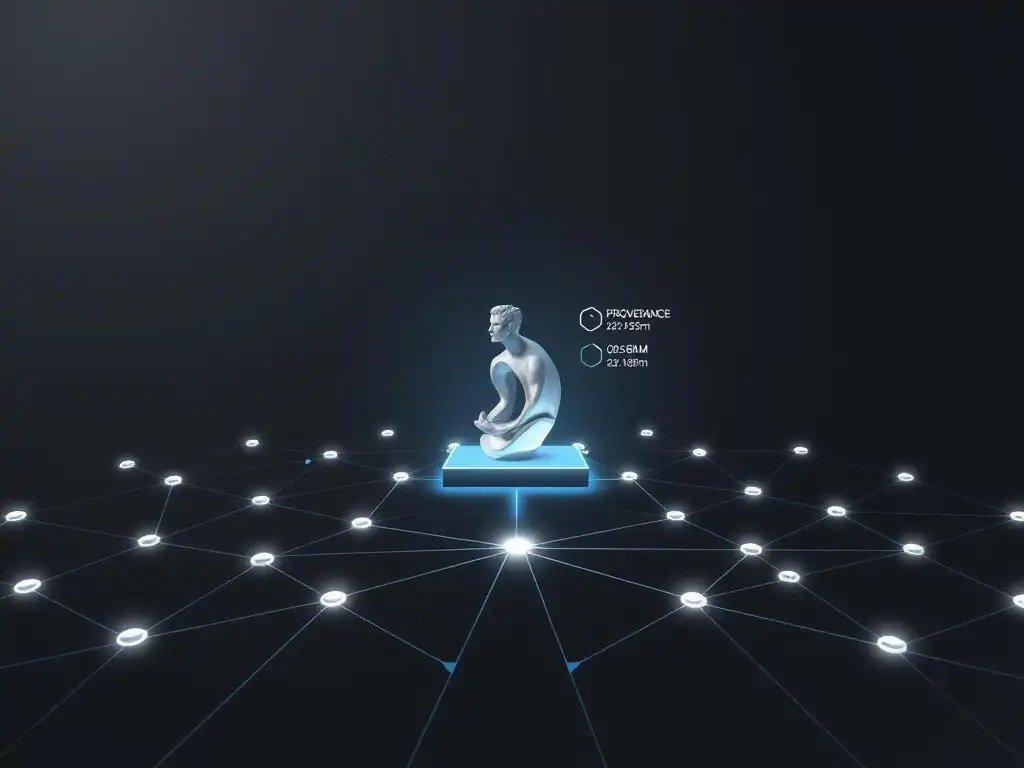
Protecting Digital Art and NFTs with Content Provenance Oracles
The digital art world, particularly the burgeoning NFT market, is a prime use case for blockchain content provenance oracles. Oracles play a crucial role in establishing the authenticity and provenance of digital artworks, combating fraud, plagiarism, and ensuring the value and legitimacy of NFTs. For digital artists, oracles can verify their identity and authorship, linking their real-world identities to their on-chain creations.
For example, an oracle can verify an artist's identity against a recognized art registry or professional organization, providing verifiable proof of authorship for their NFTs. Furthermore, oracles can timestamp the creation of digital artworks using trusted time sources, establishing an irrefutable record of when the artwork was created, further solidifying provenance.
Platforms like SuperRare and KnownOrigin, which focus on curated NFT art, could leverage oracles to enhance their provenance verification processes. Imagine an oracle that automatically verifies the artist's portfolio and past exhibition history from publicly available art databases and records this information directly onto the NFT's metadata on the blockchain. This would provide buyers with an added layer of confidence in the authenticity and value of the NFT.
Oracles can also be used to track the history of ownership and transactions of NFTs, providing a complete and transparent provenance trail for collectors and investors, making the digital art market more secure and trustworthy. The use of blockchain content provenance oracles is becoming increasingly vital in ensuring the long-term viability and growth of the digital art and NFT ecosystem.
Verifying News and Media Content to Combat Misinformation
Combating misinformation and "fake news" is a critical challenge in the digital age, and blockchain content provenance oracles offer a powerful tool for verifying the authenticity and source of news and media content. Oracles can be employed to verify the credentials of journalists and news organizations, ensuring that content originates from reputable and trustworthy sources.
For instance, an oracle can verify a journalist's membership in a recognized press association or their affiliation with a verified news organization, recording this information on the blockchain alongside the news article's provenance record. Timestamp oracles can provide verifiable timestamps for news articles, establishing when the content was published and helping to track its dissemination and modification history.
Organizations like the BBC and The New York Times are exploring blockchain technologies to enhance trust in their reporting. Imagine a news platform using blockchain to record the provenance of its articles, with oracles verifying author identities and timestamps. Readers could then easily verify the provenance record on the blockchain, confirming the source and publication time of the news, making it harder for manipulated or fabricated news to gain traction.
Furthermore, computation oracles could be used to verify the integrity of media files, such as images and videos, detecting potential manipulations or deepfakes. By providing verifiable provenance information, blockchain content provenance oracles can contribute significantly to restoring trust in news and media, helping to combat the spread of misinformation and promote informed public discourse.
Streamlining Intellectual Property Rights and Copyright with Oracles
Managing intellectual property rights and copyright in the digital age is complex and often inefficient. Blockchain content provenance oracles can streamline these processes by providing verifiable records of content creation, ownership, and licensing, simplifying copyright management and reducing disputes. Oracles can be used to timestamp the creation of digital content, establishing a verifiable date of creation for copyright purposes.
For example, an oracle can timestamp a piece of music upon its creation, providing legally admissible evidence of when the song was composed, which is crucial for copyright claims. Oracles can also verify the identity of content creators and rights holders, linking their on-chain identities to real-world legal entities, simplifying rights ownership verification.
Platforms like Binded (now part of Pixsy) and KodakOne have explored blockchain for IP rights management. Imagine a platform where creators register their copyrighted works on a blockchain, with oracles verifying their identity and timestamping the registration. When licensing or usage disputes arise, the blockchain-based provenance record, verified by oracles, can serve as irrefutable evidence of ownership and creation time, streamlining the resolution process.
Smart contracts, triggered by oracle data, can automate royalty payments and enforce licensing terms, making IP rights management more efficient and transparent for creators, rights holders, and consumers alike. Blockchain content provenance oracles have the potential to revolutionize IP rights management, making it more accessible, secure, and efficient in the digital age.
Challenges and Considerations When Implementing Oracles in Content Provenance
Oracle Security Risks and Vulnerabilities
While oracles are essential for blockchain content provenance, they also introduce new security risks and vulnerabilities that must be carefully considered and mitigated. As intermediaries between the blockchain and the off-chain world, oracles become potential targets for attacks aiming to compromise the data integrity of the provenance system. If an oracle is compromised, it can be manipulated to provide false or malicious data to smart contracts, undermining the trustworthiness of the entire content provenance system.
Centralized oracles, in particular, present a single point of failure, making them a more attractive target for attackers compared to decentralized oracle networks. Attacks on oracles can range from data injection, where malicious actors feed false information into the oracle, to oracle manipulation, where attackers gain control of the oracle itself.
For example, in a content provenance system relying on a centralized oracle for timestamping, if the oracle is compromised, attackers could manipulate timestamps to alter the recorded creation time of content, potentially enabling copyright infringement or manipulation of provenance records. Decentralized oracle networks mitigate some of these risks by distributing trust across multiple nodes, making it significantly harder to compromise the data feed.
However, even decentralized oracles are not immune to attacks, and careful security considerations are paramount. These considerations include choosing reputable oracle providers, implementing robust security protocols within oracle networks, and regularly auditing oracle systems to identify and address potential vulnerabilities.
Data Accuracy and Reliability Concerns
The accuracy and reliability of data provided by oracles are critical for the effectiveness of blockchain content provenance systems. "Garbage in, garbage out" applies directly to oracle data; if oracles provide inaccurate or unreliable information, the provenance records on the blockchain will be flawed, undermining the system's trustworthiness.
Data accuracy concerns can arise from various sources, including errors in the data sources themselves, failures in data retrieval processes, or malicious manipulation of data feeds. For instance, if a content provenance system relies on an oracle to fetch author identities from a flawed or outdated registry, the provenance record might contain inaccurate author information.
Ensuring data accuracy requires careful selection of reputable and reliable data sources. For timestamp oracles, choosing established time authorities like NIST or Time.gov is crucial. For other types of data, selecting well-maintained and verified databases or APIs is essential.
Furthermore, implementing data validation mechanisms within the oracle system itself is vital. This can include data integrity checks, cross-referencing data from multiple sources, and employing consensus mechanisms in decentralized oracle networks to identify and filter out inaccurate or inconsistent data. Regular monitoring of oracle performance and data quality is also important to detect and address any issues that might compromise data accuracy and reliability in content provenance systems.
Scalability and Cost Considerations
Scalability and cost are practical considerations when implementing oracles in blockchain content provenance systems, particularly for large-scale applications with high volumes of content and provenance transactions. Oracle services, especially decentralized oracle networks, can introduce overhead in terms of transaction costs and latency, which can impact the overall scalability and efficiency of the provenance system. Each oracle data request and response typically involves blockchain transactions, which incur gas fees and processing time. For applications requiring frequent oracle interactions, such as real-time content provenance tracking or high-throughput content registration, these costs and latency can become significant bottlenecks.
Centralized oracles may offer lower costs and faster response times compared to decentralized oracles, but they come with the trade-off of reduced security and trust. Decentralized oracle networks, while providing enhanced security and reliability, often involve higher operational costs and potentially slower data delivery due to the consensus mechanisms and distributed infrastructure.
Choosing the right oracle solution requires careful consideration of the scalability and cost requirements of the specific content provenance application. Exploring layer-2 scaling solutions for blockchain and optimizing oracle data retrieval and transmission processes can help mitigate scalability and cost challenges, making blockchain content provenance more practical and efficient for widespread adoption.
Future Trends in Blockchain Content Provenance Oracles
Decentralized Oracle Networks (DONs) for Enhanced Security
Decentralized Oracle Networks (DONs) are poised to become the dominant trend in blockchain content provenance oracles, driven by the growing need for enhanced security and trust in data feeds. DONs address the inherent vulnerabilities of centralized oracles by distributing data sourcing and verification across multiple independent nodes, eliminating single points of failure and reducing the risk of manipulation.
As content provenance applications handle increasingly sensitive and valuable information, the enhanced security offered by DONs becomes paramount. Leading DON providers like Chainlink, Band Protocol, and API3 are continuously developing and refining their networks, offering more robust, reliable, and secure oracle solutions for blockchain applications.
The adoption of DONs in content provenance is expected to accelerate as developers and organizations prioritize security and trust. For high-value content like digital art NFTs, premium news content, and intellectual property assets, the cost of using DONs, while potentially higher than centralized oracles, is increasingly justified by the significantly enhanced security and reliability they provide. Future developments in DON technology are likely to focus on further improving scalability, reducing latency, and expanding the range of data sources and verification capabilities, making them even more attractive for widespread adoption in blockchain content provenance systems.
IoT-Integrated Oracles for Real-Time Data Capture
The integration of oracles with the Internet of Things (IoT) represents a significant future trend in blockchain content provenance, enabling real-time data capture and automated provenance tracking. IoT devices, such as sensors, cameras, and GPS trackers, can generate a continuous stream of data about content creation, location, and environmental conditions.
When integrated with blockchain oracles, this data can be automatically and securely recorded on the blockchain, providing a highly granular and real-time provenance record. For example, in tracking the provenance of news footage captured by drones, IoT-integrated oracles can automatically record the drone's GPS location, timestamp, and camera metadata directly onto the blockchain as the footage is being captured.
This real-time data capture capability opens up new possibilities for automated and verifiable content provenance. In supply chain applications for physical media or merchandise related to digital content, IoT sensors can track the journey of physical goods, recording temperature, humidity, and location data throughout the supply chain, ensuring authenticity and provenance of physical items linked to digital content. As IoT technology becomes more pervasive and affordable, the integration of IoT-integrated oracles in blockchain content provenance systems is expected to grow, enabling more efficient, automated, and verifiable provenance tracking across various industries.
The Evolution of Oracle Standards and Protocols
The evolution of oracle standards and protocols is a crucial trend for the future of blockchain content provenance, aiming to improve interoperability, reduce development complexity, and foster wider adoption. Currently, the oracle landscape is fragmented, with various oracle providers offering different APIs, data formats, and security protocols. This fragmentation can create challenges for developers building blockchain content provenance systems, requiring them to integrate with multiple oracle solutions and manage different interfaces. The development of standardized oracle protocols and data formats would significantly simplify oracle integration, making it easier for developers to build interoperable and portable content provenance applications.
Initiatives like the Chainlink Community Grant Program and the Oracle Standards Working Group are contributing to the development of oracle standards and best practices. These efforts aim to define common interfaces, data formats, and security guidelines for oracles, promoting interoperability and reducing vendor lock-in.
Standardized oracle protocols would also facilitate the creation of reusable oracle libraries and tools, further simplifying development and accelerating the adoption of blockchain content provenance. As the blockchain ecosystem matures, the establishment of robust oracle standards and protocols will be essential for realizing the full potential of oracles in enabling secure, reliable, and interoperable blockchain applications, including content provenance systems.
Choosing the Right Oracle Solution for Your Content Provenance Needs
Evaluating Oracle Providers: Reputation, Security, and Cost
Selecting the right oracle provider is a critical decision when implementing blockchain content provenance systems, directly impacting the security, reliability, and cost-effectiveness of the solution. When evaluating oracle providers, reputation, security measures, and cost are key factors to consider. Reputation reflects the provider's track record, community trust, and experience in delivering reliable oracle services. Providers with a strong reputation and a history of successful deployments are generally preferred, as they are more likely to offer robust and dependable solutions.
Security measures are paramount, as oracles are critical components in the security architecture of content provenance systems. Evaluate the provider's security protocols, vulnerability management processes, and track record in preventing oracle attacks. Decentralized oracle networks generally offer enhanced security compared to centralized oracles, but their security mechanisms and node operator selection processes should still be carefully assessed.
Cost is another significant factor, particularly for large-scale content provenance applications. Oracle service costs can vary widely depending on the type of oracle (centralized vs. decentralized), the frequency of data requests, and the complexity of data retrieval and verification. Compare the pricing models of different oracle providers, considering both upfront costs and ongoing operational expenses.
Balance cost considerations with security and reliability requirements; choosing the cheapest oracle solution might compromise the overall trustworthiness of the content provenance system if it lacks adequate security or reliability. A thorough evaluation of oracle providers based on reputation, security, and cost is essential to selecting the optimal solution for specific content provenance needs.
Assessing Data Sources: Reliability and Accuracy
The reliability and accuracy of data sources used by oracles are as crucial as the oracle provider itself in ensuring the integrity of blockchain content provenance systems. Oracles are only as good as the data they provide; if the underlying data sources are unreliable or inaccurate, the provenance records on the blockchain will be flawed, regardless of the oracle's robustness. When assessing data sources, consider their reputation, data quality control processes, and historical accuracy.
For timestamp oracles, reputable time authorities like NIST or Time.gov are preferred data sources due to their high accuracy and reliability. For other types of data, such as author identities or copyright information, choose data sources that are well-maintained, regularly updated, and have established data validation procedures.
Diversifying data sources can enhance data reliability. For critical data points, consider using oracles that aggregate data from multiple independent sources and employ consensus mechanisms to validate the information. This reduces the reliance on any single data source and mitigates the risk of data inaccuracies or manipulation from a compromised source. Regularly monitor the data quality from chosen sources and implement data validation checks within the oracle system to detect and address any data accuracy issues. A proactive approach to assessing and monitoring data sources is essential to maintaining the integrity and trustworthiness of blockchain content provenance systems.
Integration with Existing Content Management Systems
Seamless integration with existing content management systems (CMS) and platforms is a key consideration when choosing an oracle solution for blockchain content provenance. For content provenance to be practically adopted, it needs to integrate smoothly with existing workflows and infrastructure used by content creators, publishers, and platforms. The chosen oracle solution should offer APIs and tools that facilitate easy integration with popular CMS, digital asset management (DAM) systems, and content distribution platforms.
Consider the ease of integration, developer documentation, and available support resources when evaluating oracle solutions. The integration process should be as streamlined as possible to minimize development effort and disruption to existing content workflows.
Compatibility with existing IT infrastructure and technology stacks is also important. Ensure that the chosen oracle solution is compatible with the blockchain platform being used for content provenance and that it can effectively interact with the organization's existing systems and databases. For organizations already using specific ERP or supply chain management systems, consider oracle solutions that offer pre-built integrations or are designed for interoperability with these systems. A focus on seamless integration with existing infrastructure will significantly accelerate the adoption of blockchain content provenance and maximize its practical benefits for content creators and organizations.
Conclusion: The Indispensable Role of Oracles in Blockchain Content Provenance
Recap: Oracles as Essential Components of Trustworthy Content Provenance
Blockchain oracles are not merely an optional add-on but rather indispensable components for building trustworthy and effective blockchain-based content provenance systems. They bridge the crucial gap between the inherently closed ecosystem of blockchain and the vast, complex, and data-rich real world. By securely and reliably bringing external data onto the blockchain, oracles enable content provenance systems to move beyond basic on-chain records and provide comprehensive, verifiable, and trustworthy histories of digital content. From verifying timestamps and author identities to ensuring content authenticity and managing digital rights, oracles empower blockchain to become a robust foundation for establishing trust and transparency in the digital content landscape.
The ability of oracles to enhance trust and transparency, ensure data integrity, and address the "oracle problem" directly contributes to the credibility and practical utility of blockchain content provenance solutions. Without oracles, blockchain's potential in this domain would be severely limited, confined to recording only on-chain events and lacking the crucial connection to real-world context and validation.
As we have explored through various use cases, from protecting digital art NFTs to combating misinformation and streamlining IP rights management, oracles are the enabling technology that unlocks the true potential of blockchain for content provenance, making it a powerful tool for creators, consumers, and platforms alike.
The Future of Decentralized Content Provenance Verification with Oracle Technology
The future of content provenance verification is inextricably linked to the continued evolution and adoption of oracle technology, particularly decentralized oracle networks. As the demand for verifiable and trustworthy digital content provenance grows, decentralized oracles are poised to play an increasingly central role. Their enhanced security, reliability, and resilience against manipulation make them ideally suited for applications where data integrity and trust are paramount. The trend towards DONs is expected to accelerate, driven by the increasing awareness of oracle vulnerabilities and the growing sophistication of decentralized oracle solutions.
Future advancements in oracle technology, such as improved scalability, reduced latency, and enhanced data verification capabilities, will further solidify their position as essential infrastructure for content provenance. The integration of AI and IoT with oracles will open up new possibilities for automated, real-time, and more sophisticated provenance tracking, pushing the boundaries of what is possible in content verification. As decentralized content provenance verification becomes more robust and accessible, it is expected to become a standard practice across various industries, contributing to a more transparent, trustworthy, and equitable digital content ecosystem.
The Impact of Regulatory Compliance on Blockchain Content Provenance Solutions
Regulatory compliance is a growing factor shaping the development and adoption of blockchain content provenance solutions, and oracles play a critical role in enabling compliance with relevant regulations. As governments and regulatory bodies worldwide increasingly focus on data privacy, copyright protection, and combating misinformation online, content provenance systems must be designed to adhere to these evolving regulatory frameworks. Oracles can facilitate compliance by providing verifiable audit trails of content origin, ownership, and modifications, which can be crucial for demonstrating compliance with copyright laws and data privacy regulations like GDPR or CCPA.
For example, oracles can provide verifiable timestamps and location data, which can be used to demonstrate compliance with regulations related to content creation and distribution in specific jurisdictions. In the context of combating misinformation, provenance records verified by oracles can help establish the source and authenticity of news and media content, potentially aiding in compliance with regulations aimed at curbing the spread of fake news.
As regulatory scrutiny of digital content intensifies, the role of oracles in enabling compliant blockchain content provenance solutions will become even more critical. Organizations adopting blockchain for content provenance must carefully consider regulatory requirements and leverage oracles to build systems that are not only secure and trustworthy but also compliant with applicable laws and regulations.
Frequently Asked Questions
What are oracles in the context of blockchain content provenance?
Oracles are third-party services that connect blockchains to real-world data. In the context of content provenance, they provide information about the origin and authenticity of digital content.
Why are oracles necessary for establishing content provenance on a blockchain?
Blockchains operate in a closed ecosystem and cannot directly access external data. Oracles bridge this gap by supplying the blockchain with verified information needed to track content history and ownership.
How do oracles contribute to the trust and reliability of blockchain-based content provenance systems?
Oracles ensure that the provenance data stored on the blockchain is accurate and trustworthy. By providing external verification, they mitigate the risk of false claims or manipulated information.
What are some potential challenges in using oracles for blockchain content provenance, and how can they be addressed?
Challenges include oracle reliability and the potential for data manipulation. Solutions involve using multiple oracles, implementing reputation systems, and ensuring data encryption.
How might the use of blockchain content provenance oracles impact the future of digital content creation and distribution?
They can lead to a more transparent and accountable ecosystem, where creators have greater control over their work. This can also help combat misinformation and protect intellectual property rights.
Okay, here's a final reflection designed to conclude your article "The Role of Oracles in Blockchain-Based Content Provenance Systems," optimized for the keyword "Blockchain content provenance oracles" and following the structure you provided:
Final Reflection: Securing Truth in the Digital Age
The exploration of Blockchain content provenance oracles reveals more than just a technical solution; it underscores the urgent need for verifiable truth in an increasingly digital world. As misinformation spreads like wildfire, the ability to trace content back to its origin, ensuring its authenticity and integrity, becomes paramount. The convergence of blockchain technology and oracle systems offers a powerful mechanism to combat this challenge, providing a foundation for trust in the information we consume.
The impact of this technology extends far beyond simply verifying news articles or digital art. It touches upon the very fabric of our society, influencing how we perceive reality and make informed decisions. The potential for blockchain content provenance oracles to foster transparency and accountability is immense, but its success hinges on widespread adoption and continuous improvement. The truth is rarely pure and never simple.
- Oscar Wilde. This quote reminds us that even with technological advancements, the pursuit of truth requires constant vigilance and critical thinking.
As we move forward, let us not underestimate the profound implications of Blockchain content provenance oracles. Consider how you can contribute to a more transparent and trustworthy digital landscape. Explore the possibilities, engage in the discussions, and champion the development of robust and reliable systems that empower individuals to discern fact from fiction. The future of truth in the digital age depends on our collective commitment to building a more verifiable world.
Unlock the Truth: Become a Provenance Pioneer!
Thank you for exploring the vital role of oracles in establishing content provenance on the blockchain. Now that you understand the potential of this technology, it's time to take the next step and contribute to a more transparent and trustworthy digital landscape.
Here's how you can get involved:
- Experiment with a decentralized content provenance protocol. Try integrating oracle services into your own content creation or verification process. It's easier than you might think to start small and learn by doing!
- Explore existing content provenance projects and provide feedback on their oracle integrations. Your insights can help shape the future of this technology.
- Share this article with your network and spark a conversation about the importance of verifiable content in the age of misinformation.
What innovative ways can you envision using oracles to enhance trust and transparency in digital content? Share your thoughts in the comments below!
Leave a Reply