
Tokenized Content: Earning Beyond Ads with BlockchainBased Creator Economies


Welcome to Blockchain Trends, your gateway to understanding the revolutionary impact of blockchain technology beyond the hype. Dive into a world where decentralized systems are reshaping industries, from finance to supply chains.
Are you ready to discover how creators are taking control of their content and earnings? Our featured article, "Tokenized Content: Earning Beyond Ads with Blockchain-Based Creator Economies," explores innovative blockchain-based creator monetization strategies that are disrupting traditional media models. Learn how you can leverage blockchain to unlock new revenue streams and connect directly with your audience. Intrigued? Let's explore the future of content creation, together.
Tokenized Content: Earning Beyond Ads with Blockchain-Based Creator Economies
- Introduction: The Evolution of Creator Monetization and the Rise of Blockchain
- Blockchain-Based Creator Monetization Strategies: A Deep Dive
- Benefits of Blockchain-Based Creator Monetization
- Case Studies: Successful Examples of Blockchain Content Monetization
- Overcoming Challenges in Blockchain Content Creation & Monetization
- The Future of Blockchain-Based Creator Economies
- Conclusion: Empowering Creators with Blockchain Technology
-
Frequently Asked Questions
- What are blockchain-based creator monetization strategies and how do they differ from traditional methods?
- How does tokenization of content enable new revenue streams for creators?
- What role does DeFi (Decentralized Finance) play in blockchain-based creator economies?
- What are some of the potential regulatory challenges facing blockchain-based creator monetization strategies?
- What is the future outlook for blockchain-based creator monetization strategies and the impact on the creator economy?
- Final Reflection: Embracing the Decentralized Future of Creativity
- Unleash Your Creative Power: Join the Tokenized Revolution!
Introduction: The Evolution of Creator Monetization and the Rise of Blockchain
Understanding the Limitations of Traditional Advertising-Based Revenue Models for Creators
For decades, the internet has been a fertile ground for content creation, yet the monetization landscape for creators has remained remarkably centralized around advertising. Platforms like YouTube, Facebook, and traditional media outlets rely heavily on ad revenue, sharing a fraction of it with content creators. This model, while generating enormous profits for these platforms, often leaves creators with inconsistent and unpredictable income.
Many creators, especially emerging and niche content producers, find it challenging to achieve financial sustainability solely through advertising. The ad-based model is inherently susceptible to fluctuations in advertiser demand and algorithm changes, impacting creator earnings significantly. Furthermore, the focus on maximizing ad impressions can sometimes compromise content quality and creator autonomy, pushing for clickbait and sensationalism over genuine, valuable content.
The reliance on intermediaries in the advertising ecosystem also introduces inefficiencies and reduces the creator's share of the revenue generated from their work. Ad networks and platforms take substantial cuts, leaving creators with a smaller piece of the pie.
Consider a video creator on a major platform: even with millions of views, the actual revenue generated might be significantly less than anticipated due to platform fees, ad revenue sharing ratios, and the ever-changing algorithms that dictate content visibility. This system often favors platforms and advertisers over the very individuals who produce the content that attracts audiences in the first place, highlighting the need for more equitable and creator-centric monetization models.
The Promise of Blockchain in Revolutionizing Content Monetization
Blockchain technology presents a compelling alternative to the limitations of advertising-centric models, offering a pathway towards more direct and transparent creator monetization. By leveraging decentralization, cryptography, and tokenization, blockchain enables creators to establish direct relationships with their audiences and monetize content in innovative ways. This technology allows for the creation of new economic models where value exchange is peer-to-peer, reducing the reliance on intermediaries and empowering creators to retain a larger portion of the revenue they generate. Blockchain's inherent transparency also ensures that revenue distribution is auditable and fair, fostering trust and accountability within the creator economy.
The core innovation lies in the ability to tokenize content and creator platforms. Tokenization transforms content into digital assets that can be owned, traded, and monetized in various ways, moving beyond simple ad impressions. Creators can issue their own tokens or utilize platform-specific tokens to reward engagement, offer exclusive content, and build thriving communities around their work.
Smart contracts, self-executing agreements coded on the blockchain, automate revenue distribution and ensure that creators are compensated fairly and promptly based on pre-defined rules. This shift towards blockchain-based creator monetization strategies promises to unlock new economic opportunities for creators and foster a more sustainable and equitable creator ecosystem.
Blockchain Trends: Focusing on Fan Engagement and Direct Monetization
Blockchain Trends recognizes the transformative potential of blockchain in shifting the focus from indirect advertising revenue to direct fan engagement and monetization for content creators. The future of creator economies hinges on building stronger connections between creators and their communities, and blockchain provides the tools to facilitate this. By exploring blockchain-based monetization strategies, we aim to highlight how creators can regain control over their content and earnings, fostering a more sustainable and rewarding creative landscape. Our focus is on practical applications, real-world examples, and actionable insights that empower creators to leverage blockchain technology for growth and financial independence.
We believe that blockchain is not just about cryptocurrencies; it's about fundamentally changing how value is created and distributed in the digital age, particularly within the creator economy. By showcasing successful blockchain content monetization strategies and addressing the challenges involved, Blockchain Trends aims to be a leading resource for creators, developers, and enthusiasts looking to explore and implement these innovative models.
Our content will delve into the nuances of tokenized content, NFTs, DAOs, and other blockchain applications, providing a comprehensive understanding of how these technologies can reshape the future of content creation and consumption, moving beyond the limitations of traditional advertising.
Blockchain-Based Creator Monetization Strategies: A Deep Dive
What is Tokenized Content and How Does it Work?
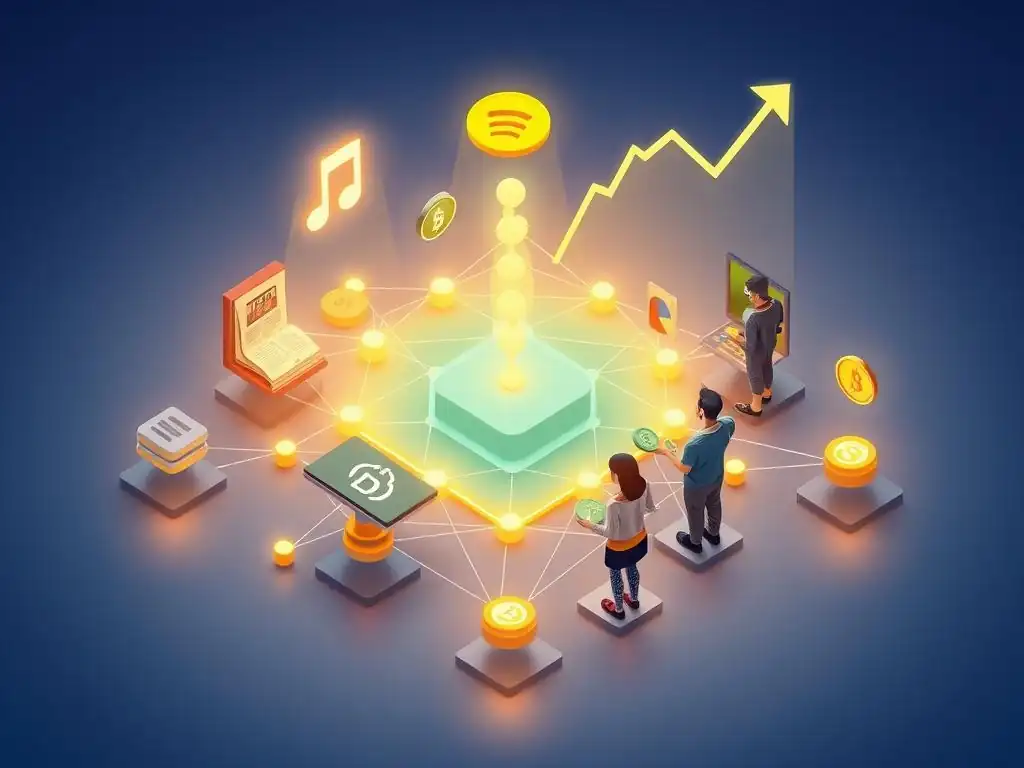
Tokenized content represents a fundamental shift in how digital assets are perceived and managed. At its core, tokenization involves representing digital content—be it articles, music, videos, art, or any other form of creative output—as a unique, verifiable digital token on a blockchain. This token, often a non-fungible token (NFT) for unique content or a fungible token for community access or utility, acts as a digital certificate of ownership or access rights.
Think of it as transforming a digital file into a scarce and tradable asset, similar to how physical collectibles are valued. This process leverages blockchain's inherent properties of immutability, transparency, and decentralization to ensure the content's authenticity and provenance.
The mechanics of tokenized content involve several key steps. First, a creator mints a token representing their content on a blockchain platform. This minting process records the content's details, creator identity, and ownership information onto the blockchain ledger. Smart contracts can be integrated to define the terms of content access, usage rights, and revenue sharing.
Once tokenized, the content can be distributed through decentralized platforms or marketplaces where audiences can purchase, access, or interact with it using cryptocurrency or platform-specific tokens. For example, a musician might tokenize their song as an NFT, allowing fans to directly purchase ownership or a limited edition version, bypassing traditional music distribution platforms and retaining a larger share of the sales revenue. This direct interaction and ownership model is a cornerstone of blockchain-based creator monetization strategies.
Exploring Different Blockchain Creator Economy Monetization Models
The versatility of blockchain technology has given rise to a diverse range of creator economy monetization models, each offering unique benefits and catering to different types of content and creator-audience relationships. These models move beyond the limitations of advertising and offer creators more control, flexibility, and direct engagement with their fans. From tokenized memberships to NFT-based ownership and decentralized autonomous organizations, blockchain provides a toolkit for creators to build sustainable and thriving ecosystems around their work. Understanding these different models is crucial for creators seeking to leverage blockchain-based creator monetization strategies effectively.
These models are not mutually exclusive and can often be combined to create hybrid monetization strategies tailored to specific creator needs and audience preferences. The common thread across all these models is the emphasis on direct creator-fan relationships, transparency in revenue distribution, and creator empowerment through ownership and control of their content and monetization mechanisms.
Tokenized Memberships and Subscriptions
Tokenized memberships and subscriptions offer a blockchain-based alternative to traditional subscription services like Patreon or Substack. Instead of relying on centralized platforms, creators can issue their own membership tokens on a blockchain, granting token holders exclusive access to content, communities, or experiences. These tokens can be fungible or non-fungible, depending on the desired level of exclusivity and scarcity.
Fungible tokens might represent a general membership tier, while NFTs could represent limited edition or higher-tier memberships with unique benefits. For instance, a writer could issue membership tokens that grant access to premium articles, community forums, and early access to new releases.
The advantage of tokenized memberships lies in their decentralization and enhanced control for both creators and members. Creators can set their own membership tiers, benefits, and pricing without platform intermediaries taking a significant cut. Members, on the other hand, gain verifiable proof of membership and potentially tradable assets.
If a creator's community grows and membership becomes more valuable, the value of the membership tokens on the secondary market could also increase, potentially benefiting early supporters. This model fosters a stronger sense of community ownership and incentivizes long-term engagement between creators and their audience, a key aspect of blockchain-based creator monetization strategies.
NFT-Based Content Ownership and Distribution
NFT-based content ownership and distribution represent a paradigm shift in how digital content is valued and exchanged. Non-Fungible Tokens (NFTs) allow creators to tokenize individual pieces of content, such as digital art, music tracks, videos, or even articles, as unique, verifiable digital assets. By selling NFTs of their content, creators can directly monetize their work and establish provable ownership and scarcity in the digital realm.
This model moves beyond licensing or subscription models, offering fans the opportunity to truly own a piece of their favorite creator's work. The scarcity and verifiable ownership provided by NFTs can drive value, especially for limited edition or highly sought-after content.
Furthermore, NFTs facilitate decentralized content distribution. Creators can distribute their NFT content directly to fans through decentralized marketplaces or their own platforms, bypassing traditional gatekeepers and intermediaries. Royalties can be programmed into the NFT smart contract, ensuring that creators receive a percentage of secondary sales whenever their NFT is resold on marketplaces.
This creates a perpetual revenue stream for creators, even after the initial sale, aligning incentives for both creators and early adopters who contribute to the content's initial value. The NFT model is particularly relevant for visual artists, musicians, and digital creators seeking to establish direct monetization and ownership of their unique digital creations, making it a powerful blockchain-based creator monetization strategy.
Decentralized Autonomous Organizations (DAOs) for Content Creation and Governance
Decentralized Autonomous Organizations (DAOs) are emerging as a powerful tool for collaborative content creation and community-driven governance in the blockchain space. DAOs are essentially internet-native communities with shared bank accounts and governance structures encoded on a blockchain. For creators, DAOs offer a way to pool resources, collaborate on projects, and share ownership and decision-making power with their community. Instead of a hierarchical structure, DAOs operate based on proposals and voting mechanisms, ensuring that decisions are made collectively by token holders.
In the context of content creation, DAOs can be used to fund creative projects, manage content platforms, and govern community guidelines. For example, a group of writers could form a DAO to collectively publish and monetize their work, with token holders having a say in editorial decisions and revenue distribution. DAOs can also be used to manage decentralized media platforms, ensuring community ownership and censorship resistance.
Friends With Benefits (FWB), as mentioned later, is a prime example of a social DAO that utilizes tokenized memberships for community access and governance. DAOs represent a more democratic and participatory approach to content creation and governance, offering a significant departure from traditional centralized media structures and embodying a core tenet of blockchain-based creator monetization strategies.
Microtransactions and Pay-Per-View Content on the Blockchain
Microtransactions and pay-per-view content models, facilitated by blockchain, offer granular monetization options for creators, particularly for smaller pieces of content or access to specific events. Blockchain's efficiency and low transaction fees (especially on certain Layer-2 solutions) make microtransactions economically viable, enabling creators to charge small amounts for individual articles, videos, music tracks, or access to live streams or online events. This model allows audiences to pay only for the content they consume, offering a more flexible and potentially more affordable alternative to subscriptions for casual consumers.
Blockchain-based microtransaction systems can streamline the payment process and reduce transaction costs compared to traditional payment gateways. Smart contracts can automate micropayments, ensuring instant and transparent revenue distribution to creators. Imagine a news platform where readers can pay a small fee to access individual articles using cryptocurrency, or a video streaming platform where viewers can pay per view for specific content.
This pay-per-view model can be particularly appealing for creators of niche content or those who want to offer flexible consumption options to their audience. By enabling efficient and cost-effective microtransactions, blockchain opens up new avenues for creators to monetize smaller content units and cater to diverse audience consumption patterns, further diversifying blockchain-based creator monetization strategies.
Benefits of Blockchain-Based Creator Monetization
Direct Creator-Fan Relationships and Community Building
One of the most significant advantages of blockchain-based creator monetization is the fostering of direct relationships between creators and their fans, bypassing traditional intermediaries. Blockchain empowers creators to interact directly with their audience, build communities around their work, and cultivate stronger, more personal connections. Tokenized memberships, NFTs, and DAOs all facilitate direct engagement and interaction, moving away from the passive consumption model often associated with advertising-driven platforms. This direct connection allows creators to understand their audience better, receive direct feedback, and tailor their content and offerings to community needs and preferences.
Building a strong community around content becomes significantly easier with blockchain tools. Tokenized access, exclusive content for token holders, and community governance mechanisms within DAOs all contribute to a sense of belonging and shared ownership among fans. This enhanced community engagement not only strengthens creator-fan relationships but also fosters loyalty and long-term support, creating a more sustainable and resilient ecosystem for creators. The shift from platform-centric to creator-centric models, enabled by blockchain, prioritizes community building and direct interaction as core components of blockchain-based creator monetization strategies.
Enhanced Transparency and Fair Revenue Distribution
Blockchain technology inherently promotes transparency and fairness in revenue distribution, addressing a major pain point in traditional creator monetization models. Smart contracts, which govern transactions on the blockchain, ensure that revenue sharing agreements are automatically executed and auditable by all parties involved. This eliminates the opacity and potential discrepancies often associated with platform-mediated revenue splits, providing creators with clear visibility into their earnings and the platform's revenue distribution mechanisms. Transparency builds trust between creators and platforms, fostering a more equitable and sustainable ecosystem.
Fair revenue distribution is also facilitated by blockchain's ability to bypass intermediaries. By directly monetizing content through token sales, memberships, or microtransactions, creators can retain a larger share of the revenue generated from their work, compared to ad-based models where platforms and ad networks take significant cuts. Royalties embedded in NFT smart contracts further ensure that creators continue to earn from secondary sales, creating a more equitable and long-term revenue stream. This emphasis on transparency and fair distribution is a core benefit of blockchain-based creator monetization strategies, empowering creators and incentivizing high-quality content creation.
Ownership and Control of Content by Creators
Blockchain empowers creators with greater ownership and control over their content, a crucial aspect often lacking in traditional centralized platforms. By tokenizing their content as NFTs, creators establish verifiable and immutable proof of ownership on the blockchain. This ownership extends beyond mere copyright; it represents a digital asset that creators can control, distribute, and monetize directly, without relying on platform permissions or facing the risk of content censorship or deplatforming. Creators regain agency over their creative work and its economic potential.
Furthermore, blockchain enables creators to define the terms of content usage and distribution. Smart contracts can be programmed to specify licensing terms, usage rights, and even control access to content based on token ownership. This granular control over content rights empowers creators to monetize their work in diverse ways and protect their intellectual property effectively. The shift towards creator ownership and control, facilitated by blockchain, represents a fundamental rebalancing of power in the digital content landscape, making it a central advantage of blockchain-based creator monetization strategies.
New Avenues for Funding and Investment in Creative Projects
Blockchain opens up new and innovative avenues for funding and investment in creative projects, moving beyond traditional funding models like grants or venture capital. Creators can leverage token sales, Initial Coin Offerings (ICOs), or NFT drops to raise capital directly from their community and supporters to fund new projects, expand their creative endeavors, or build decentralized platforms. This direct access to funding democratizes the investment landscape and allows creators to bypass traditional gatekeepers in the funding process.
Furthermore, blockchain facilitates fractional ownership and investment in creative projects. NFTs can represent fractional ownership of digital assets, allowing communities to collectively invest in and own pieces of creative work. DAOs can also be used to pool resources and collectively fund projects, further democratizing access to capital for creators. This new wave of blockchain-based funding mechanisms empowers creators to finance their projects independently and build sustainable creative businesses, representing a significant evolution in blockchain-based creator monetization strategies and overall creator economy funding models.
Case Studies: Successful Examples of Blockchain Content Monetization
Audius: Decentralized Music Streaming
Audius stands out as a prominent example of a decentralized music streaming platform leveraging blockchain technology to empower artists and revolutionize the music industry. Built on its own blockchain, Audius allows artists to directly upload and distribute their music to fans without intermediaries. The platform utilizes its native token, $AUDIO, for governance, staking, and rewarding artists and users. Artists earn $AUDIO tokens based on their content's popularity and engagement, fostering a direct and transparent revenue stream. Unlike traditional streaming platforms that take a significant cut of artist earnings, Audius aims to distribute value more equitably to creators.
Audius has gained significant traction within the music community, attracting both established and emerging artists seeking greater control over their music and monetization. The platform's open and permissionless nature allows any artist to join and share their work, fostering a more diverse and inclusive music ecosystem.
Audius's success demonstrates the viability of blockchain-based creator monetization strategies in the music industry, showcasing how decentralization can empower artists and create a more sustainable and equitable music ecosystem. As of late 2023, Audius reported millions of monthly active users and a growing catalog of tracks, highlighting the increasing adoption of decentralized music platforms.
Mirror.xyz: Web3 Publishing Platform
Mirror.xyz is a Web3 publishing platform that leverages blockchain to empower writers and creators with new monetization and community building tools. Built on Ethereum, Mirror allows writers to publish articles, essays, and other content as NFTs, enabling them to directly monetize their writing and establish ownership of their work. Writers can sell NFTs of their publications, set up tokenized subscriptions, and even launch crowdfunding campaigns using Mirror's built-in tools. This direct monetization approach bypasses traditional publishing models and allows writers to retain a larger share of the revenue generated from their content.
Mirror has become a hub for Web3 writers, thinkers, and communities, fostering a vibrant ecosystem around blockchain-based publishing. The platform's emphasis on ownership, community, and direct monetization has attracted a growing number of writers seeking alternative publishing models. Mirror's success exemplifies how blockchain-based creator monetization strategies can disrupt traditional publishing and empower writers with greater control and economic agency. The platform's innovative features, like "Write Race" which gamifies fundraising for writers, demonstrate the creative potential of blockchain in fostering a more dynamic and rewarding publishing landscape.
Friends With Benefits (FWB) is a prominent example of a social DAO that utilizes tokenized memberships to build a thriving online and offline community around shared interests in Web3, culture, and technology. FWB requires members to hold a certain amount of its native token, $FWB, to gain access to its exclusive online community, events, and resources. The $FWB token acts as both a membership key and a governance token, granting holders voting rights in the DAO's decision-making processes. This tokenized membership model creates a curated and engaged community, incentivizing participation and contribution.
FWB showcases the power of DAOs in fostering strong communities and enabling new forms of social interaction and collaboration. The DAO's treasury, funded by token sales and membership fees, is used to support community initiatives, events, and projects, creating a self-sustaining ecosystem.
FWB's success demonstrates how blockchain-based creator monetization strategies, specifically tokenized memberships and DAOs, can be applied to build vibrant online communities and unlock new forms of social and economic value creation around shared interests and passions. FWB's growing membership and influence within the Web3 space highlight the increasing relevance of social DAOs in the evolving landscape of online communities and creator economies.
Overcoming Challenges in Blockchain Content Creation & Monetization
Scalability and Transaction Fees on Blockchain Networks
One of the primary challenges facing blockchain content creation and monetization is scalability and transaction fees, particularly on popular blockchains like Ethereum. High gas fees on Ethereum can make microtransactions and frequent on-chain interactions economically unviable for creators and users. While Layer-2 scaling solutions like Polygon, Optimism, and Arbitrum are addressing these issues by offering faster and cheaper transactions, adoption of these solutions is still ongoing, and complexity can remain a barrier for some users.
Scalability limitations can also impact the performance of decentralized platforms and applications, especially as user bases grow. While newer blockchains and scaling solutions offer improved throughput, ensuring seamless and cost-effective user experiences remains a crucial challenge for the widespread adoption of blockchain-based creator monetization strategies. Ongoing development and innovation in blockchain scalability are essential to overcome these limitations and enable mainstream adoption of tokenized content and decentralized creator economies.
Regulatory Uncertainty and Legal Considerations
Regulatory uncertainty surrounding cryptocurrencies and blockchain technology poses a significant challenge to the growth of blockchain content creation and monetization. The legal and regulatory landscape for tokenized assets, NFTs, and DAOs is still evolving globally, creating ambiguity and potential risks for creators and platforms. Different jurisdictions have varying approaches to regulating crypto assets, leading to compliance complexities and potential legal hurdles. Creators and platforms operating in this space must navigate a complex and often unclear regulatory environment.
Furthermore, legal considerations around copyright, intellectual property, and content ownership in the context of blockchain are still being defined. While NFTs provide a mechanism for establishing ownership, legal frameworks for enforcing these rights and addressing potential disputes are still developing. Clarity and harmonization in regulations are crucial to foster a safe and legally sound environment for blockchain-based creator monetization strategies and to encourage wider adoption by both creators and audiences.
User Adoption and Education
User adoption and education represent a significant hurdle in the path to mainstream blockchain content creation and monetization. Many creators and audiences are still unfamiliar with blockchain technology, cryptocurrencies, and concepts like NFTs and DAOs. The technical complexities associated with blockchain wallets, transactions, and decentralized platforms can be daunting for non-technical users, creating a barrier to entry. Overcoming this adoption challenge requires focused educational efforts and user-friendly platform design.
Simplifying the user experience and providing clear and accessible educational resources are crucial to onboard more creators and users into the blockchain creator economy. Platforms need to prioritize user-friendly interfaces, seamless onboarding processes, and intuitive tools that abstract away the underlying technical complexities of blockchain. Effective education and simplified user experiences are key to driving wider adoption and realizing the full potential of blockchain-based creator monetization strategies.
Security Risks and Smart Contract Vulnerabilities
Security risks and smart contract vulnerabilities are inherent concerns in the blockchain space that creators and platforms must address diligently. Smart contracts, while automating processes and enhancing transparency, are also susceptible to coding errors and vulnerabilities that can be exploited by malicious actors. Security breaches and exploits in smart contracts can lead to loss of funds or compromise the integrity of decentralized platforms and applications. Rigorous security audits and best practices in smart contract development are essential to mitigate these risks.
Creators and platforms need to prioritize security measures, including thorough smart contract audits, robust security protocols, and user education on security best practices. Users should be educated about the risks associated with interacting with smart contracts and encouraged to use secure wallets and exercise caution when engaging with decentralized platforms. Addressing security concerns and mitigating smart contract vulnerabilities are paramount to building trust and ensuring the long-term sustainability of blockchain-based creator monetization strategies.
The Future of Blockchain-Based Creator Economies
Predictions for the Growth of Tokenized Content
The future of creator economies is increasingly intertwined with blockchain technology, and predictions point towards significant growth in tokenized content and blockchain-based monetization models. As blockchain scalability solutions mature and user adoption increases, we can expect to see a wider range of content formats and platforms embracing tokenization. From music and art to writing, video, and interactive experiences, tokenized content is poised to become a mainstream monetization strategy for creators across various disciplines. Analysts project substantial growth in the NFT market and the broader Web3 creator economy in the coming years, indicating a strong upward trajectory for tokenized content.
The convergence of blockchain with other emerging technologies like AI and the metaverse will further accelerate the growth of tokenized content. AI-powered content creation tools can enhance creator productivity and enable new forms of personalized and interactive content, which can be effectively monetized through blockchain. The metaverse, with its emphasis on virtual worlds and digital ownership, provides a fertile ground for tokenized content and immersive creator experiences. These technological synergies are likely to drive significant innovation and expansion in the blockchain-based creator economy, solidifying the role of tokenized content as a key monetization strategy.
Decentralized social media platforms are expected to play a crucial role in shaping the future of blockchain-based creator economies. These platforms, built on blockchain technology, aim to address the limitations of centralized social media by offering creators greater control over their content, data, and monetization. Decentralized social media platforms often incorporate tokenized reward systems, NFT integration, and DAO governance mechanisms, empowering creators and fostering community ownership. Platforms like Mastodon (though not blockchain-based itself, it embodies decentralized principles), Lens Protocol, and others in development represent a growing trend towards more creator-centric and community-governed social media experiences.
As users become increasingly aware of the issues associated with centralized social media, such as data privacy concerns and algorithmic censorship, the appeal of decentralized alternatives is likely to grow. Decentralized social media platforms have the potential to become the primary distribution channels for tokenized content, creating a more equitable and creator-friendly social media landscape. The evolution of decentralized social media is intrinsically linked to the future success and mainstream adoption of blockchain-based creator monetization strategies.
The Impact on Traditional Media Industries
The rise of blockchain-based creator economies and tokenized content is poised to have a significant impact on traditional media industries. Traditional media models, heavily reliant on advertising and centralized distribution, are facing increasing competition from decentralized and creator-centric alternatives. Blockchain technology offers creators the tools to bypass traditional gatekeepers, monetize their content directly, and build independent audiences, potentially disrupting established media power structures. Traditional media companies may need to adapt and explore blockchain-based strategies to remain competitive in the evolving media landscape.
The shift towards decentralized content creation and consumption could lead to a more diverse and democratized media ecosystem, where creators have greater agency and audiences have more control over their media experiences. Traditional media industries may find opportunities to integrate blockchain technology into their workflows, explore NFT-based content distribution, or even launch their own decentralized platforms. The long-term impact on traditional media will depend on their ability to adapt to the changing landscape and embrace the transformative potential of blockchain-based creator monetization strategies.
Conclusion: Empowering Creators with Blockchain Technology
Blockchain's Potential to Transform Content Creation and Consumption
Blockchain technology holds immense potential to fundamentally transform both content creation and consumption. By decentralizing control, enhancing transparency, and enabling new monetization models, blockchain empowers creators and reshapes the dynamics of the digital content landscape. Creators gain greater ownership of their work, direct access to their audience, and more equitable revenue streams, fostering a more sustainable and rewarding creative ecosystem. Consumers benefit from more diverse content options, direct engagement with creators, and potentially new forms of content ownership and participation.
The shift towards blockchain-based creator economies represents a paradigm shift away from centralized platform dominance towards a more decentralized and creator-centric model. This transformation has the potential to unlock new levels of creativity, innovation, and economic opportunity within the content industry, fostering a more vibrant and equitable digital ecosystem for both creators and consumers. Blockchain's transformative power extends beyond just monetization; it has the potential to reshape the very fabric of content creation and consumption in the digital age.
Embracing Blockchain-Based Creator Monetization Strategies for Sustainable Growth
Embracing blockchain-based creator monetization strategies is crucial for creators seeking sustainable growth and financial independence in the evolving digital landscape. Moving beyond the limitations of traditional advertising models, blockchain offers a diverse toolkit of monetization options, including tokenized memberships, NFTs, DAOs, and microtransactions. By strategically leveraging these tools, creators can build stronger communities, establish direct relationships with their fans, and unlock new revenue streams, ensuring the long-term viability of their creative endeavors.
For platforms and the broader content industry, supporting blockchain-based creator monetization strategies is essential for fostering innovation, attracting creators, and building a more equitable and sustainable ecosystem. Embracing decentralization, transparency, and creator empowerment through blockchain is not just a technological shift; it's a fundamental shift towards a more creator-centric and community-driven future for content creation and consumption. By actively exploring and implementing blockchain-based creator monetization strategies, creators, platforms, and the industry as a whole can unlock new levels of growth, innovation, and shared value creation.
Frequently Asked Questions
What are blockchain-based creator monetization strategies and how do they differ from traditional methods?
These strategies utilize blockchain technology to allow creators to directly monetize their content, often bypassing traditional intermediaries like advertising platforms. This offers greater control and potentially higher earnings.
How does tokenization of content enable new revenue streams for creators?
Tokenization allows creators to convert their content into digital assets (tokens), which can then be sold, traded, or used to grant access to exclusive content or experiences. This creates new avenues for income beyond ads and subscriptions.
What role does DeFi (Decentralized Finance) play in blockchain-based creator economies?
DeFi provides the infrastructure for financial transactions within these economies, offering tools like decentralized exchanges (DEXs) and lending platforms. This allows creators to manage and grow their earnings more effectively.
What are some of the potential regulatory challenges facing blockchain-based creator monetization strategies?
Regulatory uncertainty surrounding cryptocurrencies and digital assets can pose challenges. Issues like securities regulations and tax implications need to be addressed for widespread adoption.
What is the future outlook for blockchain-based creator monetization strategies and the impact on the creator economy?
The future looks promising, with blockchain potentially enabling more sustainable and equitable models for creators. We can expect to see increased adoption and innovation in this space, fundamentally reshaping the creator economy.
Final Reflection: Embracing the Decentralized Future of Creativity
The journey through the landscape of tokenized content and blockchain-based creator economies reveals a fundamental shift in power dynamics. The potential for creators to directly monetize their work, bypassing traditional gatekeepers, is no longer a futuristic fantasy but a tangible reality. This article has explored various blockchain-based creator monetization strategies, highlighting the transformative impact they can have on the creative landscape and the financial independence of artists worldwide.
This burgeoning ecosystem is not just about earning; it's about fostering genuine connection and community around creative endeavors. The ability to directly support creators, to own a piece of their work, and to participate in their success fosters a deeper sense of belonging and shared purpose. This resonates deeply with the human desire for connection and meaningful contribution. The future of content creation isn't about mass consumption, it's about meaningful engagement and shared ownership.
This quote encapsulates the essence of the shift we're witnessing, a move away from passive consumption towards active participation in the creative process.
As we stand on the cusp of this decentralized future, I invite you to reflect on your own role in shaping it. Consider how you can support creators directly, explore the possibilities of tokenized content, and contribute to building a more equitable and sustainable ecosystem for artistic expression. The power to redefine the relationship between creators and their audiences lies within each of us. Let us embrace this opportunity and build a future where creativity thrives, empowered by the transformative potential of blockchain technology.
Unleash Your Creative Power: Join the Tokenized Revolution!
Thank you for exploring the exciting potential of tokenized content! Now that you understand how blockchain is empowering creators, it’s time to take action and become part of this evolving landscape.
You can start by creating your own tokenized content—whether it's a short story, a piece of music, or digital artwork—and experimenting with different platforms to mint and share your work. Connecting with blockchain-based creator communities allows you to exchange ideas, learn from others, and contribute to shaping the future of decentralized content creation. Additionally, exploring various blockchain protocols and smart contract technologies can help you develop a more effective tokenized content strategy.
What type of tokenized content are you most eager to create and share with the world?
Leave a Reply