
Will Decentralized Social Media Replace Traditional Social Networks?

Welcome to Blockchain Trends, your compass navigating the ever-evolving landscape of decentralized technologies. Beyond the hype of cryptocurrencies lies a world of transformative potential, and we're here to explore it. Ever wondered if your favorite social media platform could be truly yours? Dive into our analysis of " Blockchain social media future trends" and discover how decentralized platforms are poised to revolutionize the way we connect, share, and control our digital identities. The future of social media is being written on the blockchain – are you ready to read it?
Will Decentralized Social Media Replace Traditional Social Networks? - Blockchain Trends
- Introduction: The Rise of Decentralized Social Media and Its Potential Impact
-
Frequently Asked Questions
- How does decentralized social media differ from traditional social media?
- What are the potential benefits of using blockchain-based social media platforms?
- What are some of the challenges facing the adoption of decentralized social media?
- What role does blockchain play in the future of social media?
- How are blockchain social media future trends expected to impact content creators?
- Final Reflection: Embracing the Decentralized Horizon
- Embark on Your Decentralized Social Journey Today!
The journey of social media has been marked by distinct phases, each defined by technological advancements and shifts in user behavior. Web1, the initial phase, was largely characterized by static websites and limited user interaction, with platforms like early forums and basic personal websites dominating the online landscape. This era was primarily about information consumption, with content creation being largely centralized in the hands of website owners and publishers. User participation was limited to basic interactions like reading and occasionally posting comments in forums.
Web2, the era of centralized social media, revolutionized online interaction by introducing dynamic platforms that fostered user-generated content and social networking. Companies like Facebook, Twitter (now X), and Instagram emerged, becoming behemoths by centralizing user data and content under their control. This phase was marked by unprecedented connectivity and the rise of the creator economy, but also by growing concerns about data privacy, censorship, and the concentration of power in the hands of a few tech giants. The core architecture of these platforms relies on centralized servers and databases, making them vulnerable to single points of failure and control.
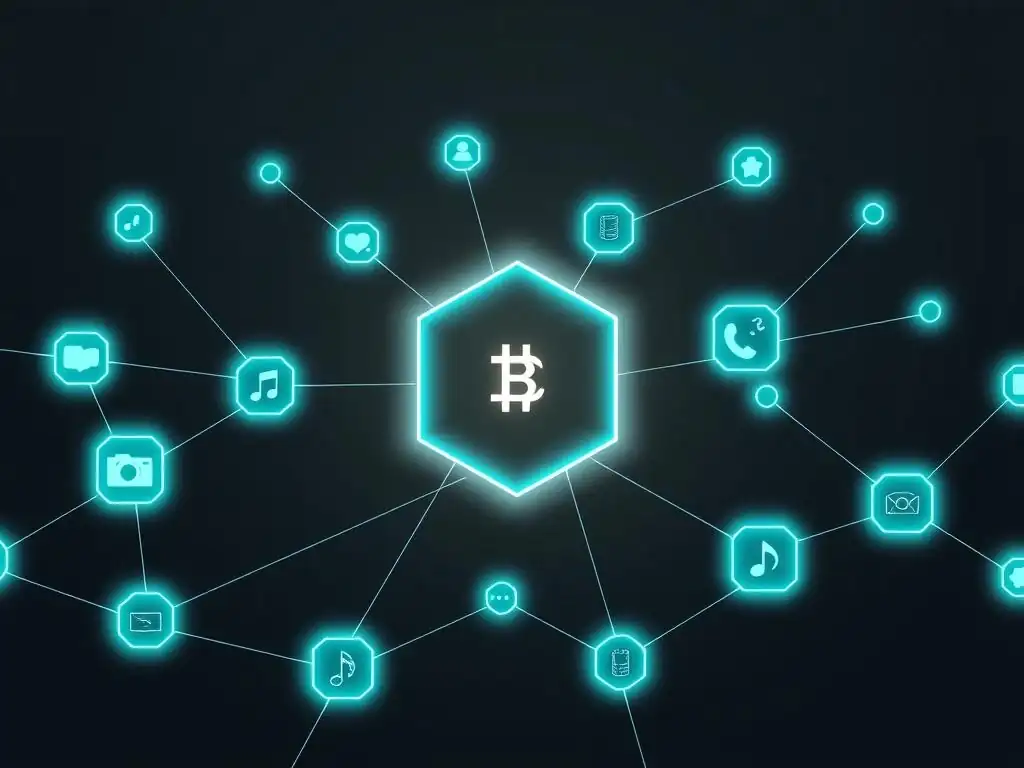
Decentralized social media, often referred to as Web3 social media, represents a paradigm shift from the centralized models of Web2. Built upon blockchain technology, these platforms aim to distribute control and ownership back to the users. The fundamental principle is decentralization, where data is not stored in a central repository controlled by a single entity, but rather distributed across a network of nodes. This distributed ledger system, inherent in blockchain, ensures transparency and immutability, making it difficult for any single party to censor or manipulate data.
Another core principle is user empowerment through data ownership and control. In blockchain-based social networks, users typically own their data and have greater control over their online identity and content. This is often facilitated through cryptographic keys and decentralized identifiers (DIDs), giving individuals more autonomy over their digital presence. Furthermore, many decentralized social media platforms integrate tokenomics, using cryptocurrencies and tokens to incentivize user participation, content creation, and platform governance, fostering a more equitable and user-centric ecosystem.
Decentralized social media platforms hold the potential to revolutionize online interaction by addressing many of the shortcomings of traditional social networks. The promise lies in creating a more democratic, transparent, and user-centric digital space. By leveraging blockchain technology, these platforms aim to mitigate issues like data privacy violations, algorithmic bias, and censorship that are prevalent in centralized systems. For instance, by distributing data across a network, decentralized platforms reduce the risk of large-scale data breaches and enhance user privacy.
Moreover, decentralized social media can empower content creators by offering new monetization models and reducing reliance on platform-controlled advertising revenue. Token-based rewards and direct creator-fan interactions can foster a more sustainable and equitable creator economy. The potential for censorship resistance is another significant advantage. With content distributed across a blockchain, it becomes significantly harder for any single entity to arbitrarily remove or suppress information, promoting freedom of expression and open dialogue in the digital sphere. This new era of online interaction aims to prioritize user rights, data sovereignty, and a more equitable distribution of value within social networks.
Frequently Asked Questions
Decentralized social media leverages blockchain technology to distribute data and control, unlike traditional platforms which are centrally managed. This gives users more ownership and control over their data.
Benefits include increased privacy, resistance to censorship due to decentralized governance, and potentially monetizing content directly without intermediaries.
Challenges include scalability issues with current blockchain technology, the complexity for average users compared to familiar platforms, and regulatory uncertainty.
Blockchain could facilitate more transparent and equitable social media ecosystems, where users own their data and participate in governance, leading to more trust and less manipulation.
Content creators could gain greater control over their content and receive fairer compensation through direct monetization models, bypassing traditional advertising revenue sharing systems.
Final Reflection: Embracing the Decentralized Horizon
The exploration of decentralized social media and its potential to supplant traditional networks highlights a critical juncture in our digital evolution. The promise of user empowerment, data sovereignty, and censorship resistance is no longer a distant dream, but a tangible possibility reshaping the very fabric of online interaction. As we've seen, the limitations of centralized platforms are becoming increasingly apparent, fueling the demand for alternative models that prioritize individual autonomy and community governance.
This shift towards decentralization isn't merely a technological upgrade; it's a cultural and social transformation. The desire for greater control over our digital identities and the content we consume is deeply rooted in our inherent need for freedom and self-expression. This movement resonates profoundly with the growing skepticism towards centralized power structures and the yearning for more authentic online experiences. The future of social media is not about building bigger platforms, but about building better communities.
This quote encapsulates the essence of the decentralized social media movement, emphasizing the importance of fostering genuine connections and shared values.
As we stand on the cusp of this decentralized revolution, it's crucial to consider the role we each play in shaping its trajectory. Let us not simply be passive observers, but active participants in building a more equitable and empowering digital landscape. Reflect on your own online habits and consider how you can support and contribute to the growth of decentralized social media. The future of online interaction is being written now, and your voice matters in defining the narrative.
Thank you for exploring the potential of decentralized social media! We hope you've gained valuable insights into the challenges and opportunities that lie ahead. Now, let's put that knowledge into action:
- Create an account on a platform like Mastodon or Lens Protocol to explore the decentralized web. Discover the unique communities and experiences they offer.
- Share this article with your network to spark a conversation about the future of social media. Encourage others to consider alternative platforms!
- Dive deeper: Research specific decentralized social projects and contribute to their development—even a small contribution can make a difference.
What are your initial thoughts on taking control of your online identity and content? Share your experiences and opinions in the comments below!
Leave a Reply