
How to Balance Profit and Fun in PlaytoEarn Game Design

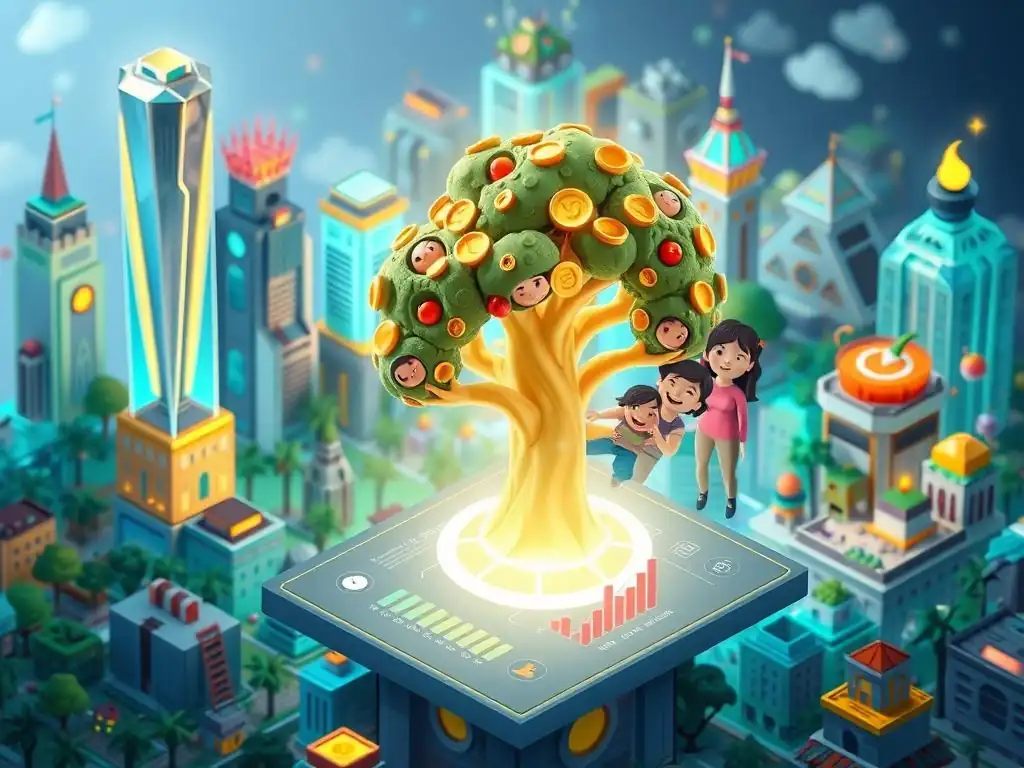
Welcome to Blockchain Trends, your compass in the rapidly evolving world of decentralized technologies! Are you ready to unravel the secrets to creating truly profitable and engaging PlaytoEarn games? Dive in as we explore crucial considerations for PlaytoEarn game profitability design, revealing how to strike the perfect balance between economic incentives and captivating gameplay. What if the key to a successful blockchain game lies not just in its mechanics, but in its carefully crafted economic ecosystem? Let's find out!
- Balancing Profit and Fun: A Guide to Play-to-Earn Game Profitability Design
- Key Principles for Play-to-Earn Game Profitability Design
- Designing for Player Retention: Keeping Players Engaged and Invested
- Optimizing Play-to-Earn Mechanics for Profitability
- Mitigating Risks in Play-to-Earn Game Development
- Case Studies: Successful Play-to-Earn Game Profitability Models
- Future Trends in Play-to-Earn Game Design and Profitability
- Conclusion: Achieving Sustainable Profitability in Play-to-Earn Game Design through Balance
-
Frequently Asked Questions
- How can PlaytoEarn game developers ensure long-term profitability?
- What are some key design considerations for a profitable PlaytoEarn game?
- How does the "fun factor" impact the profitability of a PlaytoEarn game?
- What role does regulation play in the profitability of PlaytoEarn games?
- How can developers adapt their PlaytoEarn games to maintain profitability in a changing market?
- Final Reflection: Harmonizing Profit and Play
- Unearth the Winning Formula: Level Up Your PlaytoEarn Design!
Balancing Profit and Fun: A Guide to Play-to-Earn Game Profitability Design
Introduction: The Dual Challenge of Play-to-Earn Game Design
The rise of Play-to-Earn (P2E) gaming has presented a paradigm shift in the video game industry, merging entertainment with financial incentives. However, designing a successful and enduring P2E game is a delicate balancing act. Developers face the dual challenge of creating a fun and engaging game that players want to invest their time in, while simultaneously constructing a robust and profitable economic system that rewards both players and creators.
This necessitates a deep understanding of game design principles combined with economic modeling to ensure long-term sustainability and appeal. The core issue revolves around designing for PlaytoEarn game profitability without sacrificing the fun and engaging elements that draw players in the first place.
The initial allure of P2E games was often driven by the earning potential, but as the market matures, players are becoming more discerning. They are no longer satisfied with simply clicking buttons for rewards; they seek immersive experiences, compelling gameplay, and a sense of accomplishment. A game solely focused on profit generation, devoid of engaging mechanics or a captivating narrative, is unlikely to retain players in the long run.
Conversely, a game that is incredibly fun but lacks a sustainable economic model will struggle to provide meaningful rewards and ultimately fail to attract and retain players who are seeking to earn while they play. Therefore, the key to successful PlaytoEarn game profitability design lies in harmonizing these seemingly competing objectives.
Understanding the Play-to-Earn Landscape: Where Profitability Meets Player Experience
The Play-to-Earn landscape is dynamic and rapidly evolving, characterized by a spectrum of games ranging from simple click-based earning models to complex, strategy-rich virtual worlds. Early P2E games often prioritized the "Earn" aspect, sometimes at the expense of the "Play". This led to games that felt more like jobs than entertainment, with repetitive tasks and a focus on maximizing earnings rather than enjoying the gameplay experience.
These models, while initially attractive due to novelty and earning potential, often proved unsustainable and prone to rapid player churn. Players would flock to these games for quick gains, but leave as soon as the earning potential diminished or the gameplay became monotonous.
Today, the successful P2E games are those that recognize the importance of player experience as a critical component of PlaytoEarn game profitability. These games prioritize fun, engaging gameplay loops, and compelling narratives, embedding the earning mechanics seamlessly within the core game experience. Think of games that incorporate strategic elements, skill-based challenges, and social interaction.
By focusing on creating a truly enjoyable game first, developers can attract a wider player base, foster long-term engagement, and build a more resilient and sustainable economy. This shift towards prioritizing player experience is crucial for the long-term health and growth of the P2E gaming sector, ensuring that PlaytoEarn game profitability design is not solely focused on economic extraction but also on creating genuine value and enjoyment for players.
Key Principles for Play-to-Earn Game Profitability Design
Core Gameplay Loop and Player Engagement: The Foundation of a Profitable Play-to-Earn Game
The cornerstone of any successful Play-to-Earn game, and indeed any successful game, is a compelling core gameplay loop. This loop represents the fundamental actions players repeatedly engage in and should be inherently fun and rewarding, even without the added layer of earning cryptocurrency or NFTs. Consider traditional game design principles: games are engaging when they offer a sense of progression, challenge, and mastery.
Whether it's leveling up a character, conquering increasingly difficult levels, or mastering complex strategies, players need to feel a sense of accomplishment and continuous improvement. In the context of PlaytoEarn game profitability design, this core loop is not just about fun; it's about creating a foundation for player retention and sustained engagement, which are crucial for a thriving game economy.
A well-designed gameplay loop should be easily accessible to new players while offering depth and complexity for experienced players to master. For example, think about games like Stardew Valley or Minecraft. While not inherently P2E, their success stems from their deeply engaging core loops of farming, building, and exploration, which are intrinsically rewarding.
P2E games need to replicate this intrinsic motivation, layering the earning mechanics on top of an already enjoyable experience. This means focusing on game mechanics that are inherently fun – strategic combat, resource management, creative building, social interaction, or exploration – and then carefully integrating the P2E elements in a way that enhances, rather than detracts from, the core gameplay. Ultimately, PlaytoEarn game profitability hinges on attracting and retaining players who are genuinely invested in the game for its gameplay, not just for the potential to earn.
Tokenomics Design: Structuring a Sustainable Play-to-Earn Economy
Tokenomics, the study of the economics of a cryptocurrency token, is paramount in Play-to-Earn game design. It encompasses the token's supply, distribution, utility, and the mechanisms that govern its flow within the game ecosystem. A well-designed tokenomic model is the engine that drives PlaytoEarn game profitability, ensuring a balanced and sustainable economy where players are rewarded for their engagement, and the game ecosystem itself remains healthy and vibrant over the long term.
Poor tokenomics can lead to rapid inflation, token devaluation, and ultimately, the collapse of the game economy, regardless of how fun the gameplay might be. Therefore, careful consideration and rigorous economic modeling are crucial during the game design phase.
Key aspects of tokenomics in P2E games include the token distribution model (how tokens are initially released), the token utility within the game (what players can do with the tokens), the token emission rate (how many new tokens are created over time), and the token burning mechanisms (how tokens are removed from circulation). A sustainable P2E economy often incorporates a dual-token system, with one token primarily used for in-game transactions and another governance token used for decision-making and long-term value accrual.
Balancing the inflow and outflow of tokens is critical to prevent hyperinflation or deflation, both of which can be detrimental to PlaytoEarn game profitability. The design must incentivize players to both earn and spend tokens within the game ecosystem, creating a circular economy that benefits all participants.
In-Game Currency Mechanics: Balancing Inflation and Deflation in Play-to-Earn
In-game currency mechanics are the lifeblood of a Play-to-Earn game economy. They dictate how players earn, spend, and interact with the game's native tokens. Balancing inflation and deflation is a constant challenge in PlaytoEarn game profitability design.
Inflation, where the value of the in-game currency decreases due to an oversupply, can erode player earnings and make the game less attractive over time. Conversely, deflation, where the value of the currency increases due to limited supply and high demand, can make the game inaccessible to new players and stifle economic activity. Therefore, designing robust and adaptable currency mechanics is crucial for long-term sustainability.
Effective strategies for managing inflation and deflation include implementing token sinks and faucets. Token faucets are mechanisms for distributing tokens into the economy, such as quest rewards, daily login bonuses, and staking rewards. Token sinks, on the other hand, are mechanisms for removing tokens from circulation, such as item purchases, crafting fees, breeding costs, and entry fees for competitive events.
The key is to carefully calibrate the flow of tokens through these faucets and sinks to maintain a healthy equilibrium. Furthermore, dynamic adjustment mechanisms, such as adjusting reward payouts or item prices based on market conditions, can help to further stabilize the economy and ensure PlaytoEarn game profitability remains consistent.
NFT Integration: Utilizing NFTs for Revenue Generation and Player Ownership
Non-Fungible Tokens (NFTs) have become a cornerstone of many Play-to-Earn games, offering a unique way to generate revenue and provide players with true digital ownership of in-game assets. NFT integration is a powerful tool in PlaytoEarn game profitability design, but it needs to be implemented thoughtfully to avoid alienating players or creating unfair advantages. NFTs can represent a wide range of in-game items, from characters and weapons to land and cosmetic items. Their scarcity, provable ownership, and potential for interoperability with other platforms make them valuable assets within the P2E ecosystem.
Revenue generation through NFTs can take various forms. Initial NFT sales provide upfront capital for game development. Marketplace transaction fees on NFT trades generate ongoing revenue for the game developers. Furthermore, NFTs can be designed with utility that enhances gameplay or provides exclusive access to features, creating demand and driving value.
However, it's crucial to strike a balance between creating valuable NFTs and avoiding pay-to-win mechanics that can undermine fair gameplay. NFTs should primarily enhance the player experience and contribute to the overall PlaytoEarn game profitability without creating an insurmountable barrier for players who choose not to invest heavily in NFTs. Thoughtful NFT design and integration can significantly contribute to a sustainable and engaging P2E game ecosystem.
Balancing Free-to-Play and Play-to-Earn Elements
The integration of Free-to-Play (F2P) mechanics within a Play-to-Earn game can significantly broaden its appeal and player base. Many successful P2E games adopt a hybrid model, offering a free entry point to attract a large audience while providing P2E opportunities for those who choose to engage with the game's economy. This balance is critical for PlaytoEarn game profitability design as it ensures accessibility and scalability. A purely pay-to-play P2E model can limit its reach and create a barrier to entry for many potential players.
Offering a F2P entry point allows players to experience the core gameplay loop without initial financial investment. This "try-before-you-buy" approach can be highly effective in attracting new users and building a community. The F2P version might have limitations, such as slower progression, restricted access to certain features, or lower earning potential compared to players who invest in NFTs or premium passes.
However, it provides a pathway for players to become familiar with the game, build skills, and potentially transition into the P2E aspects as they become more invested. This tiered approach to gameplay and earning opportunities is a strategic element of successful PlaytoEarn game profitability, catering to a diverse range of players with varying levels of commitment and investment.
Designing for Player Retention: Keeping Players Engaged and Invested
Reward Systems: Incentivizing Consistent Gameplay and Investment
Reward systems are the backbone of player retention in Play-to-Earn games. They are meticulously designed to incentivize consistent gameplay, encourage strategic investment, and foster a sense of progression and accomplishment. Effective reward systems are crucial for PlaytoEarn game profitability design because they directly influence player engagement and the long-term health of the game economy. These systems go beyond simply distributing tokens; they are about creating meaningful rewards that players value and are motivated to pursue.
Reward structures can take many forms, including daily quests, weekly challenges, leaderboard rankings, achievement badges, and seasonal events. The key is to design rewards that are both attainable and desirable, providing a constant stream of positive reinforcement for player activity. Furthermore, reward systems should encourage strategic investment within the game ecosystem.
For example, staking tokens to earn passive income, investing in NFTs to enhance gameplay, or participating in governance to influence game development can all be incentivized through well-designed reward mechanisms. By carefully structuring reward systems, developers can cultivate a loyal player base, drive consistent engagement, and ensure the sustained PlaytoEarn game profitability of their game.
Community Building: Fostering a Loyal Player Base
A strong and active community is an invaluable asset for any Play-to-Earn game. It's the social fabric that binds players together, fosters collaboration, and contributes significantly to player retention and overall game longevity. Community building is an often-underestimated aspect of PlaytoEarn game profitability design, but it is crucial for creating a vibrant and thriving game ecosystem. A loyal player base not only provides a consistent stream of players but also acts as a powerful marketing force, organically attracting new players through word-of-mouth and community-driven content creation.
Strategies for community building include creating official communication channels (Discord, Telegram, forums), hosting regular community events (AMAs, contests, tournaments), actively engaging with players, and empowering community leaders. Providing tools and platforms for players to connect, collaborate, and share their experiences is essential. Furthermore, incorporating player feedback into game development and governance processes can foster a sense of ownership and strengthen community bonds. A strong community not only enhances the player experience but also contributes directly to PlaytoEarn game profitability by increasing player retention, driving organic growth, and creating a more resilient and sustainable game ecosystem.
Content Updates and Expansion: Maintaining Long-Term Interest
In the rapidly evolving world of gaming, stagnation is a death knell. Play-to-Earn games, like any other successful game, require regular content updates and expansions to maintain player interest, prevent burnout, and ensure long-term viability. Content updates are a critical component of PlaytoEarn game profitability design, as they inject fresh excitement, introduce new challenges, and provide ongoing reasons for players to remain engaged and invested in the game. Without consistent updates, even the most initially popular P2E games risk losing players to newer, more dynamic experiences.
Content updates can encompass a wide range of additions, including new characters, items, gameplay modes, maps, storylines, and features. These updates not only provide fresh content for existing players but also serve as opportunities to re-engage lapsed players and attract new ones.
Furthermore, content expansions can introduce new earning opportunities, expand the game economy, and create new demand for in-game assets. Planning for a roadmap of regular content updates from the outset is a crucial element of PlaytoEarn game profitability, ensuring that the game remains dynamic, engaging, and continues to provide value and entertainment for its player base over the long term.
Optimizing Play-to-Earn Mechanics for Profitability
Crafting Desirable In-Game Assets
The desirability of in-game assets is a fundamental driver of PlaytoEarn game profitability. Assets, whether they are NFTs or fungible tokens, must possess inherent value and utility within the game ecosystem to incentivize player acquisition and trading. Simply creating a large number of assets without careful consideration of their purpose and desirability can lead to an oversupply and devalue the entire game economy. Therefore, crafting desirable in-game assets is a crucial aspect of P2E game design.
Desirability can be driven by various factors, including scarcity, utility, aesthetics, and status. Limited edition NFTs, assets that provide gameplay advantages, visually appealing cosmetic items, and assets that signify player achievement or prestige are all examples of desirable in-game items. The crafting and earning mechanics for these assets should be carefully balanced to ensure that they are challenging to obtain but not so rare that they become inaccessible to the majority of players.
Furthermore, the utility of these assets within the game should be clearly defined and impactful, providing tangible benefits to players who acquire them. By focusing on crafting desirable in-game assets, developers can create a thriving marketplace, drive demand, and enhance PlaytoEarn game profitability.
Implementing Effective Marketplace Dynamics
A robust and efficient marketplace is essential for the smooth functioning of a Play-to-Earn game economy and a key component of PlaytoEarn game profitability. The marketplace is where players buy, sell, and trade in-game assets, including NFTs and tokens. A well-designed marketplace facilitates these transactions, ensures fair pricing, and provides a secure and transparent trading environment. Ineffective marketplace dynamics can lead to price manipulation, low liquidity, and a diminished player experience, negatively impacting the overall game economy.
Key considerations for marketplace design include transaction fees, listing mechanisms, search and filtering functionalities, and security measures. Transaction fees generate revenue for the game developers and can be adjusted to influence trading activity. User-friendly listing mechanisms, intuitive search and filtering options, and robust security protocols are crucial for creating a positive trading experience. Furthermore, integrating analytics and market data within the marketplace can empower players to make informed trading decisions. A well-implemented marketplace not only enhances PlaytoEarn game profitability through transaction fees but also fosters a vibrant and dynamic game economy, encouraging player interaction and asset circulation.
Revenue Streams Beyond Gameplay
While in-game gameplay and marketplace activities are primary revenue sources for Play-to-Earn games, diversifying revenue streams is crucial for long-term sustainability and enhanced PlaytoEarn game profitability. Relying solely on a single revenue stream can make the game economy vulnerable to fluctuations in player activity or market conditions. Exploring and implementing additional revenue streams can strengthen the game's financial foundation and create more resilient PlaytoEarn game profitability.
Transaction Fees: A Source of Passive Income
Transaction fees, levied on marketplace trades and other in-game transactions, represent a significant source of passive income for Play-to-Earn games. These fees are generated automatically as players engage in economic activities within the game, providing a consistent revenue stream that is directly tied to player engagement. Transaction fees are a relatively passive form of revenue in the sense that they require minimal ongoing effort to generate once the marketplace infrastructure is in place, contributing significantly to PlaytoEarn game profitability.
The percentage of transaction fees can be adjusted to balance revenue generation with player affordability. Lower fees can encourage more trading activity, while higher fees can maximize revenue per transaction. Finding the optimal fee structure requires careful consideration of market dynamics and player behavior. Furthermore, transaction fees can be applied to various in-game activities beyond marketplace trades, such as minting new NFTs, participating in certain events, or accessing premium features. By strategically implementing transaction fees across different aspects of the game economy, developers can establish a reliable and scalable source of passive income, boosting PlaytoEarn game profitability.
In-Game Advertising (Considerations and Best Practices)
In-game advertising, while often debated in traditional gaming, can be a viable supplementary revenue stream for Play-to-Earn games, contributing to PlaytoEarn game profitability. However, it must be implemented carefully and ethically to avoid disrupting the player experience and alienating the community. Intrusive or poorly integrated advertising can be detrimental to player engagement and undermine the overall quality of the game. Therefore, a thoughtful and player-centric approach is crucial when considering in-game advertising.
Best practices for in-game advertising in P2E games include opting for non-intrusive formats, such as banner ads in non-gameplay areas, sponsored in-game events, or optional rewarded video ads that players can choose to watch for small in-game rewards. Directly integrating advertising into the core gameplay loop or forcing players to watch ads to progress can be highly detrimental.
Transparency with the player community about the use of advertising and offering options to remove ads through premium subscriptions or in-game purchases can also mitigate potential negative reactions. When implemented thoughtfully and ethically, in-game advertising can provide a supplementary revenue stream to enhance PlaytoEarn game profitability without compromising the player experience.
Mitigating Risks in Play-to-Earn Game Development

Addressing Inflation and Token Value Fluctuation
Inflation and token value fluctuation are inherent risks in Play-to-Earn game economies. Uncontrolled inflation can devalue in-game assets and player earnings, leading to player churn and economic instability. Similarly, volatile token prices can create uncertainty and discourage player investment. Mitigating these risks is crucial for long-term PlaytoEarn game profitability design and sustainability. Proactive measures and adaptive mechanisms are necessary to maintain a balanced and resilient game economy.
Strategies for addressing inflation include implementing token burning mechanisms, adjusting token emission rates dynamically based on economic conditions, and introducing deflationary mechanics such as item sinks and crafting costs. To manage token value fluctuation, developers can explore strategies like pegging the in-game token to a stablecoin, implementing liquidity pools to stabilize trading pairs, and communicating transparently with the community about economic management strategies. Regular monitoring of key economic indicators, such as token supply, trading volume, and player activity, is essential for early detection of potential imbalances and proactive intervention to maintain PlaytoEarn game profitability.
Preventing Exploits and Cheating
Exploits and cheating pose a significant threat to the integrity and fairness of Play-to-Earn games, directly impacting PlaytoEarn game profitability and player trust. Exploits, vulnerabilities in the game code or mechanics that players can abuse for unfair advantage, and cheating, using unauthorized tools or methods to gain an edge, can disrupt the game economy, devalue assets, and create an uneven playing field. Robust security measures and proactive anti-cheat strategies are essential for maintaining a healthy and trustworthy P2E gaming environment.
Preventative measures include rigorous code audits, thorough testing of game mechanics, and the implementation of anti-cheat software. Continuous monitoring of player activity and game data for suspicious patterns is also crucial for detecting and addressing exploits and cheating in real-time. Furthermore, establishing clear rules and consequences for exploiting and cheating, and communicating these policies transparently to the player community, is important for deterring malicious behavior. A proactive approach to security and anti-cheat measures is paramount for safeguarding PlaytoEarn game profitability and ensuring a fair and enjoyable experience for all players.
Legal and Regulatory Considerations for Play-to-Earn Games
The legal and regulatory landscape surrounding Play-to-Earn games is still evolving and varies significantly across jurisdictions. Navigating these complexities is crucial for ensuring compliance and mitigating legal risks, which can directly impact the long-term viability and PlaytoEarn game profitability of P2E projects. Understanding and adhering to relevant regulations is not just about compliance; it's about building a sustainable and responsible P2E gaming ecosystem.
Key legal and regulatory considerations include the classification of in-game tokens and NFTs (securities vs. utility tokens), compliance with anti-money laundering (AML) and know-your-customer (KYC) regulations, and adherence to consumer protection laws. Engaging with legal experts specializing in blockchain and gaming is essential for navigating these complexities and ensuring compliance in relevant jurisdictions. Furthermore, proactively adapting to evolving regulations and maintaining transparency with players regarding legal compliance are crucial for building trust and fostering a sustainable and legally sound PlaytoEarn game profitability model.
Case Studies: Successful Play-to-Earn Game Profitability Models
Analyzing Axie Infinity: A Breakdown of its Tokenomics and Engagement Strategies
Axie Infinity stands as a pioneering example of a successful Play-to-Earn game, demonstrating a robust profitability model and high player engagement. Its tokenomics, centered around two tokens – AXS (governance token) and SLP (in-game utility token) – played a crucial role in its initial success. Players earn SLP by playing the game, which can then be used to breed new Axies (NFT creatures) or traded on exchanges. AXS holders can participate in governance decisions and stake their tokens for rewards. This dual-token system, combined with the inherent collectibility and breeding mechanics of Axies, created a compelling P2E ecosystem.
Axie Infinity's engagement strategies focused on creating a fun and engaging battle system, fostering a strong community, and providing clear pathways for players to earn. The game's scholarship system, where Axie owners lend out their NFTs to other players to earn SLP on their behalf, further expanded its reach and accessibility. However, Axie Infinity also faced challenges related to inflation of SLP and the sustainability of its economy.
The game has since implemented adjustments to its tokenomics and reward structures to address these issues and maintain PlaytoEarn game profitability in the long term. Analyzing Axie Infinity provides valuable lessons in the design and evolution of P2E game economies.
Analyzing Splinterlands: A Breakdown of its Tokenomics and Engagement Strategies
Splinterlands, a collectible card game built on blockchain, offers another compelling case study in Play-to-Earn game profitability. Its tokenomics model revolves around the SPS (Splintershards) governance token and Dark Energy Crystals (DEC) in-game currency. Players earn DEC by winning battles and completing quests, which can then be used to purchase cards, participate in tournaments, or traded on exchanges. SPS tokens are distributed through airdrops and staking rewards, granting holders governance rights and access to exclusive features. Splinterlands' focus on collectible cards and strategic gameplay has contributed to its sustained player engagement.
Splinterlands' engagement strategies emphasize competitive gameplay, card collection, and community interaction. Regular tournaments, ranked battles, and guild-based gameplay provide ongoing incentives for players to engage with the game. The game's active marketplace for trading cards further enhances its P2E aspects.
Splinterlands has also implemented mechanisms to manage inflation and maintain the value of its assets, such as card burning and resource sinks. By focusing on strategic gameplay, collectible assets, and a balanced token economy, Splinterlands has established a sustainable PlaytoEarn game profitability model. Analyzing Splinterlands reveals the importance of engaging gameplay and well-structured tokenomics in achieving long-term success in the P2E space.
Future Trends in Play-to-Earn Game Design and Profitability
The Evolution of Tokenomics Models
Tokenomics models in Play-to-Earn games are constantly evolving as developers learn from successes and failures, and as the broader blockchain and gaming landscape matures. Future trends point towards more sophisticated and dynamic tokenomics models that are better equipped to handle inflation, deflation, and market volatility, ensuring sustainable PlaytoEarn game profitability. We are likely to see more games adopting multi-token systems with clear utility distinctions, advanced burning mechanisms, and algorithmic adjustments to token emission rates based on real-time economic data.
Furthermore, we can expect to see greater integration of decentralized finance (DeFi) principles into P2E tokenomics. Yield farming, staking, and liquidity pools are already being incorporated into some P2E games, and this trend is likely to accelerate. These DeFi integrations can provide additional earning opportunities for players, enhance token utility, and create more robust and self-sustaining game economies. The future of PlaytoEarn game profitability design will likely be characterized by increasingly complex and adaptable tokenomics models that prioritize long-term sustainability and player empowerment.
The Rise of Decentralized Autonomous Organizations (DAOs) in Play-to-Earn
Decentralized Autonomous Organizations (DAOs) are poised to play an increasingly significant role in the future of Play-to-Earn gaming. DAOs, governed by code and community consensus, offer a path towards greater player ownership, transparency, and decentralization in P2E game development and management. The integration of DAOs can fundamentally reshape PlaytoEarn game profitability design by shifting power from centralized game studios to the player community.
In a DAO-governed P2E game, players can have a direct say in game development decisions, tokenomics adjustments, and the allocation of game resources. This participatory governance model can foster a stronger sense of ownership and community, leading to increased player engagement and loyalty. DAOs can also facilitate more transparent and equitable distribution of game revenue, aligning incentives between developers and players. While DAOs are still in their early stages of adoption in P2E gaming, their potential to revolutionize game governance and enhance PlaytoEarn game profitability through community empowerment is substantial.
Integrating AI and Machine Learning to Enhance Player Experience and Profitability
Artificial intelligence (AI) and machine learning (ML) are emerging as powerful tools that can significantly enhance both player experience and PlaytoEarn game profitability in the future of P2E gaming. AI and ML can be applied to various aspects of P2E game design, from personalized gameplay experiences to dynamic economic management and enhanced security. Their integration promises to create more engaging, efficient, and sustainable P2E gaming ecosystems.
AI-powered personalization can tailor gameplay to individual player preferences, creating more immersive and enjoyable experiences. ML algorithms can be used to dynamically balance game economies, optimize reward systems, and detect and prevent exploits and cheating more effectively. Furthermore, AI can enhance customer support, automate game operations, and provide valuable insights into player behavior and market trends, all contributing to improved PlaytoEarn game profitability. As AI and ML technologies continue to advance, their integration into P2E game design will become increasingly crucial for creating competitive and sustainable P2E experiences.
Conclusion: Achieving Sustainable Profitability in Play-to-Earn Game Design through Balance
Achieving sustainable PlaytoEarn game profitability is not solely about maximizing revenue extraction, but about striking a delicate balance between economic incentives and engaging gameplay. The most successful Play-to-Earn games are those that prioritize player experience, build strong communities, and implement robust and adaptable tokenomics models. By focusing on creating genuinely fun and rewarding games, developers can attract and retain a loyal player base, fostering a thriving and sustainable P2E ecosystem.
The future of Play-to-Earn gaming hinges on continuous innovation, adaptation, and a commitment to creating value for both players and developers. By embracing emerging technologies like AI and DAOs, and by constantly refining tokenomics models and engagement strategies, the P2E industry can unlock its full potential and establish itself as a transformative force within the broader gaming landscape. Ultimately, the key to long-term PlaytoEarn game profitability lies in prioritizing balance – balancing fun with earning, community with economy, and innovation with sustainability.
Frequently Asked Questions
How can PlaytoEarn game developers ensure long-term profitability?
Developers need to carefully balance tokenomics and gameplay mechanics. A sustainable ecosystem requires a steady influx of new players and value creation to outweigh rewards payouts and ensure the game economy doesn't collapse.
What are some key design considerations for a profitable PlaytoEarn game?
Consider scarcity of in-game assets, a well-defined utility for tokens, and mechanisms to burn or sink tokens. These measures help maintain value and prevent hyperinflation, contributing to long-term profitability.
How does the "fun factor" impact the profitability of a PlaytoEarn game?
If a game isn't enjoyable, players won't stick around, no matter how lucrative the rewards are. Player retention is crucial for a healthy in-game economy and continuous revenue streams. Prioritizing fun gameplay is essential.
What role does regulation play in the profitability of PlaytoEarn games?
Unclear or restrictive regulations can significantly impact a game's accessibility and profitability. Compliance with legal frameworks is vital to avoid legal challenges and ensure long-term viability in the market.
How can developers adapt their PlaytoEarn games to maintain profitability in a changing market?
Continuous monitoring of the game economy and player behavior is key. Developers should be ready to implement adjustments to tokenomics, gameplay, or reward structures to maintain balance and adapt to evolving market conditions.
Final Reflection: Harmonizing Profit and Play
The journey through PlaytoEarn game profitability design reveals a crucial truth: sustainable success lies in the delicate balance between financial incentives and genuine enjoyment. The strategies discussed, from crafting compelling gameplay loops to implementing thoughtful tokenomics, are not merely theoretical exercises. They are the building blocks for creating digital worlds that thrive on both player engagement and economic viability.
This pursuit of equilibrium profoundly impacts the evolving landscape of gaming. It challenges us to move beyond extractive models and embrace designs that prioritize player agency and intrinsic motivation. The shift towards sustainable PlaytoEarn requires a fundamental rethinking of what constitutes value in a digital economy, moving beyond mere speculation to genuine participation and contribution. Play is often talked about as if it were a relief from serious learning. But for children play is serious learning. Play is really the work of childhood.
- Fred Rogers. This quote reminds us that the core of a successful game, even one with economic incentives, must be rooted in the inherent joy of play.
Ultimately, the future of PlaytoEarn hinges on our ability to learn from the successes and failures of the past. Let us not be driven solely by the allure of profit, but by the desire to create truly engaging and rewarding experiences for players. Consider how you can contribute to this evolution, not just as a designer or investor, but as a player who values both the fun and the potential of PlaytoEarn. The power to shape this future rests in our hands.
Unearth the Winning Formula: Level Up Your PlaytoEarn Design!
Thanks for exploring how to navigate the exciting world of PlaytoEarn game design! You've now got a solid understanding of balancing profitability with engaging gameplay. Ready to put that knowledge to work? Here are some actions you can take right now to create the next big PlaytoEarn hit:
- Implement one key adjustment to your current game design based on what you learned today. Don't wait! Test that core element that will boost player enjoyment and revenue generation.
- Brainstorm three completely unexpected PlaytoEarn mechanics that no one else is using. Let creativity guide innovation and set your game apart!
- Share this article with a fellow game developer who could benefit from these insights. Spread the knowledge and help build a thriving PlaytoEarn ecosystem!
What is the single, boldest change you're willing to make in your game design to truly put the "fun" back into PlaytoEarn? Let's discuss in the comments!
Leave a Reply