
The Benefits of Decentralized Game Servers: A New Era of Gaming


Welcome to Blockchain Trends, your gateway to understanding how blockchain is revolutionizing industries beyond just cryptocurrencies.
Ever wondered how blockchain can transform the gaming experience? Dive in to discover the revolutionary decentralized game server benefits that are reshaping the gaming landscape, offering enhanced security, improved performance, and a fairer playing field. Explore how this cutting-edge technology is creating a new era of gaming, and what the future holds for decentralized systems in the world of virtual entertainment. Ready to level up your knowledge?
- The Benefits of Decentralized Game Servers: A New Era of Gaming
- Decentralized Game Server Benefits: A Comprehensive Look
- Real-World Applications and Examples of Decentralized Game Servers
- Addressing Potential Challenges of Decentralized Gaming
- The Future of Decentralized Game Servers
- Conclusion: Embracing the Decentralized Gaming Revolution
-
Frequently Asked Questions
- How do decentralized game servers improve game availability?
- What are the potential cost savings associated with using decentralized game servers?
- How does decentralization impact game security and fairness?
- How does blockchain technology contribute to the management of in-game assets in decentralized game servers?
- What regulatory challenges might arise with the adoption of decentralized game servers?
- Final Reflection: Embracing the Decentralized Gaming Revolution
- Level Up Your Gaming Experience Now!
The Benefits of Decentralized Game Servers: A New Era of Gaming
Introduction: The Rise of Decentralized Gaming
The gaming industry, a behemoth of entertainment and technological innovation, is constantly evolving. From arcade cabinets to online multiplayer experiences, each era has brought significant shifts in how games are played and delivered. Today, we stand at the cusp of another revolution: decentralized gaming.
This paradigm shift is fueled by blockchain technology, promising to reshape core aspects of game development, distribution, and player interaction. While centralized servers have been the backbone of online gaming for decades, offering stability and control, they also present limitations in security, transparency, and player empowerment. The emergence of decentralized gaming, particularly through decentralized game servers, aims to address these shortcomings, ushering in a new era focused on community, ownership, and resilience.
This evolution is not just about adopting new technology; it's about fundamentally rethinking the power dynamics within the gaming ecosystem. For years, game developers and publishers have held centralized control over game worlds, in-game assets, and server infrastructure. Decentralization proposes a move towards distributing this control, empowering players and fostering more transparent and equitable gaming environments. The promise of enhanced security, player ownership, and greater fairness is driving significant interest and investment into decentralized gaming solutions, positioning decentralized game server benefits as a key driver in this transformative trend.
Understanding Decentralized Game Servers
Decentralized game servers represent a fundamental departure from the traditional centralized server model that has dominated online gaming. In a centralized system, a single entity, typically the game developer or publisher, operates and maintains servers that host game worlds and manage player interactions. These servers are often located in specific geographical locations and are vulnerable to single points of failure, censorship, and manipulation. Decentralized game servers, in contrast, leverage blockchain technology and distributed networks to distribute the server infrastructure across multiple nodes, often operated by different entities or even players themselves.
This distribution of server infrastructure is the core of decentralization. Instead of relying on a single point of control, a decentralized game server network operates on a peer-to-peer basis or utilizes a distributed ledger. This means game data and processing are spread across numerous computers, making the system more resilient to attacks, censorship, and downtime.
Furthermore, the use of blockchain can introduce transparency and immutability to game logic and asset management, creating a more trustworthy and fair gaming environment. Understanding this shift from central control to distributed operation is crucial to grasping the profound implications of decentralized game server benefits.
Key Features of Decentralized Gaming Infrastructure
Decentralized gaming infrastructure is built upon several key features derived from blockchain technology and distributed systems. One of the most critical is distributed consensus. Instead of relying on a central authority to validate transactions and game states, decentralized systems use consensus mechanisms like Proof-of-Stake or Proof-of-Work to ensure agreement across the network. This eliminates the need for trust in a single entity and enhances the integrity of the game world.
Another essential feature is smart contracts. These self-executing contracts, coded on the blockchain, automate game logic, asset management, and reward distribution. For example, smart contracts can govern the rules of a game, ensuring that they are consistently applied and cannot be arbitrarily changed by the game developer.
Furthermore, tokenization plays a significant role, allowing for the creation of unique, non-fungible tokens (NFTs) representing in-game assets. These NFTs provide players with true ownership of their digital items, enabling them to trade, sell, or use them across different games and platforms, fostering a more open and player-centric gaming ecosystem. These combined features underpin the decentralized game server benefits and promise a more robust and empowering gaming experience.
Decentralized Game Server Benefits: A Comprehensive Look
Enhanced Security and Reduced Downtime
One of the most compelling decentralized game server benefits is the significant improvement in security and reduction in downtime. Traditional centralized servers are vulnerable to Distributed Denial of Service (DDoS) attacks, where malicious actors overwhelm the server with traffic, causing it to crash and rendering the game unplayable. In 2019, for example, major gaming platforms like PlayStation Network and Xbox Live experienced significant outages due to DDoS attacks, impacting millions of players worldwide.
Decentralized networks, by their very nature, are far more resilient to such attacks. Because the server infrastructure is distributed across numerous nodes, taking down the entire network becomes exponentially more difficult and costly for attackers.
Furthermore, decentralized systems enhance security by eliminating single points of failure. If a centralized server fails due to hardware malfunction, natural disaster, or cyberattack, the entire game can become inaccessible. With decentralized game servers, if one node goes offline, the network can continue to operate seamlessly as other nodes maintain the game state and functionality.
This redundancy drastically reduces the likelihood of prolonged downtime and ensures a more stable and reliable gaming experience. This inherent resilience is a major advantage, making decentralized game servers a more robust solution for online gaming, ensuring players can consistently access and enjoy their games.
Improved Transparency and Fairness in Gaming
Transparency and fairness are critical aspects of any gaming ecosystem, and decentralized game servers offer significant improvements in these areas. In centralized gaming, players often rely on the game developer's word regarding in-game mechanics, loot drop rates, and fairness of matchmaking algorithms. However, these systems can be opaque, leading to concerns about potential manipulation or unfair advantages. Decentralized systems, particularly when leveraging blockchain, can bring a new level of transparency to game operations.
By recording game logic and transaction history on a public and immutable blockchain, decentralized game servers offer verifiable fairness. For instance, smart contracts can govern loot box mechanics, ensuring that the odds of obtaining rare items are provably fair and cannot be altered arbitrarily. Similarly, matchmaking algorithms can be transparently audited, reducing concerns about unfair pairings or rigged systems.
This enhanced transparency fosters trust between players and developers, creating a more equitable and enjoyable gaming environment. Players can have greater confidence that the game is operating as intended and that the rules are applied consistently and fairly, a key decentralized game server benefit.
Greater Player Ownership and Control
Decentralized game servers are instrumental in empowering players with greater ownership and control over their gaming experiences. In traditional gaming models, players essentially rent access to games and in-game assets. Developers retain full control over game worlds, economies, and even in-game items, which can be altered or removed at their discretion. Decentralization shifts this paradigm by enabling true digital ownership through NFTs and distributed governance mechanisms.
NFTs, representing unique in-game items, grant players verifiable ownership of these assets. Unlike traditional in-game items tied to a specific game server, NFTs exist on the blockchain and can be traded, sold, or transferred outside of the game ecosystem. This empowers players to control their digital assets and potentially profit from their in-game achievements and investments.
Furthermore, decentralized autonomous organizations (DAOs) can be integrated into game governance, allowing players to participate in decision-making processes related to game development, updates, and community rules. This level of player ownership and control is a fundamental decentralized game server benefit, fostering a more player-centric and community-driven gaming landscape.
Cost Efficiency and Scalability
While often perceived as complex and expensive, decentralized game servers can offer long-term cost efficiencies and improved scalability compared to traditional centralized infrastructure. Maintaining large centralized server farms requires significant capital expenditure on hardware, infrastructure, and ongoing maintenance. Decentralized networks, by distributing the workload across multiple nodes, can potentially reduce the burden on a single entity and lower overall infrastructure costs.
Moreover, decentralized systems can leverage existing computing resources, potentially through incentivized node operation. Players or community members could contribute their computing power to the network and be rewarded for their participation, creating a more cost-effective and scalable server infrastructure. In terms of scalability, decentralized networks can be designed to scale horizontally by adding more nodes to the network as player demand grows.
This distributed architecture can be more flexible and adaptable to fluctuating player loads compared to the vertical scaling limitations of centralized servers. While initial setup costs might be involved in developing decentralized infrastructure, the long-term cost efficiency and scalability advantages represent significant decentralized game server benefits for game developers and the gaming industry as a whole.
Real-World Applications and Examples of Decentralized Game Servers
Case Studies of Games Utilizing Decentralized Servers
While still in its early stages, the adoption of decentralized game servers is gaining momentum, with several projects showcasing their potential. One notable example is Grit, a Web3-based battle royale game developed by Gala Games. Grit utilizes blockchain for player ownership of in-game assets and is exploring decentralized server solutions to enhance game resilience and community participation. Although specific details of their server architecture are still evolving, Grit exemplifies the trend of integrating decentralized elements into competitive online gaming.
Another project, Influence, a massively multiplayer online space strategy game, is being built entirely on the StarkNet Layer-2 scaling solution for Ethereum. Influence aims to leverage decentralized servers to create a persistent and player-owned universe. They are actively developing and testing decentralized server technologies to support the complex interactions and vast scale of their game world.
These examples, while representing early stages of implementation, demonstrate the growing interest and practical exploration of decentralized game server benefits within the gaming industry. As these projects mature and more games adopt decentralized architectures, we can expect to see further innovation and refinement in this space.
Exploring Different Blockchain Platforms for Game Servers
The choice of blockchain platform is crucial for implementing decentralized game servers, as different platforms offer varying capabilities in terms of scalability, transaction speed, and smart contract functionality. Ethereum, while being the most established smart contract platform, faces scalability challenges that can impact real-time gaming performance. Layer-2 scaling solutions like Polygon, Arbitrum, and StarkNet, built on top of Ethereum, offer improved transaction throughput and lower fees, making them more suitable for gaming applications requiring faster and cheaper transactions.
Alternatively, platforms like Solana and Avalanche are designed for high throughput and low latency, making them potentially well-suited for demanding online games. Furthermore, dedicated gaming blockchains, such as Enjin and WAX, are specifically designed for NFT and gaming applications, providing optimized features and tools for game developers. The selection of the appropriate blockchain platform depends on the specific requirements of the game, including the scale of player interactions, the complexity of game logic, and the desired level of decentralization. Developers are actively experimenting with various platforms to leverage the decentralized game server benefits and create compelling blockchain-based gaming experiences.
Addressing Potential Challenges of Decentralized Gaming
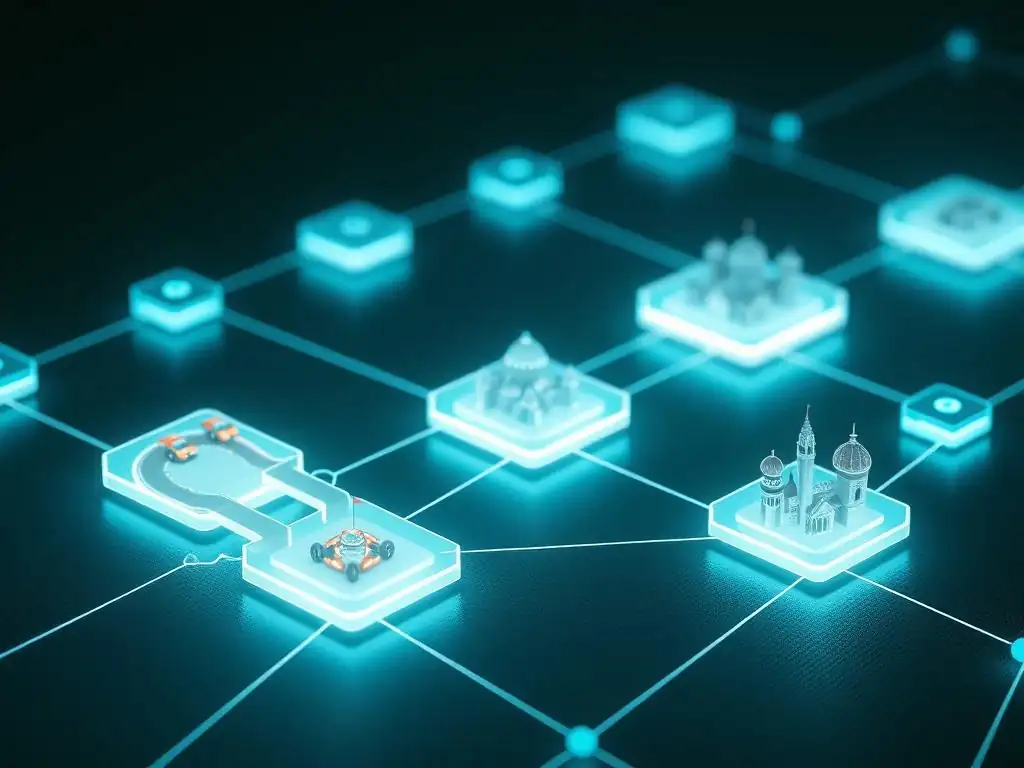
Scalability Limitations and Solutions
Despite the numerous decentralized game server benefits, scalability remains a significant challenge for blockchain-based gaming. Traditional blockchains often struggle to handle the high transaction volumes and low latency requirements of real-time online games. For instance, processing every player action on a main layer blockchain like Ethereum can be prohibitively slow and expensive, hindering the seamless gameplay experience expected by modern gamers.
However, various scalability solutions are being developed and implemented to address these limitations. Layer-2 scaling solutions, as mentioned earlier, like rollups and sidechains, offer significant improvements in transaction throughput by processing transactions off-chain and then batching them onto the main blockchain. Furthermore, advancements in blockchain technology, such as sharding and state channels, aim to further enhance scalability and reduce latency.
Game developers are also exploring hybrid approaches, combining decentralized elements for critical functions like asset ownership and governance with more traditional centralized or off-chain solutions for real-time gameplay mechanics. Overcoming scalability limitations is crucial for realizing the full potential of decentralized game server benefits and enabling mass adoption of blockchain gaming.
User Experience and Onboarding
User experience and onboarding present another set of challenges for decentralized gaming. The complexities of blockchain technology, such as managing cryptocurrency wallets, understanding gas fees, and interacting with decentralized applications (dApps), can create a barrier to entry for mainstream gamers who are accustomed to seamless and user-friendly gaming experiences. Onboarding new players into decentralized gaming ecosystems requires simplifying these complexities and creating intuitive interfaces.
Efforts are being made to improve user experience through solutions like wallet abstraction, where players can interact with blockchain games without directly managing cryptocurrency wallets. Furthermore, educational resources and simplified onboarding processes are crucial to guide new users through the decentralized gaming landscape. Game developers are also focusing on creating engaging gameplay experiences that prioritize fun and accessibility, rather than solely focusing on the underlying blockchain technology. Addressing user experience and simplifying onboarding are essential steps in making decentralized game server benefits accessible and appealing to a broader audience of gamers.
Regulatory Uncertainty and Compliance
Regulatory uncertainty and compliance represent a significant challenge for the burgeoning decentralized gaming industry. The legal and regulatory landscape surrounding blockchain technology and cryptocurrencies is still evolving globally, and the application of these regulations to gaming is often unclear. Issues such as the classification of in-game NFTs as securities, the legality of play-to-earn mechanics in certain jurisdictions, and compliance with anti-money laundering (AML) regulations pose potential hurdles for decentralized game developers.
Navigating this complex regulatory environment requires careful legal analysis and proactive engagement with regulators. Game developers need to ensure compliance with applicable laws and regulations in the jurisdictions where their games are offered. Industry associations and legal experts are working to provide guidance and clarity on regulatory issues related to decentralized gaming. Addressing regulatory uncertainty and ensuring compliance are crucial for fostering a sustainable and legally sound decentralized gaming ecosystem, allowing the decentralized game server benefits to be realized within a clear and predictable framework.
The Future of Decentralized Game Servers
Predictions and Trends in Blockchain Gaming
The future of blockchain gaming and decentralized game servers is bright, with several key trends and predictions shaping its trajectory. We can expect to see increased adoption of Layer-2 scaling solutions and advancements in blockchain technology that further improve scalability and reduce transaction costs, making decentralized gaming more viable for mainstream adoption. The integration of decentralized finance (DeFi) elements into games is also likely to expand, creating more sophisticated play-to-earn and player-owned economies.
Furthermore, the metaverse concept and interoperability between different blockchain games are gaining traction. Decentralized game servers can play a crucial role in enabling persistent and interconnected virtual worlds where players can seamlessly move between different games and platforms while retaining ownership of their digital assets. We can also anticipate greater focus on user experience and simplified onboarding processes, making decentralized gaming more accessible and appealing to a wider audience. These trends point towards a future where decentralized game server benefits are fully realized, transforming the gaming landscape and empowering players in unprecedented ways.
Decentralized Game Servers: A Paradigm Shift for the Gaming Industry
Decentralized game servers represent a paradigm shift for the gaming industry, moving away from centralized control towards a more distributed, transparent, and player-centric model. The benefits they offer, including enhanced security, reduced downtime, improved fairness, greater player ownership, and potential cost efficiencies, are compelling and address many of the limitations of traditional centralized gaming infrastructure. While challenges related to scalability, user experience, and regulation still need to be overcome, the progress being made in blockchain technology and the growing interest from both developers and players indicate a promising future for decentralized gaming.
This paradigm shift is not just about technology; it's about fundamentally changing the power dynamics within the gaming ecosystem. Decentralized game servers empower players, fostering a sense of ownership and community that was previously limited in centralized models. As the technology matures and adoption increases, decentralized game servers are poised to revolutionize the gaming industry, creating more engaging, equitable, and resilient gaming experiences for players worldwide.
Conclusion: Embracing the Decentralized Gaming Revolution
The transition to decentralized game servers marks a significant evolution in the gaming industry, promising a new era of gaming characterized by enhanced security, transparency, player empowerment, and long-term sustainability. While challenges remain, the potential decentralized game server benefits are undeniable and compelling. From enhanced security and reduced downtime to greater player ownership and fairer game mechanics, decentralized servers offer a compelling alternative to traditional centralized infrastructure.
As blockchain technology continues to mature and scalability solutions become more robust, we can expect to see wider adoption of decentralized game servers across various game genres and platforms. Embracing this decentralized gaming revolution is not just about adopting new technology; it's about fostering a more equitable, community-driven, and player-centric gaming future. The journey towards full decentralization in gaming is underway, and the decentralized game server benefits are paving the way for a transformative shift in how games are developed, played, and experienced.
Frequently Asked Questions
How do decentralized game servers improve game availability?
Decentralized servers eliminate a single point of failure, ensuring higher uptime and resistance to DDoS attacks. This translates to a more consistently available gaming experience for players, with reduced server downtime.
What are the potential cost savings associated with using decentralized game servers?
Instead of relying on expensive centralized infrastructure, decentralized systems can utilize a distributed network, potentially lowering costs through shared resources and reduced maintenance. This can lead to lower operational expenses for game developers.
How does decentralization impact game security and fairness?
Decentralized systems offer enhanced security through tamper-proof records on the blockchain and transparent game mechanics. This can deter cheating and ensure a fairer gameplay experience for all players with verifiable game states.
How does blockchain technology contribute to the management of in-game assets in decentralized game servers?
Blockchain allows for the creation of unique, verifiable, and tradable in-game assets (NFTs). Players can truly own their digital items, fostering a player-driven economy and enabling new monetization models for developers.
What regulatory challenges might arise with the adoption of decentralized game servers?
Navigating the legal landscape surrounding decentralized systems, NFTs, and virtual economies presents a significant challenge. Clear regulations are needed to address issues like ownership, liability, and cross-border transactions, and compliance is crucial.
Final Reflection: Embracing the Decentralized Gaming Revolution
The journey through the benefits of decentralized game servers reveals a profound shift in the gaming landscape, and its relevance today is undeniable. The promise of enhanced security, player autonomy, and community-driven development is no longer a distant dream, but a tangible reality reshaping how we experience virtual worlds. The centralized model, with its inherent vulnerabilities and limitations, is increasingly challenged by the empowering potential of decentralization.
This shift isn't just about technology; it's about reclaiming ownership and fostering a more equitable gaming ecosystem. The ability for players to truly own their in-game assets, participate in governance, and contribute to the server's evolution represents a fundamental change in the power dynamic. This resonates deeply with the growing desire for transparency and control in all aspects of our digital lives. The future of gaming is not just about better graphics or more immersive gameplay; it's about empowering players and building communities that are truly owned by their members.
As we stand on the cusp of this decentralized revolution, I invite you to consider the implications for your own gaming experience. How can you support and participate in this movement? Explore decentralized games, engage with blockchain gaming communities, and advocate for a future where players are not just consumers, but active participants in shaping the worlds they inhabit. The power to build a more fair, secure, and engaging gaming future lies within each of us.
Level Up Your Gaming Experience Now!
Thank you for exploring the exciting world of decentralized game servers with us! You've now unlocked the potential for fairer, more resilient, and truly community-driven gaming. Are you ready to take control?
Here are a few ways to get started:
- Research decentralized games currently available! Discover titles that are already leveraging this technology and experience the difference firsthand.
- Share this article with your fellow gamers! Help spread awareness about the benefits of decentralized game servers and spark an engaging conversation.
- Explore blockchain gaming platforms and communities; many projects are launching initial funding campaigns to bring innovative new opportunities to life.
What kind of game would you create if you had access to a fully decentralized server infrastructure?
Leave a Reply