
How Blockchain is Empowering Players to Create and Share Content

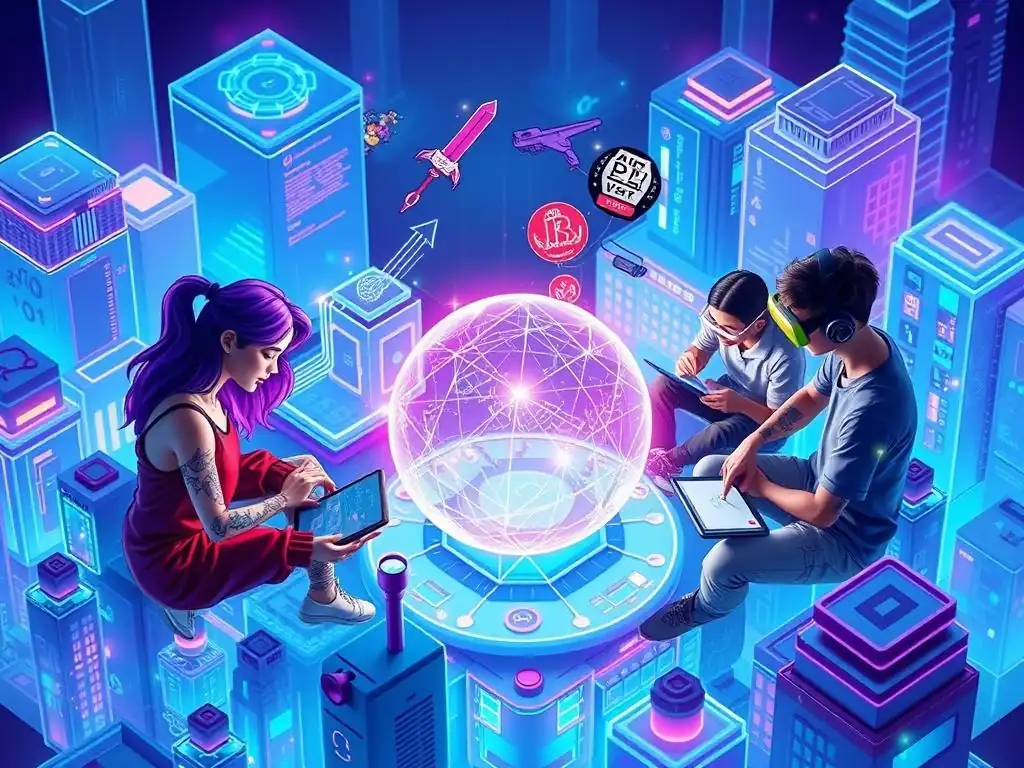
Welcome to Blockchain Trends, your compass in the rapidly evolving world of decentralized technologies. Beyond the headlines of cryptocurrencies lies a universe of innovation, and we're here to explore it all – from DeFi to enterprise solutions. Ever wondered how blockchain is revolutionizing the gaming landscape? Dive into our latest analysis to discover how blockchain gaming content creation is empowering players like never before, and unlocking new possibilities for ownership and creativity. This is just the beginning – join us as we unravel the future of decentralized systems.
How Blockchain is Empowering Players to Create and Share Content
- Blockchain Gaming Content Creation: A New Era for Players
- Blockchain Technology's Role in Revolutionizing Content Ownership
- Empowering Players: Blockchain-Based Content Creation Platforms
- Benefits of Blockchain for Gaming Content Creators
- Sharing Content on the Blockchain: Decentralized Distribution
- Use Cases of Blockchain in Gaming Content Creation
- Challenges and Considerations for Blockchain Gaming Content
- The Future of Blockchain Gaming Content Creation
- Conclusion: Blockchain's Transformative Power in Gaming Content
-
Frequently Asked Questions
- How is blockchain technology changing the way players create in-game content?
- What are the key benefits of using blockchain for in-game content creation?
- How does blockchain facilitate the monetization of player-created content in games?
- What are the potential challenges associated with integrating blockchain into game development for content creation?
- How might regulation affect the future of blockchain gaming content creation?
- Final Reflection: The Dawn of Decentralized Creativity
- Unleash Your Inner Creator: Dive Deeper into Blockchain Gaming!
Blockchain Gaming Content Creation: A New Era for Players
The gaming industry has always thrived on innovation, constantly evolving to offer players richer and more immersive experiences. A significant shift in recent years is the growing importance of player-generated content (PGC). From user-created levels in classic games to elaborate mods and custom skins, players are no longer passive consumers but active contributors shaping the games they love.
Now, blockchain technology is poised to amplify this trend, ushering in a new era for gaming content creation by fundamentally altering how players create, own, and share their creations. This transformation is not just about adding new features; it's about redefining the relationship between game developers, players, and the content itself, placing more power and potential directly into the hands of the gaming community.
This article delves into how blockchain is revolutionizing gaming content creation, exploring the mechanisms, benefits, and future possibilities of this exciting intersection. We will examine how decentralized technologies, particularly NFTs and blockchain platforms, are empowering players to take ownership of their digital creations, monetize their skills, and participate in a more equitable and transparent gaming ecosystem. From securing intellectual property to fostering direct connections between creators and communities, blockchain is laying the foundation for a more vibrant and player-centric future of gaming content.
The Rise of Player-Generated Content in Gaming
Player-generated content has become a cornerstone of modern gaming, significantly contributing to game longevity, community engagement, and overall player satisfaction. Games like Minecraft, Roblox, and Fortnite Creative are prime examples of platforms where user-created content is not just a feature, but the core of the experience. Minecraft, for instance, boasts millions of player-created worlds, servers, and mods, extending its lifespan and appeal far beyond its initial release.
Similarly, Roblox hosts over 50 million games, almost entirely built by its user base, demonstrating the immense creative power of players and the scalability of PGC platforms. This trend underscores a fundamental shift in the gaming landscape, moving from a developer-centric model to a more collaborative and community-driven approach.
The success of PGC is driven by several factors. Firstly, it taps into the inherent creativity and passion of gamers, allowing them to express themselves and contribute to the worlds they inhabit. Secondly, it provides endless variety and novelty, constantly refreshing the game experience with new content and perspectives that developers alone could not produce at the same pace.
Thirdly, it fosters strong communities around games, as players connect over shared creations, collaborations, and the collective building of virtual worlds. The rise of platforms that actively encourage and facilitate PGC highlights its crucial role in the contemporary gaming ecosystem and sets the stage for blockchain's disruptive potential in this domain.
Understanding the Limitations of Traditional Gaming Content
Despite the undeniable success of player-generated content, traditional gaming models often present limitations that hinder creators and restrict the full potential of PGC. One primary constraint is the lack of true ownership for players. In most conventional games, even when players invest countless hours creating in-game items, levels, or mods, they do not legally own these digital assets. These creations are typically bound by the game's terms of service, residing within the developer's ecosystem and subject to their control. This means players cannot freely trade, sell, or transfer their creations outside the game's designated marketplace, if one even exists.
Furthermore, traditional platforms often exert centralized control over content distribution and monetization. Revenue sharing models, when available, are often skewed in favor of the platform or developer, leaving creators with a smaller share of the value they generate. Content moderation and censorship are also centralized, with platforms having the final say on what content is allowed and what is not, potentially stifling creativity and expression.
These limitations can disincentivize creators, restrict the growth of PGC ecosystems, and ultimately limit the potential for players to truly benefit from their creative contributions within the gaming world. Blockchain technology offers a compelling solution to these limitations by introducing decentralization and true digital ownership.
Blockchain Technology's Role in Revolutionizing Content Ownership
Blockchain technology presents a paradigm shift in how digital content ownership is perceived and managed, offering solutions to many of the limitations inherent in traditional gaming content models. At its core, blockchain's decentralized and transparent nature allows for the creation of digital assets that are verifiably unique, owned by the user, and exist independently of any central authority. This fundamentally alters the power dynamic in gaming, empowering players with unprecedented control over their in-game creations and contributions.
By leveraging blockchain, gaming platforms can transition from centralized ownership models to decentralized ecosystems where players genuinely own their digital assets. This ownership is not just about in-game recognition; it translates to real-world value and control, allowing players to participate in open marketplaces, trade their assets freely, and even port their creations across different gaming environments in the future. This shift towards decentralized ownership is the cornerstone of blockchain's transformative impact on gaming content creation, fostering a more equitable, player-centric, and creator-friendly gaming landscape.
Decentralized Content Ownership with NFTs
Non-Fungible Tokens (NFTs) are the key mechanism through which blockchain technology enables decentralized content ownership in gaming. NFTs are unique digital assets that reside on a blockchain, representing ownership of a specific item, be it a piece of art, a collectible, or, in the context of gaming, an in-game asset like a weapon, character skin, or even a user-created level. Each NFT is unique and its ownership is transparently and immutably recorded on the blockchain, providing verifiable proof of ownership that cannot be altered or duplicated.
In gaming, NFTs empower players to truly own their in-game creations. When a player creates or earns an in-game asset represented as an NFT, they possess verifiable ownership of that asset, much like owning a physical collectible. This ownership extends beyond the confines of a single game platform.
Players can potentially trade, sell, or gift their NFTs on open marketplaces, independent of the game developer. For example, in games like Axie Infinity, players own their Axies as NFTs, allowing them to breed, battle, and trade these digital creatures, creating a player-driven economy around these assets. This fundamental shift from renting or licensing in-game items to actually owning them is a revolutionary aspect of blockchain gaming and a core driver of its appeal to content creators and players alike.
Securing Intellectual Property Rights on the Blockchain
Blockchain technology offers novel solutions for content creators to secure their intellectual property (IP) rights in the digital gaming space. Traditional IP protection methods can be complex, costly, and often difficult to enforce in the rapidly evolving digital realm. Blockchain, with its immutable and transparent ledger, provides a robust and accessible way to establish proof of creation and ownership of digital assets, including in-game content.
By registering their creations on a blockchain, content creators can timestamp their work, creating an indelible record of when and by whom the content was created. This timestamped record serves as verifiable proof of originality and ownership, which can be crucial in resolving disputes and protecting against unauthorized use or replication of their work. Furthermore, smart contracts, self-executing agreements coded on the blockchain, can be used to automate licensing and royalty distribution for player-created content.
For instance, a smart contract can be programmed to automatically distribute a percentage of sales or usage fees to the original creator whenever their content is used or traded within a game or across different platforms. This automated and transparent system can significantly simplify IP management for gaming content creators and ensure they are fairly compensated for their contributions.
Empowering Players: Blockchain-Based Content Creation Platforms
The convergence of blockchain technology and gaming is giving rise to a new generation of platforms specifically designed to empower player-generated content creators. These platforms are built upon decentralized principles, utilizing blockchain to provide players with true ownership of their creations, facilitate transparent monetization mechanisms, and foster more direct engagement with their communities. Unlike traditional gaming platforms that often act as intermediaries, these blockchain-based ecosystems aim to create a more direct and equitable relationship between creators, players, and the games themselves.
These platforms are not just about incorporating blockchain as an afterthought; they are fundamentally designed around the principles of decentralization and player empowerment. They leverage NFTs for asset ownership, decentralized autonomous organizations (DAOs) for community governance, and cryptocurrency for in-game economies, creating holistic ecosystems that prioritize player agency and reward creative contributions. This new wave of blockchain gaming platforms is paving the way for a future where players are not just consumers but active participants and stakeholders in the games they play and the content they create.
Exploring Existing Blockchain Gaming Platforms for Content Creators
Several blockchain gaming platforms are already demonstrating the potential of this new paradigm for content creators. Platforms like The Sandbox and Decentraland are metaverse-style environments that explicitly empower users to create, own, and monetize virtual land, assets, and experiences. In The Sandbox, users can create voxel-based assets and games using the VoxEdit and Game Maker tools and then sell or rent these creations as NFTs within the platform's marketplace. Similarly, Decentraland allows users to purchase virtual land parcels as NFTs and build interactive experiences, games, and even virtual businesses on their land, fostering a user-driven virtual economy.
Beyond metaverse platforms, games like Splinterlands and Gods Unchained exemplify how blockchain can empower content creators within more traditional game genres. Splinterlands, a collectible card game, allows players to own their cards as NFTs, enabling them to trade, rent, and even combine cards to increase their value.
Gods Unchained, a trading card game in the vein of Magic: The Gathering, also utilizes NFTs for card ownership, providing players with true digital ownership and control over their game assets. These examples showcase the diversity of blockchain gaming platforms and their commitment to empowering players with ownership and monetization opportunities for their in-game achievements and creations.
Axie Infinity: Empowering Players Through Digital Ownership
Axie Infinity stands out as a prime example of how blockchain-based gaming empowers players through digital ownership and content creation. This play-to-earn game, inspired by Pokémon, centers around collecting, breeding, and battling digital creatures called Axies, each represented as an NFT. Players truly own their Axies, granting them the freedom to trade them on open marketplaces, rent them out to other players, or use them to participate in battles and earn in-game cryptocurrency, Smooth Love Potion (SLP), and AXS tokens, the game's governance token.
The success of Axie Infinity highlights the strong appeal of digital ownership to players, especially in regions where earning potential through gaming can be significant. Players are not just consumers in Axie Infinity; they are active participants in a player-driven economy where their skills and strategic gameplay directly translate into tangible financial rewards.
Furthermore, the community around Axie Infinity has become a vibrant ecosystem of content creators, from Axie breeders and trainers to content writers and streamers, all contributing to and benefiting from the game's success. Axie Infinity serves as a powerful case study demonstrating how blockchain-based digital ownership can empower players, foster thriving communities, and create new economic opportunities within the gaming world.
Benefits of Blockchain for Gaming Content Creators
The integration of blockchain technology into gaming offers a multitude of benefits specifically tailored for gaming content creators, addressing many of the shortcomings of traditional gaming models and unlocking new avenues for creativity, monetization, and community engagement. These advantages stem from blockchain's core principles of decentralization, transparency, and immutability, creating a more equitable and empowering environment for players who contribute to the gaming ecosystem through their creations.
From enhanced earning potential and fairer revenue sharing to building more direct connections with gaming communities, blockchain is reshaping the landscape for gaming content creators. These benefits are not just theoretical; they are being realized in practice by creators already active in blockchain gaming, demonstrating the tangible advantages of this technological shift and its potential to revolutionize the creator economy within the gaming industry.
Earning Potential: Monetizing Player-Created Content
Blockchain technology significantly enhances the earning potential for gaming content creators by providing new and more direct monetization avenues. In traditional gaming models, players often rely on limited in-game marketplaces or external platforms, often facing high transaction fees or restrictions on what they can sell and how they can monetize their creations. Blockchain, particularly through NFTs, allows creators to directly monetize their in-game assets and content in a more open and decentralized manner.
NFTs enable creators to sell their in-game assets directly to other players on open marketplaces, bypassing centralized platforms and potentially retaining a larger share of the revenue. Furthermore, smart contracts can be programmed to ensure creators receive royalties on secondary sales of their NFTs, meaning they continue to earn even after the initial sale, fostering a more sustainable and rewarding creator economy.
Play-to-earn models, like that of Axie Infinity, further empower creators by rewarding gameplay and content creation with cryptocurrency, providing tangible financial incentives for player contributions. This combination of direct sales, royalties, and play-to-earn mechanisms significantly expands the earning potential for gaming content creators and moves away from traditional models where developers often capture the majority of the value generated by player creations.
Enhanced Transparency and Fair Revenue Sharing
Transparency and fairness in revenue sharing are critical concerns for content creators in any industry, and blockchain offers significant improvements in this area within gaming. Traditional gaming platforms often operate with opaque revenue sharing models, where creators have limited visibility into how revenue is generated and distributed. Blockchain's transparent and immutable ledger provides a stark contrast, enabling verifiable and auditable records of transactions and revenue distribution.
Smart contracts can be programmed to automatically and transparently distribute revenue according to pre-defined rules, ensuring that creators receive their fair share without relying on the platform's discretion or manual processes. This transparency builds trust between creators and platforms, fostering a more equitable and collaborative environment. Moreover, decentralized autonomous organizations (DAOs) can further enhance fairness by allowing creators to participate in the governance of gaming platforms and have a say in revenue sharing models and platform policies. This move towards transparent and community-driven governance empowers creators and ensures that the rewards of their contributions are distributed fairly and openly.
Building a Direct Connection with the Gaming Community
Blockchain technology facilitates a more direct and meaningful connection between gaming content creators and their communities. Traditional gaming platforms often act as intermediaries, limiting direct interaction between creators and players and controlling the flow of communication and feedback. Blockchain, with its decentralized nature, enables creators to bypass these intermediaries and build closer relationships with their audience.
NFTs can function as membership tokens or access keys, granting holders exclusive access to creator communities, content, or events. This fosters a sense of ownership and belonging within the community and allows creators to directly engage with their most dedicated fans.
Decentralized social media platforms and communication tools built on blockchain can further enhance this direct interaction, providing creators with more control over their communication channels and enabling them to build stronger, more engaged communities around their work. This direct connection not only benefits creators by fostering stronger fan relationships but also allows for more direct feedback loops, enabling creators to better understand and respond to the needs and desires of their community, ultimately leading to better and more community-driven content.

Beyond creation and ownership, blockchain technology is also revolutionizing the distribution of gaming content, moving away from centralized distribution models towards more decentralized and peer-to-peer approaches. Traditional game distribution platforms often act as gatekeepers, controlling which content is allowed, imposing fees, and potentially censoring or removing content based on their own policies. Blockchain offers the potential for more open, permissionless, and censorship-resistant content distribution mechanisms.
Decentralized distribution not only empowers content creators by giving them more control over how their content is shared but also benefits players by providing access to a wider range of content, potentially at lower costs, and fostering a more open and diverse gaming ecosystem. This shift towards decentralized distribution is a key aspect of blockchain's transformative impact on gaming, moving towards a more creator-centric and player-friendly content landscape.
Peer-to-Peer Content Sharing in Blockchain Gaming
Peer-to-peer (P2P) content sharing is a core principle of blockchain technology that can be applied to revolutionize content distribution in gaming. Traditional distribution models rely on centralized servers and platforms to host and deliver game content, creating potential bottlenecks, points of failure, and centralized control. P2P networks, in contrast, distribute content across a network of users, allowing users to share content directly with each other without relying on a central authority.
In blockchain gaming, P2P networks can be used to distribute game assets, user-generated levels, mods, and even entire games in a decentralized manner. This approach can reduce reliance on centralized servers, improve content delivery speed and resilience, and lower distribution costs. Furthermore, P2P content sharing can enhance censorship resistance, as content is not controlled by a single entity but distributed across a network. While P2P distribution in gaming is still in its early stages, its potential to create a more open, efficient, and censorship-resistant content ecosystem is significant, particularly for user-generated content and indie game developers.
Overcoming Censorship and Content Control Issues
Censorship and content control are ongoing concerns in the digital world, including the gaming industry. Traditional gaming platforms often have broad powers to censor or remove content based on their own policies, which can be subjective and potentially stifle creative expression. Blockchain technology, with its decentralized and censorship-resistant nature, offers a potential solution to these issues in gaming content creation and distribution.
By distributing content on a blockchain or through decentralized P2P networks, creators can reduce their reliance on centralized platforms and mitigate the risk of censorship. Content stored on a blockchain is immutable and difficult to remove or alter, providing a more permanent and censorship-resistant record of creations.
Furthermore, decentralized platforms governed by DAOs can establish more transparent and community-driven content moderation policies, reducing the risk of arbitrary censorship and empowering creators and communities to have a greater say in content standards. While blockchain cannot completely eliminate content moderation challenges, it offers tools and mechanisms to create a more censorship-resistant and creator-friendly content environment within the gaming industry.
Use Cases of Blockchain in Gaming Content Creation
The application of blockchain technology in gaming content creation is diverse and rapidly evolving, with numerous use cases already emerging and many more possibilities on the horizon. These use cases span various aspects of content creation, from asset ownership and trading to user-generated level design and the development of entirely user-created virtual worlds. Understanding these use cases provides a concrete picture of how blockchain is transforming the gaming landscape and empowering players to become active creators and participants in the gaming ecosystem.
These examples showcase the breadth and depth of blockchain's impact on gaming content creation, illustrating how it is not just a theoretical concept but a practical technology with real-world applications that are already shaping the future of gaming. As the technology matures and adoption grows, we can expect to see even more innovative and impactful use cases emerge in the years to come.
Creating and Trading In-Game Assets as NFTs
One of the most prominent and impactful use cases of blockchain in gaming content creation is the creation and trading of in-game assets as NFTs. This application directly addresses the issue of digital ownership, empowering players to truly own their in-game items and participate in open marketplaces to trade, sell, or rent these assets. NFTs can represent a wide range of in-game assets, including weapons, armor, character skins, virtual land, collectibles, and even user-created content like levels and mods.
Games like Axie Infinity, CryptoKitties, and The Sandbox have demonstrated the viability and popularity of NFT-based in-game assets. The ability to own and trade these assets creates new economic opportunities for players, allowing them to monetize their skills, time, and creativity within the game. Furthermore, NFT marketplaces facilitate cross-game and even cross-platform asset trading, potentially creating a more interconnected and interoperable gaming metaverse in the future. The creation and trading of in-game assets as NFTs is a fundamental use case that is already transforming the gaming industry and driving the growth of blockchain gaming.
Developing and Distributing User-Generated Levels and Mods
Blockchain technology offers exciting possibilities for the development and distribution of user-generated levels and mods in gaming. Traditional modding communities often face challenges related to content distribution, IP protection, and monetization. Blockchain can provide solutions to these challenges, empowering modders and level designers to create, share, and potentially monetize their creations in a more open and decentralized manner.
NFTs can be used to represent ownership of user-generated levels and mods, allowing creators to sell or license their content directly to other players. Smart contracts can automate royalty distribution, ensuring that modders receive compensation whenever their creations are used or distributed. Decentralized platforms can facilitate the distribution of mods and levels, bypassing centralized platforms and reducing the risk of censorship or content restrictions. These blockchain-based tools can empower modding communities, foster greater innovation in user-generated content, and create new economic opportunities for level designers and modders.
Decentraland: User-Created Virtual Worlds and Experiences
Decentraland serves as a compelling example of how blockchain is enabling the creation of entirely user-created virtual worlds and experiences. This decentralized metaverse platform is built on the Ethereum blockchain and allows users to purchase virtual land parcels as NFTs. Landowners can then build anything they desire on their land, from virtual homes and art galleries to games, casinos, and virtual businesses. Decentraland is entirely governed by its users through a DAO, giving the community control over the platform's policies and development.
The user-driven nature of Decentraland has fostered a vibrant and diverse virtual world filled with player-created content and experiences. Users can explore virtual art galleries, attend virtual concerts, play user-created games, and even participate in virtual economies within Decentraland. This platform demonstrates the potential of blockchain to empower users to create, own, and govern virtual worlds, ushering in a new era of decentralized metaverse experiences where players are not just consumers but active builders and participants in the digital realm.
Challenges and Considerations for Blockchain Gaming Content
While blockchain technology offers tremendous potential for gaming content creation, it is essential to acknowledge the challenges and considerations that must be addressed for its widespread adoption and long-term success. These challenges range from technical limitations like scalability to regulatory uncertainties and accessibility issues for non-technical users. Addressing these challenges is crucial to realizing the full potential of blockchain in gaming and ensuring that its benefits are accessible to all players and creators.
Overcoming these challenges will require continued innovation, collaboration between developers and regulators, and a focus on user experience and accessibility. Addressing these considerations is not just about mitigating risks; it is about building a sustainable, inclusive, and thriving blockchain gaming ecosystem that benefits all participants.
Scalability Issues in Blockchain Gaming
Scalability remains a significant challenge for blockchain technology in general, and it is particularly relevant to blockchain gaming. Many popular blockchains, like Ethereum, face limitations in transaction throughput and speed, which can impact the performance and user experience of blockchain games, especially those with high transaction volumes or real-time gameplay requirements. Gas fees, the transaction costs on blockchains like Ethereum, can also become prohibitively expensive, particularly during periods of network congestion, hindering microtransactions and player interactions within games.
While Layer-2 scaling solutions like sidechains and rollups are emerging to address these scalability issues, they are still under development and adoption. Alternative blockchains with higher throughput and lower fees, such as Solana and Polygon, are also gaining traction in the gaming space. However, the long-term scalability and performance of blockchain gaming platforms remain a key consideration for developers and players. Continued research and development in blockchain scalability solutions are crucial to ensuring that blockchain gaming can handle the demands of mainstream adoption and provide a seamless user experience.
Regulatory Uncertainty Surrounding NFTs and Gaming Content
Regulatory uncertainty surrounding NFTs and blockchain gaming content is a significant concern that the industry must navigate. The legal and regulatory landscape for NFTs is still evolving, and different jurisdictions are taking varying approaches to their classification and regulation. Questions remain regarding the legal status of NFTs, their tax implications, and their potential classification as securities. This regulatory uncertainty can create risks for both game developers and players, particularly regarding compliance and legal liabilities.
Furthermore, the regulatory landscape for gaming itself is complex and varies across jurisdictions. The integration of blockchain and NFTs into gaming adds another layer of complexity, raising questions about gambling regulations, consumer protection, and intellectual property rights. Clear and consistent regulatory frameworks are needed to provide clarity and certainty for the blockchain gaming industry, fostering innovation while protecting consumers and ensuring responsible development. Ongoing dialogue between industry stakeholders, regulators, and policymakers is crucial to navigating this regulatory uncertainty and establishing a stable and supportive legal environment for blockchain gaming.
Ensuring Accessibility for Non-Technical Users
Accessibility for non-technical users is a critical factor for the widespread adoption of blockchain gaming content creation. Blockchain technology, with its complex terminology and technical concepts, can be intimidating and confusing for mainstream gamers who are not familiar with cryptocurrency or decentralized technologies. Onboarding new users to blockchain gaming platforms and content creation tools can be challenging if the user experience is not intuitive and user-friendly.
Simplifying the user interface, abstracting away complex blockchain concepts, and providing clear and accessible educational resources are crucial steps to improving accessibility for non-technical users. Developing user-friendly wallets, seamless NFT marketplaces, and intuitive content creation tools are essential to making blockchain gaming content creation accessible to a broader audience. Focusing on user experience and designing blockchain gaming platforms with non-technical users in mind is crucial to bridging the gap between blockchain technology and mainstream gamers and content creators.
The Future of Blockchain Gaming Content Creation
The future of blockchain gaming content creation is brimming with potential, driven by the continued evolution of blockchain technology, the growing adoption of NFTs, and the increasing demand for player empowerment and decentralized gaming experiences. Predictions point towards a significant expansion of decentralized gaming ecosystems, a deeper integration of blockchain into the metaverse, and a further blurring of the lines between players, creators, and game developers. This future envisions a gaming landscape that is more open, equitable, and driven by the creativity and participation of the gaming community itself.
These predictions are not just optimistic hopes; they are grounded in the observable trends and technological advancements already shaping the gaming industry. The future of blockchain gaming content creation is likely to be characterized by increased decentralization, player ownership, creator empowerment, and a more immersive and interconnected gaming metaverse.
Predictions for the Growth of Decentralized Gaming Ecosystems
Predictions for the growth of decentralized gaming ecosystems are overwhelmingly positive, with analysts forecasting significant expansion in the coming years. The market for blockchain games and NFTs is projected to experience substantial growth, driven by increasing player adoption, the rise of play-to-earn models, and the development of more sophisticated and engaging blockchain games. DappRadar, a leading platform for tracking decentralized applications, reported that blockchain games accounted for nearly half of all blockchain usage in early 2022, indicating the significant traction and growing popularity of this sector.
The growth of decentralized gaming ecosystems is expected to be fueled by several factors. Firstly, the increasing awareness and understanding of NFTs and digital ownership are attracting more players to blockchain games. Secondly, the play-to-earn model is proving to be a powerful incentive, particularly in developing countries, driving adoption and creating new economic opportunities.
Thirdly, the continuous development of blockchain technology and scaling solutions is improving the performance and user experience of blockchain games, making them more competitive with traditional games. These factors combined suggest a strong trajectory for the growth of decentralized gaming ecosystems and their increasing influence on the wider gaming industry.
The Impact of the Metaverse on Player-Generated Content
The metaverse, the concept of persistent, shared virtual worlds, is poised to significantly amplify the impact of player-generated content and blockchain technology in gaming. The metaverse envisions interconnected virtual environments where users can seamlessly interact, socialize, and participate in various activities, including gaming. Blockchain and NFTs are seen as essential components of the metaverse, providing the infrastructure for digital ownership, interoperability of assets, and decentralized economies within these virtual worlds.
In the metaverse, player-generated content will likely become even more central to the user experience. Users will be able to create and own virtual land, assets, and experiences within the metaverse, leveraging blockchain and NFTs to monetize their creations and participate in virtual economies.
The interoperability of NFTs across different metaverse platforms could enable players to bring their avatars, assets, and creations with them as they move between virtual worlds, creating a more seamless and interconnected metaverse experience. The metaverse is expected to be a fertile ground for blockchain gaming content creation, further empowering players and blurring the lines between the real and virtual worlds.
Conclusion: Blockchain's Transformative Power in Gaming Content
Blockchain technology is undeniably wielding a transformative power over gaming content creation, fundamentally altering the landscape for players, creators, and the industry as a whole. By introducing decentralized ownership through NFTs, enabling fairer revenue sharing models, fostering direct connections between creators and communities, and paving the way for decentralized content distribution, blockchain is empowering players to become active participants and stakeholders in the gaming ecosystem. This shift moves away from traditional, centralized models towards a more open, equitable, and player-centric future for gaming content.
While challenges remain, particularly in areas like scalability, regulation, and accessibility, the potential benefits of blockchain for gaming content creation are undeniable. As the technology matures, adoption grows, and the metaverse vision takes shape, we can anticipate a future where blockchain-powered gaming content creation becomes the norm, unlocking unprecedented creative potential, economic opportunities, and community engagement within the gaming world. The journey is still ongoing, but the direction is clear: blockchain is revolutionizing gaming content, and the power is increasingly shifting into the hands of the players.
Frequently Asked Questions
How is blockchain technology changing the way players create in-game content?
Blockchain enables decentralized ownership of in-game assets. Players can truly own their creations and potentially monetize them through marketplaces. This fosters a more collaborative and rewarding environment.
What are the key benefits of using blockchain for in-game content creation?
The main advantages include verifiable ownership, increased security against piracy, and the ability to earn rewards directly from content. This empowers creators and builds stronger communities.
How does blockchain facilitate the monetization of player-created content in games?
Blockchain allows for the creation of non-fungible tokens (NFTs) representing unique in-game items. These NFTs can be bought, sold, and traded on blockchain-based marketplaces, providing creators with a revenue stream.
What are the potential challenges associated with integrating blockchain into game development for content creation?
Challenges include the complexity of blockchain technology, the high gas fees sometimes associated with transactions, and the need for user-friendly interfaces to onboard non-crypto native players.
How might regulation affect the future of blockchain gaming content creation?
Regulation surrounding NFTs and blockchain gaming is still evolving. Clearer legal frameworks are needed to ensure consumer protection and prevent illegal activities, which will shape the future of this space.
Okay, here's a final reflection designed to close your article on how blockchain is empowering players to create and share content, optimized for the keyword "Blockchain gaming content creation."
Final Reflection: The Dawn of Decentralized Creativity
The rise of blockchain gaming content creation isn't just a trend; it's a fundamental shift in power dynamics. This democratization of content ownership and monetization represents a profound change in how games are developed, experienced, and shared. No longer are players simply consumers; they are active participants in shaping the very worlds they inhabit, and rightfully rewarded for their contributions.
This movement is already leaving an indelible mark on the gaming landscape. The ability to truly own and trade in-game assets, coupled with the freedom to create and share content without centralized gatekeepers, is fostering a vibrant and innovative ecosystem. The future of gaming is not just about playing games, but about building them, owning them, and sharing them with the world.
This quote encapsulates the spirit of blockchain gaming content creation, highlighting the potential for players to become active creators and stakeholders.
Now, as we stand at the cusp of this new era, it's time to consider your role. How can you embrace the opportunities presented by blockchain gaming content creation? How can you contribute to a more equitable and engaging gaming ecosystem? Let the principles of decentralization, ownership, and community guide your actions, and together, let's build a future where creativity thrives and players are truly empowered.
Unleash Your Inner Creator: Dive Deeper into Blockchain Gaming!
Thank you for exploring how blockchain is transforming the gaming industry and giving players new opportunities to create and share content. We hope you’ve gained insights into the future of gaming and digital ownership. Now, it’s your turn to get involved in this exciting movement!
Here are some ways to get started:
- Begin creating your own in-game assets and exploring blockchain gaming platforms. Experience firsthand how decentralized ownership empowers players.
- Join the conversation! Share this article with fellow gamers and discuss the potential of blockchain gaming on social media using the hashtag #BlockchainGaming.
- Research emerging blockchain gaming DAOs (Decentralized Autonomous Organizations) and see how you can contribute to shaping the future of player-owned content.
What kind of content are you most excited to create and share in a blockchain-powered game? Let us know in the comments below!
Leave a Reply