
How Blockchain is Enabling True Digital Scarcity in Gaming


Welcome to Blockchain Trends, your guide to understanding the revolutionary power of blockchain beyond the hype. Dive into the world of DeFi, enterprise solutions, and the evolving landscape of decentralized systems.
Are you ready to uncover the groundbreaking potential of blockchain gaming scarcity opportunities? Discover how blockchain technology is finally enabling true digital ownership and scarcity in the gaming world, creating entirely new economies and experiences. Intrigued? Explore the future of gaming and read on to learn more!
How Blockchain is Enabling True Digital Scarcity in Gaming
- Understanding Digital Scarcity and Its Importance in Gaming
- Blockchain Technology: The Foundation for True Digital Scarcity
- Blockchain Gaming Scarcity Opportunities: Transforming the Gaming Landscape
- Real-World Examples: Blockchain Games Leveraging Digital Scarcity
- Benefits of Blockchain-Enabled Digital Scarcity in Gaming
- Challenges and Considerations for Implementing Blockchain Scarcity
- The Future of Blockchain Gaming: A World of Scarce and Valuable Digital Assets
-
Frequently Asked Questions
- What is meant by "true digital scarcity" in the context of blockchain gaming?
- How does blockchain technology enable digital scarcity in gaming assets?
- What are the potential "Blockchain gaming scarcity opportunities" for players and developers?
- How does digital scarcity impact the value of in-game items in blockchain games?
- What are some challenges associated with implementing digital scarcity in blockchain gaming?
- Final Reflection: Embracing the Dawn of Digital Ownership
- Unlock the Future of Gaming: Claim Your Piece!
Understanding Digital Scarcity and Its Importance in Gaming
The Problem with Traditional Digital Assets in Games
In traditional gaming models, digital assets, such as in-game currencies, items, and characters, are typically centralized and controlled by the game developers or publishers. This centralized control means that these assets are, in essence, infinitely reproducible. Developers can create more of any digital item at will, often leading to inflation and devaluation of player investments.
For example, consider in-game currencies in many popular MMORPGs. While players earn these currencies through gameplay, developers can, and often do, introduce more currency into the economy through various mechanisms, like increasing drop rates or selling currency directly. This constant influx dilutes the value of the currency already held by players, diminishing the sense of accomplishment and the economic value of their in-game efforts.
Furthermore, the ownership of these digital assets is often questionable. Users technically license the right to use these assets within the game's ecosystem, but they do not truly own them. If a game shuts down, or a player's account is banned, all the accumulated digital assets are lost, representing a significant risk and a lack of real ownership. This lack of true ownership and the potential for infinite supply fundamentally undermines the concept of digital scarcity in traditional gaming. Players are essentially participating in economies where the "goods" are not truly limited and their ownership is precarious.
The Value Proposition of Scarcity in Gaming Economies
The introduction of scarcity into gaming economies offers a powerful value proposition for both players and developers. Scarcity, in its simplest form, means that a resource is limited in supply. In the context of gaming, this implies that certain digital assets, like weapons, skins, or virtual land, are finite and cannot be easily replicated or generated infinitely.
This limitation inherently drives up the perceived and real value of these assets. Think of limited edition physical collectibles in the real world, such as rare trading cards or vintage toys; their scarcity is a key component of their desirability and market value. Digital scarcity aims to replicate this principle in the virtual realm.
By implementing scarcity, game developers can create more robust and engaging in-game economies. When items are genuinely scarce, players are incentivized to invest more time and effort in acquiring and trading them. This can lead to more dynamic and player-driven markets within games, moving away from developer-controlled economies to ecosystems where value is determined by supply and demand among players. Scarcity can also foster a sense of prestige and accomplishment. Owning a rare and scarce item can become a status symbol within the game, enhancing the social and competitive aspects of the gaming experience.
Why Digital Scarcity Matters for Players and Developers
Digital scarcity is crucial for fostering a more meaningful and rewarding gaming experience for players. When digital assets are scarce, they acquire tangible value that transcends mere in-game utility. Players can invest time and resources into acquiring these scarce items with the confidence that their value is more likely to be preserved or even appreciate over time, mirroring real-world economies. This sense of ownership and potential for value appreciation can significantly enhance player engagement and loyalty. Players are not just consumers within the game; they become participants in a digital economy with real implications.
For developers, digital scarcity presents new avenues for monetization and sustainable game economies. By creating and controlling the supply of scarce digital assets, developers can introduce new revenue models beyond traditional upfront purchases or subscription fees. The sale of limited-edition items, the creation of secondary markets for trading scarce assets, and the potential for royalty fees on player-to-player transactions all represent innovative ways to generate revenue while simultaneously enhancing the player experience.
Moreover, a thriving in-game economy based on scarcity can increase player retention and attract new players drawn to the potential for both entertainment and economic opportunity. This creates a more sustainable and mutually beneficial relationship between developers and players, fostering a more vibrant and enduring gaming ecosystem.
Blockchain Technology: The Foundation for True Digital Scarcity
How Blockchain Creates Verifiable Ownership of Game Assets
Blockchain technology is revolutionary in its ability to establish verifiable ownership of digital assets, which is fundamental to creating true digital scarcity. Unlike traditional databases where records can be altered or manipulated by a central authority, blockchain operates as a decentralized, distributed ledger. Every transaction and ownership record is permanently and transparently recorded across a network of computers. This immutability and transparency are key to ensuring that ownership claims are verifiable and cannot be easily challenged or altered. When a digital game asset is represented on a blockchain, its ownership is cryptographically linked to a player's digital wallet address.
This cryptographic link acts as an undeniable proof of ownership. Anyone can verify on the blockchain the history of a particular asset, tracing its ownership back to its origin and confirming the current owner. This eliminates the ambiguity and centralized control inherent in traditional gaming asset management. Players truly own their blockchain-based game assets in a way that was never possible before. This verifiable ownership is the bedrock upon which digital scarcity is built, as it provides the trust and security necessary for players to value and trade these assets as if they were tangible possessions.
Non-Fungible Tokens (NFTs) and Their Role in Digital Scarcity
Non-Fungible Tokens (NFTs) are the technological mechanism that brings the concept of digital scarcity to life on the blockchain. NFTs are unique cryptographic tokens that represent a specific digital asset. Unlike cryptocurrencies like Bitcoin, which are fungible (one Bitcoin is identical to another), each NFT is unique and distinct. This uniqueness is crucial for representing scarce digital items in games. NFTs can be used to represent a wide range of in-game assets, from virtual land and characters to weapons, skins, and collectibles. Each NFT carries metadata that describes the asset it represents, including its attributes, rarity, and history.
The inherent properties of NFTs – their uniqueness, provable scarcity, and verifiable ownership on the blockchain – make them ideal for creating and managing scarce digital assets in gaming. When a game item is tokenized as an NFT, its scarcity is not just a game design choice; it is enforced by the underlying blockchain technology.
The limited supply of NFTs for a particular item is predetermined and auditable on the blockchain, ensuring transparency and preventing developers from arbitrarily increasing the supply and diluting value. This technological enforcement of scarcity is a paradigm shift in how digital assets are managed and valued in the gaming world, unlocking new possibilities for blockchain gaming scarcity opportunities.
Immutable Records: Ensuring Transparency and Authenticity in Game Items
The immutability of blockchain records is paramount in ensuring the transparency and authenticity of blockchain-based game items, further solidifying digital scarcity. Once a transaction is recorded on a blockchain, it becomes virtually impossible to alter or delete it. This means that the history of an NFT, including its creation, ownership transfers, and any relevant attributes, is permanently and transparently recorded on the blockchain. This immutable record provides an unparalleled level of authenticity for digital game items. Players can confidently verify the provenance and legitimacy of any NFT-based asset, ensuring they are not dealing with counterfeit or duplicated items.
This transparency and authenticity are crucial for building trust and confidence in blockchain gaming economies. Players can be certain that the scarce items they acquire are genuinely limited in supply and that their ownership is securely recorded and verifiable.
The immutable nature of blockchain records also protects against fraud and manipulation, as any attempt to tamper with the history of an NFT would be immediately detectable on the transparent ledger. This foundation of trust and authenticity, underpinned by blockchain's immutable records, is essential for the long-term viability and growth of blockchain gaming and its ability to create truly scarce and valuable digital assets.
Blockchain Gaming Scarcity Opportunities: Transforming the Gaming Landscape
Creating Limited-Edition In-Game Items and Collectibles
Blockchain technology opens up exciting new avenues for creating truly limited-edition in-game items and collectibles, transforming the landscape of blockchain gaming scarcity opportunities. Developers can design unique and highly desirable items and mint them as NFTs with a strictly limited supply. This scarcity can be programmed directly into the NFT's smart contract, ensuring that no more of that specific item can ever be created.
Imagine a rare sword in an RPG with only 100 NFTs ever minted, or a unique skin in a shooter with just 50 available. These limited-edition items become highly sought-after collectibles, driving demand and value within the game's economy.
The scarcity of these items can be further enhanced by incorporating unique attributes or functionalities that are exclusive to the limited edition. For example, a limited-edition weapon might have superior stats or a unique visual effect compared to standard weapons. This combination of scarcity and enhanced utility makes these items even more desirable and valuable. Furthermore, these limited-edition NFTs can be traded on secondary marketplaces outside of the game, allowing players to realize the value of their rare collectibles and creating new economic opportunities within the blockchain gaming ecosystem.
Generating Unique and Rare Digital Art Within Games
Blockchain enables the generation of unique and rare digital art within games, expanding the possibilities for blockchain gaming scarcity opportunities beyond just functional items. Games can incorporate generative art systems that create one-of-a-kind digital artworks as NFTs. These artworks can be integrated into the game world as in-game decorations, character customizations, or even as standalone collectibles.
The use of generative algorithms ensures that each piece of digital art is truly unique, with variations in style, color palettes, and composition. This inherent uniqueness, combined with the limited supply enforced by NFTs, creates digital art that is both aesthetically appealing and inherently scarce.
Consider a game where players can discover or earn unique digital paintings that decorate their virtual homes, or collectible cards featuring procedurally generated characters or landscapes. Each piece of art is verifiably unique and rare, thanks to its NFT representation on the blockchain. This opens up new dimensions of collecting and trading within games, appealing to players who are interested in both gaming and digital art. The combination of gaming and digital art scarcity creates a powerful synergy, attracting a broader audience and further enhancing the value proposition of blockchain gaming.
Enabling Player-Driven Economies Based on Scarcity
One of the most transformative blockchain gaming scarcity opportunities lies in enabling truly player-driven economies based on scarcity. By giving players verifiable ownership of scarce in-game assets as NFTs, blockchain empowers them to participate in decentralized, player-driven marketplaces. Players can freely trade, sell, and rent their NFT-based assets with each other, without relying on centralized game developers or platforms. This creates a more dynamic and organic in-game economy where value is determined by supply and demand within the player community.
Imagine a game where players own virtual land as NFTs and can build businesses, host events, or rent out their land to other players. The scarcity of land parcels, combined with player-driven development and commerce, creates a thriving virtual economy that is controlled by the players themselves, not the game developers. This shift towards player-driven economies is a fundamental change in the gaming paradigm, fostering greater player agency, economic empowerment, and a more immersive and engaging gaming experience. Blockchain-enabled scarcity is the key ingredient that unlocks the potential for these decentralized and player-centric gaming ecosystems.
Real-World Examples: Blockchain Games Leveraging Digital Scarcity
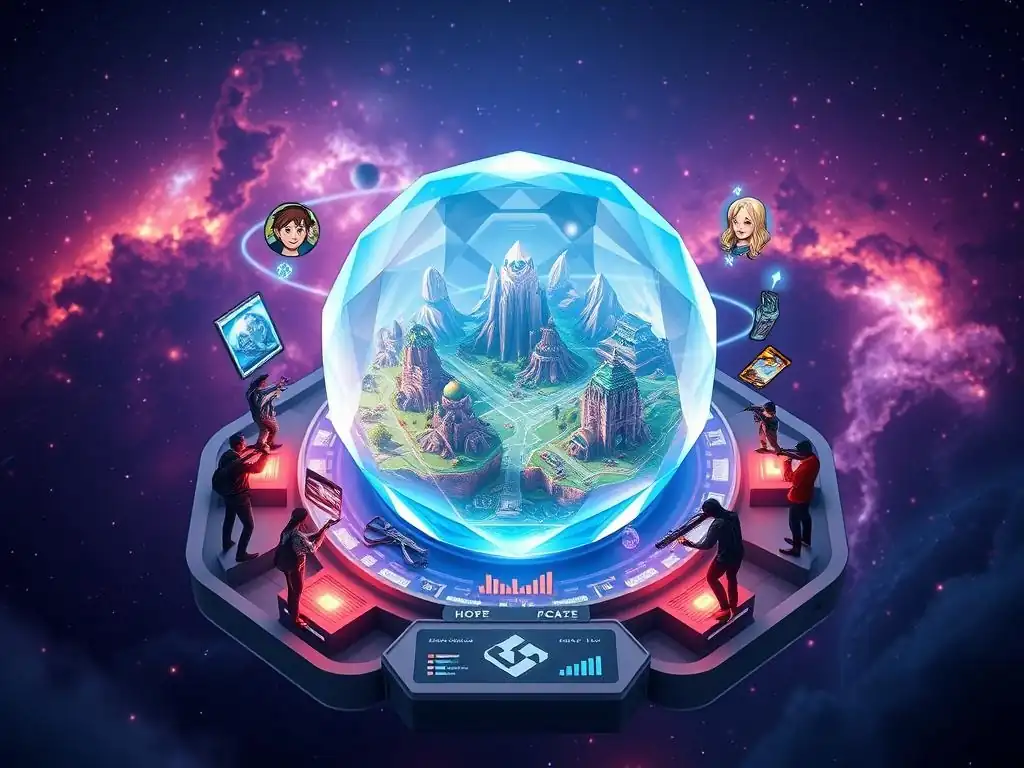
Axie Infinity - Implementing Scarcity Through Limited Edition Axies
Axie Infinity stands as a prominent example of a blockchain game successfully implementing scarcity through limited-edition Axies. Axies are digital creatures represented as NFTs that players collect, breed, and battle. The core gameplay revolves around these Axies, and their scarcity is a fundamental aspect of the game's economy.
Each Axie has unique genetic traits and belongs to specific classes, influencing its battle effectiveness and breeding potential. While new Axies can be bred, the total supply is inherently limited by the game's design and the mechanics of breeding, which become increasingly complex over generations, naturally limiting the creation of top-tier Axies.
Furthermore, Axie Infinity has introduced special, limited-edition Axies and Axie parts that are only available during specific events or through special promotions. These limited-edition Axies are often highly sought-after due to their rarity and unique attributes, driving up their value in the Axie marketplace. The implementation of scarcity in Axie Infinity has created a robust and player-driven economy where Axies are traded as valuable digital assets, demonstrating the power of blockchain gaming scarcity opportunities in practice. The game's success is largely attributed to its effective use of NFTs to create scarce and desirable in-game assets.
Decentraland - Building a Player-Owned Economy with Scarce Land Parcels
Decentraland is a virtual world built on the Ethereum blockchain that exemplifies the power of digital scarcity in creating player-owned economies. The core asset in Decentraland is LAND, virtual parcels of land represented as NFTs. The total supply of LAND is fixed and limited, creating inherent scarcity within the Decentraland metaverse. This scarcity is a foundational element of Decentraland's design, driving the value of LAND and shaping the player-driven economy. Players can purchase LAND NFTs and develop their virtual parcels to create experiences, build businesses, or host events.
The limited supply of LAND in Decentraland has led to a vibrant marketplace where LAND parcels are traded as valuable digital real estate. The price of LAND varies depending on location, size, and proximity to popular districts within Decentraland, mirroring real-world real estate markets. The scarcity of LAND has fostered a player-owned economy where users have true ownership and control over their virtual land and can monetize their creations and experiences within the metaverse. Decentraland serves as a compelling example of how blockchain gaming scarcity opportunities can underpin entire virtual economies and empower players with digital ownership.
Gods Unchained - Using Blockchain to Verify the Rarity of In-Game Cards
Gods Unchained is a collectible card game that leverages blockchain to verify the rarity and authenticity of its in-game cards. Each card in Gods Unchained is represented as an NFT, ensuring its unique identity and provable scarcity. The game features different card rarities, ranging from common to legendary, with each rarity tier having a predetermined and limited supply. Blockchain technology is used to transparently verify the rarity and supply of each card, ensuring that players can trust the stated scarcity of their digital collectibles.
Gods Unchained utilizes blockchain to not only create scarcity but also to combat the problem of counterfeit cards. Because each card is an NFT on the blockchain, its authenticity can be easily verified, preventing the creation and distribution of fake or duplicated cards.
This verification of rarity and authenticity through blockchain is crucial for maintaining the value and integrity of the Gods Unchained card market. Players can confidently trade and collect cards knowing that their rarity is verifiably scarce and their ownership is securely recorded on the blockchain, showcasing the practical application of blockchain gaming scarcity opportunities in the collectible card game genre.
Benefits of Blockchain-Enabled Digital Scarcity in Gaming
Enhanced Player Ownership and Control
Blockchain-enabled digital scarcity fundamentally enhances player ownership and control over their in-game assets. In traditional gaming models, players essentially license digital items, with developers retaining ultimate control. Blockchain flips this paradigm by granting players true ownership of their digital assets as NFTs. This ownership is verifiable on the blockchain, independent of the game developers or publishers. Players can freely trade, sell, or hold their NFT game assets as they see fit, similar to owning physical collectibles. This newfound ownership empowers players and gives them greater agency within the gaming ecosystem.
This enhanced ownership translates to greater control over their gaming investments. Players are no longer at the mercy of game developers' decisions regarding item supply or game shutdowns. Because their assets are NFTs on a blockchain, they retain ownership even if the game ceases to exist. This level of control and security is unprecedented in the history of digital gaming, fostering a more trust-based and player-centric gaming environment. Blockchain gaming scarcity opportunities are directly tied to this increase in player ownership and control, making games more engaging and rewarding for players.
Increased Value and Tradability of Game Assets
Digital scarcity, powered by blockchain, naturally leads to increased value and tradability of game assets. When in-game items are genuinely scarce and verifiably owned as NFTs, they acquire inherent value based on supply and demand principles. Limited-edition items, rare collectibles, and unique digital art become desirable assets that players are willing to invest in and trade. This creates a thriving secondary market for game assets, where players can buy, sell, and trade NFTs with each other, often for real-world currency.
The tradability of blockchain-based game assets extends beyond the confines of a single game. NFTs can be traded on various NFT marketplaces, allowing players to potentially realize value from their game assets across different platforms and ecosystems. This interoperability and liquidity further enhance the value proposition of blockchain gaming assets. The potential for value appreciation and the ease of trading contribute to a more dynamic and engaging gaming experience, attracting both gamers and collectors to blockchain gaming scarcity opportunities.
New Revenue Streams for Game Developers
Blockchain-enabled digital scarcity opens up new and innovative revenue streams for game developers, moving beyond traditional monetization models. Developers can generate revenue through the initial sale of limited-edition NFTs, creating a direct revenue stream from the creation of scarce digital assets. Furthermore, developers can implement royalty fees on secondary market transactions of their NFTs, earning a percentage each time an NFT is traded between players. This creates a continuous revenue stream that is aligned with the success and vibrancy of the game's player-driven economy.
These new revenue models are more sustainable and player-aligned compared to traditional methods like pay-to-win mechanics or aggressive in-app purchases. By focusing on creating valuable and scarce digital assets that players genuinely desire, developers can build more ethical and engaging monetization strategies. Blockchain gaming scarcity opportunities provide developers with the tools to create sustainable game economies that benefit both the developers and the players, fostering a more collaborative and mutually rewarding gaming ecosystem.
Fostering Deeper Engagement and Community Building
The implementation of digital scarcity through blockchain can foster deeper player engagement and stronger community building within games. When players have true ownership of scarce and valuable assets, they become more invested in the game and its community. The desire to acquire rare items, participate in player-driven economies, and showcase their collections drives deeper engagement with the game world. The shared experience of participating in a scarce digital asset economy creates a stronger sense of community among players.
The ability to trade and interact with each other in player-driven marketplaces further strengthens community bonds. Players collaborate, negotiate, and build relationships within the game's economy, fostering a more social and interactive gaming experience. The sense of ownership and shared economic activity creates a more vibrant and dedicated player community. Blockchain gaming scarcity opportunities are not just about economics; they are also about creating more engaging, social, and community-driven gaming experiences.
Challenges and Considerations for Implementing Blockchain Scarcity
Scalability Issues and Transaction Costs
While blockchain offers numerous benefits for digital scarcity, scalability issues and transaction costs are significant challenges that need to be addressed for widespread adoption in gaming. Many popular blockchains, particularly Ethereum, have faced scalability limitations, leading to slow transaction speeds and high gas fees, especially during periods of network congestion. These high transaction costs can be prohibitive for frequent in-game transactions and make blockchain gaming less accessible to players, especially in regions with lower average incomes.
Solutions to scalability challenges, such as layer-2 scaling solutions and alternative blockchains with higher throughput and lower fees, are actively being developed and implemented. As blockchain technology matures and scaling solutions become more robust, these challenges are expected to diminish. However, currently, scalability and transaction costs remain important considerations for game developers implementing blockchain gaming scarcity opportunities, requiring careful selection of blockchain infrastructure and optimization of in-game transaction mechanisms.
Regulatory Uncertainty Surrounding Digital Assets
Regulatory uncertainty surrounding digital assets, including NFTs and cryptocurrencies, poses a significant challenge for the blockchain gaming industry. The legal and regulatory landscape for digital assets is still evolving globally, and different jurisdictions have varying approaches to their classification and regulation. This uncertainty creates risks for game developers and players alike, as the legal status and tax implications of owning and trading blockchain-based game assets can be unclear and subject to change.
Clearer and more consistent regulatory frameworks are needed to provide legal certainty and foster the growth of the blockchain gaming industry. Game developers need to navigate complex and evolving regulations to ensure compliance and protect their players. Players also need clarity on their rights and obligations regarding ownership and trading of digital assets. Addressing regulatory uncertainty is crucial for unlocking the full potential of blockchain gaming scarcity opportunities and ensuring the long-term sustainability of the industry.
The Importance of User Experience and Accessibility
User experience and accessibility are paramount for the mainstream adoption of blockchain gaming and its scarcity-based economies. The technical complexities of blockchain technology, such as managing crypto wallets, understanding gas fees, and interacting with decentralized applications, can be daunting for mainstream gamers. A seamless and user-friendly experience is essential to onboard traditional gamers to blockchain gaming. Games need to abstract away the underlying blockchain complexities and provide intuitive interfaces and user-friendly onboarding processes.
Accessibility is also crucial to ensure that blockchain gaming is inclusive and available to players from diverse backgrounds and technical skill levels. Games need to be designed to be accessible on various devices and platforms and should not require extensive technical knowledge to participate. Focusing on user experience and accessibility is critical for overcoming the adoption barriers and realizing the full potential of blockchain gaming scarcity opportunities in the broader gaming market. Making blockchain gaming as easy and enjoyable to play as traditional games is key to its long-term success.
The Future of Blockchain Gaming: A World of Scarce and Valuable Digital Assets
The Growth of Play-to-Earn (P2E) Models and Scarcity
The future of blockchain gaming is inextricably linked to the growth of Play-to-Earn (P2E) models, where digital scarcity plays a central role. P2E games empower players to earn real-world value by participating in the game ecosystem, often through acquiring and trading scarce NFT-based assets. The inherent scarcity of these assets, coupled with player ownership, is the economic engine driving P2E models.
As P2E gaming matures and becomes more sophisticated, the importance of digital scarcity will only amplify. The demand for scarce and valuable in-game assets will continue to fuel the growth of P2E economies, creating new opportunities for players to earn and for developers to build sustainable gaming ecosystems.
The combination of P2E and digital scarcity is transforming the gaming landscape, shifting the focus from purely entertainment to a blend of entertainment and economic opportunity. This paradigm shift is attracting a new wave of players to blockchain gaming, drawn by the potential to earn while playing. The future of blockchain gaming is likely to be dominated by P2E models that leverage digital scarcity to create engaging, rewarding, and economically viable gaming experiences. Blockchain gaming scarcity opportunities are at the heart of this evolving landscape.
The Evolution of Metaverse Economies and Digital Ownership
The evolution of metaverse economies is deeply intertwined with blockchain gaming and the concept of digital ownership enabled by scarcity. Metaverses, persistent shared virtual worlds, are increasingly incorporating blockchain technology to facilitate digital ownership and create decentralized economies. Scarce digital assets, represented as NFTs, are becoming the building blocks of these metaverse economies, enabling users to own virtual land, digital items, and participate in player-driven marketplaces. The scarcity of these digital assets is fundamental to the value and functioning of metaverse economies.
As metaverses mature and become more interconnected, the importance of digital ownership and scarcity will only grow. Users will increasingly demand true ownership of their digital assets within these virtual worlds, and blockchain technology provides the mechanism to achieve this. The future of metaverses is likely to be built upon the principles of digital ownership and scarcity, creating persistent, user-owned, and economically vibrant virtual environments. Blockchain gaming scarcity opportunities are paving the way for this evolution of metaverse economies and digital ownership.
The Long-Term Impact of Blockchain on the Gaming Industry
The long-term impact of blockchain on the gaming industry is projected to be transformative, fundamentally reshaping how games are designed, played, and monetized. Blockchain-enabled digital scarcity is a key driver of this transformation, ushering in an era of player ownership, decentralized economies, and new forms of player engagement. The traditional gaming industry is gradually recognizing the potential of blockchain and is starting to explore integration opportunities. While challenges remain, the momentum behind blockchain gaming is undeniable.
In the long term, blockchain has the potential to democratize the gaming industry, empowering players and creating more equitable and sustainable gaming ecosystems. Digital scarcity, as a core principle enabled by blockchain, will play a crucial role in shaping this future. The gaming industry is on the cusp of a significant evolution, and blockchain gaming scarcity opportunities are at the forefront of this revolution, promising a future where digital assets are truly scarce, valuable, and owned by the players.
Frequently Asked Questions
What is meant by "true digital scarcity" in the context of blockchain gaming?
It means that in-game items are truly unique and limited, verified on a blockchain. This is unlike traditional games where developers can duplicate or remove items at will, impacting their value and ownership.
How does blockchain technology enable digital scarcity in gaming assets?
Blockchain utilizes NFTs (Non-Fungible Tokens) to represent in-game items. Each NFT is unique and immutable, ensuring that only one owner can possess a specific item, verifiable on the blockchain.
What are the potential "Blockchain gaming scarcity opportunities" for players and developers?
Players can own and trade valuable, scarce in-game assets, potentially earning real-world money. Developers can create new revenue streams by offering limited-edition items and fostering a thriving in-game economy.
How does digital scarcity impact the value of in-game items in blockchain games?
Scarcity typically increases the perceived and actual value of an item. Limited edition or uniquely designed items can become highly sought after, leading to higher prices in the marketplace.
What are some challenges associated with implementing digital scarcity in blockchain gaming?
Challenges include scalability issues on some blockchains, the environmental impact of certain blockchain technologies (like Proof-of-Work), and the need for user education to understand the benefits and risks of NFTs.
Final Reflection: Embracing the Dawn of Digital Ownership
The journey we've explored, tracing the path of blockchain's impact on gaming, culminates in a profound realization: true digital scarcity is no longer a futuristic dream, but a tangible reality. The implications of this shift extend far beyond mere gameplay, fundamentally altering the dynamics of ownership, value, and community within the gaming ecosystem.
This newfound scarcity, powered by blockchain technology, is more than just a technological advancement; it's a cultural revolution. It empowers players, granting them genuine ownership and control over their digital assets, fostering a deeper connection to the games they love. The blockchain is more than just a technology; it's a social and economic architecture that allows for new forms of collaboration and value creation.
This quote encapsulates the transformative potential we've only begun to unlock, a potential that promises to reshape the very fabric of the gaming world.
As we stand at the cusp of this new era, let us not merely observe, but actively participate in shaping its future. Consider the possibilities that lie ahead: how can you, as a gamer, developer, or investor, leverage the power of blockchain to create more engaging, equitable, and rewarding gaming experiences? The opportunities are boundless, and the time to explore them is now. Embrace the dawn of digital ownership, and let us collectively build a gaming landscape where scarcity empowers, and community thrives.
Unlock the Future of Gaming: Claim Your Piece!
Thank you for exploring how blockchain is transforming the gaming industry by enabling true digital scarcity. Now that you understand the potential, it's time to take action and help shape the future!
Here's how you can get started:
- Experience blockchain gaming firsthand: Try out at least one blockchain-based game within the next week to see how digital scarcity works in practice. Learn about the game mechanics, the ecosystem, and the management of digital assets.
- Share your experience: Discuss your thoughts with friends or on social media using #BlockchainGaming and #DigitalScarcity. Help raise awareness about how blockchain is innovating the gaming landscape.
- Join the community: Participate in discussions on gaming forums related to blockchain technology and share your insights to learn and contribute.
What kind of unique digital asset would you love to own in a blockchain game, and why? Share your ideas in the comments below!
Leave a Reply