
Blockchain Gaming and the Rise of Virtual Real Estate

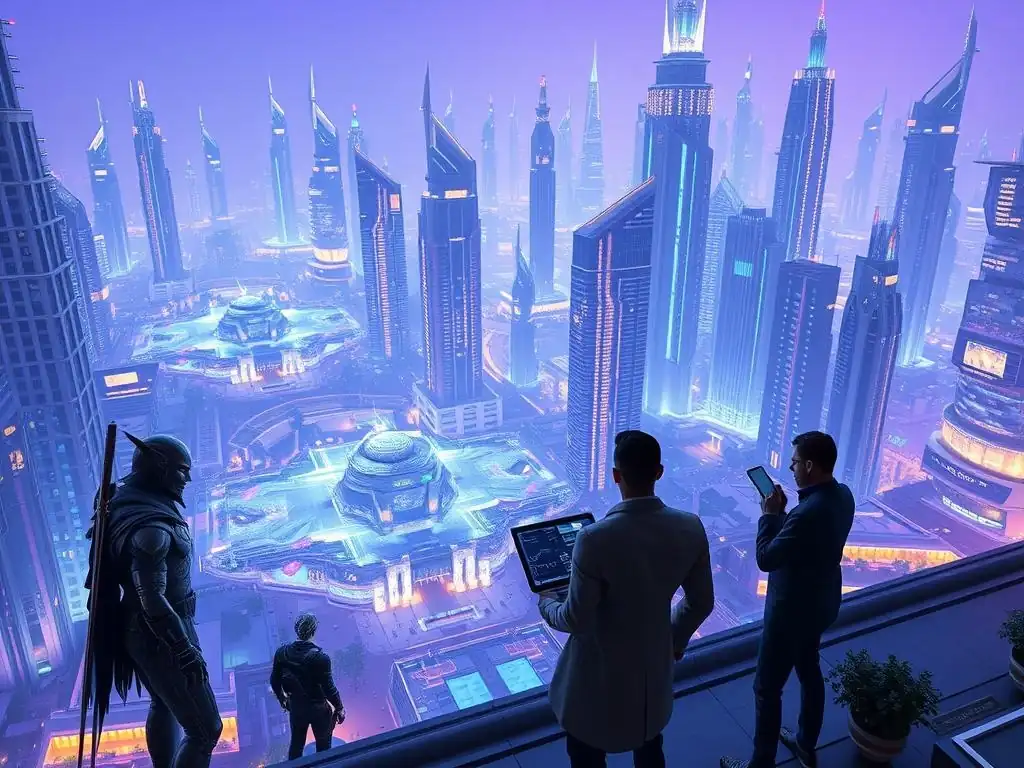
Welcome to Blockchain Trends, your guide to understanding the revolutionary power of blockchain technology.
Delve into the fascinating convergence of gaming and decentralized systems as we explore the burgeoning world of blockchain gaming virtual real estate. What if owning virtual land held real-world value? Discover the innovative possibilities and emerging trends shaping this exciting new frontier and unlock the potential that lies within the digital landscape. Ready to stake your claim?
Blockchain Gaming and Virtual Real Estate: A New Frontier
- Introduction: The Convergence of Blockchain Gaming and Virtual Worlds
- Understanding Blockchain Gaming: Decentralization and Player Empowerment
- Virtual Real Estate: Land Ownership in the Metaverse
- The Convergence: Blockchain and Virtual Land Ownership
- Investing in Virtual Real Estate: Potential and Considerations
- The Future of Blockchain Gaming and Virtual Land
- Conclusion: Navigating the Future of Gaming and Digital Ownership
-
Frequently Asked Questions
- What exactly is blockchain gaming virtual real estate?
- How does blockchain technology enhance virtual real estate in games?
- What are the potential benefits of investing in blockchain gaming virtual real estate?
- What are some of the risks associated with investing in this type of asset?
- How is the regulation of blockchain gaming virtual real estate evolving?
- Final Reflection: Building the Future, Block by Block
- Unlock Your Metaverse Empire Today!
Introduction: The Convergence of Blockchain Gaming and Virtual Worlds
The intersection of blockchain technology and the gaming industry is birthing a revolutionary concept: virtual real estate within blockchain games. This novel paradigm transcends traditional gaming, offering players genuine ownership of digital assets and transforming the way we perceive virtual economies. As blockchain technology matures and the metaverse expands, virtual land in gaming environments is emerging as a significant asset class, attracting both gamers and investors alike. This article delves into the intricacies of blockchain gaming virtual real estate, exploring its defining features, potential, and the future it holds for digital ownership and immersive online experiences.
Understanding Blockchain Gaming: Decentralization and Player Empowerment
Blockchain gaming represents a significant departure from conventional gaming models. At its core lies the principle of decentralization, leveraging blockchain technology to shift power from centralized game developers to the players themselves. This shift is manifested through the tokenization of in-game assets, enabling players to truly own, trade, and utilize their digital possessions outside the confines of a single game. This newfound ownership fosters a more engaging and rewarding gaming experience, aligning player incentives with the game's ecosystem in unprecedented ways.
Defining Blockchain Gaming: Ownership and Control
Blockchain gaming is characterized by the integration of blockchain technology into game mechanics, primarily through the use of Non-Fungible Tokens (NFTs) and cryptocurrencies. Unlike traditional games where in-game items are centrally controlled by the game company and are essentially lent to players, blockchain games empower players with verifiable ownership of their digital assets. This ownership is recorded on a public, immutable blockchain, ensuring transparency and security.
For instance, a player might acquire a rare sword in a blockchain game, and this sword is represented by a unique NFT. This NFT is stored in the player's digital wallet, and they can freely trade, sell, or even use this sword in other compatible blockchain games or platforms, depending on the game's interoperability features. This fundamental shift in ownership is the cornerstone of blockchain gaming's appeal and transformative potential.
Key Features of Blockchain Games
Blockchain games offer several distinctive features that set them apart from traditional gaming experiences. These features are intrinsically linked to the underlying blockchain technology and contribute to a more player-centric and economically vibrant gaming ecosystem.
-
True Ownership:
In blockchain games, players possess genuine ownership of in-game assets, typically represented as NFTs. This ownership is secured by the blockchain and grants players full control over their digital items. They are not merely licenses to use in-game items but rather actual digital property. For example, consider a character skin in a popular game.
In a traditional game, purchasing this skin grants usage rights within the game, but the company retains ownership. In a blockchain game, this skin, as an NFT, belongs to the player. This is a paradigm shift, transforming digital assets from ephemeral in-game commodities to potentially valuable and transferable digital possessions.
-
Interoperability:
Blockchain technology facilitates interoperability between different games and platforms. Ideally, assets acquired in one blockchain game could be utilized in other compatible games or metaverse environments. While still in its early stages, the promise of interoperability is a major driver for innovation in blockchain gaming. Imagine owning a virtual land plot in one game and being able to display NFTs earned from another game on your virtual property, creating a cohesive and interconnected digital identity across different virtual worlds. This interoperability is crucial for building a truly open and decentralized metaverse.
-
Decentralized Governance:
Some blockchain games are exploring decentralized governance models, where players participate in the decision-making processes that shape the game's future. This can range from voting on game updates and rule changes to influencing the game's economic policies. Decentralized governance aims to create a more democratic and community-driven gaming experience, empowering players to have a direct say in the evolution of the games they play. This contrasts sharply with traditional games where developers hold complete control over the game's direction and evolution.
Virtual Real Estate: Land Ownership in the Metaverse
Virtual real estate, often referred to as virtual land, is digital property within virtual worlds or metaverse environments. This concept, while seemingly abstract, is rapidly gaining traction as the metaverse expands and digital interactions become increasingly integral to our lives. Virtual land is not just pixels on a screen; it represents ownership of space within these digital realms, offering users opportunities for creation, interaction, and economic activity. The value proposition of virtual land is tied to the potential for these digital spaces to become hubs for social interaction, entertainment, commerce, and various other activities within the metaverse.
Defining Virtual Land: Digital Properties
Virtual land is essentially digital parcels of land within a virtual world, often represented as NFTs on a blockchain. These digital properties are distinct and unique, just like physical land, and can be bought, sold, traded, and developed. The scarcity of virtual land in many metaverse projects, similar to real-world land scarcity, contributes to its perceived value.
Different metaverse platforms offer varying sizes, locations, and functionalities for their virtual land parcels. Some platforms offer prime locations near popular areas or hubs, while others might offer larger plots further from the center, mirroring real-world real estate dynamics. The ownership of virtual land is recorded on the blockchain, providing verifiable proof of ownership and facilitating secure transactions.
Use Cases for Virtual Land
The utility of virtual land is multifaceted and continues to evolve as the metaverse develops. Its potential use cases are diverse, ranging from creative endeavors to commercial ventures and passive income generation.
-
Building and Development:
Virtual land provides a canvas for creativity and development within the metaverse. Owners can construct buildings, create experiences, and design environments on their digital plots. This could range from building virtual homes and galleries to creating interactive games and social spaces. For example, in platforms like Decentraland and The Sandbox, users can use built-in tools or import custom assets to construct elaborate structures and interactive experiences on their virtual land, attracting visitors and creating vibrant virtual communities.
-
Hosting Events and Activities:
Virtual land serves as a venue for hosting virtual events, gatherings, and activities within the metaverse. From concerts and virtual conferences to social meetups and gaming tournaments, virtual land can be transformed into dynamic event spaces. Brands and individuals are increasingly leveraging virtual land to host virtual events, reaching a global audience and creating immersive experiences. For instance, a music artist could host a virtual concert on their virtual land, allowing fans from around the world to attend and interact in a shared digital space.
-
Advertising and Marketing:
Prime locations within virtual worlds are becoming valuable spaces for advertising and marketing. Just as physical billboards and storefronts attract attention in the real world, virtual land in high-traffic areas of the metaverse can serve as prime advertising real estate. Brands can purchase virtual land to set up virtual storefronts, display advertisements, and engage with metaverse users directly. For example, a fashion brand could set up a virtual boutique on a prominent virtual land parcel, showcasing their digital clothing line and attracting metaverse residents.
-
Passive Income Generation:
Virtual land can generate passive income through various mechanisms within the metaverse. Landowners can rent out their virtual properties to others for events, activities, or development. They can also earn revenue through in-world advertising or by creating experiences that attract visitors and generate economic activity on their land. Some metaverse platforms are even exploring staking mechanisms for virtual land, allowing landowners to earn rewards simply by holding their digital assets. This potential for passive income is attracting investors looking to capitalize on the growth of the metaverse economy.
The Convergence: Blockchain and Virtual Land Ownership

The synergy between blockchain technology and virtual land ownership is what truly unlocks the potential of metaverse real estate. Blockchain provides the infrastructure for secure, transparent, and verifiable ownership of virtual land, addressing key challenges that existed in previous virtual world iterations. This convergence creates a robust foundation for a thriving metaverse economy where digital assets are truly owned and controlled by users.
Blockchain's Role in Securing Virtual Land
Blockchain technology plays a crucial role in securing virtual land ownership by providing a decentralized and immutable record of property rights. When virtual land is represented as an NFT on a blockchain, ownership is cryptographically secured and publicly verifiable. This eliminates the risks associated with centralized control over virtual assets, where game companies could potentially alter or revoke ownership.
Blockchain's immutability ensures that ownership records cannot be tampered with, providing a permanent and trustworthy ledger of virtual land ownership. Smart contracts, self-executing agreements coded on the blockchain, can automate the process of buying, selling, and transferring virtual land, further enhancing security and transparency.
Examples of Blockchain Games with Virtual Real Estate
Several blockchain games have pioneered the integration of virtual real estate, showcasing the potential of this concept and attracting significant user interest.
-
Axie Infinity
While primarily known for its play-to-earn mechanics centered around battling creatures called Axies, Axie Infinity also features virtual land called Lunacia. Land in Lunacia is represented by NFTs and allows players to build, customize, and potentially earn resources. Landowners in Axie Infinity can develop their plots to create experiences for other players, potentially earning passive income or creating engaging gameplay scenarios within their virtual territories. The land aspect of Axie Infinity is still under development but represents a significant expansion of its metaverse ambitions beyond creature battling.
-
Decentraland
Decentraland is a fully decentralized virtual world built on the Ethereum blockchain, where users can buy, sell, and develop virtual land parcels called LAND. LAND in Decentraland is represented by NFTs, granting owners complete control over their digital property. Decentraland is a prime example of a metaverse platform where virtual real estate is central to the user experience.
Users can build anything they imagine on their LAND, from virtual shops and casinos to art galleries and social hubs. Decentraland's open and decentralized nature, combined with its focus on virtual land ownership, has made it a leading example of metaverse real estate in action.
Investing in Virtual Real Estate: Potential and Considerations
Investing in virtual real estate presents both exciting opportunities and significant risks. The potential for high returns is attracting investors, but it's crucial to approach virtual land investments with a clear understanding of the underlying factors and potential pitfalls. Like any emerging asset class, virtual real estate investments require careful evaluation and due diligence.
Evaluating Virtual Land Investments
Evaluating virtual land investments requires considering various factors, mirroring the principles of real-world real estate investment but with a digital twist. Location within the virtual world is paramount; just as in the physical world, prime locations in the metaverse, such as those near popular hubs or with high foot traffic, are likely to be more valuable. The platform's popularity and user base are also critical indicators.
Metaverse platforms with growing user bases and active communities are more likely to see increased demand for virtual land. Scarcity of land within a specific metaverse is another key factor, as limited supply can drive up prices. Finally, the utility and functionality offered by the virtual land within the platform should be assessed; land in platforms that offer robust development tools and diverse use cases is generally more attractive.
Risks of Virtual Real Estate Investments
Investing in virtual real estate carries inherent risks that potential investors must carefully consider. These risks are often amplified by the nascent and rapidly evolving nature of the metaverse and blockchain gaming space.
-
Volatility:
The virtual real estate market, like the broader cryptocurrency market, is highly volatile. Prices can fluctuate dramatically in short periods, influenced by market sentiment, hype cycles, and broader economic trends. The value of virtual land is often speculative and driven by future expectations of metaverse adoption, making it susceptible to significant price swings. Investors should be prepared for potential losses and understand that virtual land investments are not immune to market corrections and downturns.
-
Game Dependence:
The value of virtual land in blockchain games is often intrinsically linked to the game's popularity and longevity. If a game loses popularity or shuts down, the value of associated virtual land could plummet. Investing in virtual land tied to a single game carries significant game dependence risk. Diversification across multiple metaverse platforms and games can help mitigate this risk, but it remains a crucial factor to consider. The long-term sustainability and user adoption of the underlying game or metaverse platform are critical determinants of virtual land value.
-
Regulatory Uncertainty:
The regulatory landscape surrounding virtual assets, including virtual real estate, is still evolving and largely undefined. Governments and regulatory bodies worldwide are grappling with how to classify and regulate digital assets, and future regulations could significantly impact the virtual real estate market. Changes in tax laws, property rights regulations, or restrictions on virtual asset trading could all pose risks to virtual land investments. Investors should stay informed about regulatory developments and understand the potential impact on their virtual asset holdings.
The Future of Blockchain Gaming and Virtual Land
The future of blockchain gaming and virtual land is inextricably linked to the ongoing evolution of the metaverse and the increasing integration of blockchain technology into various aspects of digital life. Several trends are shaping the landscape of metaverse real estate and pointing towards a future where digital ownership becomes even more prevalent.
Trends Shaping Metaverse Real Estate
Several key trends are shaping the trajectory of metaverse real estate, indicating a future of increased adoption, technological advancements, and expanding use cases.
-
Increased Adoption:
As metaverse platforms become more user-friendly, accessible, and offer richer experiences, wider adoption is expected. Increased user adoption will likely drive demand for virtual land, as more individuals and businesses seek to establish a presence in these digital worlds. Factors like improved virtual reality and augmented reality technologies, coupled with growing societal acceptance of digital interactions, are expected to fuel metaverse adoption and, consequently, the demand for virtual real estate.
-
Technological Integration:
Technological advancements will further enhance the functionality and utility of virtual land. Improved graphics, more immersive virtual reality experiences, and seamless integration with other technologies like artificial intelligence and the Internet of Things will create more dynamic and interactive metaverse environments. These technological advancements will unlock new possibilities for virtual land use and increase its value proposition beyond simple digital ownership.
-
Evolving Use Cases:
The use cases for virtual land are constantly expanding beyond the initial focus on gaming and social interaction. New applications are emerging in areas like virtual commerce, education, remote work, and digital identity. As the metaverse becomes more integrated into daily life, the utility of virtual land will likely diversify further, creating new opportunities for landowners and businesses operating within these digital realms. This evolution of use cases will contribute to the long-term viability and value of virtual real estate.
Blockchain's Role in the Metaverse Economy
Blockchain technology will be foundational to the metaverse economy, providing the infrastructure for secure digital ownership, decentralized marketplaces, and transparent value exchange. Virtual land, as a core component of the metaverse, will rely heavily on blockchain for its ownership and transaction mechanisms. Beyond virtual real estate, blockchain will facilitate the creation of metaverse-native economies with cryptocurrencies, NFTs, and decentralized autonomous organizations (DAOs) playing crucial roles. This decentralized economic infrastructure will empower users, foster innovation, and drive the growth of a truly open and user-owned metaverse.
Blockchain gaming and virtual real estate represent a paradigm shift in how we interact with and own digital assets. The convergence of these technologies is creating new frontiers in gaming, entertainment, and digital commerce. While the virtual real estate market is still nascent and carries inherent risks, the potential for innovation and growth is undeniable.
As the metaverse continues to evolve and mature, understanding the principles of blockchain gaming and virtual land ownership will be crucial for navigating the future of digital ownership and participating in the emerging metaverse economy. The journey into this new digital frontier is just beginning, promising exciting possibilities and transformative changes to the way we play, interact, and own in the digital age.
Frequently Asked Questions
What exactly is blockchain gaming virtual real estate?
It refers to ownership of digital land within blockchain-based games. These virtual assets are represented as NFTs (Non-Fungible Tokens) and can be bought, sold, and developed.
How does blockchain technology enhance virtual real estate in games?
Blockchain provides verifiable ownership and scarcity through NFTs. This allows players to truly own their virtual land and ensures its uniqueness.
What are the potential benefits of investing in blockchain gaming virtual real estate?
Potential benefits include passive income through rentals, development opportunities, and appreciation in value. Scarcity and demand can drive up the price of desirable plots.
What are some of the risks associated with investing in this type of asset?
Risks include game failure, market volatility of NFTs, and regulatory uncertainty. The value of virtual land is tied to the success and popularity of the game.
How is the regulation of blockchain gaming virtual real estate evolving?
Regulation is still in its early stages, with jurisdictions grappling with how to classify and treat these digital assets. Legal clarity is needed to foster long-term growth and stability.
Final Reflection: Building the Future, Block by Block
The exploration of blockchain gaming and virtual real estate reveals a landscape ripe with potential, yet also fraught with nascent challenges. The convergence of these technologies is not merely a trend, but a fundamental shift in how we perceive ownership, interaction, and value within digital spaces. The promise of decentralized economies and user-owned assets is reshaping the gaming industry and beyond, offering a glimpse into a future where virtual worlds hold tangible, real-world significance.
This emerging paradigm has profoundly influenced the cultural and social landscape, blurring the lines between the physical and digital realms. The ability to own, develop, and trade virtual land empowers individuals in unprecedented ways, fostering creativity, entrepreneurship, and community building. The metaverse is coming, and it will affect every product, company and person that we touch. It's a big deal.
- Tim Sweeney, CEO of Epic Games. This quote encapsulates the transformative potential of blockchain gaming and virtual real estate, suggesting a future where digital ownership is not just a novelty, but a cornerstone of our interconnected world.
As we stand on the cusp of this digital revolution, I invite you to reflect on the implications of blockchain gaming and virtual real estate for your own life. Consider the possibilities for creative expression, economic empowerment, and community engagement that these technologies unlock. How can you leverage these tools to build a more equitable, engaging, and fulfilling future, both within the virtual world and beyond? The future is being built, block by block, and your participation is essential.
Unlock Your Metaverse Empire Today!
Thank you for exploring the exciting intersection of blockchain gaming and virtual real estate. You've gained valuable insights into how digital ownership is transforming the gaming industry and creating new opportunities for digital entrepreneurs. Ready to take the next step and stake your claim?
Here are some actions you can take right now:
- Try out a blockchain-based game that offers virtual land ownership. Experience firsthand how this innovative concept works.
- Browse online marketplaces to discover available virtual plots and learn about their potential value.
- Share this article with a friend interested in crypto, gaming, or the metaverse to start a conversation about the future of digital ownership!
What kind of virtual world are you most excited to build, and what strategies will you use to secure your digital assets? Share your thoughts in the comments below!
Leave a Reply