
How Blockchain Technology is Enhancing Game Accessibility for All

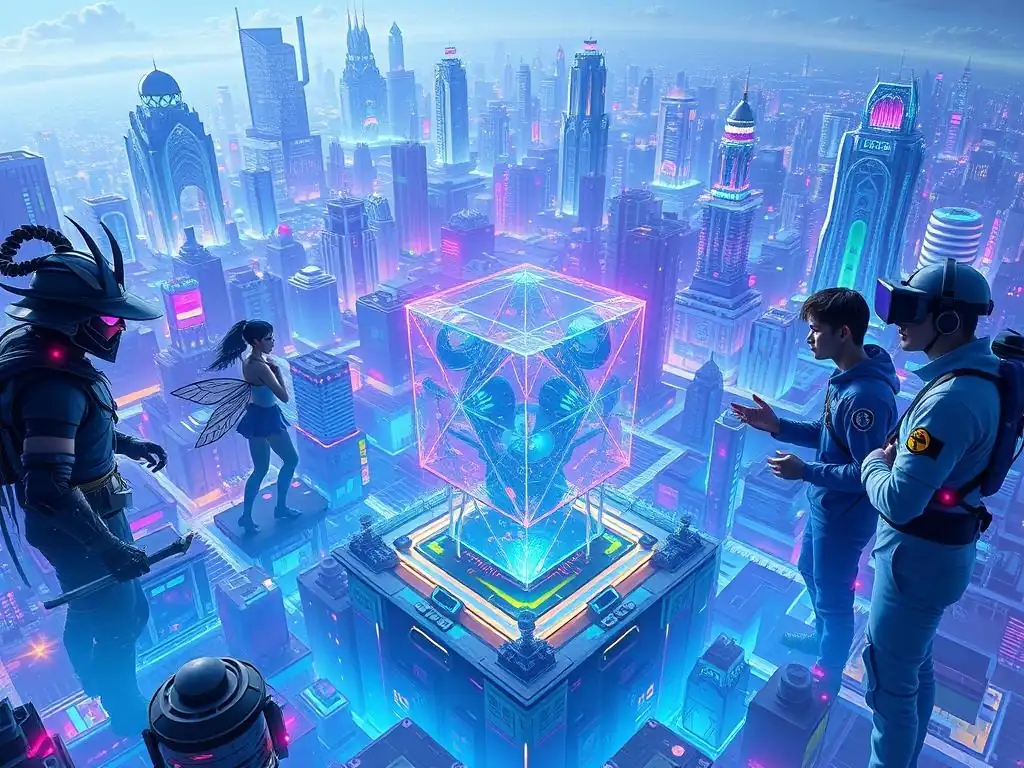
Welcome to Blockchain Trends, your go-to source for unraveling the real-world applications of blockchain technology. Beyond the hype of cryptocurrencies, discover how this revolutionary technology is reshaping industries from finance to gaming.
Intrigued by the potential of blockchain to create more inclusive experiences? Dive into our latest article exploring innovative blockchain gaming accessibility solutions and how they're making gaming more accessible for everyone. The future of decentralized gaming is here, and it's more inclusive than you might think! Explore the possibilities and learn how blockchain is opening up new worlds for players of all abilities.
How Blockchain Technology is Enhancing Game Accessibility for All
- Introduction: Blockchain's Role in Democratizing Gaming
- Understanding the Foundations: Blockchain and Game Accessibility
- Blockchain-Based Features Promoting Game Accessibility
- Case Studies: Blockchain Games Championing Accessibility
- Addressing the Challenges and Limitations of Blockchain Gaming Accessibility
- The Future of Blockchain Gaming Accessibility Solutions
- Conclusion: Blockchain's Potential to Transform Game Accessibility
-
Frequently Asked Questions
- How does blockchain technology improve accessibility for gamers with disabilities?
- What are some specific examples of how blockchain is being used to make games more accessible?
- What are the potential benefits of blockchain-based gaming for players with cognitive impairments?
- Are there any concerns about the accessibility of blockchain technology itself, especially for people with disabilities?
- How can developers ensure that blockchain-based games are truly accessible and inclusive?
- Final Reflection: Embracing Decentralized Play
- Unlock Gaming's Future: Take Action Now!
Introduction: Blockchain's Role in Democratizing Gaming
The Existing Accessibility Challenges in Traditional Gaming
Traditional gaming, while a source of entertainment and community for billions, often presents significant accessibility barriers for players with disabilities. These challenges range from physical limitations, such as needing specialized controllers for players with motor impairments, to sensory and cognitive hurdles. For instance, games often lack customizable interfaces, subtitles for audio cues, or colorblind modes, hindering players with visual, auditory, or cognitive disabilities.
According to a study by the Entertainment Software Association (ESA), approximately 19% of gamers in the US have disabilities. Despite this considerable portion of the gaming population, the industry has historically lagged in consistently implementing comprehensive accessibility features across all titles. This lack of focus means that many potentially engaging and enjoyable game experiences remain out of reach for a significant segment of the population.
Furthermore, the centralized nature of traditional gaming platforms can exacerbate these accessibility issues. Game developers and publishers hold complete control over game design and updates, meaning accessibility features are often implemented as an afterthought, if at all. Players have limited recourse to advocate for changes or modifications tailored to their specific needs.
While some companies are making strides in accessibility, as seen with initiatives like Xbox Accessibility Guidelines and Sony's accessibility features on PlayStation consoles, these efforts are not uniformly adopted across the industry. This inconsistency creates a fragmented landscape where accessibility is not guaranteed, and gamers with disabilities must often navigate a maze of incompatible or insufficiently accessible games, limiting their choices and enjoyment.
Blockchain Gaming Accessibility Solutions: A New Paradigm
Blockchain technology offers a transformative approach to address and overcome many of the existing accessibility challenges in traditional gaming. By its decentralized nature, blockchain introduces a new paradigm where players have greater ownership, control, and influence over their gaming experiences. This shift in power dynamics can lead to more inclusive and accessible gaming environments. Blockchain gaming accessibility solutions are emerging as a promising avenue to democratize gaming, moving beyond the limitations of centralized systems and fostering a more equitable and enjoyable space for all players, including those with disabilities.
The core principles of blockchain, such as decentralization, transparency, and community governance, align intrinsically with the goals of accessibility and inclusivity. For example, the use of Non-Fungible Tokens (NFTs) allows for true ownership of in-game assets, potentially enabling players to customize and adapt these assets to their specific accessibility requirements in ways not possible in traditional gaming.
Furthermore, decentralized autonomous organizations (DAOs) within blockchain games can empower communities, including players with disabilities, to collectively advocate for and implement accessibility improvements. This move towards player-centric and community-driven development holds immense potential for creating games that are inherently more accessible and adaptable to diverse needs.
Understanding the Foundations: Blockchain and Game Accessibility
What is Blockchain Technology and How Does it Work?
Blockchain technology, at its core, is a decentralized and distributed ledger system that records transactions across many computers. Imagine it as a digital record book that is duplicated and shared across a network. Each "block" in the chain contains a set of transactions, and once a block is added to the chain, it is immutable and cannot be altered.
This immutability and transparency are key characteristics of blockchain. Information on a blockchain is not stored in a single location, making it highly resistant to censorship or single points of failure. In the context of gaming, blockchain can be used to record ownership of in-game items, track player progress, and manage virtual economies in a secure and transparent manner.
The operation of blockchain relies on cryptographic principles to secure transactions and ensure data integrity. When a transaction is initiated, it is broadcast to the network and verified by multiple nodes (computers) through a consensus mechanism. Once verified, the transaction is grouped into a block and added to the blockchain, cryptographically linked to the previous block, hence forming a "chain."
This process ensures that all participants in the network have a consistent and verifiable record of all transactions. In gaming, this technology enables players to truly own their digital assets as NFTs, providing provable scarcity and ownership that is independent of the game developers or publishers. This fundamental shift from centralized control to decentralized ownership is crucial for enhancing accessibility and player empowerment.
Defining Game Accessibility: Principles and Guidelines
Game accessibility refers to the design and development of games that are usable and enjoyable by as many people as possible, including individuals with disabilities. It encompasses a wide range of considerations, addressing visual, auditory, cognitive, motor, and speech impairments. The principles of game accessibility are often guided by international standards and guidelines, such as the Web Content Accessibility Guidelines (WCAG) adapted for gaming, and industry-specific recommendations like the Game Accessibility Guidelines (GAG). These guidelines advocate for inclusive design practices that consider diverse needs from the outset of game development.
Key principles of game accessibility include perceivability, operability, understandability, and robustness (POUR). Perceivability focuses on ensuring that all game content is presented in a way that users can perceive it, for example, providing visual and auditory alternatives for information. Operability addresses the ability of users to interact with game controls and interfaces, considering different input methods and physical abilities.
Understandability aims to make game content and mechanics clear and easy to understand for players with cognitive disabilities. Robustness emphasizes designing games that are compatible with assistive technologies and adaptable to evolving user needs. Implementing these principles in game design is crucial for creating truly accessible gaming experiences, and blockchain technology can play a significant role in facilitating these implementations.
The Intersection: How Blockchain Addresses Accessibility Needs
The intersection of blockchain technology and game accessibility lies in blockchain's inherent capabilities to provide decentralization, ownership, customization, and community empowerment, all of which directly address key accessibility needs. Traditional gaming often falls short in offering personalized experiences and player agency, especially for those requiring specific accommodations. Blockchain gaming accessibility solutions offer a departure from this norm by enabling players to own and control their in-game assets, customize their experiences, and participate in community-driven governance.
For instance, the use of NFTs can allow for the creation of universally accessible game assets. Imagine an NFT-based character skin that includes built-in colorblind modes or adjustable text sizes. Because the player owns this skin, they can use it across different compatible blockchain games, ensuring consistent accessibility features across their gaming experiences.
Furthermore, decentralized communication platforms integrated into blockchain games can foster more inclusive communities where players with disabilities can connect, collaborate, and advocate for their needs directly within the game ecosystem. The transparency and immutability of blockchain also provide a platform for accountability, potentially encouraging developers to prioritize accessibility as a core design principle, knowing that their actions are publicly recorded and scrutinized by a community that values inclusivity.
Blockchain-Based Features Promoting Game Accessibility
Decentralized Game Ownership and Asset Management for Accessibility
NFTs and Inclusive Game Design
Non-Fungible Tokens (NFTs) are unique digital assets that are recorded on a blockchain, proving ownership and authenticity. In the context of gaming, NFTs can represent in-game items like characters, equipment, virtual land, or even customized accessibility settings. This ownership model is revolutionary for inclusive game design because it allows for the creation and distribution of game assets that are specifically tailored for accessibility needs and truly belong to the players.
For example, a developer could create NFT-based assistive tools within a game, such as specialized HUDs with adjustable font sizes and contrast, or audio description packs for visually impaired players. Because these are NFTs, players can own them, trade them, and even potentially use them across different games within the same blockchain ecosystem, creating a more consistent and accessible gaming experience.
Furthermore, NFTs can empower players to create and customize their own accessibility solutions within games. Imagine a player community developing and sharing NFT-based texture packs that improve visibility for players with specific visual impairments, or customizable controller mappings represented as NFTs that can be easily shared and utilized.
This user-generated content approach to accessibility can be particularly powerful in blockchain gaming, as it leverages the decentralized and community-driven nature of the technology. By shifting the focus from centralized, top-down accessibility implementations to a more distributed and player-centric model, NFTs can unlock a new era of inclusive game design where accessibility is not just a feature, but an integral and player-owned aspect of the gaming experience.
Blockchain-Powered Customization Options
Blockchain technology can significantly enhance customization options in games, directly contributing to improved accessibility. Traditional games often have limited customization settings, making it challenging for players with specific needs to tailor the game to their preferences. Blockchain-powered games can leverage smart contracts and decentralized data storage to offer a wider range of customizable features that are persistent and player-controlled. For instance, players could use blockchain-based profiles to store their preferred accessibility settings, such as control schemes, subtitle preferences, and visual adjustments, and these settings could be automatically applied across different blockchain games they play.
Moreover, blockchain can facilitate more granular and dynamic customization within individual games. Imagine in-game items that are not just aesthetically different but also offer functional accessibility benefits. For example, an NFT-based "sensory filter" item could allow players sensitive to flashing lights to reduce or eliminate such effects in the game environment.
Similarly, "cognitive aid" NFTs could provide in-game prompts or simplified interfaces for players with cognitive disabilities. Because these customizations are tied to blockchain and potentially represented as NFTs, they become player-owned and transferable, fostering a more personalized and accessible gaming experience that goes beyond the limitations of traditional, centralized customization options.
Enhanced Communication and Collaboration for Players with Disabilities
Decentralized Communication Platforms within Games
Effective communication and collaboration are crucial aspects of gaming, and blockchain technology can enhance these aspects for players with disabilities through decentralized communication platforms integrated within games. Traditional online games often rely on centralized servers for chat and voice communication, which can be vulnerable to moderation issues, censorship, and lack of accessibility features. Decentralized communication platforms, built on blockchain, offer a more secure, transparent, and potentially more accessible alternative. These platforms can leverage blockchain's immutability and encryption to provide safer and more private communication channels within game ecosystems.
Furthermore, decentralized platforms can be designed with accessibility in mind from the ground up. For example, blockchain-based chat systems could incorporate features like real-time transcription for deaf or hard-of-hearing players, text-to-speech functionality for players with speech impairments, and customizable font sizes and color contrasts for visually impaired users.
Because these platforms are decentralized and often open-source, they are less susceptible to being shut down or altered without community consensus, ensuring greater stability and reliability for players who depend on these communication features for an inclusive gaming experience. This shift towards decentralized communication can foster more welcoming and accessible online gaming communities.
Fostering Inclusive Gaming Communities
Blockchain gaming has the potential to foster more inclusive gaming communities by empowering players and promoting decentralized governance. Traditional gaming communities, while often vibrant, can sometimes struggle with moderation and inclusivity, particularly for marginalized groups, including players with disabilities. Blockchain's principles of decentralization and community governance, often manifested through DAOs, offer tools to create more equitable and player-driven community spaces. DAOs can enable players to participate in decision-making processes related to game development, community rules, and accessibility initiatives.
Within blockchain games, DAOs can be used to allocate resources towards accessibility improvements, moderate community forums in a transparent and accountable manner, and even directly fund accessibility-focused projects within the game ecosystem. For instance, a DAO could vote to allocate funds to develop and integrate specific accessibility features requested by players with disabilities, or to support community-led accessibility testing and feedback initiatives.
This community-driven approach to game development and governance can lead to more inclusive and welcoming gaming environments where the needs of all players, including those with disabilities, are actively considered and addressed, fostering a stronger sense of belonging and participation.
Play-to-Earn Models and Economic Accessibility
Lowering Barriers to Entry Through Crypto Rewards
Play-to-Earn (P2E) models, prevalent in blockchain gaming, can significantly lower barriers to entry for players, including those with disabilities, by offering opportunities to earn cryptocurrency rewards through gameplay. Traditional gaming often requires upfront purchases of games and in-game items, which can be a financial barrier, particularly for individuals with disabilities who may face economic disadvantages due to limited employment opportunities or higher living costs. P2E models, in contrast, allow players to earn while playing, potentially offsetting the initial costs of entry and creating a more accessible and equitable gaming landscape.
For players with disabilities, P2E can provide a pathway to participate in gaming without the traditional financial hurdles. By earning cryptocurrency through gameplay, players can reinvest these earnings into acquiring necessary in-game assets or even convert them into fiat currency to support their real-world needs.
This economic aspect of blockchain gaming can be particularly empowering, transforming gaming from a purely leisure activity into a potential source of income or financial support. The reduced financial barrier inherent in many P2E blockchain games makes them more accessible to a wider range of players, including those who might have been excluded from traditional gaming due to economic constraints.
Providing Opportunities for Players with Disabilities to Earn
Beyond lowering barriers to entry, Play-to-Earn models in blockchain gaming can actively provide economic opportunities for players with disabilities. Traditional employment can be challenging for many individuals with disabilities due to physical limitations, accessibility barriers in workplaces, or societal biases. P2E gaming offers a potentially more flexible and accessible avenue for earning income, as it can be done from home and often requires skills that are not physically demanding. For example, players can earn by completing in-game tasks, participating in competitions, creating and selling in-game content, or even by renting out their in-game assets to other players.
The decentralized and global nature of blockchain gaming also expands the potential market for players with disabilities to earn. Unlike traditional geographically limited job markets, P2E opportunities are often accessible to anyone with an internet connection, regardless of location or physical limitations. This global reach, combined with the potential for flexible work hours and skill-based earning, makes P2E blockchain gaming a particularly promising avenue for economic empowerment for players with disabilities, offering a chance to contribute to the digital economy and generate income in a more accessible and inclusive environment.
Case Studies: Blockchain Games Championing Accessibility
Axie Infinity: Play-to-Earn Opportunities and Community Focus
Axie Infinity, a popular blockchain-based game, exemplifies how P2E models and community focus can contribute to accessibility. Axie Infinity's P2E mechanics have created economic opportunities for players globally, particularly in developing countries, and this accessibility extends to players with disabilities. The game's relatively low initial investment compared to traditional gaming, combined with the potential to earn cryptocurrency (AXS and SLP) through gameplay, has lowered the economic barrier to entry. Stories abound of individuals using Axie Infinity earnings to supplement their income, and this impact is especially significant for those who face employment challenges due to disabilities.
Furthermore, Axie Infinity's strong community focus contributes to its accessibility. The game has fostered a vibrant online community where players support each other, share strategies, and even provide scholarships (borrowing Axies to play without upfront investment). This community support network can be particularly beneficial for players with disabilities, offering a sense of belonging and collaborative problem-solving. While Axie Infinity's accessibility features within the game itself may still be evolving, its P2E model and community-driven ethos demonstrate the potential of blockchain gaming to create more economically and socially accessible gaming experiences.
Decentraland: Customizable Avatars and Virtual Environments
Decentraland, a decentralized virtual world built on blockchain, showcases the potential for customizable avatars and virtual environments to enhance accessibility. Decentraland allows users to create and customize avatars representing themselves in the metaverse, and these avatars can be tailored to reflect diverse identities and needs, including accessibility requirements. Users can customize physical appearance, including incorporating assistive devices like wheelchairs or hearing aids into their avatars, promoting self-expression and representation within the virtual world.
Beyond avatars, Decentraland's virtual environments are also customizable and user-generated. Landowners can design and build experiences on their virtual parcels, and there is potential for creating accessible spaces within Decentraland. For example, creators could design virtual spaces that are navigable for avatars with mobility limitations or incorporate visual and auditory cues that are accessible to players with sensory disabilities. While Decentraland is still evolving, its emphasis on user-generated content and avatar customization provides a foundation for building a metaverse that is inherently more inclusive and adaptable to diverse accessibility needs.
The Sandbox: User-Generated Content and Accessible Game Creation
The Sandbox, another prominent blockchain-based metaverse platform, emphasizes user-generated content and accessible game creation tools, contributing to greater accessibility in gaming. The Sandbox provides users with tools to create their own games and experiences within its metaverse, even without coding knowledge. This empowers a wider range of creators, including individuals with disabilities, to contribute to the gaming landscape and design experiences that are inherently more accessible.
The platform's voxel-based building system and visual scripting tools lower the technical barriers to game creation, making it more accessible to individuals with diverse skill sets and backgrounds. Creators can design games with accessibility in mind from the outset, incorporating features like customizable controls, clear visual cues, and adaptable gameplay mechanics.
Furthermore, The Sandbox's marketplace for user-generated assets allows creators to share and monetize their creations, potentially fostering a community-driven ecosystem of accessible game content. By democratizing game creation, The Sandbox empowers individuals to build a more inclusive and accessible metaverse, reflecting the diverse needs and perspectives of its user base.
Addressing the Challenges and Limitations of Blockchain Gaming Accessibility
Blockchain's Technical Barriers to Entry for Some Users
Despite the potential benefits, blockchain gaming accessibility solutions are not without their challenges. One significant hurdle is the technical barrier to entry for some users. Understanding and interacting with blockchain technology, including concepts like wallets, cryptocurrencies, and NFTs, can be complex and intimidating for individuals who are not tech-savvy. This technical complexity can disproportionately affect certain groups, including older adults or individuals with cognitive disabilities, potentially creating a new form of digital divide.
Moreover, the user interfaces and user experiences of many blockchain games and platforms are still in their early stages of development and can be less intuitive and accessible compared to mature traditional gaming platforms. Setting up wallets, managing cryptocurrencies, and navigating decentralized marketplaces can be cumbersome and require a certain level of technical proficiency.
Addressing these technical barriers is crucial for ensuring that blockchain gaming truly becomes accessible to all, including those who may not have the technical skills or resources to easily navigate the complexities of blockchain technology. Simplifying user interfaces, providing clear educational resources, and developing more user-friendly onboarding processes are essential steps to overcome this challenge.
Regulatory and Legal Considerations for Accessible Blockchain Games
Regulatory and legal considerations also present challenges for accessible blockchain games. The regulatory landscape surrounding blockchain technology and cryptocurrencies is still evolving and varies significantly across jurisdictions. This uncertainty can create legal complexities for game developers and platforms, particularly concerning issues like player protection, data privacy, and the legal status of in-game assets. For accessibility, these legal ambiguities can create challenges in ensuring that blockchain games comply with accessibility regulations and protect the rights of players with disabilities.
For instance, regulations related to online accessibility, such as the Americans with Disabilities Act (ADA) in the US or similar legislation in other countries, may apply to blockchain games, but the decentralized and global nature of these platforms can make enforcement complex. Furthermore, the use of cryptocurrencies and NFTs raises questions about consumer protection and financial regulations, which can impact the economic accessibility of P2E models and the security of player assets.
Navigating these regulatory complexities and ensuring compliance with accessibility laws is crucial for the sustainable and inclusive growth of blockchain gaming. Clearer regulatory frameworks and international cooperation are needed to address these challenges and foster a legally sound and accessible blockchain gaming ecosystem.
Scalability and Transaction Fees Impacting Accessibility
Scalability and transaction fees are technical limitations of some blockchain networks that can indirectly impact the accessibility of blockchain gaming. Many popular blockchain networks, particularly early generations like Ethereum, have faced scalability challenges, meaning they can process only a limited number of transactions per second. This can lead to network congestion and high transaction fees, especially during periods of high demand. High transaction fees, often referred to as "gas fees" on Ethereum, can create an economic barrier to entry for players, particularly for microtransactions or frequent in-game actions.
For players in developing countries or those with limited financial resources, including many individuals with disabilities, high transaction fees can make blockchain games prohibitively expensive to play, effectively negating the potential for economic accessibility offered by P2E models. While newer blockchain networks and scaling solutions are emerging to address these limitations, scalability and transaction fees remain important considerations for ensuring that blockchain gaming is truly accessible and affordable for all players.
Optimizing blockchain networks for lower fees and higher transaction throughput, and exploring alternative scaling solutions, are crucial steps towards mitigating these limitations and fostering more accessible blockchain gaming experiences.
The Future of Blockchain Gaming Accessibility Solutions
Emerging Technologies and Innovations in Blockchain Gaming
The future of blockchain gaming accessibility solutions is bright, with emerging technologies and innovations continuously pushing the boundaries of what's possible. Layer-2 scaling solutions for blockchains, such as Polygon, Optimism, and Arbitrum, are addressing scalability issues and significantly reducing transaction fees, making blockchain gaming more economically accessible. These technologies allow for faster and cheaper transactions, enabling more frequent in-game interactions and lowering the financial barrier to entry.
Furthermore, advancements in user interface and user experience design are making blockchain technologies more user-friendly and accessible to non-technical users. Wallet providers are simplifying onboarding processes, and game developers are creating more intuitive interfaces for interacting with blockchain features within games. Innovations in decentralized identity and account management are also emerging, potentially streamlining user authentication and reducing the technical complexity of managing blockchain accounts. These technological advancements, combined with a growing awareness of accessibility needs within the blockchain gaming community, are paving the way for a more inclusive and accessible future for blockchain gaming.
The Role of DAOs in Shaping Accessible Gaming Experiences
Decentralized Autonomous Organizations (DAOs) are poised to play a crucial role in shaping accessible gaming experiences in the blockchain space. DAOs empower communities to collectively govern and manage projects, resources, and decision-making processes. In blockchain gaming, DAOs can be used to give players a direct voice in game development, community moderation, and accessibility initiatives. Game DAOs can allocate resources towards accessibility improvements, fund accessibility-focused development projects, and establish community-driven accessibility guidelines.
By giving players with disabilities a seat at the table, DAOs can ensure that accessibility is not just an afterthought but a core principle guiding game development and community building. DAOs can also facilitate transparent and accountable decision-making processes related to accessibility, allowing players to track how resources are allocated and hold developers accountable for implementing accessibility features. The decentralized and community-driven nature of DAOs aligns perfectly with the goals of inclusive gaming, empowering players to shape gaming experiences that are truly accessible and welcoming to all.
Predictions for the Growth of Inclusive Blockchain Gaming
Predictions for the growth of inclusive blockchain gaming are optimistic, with several factors pointing towards a future where accessibility is a central tenet of the industry. As blockchain technology matures and becomes more user-friendly, and as scalability solutions reduce transaction fees, the technical and economic barriers to entry will continue to decrease, making blockchain gaming accessible to a wider audience. The increasing awareness of accessibility issues within the gaming industry as a whole, coupled with the inherent community-driven ethos of blockchain, is creating a fertile ground for the development of more inclusive games.
We can anticipate seeing more blockchain games designed with accessibility in mind from the outset, incorporating features like customizable interfaces, diverse input methods, and robust communication tools. The rise of game DAOs will further empower players with disabilities to advocate for their needs and directly influence game development. Furthermore, the economic opportunities offered by P2E models in blockchain gaming are likely to attract a diverse player base, including individuals with disabilities, fostering a more inclusive and representative gaming community. Overall, the convergence of technological advancements, community empowerment, and growing accessibility awareness suggests a promising future for inclusive blockchain gaming.
Conclusion: Blockchain's Potential to Transform Game Accessibility
Blockchain Gaming: A Step Towards a More Inclusive Future
Blockchain gaming represents a significant step towards a more inclusive future for the gaming industry. By leveraging the principles of decentralization, ownership, and community governance, blockchain technology offers solutions to many of the accessibility challenges inherent in traditional gaming. From NFTs enabling customizable and player-owned accessibility assets to DAOs empowering communities to advocate for inclusive design, blockchain gaming accessibility solutions are paving the way for more equitable and enjoyable gaming experiences for all, including players with disabilities.
The Play-to-Earn models prevalent in blockchain gaming also contribute to economic accessibility, lowering barriers to entry and providing opportunities for players with disabilities to earn income through gameplay. While challenges remain, such as technical complexities and regulatory uncertainties, the ongoing innovations and the growing commitment to inclusivity within the blockchain gaming community are driving positive change. Blockchain gaming is not just about new technologies; it is about creating a more democratic and accessible digital world where everyone can participate and thrive in the metaverse.
Call to Action: Supporting and Developing Accessible Blockchain Games
To fully realize the transformative potential of blockchain gaming for accessibility, a collective effort is needed from developers, players, and the broader gaming community. Developers should prioritize accessibility in the design and development of blockchain games, incorporating inclusive features from the outset and actively seeking feedback from players with disabilities. Game platforms and marketplaces should ensure that accessibility is a key consideration in the curation and promotion of blockchain games.
Players can contribute by supporting blockchain games that champion accessibility, advocating for inclusive features within game communities, and sharing their experiences and feedback. The broader gaming community, including researchers, accessibility advocates, and policymakers, should continue to engage with the blockchain gaming space, providing guidance, resources, and support to foster the development of truly accessible and inclusive gaming ecosystems. By working together, we can harness the power of blockchain technology to create a gaming future where everyone can play, connect, and thrive, regardless of their abilities.
Frequently Asked Questions
How does blockchain technology improve accessibility for gamers with disabilities?
Blockchain offers verifiable ownership of in-game assets, allowing for easy transfer and resale. This can empower players with disabilities to earn income or trade items, regardless of physical limitations.
What are some specific examples of how blockchain is being used to make games more accessible?
Blockchain allows for the creation of customizable interfaces and control schemes stored on-chain. This ensures that players can access their personalized settings across different games and platforms.
What are the potential benefits of blockchain-based gaming for players with cognitive impairments?
Blockchain can facilitate simplified gameplay experiences through tokenized rewards and clear, transparent rules. This can help reduce cognitive load and improve overall engagement.
Are there any concerns about the accessibility of blockchain technology itself, especially for people with disabilities?
Yes, digital literacy and access to technology are crucial. Efforts are needed to ensure blockchain tools and platforms are user-friendly and inclusive of all users.
How can developers ensure that blockchain-based games are truly accessible and inclusive?
By incorporating accessibility best practices from the start, developers can create games that are usable by everyone. This includes considering diverse input methods and cognitive abilities.
Final Reflection: Embracing Decentralized Play
The journey through exploring blockchain gaming accessibility solutions reveals a profound truth: technology, when thoughtfully applied, can dismantle barriers and foster inclusivity. The potential of blockchain to democratize gaming, making it more accessible to players of all abilities and backgrounds, is not just a futuristic aspiration; it's a tangible reality unfolding before us.
This shift towards decentralized play is already reshaping the cultural landscape of gaming. Witnessing the emergence of play-to-earn models and community-driven development underscores the power of blockchain to empower players and create more equitable gaming ecosystems. The future of gaming is not just about better graphics or more immersive worlds, but about empowering players and giving them true ownership and control.
This sentiment perfectly encapsulates the transformative potential we've explored.
Now, as we stand at the cusp of this new era, I invite you to reflect on your own role in shaping the future of gaming. Consider how you can champion blockchain gaming accessibility solutions, advocate for inclusivity, and contribute to building a gaming world where everyone has the opportunity to play, connect, and thrive. Let us all strive to make gaming a truly universal language, spoken and enjoyed by all.
Unlock Gaming's Future: Take Action Now!
Thank you for exploring how blockchain technology is making gaming more accessible and inclusive. We hope you've gained valuable insights into how this innovation can transform the gaming experience for everyone. Now, it's time to put that knowledge into action!
Here are some ways you can get involved and help build a more accessible gaming community:
- Try out a blockchain-based accessible game to see firsthand how these platforms are revolutionizing gaming. Look for titles specifically designed with accessibility in mind.
- Advocate for inclusive gaming by sharing this article with friends, fellow gamers, developers, and accessibility advocates. Together, we can raise awareness!
- Consider contributing to open-source blockchain gaming projects focused on accessibility. Your skills can make a meaningful difference in the lives of gamers with disabilities.
What innovative features in blockchain gaming accessibility are you most excited to see in the future? Share your thoughts in the comments below!
Leave a Reply