
How Blockchain is Being Used to Create Unique Gaming Experiences

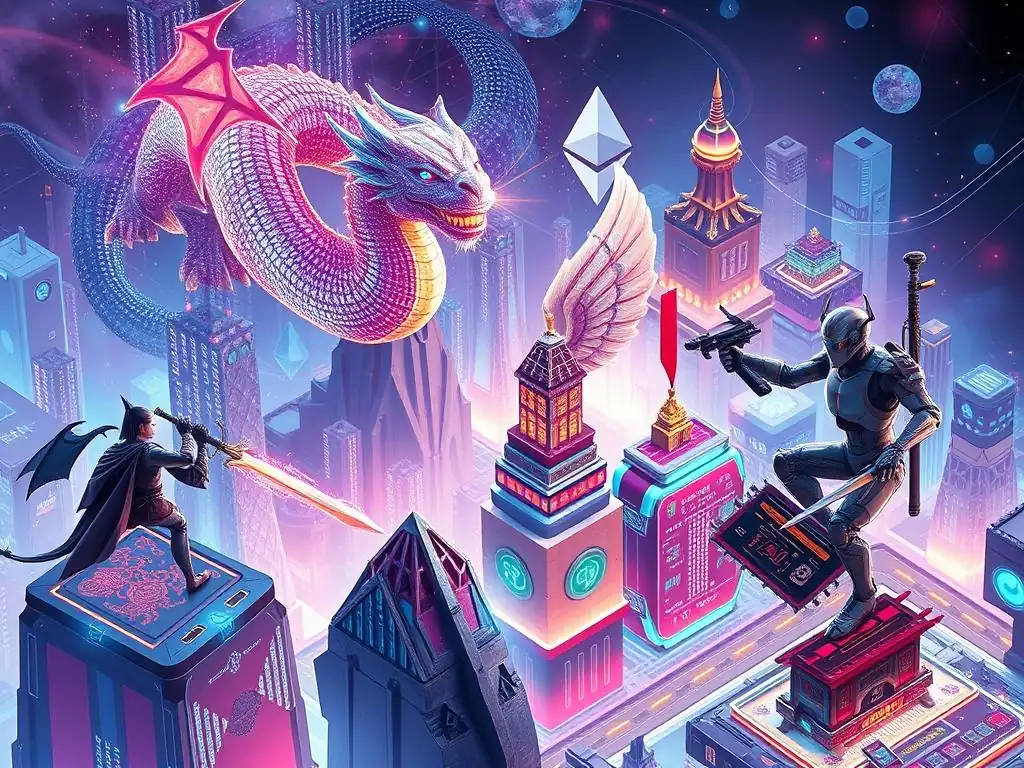
Welcome to Blockchain Trends, your gateway to understanding the revolutionary impact of blockchain technology beyond the headlines. Dive into a world of decentralized finance, enterprise solutions, and the evolving regulatory landscape.
Are you ready to discover how blockchain is reshaping the gaming industry? This week, we explore how blockchain is being used to create unique gaming experiences. From verifiable scarcity to player-owned assets, unlock the potential of decentralized gaming and see what the future holds. Intrigued? Let's begin!
How Blockchain is Revolutionizing Gaming
- Blockchain Gaming: A New Paradigm of Player Empowerment
- Transforming Gaming with Blockchain Technology: Key Applications
- Blockchain Gaming Innovations: Examples and Use Cases
- The Future of Blockchain Gaming: Beyond Innovation
- Conclusion: Blockchain's Impact on the Future of Gaming
-
Frequently Asked Questions
- How does blockchain technology enhance gaming beyond traditional methods?
- What are some examples of unique experiences made possible by blockchain in gaming?
- What is the significance of NFTs (Non-Fungible Tokens) in blockchain gaming?
- How is blockchain influencing the development and distribution of games?
- What are the potential challenges and future prospects of blockchain gaming?
- Final Reflection: Unlocking Gaming's Potential with Blockchain
- Ignite Your Game: Dive Deeper into Blockchain Gaming!
Blockchain Gaming: A New Paradigm of Player Empowerment
Exploring the Fusion of Blockchain Technology and Gaming
Blockchain technology, initially recognized for its role in cryptocurrencies, is now extending its transformative capabilities into the gaming industry. This fusion is not merely about integrating digital currencies into games; it's about fundamentally reshaping the gaming experience by introducing decentralization, transparency, and player empowerment.
The core concept revolves around leveraging blockchain's inherent properties – immutability, security, and distributed ledgers – to create gaming ecosystems that are more player-centric and less reliant on centralized game developers or publishers. This shift promises to address long-standing issues within the traditional gaming model, such as the lack of true ownership of in-game assets and limited opportunities for players to benefit from their gaming efforts.
The integration of blockchain into gaming represents a significant evolution from the traditional gaming landscape. Historically, in-game assets and currencies have been controlled entirely by game companies, giving players limited rights and no real-world value for their investments of time and money. Blockchain gaming seeks to overturn this paradigm by granting players genuine ownership of their digital assets.
This is achieved through the use of non-fungible tokens (NFTs), which are unique digital assets secured on a blockchain. This technological shift is paving the way for innovative gaming experiences that prioritize player agency and economic participation, marking a new era in digital entertainment.
Defining Innovative Gaming Experiences Enabled by Blockchain
Blockchain technology unlocks a spectrum of innovative gaming experiences that were previously unattainable in traditional gaming models. One of the most significant innovations is the concept of true digital ownership. Players can now own unique in-game items, characters, or even virtual land as NFTs, which they can freely trade, sell, or use across different compatible games and platforms.
This contrasts sharply with traditional games where in-game purchases are essentially licenses, revocable by the game publisher, and hold no value outside of the game itself. Blockchain facilitates a decentralized gaming ecosystem where players have genuine control over their digital assets, creating a tangible link between their gaming achievements and real-world value.
Furthermore, blockchain empowers the development of play-and-earn (P&E) gaming models. These models incentivize players to participate and contribute to the game ecosystem by rewarding them with cryptocurrency or NFTs that have real-world value. This shifts the traditional gaming dynamic from a purely entertainment-focused model to one where players can potentially earn income or build valuable digital asset portfolios through gameplay.
This approach has gained significant traction, particularly in regions where traditional income opportunities are limited, showcasing the transformative potential of blockchain gaming to create new economic opportunities within the digital realm. The combination of true ownership and play-and-earn mechanics is redefining what "unique gaming experiences" mean, fostering a more engaging and rewarding environment for players worldwide.
Transforming Gaming with Blockchain Technology: Key Applications
True Ownership of In-Game Assets: A Fundamental Shift
Blockchain-Based NFTs for Unique In-Game Items
The cornerstone of blockchain gaming's revolution lies in the application of Non-Fungible Tokens (NFTs) to represent in-game assets. NFTs are unique digital tokens that exist on a blockchain, proving verifiable ownership and scarcity. In gaming, this translates to players owning unique swords, characters, skins, virtual land parcels, and other in-game items as NFTs.
Unlike traditional in-game items that are tied to a specific game and controlled by the game developer, blockchain-based NFTs are owned by the player and exist independently on the blockchain. This means players have the freedom to trade, sell, or even lend their NFTs on open marketplaces, effectively creating a player-driven economy around in-game assets.
For example, consider a player who invests time and resources to acquire a rare sword in a traditional MMORPG. If the game shuts down or the player decides to move to a different game, that sword loses all its value and utility. However, if that sword was an NFT, the player would retain ownership of it even outside of the game.
They could potentially sell it to another player, use it in a different compatible game (if interoperability is supported), or simply hold it as a collectible. This fundamental shift from licensed in-game items to player-owned NFTs is a core element of the unique experiences blockchain gaming offers.
Empowering Players Through Decentralized Asset Management
Decentralized asset management, facilitated by blockchain, puts players in control of their gaming assets in a way never before possible. Traditionally, players are reliant on centralized game servers and company policies for the management and security of their in-game possessions. With blockchain, players manage their NFTs through their own crypto wallets, using private keys to control access and ownership.
This removes the dependency on a central authority and mitigates risks associated with account hacking or game server failures. The transparency of the blockchain also ensures that ownership records are publicly verifiable and immutable, fostering trust and security within the gaming ecosystem.
This empowerment extends beyond just ownership; it also impacts how players interact with the game economy. Decentralized marketplaces for NFTs allow players to trade directly with each other, bypassing centralized in-game stores that often take a significant cut of transactions. This peer-to-peer trading fosters a more equitable and efficient market for in-game assets, benefiting both buyers and sellers. Furthermore, the decentralized nature of blockchain can facilitate community-driven game development and governance, where players have a greater say in the direction of the game and how in-game assets are managed, further enhancing the sense of ownership and participation.
Play-and-Earn (P&E) Gaming: Earning Rewards Through Gameplay
Understanding the Mechanics of Play-and-Earn Models
Play-and-earn (P&E) gaming models represent a paradigm shift in how players interact with games, turning gameplay into a potential source of income. These models typically integrate cryptocurrencies and NFTs as rewards for in-game activities, such as winning battles, completing quests, or contributing to the game ecosystem. Players can earn these rewards through skill-based gameplay, strategic decision-making, or by investing time and effort into developing their in-game assets. The earned cryptocurrencies or NFTs can then be traded on exchanges or marketplaces for other cryptocurrencies or fiat currencies, providing players with tangible financial benefits for their gaming engagement.
The mechanics of P&E models vary across different games. Some games, like Axie Infinity, reward players with cryptocurrency tokens for winning battles and completing daily quests. These tokens can then be used to breed new in-game creatures (Axies) or traded on exchanges.
Other games might reward players with NFTs for achieving certain milestones or contributing valuable content to the game community. Regardless of the specific mechanics, the core principle of P&E gaming is to create a symbiotic relationship between players and the game economy, where player participation directly contributes to the value and sustainability of the game ecosystem, while simultaneously offering players opportunities for financial gain.
The Growth of Blockchain Games with Reward Potential
The play-and-earn gaming sector has witnessed explosive growth, particularly in regions where traditional income opportunities are limited. Games like Axie Infinity, at its peak, boasted millions of daily active users, with players in countries like the Philippines and Venezuela reportedly earning more from playing the game than from traditional minimum wage jobs. While the P&E market is still evolving and subject to market fluctuations, its impact on the gaming landscape is undeniable. The potential to earn while playing has attracted a new demographic of gamers who are not just looking for entertainment but also seeking economic opportunities.
Data from industry reports indicates significant investment and user growth in the blockchain gaming space. For instance, in 2021, blockchain gaming and metaverse projects attracted over \$4 billion in investment, signaling strong investor confidence in the sector's future. Furthermore, the number of blockchain game projects and active players continues to rise, demonstrating the increasing adoption and mainstream appeal of P&E gaming models. This growth is fueled by the inherent appeal of earning rewards for enjoyable activities, combined with the increasing accessibility and user-friendliness of blockchain technologies.
Enhanced Security and Transparency in Gaming Ecosystems
Combating Fraud and Cheating with Blockchain
Blockchain technology offers robust solutions to combat fraud and cheating, which have been persistent problems in traditional online gaming. The transparent and immutable nature of blockchain transactions provides a verifiable record of all in-game actions and asset ownership. This makes it significantly harder for cheaters to manipulate game data or duplicate in-game items, as any such attempts would be easily detectable and traceable on the blockchain. Smart contracts, self-executing contracts coded on the blockchain, can automate game rules and ensure fair gameplay by eliminating the possibility of human intervention or manipulation.
For example, in traditional online games, account hacking and item duplication are common forms of fraud. Hackers might gain unauthorized access to player accounts or use exploits to create illegitimate copies of rare items. However, in blockchain games, player accounts are secured by cryptographic keys, making unauthorized access much more difficult. Furthermore, because in-game assets are represented as NFTs on the blockchain, attempts to duplicate them would be immediately evident on the publicly auditable ledger. This inherent security and transparency of blockchain significantly reduces the prevalence of fraud and cheating, creating a fairer and more trustworthy gaming environment.
Verifiable Randomness and Fair Gaming Practices on the Blockchain
Blockchain can also enhance fairness in gaming through verifiable randomness. Many games rely on random number generators (RNGs) to determine outcomes, such as loot drops or critical hits. In traditional games, the fairness of these RNGs is often opaque and unverifiable, leading to concerns about potential manipulation. Blockchain-based games can utilize provably fair RNGs, where the randomness is generated using cryptographic methods that can be independently verified by anyone. This ensures that game outcomes are genuinely random and not influenced by the game developers, promoting trust and fairness among players.
Provably fair RNGs typically use cryptographic hash functions and publicly available seeds to generate random numbers. Players can independently verify that the RNG algorithm was executed correctly and that the outcomes were indeed random and unbiased. This level of transparency is particularly important for games that involve elements of chance or gambling, ensuring that players can have confidence in the fairness of the game mechanics. By implementing verifiable randomness and transparent game logic, blockchain gaming fosters a more trustworthy and equitable gaming experience, building player confidence and engagement.
Blockchain Gaming Innovations: Examples and Use Cases
Case Study: Axie Infinity - A Deep Dive
Analyzing Axie Infinity's Implementation of Blockchain Technology
Axie Infinity, developed by Sky Mavis, is a prominent example of a successful blockchain-based play-and-earn game. It utilizes the Ethereum blockchain and its own sidechain, Ronin, to manage in-game assets and transactions. The core gameplay revolves around collecting, breeding, and battling digital creatures called Axies, which are represented as NFTs.
Players earn Smooth Love Potion (SLP) tokens by winning battles and completing daily quests. SLP is an ERC-20 token that can be traded on cryptocurrency exchanges, providing players with a real-world financial incentive to play. Axie Infinity’s use of blockchain technology is deeply integrated into its core mechanics, creating a player-driven economy and a compelling play-and-earn experience.
The game's architecture leverages NFTs for Axies and Land plots, ensuring true ownership for players. The Ronin sidechain was specifically developed to address scalability issues on the Ethereum mainnet, enabling faster and cheaper transactions within the Axie Infinity ecosystem. This was crucial for supporting the high volume of in-game transactions and making the game accessible to a wider audience. Axie Infinity’s strategic use of blockchain, particularly the implementation of NFTs and a dedicated sidechain, demonstrates a sophisticated approach to building a robust and engaging blockchain gaming platform.
Unique Features and Player Experiences in Axie Infinity
Axie Infinity offers several unique features that contribute to its distinct player experiences. The play-and-earn model is central, allowing players to potentially earn income through gameplay. The breeding mechanic, where players can breed their Axies to create new and potentially more valuable Axies, adds a strategic and economic layer to the game.
The community-driven aspect is also significant, with a vibrant ecosystem of players, scholars, and guilds forming around the game. Scholarship programs, where Axie owners lend out Axies to other players (scholars) in exchange for a share of their earnings, emerged as a unique social and economic innovation within the Axie Infinity community.
Furthermore, Axie Infinity's engaging gameplay, combining turn-based battles with creature collection and strategic team building, contributes to its appeal. The visual style and lore of the Axie universe also play a role in attracting and retaining players. While the P&E market is dynamic and Axie Infinity has faced fluctuations in player activity and token prices, its impact on popularizing blockchain gaming and demonstrating the potential of play-and-earn models is undeniable. It served as a blueprint for many subsequent blockchain games and continues to be a significant case study in the space.
Case Study: Decentraland - A Deep Dive
Analyzing Decentraland's Implementation of Blockchain Technology
Decentraland is a decentralized virtual world built on the Ethereum blockchain, representing a pioneering example of a blockchain-based metaverse. It utilizes NFTs to represent parcels of virtual land (LAND) and in-world avatars and items. LAND NFTs are owned by users, granting them full control over their virtual real estate. Decentraland is governed by a Decentralized Autonomous Organization (DAO), giving LAND holders voting rights and a say in the platform's development and policies. The platform's currency, MANA, is an ERC-20 token used for transactions within Decentraland, including purchasing LAND, avatars, and virtual goods and services.
Decentraland's architecture is fully decentralized, with content hosted on a distributed network. This ensures that the virtual world is not controlled by a central entity and is resistant to censorship or shutdowns. The use of blockchain for LAND ownership and governance is fundamental to Decentraland's vision of a user-owned and controlled metaverse. The platform's open and decentralized nature encourages creativity and innovation, allowing users to build experiences, create content, and establish virtual businesses within the metaverse.
Unique Features and Player Experiences in Decentraland
Decentraland offers a unique and immersive player experience centered around user-generated content and virtual ownership. Players can explore a vast virtual world, interact with other users, attend virtual events, play games, and even create and monetize their own experiences on their LAND parcels. The platform's open architecture and decentralized nature foster a sense of community and creativity. Users are empowered to build their own virtual spaces, express themselves through avatars and creations, and participate in a decentralized digital economy.
The absence of a central authority and the emphasis on user ownership are key differentiators for Decentraland. Unlike traditional virtual worlds controlled by corporations, Decentraland is governed by its users, fostering a more democratic and community-driven environment. The platform's potential for virtual commerce, social interaction, and creative expression positions it as a significant player in the evolving metaverse landscape and a compelling example of blockchain's transformative impact on virtual experiences.
Exploring Different Genres and Blockchain Applications
Blockchain Integration in RPGs: Illuvium
Illuvium is an upcoming open-world RPG built on the Ethereum blockchain, showcasing the potential of blockchain integration in complex game genres. It features collectible creatures called Illuvials, represented as NFTs, which players can battle, capture, and evolve. Illuvium aims to offer a AAA-quality gaming experience with stunning graphics and immersive gameplay, combined with the benefits of blockchain-based ownership and play-to-earn mechanics. The game's focus on high-fidelity visuals and deep RPG mechanics demonstrates that blockchain gaming is moving beyond simple browser-based games and into more sophisticated and visually impressive titles.
Illuvium's use of NFTs for Illuvials and in-game items allows for true player ownership and a player-driven economy. The game is designed to be decentralized and community-governed, with plans for a DAO to oversee its future development. Illuvium represents a significant step forward in the evolution of blockchain gaming, demonstrating the technology's potential to enhance the RPG genre and attract a wider audience of gamers.
Blockchain Integration in Strategy Games: Gods Unchained
Gods Unchained is a collectible card trading game built on the Ethereum blockchain, exemplifying blockchain's application in strategy games. It features tradable NFT cards that players use to build decks and compete against each other. Gods Unchained emphasizes skill-based gameplay and strategic deck building, with blockchain ensuring the scarcity and ownership of digital cards. Players can earn GODS tokens, the game's native cryptocurrency, by winning matches and participating in tournaments, creating a play-and-earn element within a competitive strategy game.
The use of blockchain in Gods Unchained addresses issues of digital asset ownership and scarcity that are prevalent in traditional collectible card games. Players truly own their cards as NFTs and can trade them freely outside of the game. This model offers a more transparent and player-centric approach to digital card collecting and trading, enhancing the overall gaming experience for strategy game enthusiasts.
Blockchain Integration in Metaverse Games: The Sandbox
The Sandbox is a user-generated content metaverse platform built on the Ethereum blockchain, showcasing blockchain's versatility in metaverse gaming. It allows users to create, own, and monetize their gaming experiences and assets using NFTs and its native cryptocurrency, SAND. The Sandbox emphasizes user creativity and empowerment, providing tools for users to build virtual worlds, create games, and design unique in-game assets. LAND parcels in The Sandbox are NFTs owned by users, enabling them to build and monetize their virtual real estate within the metaverse.
The Sandbox's focus on user-generated content and blockchain-based ownership creates a vibrant and decentralized metaverse ecosystem. Players can participate in a variety of experiences created by other users, earn SAND tokens through gameplay and content creation, and truly own their virtual creations. The Sandbox exemplifies the potential of blockchain to power user-centric and economically rewarding metaverse experiences.
The Future of Blockchain Gaming: Beyond Innovation
Scalability Solutions for Blockchain Games
Addressing Transaction Speed and Gas Fees
Scalability has been a significant challenge for blockchain gaming, particularly for games built on blockchains like Ethereum, which can experience slow transaction speeds and high gas fees. High gas fees can make microtransactions and frequent in-game actions prohibitively expensive, hindering the user experience and limiting the potential for certain types of gameplay. Addressing these scalability limitations is crucial for the mainstream adoption of blockchain gaming.
Various solutions are being developed to improve the scalability of blockchain gaming, including layer-2 scaling solutions and alternative blockchains. These solutions aim to increase transaction throughput and reduce transaction costs, making blockchain gaming more accessible and user-friendly for a broader audience. Overcoming scalability challenges is essential for enabling complex and high-volume blockchain games to thrive.
Layer-2 Solutions and Sidechains for Gaming
Layer-2 solutions and sidechains offer promising approaches to address scalability issues in blockchain gaming. Layer-2 solutions, such as rollups and state channels, operate on top of the main blockchain, processing transactions off-chain and then batching them onto the main chain. This significantly increases transaction speed and reduces gas fees. Sidechains, like Ronin used by Axie Infinity, are separate blockchains that are connected to the main chain. They can be optimized for specific applications, such as gaming, offering faster transaction speeds and lower fees compared to the main chain.
The adoption of layer-2 solutions and sidechains is becoming increasingly prevalent in blockchain gaming. These technologies enable developers to build more complex and interactive games without being constrained by the scalability limitations of the main blockchain. As these scalability solutions mature and become more widely adopted, they are expected to play a crucial role in the growth and evolution of the blockchain gaming industry.
Interoperability and Cross-Game Asset Utilization
Connecting Different Blockchain Games and Ecosystems
Interoperability, the ability for different blockchain games and ecosystems to interact with each other, is a key area of development for the future of blockchain gaming. Currently, most blockchain games operate in isolation, with in-game assets and currencies confined to their specific ecosystems. Achieving interoperability would unlock significant potential for players and the gaming industry as a whole. Imagine using the same NFT character across multiple different games or trading assets seamlessly between different gaming universes.
Interoperability could create a more interconnected and dynamic gaming metaverse. Standardized NFT formats and cross-chain communication protocols are being developed to facilitate interoperability. Projects focused on building bridges between different blockchain ecosystems are also emerging. Realizing the vision of a truly interoperable blockchain gaming landscape would require collaboration and standardization across the industry, but the potential benefits are substantial.
The Potential of Universal Gaming Assets
The concept of universal gaming assets, NFTs that can be used across multiple different games and platforms, is a compelling vision for the future of blockchain gaming. This would further enhance the value and utility of in-game assets and empower players with greater control over their digital possessions. Imagine owning a digital sword NFT that you could use in an RPG, a strategy game, and even a metaverse platform. This level of asset portability would revolutionize the gaming experience and create new possibilities for player ownership and engagement.
While universal gaming assets are still a nascent concept, the underlying technology and infrastructure are developing rapidly. Standardization efforts and the increasing adoption of interoperability solutions are paving the way for a future where universal gaming assets become a reality. This would represent a significant step towards realizing the full potential of blockchain gaming and creating a truly player-centric and interconnected gaming metaverse.
Challenges and Opportunities in the Blockchain Gaming Space
Regulatory Considerations for Blockchain Games
Regulatory considerations pose both challenges and opportunities for the blockchain gaming space. The evolving regulatory landscape surrounding cryptocurrencies and NFTs is creating uncertainty for game developers and players. Different jurisdictions have varying approaches to regulating digital assets and blockchain-based activities, leading to complexities for global blockchain games. Navigating these regulatory complexities and ensuring compliance is a crucial challenge for the industry.
However, clear and well-defined regulations could also provide greater legitimacy and stability to the blockchain gaming sector. Regulatory frameworks that address issues such as consumer protection, taxation, and anti-money laundering are necessary for fostering trust and mainstream adoption. Engaging with regulators and advocating for sensible regulations that support innovation while protecting consumers is an important opportunity for the blockchain gaming industry to mature and thrive.
Overcoming Barriers to Entry for Mainstream Gamers
Overcoming barriers to entry for mainstream gamers is essential for the widespread adoption of blockchain gaming. Currently, blockchain gaming can be perceived as complex and technically challenging for non-crypto native gamers. Setting up crypto wallets, understanding gas fees, and navigating NFT marketplaces can be intimidating for players accustomed to traditional gaming experiences. Simplifying the user experience and making blockchain gaming more accessible and user-friendly is crucial for attracting mainstream gamers.
Improving user interfaces, streamlining onboarding processes, and abstracting away the complexities of blockchain technology are key steps to overcome these barriers. Developing intuitive wallets, integrated marketplaces within games, and educational resources for new players can make blockchain gaming more approachable and appealing to a wider audience. As blockchain gaming becomes more user-friendly and seamlessly integrates into the traditional gaming experience, it is poised to attract a massive influx of mainstream gamers and realize its full potential.
Conclusion: Blockchain's Impact on the Future of Gaming
Blockchain technology is undeniably revolutionizing the gaming industry, ushering in a new era of player empowerment and unique gaming experiences. By enabling true ownership of in-game assets, fostering play-and-earn models, and enhancing security and transparency, blockchain is fundamentally reshaping the gaming landscape. While challenges related to scalability, interoperability, and regulation remain, the opportunities for innovation and growth in blockchain gaming are immense.
As the technology matures and adoption increases, blockchain is poised to transform gaming into a more player-centric, economically rewarding, and engaging form of entertainment for players worldwide. The future of gaming is being written on the blockchain, promising a more decentralized, equitable, and ultimately, more unique gaming experience for all.
Frequently Asked Questions
How does blockchain technology enhance gaming beyond traditional methods?
Blockchain introduces verifiable scarcity and true ownership of in-game assets, allowing players to trade, sell, and even use them across different games. This creates unique economic models and player experiences.
What are some examples of unique experiences made possible by blockchain in gaming?
Examples include play-to-earn models where players earn cryptocurrency or NFTs by playing, decentralized gaming platforms with community-driven governance, and interoperable game assets that can be used across multiple games.
What is the significance of NFTs (Non-Fungible Tokens) in blockchain gaming?
NFTs represent unique in-game items or characters. They offer irrefutable proof of ownership and allow for scarcity, making them valuable and tradeable on blockchain marketplaces, enriching the gaming experience.
How is blockchain influencing the development and distribution of games?
Blockchain allows for decentralized game development, where communities can contribute to and fund games directly. It also enables transparent distribution channels, bypassing traditional intermediaries and empowering developers.
What are the potential challenges and future prospects of blockchain gaming?
Challenges include scalability issues on some blockchains, regulatory uncertainties, and the need for user-friendly interfaces. However, the future holds immense potential for innovative game designs and player-owned economies.
Final Reflection: Unlocking Gaming's Potential with Blockchain
The journey we've explored through the innovative applications of blockchain in gaming underscores a crucial point: the future of gaming is undeniably intertwined with decentralized technologies. From verifiable scarcity of digital assets to player-owned economies, the potential for blockchain to revolutionize how we interact with and value virtual worlds is only beginning to be realized. The examples we've discussed highlight not just technological advancements, but a fundamental shift in power dynamics, placing more control and ownership in the hands of the players themselves.
This shift has profoundly influenced, and continues to influence, the cultural landscape of gaming. The promise of true digital ownership, the ability to earn while playing, and the creation of truly unique and persistent in-game items are all compelling forces driving adoption and innovation. This is more than just a trend; it's a paradigm shift. The blockchain is more than just a technology; it's a philosophy of decentralization and empowerment that resonates deeply with the gaming community.
This philosophy is reshaping how we think about value, ownership, and community within the digital realm.
Now, as you reflect on the potential of blockchain gaming to create unique experiences, consider its implications for your own engagement with the digital world. How can you, as a player, developer, or investor, contribute to this exciting evolution? Embrace the possibilities, explore the innovative projects emerging, and become an active participant in shaping a future where gaming is not just entertainment, but a powerful force for economic empowerment and creative expression. The future of blockchain gaming is being written now, and your voice matters.
Ignite Your Game: Dive Deeper into Blockchain Gaming!
Thanks for exploring the revolutionary world of blockchain gaming with us! We hope you've gained valuable insights into how this technology is transforming the way we play and interact with games. Now, it's time to take your understanding to the next level:
- Dive into your first blockchain game! Explore marketplaces like Immutable X or Enjin to find a game that sparks your interest and experience the future of gaming firsthand. This is your primary action – get hands-on!
- Uncover hidden gems! Research indie blockchain game developers and support their innovative projects on platforms like Kickstarter or Patreon. You might just discover the next big thing!
- Share your newfound knowledge! Discuss your favorite blockchain games with friends or write a review on your favorite gaming forum to spread the word.
What aspects of blockchain gaming are you most excited to explore further, and what questions do you still have about this emerging landscape?
Leave a Reply