
Building the Open Metaverse: Blockchain's Contribution to Interconnected Virtual Worlds

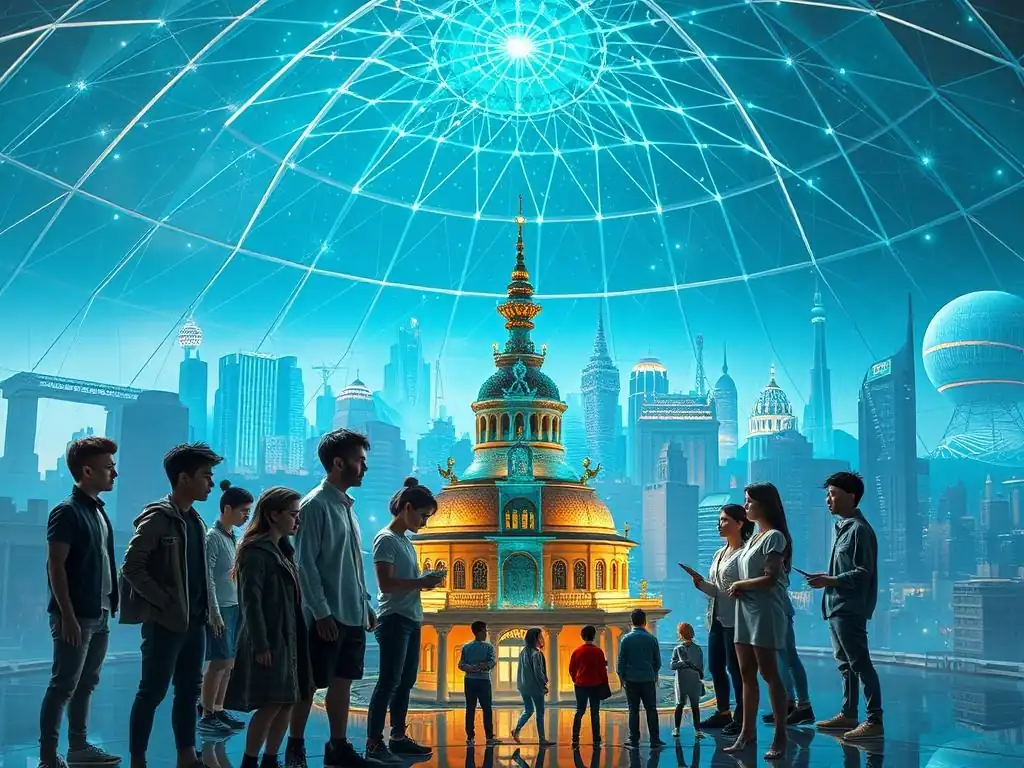
Welcome to Blockchain Trends, your guide to the revolutionary power of blockchain beyond the headlines.
Intrigued by the possibilities of interconnected virtual worlds? Dive into our latest article, " Building the Open Metaverse: Blockchain's Contribution to Interconnected Virtual Worlds," where we uncover the exciting blockchain metaverse development opportunities emerging in the gaming sector and beyond. Discover how blockchain is shaping the future of decentralized experiences and what this means for you. The future is decentralized; let's explore it together.
Building the Open Metaverse: Blockchain's Contribution to Interconnected Virtual Worlds
- Introduction: Exploring Blockchain's Role in Shaping the Metaverse
- Blockchain Metaverse Development Opportunities: A Deep Dive
- Core Blockchain Technologies Powering the Metaverse
- Interoperability Challenges and Solutions for a Seamless Metaverse Experience
- The Economic Impact of Blockchain in the Metaverse
- Security and Scalability Considerations for Blockchain Metaverse Development
- Use Cases: Real-World Examples of Blockchain Metaverse Integration
- Overcoming Barriers to Entry in Blockchain Metaverse Development
- The Future of the Blockchain Metaverse: Trends and Predictions
- Conclusion: Blockchain's Transformative Potential in the Metaverse
-
Frequently Asked Questions
- What role does blockchain play in the development of the metaverse?
- How does blockchain contribute to the interoperability of different metaverse platforms?
- What are some potential blockchain metaverse development opportunities for businesses?
- How does blockchain address concerns about data privacy and security within the metaverse?
- What are the regulatory challenges facing blockchain metaverse development?
- Final Reflection: Weaving the Threads of Reality
- Embrace the Open Metaverse: Become a Builder!
Introduction: Exploring Blockchain's Role in Shaping the Metaverse
The Convergence of Blockchain and the Metaverse: A New Frontier
The metaverse, once a concept confined to science fiction, is rapidly becoming a tangible reality. This evolution is significantly propelled by the integration of blockchain technology, marking a convergence that promises to redefine digital interaction and ownership. Imagine virtual worlds where digital assets are not merely in-game items but verifiable, ownable commodities; where identities are portable and controlled by users, not platforms; and where economies are transparent and decentralized.
This is the transformative potential unlocked by the fusion of blockchain and the metaverse. This convergence is not just about creating immersive 3D environments; it's about building a new paradigm for the internet – one that is more open, user-centric, and economically empowering. The early stages of this integration are already visible, with blockchain projects laying the groundwork for decentralized virtual worlds, and the future holds immense possibilities for innovation and growth in this nascent space.
The intersection of these two powerful technologies represents a new frontier in digital evolution. Blockchain provides the foundational infrastructure for trust, security, and decentralization, addressing critical limitations of existing centralized virtual platforms. Consider the current state of online gaming, where users invest time and resources into in-game assets, yet these assets are ultimately controlled by the game developers and lack true ownership or interoperability.
Blockchain changes this paradigm by enabling the creation of NFTs representing virtual land, avatars, and items, giving users verifiable ownership and control. This shift is not merely technological; it's a philosophical change that empowers individuals within digital ecosystems and fosters a more equitable distribution of value within these virtual economies. This powerful synergy is fueling a wave of blockchain metaverse development opportunities that are attracting significant attention and investment.
Understanding the Open Metaverse Vision: Interoperability and Decentralization
The vision of the "open metaverse" stands in stark contrast to the walled gardens of existing virtual platforms. It envisions a network of interconnected virtual worlds, where users can seamlessly move between experiences, carrying their avatars, assets, and identities with them. This interoperability is a cornerstone of the open metaverse, and blockchain technology is crucial to realizing this vision.
Decentralization is the other critical pillar. Traditional virtual worlds are centrally controlled by corporations, dictating rules, terms of service, and often extracting a significant portion of the value generated within their ecosystems. The open metaverse, powered by blockchain, aims to distribute control and ownership across users and communities, fostering a more democratic and resilient digital environment.
Interoperability in the open metaverse is not just a technical challenge; it's a fundamental requirement for creating a truly immersive and user-centric experience. Imagine a future where your digital avatar, developed and customized in one virtual world, can be seamlessly transported to another, along with your digital possessions and social connections. This level of fluidity requires standardized protocols and technologies that facilitate cross-platform communication and asset transfer.
Blockchain's inherent properties of decentralization and immutability offer a robust foundation for building these interoperable systems. By leveraging blockchain, the open metaverse seeks to break down the silos of existing virtual platforms, creating a more unified and accessible digital landscape, and opening up vast blockchain metaverse development opportunities focused on building bridges between these virtual worlds.
Blockchain Metaverse Development Opportunities: A Deep Dive
Identifying Key Blockchain Metaverse Use Cases and Applications
The landscape of blockchain metaverse development opportunities is incredibly diverse, spanning numerous sectors and applications. One prominent area is virtual land ownership and development. Platforms like Decentraland and The Sandbox exemplify this, allowing users to purchase, own, and develop virtual land represented as NFTs.
These virtual plots can be used for various purposes, from hosting virtual stores and art galleries to creating immersive games and social experiences. Another significant use case lies in play-to-earn (P2E) gaming. Games like Axie Infinity and Illuvium demonstrate how blockchain can empower players by allowing them to earn cryptocurrency and NFTs through gameplay, creating new economic opportunities within virtual worlds.
Beyond gaming and virtual real estate, the metaverse presents opportunities in virtual events and experiences. Imagine attending a virtual concert where tickets are NFTs, providing proof of ownership and potentially offering exclusive access or perks. Or consider virtual conferences and exhibitions where attendees can interact with digital twins of products and services, all underpinned by blockchain for secure ticketing, digital asset ownership, and verifiable attendance. Furthermore, the metaverse is poised to revolutionize digital commerce.
Blockchain enables secure and transparent transactions for virtual goods and services, facilitating the growth of metaverse marketplaces and economies. From virtual fashion and avatars to digital art and music, the blockchain metaverse development opportunities in digital commerce are vast and largely untapped. These diverse use cases highlight the broad potential for developers, creators, and businesses to build innovative applications and experiences within blockchain-powered metaverses.
Unlocking New Economic Models Within the Metaverse with Blockchain
Blockchain technology is instrumental in unlocking entirely new economic models within the metaverse, shifting away from traditional centralized paradigms. One key innovation is the creator economy. Blockchain empowers creators by enabling direct monetization of their digital creations through NFTs. Artists, musicians, and developers can sell their virtual assets directly to users, bypassing intermediaries and retaining a larger share of the value they generate.
This fosters a more equitable and sustainable ecosystem for creators within the metaverse. Play-to-earn (P2E) models are another revolutionary economic model. By integrating blockchain, metaverse platforms can reward users for their participation and contributions, transforming gaming and virtual interactions into potential income streams. This incentivizes user engagement and creates self-sustaining virtual economies.
Decentralized Finance (DeFi) principles are also being integrated into the metaverse, opening up new financial opportunities. Imagine lending and borrowing virtual assets within the metaverse, or participating in decentralized exchanges for metaverse-native tokens. DeFi protocols can provide the financial infrastructure for metaverse economies, enabling users to access financial services directly within virtual worlds. Furthermore, blockchain facilitates the concept of digital ownership, allowing users to truly own their virtual assets and identities.
This ownership is not just about bragging rights; it's about economic empowerment. Users can trade, sell, and utilize their digital assets across different metaverse platforms, creating a more fluid and valuable digital economy. The convergence of blockchain and the metaverse is therefore not just about creating virtual worlds; it's about building new economic systems that are more open, equitable, and user-centric, driving significant blockchain metaverse development opportunities in the process.
Core Blockchain Technologies Powering the Metaverse
NFTs (Non-Fungible Tokens): Establishing Digital Ownership and Scarcity
Non-Fungible Tokens (NFTs) are a cornerstone technology for the blockchain metaverse, providing the essential mechanism for establishing digital ownership and scarcity. Unlike fungible tokens like cryptocurrencies, each NFT is unique and represents a specific digital asset. This uniqueness is crucial for representing virtual land, avatars, in-game items, digital art, and collectibles within the metaverse.
When a user owns an NFT, they have verifiable proof of ownership recorded on the blockchain, making it immutable and transparent. This eliminates the ambiguity and lack of ownership that characterize traditional digital assets within centralized platforms. The scarcity enforced by NFTs also adds value to digital assets, mimicking real-world economies where scarcity often drives demand and price.
Consider the example of virtual land in platforms like Decentraland. Each parcel of virtual land is represented by a unique NFT. This NFT acts as a digital deed, proving ownership of that specific piece of virtual real estate. Because NFTs are stored on the blockchain, ownership is transparently verifiable and cannot be easily duplicated or counterfeited.
This verifiable scarcity and ownership are fundamental for building robust virtual economies. NFTs are not just limited to virtual land; they can represent any unique digital item within the metaverse. From customized avatar skins and rare in-game weapons to digital art pieces displayed in virtual galleries, NFTs are the building blocks for creating a diverse and valuable digital asset ecosystem within the metaverse, driving significant blockchain metaverse development opportunities in NFT creation, marketplaces, and utilities.
Decentralized Identity (DID): Creating User-Controlled Metaverse Avatars and Profiles
Decentralized Identity (DID) technology is another crucial component for building a user-centric and open metaverse. DIDs empower users to control their digital identities, avatars, and profiles, rather than being dictated by centralized platforms. In traditional online platforms, user identities are often siloed and controlled by the platform provider.
DIDs, leveraging blockchain, allow users to create and manage their own identities, storing identity data in a decentralized and secure manner. This gives users greater control over their personal information and how it is used within the metaverse. Imagine having a single, portable digital identity that you can use across multiple virtual worlds and applications, without being locked into a specific platform's ecosystem.
With DIDs, users can create metaverse avatars and profiles that are not tied to a single platform. This means that your carefully crafted digital persona can be seamlessly transported between different virtual environments, maintaining consistency and portability of your digital identity. Furthermore, DIDs enhance user privacy. Users can selectively disclose information to different metaverse applications and services, controlling what data they share and with whom.
This contrasts with centralized platforms that often collect and control vast amounts of user data. By putting users in control of their identities, DIDs are essential for building a more privacy-preserving and user-empowering metaverse. The development and integration of DID solutions within metaverse platforms represent significant blockchain metaverse development opportunities, focusing on user-centric identity management and privacy-preserving technologies.
Blockchain-Based Governance: Empowering Metaverse Communities
Blockchain technology enables the implementation of decentralized governance models within metaverses, empowering communities and fostering more democratic virtual environments. Traditional virtual worlds are often governed by centralized entities, dictating rules, policies, and platform development decisions. Blockchain-based governance, often implemented through Decentralized Autonomous Organizations (DAOs), shifts power to the community. DAOs are organizations governed by rules encoded in smart contracts and executed automatically on the blockchain. In a metaverse context, a DAO could govern aspects of the virtual world, such as land allocation, content moderation, and development roadmaps.
Imagine a metaverse where users who hold native tokens or NFTs have voting rights within a DAO. These users can propose and vote on changes to the metaverse, influencing its direction and evolution. This participatory governance model contrasts sharply with centralized systems where users have limited input. Blockchain-based governance promotes transparency and accountability.
All governance decisions and voting records are publicly auditable on the blockchain, ensuring that the community can monitor and verify the decision-making process. This transparency builds trust and fosters a more equitable governance structure. The development and implementation of DAO-based governance models within metaverses present significant blockchain metaverse development opportunities, focusing on community empowerment, transparent decision-making, and decentralized virtual world management.
Smart Contracts: Automating Interactions and Transactions within Virtual Worlds
Smart contracts are self-executing contracts with the terms of the agreement directly written into code. They are another fundamental blockchain technology powering the metaverse, enabling the automation of interactions and transactions within virtual worlds in a trustless and efficient manner. Smart contracts eliminate the need for intermediaries in many metaverse interactions, reducing friction and enhancing transparency.
For example, when a user purchases an NFT representing virtual land, a smart contract can automatically execute the transaction, transferring ownership of the NFT and the corresponding virtual land to the buyer upon payment. This process is automated, transparent, and secure, without requiring a central authority to oversee the transaction.
Smart contracts can also automate complex interactions within the metaverse. Imagine a virtual game where smart contracts define the rules of gameplay, reward distribution, and asset management. These rules are encoded in the smart contract and executed automatically, ensuring fairness and transparency in the game mechanics. Smart contracts can also facilitate decentralized marketplaces within the metaverse.
Users can list NFTs and virtual goods for sale, and smart contracts can automatically handle the escrow, payment processing, and asset transfer when a sale occurs. This creates efficient and secure marketplaces without relying on centralized intermediaries. The versatility of smart contracts makes them a crucial technology for building dynamic, automated, and trustless metaverse experiences, driving significant blockchain metaverse development opportunities in smart contract development for metaverse applications across various sectors.
Interoperability Challenges and Solutions for a Seamless Metaverse Experience
The Need for Cross-Chain Communication in the Metaverse
Achieving a truly seamless and open metaverse experience hinges on interoperability, and a critical aspect of this is cross-chain communication. Currently, many blockchain-based metaverse projects operate on different blockchain networks. For instance, Decentraland primarily uses Ethereum, while other projects might utilize Solana, Polygon, or other chains.
This fragmentation creates silos, hindering the vision of a unified metaverse where users can seamlessly move assets and identities between different virtual worlds. Cross-chain communication is essential to bridge these blockchain ecosystems and enable interoperability. Without it, the metaverse risks becoming a collection of isolated virtual islands rather than a cohesive and interconnected digital landscape.
The need for cross-chain communication arises from the diversity of blockchain technologies and the varying strengths of different networks. Some blockchains might be optimized for speed and scalability, while others prioritize security or specific functionalities. Metaverse projects may choose different blockchains based on their specific needs and priorities.
However, this choice should not come at the cost of user experience and interoperability. Cross-chain communication technologies, such as bridges and interoperability protocols, are crucial to enable the transfer of assets and data between different blockchains. This would allow users to, for example, use an NFT acquired on one blockchain-based metaverse platform within another metaverse built on a different chain, fostering a more unified and user-friendly metaverse experience and unlocking significant blockchain metaverse development opportunities focused on cross-chain solutions.
Standardizing Metaverse Assets and Data for Interoperability
Beyond cross-chain communication, standardization of metaverse assets and data is paramount for achieving true interoperability. Currently, different metaverse platforms often utilize proprietary formats and standards for their virtual assets, avatars, and data structures. This lack of standardization makes it difficult to seamlessly transfer and utilize assets across different virtual worlds. Imagine purchasing a virtual garment as an NFT for your avatar in one metaverse, but finding that it's incompatible with another metaverse platform due to different asset formats or rendering engines. Standardization is necessary to overcome these compatibility barriers and create a more fluid and interoperable metaverse experience.
Standardization efforts need to address various aspects of metaverse assets and data, including avatar formats, asset metadata, and communication protocols. For example, developing common avatar standards would allow users to seamlessly import their avatars into different virtual worlds without requiring significant adjustments or conversions. Standardizing asset metadata would ensure that information about virtual items, such as their properties and functionalities, is consistently interpreted across different platforms.
Furthermore, standardized communication protocols would facilitate seamless data exchange and interaction between different metaverse applications and services. Industry-wide collaboration and open standards initiatives are crucial to drive standardization efforts and unlock the full potential of metaverse interoperability, creating significant blockchain metaverse development opportunities in standardization technologies and interoperability protocols.
Bridging Different Blockchain Ecosystems for a Unified Metaverse
Bridging different blockchain ecosystems is a technical challenge that needs to be addressed to achieve a unified metaverse. Blockchain bridges are technologies that enable the transfer of assets and data between different blockchain networks. They act as conduits, allowing users to move tokens and NFTs from one blockchain to another.
Various types of blockchain bridges exist, each with its own trade-offs in terms of security, speed, and cost. Some bridges operate in a centralized or federated manner, while others are more decentralized and rely on cryptographic mechanisms to ensure trust and security. Choosing the right bridging solution is crucial for metaverse projects aiming to achieve interoperability.
The development and adoption of robust and secure blockchain bridges are essential for building a unified metaverse. These bridges need to be reliable, efficient, and resistant to attacks. Security is paramount, as vulnerabilities in bridges can lead to significant financial losses and undermine user trust. Scalability is also important, as bridges need to handle increasing volumes of cross-chain transactions as the metaverse grows.
Furthermore, usability is a key consideration. Bridges should be user-friendly and intuitive, making it easy for users to transfer assets between different blockchain ecosystems. Ongoing research and development are focused on improving the security, scalability, and usability of blockchain bridges, driving significant blockchain metaverse development opportunities in bridge technologies and cross-chain infrastructure for the metaverse.
The Economic Impact of Blockchain in the Metaverse
Metaverse Commerce: Enabling Secure and Transparent Transactions
Blockchain technology is poised to revolutionize commerce within the metaverse by enabling secure and transparent transactions. Traditional online commerce often relies on centralized payment processors and intermediaries, which can introduce fees, delays, and security risks. Blockchain offers a decentralized and trustless alternative, facilitating peer-to-peer transactions directly between users within the metaverse. Cryptocurrencies, as native digital currencies of blockchain networks, can be used for seamless and efficient payments for virtual goods and services. Smart contracts can automate transaction processes, ensuring that terms of agreements are executed automatically and transparently.
The use of blockchain in metaverse commerce enhances security by reducing reliance on centralized intermediaries. Transactions are recorded on the immutable blockchain ledger, providing a transparent and auditable record of all economic activity. This transparency builds trust between users and reduces the risk of fraud and disputes.
Furthermore, blockchain can enable microtransactions within the metaverse. The low transaction fees associated with some blockchain networks make it feasible to conduct small-value transactions, opening up new possibilities for micropayments and content monetization within virtual worlds. The development of blockchain-based payment solutions and commerce platforms within the metaverse represents significant blockchain metaverse development opportunities, focusing on secure, transparent, and efficient digital economies.
Decentralized Finance (DeFi) in the Metaverse: Lending, Borrowing, and Yield Farming
Decentralized Finance (DeFi) principles are being increasingly integrated into the metaverse, creating new financial opportunities and economic models within virtual worlds. DeFi protocols, built on blockchain, offer a range of financial services, such as lending, borrowing, and yield farming, without relying on traditional financial institutions. These services can be seamlessly integrated into metaverse platforms, providing users with access to financial tools directly within virtual environments. Imagine lending virtual assets within the metaverse to earn interest, or borrowing against your virtual land NFTs to fund metaverse developments.
DeFi in the metaverse can create more dynamic and sophisticated virtual economies. Yield farming protocols can incentivize users to provide liquidity to metaverse marketplaces, earning rewards in return. Decentralized exchanges (DEXs) can facilitate the trading of metaverse-native tokens and NFTs, providing liquidity and price discovery for virtual assets.
Furthermore, DeFi can empower users with greater financial control and ownership within the metaverse. Users can directly manage their virtual assets and participate in DeFi protocols without relying on centralized intermediaries. The integration of DeFi into the metaverse is still in its early stages, but it holds immense potential to transform virtual economies and create new blockchain metaverse development opportunities in DeFi-metaverse integrations, virtual asset lending platforms, and decentralized metaverse financial services.
Creator Economy in the Metaverse: Empowering Artists and Developers
Blockchain is fundamentally reshaping the creator economy within the metaverse, empowering artists, developers, and content creators with new tools for monetization and ownership. Traditional digital content platforms often rely on centralized intermediaries that take a significant share of the revenue generated by creators. Blockchain, particularly NFTs, enables creators to directly monetize their digital creations and retain a larger portion of the value they generate.
Artists can mint their digital art as NFTs and sell them directly to collectors in metaverse marketplaces, bypassing traditional galleries and auction houses. Game developers can create in-game assets as NFTs and allow players to truly own and trade these assets, fostering a more engaging and rewarding gaming experience.
The creator economy in the blockchain metaverse is characterized by greater ownership and control for creators. NFTs provide verifiable proof of ownership and provenance for digital creations, protecting intellectual property and enabling creators to build their brands and reputations. Smart contracts can automate royalty payments to creators, ensuring that they receive a percentage of secondary sales of their NFTs, creating a sustainable revenue stream over time.
Furthermore, blockchain can facilitate new forms of creator-fan interaction and community building. Creators can use NFTs to provide exclusive access to content, experiences, or communities for their fans, fostering stronger relationships and direct engagement. The growth of the creator economy in the metaverse is driving significant blockchain metaverse development opportunities in NFT creation tools, creator platforms, and decentralized marketplaces for digital content.
Security and Scalability Considerations for Blockchain Metaverse Development

Addressing Security Risks in Blockchain-Based Virtual Worlds
While blockchain offers inherent security advantages, blockchain-based metaverses also face specific security risks that need to be addressed. Smart contract vulnerabilities are a primary concern. If smart contracts governing metaverse interactions and asset management contain bugs or flaws, they can be exploited by attackers, leading to theft of funds or assets. Rigorous smart contract auditing and security best practices are crucial to mitigate this risk.
NFT security is another important consideration. While NFTs themselves are secure on the blockchain, the platforms and marketplaces where they are traded can be vulnerable to phishing attacks, social engineering, and other forms of fraud. User education and robust security measures are needed to protect NFT holders.
Data privacy is also a security concern in the metaverse, even with blockchain's decentralization. While blockchain transactions are pseudonymous, metadata associated with metaverse interactions and user profiles can still reveal sensitive information. Privacy-preserving technologies and data encryption techniques are needed to protect user privacy within blockchain metaverses. Furthermore, the interoperability of the metaverse introduces new security challenges.
Cross-chain bridges and interoperability protocols can be potential attack vectors if not properly secured. Robust security audits and monitoring are essential to ensure the safety of cross-chain interactions. Addressing these security risks is paramount for building trust and fostering widespread adoption of blockchain metaverses, creating significant blockchain metaverse development opportunities in metaverse security solutions, smart contract auditing services, and privacy-enhancing technologies.
Scalability Solutions for Handling Mass User Adoption in the Metaverse
Scalability is a critical challenge for blockchain metaverses, particularly as they aim for mass user adoption. Traditional blockchain networks can face limitations in transaction throughput and processing speed, which can become bottlenecks in a metaverse environment with potentially millions of concurrent users and interactions. Scalability solutions are needed to ensure that blockchain metaverses can handle large volumes of transactions and user activity without compromising performance or user experience.
Layer-2 scaling solutions, such as rollups and sidechains, are being explored to improve the scalability of blockchain metaverses. These solutions process transactions off-chain and then periodically batch and submit them to the main blockchain, significantly increasing transaction throughput.
Sharding is another scalability technique that involves dividing the blockchain into smaller, manageable shards, allowing for parallel processing of transactions. This can dramatically increase the overall scalability of the blockchain network. Furthermore, optimizing blockchain protocols and consensus mechanisms can also improve scalability.
Research and development efforts are ongoing to explore and implement various scalability solutions for blockchain metaverses. Choosing the right scalability approach depends on the specific requirements and characteristics of each metaverse project. Addressing scalability limitations is crucial for enabling blockchain metaverses to reach their full potential and accommodate mass user adoption, driving significant blockchain metaverse development opportunities in layer-2 solutions, sharding technologies, and scalable blockchain infrastructure for virtual worlds.
Ensuring Data Privacy and Compliance in the Decentralized Metaverse
Data privacy and regulatory compliance are crucial considerations for the development of decentralized metaverses. While blockchain offers decentralization and transparency, it also raises questions about data privacy and how to comply with existing regulations, such as GDPR and CCPA. In a decentralized metaverse, user data is often distributed across multiple nodes and platforms, making it challenging to apply traditional data privacy regulations. Privacy-enhancing technologies, such as zero-knowledge proofs and homomorphic encryption, are being explored to enable data privacy in decentralized environments. These technologies allow for data processing and verification without revealing the underlying data itself.
Regulatory compliance in the metaverse is still an evolving area. Governments and regulatory bodies are beginning to grapple with the implications of virtual worlds and digital assets. Metaverse developers need to be mindful of existing and emerging regulations related to data privacy, consumer protection, and financial transactions.
Balancing decentralization with regulatory compliance is a key challenge. Finding innovative approaches to data governance and compliance that align with the principles of decentralization is crucial for the long-term sustainability of blockchain metaverses. Addressing data privacy and compliance concerns is not only ethically important but also essential for fostering trust and legitimacy in the blockchain metaverse, creating significant blockchain metaverse development opportunities in privacy-preserving technologies, regulatory compliance solutions, and decentralized data governance frameworks for virtual worlds.
Use Cases: Real-World Examples of Blockchain Metaverse Integration
Blockchain-Based Virtual Land Ownership and Development
Real-world examples of blockchain-based virtual land ownership and development are already emerging, demonstrating the practical applications and potential of this use case. Decentraland, launched in 2020, is one of the pioneering platforms in this space. It allows users to purchase, own, and develop virtual land parcels represented as NFTs called LAND.
These LAND parcels can be used to create various experiences, from virtual stores and casinos to art galleries and social hubs. Land sales in Decentraland have reached significant values, with some parcels selling for hundreds of thousands or even millions of dollars, indicating the growing demand for virtual real estate in blockchain metaverses.
The Sandbox is another prominent example, offering a user-generated content platform built on blockchain. It also utilizes NFTs for virtual land ownership (LAND) and in-game assets (ASSETS). Users can create, own, and monetize their gaming experiences and creations within The Sandbox metaverse.
Brands and celebrities are also entering these virtual worlds, purchasing virtual land to establish a presence in the metaverse. For example, Adidas has partnered with The Sandbox and owns virtual land in the platform. These real-world examples showcase the growing adoption and economic activity within blockchain-based virtual land platforms, validating the potential of blockchain metaverse development opportunities in virtual real estate and metaverse land economies.
Play-to-Earn (P2E) Gaming Models and the Metaverse
Play-to-earn (P2E) gaming models are gaining traction within the metaverse, showcasing how blockchain can transform gaming economies and empower players. Axie Infinity, launched in 2018, is a prominent example of a P2E game built on blockchain. Players collect, breed, and battle digital creatures called Axies, which are NFTs.
Players can earn cryptocurrency (AXS and SLP) by playing the game, which can then be traded on cryptocurrency exchanges. Axie Infinity has demonstrated the potential of P2E models to create new economic opportunities for players, particularly in developing countries. At its peak, some players were reportedly earning more than the average monthly wage in their regions by playing Axie Infinity.
Illuvium is another highly anticipated blockchain-based P2E game set in an open-world metaverse. Players explore a vast virtual world, collect creatures called Illuvials (NFTs), and battle other players. Illuvium aims to offer a AAA-quality gaming experience combined with blockchain-based ownership and P2E mechanics. These examples illustrate the growing trend of P2E gaming within the metaverse, demonstrating how blockchain can create more engaging and economically rewarding gaming experiences for players, fostering significant blockchain metaverse development opportunities in P2E game development, metaverse gaming platforms, and blockchain-based gaming economies.
Metaverse Events and Experiences Powered by Blockchain
Metaverse events and experiences powered by blockchain are emerging as innovative ways to engage audiences and create immersive virtual interactions. Virtual concerts are a prominent example. Artists like Ariana Grande and Travis Scott have hosted virtual concerts within platforms like Fortnite and Roblox, attracting millions of viewers. Blockchain can enhance these virtual concerts by utilizing NFTs for ticketing and exclusive access.
NFT tickets can provide proof of ownership, prevent counterfeiting, and potentially offer additional perks, such as backstage passes or virtual merchandise. Metaverse conferences and exhibitions are also leveraging blockchain. Virtual events can utilize blockchain for secure registration, verifiable attendance, and digital asset ownership for exhibitors and attendees.
Art exhibitions in the metaverse are another growing trend. Virtual galleries can showcase digital art NFTs, allowing artists to reach a global audience and collectors to acquire and display digital art pieces. Blockchain ensures the provenance and authenticity of digital art, making it a viable asset class within the metaverse. These examples demonstrate the diverse applications of blockchain in powering metaverse events and experiences, highlighting the potential for blockchain metaverse development opportunities in virtual event platforms, NFT ticketing solutions, and blockchain-based metaverse experiences across various industries.
Overcoming Barriers to Entry in Blockchain Metaverse Development
Addressing Technical Complexity and Development Costs
Technical complexity and development costs are significant barriers to entry in blockchain metaverse development. Building blockchain-based metaverses requires expertise in various technologies, including blockchain development, smart contract programming, 3D modeling, game development, and virtual reality/augmented reality technologies. Finding developers with the necessary skillsets can be challenging and costly. Furthermore, developing robust and scalable blockchain infrastructure for metaverses can be expensive, requiring significant investment in hardware, software, and security. The cost of deploying and maintaining blockchain networks, developing smart contracts, and creating high-quality 3D virtual environments can be substantial, particularly for smaller teams and independent developers.
To address technical complexity, developers can leverage existing blockchain development platforms and tools, such as SDKs (Software Development Kits) and APIs (Application Programming Interfaces). These tools can simplify the development process and reduce the learning curve for developers entering the blockchain metaverse space. Open-source libraries and frameworks can also help to reduce development costs and accelerate innovation.
Cloud-based blockchain services can lower infrastructure costs and simplify deployment. Furthermore, fostering collaboration and knowledge sharing within the blockchain metaverse developer community can help to overcome technical challenges and reduce barriers to entry, creating blockchain metaverse development opportunities in developer tools, SDKs, and open-source resources for metaverse development.
Fostering Collaboration and Open-Source Development
Fostering collaboration and open-source development is crucial for accelerating innovation and overcoming barriers to entry in the blockchain metaverse space. Open-source projects can lower development costs, promote transparency, and encourage community contributions. Collaborative efforts between different metaverse projects and developers can lead to the development of shared standards, interoperability protocols, and common infrastructure components.
Open-source metaverse platforms and SDKs can empower developers to build upon existing foundations and contribute to the collective growth of the metaverse ecosystem. Industry consortiums and working groups can facilitate collaboration and standardization efforts, bringing together stakeholders from different sectors to address common challenges and promote interoperability.
Open-source development can also foster greater transparency and trust in blockchain metaverse technologies. By making code publicly available and auditable, open-source projects can enhance security and build community confidence. Furthermore, open-source communities can provide valuable support and resources for developers entering the blockchain metaverse space. Online forums, documentation, and community-driven tutorials can help to lower the learning curve and facilitate knowledge sharing. Encouraging collaboration and supporting open-source initiatives are essential for building a vibrant and accessible blockchain metaverse ecosystem, driving significant blockchain metaverse development opportunities in open-source metaverse projects, collaborative development platforms, and community-driven innovation.
Educating Users and Developers About Blockchain Metaverse Technology
Education is a critical factor in overcoming barriers to entry and fostering wider adoption of blockchain metaverse technology. Many users are still unfamiliar with blockchain concepts, NFTs, and decentralized technologies. Educating users about the benefits and functionalities of blockchain metaverses is essential for driving user adoption and engagement. Educational initiatives should focus on explaining the value proposition of blockchain in the metaverse, such as digital ownership, decentralization, and new economic opportunities. User-friendly interfaces and onboarding experiences are also crucial to make blockchain metaverses accessible to non-technical users.
Similarly, educating developers about blockchain metaverse development is essential for expanding the developer ecosystem and accelerating innovation. Developer education programs, online courses, and workshops can provide developers with the necessary skills and knowledge to build blockchain metaverse applications. Providing clear documentation, tutorials, and developer resources is crucial for lowering the learning curve and encouraging more developers to enter the space.
Furthermore, highlighting the blockchain metaverse development opportunities and the potential for career growth in this emerging field can attract more talent to the blockchain metaverse ecosystem. Investing in user and developer education is crucial for building a thriving and widely adopted blockchain metaverse, driving long-term growth and innovation.
The Future of the Blockchain Metaverse: Trends and Predictions
The Evolution of Virtual Reality (VR) and Augmented Reality (AR) Integration
The future of the blockchain metaverse is inextricably linked to the evolution of Virtual Reality (VR) and Augmented Reality (AR) technologies. VR and AR provide immersive and interactive interfaces for accessing and experiencing the metaverse. As VR and AR technology becomes more advanced, affordable, and accessible, it is expected to play an increasingly important role in shaping the metaverse user experience.
VR headsets will likely become more lightweight, comfortable, and offer higher resolution displays, enhancing the sense of immersion in virtual worlds. AR glasses will become more seamlessly integrated into everyday life, blurring the lines between the physical and digital realms and enabling metaverse experiences to overlay onto the real world.
The integration of blockchain with VR and AR will create even more compelling and interactive metaverse experiences. VR and AR interfaces can provide immersive ways to interact with blockchain-based assets, NFTs, and decentralized applications within the metaverse. Imagine exploring a virtual art gallery in VR and interacting with NFT art pieces, or using AR glasses to view and manage your virtual land portfolio in the real world.
The convergence of blockchain, VR, and AR is expected to drive the next wave of metaverse innovation, creating new forms of immersive entertainment, social interaction, and digital commerce. The development of seamless VR/AR integrations with blockchain metaverses represents significant blockchain metaverse development opportunities in immersive metaverse experiences, VR/AR applications for blockchain assets, and spatial computing in virtual worlds.
The Rise of Decentralized Autonomous Organizations (DAOs) in the Metaverse
Decentralized Autonomous Organizations (DAOs) are predicted to play an increasingly significant role in shaping the future of the blockchain metaverse. DAOs offer a decentralized and community-driven governance model for virtual worlds, empowering users and fostering more democratic metaverse ecosystems. As metaverses evolve and become more complex, centralized governance models may become less efficient and less representative of the diverse interests of metaverse communities. DAOs can provide a more scalable and adaptable governance framework, allowing metaverse communities to collectively make decisions about platform development, content moderation, and resource allocation.
The rise of DAOs in the metaverse could lead to more user-owned and user-governed virtual worlds. Metaverse platforms could transition from centralized control to DAO-based governance, empowering users to have a direct say in the future direction of the metaverse. DAOs can also facilitate decentralized funding and resource allocation within the metaverse.
Community treasuries governed by DAOs can be used to fund metaverse development projects, incentivize content creation, and reward community contributions. The increasing adoption of DAOs in the metaverse is expected to create more democratic, transparent, and user-centric virtual worlds, driving significant blockchain metaverse development opportunities in DAO governance tools, decentralized metaverse management platforms, and community-driven metaverse development initiatives.
Predicting the Long-Term Impact of Blockchain on the Metaverse
Predicting the long-term impact of blockchain on the metaverse is a complex task, but it is likely to be transformative and far-reaching. Blockchain has the potential to fundamentally reshape the internet and digital interactions, and the metaverse is poised to be a major beneficiary of this transformation.
In the long term, blockchain could enable the creation of a truly open, interoperable, and user-owned metaverse, breaking down the silos of existing centralized platforms and empowering individuals within digital ecosystems. The metaverse could become a new frontier for digital economies, creating new forms of work, entertainment, and social interaction, all underpinned by blockchain's principles of decentralization, transparency, and security.
The long-term impact of blockchain on the metaverse could extend beyond virtual worlds and into the physical realm. The metaverse could become increasingly integrated with the real world through AR and other technologies, blurring the lines between the digital and physical. Blockchain-based digital identities and assets could become increasingly integrated into everyday life, impacting various sectors, from finance and commerce to healthcare and education.
The metaverse, powered by blockchain, has the potential to revolutionize how we interact with technology and each other, creating a more immersive, interconnected, and user-empowering digital future. The long-term vision of the blockchain metaverse represents immense blockchain metaverse development opportunities across various sectors, promising a future where virtual and physical worlds are seamlessly integrated and empowered by decentralized technologies.
Conclusion: Blockchain's Transformative Potential in the Metaverse
Blockchain technology is not just an incremental improvement to the metaverse; it's a fundamental catalyst for its transformation. By providing the essential infrastructure for digital ownership, decentralization, and secure transactions, blockchain is unlocking the true potential of the metaverse to become an open, interoperable, and user-centric digital realm. From NFTs establishing digital scarcity and ownership to DAOs empowering metaverse communities with decentralized governance, blockchain technologies are reshaping the very fabric of virtual worlds.
The blockchain metaverse development opportunities are vast and span across diverse sectors, promising innovation in gaming, commerce, social interaction, and beyond. As VR, AR, and blockchain technologies continue to converge and mature, the metaverse is poised to evolve into a transformative digital landscape, fundamentally changing how we live, work, and interact in the digital age. The journey of building the open metaverse is just beginning, and blockchain is undoubtedly the foundational technology driving this exciting evolution.
Frequently Asked Questions
What role does blockchain play in the development of the metaverse?
Blockchain provides the underlying infrastructure for the metaverse, enabling verifiable ownership of digital assets and secure, decentralized transactions. This is crucial for creating a truly open and interoperable metaverse.
How does blockchain contribute to the interoperability of different metaverse platforms?
Blockchain facilitates the seamless transfer of digital assets between different metaverse platforms using standardized protocols. This allows users to maintain ownership and use their assets across various virtual worlds.
What are some potential blockchain metaverse development opportunities for businesses?
Businesses can leverage blockchain to create unique digital assets, build decentralized applications (dApps) within the metaverse, and develop new economic models based on tokenization and decentralized finance (DeFi).
How does blockchain address concerns about data privacy and security within the metaverse?
Blockchain's decentralized and transparent nature enhances data privacy by distributing control. Cryptographic techniques also secure user data and digital assets against unauthorized access.
What are the regulatory challenges facing blockchain metaverse development?
Navigating complex and evolving regulations regarding digital assets, data privacy, and securities laws is a significant challenge. The need for clear and consistent regulatory frameworks is crucial for fostering innovation.
Final Reflection: Weaving the Threads of Reality
The journey we've explored, charting the course of Blockchain metaverse development opportunities, isn't merely a technological forecast; it's a glimpse into a future where digital and physical realities intertwine. The potential for decentralized, interconnected virtual worlds, powered by blockchain, is no longer a distant dream, but a tangible horizon rapidly approaching, promising unprecedented levels of creativity, ownership, and economic empowerment.
The impact of this shift extends far beyond gaming and entertainment. It's about redefining how we interact, collaborate, and even define ourselves in the digital age. The open metaverse, built on blockchain principles, offers a chance to build a more equitable and transparent digital landscape, free from the constraints of centralized control. As William Gibson famously said: The future is already here – it's just not evenly distributed.
Blockchain offers the tools to distribute that future more equitably, empowering creators and users alike.
Now, consider the role you can play in shaping this future. The open metaverse is not a passive experience; it's a collaborative creation. What skills can you bring to the table? How can you contribute to building a more inclusive, innovative, and empowering digital world? The opportunity is here, waiting for you to seize it and weave your own thread into the vibrant tapestry of the blockchain metaverse.
Embrace the Open Metaverse: Become a Builder!
Thanks for exploring the exciting role of blockchain in shaping the open metaverse! Now that you understand its interconnected potential, it's time to turn that knowledge into action and contribute to this innovative space.
Here's how you can get started:
- Dive into Development: Start exploring blockchain-based metaverse platforms. Experiment with their SDKs and begin building your own virtual experiences. This is your opportunity to influence the future!
- Join the Community: Participate in forums, online groups, and meetups dedicated to metaverse development and blockchain technology. Share your ideas, learn from others, and collaborate on innovative projects.
- Spread the Word: Share this article on your social media channels to engage your network and encourage discussions about how blockchain can revolutionize virtual worlds.
What unique virtual experience will you bring to the open metaverse? Let us know in the comments!
Leave a Reply