
Decentralized Gaming: The Future of Player Empowerment

Welcome to Blockchain Trends, your guide to navigating the ever-evolving landscape of blockchain technology.
Intrigued by the possibilities beyond cryptocurrencies? Delve into the transformative potential of blockchain across DeFi, enterprise applications, and the future of decentralized systems. Specifically, are you ready to unlock the secrets of blockchain gaming investment strategies? Discover how smart investments are shaping the future of player empowerment and decentralized gaming – let's explore!
Decentralized Gaming: The Future of Player Empowerment
- Blockchain Gaming Revolution: Understanding the Shift in Power
- Player Empowerment Through Blockchain: Key Benefits
- Exploring Blockchain Gaming Investment Strategies: A Comprehensive Guide
- The Role of NFTs in Decentralized Gaming Economies
- Investing in the Future of Gaming: Blockchain Gaming Investment Strategies
- The Challenges and Opportunities of Decentralized Gaming
- Case Studies: Success Stories in Blockchain Gaming
- Blockchain Gaming Platforms and Ecosystems: An Overview
- The Impact of Blockchain on Traditional Gaming Models
- Conclusion: Embracing the Decentralized Gaming Revolution
-
Frequently Asked Questions
- What are some key blockchain gaming investment strategies discussed in the article?
- How does blockchain technology empower players in the gaming industry?
- Besides asset ownership, what other benefits does blockchain offer to game developers?
- What are some of the regulatory challenges facing the burgeoning blockchain gaming sector?
- What does the future hold for decentralized gaming, and how can investors prepare?
- Final Reflection: Embracing the Decentralized Gaming Revolution
- Unleash Your Inner Gamer: Start Building the Future!
Blockchain Gaming Revolution: Understanding the Shift in Power
The Evolution of Gaming: From Centralized Control to Decentralized Autonomy
The gaming industry has undergone a dramatic transformation since its inception. Early gaming experiences were primarily centralized, existing within arcades or on closed console ecosystems. Players had limited control, with game assets and progress locked within proprietary platforms governed entirely by game developers and publishers.
This centralized model dictated not only gameplay mechanics but also the entire economic structure surrounding games, with players essentially renting access to content and virtual items. Traditional online games, even in their more modern iterations, largely maintain this centralized control. Developers retain ultimate authority over game economies, item distribution, and even player accounts, fostering a system where players are consumers rather than stakeholders.
However, the advent of blockchain technology has presented a paradigm shift, paving the way for decentralized autonomy in gaming. This evolution mirrors broader trends in technology, moving away from centralized authorities towards distributed networks and user-centric control. Decentralized gaming leverages blockchain to distribute power and ownership, placing a greater emphasis on player agency and participation.
This transition represents a fundamental rethinking of the player-developer relationship, envisioning a future where players can truly own their in-game assets, participate in game governance, and even earn real-world value from their gaming experiences. This move towards decentralization is not merely a technological upgrade but a philosophical shift in how we perceive and interact with virtual worlds.
What is Decentralized Gaming and Why Does it Matter?
Decentralized gaming, at its core, utilizes blockchain technology to distribute control and ownership within a gaming ecosystem. Unlike traditional games where all data and assets reside on centralized servers owned by the game company, decentralized games leverage blockchain's distributed ledger to record transactions and manage in-game assets. This decentralization brings several key advantages, fundamentally altering the gaming landscape. It introduces concepts like true digital ownership through Non-Fungible Tokens (NFTs), allowing players to verifiably own in-game items and characters, and the potential for player-driven economies where virtual assets hold real-world value.
The significance of decentralized gaming lies in its potential to empower players. By shifting away from centralized control, it fosters a more equitable and transparent gaming environment. Players are no longer solely consumers but can become active participants in the game's economy and even governance.
Decentralized gaming can mitigate issues common in traditional gaming, such as arbitrary account bans, item duplication, and opaque game economies. Furthermore, it opens up new economic opportunities for players through play-to-earn models, where skilled or dedicated players can earn cryptocurrency or valuable NFTs by participating in the game. This shift towards player empowerment is not just about giving players more control; it’s about creating more engaging, rewarding, and sustainable gaming ecosystems.
Player Empowerment Through Blockchain: Key Benefits
True Ownership of In-Game Assets: NFTs and Game Items
One of the most transformative aspects of decentralized gaming is the introduction of true ownership of in-game assets through Non-Fungible Tokens (NFTs). In traditional gaming, players may "purchase" digital items, but in reality, they are typically acquiring a license to use these items within the game's ecosystem, with the game company retaining ultimate ownership. If the game shuts down, or a player is banned, these assets are often lost.
NFTs change this paradigm by representing unique digital assets on a blockchain. When a player acquires an NFT in a decentralized game, they truly own that asset in a verifiable and immutable way, independent of the game developer.
This true ownership has profound implications. Players can freely trade, sell, or even lend their NFT game assets on open marketplaces, realizing their value outside of the game itself. For example, a rare sword in a blockchain game, represented as an NFT, could be traded on platforms like OpenSea or Magic Eden for cryptocurrency.
This creates a tangible link between in-game effort and real-world value, incentivizing player engagement and fostering a sense of investment in the game world. Moreover, the scarcity and uniqueness of NFTs, often provably limited by smart contracts, can drive the value of these digital collectibles, further enhancing the appeal of decentralized gaming for both players and investors looking at blockchain gaming investment strategies.
Enhanced Security and Transparency in Gaming Transactions
Blockchain technology inherently offers enhanced security and transparency, benefits that directly translate to decentralized gaming. Traditional online games often face issues related to fraud, account hacking, and opaque in-game economies. Transactions are typically processed through centralized servers, making them vulnerable to single points of failure and potential manipulation. Decentralized gaming, leveraging blockchain, distributes transaction validation across a network of nodes, making it significantly more secure and resistant to tampering. Every transaction, whether it's buying an NFT, earning in-game currency, or trading assets, is recorded on the transparent blockchain ledger.
This transparency provides players with verifiable proof of ownership and transaction history. Smart contracts, which are self-executing contracts with the terms of the agreement directly written into code, further enhance security and transparency in decentralized gaming. They automate game mechanics, asset distribution, and economic rules in a predictable and auditable manner.
For instance, the distribution of rewards in a play-to-earn game can be governed by a smart contract, ensuring fairness and preventing developers from arbitrarily altering reward structures. This level of security and transparency builds trust within the gaming community and addresses many of the concerns associated with centralized gaming platforms, making decentralized gaming a more attractive and reliable environment.
Player-Driven Economies: Earning Opportunities in Blockchain Games
Decentralized gaming is pioneering player-driven economies, moving away from the traditional model where game economies are solely controlled and profited from by game developers. Blockchain games often incorporate play-to-earn mechanics, allowing players to earn cryptocurrency or valuable NFTs through gameplay. These earnings are not just virtual points or in-game currency with limited utility; they can often be exchanged for real-world value on cryptocurrency exchanges or NFT marketplaces. This shift creates new economic opportunities for players, transforming gaming from a purely leisure activity into a potential source of income.
The emergence of player-driven economies is fueled by the principles of decentralization and true asset ownership. Players contribute to the game ecosystem through their participation, skill, and investment, and are directly rewarded for their contributions. Examples like Axie Infinity, where players earn Smooth Love Potion (SLP) tokens by playing the game, demonstrate the potential of play-to-earn models.
These tokens can then be traded on cryptocurrency exchanges, providing players with tangible financial rewards. Furthermore, the ownership of valuable NFTs within these games allows players to participate in secondary markets and potentially profit from the appreciation of their digital assets. This economic empowerment is a key driver behind the growing interest in decentralized gaming and blockchain gaming investment strategies, as it aligns player incentives with the long-term success and growth of the game ecosystem.
Exploring Blockchain Gaming Investment Strategies: A Comprehensive Guide
Identifying Promising Blockchain Gaming Projects: Due Diligence is Key
Investing in blockchain gaming presents exciting opportunities, but like any investment, requires careful due diligence. The blockchain gaming space is still relatively nascent and rapidly evolving, meaning there is a mix of high-potential projects and speculative ventures. Identifying promising projects necessitates a thorough evaluation of several key factors. First, understanding the game itself is crucial. Is it fun and engaging? Does it have sustainable gameplay mechanics that will retain players? Analyzing the game's design, target audience, and potential for long-term engagement is paramount.
Beyond the game itself, scrutinizing the project's team and roadmap is essential. A strong and experienced development team with a clear vision and a realistic roadmap increases the likelihood of success. Researching the team's background, past projects, and community engagement can provide valuable insights.
Furthermore, evaluating the project's tokenomics is critical for blockchain gaming investment strategies. Understanding the token's utility within the game, its distribution mechanism, and its supply dynamics can help assess its long-term value potential. Analyzing the project's whitepaper, conducting community research, and even participating in early game testing (if available) are vital steps in performing comprehensive due diligence before investing in any blockchain gaming project.
Diversifying Your Blockchain Gaming Investment Portfolio: Managing Risk
Diversification is a fundamental principle of sound investment management, and it applies equally to blockchain gaming investments. The blockchain gaming market, while promising, is also volatile and carries inherent risks. Concentrating investments in a single project can expose investors to significant losses if that project fails or underperforms. Diversifying across multiple blockchain gaming projects helps mitigate this risk by spreading capital across different assets and reducing the impact of any single investment's poor performance.
A diversified blockchain gaming portfolio could include investments in different types of games (e.g., RPGs, strategy games, virtual worlds), projects built on different blockchains (e.g., Ethereum, Solana, Polygon), and different categories of gaming assets (e.g., game tokens, NFTs, virtual land). Furthermore, diversifying across different stages of project development, from early-stage projects to more established games, can also be a risk management strategy. While early-stage projects may offer higher potential returns, they also carry greater risk.
Balancing investments across different project maturity levels can create a more balanced and resilient portfolio. Ultimately, diversification in blockchain gaming investment strategies is about minimizing exposure to specific project risks and maximizing the potential for capturing gains across the broader gaming ecosystem.
Understanding Different Types of Blockchain Gaming Tokens: Tokenomics Explained
Tokenomics, the study of a cryptocurrency's or token's economics, is crucial for understanding blockchain gaming investment strategies. Blockchain games utilize various types of tokens, each with different functionalities and economic models. Understanding these token types and their tokenomics is essential for making informed investment decisions. Generally, blockchain games employ two primary types of tokens: utility tokens and governance tokens. Utility tokens are used within the game ecosystem for various purposes, such as in-game currency, purchasing NFTs, accessing features, or participating in events. Their value is typically tied to the game's popularity and utility within the ecosystem.
Governance tokens, on the other hand, grant holders voting rights on decisions related to the game's development, economy, or future direction. Holding governance tokens allows players to participate in the game's governance and potentially influence its evolution. The tokenomics of a blockchain game project encompasses factors like token supply, distribution, inflation/deflation mechanisms, and token utility.
Analyzing these factors helps investors understand the token's potential value accrual and its sustainability. For instance, a game with a limited supply token and strong utility within a thriving game ecosystem may have higher potential for long-term value appreciation compared to a token with inflationary tokenomics and limited use cases. Therefore, a thorough understanding of tokenomics is paramount for evaluating the investment potential of blockchain gaming tokens.
The Role of NFTs in Decentralized Gaming Economies
NFT Gaming Assets: Utility, Scarcity, and Value
NFTs are the cornerstone of decentralized gaming economies, transforming in-game assets from mere digital trinkets into verifiable, ownable, and tradable digital property. The value of NFT gaming assets stems from a combination of factors: utility, scarcity, and perceived value within the game ecosystem and broader NFT market. Utility refers to the in-game function of the NFT. This could range from cosmetic items to powerful weapons, land ownership, or access to exclusive game features. NFTs with higher utility within the game, meaning they offer tangible gameplay advantages or unique experiences, often command higher value.
Scarcity is another crucial value driver. Many blockchain games employ mechanisms to limit the supply of certain NFTs, creating digital scarcity similar to rare collectibles in the physical world. Provably scarce NFTs, especially those with high utility, tend to be more valuable due to their limited availability.
Finally, perceived value plays a significant role. This is influenced by factors like the game's popularity, the aesthetic appeal of the NFT, its lore or history within the game world, and the overall demand for NFTs in the market. NFT gaming assets, therefore, derive their value from a complex interplay of utility, scarcity, and market perception, making them a unique and potentially valuable asset class within decentralized gaming economies.
Integrating NFTs into Gameplay: Use Cases and Examples
The integration of NFTs into gameplay is diverse and continually evolving, with developers exploring innovative use cases to enhance player experiences and create robust decentralized economies. NFTs are not just limited to being static collectibles; they are being actively integrated into core gameplay mechanics in various ways. One common use case is representing in-game characters or avatars as NFTs.
Examples like CryptoKitties and Axie Infinity showcase how unique NFT characters can be collected, bred, and used in gameplay. Another prevalent use case is representing in-game items as NFTs, such as weapons, armor, vehicles, or virtual land. Games like Decentraland and The Sandbox utilize NFTs for virtual land ownership, allowing players to own, develop, and monetize virtual real estate within their metaverse platforms.
Beyond characters and items, NFTs are also being used to represent access keys to exclusive game content, tournament entries, or even governance rights within decentralized gaming ecosystems. For instance, some games offer NFT passes that grant access to beta testing, exclusive events, or early access to new features. The versatility of NFTs allows developers to create dynamic and engaging gameplay experiences while simultaneously empowering players with true ownership of their in-game assets. The ongoing innovation in NFT integration within gameplay is continuously expanding the possibilities for decentralized gaming and its economic models.
The Future of NFTs in Gaming: Beyond Collectibles
While NFTs initially gained traction as digital collectibles, their future in gaming extends far beyond mere collectibility. The true potential of NFTs lies in their ability to revolutionize game economies, player agency, and interoperability within the gaming industry. Looking ahead, NFTs are poised to become increasingly integral to core gameplay loops, enabling more complex and dynamic game mechanics.
We can anticipate seeing more sophisticated use cases, such as NFTs evolving based on player actions or game events, creating dynamic and personalized digital assets. Imagine an NFT weapon that gains stats and visual modifications based on player achievements or a character NFT that ages and develops unique traits over time.
Furthermore, NFTs hold the promise of greater interoperability between different games and metaverse platforms. Currently, assets are typically locked within specific game ecosystems. However, NFTs could potentially bridge these silos, allowing players to use their assets across multiple compatible games and virtual worlds.
This interoperability could create a more interconnected and open metaverse, where players truly own their digital identities and assets across various online experiences. The future of NFTs in gaming is about moving beyond simple collectibles and leveraging their unique properties to create richer, more player-centric, and interconnected gaming ecosystems, fundamentally reshaping the landscape of digital entertainment and blockchain gaming investment strategies.
Investing in the Future of Gaming: Blockchain Gaming Investment Strategies
Analyzing the Market Trends in Blockchain Gaming Investments
The blockchain gaming market is experiencing rapid growth and evolving trends that are crucial for informed blockchain gaming investment strategies. Analyzing these market trends provides insights into the current state and future direction of the industry, helping investors identify potential opportunities and navigate risks. One prominent trend is the increasing adoption of play-to-earn models, which are attracting a significant influx of players and investors. Games like Axie Infinity and STEPN have demonstrated the potential of these models to create thriving player-driven economies and generate substantial revenue. The continued growth and evolution of play-to-earn are key trends to monitor.
Another significant trend is the growing interest from traditional gaming companies and investors in the blockchain gaming space. Major gaming publishers are exploring blockchain integration, and venture capital firms are increasingly investing in blockchain gaming startups. This institutional interest signals a growing recognition of the transformative potential of blockchain technology in gaming.
Furthermore, the metaverse and virtual world concepts are converging with blockchain gaming, creating immersive and interconnected digital experiences. Projects like Decentraland and The Sandbox are at the forefront of this trend, building decentralized virtual worlds with player-owned assets and economies. Analyzing these market trends, including play-to-earn evolution, institutional adoption, and metaverse convergence, is essential for formulating effective blockchain gaming investment strategies and identifying promising investment opportunities.
Long-Term vs. Short-Term Blockchain Gaming Investment Strategies
Blockchain gaming investments can be approached with both long-term and short-term strategies, each with its own risk-reward profile and investment horizon. Long-term blockchain gaming investment strategies typically focus on projects with strong fundamentals, sustainable gameplay, and long-term growth potential. This approach involves identifying projects with solid teams, robust tokenomics, active communities, and a clear roadmap for future development.
Long-term investors often look for projects that are building enduring gaming ecosystems and are positioned to benefit from the broader adoption of blockchain technology in gaming. This strategy may involve holding game tokens or NFTs for extended periods, anticipating their value appreciation as the game and the overall market mature.
Short-term blockchain gaming investment strategies, on the other hand, often involve more speculative and opportunistic approaches. This may include trading game tokens or NFTs based on short-term market fluctuations, participating in initial game offerings (IGOs) or NFT drops, or capitalizing on hype cycles around new game releases or updates. Short-term strategies are typically higher risk and require active market monitoring and timely execution.
They aim to generate quicker returns but are also susceptible to greater volatility and potential losses. The choice between long-term and short-term blockchain gaming investment strategies depends on an investor's risk tolerance, investment goals, and time horizon. A balanced approach may involve allocating capital to both long-term and short-term opportunities, diversifying risk and potentially maximizing returns across different market conditions.
Mitigating Risks in Blockchain Gaming Investments: Smart Contract Audits
Investing in blockchain gaming, like any crypto-related investment, carries inherent risks. Mitigating these risks is crucial for protecting capital and maximizing investment success. One of the primary risks in blockchain gaming projects is smart contract vulnerabilities. Smart contracts govern the logic and execution of decentralized games, and flaws in their code can lead to exploits, asset losses, or game imbalances. Therefore, ensuring that blockchain gaming projects undergo thorough smart contract audits is a critical risk mitigation strategy. Smart contract audits are conducted by independent security firms that review the code for vulnerabilities, bugs, and potential security flaws.
Investing in projects that have undergone reputable smart contract audits significantly reduces the risk of smart contract-related exploits. Another risk mitigation strategy involves conducting thorough due diligence on the project team, tokenomics, and game design, as previously discussed. Understanding the project's fundamentals and evaluating its long-term sustainability are essential steps in risk management.
Furthermore, portfolio diversification, as mentioned earlier, is a key risk mitigation technique. Spreading investments across multiple projects and asset types reduces the impact of any single project's failure. By prioritizing smart contract audits, conducting thorough due diligence, and diversifying portfolios, investors can effectively mitigate risks associated with blockchain gaming investments and enhance their chances of success in this evolving market.
The Challenges and Opportunities of Decentralized Gaming
Scalability Issues in Blockchain Gaming: Layer-2 Solutions
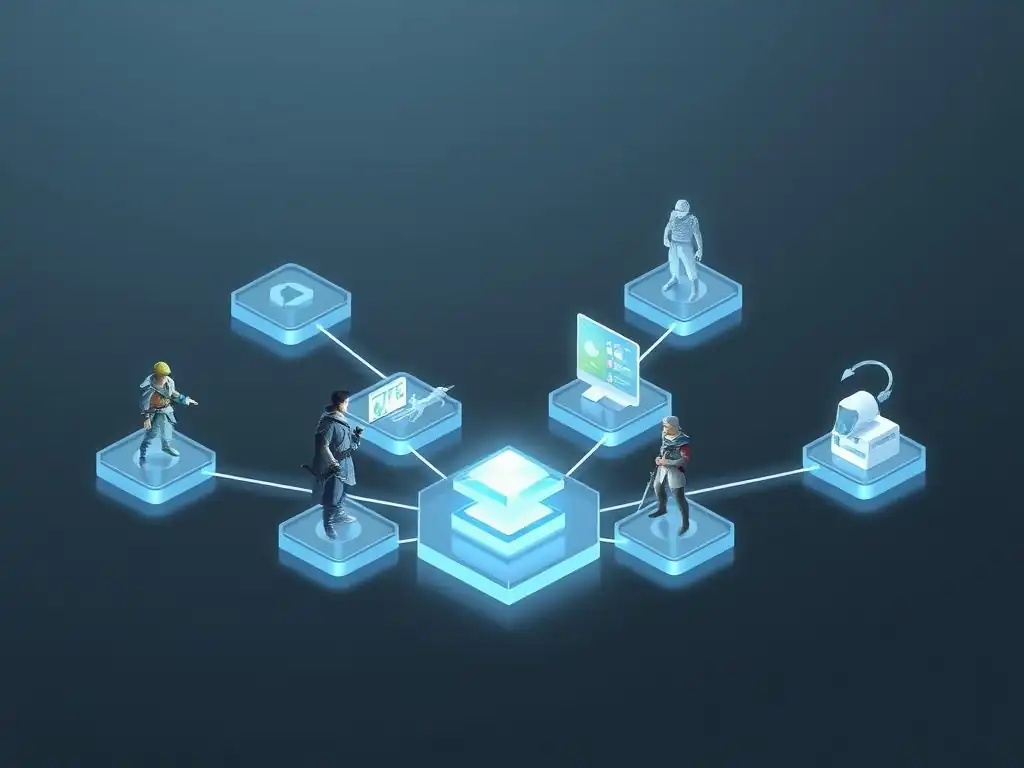
Scalability remains a significant challenge for blockchain gaming, hindering its widespread adoption and ability to handle large player bases and complex gameplay. Traditional blockchains, particularly Ethereum, which many early blockchain games were built on, have limitations in transaction throughput and can suffer from high gas fees, especially during periods of network congestion. These scalability constraints can lead to slow transaction speeds and expensive in-game interactions, negatively impacting the player experience and limiting the potential for complex, real-time gameplay in decentralized games.
Layer-2 scaling solutions are emerging as a promising approach to address these scalability issues in blockchain gaming. Layer-2 solutions are built on top of existing Layer-1 blockchains (like Ethereum) and enable faster and cheaper transactions without compromising security or decentralization. Examples of Layer-2 solutions include sidechains, rollups, and state channels. Sidechains, like Polygon, are independent blockchains that run parallel to the main chain and offer faster transaction processing.
Rollups, such as Optimistic Rollups and ZK-Rollups, bundle multiple transactions off-chain and then submit a summary proof to the main chain, significantly increasing transaction throughput. The adoption of Layer-2 solutions is crucial for scaling blockchain gaming to accommodate mass adoption and enable more complex and engaging gameplay experiences. Projects like Immutable X, specifically designed for NFTs and gaming, leverage Layer-2 technologies to provide scalable and cost-effective solutions for blockchain games.
Regulatory Landscape for Blockchain Gaming: Compliance Considerations
The regulatory landscape for blockchain gaming is still evolving and presents both challenges and uncertainties for developers and investors. Governments worldwide are grappling with how to regulate cryptocurrencies, NFTs, and blockchain-based applications, including gaming. The lack of clear and consistent regulations across jurisdictions creates compliance complexities for blockchain gaming projects operating globally. Regulatory concerns often revolve around issues such as the classification of game tokens and NFTs (are they securities? ), anti-money laundering (AML) compliance, and consumer protection.
Blockchain gaming projects need to navigate these regulatory uncertainties and proactively address compliance considerations. This may involve seeking legal counsel to ensure compliance with relevant regulations in different jurisdictions, implementing KYC (Know Your Customer) and AML procedures, and designing game economies and tokenomics in a way that minimizes regulatory risks. The regulatory landscape is dynamic, and blockchain gaming projects need to stay informed about evolving regulations and adapt their operations accordingly.
Engaging with regulatory bodies and participating in industry discussions can help shape a more favorable and clearer regulatory environment for blockchain gaming in the long term. Navigating the regulatory landscape is a crucial aspect of responsible blockchain gaming development and a key consideration for blockchain gaming investment strategies, as regulatory uncertainty can impact project viability and long-term success.
The Future of Decentralized Gaming: Mass Adoption and Innovation
The future of decentralized gaming is bright, with significant potential for mass adoption and continuous innovation. While challenges like scalability and regulatory uncertainty exist, the underlying benefits of player empowerment, true asset ownership, and player-driven economies are compelling and are driving increasing interest from both players and the traditional gaming industry. Mass adoption of decentralized gaming hinges on several factors, including improved user experience, greater accessibility, and the development of high-quality, engaging games that can compete with traditional gaming titles. Layer-2 scaling solutions are crucial for addressing scalability and improving user experience by enabling faster and cheaper transactions.
Innovation in gameplay mechanics, NFT utility, and metaverse integration will also be key drivers of mass adoption. As developers continue to explore the possibilities of blockchain technology, we can expect to see more innovative and compelling decentralized gaming experiences emerge. The convergence of blockchain gaming with the metaverse and Web3 is creating new opportunities for immersive and interconnected digital worlds where players have true ownership and agency.
The long-term vision for decentralized gaming is a future where players are not just consumers but active participants and stakeholders in thriving virtual economies, and blockchain technology is the foundation for a more equitable, transparent, and engaging gaming ecosystem. The ongoing evolution and innovation in this space position decentralized gaming as a significant force in the future of entertainment and a compelling area for blockchain gaming investment strategies.
Case Studies: Success Stories in Blockchain Gaming
Axie Infinity: A Play-to-Earn Phenomenon
Axie Infinity stands out as a pioneering example of a successful play-to-earn blockchain game and a phenomenon that brought mainstream attention to decentralized gaming. Launched in 2018, Axie Infinity is a Pokémon-inspired game where players collect, breed, battle, and trade digital creatures called Axies, represented as NFTs. Its play-to-earn model, driven by the Smooth Love Potion (SLP) and Axie Infinity Shard (AXS) tokens, revolutionized the gaming landscape by allowing players to earn real income through gameplay.
Players earn SLP tokens by playing the game, which can then be sold on cryptocurrency exchanges. AXS is the governance token of the Axie Infinity ecosystem, granting holders voting rights and staking rewards.
Axie Infinity's success can be attributed to its engaging gameplay, strong community, and innovative play-to-earn mechanics. During its peak in 2021, Axie Infinity saw millions of daily active players, particularly in developing countries where the play-to-earn income provided significant economic opportunities. The game demonstrated the potential for blockchain gaming to create new economic models and empower players globally.
While Axie Infinity has faced challenges and market fluctuations, its initial success and impact on the blockchain gaming space are undeniable. It serves as a significant case study for understanding the potential and mechanics of play-to-earn gaming and the dynamics of blockchain gaming investment strategies.
Decentraland: A Thriving Virtual World Economy
Decentraland is a leading example of a decentralized metaverse platform and a successful blockchain gaming project that showcases the potential of virtual world economies built on blockchain. Launched in 2020, Decentraland is a virtual world owned by its users, where players can buy, sell, and develop virtual land represented as NFTs. Within Decentraland, users can create and explore virtual experiences, interact with other players, participate in events, and even conduct business.
The platform is governed by a Decentralized Autonomous Organization (DAO), giving LAND and MANA token holders voting rights over platform decisions. MANA is the native cryptocurrency of Decentraland, used for transactions within the virtual world, including purchasing LAND and virtual goods.
Decentraland has cultivated a thriving virtual economy, with a vibrant community of creators, businesses, and players. Virtual land in Decentraland has become a valuable digital asset, with parcels selling for significant sums. Brands and organizations have established a presence in Decentraland, hosting virtual events, creating interactive experiences, and engaging with users in the metaverse.
Decentraland's success demonstrates the viability of decentralized virtual worlds and the potential for blockchain to power user-owned and user-governed online environments. It provides a compelling case study for understanding the metaverse, virtual land ownership, and the economic opportunities within decentralized virtual worlds, relevant for blockchain gaming investment strategies focused on metaverse platforms.
Lessons Learned from Early Blockchain Gaming Adopters
The early adopters of blockchain gaming, including projects like Axie Infinity and Decentraland, offer valuable lessons for the future development and investment in this space. One key lesson is the importance of creating engaging and fun gameplay experiences. While play-to-earn mechanics and economic incentives are attractive, sustainable blockchain games must prioritize core gameplay that is enjoyable and retains players. Axie Infinity's initial success was driven by its engaging battle mechanics and creature collection aspects, alongside its play-to-earn model. Decentraland's thriving community is built around the creative freedom and social interactions within its virtual world.
Another lesson is the significance of strong community building and governance. Decentralized gaming thrives on active and engaged communities. Projects that foster strong communities, listen to player feedback, and empower players through governance mechanisms are more likely to succeed in the long run. Furthermore, sustainable tokenomics and balanced game economies are crucial.
Early blockchain games have faced challenges related to token inflation, economic imbalances, and the long-term sustainability of play-to-earn models. Learning from these early experiences, future blockchain games need to carefully design their tokenomics and economies to ensure long-term stability and incentivize both players and investors. These lessons learned from early blockchain gaming adopters are invaluable for guiding future development and informing effective blockchain gaming investment strategies.
Blockchain Gaming Platforms and Ecosystems: An Overview
Enjin: Features and Advantages
Enjin is a prominent blockchain gaming platform and ecosystem that provides tools and services for developers to create, integrate, and manage blockchain assets in their games. Established in 2017, Enjin offers a suite of features designed to simplify blockchain adoption for game developers and enhance the gaming experience for players. Key features of Enjin include the Enjin Platform, a comprehensive development platform with APIs and SDKs for integrating blockchain functionality into games; the Enjin Wallet, a secure cryptocurrency wallet designed for gaming assets; and the Enjin Marketplace, a platform for trading Enjin-powered NFTs.
Advantages of using Enjin include its user-friendly development tools, which streamline the process of creating and managing blockchain assets. Enjin also focuses on cross-game asset interoperability, allowing players to potentially use their Enjin-powered NFTs across multiple games within the Enjin ecosystem. The Enjin Coin (ENJ) is the native cryptocurrency of the Enjin ecosystem and is used to back the value of Enjin-powered NFTs.
Enjin has partnered with numerous game developers and projects, fostering a growing ecosystem of blockchain games and applications. Its focus on developer tools, interoperability, and a robust ecosystem makes Enjin a significant platform in the blockchain gaming space and a relevant consideration for blockchain gaming investment strategies focused on platform ecosystems.
Immutable X: Unique Selling Points
Immutable X is a Layer-2 scaling solution specifically designed for NFTs on Ethereum, with a strong focus on gaming and metaverse applications. Developed by Immutable, Immutable X addresses the scalability limitations of Ethereum for NFTs by providing near-instant and gas-free NFT transactions. Its unique selling points center around scalability, gas-free minting and trading, and security. Immutable X utilizes StarkWare's StarkEx technology, a ZK-rollup solution, to achieve high transaction throughput and low costs. This enables blockchain games to offer seamless and affordable NFT experiences to players without the burden of high gas fees on Ethereum.
Immutable X's gas-free NFT minting and trading are particularly attractive for blockchain games, allowing developers to create and distribute large volumes of NFTs without incurring significant costs. Furthermore, Immutable X inherits the security of the underlying Ethereum blockchain while providing enhanced scalability.
It has partnered with numerous prominent blockchain gaming projects and NFT marketplaces, establishing itself as a leading Layer-2 platform for gaming NFTs. Its focus on scalability, gas-free transactions, and security makes Immutable X a compelling platform for blockchain gaming and a key consideration for blockchain gaming investment strategies seeking exposure to Layer-2 scaling solutions within the gaming sector.
Choosing the Right Blockchain Gaming Platform for Investment
Selecting the right blockchain gaming platform for investment depends on various factors, including investment goals, risk tolerance, and understanding of different platform ecosystems. Different platforms offer different features, advantages, and investment opportunities. When evaluating blockchain gaming platforms for investment, consider factors such as the platform's technology, ecosystem, partnerships, and tokenomics. Platforms like Enjin offer a comprehensive ecosystem with developer tools and a focus on cross-game interoperability, while platforms like Immutable X specialize in Layer-2 scaling solutions for NFTs and gaming, addressing scalability and cost issues.
Researching the platform's technology and its underlying scaling solution (if applicable) is crucial. Understanding the platform's ecosystem, including the number of games and projects built on it, and the activity within its marketplace, provides insights into its adoption and growth potential. Evaluating the platform's partnerships and collaborations with game developers and other industry players can indicate its credibility and long-term prospects.
Analyzing the platform's tokenomics and the utility of its native token is also essential for assessing its investment potential. Ultimately, choosing the right blockchain gaming platform for investment requires thorough research, due diligence, and alignment with individual investment strategies and risk preferences.
The Impact of Blockchain on Traditional Gaming Models
How Blockchain is Disrupting Existing Gaming Infrastructure
Blockchain technology is fundamentally disrupting existing gaming infrastructure and challenging traditional gaming models in several key areas. Traditional gaming infrastructure relies heavily on centralized servers and databases controlled by game publishers. Blockchain introduces decentralization, distributing data and control across a network, reducing reliance on single points of failure and empowering players with greater autonomy. Existing gaming economies are typically closed and controlled by game developers, with limited opportunities for players to earn real-world value. Blockchain enables player-driven economies through play-to-earn models and true asset ownership via NFTs, creating new economic paradigms within gaming.
Furthermore, traditional gaming often lacks transparency in areas such as loot box mechanics, item rarity, and transaction history. Blockchain provides transparency and verifiability through its immutable ledger, enhancing trust and accountability within gaming ecosystems. Interoperability is limited in traditional gaming, with assets typically locked within specific game ecosystems.
Blockchain has the potential to foster greater interoperability through NFTs, enabling cross-game asset utilization and the creation of more interconnected metaverse experiences. These disruptions are not merely incremental improvements; they represent a paradigm shift in how games are developed, played, and monetized, challenging the foundations of traditional gaming infrastructure and paving the way for a more player-centric and decentralized future.
The Potential for Collaboration Between Traditional and Blockchain Gaming Companies
The potential for collaboration between traditional and blockchain gaming companies is significant and mutually beneficial, representing a key avenue for the mainstream adoption of blockchain in gaming. Traditional gaming companies possess established game development expertise, large player bases, and marketing infrastructure. Blockchain gaming projects often bring innovative blockchain technology, decentralized economic models, and a focus on player empowerment. Collaboration can leverage the strengths of both sides, bridging the gap between traditional gaming and the emerging blockchain gaming space.
Traditional gaming companies can benefit from integrating blockchain technology into their existing games or developing new blockchain-based titles, tapping into the growing interest in NFTs, play-to-earn, and decentralized economies. Blockchain gaming companies can benefit from the expertise, resources, and player reach of traditional gaming companies, accelerating their growth and mainstream adoption. Collaborations can take various forms, including partnerships for game development, technology integration, or joint ventures.
The convergence of traditional and blockchain gaming is already underway, with several traditional gaming companies exploring blockchain integration and partnerships. This collaboration is crucial for driving innovation, expanding the reach of blockchain gaming, and shaping the future of the industry.
A Look Ahead: The Convergence of Web2 and Web3 Gaming
The future of gaming is increasingly pointing towards a convergence of Web2 and Web3 gaming models, blending the best aspects of both worlds to create a more engaging, equitable, and sustainable gaming ecosystem. Web2 gaming, representing traditional online gaming, excels in user experience, polished gameplay, and large-scale infrastructure. Web3 gaming, powered by blockchain, offers player ownership, decentralized economies, and new forms of player empowerment. The convergence of Web2 and Web3 gaming aims to integrate blockchain elements into traditional gaming frameworks, enhancing player experiences without sacrificing user-friendliness or gameplay quality.
This convergence may involve incorporating NFTs for in-game assets within traditional game structures, integrating play-to-earn mechanics into existing game economies, or leveraging blockchain for enhanced security and transparency. Hybrid models, combining centralized and decentralized elements, are likely to emerge, offering a balance between control and player agency.
The goal is to create gaming experiences that are both fun and engaging for players while also providing them with the benefits of blockchain technology, such as true ownership and economic opportunities. This convergence of Web2 and Web3 gaming represents the next evolution of the gaming industry, promising a more player-centric and innovative future and shaping the landscape for blockchain gaming investment strategies.
Conclusion: Embracing the Decentralized Gaming Revolution
The Future of Player Empowerment in Gaming
The decentralized gaming revolution is fundamentally reshaping the power dynamics within the gaming industry, ushering in an era of unprecedented player empowerment. Traditional gaming models have historically placed control and ownership firmly in the hands of game developers and publishers. Decentralized gaming, powered by blockchain technology, is shifting this paradigm, giving players greater agency, ownership, and economic participation in the games they play. True ownership of in-game assets through NFTs, player-driven economies with play-to-earn mechanics, and decentralized governance are empowering players in ways previously unimaginable in traditional gaming.
This player empowerment is not just about giving players more control; it's about creating more engaging, rewarding, and sustainable gaming ecosystems. Players are becoming active stakeholders in the games they participate in, incentivized to contribute to the game's growth and success. The future of gaming is increasingly player-centric, where players are not just consumers but active participants, owners, and contributors. This shift towards player empowerment is a driving force behind the decentralized gaming revolution and a key factor attracting both players and investors to this evolving space.
Opportunities for Investors in the Blockchain Gaming Space
The blockchain gaming space presents significant opportunities for investors seeking exposure to a rapidly growing and transformative industry. The market is still in its early stages, offering the potential for high growth and early-mover advantages. Blockchain gaming investment strategies can encompass various approaches, from investing in game tokens and NFTs to supporting blockchain gaming platforms and infrastructure projects. Identifying promising blockchain gaming projects requires careful due diligence, focusing on factors such as game design, team, tokenomics, and community. Diversification across multiple projects and asset types is crucial for managing risk in this volatile market.
The long-term potential of blockchain gaming is substantial, driven by the increasing adoption of play-to-earn models, the convergence of gaming with the metaverse, and the growing interest from traditional gaming companies. As the industry matures and technology evolves, new investment opportunities are likely to emerge. Blockchain gaming investment strategies should consider both short-term and long-term horizons, balancing speculative opportunities with investments in fundamentally strong projects positioned for long-term growth. The evolving landscape of blockchain gaming offers a dynamic and potentially lucrative investment frontier for those who understand its underlying trends and navigate its risks effectively.
The Long-Term Vision for Decentralized Gaming and Blockchain Technology
The long-term vision for decentralized gaming extends beyond mere entertainment, envisioning a future where blockchain technology fundamentally transforms how we interact with virtual worlds and digital economies. Decentralized gaming is at the forefront of the broader Web3 movement, pioneering new models of digital ownership, decentralized governance, and user-centric online experiences. The convergence of gaming with the metaverse and blockchain is creating the foundation for interconnected and immersive virtual worlds where players have true ownership of their digital identities and assets, and can participate in open and transparent economies.
In the long term, decentralized gaming could evolve into a significant component of the metaverse, driving innovation in virtual economies, digital ownership, and online social interactions. Blockchain technology provides the infrastructure for building these decentralized virtual worlds, enabling secure and transparent transactions, verifiable digital ownership, and player-driven governance. The long-term vision is a future where decentralized gaming empowers individuals, fosters new economic opportunities, and redefines the relationship between players and virtual worlds. This vision extends beyond gaming itself, potentially influencing other sectors and shaping the future of the digital economy and the internet itself.
Frequently Asked Questions
What are some key blockchain gaming investment strategies discussed in the article?
The article highlights strategies like investing in early-stage game developers leveraging blockchain, focusing on in-game asset tokenization, and exploring platforms facilitating decentralized gaming ecosystems.
How does blockchain technology empower players in the gaming industry?
Blockchain empowers players through true ownership of in-game assets, allowing them to trade, sell, and utilize assets across different games and platforms, creating a more player-centric economy.
Besides asset ownership, what other benefits does blockchain offer to game developers?
Blockchain provides developers with new monetization models like play-to-earn, enhanced security against cheating, and the potential for community-driven game development.
What are some of the regulatory challenges facing the burgeoning blockchain gaming sector?
Regulatory challenges include defining the legal status of in-game tokens, navigating securities laws related to initial game offerings (IGOs), and addressing concerns about anti-money laundering (AML) compliance.
What does the future hold for decentralized gaming, and how can investors prepare?
The future points towards more immersive and interconnected gaming experiences, driven by NFT integration and metaverse development. Investors should focus on diversified portfolios and stay informed about evolving regulations.
Final Reflection: Embracing the Decentralized Gaming Revolution
The exploration of decentralized gaming and its potential for player empowerment culminates in a crucial understanding: blockchain gaming investment strategies are not just about financial gain, but about investing in a paradigm shift. The current landscape, ripe with opportunity and nascent technologies, demands a proactive and informed approach to navigate the complexities and capitalize on the transformative power of decentralized gaming. This isn't merely a trend; it's a fundamental restructuring of the relationship between developers, players, and the games they love.
The rise of decentralized gaming has profoundly impacted the cultural landscape, shifting the power dynamic and fostering a sense of ownership previously unheard of in the gaming world. This movement towards true digital ownership and community governance resonates deeply with a generation seeking authenticity and control. The future of gaming isn't just about better graphics or more immersive worlds; it's about giving players a real stake in the games they play and the communities they build.
This quote encapsulates the core ethos of decentralized gaming, highlighting its potential to revolutionize not only the industry but also the very concept of digital ownership.
As we stand at the precipice of this decentralized future, I invite you to reflect on the implications of this shift. Consider how you can leverage the knowledge gained to not only make informed investment decisions but also to actively participate in shaping the future of gaming. Embrace the opportunity to be a part of a community that values ownership, transparency, and player empowerment. The future of gaming is being written now, and your actions today will help define its trajectory.
Unleash Your Inner Gamer: Start Building the Future!
Thank you for exploring the world of decentralized gaming. We hope you now have a clearer understanding of how blockchain technology is transforming player empowerment and ownership. It's time to turn that knowledge into action. Here's how you can get involved:
- Discover a decentralized game that interests you and actively participate in its ecosystem. Explore various genres, communities, and governance models to find the one that suits you best.
- Share this article with fellow gamers and blockchain enthusiasts to spark conversations about the potential of decentralized gaming. Help spread awareness and build momentum for this exciting new frontier.
- Consider contributing to a decentralized gaming project—whether by providing feedback, creating content, or learning to code and developing new features.
Are you ready to take the leap? Which decentralized game are you most excited to explore next?
Leave a Reply