
How Decentralized Platforms are Transforming Traditional Gaming Models

Welcome to Blockchain Trends, your guide to understanding the revolutionary impact of blockchain technology.
Dive into How Decentralized Platforms are Transforming Traditional Gaming Models and uncover the exciting future of play! We'll explore the key drivers behind blockchain gaming revenue growth and its ripple effects across the industry. Curious to see how decentralized systems are reshaping the gaming landscape? Let's begin!
How Decentralized Platforms are Transforming Traditional Gaming Models
- Introduction: The Rise of Blockchain Gaming and Decentralization
- Traditional Gaming Models: Limitations and Challenges
- Decentralized Gaming Platforms: A Paradigm Shift
- Key Features of Decentralized Gaming Platforms
- Blockchain Gaming Revenue Growth: Analyzing the Numbers
- Transforming Traditional Gaming Models: Specific Examples
- Challenges and Opportunities in Decentralized Gaming
- The Future of Gaming: A Decentralized Vision
- Conclusion: Embracing the Decentralized Gaming Revolution
-
Frequently Asked Questions
- How is blockchain technology impacting the traditional gaming industry?
- What are the main benefits of using blockchain in gaming, specifically concerning revenue?
- How does the concept of "play-to-earn" contribute to the growth of blockchain gaming revenue?
- Are there any regulatory challenges associated with the rising popularity of blockchain gaming?
- What is the future outlook for blockchain gaming and its revenue potential?
- Final Reflection: Embracing the Decentralized Gaming Revolution
- Unveil Your New Gaming Reality!
Introduction: The Rise of Blockchain Gaming and Decentralization
Understanding the Shift: From Centralized to Decentralized Gaming
The gaming industry, for decades, has been dominated by centralized models. In these traditional structures, game developers and publishers hold absolute control over game assets, economies, and player experiences. This means players are essentially renting access to games and their in-game items, with no real ownership or say in the game's direction. Centralized gaming operates much like a walled garden, where all power resides with the gatekeeper. Decisions regarding game updates, item distribution, and even server shutdowns are solely in the hands of the central authority, leaving players with limited agency.
Decentralized gaming, powered by blockchain technology, proposes a fundamental shift in this paradigm. It aims to distribute power and ownership more equitably among participants, especially players. Instead of a single entity controlling all aspects, decentralized platforms leverage distributed ledgers and smart contracts to create transparent and player-centric ecosystems. This transition entails moving away from closed, proprietary systems towards open, permissionless environments where players can truly own their in-game assets, participate in game governance, and even potentially earn cryptocurrency through gameplay. This shift represents a move towards greater player empowerment and a more democratized gaming landscape.
The Growing Market: Blockchain Gaming Revenue Growth and Projections
The burgeoning blockchain gaming sector is demonstrating significant growth, indicating a strong appetite for decentralized gaming experiences. In 2021, the blockchain gaming market generated approximately \$2.3 billion in revenue. This figure, while still a fraction of the overall gaming market, represented a substantial increase compared to previous years and signaled the emerging potential of this niche. Industry analysts project continued exponential blockchain gaming revenue growth in the coming years.
Estimates vary, but reports suggest that the blockchain gaming market could reach valuations exceeding \$50 billion by 2025 and potentially surpass \$100 billion by 2030. This projected growth is fueled by increasing awareness of blockchain technology, the appeal of play-to-earn models, and the desire among gamers for greater control and ownership within the games they play.
Furthermore, venture capital investments in blockchain gaming startups and projects have been steadily rising, demonstrating investor confidence in the long-term viability and profitability of decentralized gaming platforms. This influx of capital is further accelerating innovation and development within the space, contributing to the anticipated surge in blockchain gaming revenue growth.
Traditional Gaming Models: Limitations and Challenges
Control and Ownership: The Problem with Centralized Game Assets
One of the most significant limitations of traditional gaming models is the lack of true ownership for players. In centralized games, in-game assets, whether they are characters, items, or virtual land, are ultimately owned by the game company. Players purchase licenses to use these assets within the game's ecosystem, but they do not possess them in a real sense. This means that if a game shuts down, or if a player's account is banned, all acquired assets are lost, representing a sunk cost with no residual value outside of the game.
This centralized control extends to the in-game economy as well. Game companies can unilaterally alter the scarcity, value, and functionality of in-game items, often with little to no input from the player base. For example, a developer might introduce a new, more powerful item that diminishes the value of previously rare items, or they could change the rules of the game economy, impacting players' progress and investments. This lack of player ownership and control can lead to frustration and a sense of powerlessness, especially for players who invest significant time and resources into a game.
Lack of Interoperability: Siloed Gaming Ecosystems
Traditional gaming operates in largely siloed ecosystems. Each game exists as an isolated entity, with its own assets, currencies, and player base. Items and progress earned in one game cannot typically be transferred or used in another game, even if they are from the same publisher. This creates fragmented gaming experiences and limits the potential for players to build a persistent digital identity across multiple gaming worlds. Players are essentially locked into individual game ecosystems, unable to leverage their achievements or in-game wealth beyond the confines of a specific title.
This lack of interoperability also hinders the development of richer, more interconnected gaming experiences. Imagine a scenario where a sword earned in a fantasy RPG could be used, with different attributes, in a sci-fi strategy game. Traditional models make this virtually impossible. The technical and economic complexities of integrating disparate centralized systems are substantial barriers. This siloed approach limits innovation and prevents the emergence of a truly interconnected metaverse where players can seamlessly move between different gaming experiences and carry their digital assets with them.
Monetization Issues: Exploitation by Centralized Platforms
Traditional gaming monetization models often rely on strategies that can be perceived as exploitative by players. While monetization is necessary to sustain game development and operations, the methods employed in centralized gaming can sometimes prioritize revenue extraction over player satisfaction. Loot boxes, for instance, are a common mechanic where players spend real money for a chance to receive valuable in-game items, often with opaque odds and the potential for gambling-like behavior.
Furthermore, centralized platforms often take a significant cut of transactions within their ecosystems, whether it's from in-app purchases or marketplace sales. This can reduce the earning potential for content creators and players who engage in in-game trading. The power imbalance inherent in centralized systems means that platforms can dictate the terms of engagement and revenue sharing, potentially leading to situations where players feel that their contributions are not fairly rewarded and that the monetization model is designed to maximize platform profits at the expense of the player community.
Decentralized Gaming Platforms: A Paradigm Shift
Blockchain Technology: The Foundation of Decentralized Gaming
Blockchain technology provides the fundamental infrastructure for decentralized gaming platforms, enabling trust, transparency, and security without relying on central authorities. At its core, blockchain is a distributed ledger that records transactions across a network of computers. This distributed nature makes it incredibly difficult to tamper with or alter the recorded data, ensuring immutability and transparency. In the context of gaming, blockchain can be used to track ownership of in-game assets, record game events, and facilitate secure transactions.
Smart contracts, self-executing agreements written in code and stored on the blockchain, further enhance decentralization. They automate processes like asset distribution, reward payouts, and governance mechanisms, eliminating the need for intermediaries and ensuring that rules are enforced transparently and automatically. By leveraging blockchain and smart contracts, decentralized gaming platforms can create ecosystems where players can interact with each other and the game world in a trustless environment, knowing that the rules are fair and consistently applied.
NFTs and Game Assets: True Ownership and Control for Players
Non-Fungible Tokens (NFTs) are a cornerstone of decentralized gaming, representing a revolutionary shift in how in-game assets are owned and managed. NFTs are unique digital assets that are recorded on a blockchain, proving verifiable ownership and scarcity. In decentralized games, in-game items, characters, virtual land, and other digital collectibles can be represented as NFTs. When a player acquires an NFT, they truly own that asset, in the same way they own a physical collectible. This ownership is recorded on the blockchain and is independent of the game developer or platform.
This true ownership empowers players with unprecedented control over their in-game assets. They can freely trade, sell, or gift their NFTs on open marketplaces, outside of the game's immediate ecosystem. This creates secondary markets and potential earning opportunities for players. Furthermore, the scarcity and uniqueness of NFTs can enhance the value and desirability of in-game items, fostering a more robust and player-driven in-game economy. NFTs are thus transforming game assets from mere in-game licenses to tangible digital property owned by the players themselves.
Play-to-Earn (P2E) Mechanics: Rewarding Player Engagement
Play-to-Earn (P2E) mechanics are a defining feature of many decentralized gaming platforms, introducing a novel approach to player engagement and monetization. Unlike traditional gaming models where players primarily spend money, P2E games offer opportunities for players to earn cryptocurrency or valuable NFTs through gameplay. This can be achieved through various activities, such as completing quests, winning battles, participating in in-game economies, or contributing to the game's ecosystem.
P2E models are designed to reward players for their time, skill, and contributions to the game world. By actively participating in the game, players can earn digital assets that have real-world value, which they can then trade or sell on cryptocurrency exchanges or NFT marketplaces.
This creates a symbiotic relationship between players and the game, where player engagement directly contributes to the game's economy and rewards players for their participation. P2E mechanics are attracting a new wave of players to the gaming space, particularly in regions where earning opportunities are limited, and are fundamentally reshaping the economics of gaming by aligning player incentives with game growth and success.
Key Features of Decentralized Gaming Platforms
Transparency and Immutability: Benefits of Blockchain Ledgers
Transparency and immutability, inherent characteristics of blockchain ledgers, offer significant benefits to decentralized gaming platforms. Because all transactions and game events are recorded on a public blockchain, they are transparent and auditable by anyone. This transparency builds trust within the gaming community, as players can verify the fairness of game mechanics, the distribution of rewards, and the integrity of the in-game economy. Players can be confident that the game operates according to its stated rules and that there is no hidden manipulation or unfair advantage.
Immutability ensures that once data is recorded on the blockchain, it cannot be altered or deleted. This protects the integrity of game data and prevents fraudulent activities. For example, the ownership of NFTs is immutably recorded on the blockchain, preventing duplication or theft. This level of security and transparency is difficult to achieve in traditional centralized systems and is a key differentiator of decentralized gaming platforms, fostering a more trustworthy and equitable gaming environment.
Interoperability and Cross-Game Assets: Connecting Gaming Worlds
Decentralized gaming platforms hold the potential to unlock unprecedented interoperability and cross-game asset utilization. By utilizing blockchain technology and standardized NFT formats, different games built on the same or compatible blockchains can potentially allow players to use their assets across multiple gaming worlds. Imagine owning a character NFT that can be used in a variety of different metaverse games, each offering unique gameplay and experiences but recognizing the same underlying asset.
This interoperability can break down the siloed nature of traditional gaming ecosystems and create a more interconnected and persistent metaverse. Players could build a digital identity and accumulate assets that have utility and value across multiple games and virtual worlds. While true cross-game interoperability is still in its early stages of development, the decentralized nature of blockchain technology provides the foundation for realizing this vision, potentially leading to richer, more engaging, and more rewarding gaming experiences for players.
Community Governance and Player Empowerment: Shaping the Future of Games
Decentralized gaming platforms are increasingly embracing community governance models, empowering players to participate in shaping the future of the games they play. Through Decentralized Autonomous Organizations (DAOs) or similar governance mechanisms, players can have a voice in key decisions related to game development, updates, and economic policies. Token holders often have voting rights, allowing them to propose and vote on changes to the game, ensuring that the game evolves in a way that reflects the community's desires.
This shift towards community governance represents a significant departure from traditional gaming, where decisions are made solely by game developers and publishers. Player empowerment through governance fosters a stronger sense of ownership and engagement within the gaming community. It can lead to more player-centric game design, increased transparency in decision-making, and a more collaborative approach to game development, ultimately creating games that are more aligned with the needs and preferences of their player base.
Blockchain Gaming Revenue Growth: Analyzing the Numbers
Market Size and Growth Rate: Current State of Blockchain Gaming
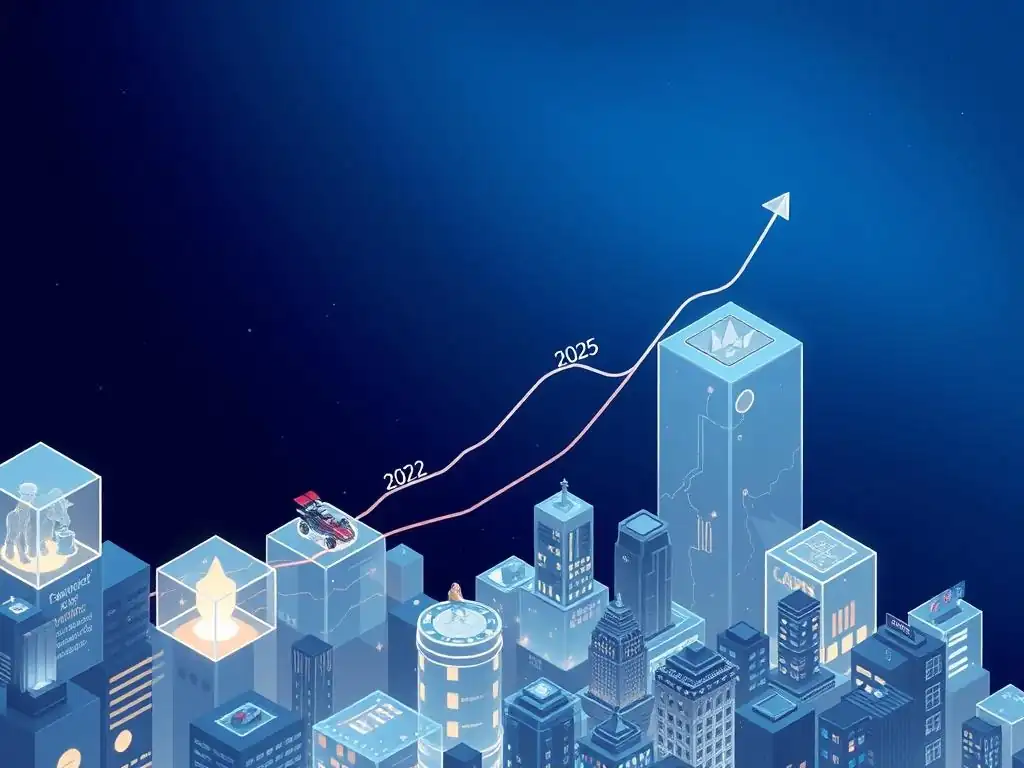
The blockchain gaming market is currently experiencing rapid expansion, demonstrating significant blockchain gaming revenue growth. As mentioned earlier, revenue reached approximately \$2.3 billion in 2021. While specific figures for 2023 and beyond are still being compiled, projections indicate a continued upward trajectory. Industry reports from firms like DappRadar and ChainPlay consistently highlight substantial growth in both the number of blockchain games and the volume of on-chain transactions related to gaming NFTs and cryptocurrencies.
For example, a report by ChainPlay in 2022 indicated that blockchain gaming activity increased by over 2000% in the preceding year. While this growth rate may moderate as the market matures, the overall trend points towards sustained expansion. Factors contributing to this blockchain gaming revenue growth include increasing mainstream awareness of blockchain and NFTs, the growing appeal of play-to-earn models, and the influx of investment capital into the sector. Although still a niche compared to the broader gaming industry, blockchain gaming is establishing itself as a significant and rapidly growing segment.
Investment Trends: Venture Capital and Funding in Decentralized Gaming
Venture capital investment in decentralized gaming is a strong indicator of the sector's potential and future blockchain gaming revenue growth. In 2021 and 2022, billions of dollars flowed into blockchain gaming startups and projects. Major venture capital firms and gaming companies are actively investing in studios developing blockchain games, platforms for NFT trading and gaming infrastructure, and metaverse-related projects with gaming components.
For instance, Animoca Brands, a leading investor and developer in the blockchain gaming space, has raised hundreds of millions of dollars in funding and has invested in numerous blockchain gaming companies. Other notable investors include firms like Andreessen Horowitz (a16z), Sequoia Capital, and Lightspeed Venture Partners, all of whom have made significant bets on the future of decentralized gaming. This substantial inflow of capital is fueling innovation, driving development, and accelerating the growth of the blockchain gaming ecosystem, further contributing to the projected increase in blockchain gaming revenue.
Axie Infinity: A Case Study of Blockchain Game Success and Revenue Generation
Axie Infinity serves as a prominent case study demonstrating the potential for blockchain game success and significant blockchain gaming revenue generation. At its peak in 2021, Axie Infinity became one of the most popular blockchain games globally, attracting millions of players and generating substantial revenue. The game, built on the Ethereum blockchain, utilizes NFTs to represent in-game creatures called Axies, which players can breed, battle, and trade.
Axie Infinity's revenue model is primarily based on marketplace fees for NFT transactions and breeding fees. During its period of peak popularity, the game generated hundreds of millions of dollars in revenue, showcasing the economic viability of blockchain gaming and the play-to-earn model. While Axie Infinity has faced challenges and a decline in player activity since its peak, it remains a significant example of a blockchain game that achieved mainstream success and demonstrated the potential for substantial blockchain gaming revenue growth. Its initial success paved the way for other blockchain games and helped to legitimize the decentralized gaming sector.
Transforming Traditional Gaming Models: Specific Examples
Asset Tokenization: Revolutionizing In-Game Economies
Asset tokenization, facilitated by blockchain and NFTs, is fundamentally revolutionizing in-game economies. Traditional games often feature in-game currencies and items, but these are typically controlled and managed solely by the game developer. Tokenization allows for the creation of in-game assets as unique digital tokens on a blockchain, giving players true ownership and control. This transformation has several profound implications for in-game economies.
Firstly, it enables player-driven economies where players can freely trade, buy, and sell their tokenized assets on open marketplaces, creating a more dynamic and decentralized economic system. Secondly, it introduces scarcity and verifiable ownership, which can increase the value and desirability of in-game items. Finally, it allows for more complex and player-centric economic models, such as play-to-earn, where players can earn cryptocurrency or valuable tokens through their gameplay contributions. Asset tokenization is moving in-game economies away from centralized control and towards more open, player-owned, and potentially more lucrative ecosystems.
Decentralized Autonomous Organizations (DAOs) in Gaming: Player-Led Development
Decentralized Autonomous Organizations (DAOs) are emerging as a powerful tool for fostering player-led development and governance in gaming. DAOs are community-governed entities that operate based on rules encoded in smart contracts on a blockchain. In the context of gaming, DAOs can be used to give players a direct voice in the development and management of games. Token holders within a gaming DAO can vote on proposals related to game updates, new features, economic policies, and even the future direction of the game.
This player-led approach contrasts sharply with traditional centralized game development, where decisions are made by game studios without direct player input. DAOs empower players to become active participants in shaping the games they play, fostering a stronger sense of community ownership and engagement. While still in their early stages of adoption in gaming, DAOs have the potential to revolutionize game development and create more player-centric and community-driven gaming experiences.
Decentralized Item Ownership in Gods Unchained: Addressing Pay-to-Win Issues
Gods Unchained, a collectible card game built on Ethereum, provides a compelling example of decentralized item ownership addressing pay-to-win concerns prevalent in traditional card games. In many traditional online card games, players can purchase card packs with real money, giving them a statistical advantage over players who choose not to spend. This pay-to-win model can create an uneven playing field and discourage players who are unwilling or unable to invest heavily in the game.
Gods Unchained utilizes NFTs to represent game cards, giving players true ownership of their card collections. Players can earn cards through gameplay and also purchase them from other players on open marketplaces. Because cards are NFTs, they have real-world value and can be traded freely.
While players can still purchase card packs directly from the game, the open marketplace and player-owned nature of cards mitigates the pay-to-win aspect. Skilled players can earn valuable cards through gameplay and potentially compete effectively even without spending large sums of money. Gods Unchained demonstrates how decentralized item ownership can create a fairer and more skill-based gaming environment.
Challenges and Opportunities in Decentralized Gaming
Scalability Issues: Overcoming Blockchain Limitations
Scalability remains a significant challenge for decentralized gaming platforms. Many blockchains, particularly early generations like Ethereum, have limitations in transaction throughput and speed. This can lead to network congestion and high transaction fees, especially during periods of high gaming activity. For blockchain games that require frequent on-chain transactions, such as real-time strategy games or fast-paced action games, scalability bottlenecks can severely impact the user experience.
However, significant progress is being made in addressing blockchain scalability. Layer-2 scaling solutions, such as sidechains, rollups, and state channels, are being developed and deployed to increase transaction throughput and reduce fees. Furthermore, newer blockchains specifically designed for gaming and metaverse applications are emerging, offering higher scalability and lower costs. Overcoming scalability limitations is crucial for the widespread adoption of decentralized gaming, and ongoing technological advancements are steadily paving the way for more scalable and performant blockchain gaming platforms.
Security Concerns: Protecting Game Assets and Player Data
Security is paramount in decentralized gaming, as players are entrusting platforms with valuable digital assets and potentially sensitive personal data. While blockchain technology itself is inherently secure, vulnerabilities can arise at various levels, including smart contract code, wallet security, and platform infrastructure. Smart contract exploits, phishing attacks, and wallet compromises are potential threats that can lead to the loss of game assets or personal information.
Robust security practices are essential for decentralized gaming platforms. This includes rigorous smart contract audits, secure wallet management solutions, and proactive security monitoring. Educating players about security best practices, such as using strong passwords, enabling two-factor authentication, and being cautious of phishing attempts, is also crucial. As the decentralized gaming space matures, security will remain a top priority to ensure player trust and protect the integrity of game ecosystems.
The regulatory landscape surrounding blockchain gaming is still evolving and presents a complex set of challenges. Regulations related to cryptocurrencies, NFTs, and online gambling vary significantly across jurisdictions, creating uncertainty and potential compliance hurdles for decentralized gaming platforms. Issues such as the classification of NFTs as securities, the legal status of play-to-earn mechanics, and the taxation of in-game earnings are still being debated and clarified in many regions.
Navigating this complex regulatory landscape requires decentralized gaming platforms to adopt a proactive and compliant approach. This may involve seeking legal counsel to ensure compliance with relevant regulations, implementing KYC/AML (Know Your Customer/Anti-Money Laundering) procedures where necessary, and adapting game mechanics to align with evolving regulatory requirements. Clarity and harmonization in global regulations will be crucial for fostering the sustainable growth and widespread adoption of decentralized gaming.
User Adoption: Making Decentralized Gaming Accessible to the Masses
User adoption is a key challenge for decentralized gaming to transition from a niche market to mainstream acceptance. Many potential players are still unfamiliar with blockchain technology, NFTs, and cryptocurrencies, creating a barrier to entry. The complexity of setting up crypto wallets, understanding blockchain concepts, and navigating decentralized platforms can be daunting for non-technical users.
Improving user experience and simplifying the onboarding process is crucial for driving user adoption. This includes developing user-friendly interfaces, providing clear and accessible educational resources, and streamlining the process of creating wallets and acquiring in-game assets. As decentralized gaming platforms become more user-friendly and accessible, they are likely to attract a broader audience and overcome the current adoption barriers, paving the way for wider mainstream acceptance.
The Future of Gaming: A Decentralized Vision
Metaverse Integration: The Convergence of Blockchain Gaming and Virtual Worlds
The future of gaming is increasingly intertwined with the metaverse, and decentralized gaming is poised to play a central role in this convergence. The metaverse envisions persistent, shared virtual worlds where users can interact, socialize, work, and play. Blockchain technology and decentralized gaming platforms are essential building blocks for creating open, interoperable, and user-owned metaverses.
Decentralized gaming can provide the gaming experiences within these virtual worlds, while blockchain and NFTs can enable ownership of virtual land, avatars, and in-world assets. The interoperability potential of blockchain allows for seamless movement of assets and identities across different metaverse experiences. The convergence of blockchain gaming and the metaverse promises to create immersive, user-centric virtual environments where gaming is not just entertainment but also a part of a broader digital lifestyle, blurring the lines between the physical and virtual realms.
Evolution of Play-to-Earn: Sustainable Gaming Economies
The Play-to-Earn (P2E) model, while revolutionary, has faced criticism regarding its sustainability and potential for economic instability. Early P2E games sometimes struggled with tokenomics that led to inflationary pressures and unsustainable reward systems. The future of P2E is likely to involve an evolution towards more balanced and sustainable gaming economies.
This evolution may include a greater focus on "Play-and-Earn" models, where earning is integrated more organically into enjoyable gameplay loops rather than being the primary focus. It may also involve more sophisticated tokenomic designs that incorporate mechanisms to control inflation, incentivize long-term player engagement, and create diverse utility for in-game assets. Sustainable P2E models will aim to create gaming ecosystems that are not only rewarding for players but also economically viable and resilient over the long term, fostering a more balanced and enduring relationship between play and earning.
Prediction: Increased Focus on Play-and-Own Models and Enhanced User Experience
Looking ahead, the decentralized gaming space is likely to see an increased focus on "Play-and-Own" models and a relentless drive towards enhanced user experience. "Play-and-Own" emphasizes the enjoyment of gameplay alongside the benefits of asset ownership, shifting the focus from purely earning to a more holistic gaming experience. This approach aims to attract a wider audience of gamers who are primarily seeking fun and engaging gameplay, with the added bonus of true digital ownership.
Furthermore, user experience will be paramount for mainstream adoption. Decentralized gaming platforms will need to become more intuitive, user-friendly, and seamless to use, rivaling the ease of use of traditional gaming platforms. Simplifying onboarding, improving wallet integration, and creating more polished and engaging game interfaces will be key priorities. By focusing on "Play-and-Own" models and enhanced user experience, decentralized gaming can broaden its appeal and realize its full potential to transform the gaming industry.
Conclusion: Embracing the Decentralized Gaming Revolution
The Long-Term Impact of Blockchain on the Gaming Industry
The long-term impact of blockchain technology on the gaming industry is poised to be profound and transformative. Decentralized platforms are not merely a niche trend; they represent a fundamental shift in power dynamics, ownership models, and the very nature of gaming experiences. Blockchain is empowering players with true digital ownership, fostering community-driven game development, and creating new economic opportunities within gaming ecosystems.
This technological revolution has the potential to reshape the gaming industry in numerous ways, from creating more equitable and player-centric game economies to enabling interoperable metaverses where gaming is seamlessly integrated into broader virtual worlds. While challenges remain, the momentum behind decentralized gaming is undeniable, and its long-term impact promises to be as significant as the advent of online gaming itself.
Capitalizing on Blockchain Gaming Revenue Growth Opportunities
Capitalizing on blockchain gaming revenue growth opportunities requires a multi-faceted approach. For game developers, embracing decentralized technologies and exploring play-and-own models can unlock new revenue streams and attract a growing audience of blockchain-savvy gamers. For investors, identifying promising blockchain gaming projects and platforms represents a significant opportunity to participate in a rapidly expanding market.
For players, engaging with decentralized games offers the potential to not only enjoy innovative gaming experiences but also to participate in player-owned economies and benefit from the emerging blockchain gaming revenue growth. Understanding the transformative potential of decentralized platforms and strategically engaging with this evolving landscape is key to capitalizing on the burgeoning opportunities within the blockchain gaming revolution.
Frequently Asked Questions
How is blockchain technology impacting the traditional gaming industry?
Blockchain is revolutionizing gaming by introducing decentralized platforms that offer players true ownership of in-game assets. This shifts the power dynamic, allowing players to earn rewards and participate in the game's economy.
What are the main benefits of using blockchain in gaming, specifically concerning revenue?
Blockchain gaming fosters new revenue streams through NFT sales, play-to-earn mechanics, and decentralized marketplaces. This leads to increased player engagement and overall blockchain gaming revenue growth.
How does the concept of "play-to-earn" contribute to the growth of blockchain gaming revenue?
The play-to-earn (P2E) model incentivizes players with cryptocurrency or NFTs, creating a direct financial reward for gameplay. This attracts a broader audience and drives blockchain gaming revenue growth as players invest time and money.
Are there any regulatory challenges associated with the rising popularity of blockchain gaming?
Yes, the regulatory landscape surrounding cryptocurrencies and NFTs is still evolving. Compliance with regulations is crucial for the long-term sustainability and blockchain gaming revenue growth of the industry.
What is the future outlook for blockchain gaming and its revenue potential?
The future looks promising, with ongoing development in infrastructure and a growing acceptance of NFTs and decentralized technologies. We expect significant blockchain gaming revenue growth as the industry matures and more players adopt this model.
Final Reflection: Embracing the Decentralized Gaming Revolution
The exploration of decentralized platforms and their impact on traditional gaming models reveals a profound shift, and its current relevance is undeniable. The projected blockchain gaming revenue growth is not just a statistic; it represents a fundamental reshaping of power dynamics within the industry, empowering players and creators alike in ways previously unimaginable. This transformation is no longer a distant possibility, but a tangible reality unfolding before our eyes, demanding our attention and understanding.
This shift towards decentralized gaming is not merely a technological upgrade; it's a cultural evolution. The ability for players to truly own their in-game assets, participate in the governance of games, and earn real-world value through their engagement is a paradigm shift that resonates deeply with the desire for autonomy and fairness. The future of gaming is not just about playing games; it's about owning them, building them, and sharing in their success.
This sentiment encapsulates the spirit of the decentralized gaming revolution, a movement that promises to democratize the industry and foster a more equitable ecosystem for all.
As we stand at the cusp of this new era, I invite you to reflect on the implications of decentralized gaming for your own life. Consider how these innovative models can empower you as a player, a creator, or simply as a member of a digital community. Embrace the potential of blockchain gaming to unlock new opportunities, foster deeper connections, and redefine the very meaning of play. The future of gaming is being written now, and your participation can help shape a more vibrant, equitable, and rewarding experience for everyone.
Unveil Your New Gaming Reality!
Thanks for exploring how decentralized platforms are reshaping the gaming world! We hope you've gained valuable insights into the exciting potential of blockchain in gaming and how it empowers players. Now, it's time to take your knowledge further and become part of the revolution.
- Dive headfirst into a decentralized game today! Explore platforms like Axie Infinity or Decentraland and experience the future of gaming firsthand.
- Share this article with your gaming community to spark conversations about the future of ownership and player empowerment.
- Research one emerging blockchain gaming project this week and share your thoughts on its potential in the comments.
What are your initial thoughts on how NFTs will affect in-game economies long-term? Share your predictions below!
Leave a Reply