
The Future of Game Monetization: Why PlaytoEarn is Here to Stay

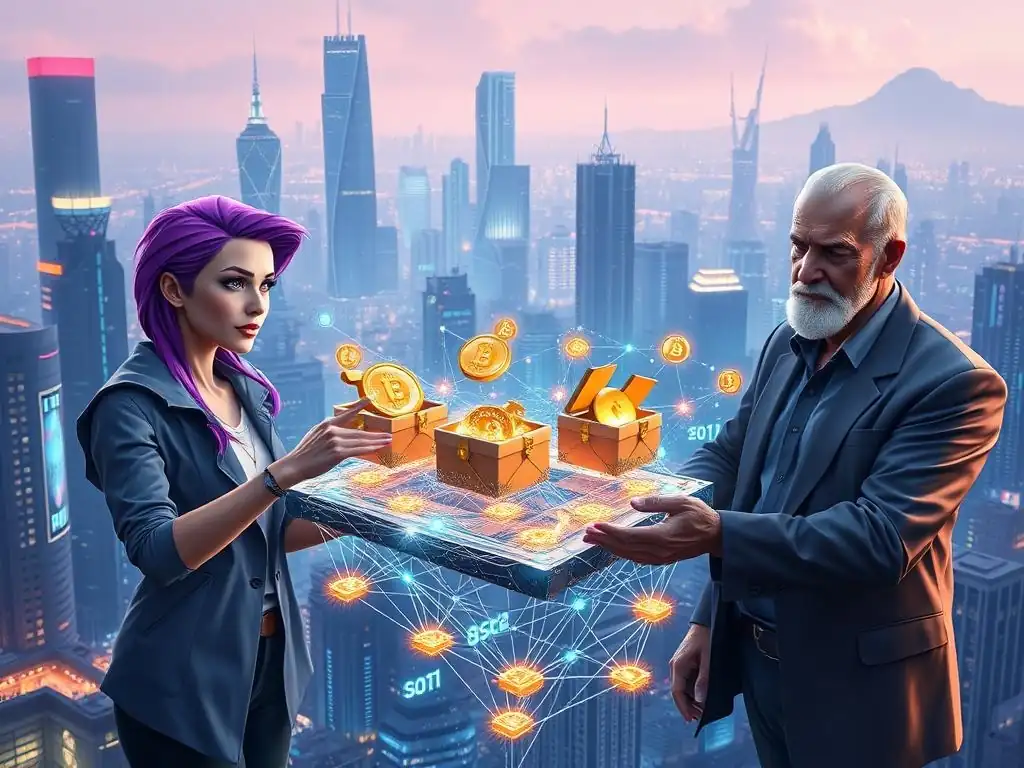
Welcome to Blockchain Trends, your guide to understanding the revolutionary impact of blockchain technology.
Intrigued by the potential of blockchain beyond cryptocurrencies? We are too! Dive in and explore how this technology is reshaping industries, from decentralized finance to enterprise solutions. This week, we're unlocking the secrets of the future of game monetization. Discover why PlaytoEarn blockchain monetization strategies are not just a trend, but a paradigm shift. Ready to level up your understanding? Keep reading to explore the opportunities and challenges that lie ahead in this exciting intersection of gaming and blockchain.
The Future of Game Monetization: Why Play-to-Earn is Here to Stay
- Introduction: The Evolution of Game Monetization and the Rise of Play-to-Earn
- Understanding Play-to-Earn Blockchain Gaming
- Play-to-Earn Blockchain Monetization Strategies: A Deep Dive
- Benefits of Play-to-Earn for Players and Developers
- Addressing the Challenges of Play-to-Earn Gaming
- The Future of Play-to-Earn: Trends and Predictions
- Case Studies: Successful Play-to-Earn Blockchain Games
- Play-to-Earn vs. Other Blockchain Monetization Strategies
- Investing in Play-to-Earn: Opportunities and Risks
- Conclusion: Play-to-Earn as a Sustainable Model for the Future of Gaming
-
Frequently Asked Questions
- What is PlaytoEarn (P2E) and how does it differ from traditional game monetization models?
- How does blockchain technology enable PlaytoEarn models?
- What are some common PlaytoEarn blockchain monetization strategies?
- What are the potential benefits of PlaytoEarn for game developers and players?
- What are the regulatory challenges and future prospects for PlaytoEarn blockchain games?
- Final Reflection: Embracing the PlaytoEarn Revolution
- Embrace the Gaming Revolution: Level Up Your Engagement!
Introduction: The Evolution of Game Monetization and the Rise of Play-to-Earn
From Pay-to-Play to Free-to-Play: A Brief History
The gaming industry has undergone a dramatic transformation in its monetization models over the decades. Initially, the pay-to-play model dominated, requiring players to purchase games upfront, often at a significant cost, to access the full experience. This model, prevalent from the early days of arcades and consoles, limited accessibility to those willing and able to make the initial investment.
Games like Super Mario Bros. or The Legend of Zelda, iconic titles that shaped the industry, were primarily distributed through this model. While successful, it created a barrier for entry for many potential players, and revenue was largely dependent on initial sales figures.
The late 1990s and early 2000s saw the gradual rise of the free-to-play (F2P) model, particularly with the advent of online gaming and massively multiplayer online role-playing games (MMORPGs). Games like RuneScape and MapleStory demonstrated that offering a game for free could attract a much larger player base. Revenue generation shifted to microtransactions, where players could purchase in-game items, cosmetic upgrades, or faster progression.
This model democratized access to gaming, allowing anyone with an internet connection to participate. However, it also introduced debates around "pay-to-win" mechanics and the potential for manipulative monetization tactics, where game design might prioritize spending over player enjoyment. The success of titles like Fortnite and League of Legends cemented free-to-play as a dominant force, showcasing its potential for massive scale and sustained revenue through ongoing player engagement.
The Play-to-Earn Revolution: Empowering Players Through Blockchain
The play-to-earn (P2E) revolution represents the next significant evolution in game monetization, leveraging blockchain technology to fundamentally alter the relationship between players and games. Unlike previous models where players invested time and often money into games without direct financial returns, P2E introduces the concept of earning real-world value through gameplay. This paradigm shift is powered by blockchain's capacity to create verifiable digital scarcity and ownership, typically through non-fungible tokens (NFTs) and cryptocurrencies. Players in P2E ecosystems can earn by participating in game activities, such as winning battles, completing quests, developing in-game assets, and contributing to the game's economy.
This approach aims to empower players by giving them genuine ownership of in-game assets and a share in the game's economic success. Instead of simply consuming entertainment, players become active participants in a digital economy, with the potential to generate income and build wealth through their gaming skills and engagement.
This model is particularly impactful in regions where traditional income opportunities may be limited, offering a novel avenue for economic participation. The rise of play-to-earn is not just a change in monetization; it's a fundamental shift in the power dynamics of gaming, potentially reshaping the industry into a more player-centric and economically inclusive ecosystem.
Understanding Play-to-Earn Blockchain Gaming
What is Play-to-Earn (P2E) and How Does it Work?
Play-to-earn (P2E) gaming is a novel model where players can earn cryptocurrency and other digital assets by playing video games. At its core, P2E leverages blockchain technology to create in-game economies where digital assets have real-world value. Unlike traditional games where in-game items are confined to the game's ecosystem, P2E games often utilize NFTs to represent items, characters, or land, granting players verifiable ownership that extends beyond the game itself. These NFTs can be traded on open marketplaces, allowing players to convert their in-game achievements and assets into tangible financial returns.
The mechanics of earning vary across P2E games. Some games reward players with cryptocurrency tokens for completing tasks, winning battles, or progressing through the game. For example, in Axie Infinity, players earn Smooth Love Potion (SLP) tokens by winning battles and completing daily quests.
Other games may reward players with rare NFTs that can be sold for profit or used to enhance their gameplay. The fundamental principle is that player time and effort within the game translate into valuable digital assets that can be exchanged for cryptocurrency or fiat currency, creating a tangible link between gameplay and real-world earnings, and thus, novel PlaytoEarn blockchain monetization strategies.
Key Elements of Play-to-Earn Games: NFTs, Tokens, and In-Game Economies
Play-to-earn games are built upon several key elements that differentiate them from traditional gaming models. Non-fungible tokens (NFTs) are crucial, acting as unique digital assets representing in-game items like characters, land, weapons, or cosmetic items. Because NFTs are recorded on a blockchain, their ownership is transparent, verifiable, and immutable, giving players true digital ownership. This scarcity and provable ownership are fundamental to the value proposition of P2E games. For instance, a rare Axie in Axie Infinity, represented as an NFT, can be worth thousands of dollars due to its unique attributes and scarcity.
Cryptocurrency tokens are the second essential element, serving as the in-game currency and reward mechanism. These tokens are often fungible, meaning they are interchangeable, and can be traded on cryptocurrency exchanges. Players earn these tokens through various in-game activities and can then exchange them for other cryptocurrencies or fiat currencies. The tokenomics of a P2E game, including the token supply, distribution, and utility, are critical to the game's long-term sustainability and economic viability.
Finally, a robust in-game economy is vital. This economy is driven by player interactions, supply and demand for NFTs and tokens, and the game's design to create a balanced and engaging ecosystem. A well-designed in-game economy encourages player participation and ensures that earning opportunities are aligned with gameplay value, contributing to sustainable PlaytoEarn blockchain monetization strategies.
The Role of Blockchain Technology in Play-to-Earn Monetization Models
Blockchain technology is the foundational layer that enables the play-to-earn monetization model. Its decentralized and transparent nature addresses core issues in traditional gaming, such as the lack of player ownership and the control of in-game economies by game developers. By utilizing blockchain, P2E games empower players with true ownership of their digital assets, verifiable scarcity, and the ability to participate in open, player-driven economies. Smart contracts, self-executing agreements written in code and stored on the blockchain, automate the distribution of rewards and the rules of in-game economies, ensuring transparency and fairness.
Blockchain also facilitates secure and transparent transactions of in-game assets. When a player trades an NFT or token, the transaction is recorded on the blockchain, providing an immutable record of ownership and preventing fraud or manipulation. This transparency builds trust within the game ecosystem and makes it more appealing for players to invest their time and resources.
Furthermore, blockchain allows for interoperability between different P2E games and platforms. While still in early stages, the potential for NFTs and tokens to be used across multiple games or metaverses could significantly enhance the value and utility of player-owned assets, solidifying blockchain's central role in innovative PlaytoEarn blockchain monetization strategies and the broader future of gaming.
Play-to-Earn Blockchain Monetization Strategies: A Deep Dive
NFT-Based Game Assets: Ownership and Trading Opportunities
NFT-based game assets are at the forefront of play-to-earn monetization strategies, offering players unprecedented ownership and trading opportunities. In traditional games, players might spend money on in-game items, but these items remain the property of the game company, with no real-world value or ability to be traded outside the game's ecosystem. NFTs change this paradigm by representing digital assets as unique, verifiable items on a blockchain. This means players truly own their in-game assets, from characters and weapons to virtual land and collectibles, and can freely trade them on NFT marketplaces like OpenSea or Rarible.
The trading volume of in-game NFTs can be substantial, demonstrating the real economic value generated by these assets. For example, in Axie Infinity, land plots represented as NFTs have sold for hundreds of thousands of dollars. This creates a dynamic economy where players can profit by acquiring, developing, and trading valuable NFTs.
The scarcity and utility of these NFTs within the game drive their market value. Rare and powerful items or assets essential for gameplay are often highly sought after, creating lucrative opportunities for players who strategically invest in and manage their NFT portfolios. This NFT-centric approach is a key element of successful PlaytoEarn blockchain monetization strategies, fostering player engagement and creating new economic avenues within gaming.
Token-Based Rewards: Earning Cryptocurrency Through Gameplay
Token-based rewards are another cornerstone of play-to-earn monetization, allowing players to earn cryptocurrency simply by playing games. Games issue their own native tokens or utilize existing cryptocurrencies as rewards for various in-game activities. These activities can range from completing quests and winning battles to participating in tournaments and contributing to the game's ecosystem. For example, Splinterlands rewards players with Dark Energy Crystals (DEC) for winning ranked battles and completing daily quests. These tokens can then be used within the game to purchase items, upgrade cards, or traded on cryptocurrency exchanges.
The value of these tokens is often tied to the game's popularity, player base, and the utility of the token within the game's economy. As more players participate and the demand for tokens increases, their value can appreciate, creating earning potential for players. This model incentivizes active participation and engagement within the game, as players are directly rewarded for their time and skills.
The distribution of token rewards needs to be carefully balanced to prevent inflation and maintain a sustainable in-game economy. Effective tokenomics and reward mechanisms are crucial for the long-term success of token-based PlaytoEarn blockchain monetization strategies, ensuring both player motivation and economic stability.
Decentralized Autonomous Organizations (DAOs) and Player Governance in P2E
Decentralized Autonomous Organizations (DAOs) are emerging as a powerful element in play-to-earn gaming, introducing player governance and community ownership. DAOs are essentially community-led entities with rules encoded on a blockchain, making them transparent and resistant to censorship. In the context of P2E games, DAOs can empower players to participate in the decision-making processes that shape the game's development, economy, and future. This represents a significant shift from traditional game development, where decisions are typically made by a centralized studio.
Through DAOs, players who hold governance tokens can vote on proposals related to game updates, tokenomics adjustments, resource allocation, and even the game's roadmap. This gives players a direct voice in the direction of the game they are invested in, fostering a sense of ownership and community. For instance, a P2E game might use a DAO to decide on adjustments to token reward rates or the introduction of new game features, with token holders voting on these proposals.
This decentralized governance model can lead to more player-centric game development and enhance the long-term sustainability of P2E ecosystems. By distributing power and decision-making, DAOs contribute to more democratic and engaging PlaytoEarn blockchain monetization strategies, aligning the interests of players and developers in a novel and impactful way.
Benefits of Play-to-Earn for Players and Developers
Enhanced Player Engagement and Retention
Play-to-earn models significantly enhance player engagement and retention compared to traditional gaming. The ability to earn real-world value through gameplay provides a powerful incentive for players to invest more time and effort into a game. Knowing that their in-game activities can generate income or build valuable digital assets motivates players to remain active, participate in the game's economy, and contribute to the community. This contrasts with traditional games where player motivation is primarily driven by entertainment and progression within the game itself, without direct financial rewards.
The economic dimension of P2E creates a deeper level of engagement. Players are not just consumers of entertainment; they become participants in a digital economy, strategizing, trading, and actively managing their in-game assets. This active participation fosters a stronger sense of ownership and investment in the game. Furthermore, the social aspect of P2E, with players collaborating, trading, and competing within a shared economic ecosystem, further enhances engagement and retention. By aligning player incentives with game participation, PlaytoEarn models create a more compelling and sustainable gaming experience, leading to longer player lifecycles and stronger game communities.
New Revenue Streams for Game Developers
Play-to-earn models unlock new and diversified revenue streams for game developers, moving beyond traditional monetization methods like upfront game sales or in-app purchases. While P2E games often incorporate initial NFT sales or token offerings to fund development, ongoing revenue can be generated through various mechanisms within the game's ecosystem. Transaction fees from NFT marketplaces, in-game item sales (while maintaining player ownership), and staking or yield-farming mechanisms within the game's DeFi elements can provide continuous revenue streams.
Moreover, the increased player engagement and retention fostered by P2E can lead to a more robust and sustainable game economy, indirectly benefiting developers. A thriving in-game economy with active trading and player participation can create a positive feedback loop, attracting new players and further driving revenue generation. The shift towards player-owned assets and decentralized economies also opens up new possibilities for community-driven game development and funding.
Developers can leverage DAOs and community governance to involve players in the game's evolution, potentially reducing development costs and fostering a stronger sense of ownership among the player base. These innovative PlaytoEarn blockchain monetization strategies not only benefit players but also offer developers more sustainable and diversified revenue models in the evolving gaming landscape.
Democratization of Game Development and Funding
Play-to-earn gaming is contributing to the democratization of game development and funding, breaking down traditional barriers and empowering independent developers and communities. The blockchain-based nature of P2E allows for more transparent and decentralized funding models. Initial coin offerings (ICOs) or NFT sales can provide developers with upfront capital to develop their games, bypassing traditional publishers or venture capital funding routes. This can be particularly beneficial for smaller, independent studios or developers with innovative ideas who might struggle to secure funding through conventional channels.
Furthermore, the open and community-driven nature of blockchain technology enables collaborative game development. DAOs and community governance models allow players and community members to contribute to game development, provide feedback, and even participate in funding decisions. This collaborative approach can lead to more player-centric game design and foster a stronger sense of community ownership.
Play-to-earn also lowers the barrier to entry for aspiring game developers. Blockchain development tools and platforms are becoming increasingly accessible, and the success of early P2E games has demonstrated the viability of this model, encouraging more developers to explore blockchain gaming. This democratization of game development and funding is fostering innovation and diversity within the gaming industry, driven by novel PlaytoEarn blockchain monetization strategies.
Addressing the Challenges of Play-to-Earn Gaming
Sustainability of Play-to-Earn Economies: Balancing Rewards and Inflation
The sustainability of play-to-earn economies is a critical challenge that requires careful design and ongoing management. A primary concern is balancing player rewards with the overall economy to prevent inflation and maintain the value of in-game assets and tokens. If rewards are distributed too liberally without sufficient value sinks or mechanisms to control token supply, inflation can erode the value of earnings, making the P2E model unsustainable. Games need to implement mechanisms to burn tokens, create sinks for in-game currency, and carefully calibrate reward structures.
For example, Axie Infinity initially faced challenges with SLP inflation, leading to adjustments in reward mechanisms and the introduction of token burning mechanics. Games must also consider the long-term demand for their tokens and NFTs. If player interest wanes or the game becomes less engaging, the demand for in-game assets can decline, impacting the value of player earnings.
Sustainable P2E economies require a delicate balance between attracting new players, rewarding existing players, and managing the in-game economy to ensure long-term viability. This often involves dynamic adjustments to reward rates, tokenomics, and game mechanics to maintain equilibrium and ensure the longevity of PlaytoEarn blockchain monetization strategies.
Security Concerns and Mitigation Strategies in Blockchain Gaming
Security is paramount in blockchain gaming, especially in play-to-earn models where real financial value is at stake. Smart contract vulnerabilities, hacks, and exploits can lead to significant financial losses for both players and developers. P2E platforms must prioritize robust security measures to protect player assets and ensure the integrity of the game ecosystem. Smart contracts should undergo rigorous audits by reputable security firms to identify and mitigate potential vulnerabilities before deployment. Regular security updates and monitoring are also essential to address emerging threats.
Furthermore, player education on security best practices is crucial. Players need to be aware of phishing scams, social engineering attacks, and the importance of secure wallet management. Implementing multi-factor authentication, using hardware wallets, and being cautious about interacting with unknown links or websites are essential security measures for P2E gamers. Developers can also implement in-game security features, such as transaction monitoring and fraud detection systems, to further protect players and the game economy. Addressing security concerns proactively is vital for building trust and ensuring the long-term viability of PlaytoEarn blockchain monetization strategies and the wider P2E gaming space.
Regulatory Landscape and Compliance for Play-to-Earn Platforms
The regulatory landscape surrounding play-to-earn gaming is still evolving and presents significant challenges for platforms and developers. The intersection of gaming, cryptocurrency, and NFTs raises complex legal and regulatory questions, particularly concerning securities laws, gambling regulations, and taxation. P2E platforms need to navigate these evolving regulations carefully to ensure compliance and avoid legal risks. Different jurisdictions have varying approaches to cryptocurrency and NFTs, creating a fragmented and complex regulatory environment.
Some jurisdictions may classify in-game tokens as securities, subjecting P2E platforms to securities regulations. Others may view certain P2E mechanics as gambling, triggering gambling licenses and compliance requirements. Taxation of in-game earnings and NFT transactions is another area of regulatory uncertainty that P2E platforms and players need to consider.
Engaging with legal experts and staying informed about evolving regulations in different jurisdictions is crucial for P2E platforms to operate legally and sustainably. Compliance with regulations is not just a legal necessity; it's also essential for building trust and legitimacy within the broader gaming and financial ecosystems, ensuring the responsible development and implementation of PlaytoEarn blockchain monetization strategies.
The Future of Play-to-Earn: Trends and Predictions

Integration with the Metaverse and Virtual Worlds
The future of play-to-earn gaming is inextricably linked to the development of the metaverse and virtual worlds. As metaverses become more immersive and interconnected, P2E games are poised to play a central role in their economies. NFT-based assets earned in P2E games could gain utility and interoperability across different metaverse platforms, increasing their value and creating new opportunities for players. Imagine using a weapon earned in one P2E game within a virtual world or trading in-game land for virtual real estate in a metaverse.
This integration could lead to the emergence of interconnected, player-owned digital economies spanning multiple games and virtual environments. Play-to-earn mechanics could become the foundation for economic activity within metaverses, providing users with opportunities to earn a living, build businesses, and engage in various forms of digital commerce within these virtual worlds. The convergence of P2E gaming and the metaverse has the potential to create a more immersive, economically empowering, and interconnected digital future, expanding the reach and impact of PlaytoEarn blockchain monetization strategies.
Evolution of Play-to-Earn Game Design: Focusing on Fun and Engagement
The initial wave of play-to-earn games often prioritized earning mechanics over core gameplay, sometimes resulting in less engaging and ultimately unsustainable game experiences. The future of P2E hinges on the evolution of game design to prioritize fun, engagement, and compelling gameplay alongside earning opportunities. Successful P2E games of the future will likely be those that seamlessly integrate earning mechanics into enjoyable and rewarding gameplay loops, rather than simply focusing on financial incentives.
This shift requires a focus on creating high-quality games with engaging narratives, compelling game mechanics, and robust social features. Earning should be a natural and enjoyable part of the gameplay experience, rather than feeling like a chore or a grind.
Developers are increasingly recognizing the importance of "play-and-earn" or "fun-to-earn" models, where the primary focus is on delivering a great gaming experience, with earning opportunities enhancing, rather than overshadowing, the core gameplay. This evolution in game design is crucial for the long-term adoption and mainstream appeal of PlaytoEarn blockchain monetization strategies, ensuring that P2E games are not just economic engines but also genuinely enjoyable forms of entertainment.
The Impact of Play-to-Earn on Traditional Gaming Models
Play-to-earn is poised to have a significant impact on traditional gaming models, potentially disrupting established industry norms and influencing the future direction of the entire gaming sector. The success of P2E games is already prompting traditional gaming companies to explore blockchain and NFT integration. While large publishers may be cautious in fully embracing P2E due to concerns about established revenue models and regulatory uncertainties, the underlying principles of player ownership and blockchain-based economies are likely to influence future game design and monetization strategies.
We may see hybrid models emerge, blending elements of P2E with traditional gaming mechanics. For example, traditional games might incorporate NFT-based collectibles or allow players to earn cryptocurrency rewards for certain achievements, without fully transitioning to a complete P2E ecosystem. The rise of P2E is also likely to increase player expectations for ownership and control over in-game assets. As players become accustomed to the benefits of P2E, they may demand more player-centric monetization models in all types of games, pushing the traditional gaming industry to adapt and innovate in response to the emerging paradigm of PlaytoEarn blockchain monetization strategies.
Case Studies: Successful Play-to-Earn Blockchain Games
Axie Infinity: Breeding, Battling, and Earning SLP
Axie Infinity is one of the most prominent examples of a successful play-to-earn blockchain game. It gained widespread popularity, particularly in regions like Southeast Asia, demonstrating the economic potential of P2E. Players in Axie Infinity collect, breed, and battle creatures called Axies, which are represented as NFTs. The core gameplay loop revolves around battling other players and completing daily quests to earn Smooth Love Potion (SLP) tokens, which are cryptocurrencies that can be exchanged for fiat currency. Axies themselves can also be bred and sold as NFTs on marketplaces.
At its peak, Axie Infinity boasted millions of daily active players and generated significant transaction volume in its NFT marketplace. The game's success highlighted the potential for P2E to provide meaningful income opportunities, particularly in developing economies. However, Axie Infinity also faced challenges, including token inflation and economic sustainability concerns. The game's developers have since implemented adjustments to its tokenomics and gameplay to address these challenges and ensure the long-term viability of the Axie Infinity ecosystem and its PlaytoEarn blockchain monetization strategies.
Splinterlands: Collectible Card Game with Trading and Tournaments
Splinterlands is another notable example of a successful play-to-earn blockchain game, operating as a collectible card game where players battle using NFT-based cards. Players can earn Dark Energy Crystals (DEC) tokens by winning ranked battles, completing daily quests, and participating in tournaments. Splinterlands cards are NFTs, allowing players to own, trade, and rent them on open marketplaces. The game features a robust in-game economy driven by card scarcity, gameplay utility, and player trading.
Splinterlands has cultivated a strong and active community, demonstrating the appeal of collectible card games within the P2E space. The game's focus on strategic gameplay, combined with earning opportunities, has contributed to its sustained popularity. Splinterlands showcases a different approach to P2E compared to Axie Infinity, focusing on collectible card mechanics and tournament play, highlighting the diversity of successful PlaytoEarn blockchain monetization strategies within the P2E gaming landscape.
Lessons Learned from Early Play-to-Earn Successes
The early successes of games like Axie Infinity and Splinterlands have provided valuable lessons for the play-to-earn gaming space. One key takeaway is the importance of a well-designed and balanced in-game economy. Sustainable P2E economies require careful tokenomics, mechanisms to control inflation, and a clear value proposition for in-game assets and tokens. Another lesson is the need to prioritize engaging gameplay alongside earning opportunities. Games that are primarily focused on earning without compelling gameplay may struggle to retain players in the long run.
Community building and player governance are also crucial factors. Successful P2E games often foster strong communities and empower players through DAOs or other governance mechanisms. Finally, security and regulatory compliance are paramount. P2E platforms must prioritize security to protect player assets and navigate the evolving regulatory landscape to ensure long-term sustainability. These early successes, and the challenges faced, are shaping the future development of PlaytoEarn blockchain monetization strategies and guiding the evolution of the P2E gaming industry.
Play-to-Earn vs. Other Blockchain Monetization Strategies
Comparing Play-to-Earn to DeFi Gaming and NFT Collectibles
Play-to-earn, DeFi gaming, and NFT collectibles represent distinct but related blockchain monetization strategies within the gaming and digital asset space. While P2E focuses on earning cryptocurrency and NFTs through gameplay, DeFi gaming integrates decentralized finance (DeFi) mechanisms into games, allowing players to earn yield on their in-game assets or participate in decentralized financial activities within the game ecosystem. NFT collectibles, on the other hand, primarily focus on the collection and trading of unique digital assets for their artistic or collectible value, often with limited or no gameplay integration.
DeFi gaming can be seen as a more sophisticated form of P2E, incorporating yield farming, staking, and other DeFi protocols into game economies. For example, a DeFi game might allow players to stake their in-game tokens to earn interest or participate in decentralized lending and borrowing activities related to their game assets.
NFT collectibles, while not always P2E, can intersect with P2E games when they are used as in-game assets or rewards. Understanding the nuances of these different blockchain monetization strategies is crucial for navigating the evolving landscape of blockchain gaming and identifying the most promising opportunities within PlaytoEarn blockchain monetization strategies.
The Synergies Between Play-to-Earn and the Broader Blockchain Ecosystem
Play-to-earn gaming is not an isolated phenomenon but rather part of a broader and rapidly expanding blockchain ecosystem. P2E games leverage various components of the blockchain ecosystem, including cryptocurrencies, NFTs, decentralized exchanges (DEXs), and decentralized autonomous organizations (DAOs). The success and growth of P2E games contribute to the overall adoption and development of the blockchain ecosystem, creating synergistic relationships.
For example, the demand for NFTs driven by P2E games increases the activity and liquidity of NFT marketplaces, benefiting the broader NFT ecosystem. Similarly, the use of cryptocurrencies in P2E games drives adoption and awareness of cryptocurrencies. The development of DAOs for P2E governance contributes to the evolution of decentralized governance models within the blockchain space.
Furthermore, the financial flows and economic activity generated by P2E games can attract investment and innovation to the blockchain ecosystem as a whole. These synergies highlight the interconnectedness of P2E gaming with the broader blockchain ecosystem and its role in driving the growth and evolution of decentralized technologies and PlaytoEarn blockchain monetization strategies.
Investing in Play-to-Earn: Opportunities and Risks
Identifying Promising Play-to-Earn Projects
Investing in play-to-earn projects presents both significant opportunities and inherent risks. Identifying promising P2E projects requires careful due diligence and an understanding of the key factors that contribute to a game's success and long-term viability. One crucial factor is the quality of the game itself. A successful P2E game needs to be fun, engaging, and well-designed, not just focused on earning mechanics.
Evaluate the gameplay, graphics, user interface, and overall player experience. Another important factor is the game's tokenomics. Assess the token supply, distribution, utility, and inflation control mechanisms. A sustainable token economy is essential for the long-term value of in-game assets and player earnings.
The team behind the project is also critical. Research the developers, their experience in gaming and blockchain, and their track record. A strong and reputable team is more likely to deliver on their promises and navigate the challenges of P2E game development and management. Community engagement and growth are further indicators of a promising P2E project.
Assess the size and activity of the game's community, social media presence, and player sentiment. A vibrant and growing community is a positive sign of a game's potential. Finally, consider the project's roadmap, future plans, and long-term vision. Promising P2E projects often have clear roadmaps and plans for ongoing development, expansion, and feature additions, contributing to the long-term sustainability of PlaytoEarn blockchain monetization strategies.
Understanding the Tokenomics of Play-to-Earn Games
Understanding the tokenomics of play-to-earn games is paramount for anyone considering investing in these projects. Tokenomics refers to the economic model of a game's tokens, including their supply, distribution, utility, and mechanisms for managing inflation and deflation. A well-designed tokenomic model is crucial for the long-term sustainability and economic viability of a P2E game. Key aspects of tokenomics to evaluate include the total token supply and initial distribution. Is the token supply capped or inflationary? How are tokens distributed to players, developers, and investors?
Token utility is another critical factor. What can players do with the tokens within the game ecosystem? Do they have utility beyond just being a reward currency? Token burn mechanisms and sinks are important for controlling inflation. Are there mechanisms in place to remove tokens from circulation, such as through in-game purchases or staking requirements? Reward distribution and earning mechanisms should be balanced to prevent excessive inflation and maintain the value of tokens. Understanding these tokenomic elements is essential for assessing the potential risks and rewards of investing in PlaytoEarn blockchain monetization strategies and individual P2E games.
Due Diligence and Risk Management in Play-to-Earn Investments
Investing in play-to-earn games, like any investment in the cryptocurrency or NFT space, carries significant risks. Thorough due diligence and robust risk management strategies are essential to mitigate potential losses. Before investing in a P2E project, conduct comprehensive research on the game, its team, tokenomics, community, and roadmap, as outlined previously. Understand the risks associated with the project, including potential token inflation, game sustainability, security vulnerabilities, and regulatory uncertainties.
Diversification is a key risk management strategy. Do not invest all your capital in a single P2E game. Spread your investments across multiple projects to reduce the impact of any single game's failure. Invest only what you can afford to lose.
The P2E gaming space is still nascent and volatile, and investments can lose value quickly. Stay informed about the latest developments in the P2E space, including market trends, regulatory changes, and security threats. Continuously monitor your investments and be prepared to adjust your strategy as needed. By practicing due diligence and implementing sound risk management strategies, investors can navigate the opportunities and challenges of PlaytoEarn blockchain monetization strategies in the evolving P2E gaming landscape.
Conclusion: Play-to-Earn as a Sustainable Model for the Future of Gaming
Play-to-earn gaming represents a paradigm shift in the gaming industry, offering a compelling vision for the future of game monetization and player empowerment. By leveraging blockchain technology, P2E models are creating new economic opportunities for players, democratizing game development, and fostering more engaged and player-centric gaming communities. While challenges remain, particularly around economic sustainability, security, and regulation, the early successes of P2E games demonstrate the transformative potential of this model.
As game design evolves to prioritize fun and engagement alongside earning opportunities, and as the blockchain ecosystem matures, play-to-earn is poised to become an increasingly significant and sustainable model for the future of gaming. The evolution of PlaytoEarn blockchain monetization strategies will likely shape the industry for years to come, creating a more equitable and economically rewarding gaming experience for players worldwide.
Frequently Asked Questions
What is PlaytoEarn (P2E) and how does it differ from traditional game monetization models?
P2E is a blockchain-based game model where players can earn real-world rewards through gameplay. Unlike traditional models, players own their in-game assets and can trade or sell them for profit.
How does blockchain technology enable PlaytoEarn models?
Blockchain enables secure and transparent ownership of in-game assets through NFTs (Non-Fungible Tokens). This allows for decentralized marketplaces where players can freely trade their earned items or tokens.
What are some common PlaytoEarn blockchain monetization strategies?
Common strategies include selling in-game NFTs, offering token rewards for completing tasks, and implementing staking mechanisms where players earn by holding tokens.
What are the potential benefits of PlaytoEarn for game developers and players?
For developers, P2E can lead to increased player engagement and new revenue streams. Players benefit from owning their in-game assets and having the potential to earn income through gameplay.
What are the regulatory challenges and future prospects for PlaytoEarn blockchain games?
Regulatory uncertainty surrounding NFTs and cryptocurrency poses a challenge. However, the future looks promising with growing adoption and the potential for more sophisticated and compliant P2E systems.
Final Reflection: Embracing the PlaytoEarn Revolution
The journey through the evolving landscape of game monetization reveals a profound shift, one where players are no longer just consumers but active participants in the economic ecosystem of their favorite games. PlaytoEarn, far from being a fleeting trend, represents a fundamental reimagining of the relationship between developers and players, offering a compelling vision for a more equitable and engaging future for the gaming industry.
The impact of PlaytoEarn extends beyond mere financial incentives; it fosters a sense of ownership, community, and shared purpose. This paradigm shift empowers players, transforming them from passive observers to active contributors, shaping the very fabric of the games they love. The future of gaming isn't just about playing; it's about owning, creating, and participating in economies that reward contribution.
This sentiment underscores the enduring power of PlaytoEarn to redefine what it means to be a gamer in the digital age.
As we stand at the cusp of this new era, let us embrace the potential of PlaytoEarn to create more immersive, rewarding, and ultimately, more meaningful gaming experiences. Consider how you, as a player, developer, or investor, can contribute to this revolution, fostering a future where gaming is not just entertainment, but a pathway to empowerment and shared prosperity.
Embrace the Gaming Revolution: Level Up Your Engagement!
Thank you for exploring the exciting world of Play-to-Earn gaming with us! We hope you now have a clearer understanding of how this innovative model is shaping the future of the industry. Now, it's time to put that knowledge into action!
Here are a few steps to help you dive deeper into the Play-to-Earn universe:
- Start exploring Play-to-Earn games! Try out at least one game to experience the earning potential firsthand. Engaging directly is the best way to understand its impact.
- Join the Blockchain Trends community! Share your thoughts, favorite games, and strategies in our forum to connect with other enthusiasts.
- Explore the technology behind your favorite traditional game. You might discover it has integrated blockchain elements without you realizing it.
Are you ready to start earning while playing? Which Play-to-Earn game will you explore first, and what excites you most about its earning opportunities?
Leave a Reply