
GameFi: Merging Finance and Gaming Through Blockchain

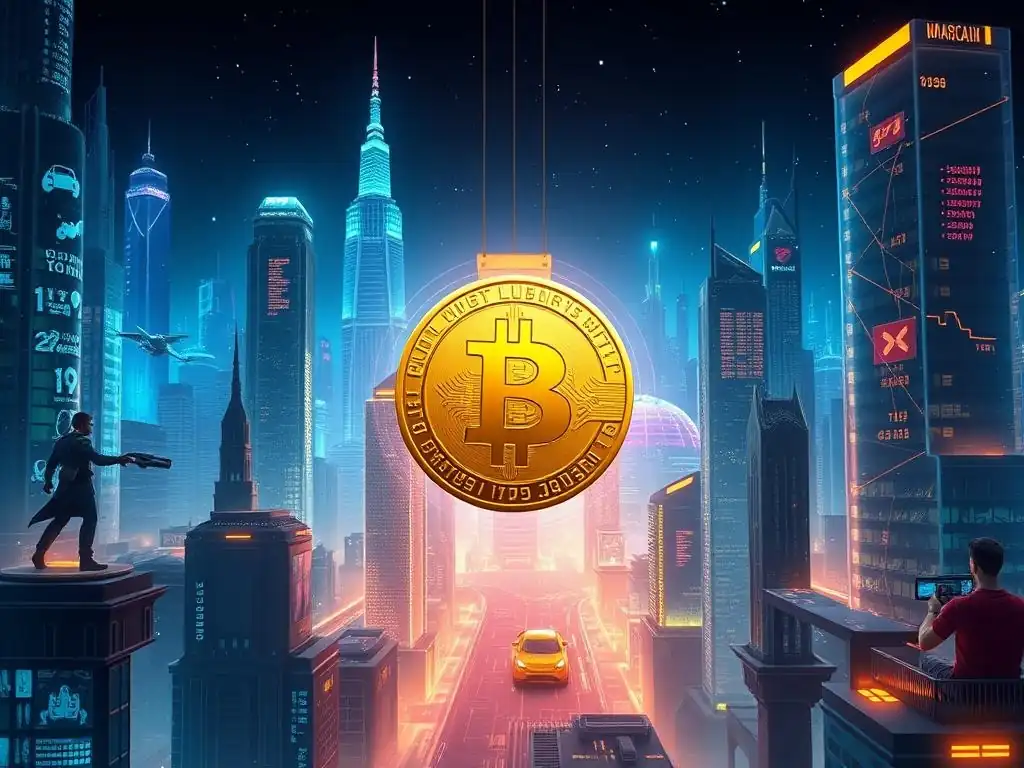
Welcome to Blockchain Trends, your go-to source for understanding the groundbreaking impact of blockchain technology!
Intrigued by the intersection of finance and gaming? Dive into our latest exploration of "Blockchain gaming investment strategies" and discover how GameFi is revolutionizing the industry. Explore the potential of decentralized economies within virtual worlds and unlock the secrets to navigating this rapidly evolving landscape. Ready to level up your understanding? Read on to learn more about the future of GameFi!
GameFi: Merging Finance and Gaming Through Blockchain
- Understanding GameFi: The Intersection of Gaming and Decentralized Finance
- Exploring the Benefits of GameFi for Players and Developers
- GameFi Investment Strategies: Capitalizing on the Blockchain Gaming Revolution
- Blockchain Gaming Investment: A Deep Dive into Key Metrics
- The Rise of Play-to-Earn: A Game Changer in the Gaming Industry
- Risks and Challenges in the GameFi Space
- The Future of GameFi: Trends and Predictions
- Navigating the Blockchain Gaming Landscape: A Guide to Investment
-
Frequently Asked Questions
- What is GameFi and how does it relate to blockchain gaming investment strategies?
- What are some potential risks associated with investing in GameFi projects?
- How can I evaluate the potential of a GameFi project before investing?
- What are some examples of successful GameFi projects that have attracted significant investment?
- What are some emerging trends in blockchain gaming investment strategies beyond traditional GameFi?
- Final Reflection: Embracing the Future of Play and Investment
- Level Up Your Understanding: Dive Deeper into GameFi!
Understanding GameFi: The Intersection of Gaming and Decentralized Finance
What is GameFi and How Does it Work?
GameFi, a portmanteau of "Game" and "Finance," represents the convergence of video gaming and decentralized finance (DeFi) principles, leveraging blockchain technology to create play-to-earn (P2E) ecosystems. Unlike traditional gaming models where players invest time and money without direct financial returns, GameFi empowers players to earn cryptocurrencies and non-fungible tokens (NFTs) through gameplay. This paradigm shift introduces a novel dimension to gaming, transforming it from a purely entertainment activity into a potential source of income.
The mechanics of GameFi revolve around blockchain's core functionalities: transparency, security, and decentralization. In GameFi games, in-game assets, such as characters, items, and virtual land, are often tokenized as NFTs, granting players true ownership. These NFTs can be traded on open marketplaces, allowing players to monetize their gaming achievements and investments. Furthermore, many GameFi platforms incorporate DeFi mechanisms like staking and yield farming, allowing players to earn passive income by holding or utilizing their in-game assets within the game's ecosystem.
Key Components of GameFi Ecosystems
GameFi ecosystems are intricate structures built upon several key components that work in synergy to create engaging and economically viable gaming experiences. Central to these ecosystems are the games themselves, ranging from simple collectible card games to complex metaverse worlds. These games are designed with inherent play-to-earn mechanics, rewarding players for their time and skill. Another vital component is the in-game economy, which is usually powered by one or more cryptocurrencies and NFTs. These digital assets represent in-game resources, characters, land, and items, possessing real-world value and tradability.
Furthermore, marketplaces play a crucial role in GameFi, serving as platforms where players can buy, sell, and trade their in-game NFTs. These marketplaces operate on blockchain networks, ensuring secure and transparent transactions. Decentralized Autonomous Organizations (DAOs) are also becoming increasingly prevalent in GameFi, aiming to give players a voice in the game's development and governance. Through DAOs, players can participate in decision-making processes, shaping the future of the game and fostering a sense of community ownership. These components, when combined effectively, create robust and engaging GameFi ecosystems.
The Role of Blockchain Technology in GameFi
Blockchain technology is the foundational pillar upon which GameFi is built, providing the essential infrastructure for its decentralized and player-centric nature. Its inherent characteristics, such as immutability and transparency, are crucial for establishing trust and security within GameFi environments. Blockchain ensures that in-game assets, tokenized as NFTs, are verifiably unique and owned by the players, not the game developers. This fundamental shift in ownership is a core differentiator from traditional gaming models.
Smart contracts, self-executing agreements written in code and stored on the blockchain, automate many GameFi processes, such as reward distribution, NFT trading, and governance mechanisms. This automation reduces the need for intermediaries, enhancing efficiency and transparency. Moreover, blockchain facilitates interoperability between different GameFi platforms and even potentially with the wider metaverse, allowing assets to be utilized across various virtual worlds. This interconnectedness expands the utility and value of in-game NFTs, creating a more dynamic and open gaming ecosystem.
Exploring the Benefits of GameFi for Players and Developers
Enhanced Player Ownership and Control Through NFTs
One of the most significant benefits of GameFi for players is the enhanced ownership and control they gain over in-game assets through NFTs. In traditional games, players may spend considerable time and resources acquiring virtual items, but these items remain under the control of the game developers. GameFi, through the use of NFTs, fundamentally alters this dynamic. When an in-game asset is tokenized as an NFT on a blockchain, it becomes a verifiable and unique digital asset that the player truly owns.
This ownership extends beyond mere possession. Players in GameFi ecosystems can freely trade, sell, or even rent out their NFTs on open marketplaces, effectively turning their gaming achievements and investments into tangible assets with real-world value. This control empowers players to participate in the game's economy and benefit directly from their engagement and skill. The ability to own and control digital assets within a game is a powerful motivator and a key driver of GameFi's growing popularity.
New Revenue Streams for Game Developers via Play-to-Earn Mechanics
GameFi is not only beneficial for players but also opens up new and innovative revenue streams for game developers. While traditional gaming monetization models often rely on upfront game purchases, in-app purchases, and subscriptions, GameFi introduces play-to-earn mechanics as a viable and potentially more sustainable alternative. By integrating blockchain and tokenomics into their games, developers can create self-sustaining economies where players are rewarded for their participation, which in turn can attract and retain a larger player base.
Play-to-earn models can generate revenue for developers through various mechanisms, including initial NFT sales, transaction fees on in-game marketplaces, and tokenomics design that benefits early adopters and active players. Furthermore, the decentralized nature of GameFi can reduce reliance on centralized distribution platforms, potentially lowering fees and increasing developer revenue share. This shift towards player-centric economies can foster a more collaborative and mutually beneficial relationship between game developers and their communities.
Fostering Community Engagement and Decentralized Governance
GameFi has the potential to foster stronger community engagement and more decentralized governance structures within the gaming industry. Traditional gaming often operates under a centralized model where developers hold complete control over the game's direction and evolution. GameFi, particularly with the integration of DAOs, can empower players to participate in the decision-making processes that shape the game's future.
Through DAOs, players can vote on proposed updates, changes to game mechanics, and even the allocation of in-game resources. This decentralized governance model can lead to games that are more responsive to player feedback and aligned with community desires. Moreover, the play-to-earn aspect of GameFi naturally incentivizes community participation, as players have a vested financial interest in the game's success and longevity. This combination of shared ownership and participatory governance can cultivate more vibrant and engaged gaming communities.
GameFi Investment Strategies: Capitalizing on the Blockchain Gaming Revolution
Identifying Promising GameFi Projects for Investment
Investing in GameFi projects requires a discerning approach, similar to investing in any emerging asset class. Identifying promising projects involves a multifaceted evaluation, starting with a deep dive into the game itself. Assess the gameplay mechanics: is the game engaging and fun to play?
A sustainable GameFi project needs to be more than just a financial instrument; it must offer an enjoyable gaming experience to attract and retain players. Look at the development team's track record and experience in both gaming and blockchain. A strong and reputable team is crucial for navigating the complexities of GameFi development and ensuring project longevity.
Examine the game's whitepaper and roadmap. A well-defined whitepaper should clearly outline the game's mechanics, tokenomics, development plan, and long-term vision. The roadmap should present realistic milestones and timelines. Consider the game's community and social media presence. A vibrant and active community is a positive indicator of player interest and project support. Analyze the game's partnerships and backers. Strategic partnerships with established entities in the gaming or blockchain space can lend credibility and resources to a project. By carefully evaluating these factors, investors can better identify GameFi projects with strong potential for growth and long-term success.
Analyzing Tokenomics and In-Game Economies
A crucial aspect of GameFi investment strategy is a thorough analysis of a project's tokenomics and in-game economy. Tokenomics refers to the economic model governing the game's native tokens, including their distribution, utility, and supply mechanisms. A well-designed tokenomic model is essential for creating a sustainable and thriving in-game economy. Understand the token distribution: how are tokens allocated to the team, investors, and players? A fair and transparent distribution model is crucial for long-term community trust.
Analyze the token utility: what are the use cases for the tokens within the game? Tokens should have clear and valuable utilities, such as in-game purchases, staking, governance, and rewards. Examine the token supply and emission schedule. Inflationary token models can devalue tokens over time if not managed carefully, while deflationary models can create scarcity and potentially drive up prices.
Assess the in-game economy's design: how are rewards distributed? Is there a balance between earning and spending within the game? A balanced and well-regulated in-game economy is vital for preventing inflation and maintaining the value of in-game assets. A deep understanding of these tokenomic and economic factors is paramount for making informed GameFi investment decisions.
Assessing the Long-Term Viability of GameFi Ventures
Evaluating the long-term viability of GameFi ventures is critical for investors looking beyond short-term hype cycles. The GameFi space is still nascent and evolving, and many projects may not possess the resilience to withstand market fluctuations and technological shifts. Consider the game's sustainability: is the play-to-earn model balanced and sustainable in the long run? Unbalanced economies can lead to hyperinflation or a collapse of the in-game economy, impacting player engagement and asset value.
Assess the game's scalability: can the game handle a large influx of players without performance issues or network congestion? Scalability is crucial for long-term growth and mass adoption. Evaluate the development team's commitment to ongoing development and updates. Games require continuous updates, new content, and feature enhancements to maintain player engagement and competitiveness.
Analyze the project's community support and growth trajectory. A strong and growing community is a vital indicator of a project's long-term potential. By carefully considering these factors, investors can better assess the long-term viability of GameFi ventures and mitigate risks associated with investing in this emerging sector.
Blockchain Gaming Investment: A Deep Dive into Key Metrics
Understanding Daily/Monthly Active Users (DAU/MAU) in GameFi
In the realm of GameFi investment, understanding key metrics is crucial for evaluating the health and potential of projects. Daily Active Users (DAU) and Monthly Active Users (MAU) are fundamental metrics that provide insights into player engagement and the overall popularity of a GameFi project. DAU represents the number of unique players who interact with the game on a daily basis, while MAU reflects the number of unique players engaging with the game within a month. These metrics offer a snapshot of the game's active player base and its ability to retain users.
Analyzing DAU/MAU trends over time is particularly insightful. A consistent or growing DAU/MAU indicates a healthy and engaged player base, suggesting strong player retention and potentially sustainable growth. Conversely, a declining DAU/MAU trend could signal waning player interest or issues with the game's mechanics or economy. Comparing DAU/MAU ratios can also be informative; a high DAU/MAU ratio suggests a highly engaged player base that frequently returns to the game. While DAU/MAU are valuable indicators, they should be considered in conjunction with other metrics to gain a holistic understanding of a GameFi project's performance.
Evaluating Transaction Volume and NFT Trading Activity
Transaction volume and NFT trading activity are vital metrics for gauging the economic activity and health of a GameFi ecosystem. Transaction volume, often measured in terms of the game's native token or other cryptocurrencies, reflects the total value of in-game transactions occurring within a specific period. This metric provides insights into the level of economic activity within the game and the flow of capital within its economy.
NFT trading activity, specifically the volume and frequency of NFT trades on marketplaces associated with the game, is another crucial indicator. High NFT trading volume suggests a vibrant and active in-game asset market, indicating player confidence in the value and utility of these assets. Analyzing trends in transaction volume and NFT trading activity can reveal shifts in player engagement, economic health, and overall project momentum.
For example, a surge in NFT trading volume could indicate increased player interest or anticipation of new game features. These metrics, when monitored closely, provide valuable signals for assessing the economic vitality of GameFi projects.
Community growth and social sentiment are qualitative yet profoundly important indicators for evaluating the potential of GameFi projects. While quantitative metrics like DAU/MAU and transaction volume offer insights into player activity and economic health, community growth and social sentiment reflect the intangible aspects of project success: player enthusiasm, community support, and overall project perception. Monitor the growth of the game's social media channels, such as Twitter, Discord, and Telegram. A rapidly expanding and engaged community is a positive sign.
Analyze social sentiment by tracking mentions of the game across social media platforms, forums, and online communities. Positive sentiment, characterized by enthusiastic discussions, positive reviews, and strong community engagement, suggests a healthy and thriving project. Conversely, negative sentiment, marked by complaints, criticisms, and declining community activity, could indicate potential issues. Community sentiment can be a leading indicator of a project's future trajectory. Actively engaged and positive communities often contribute to a project's growth and resilience. Therefore, assessing community growth and social sentiment provides crucial qualitative insights that complement quantitative metrics in evaluating GameFi investments.
The Rise of Play-to-Earn: A Game Changer in the Gaming Industry

How Play-to-Earn (P2E) Models are Transforming Gaming
Play-to-Earn (P2E) models represent a fundamental transformation in the gaming industry, shifting the paradigm from players being solely consumers of entertainment to becoming active participants in game economies with the potential to earn real-world value. Traditional gaming models largely operate on a play-to-win or pay-to-win basis, where players invest time and money for in-game advantages, without direct financial returns. P2E disrupts this model by integrating blockchain technology and tokenomics to reward players for their time, skills, and contributions to the game ecosystem.
Through P2E mechanics, players can earn cryptocurrencies and NFTs by participating in gameplay, completing tasks, and contributing to the game's community. This shift creates a new value proposition for players, transforming gaming from a leisure activity into a potential source of income. P2E models are democratizing access to gaming revenue, particularly in regions where traditional income opportunities may be limited. This transformative potential is attracting a new wave of players to the gaming industry and reshaping the relationship between players and game developers.
The Impact of P2E on Player Motivation and Retention
Play-to-Earn (P2E) models have a profound impact on player motivation and retention within gaming ecosystems. The introduction of earning potential adds a significant layer of extrinsic motivation to gameplay, complementing intrinsic motivations like fun and enjoyment. Players are incentivized to invest more time and effort into games when they know their efforts can translate into tangible financial rewards. This economic incentive can significantly boost player engagement and activity levels.
P2E models can also enhance player retention. The ability to earn and accumulate valuable in-game assets, which players truly own as NFTs, creates a sense of investment and commitment to the game. Players are less likely to abandon a game where they have invested time and resources and built up a valuable collection of digital assets. Furthermore, the community-driven aspect of many P2E games, often facilitated by DAOs and player governance, fosters a sense of belonging and shared ownership, further contributing to player retention and long-term engagement.
Examples of Successful Play-to-Earn Games
The burgeoning GameFi landscape already showcases several examples of successful Play-to-Earn (P2E) games that have demonstrated the viability and potential of this model. Axie Infinity, for instance, is a prominent example of a P2E game that gained significant traction, particularly in regions like Southeast Asia. Players in Axie Infinity earn Smooth Love Potion (SLP) tokens by battling, breeding, and trading digital creatures called Axies, which are NFTs. At its peak, Axie Infinity generated substantial revenue and provided income opportunities for many players.
Splinterlands is another successful P2E collectible card game built on blockchain. Players earn Dark Energy Crystals (DEC) tokens through gameplay and can trade their NFT cards. The Sandbox is a metaverse platform that incorporates P2E elements, allowing players to buy, sell, and monetize virtual land and create in-game experiences.
These examples, among others, illustrate the diverse range of successful P2E games emerging across different genres and demonstrate the transformative potential of this model within the gaming industry. While the P2E space is still evolving, these early successes highlight the significant impact it is having on player engagement and the gaming ecosystem as a whole.
Risks and Challenges in the GameFi Space
Regulatory Uncertainty and Legal Considerations
The GameFi space, being at the intersection of gaming, finance, and blockchain technology, faces significant regulatory uncertainty and complex legal considerations. The rapidly evolving nature of blockchain and cryptocurrencies means that regulatory frameworks are often lagging behind technological advancements. Governments and regulatory bodies worldwide are still grappling with how to classify and regulate crypto assets, NFTs, and the activities associated with GameFi. This lack of clarity creates uncertainty for both developers and investors.
Depending on the jurisdiction, GameFi projects may face scrutiny related to securities laws, gambling regulations, and consumer protection. The tokenization of in-game assets as NFTs and the play-to-earn mechanics raise questions about whether these digital assets should be classified as securities or if P2E models constitute gambling. Navigating these regulatory ambiguities requires careful legal analysis and proactive engagement with regulatory bodies. The regulatory landscape for GameFi is likely to continue evolving, and projects must remain adaptable and compliant with emerging regulations to ensure long-term sustainability.
Security Vulnerabilities and Smart Contract Risks
Security vulnerabilities and smart contract risks are inherent challenges within the GameFi space, stemming from its reliance on blockchain technology and decentralized systems. Smart contracts, while designed to be secure and immutable, are still susceptible to coding errors and vulnerabilities. Exploiting these vulnerabilities can lead to significant financial losses for players and projects. The decentralized and often open-source nature of blockchain projects also makes them potential targets for malicious actors.
GameFi projects, particularly those holding large amounts of cryptocurrency or valuable NFTs, are attractive targets for hacks and exploits. Smart contract audits are crucial for identifying and mitigating potential vulnerabilities, but even audited contracts are not entirely immune to risks. Players also face security risks, such as phishing scams and wallet compromises. Robust security measures, both at the project level and individual player level, are essential to protect against security threats and build trust within the GameFi ecosystem. Continuous security monitoring, proactive vulnerability testing, and user education are vital for mitigating these risks.
Scalability Issues and Network Congestion
Scalability issues and network congestion are significant technical challenges facing the GameFi space, particularly as adoption grows and player bases expand. Many blockchain networks, especially earlier generations, have limitations in transaction processing capacity and speed. As GameFi games attract more players and in-game transactions increase, networks can become congested, leading to slow transaction times, high gas fees, and degraded user experience.
Scalability solutions are being actively developed and implemented across various blockchain platforms, including layer-2 scaling solutions and blockchain upgrades. However, scalability remains a critical bottleneck for mass adoption of GameFi. Network congestion can negatively impact gameplay, disrupt in-game economies, and deter new players. GameFi projects need to carefully consider network scalability when choosing blockchain platforms and design their games to optimize for efficient transaction processing. Ongoing advancements in blockchain scalability are crucial for overcoming these challenges and enabling the GameFi space to reach its full potential.
The Future of GameFi: Trends and Predictions
The Evolution of GameFi beyond Play-to-Earn
While Play-to-Earn (P2E) has been the dominant model driving the initial surge of GameFi, the future evolution of the space is likely to extend beyond solely financial incentives. The long-term sustainability of purely P2E models has been questioned, with concerns about economic imbalances and potential for player churn once earning opportunities diminish. The next phase of GameFi is anticipated to focus on integrating more sophisticated and sustainable economic models, emphasizing "Play-and-Earn" or "Play-to-Own" approaches.
These evolving models aim to balance earning opportunities with engaging gameplay and deeper player ownership. "Play-and-Earn" models might incorporate more nuanced reward systems that incentivize skill, strategy, and community contribution beyond simply grinding for tokens. "Play-to-Own" models could emphasize the value and utility of in-game NFTs, focusing on creating unique and desirable digital assets that players want to collect and own, regardless of immediate earning potential. The future of GameFi is likely to see a diversification of economic models, moving beyond a singular focus on P2E and towards more holistic and sustainable gaming experiences.
The Integration of Metaverse and GameFi Experiences
The integration of Metaverse and GameFi experiences represents a significant trend shaping the future of both domains. The Metaverse, envisioned as immersive and interconnected virtual worlds, provides a fertile ground for GameFi to flourish. GameFi mechanics and play-to-earn models can enhance the engagement and economic viability of metaverse environments, creating compelling reasons for users to participate and interact within these virtual worlds.
Conversely, the Metaverse provides a richer and more expansive context for GameFi experiences. GameFi games can become integral parts of larger metaverse ecosystems, allowing players to utilize their in-game assets and identities across various virtual worlds and experiences. Imagine playing a GameFi RPG within a metaverse, using earned NFTs to customize your avatar and access exclusive metaverse events. This synergy between Metaverse and GameFi is expected to lead to more immersive, interconnected, and economically vibrant virtual experiences, blurring the lines between gaming, social interaction, and digital ownership.
The Growing Institutional Interest in Blockchain Gaming
Institutional interest in blockchain gaming and GameFi is steadily growing, signaling a maturing market and increased recognition of its potential. Initially, GameFi was largely driven by retail investors and crypto enthusiasts. However, traditional gaming companies, venture capital firms, and even institutional investors are increasingly recognizing the transformative potential of blockchain in gaming. Major gaming companies are exploring blockchain integration, either through acquisitions, partnerships, or internal development initiatives.
Venture capital firms are investing heavily in GameFi startups and blockchain gaming infrastructure. Institutional investors are beginning to allocate capital to crypto funds and investment vehicles focused on the metaverse and blockchain gaming sectors. This growing institutional interest brings significant capital, expertise, and legitimacy to the GameFi space. Institutional investment can accelerate the development of more sophisticated GameFi projects, drive wider adoption, and contribute to the long-term sustainability of the blockchain gaming industry. This influx of institutional capital and attention is a strong indicator of the maturing and evolving landscape of GameFi.
Due Diligence Checklist for GameFi Investments
Navigating the blockchain gaming landscape for investment requires a rigorous due diligence process. Before investing in any GameFi project, consider the following checklist:
- Game Quality and Gameplay: Is the game fun, engaging, and well-designed? Does it have the potential to attract and retain players beyond just earning opportunities?
- Team and Roadmap: Is the development team experienced and reputable in both gaming and blockchain? Is the project roadmap clear, realistic, and well-defined?
- Tokenomics and Economy: Is the tokenomic model sustainable and balanced? Is the in-game economy well-designed and resistant to inflation?
- Community and Social Sentiment: Is there a strong and active community supporting the project? Is social sentiment generally positive?
- Security and Audits: Have smart contracts been audited by reputable firms? Are there robust security measures in place to protect against vulnerabilities?
- Regulatory Compliance: Is the project taking steps to address regulatory considerations and ensure compliance in relevant jurisdictions?
- Market Analysis and Competition: What is the game's competitive landscape? Does it offer a unique value proposition compared to existing GameFi projects?
- Long-Term Viability: Does the project have a sustainable long-term vision beyond short-term hype cycles?
Thoroughly assessing these factors will equip investors with a more informed perspective and help mitigate risks associated with GameFi investments.
Diversifying Your Blockchain Gaming Portfolio
Diversification is a fundamental principle of sound investment strategy, and it is equally crucial when investing in the volatile and nascent GameFi space. Do not put all your capital into a single GameFi project, regardless of how promising it may seem. Diversify your portfolio across multiple GameFi projects, ideally spanning different genres, blockchain platforms, and development teams.
Consider diversifying across different stages of project development, including early-stage projects with high growth potential and more established projects with proven track records. Diversify across different risk profiles, allocating a portion of your portfolio to higher-risk, higher-reward projects and another portion to lower-risk, more established projects. Diversification helps mitigate the risk of significant losses if a single project underperforms or fails. A well-diversified GameFi portfolio can potentially capture the overall growth of the sector while reducing exposure to the inherent risks of individual projects.
Staying Informed about Emerging Trends in GameFi
Staying informed about emerging trends is paramount for successful navigation and investment in the rapidly evolving GameFi landscape. The blockchain gaming space is characterized by constant innovation, technological advancements, and shifting market dynamics. Actively follow industry news, research reports, and thought leadership articles related to GameFi and blockchain gaming. Engage with GameFi communities and participate in online forums and discussions to stay abreast of emerging trends and sentiment.
Monitor key metrics and data related to GameFi projects, such as DAU/MAU, transaction volume, and NFT trading activity. Pay attention to new blockchain technologies and scaling solutions that may impact the GameFi space. Track regulatory developments and policy changes that could affect the industry. Continuously learning and adapting to emerging trends is crucial for making informed investment decisions and maximizing opportunities in the dynamic and rapidly evolving world of GameFi and blockchain gaming investment strategies.
Frequently Asked Questions
What is GameFi and how does it relate to blockchain gaming investment strategies?
GameFi is the intersection of gaming and decentralized finance (DeFi), using blockchain technology to offer play-to-earn models. Understanding GameFi is crucial for blockchain gaming investment strategies as it unlocks new earning opportunities.
What are some potential risks associated with investing in GameFi projects?
Investing in GameFi involves risks like high volatility, regulatory uncertainty, and the potential for scams and rug pulls. Thorough research and due diligence are vital to mitigate these risks.
How can I evaluate the potential of a GameFi project before investing?
Evaluate a GameFi project by examining its team, tokenomics, gameplay quality, and community support. A strong whitepaper and active development are also good indicators.
What are some examples of successful GameFi projects that have attracted significant investment?
Examples include Axie Infinity, Decentraland, and The Sandbox, all of which have demonstrated the potential for high returns and mass adoption. However, past performance is not indicative of future results.
What are some emerging trends in blockchain gaming investment strategies beyond traditional GameFi?
Emerging trends include metaverse integration, NFT-based assets, and the development of more sophisticated gaming experiences. These trends offer diverse investment opportunities and increased risk.
Final Reflection: Embracing the Future of Play and Investment
The convergence of finance and gaming, epitomized by GameFi, is no longer a futuristic fantasy but a rapidly evolving reality. Blockchain gaming investment strategies are not just about chasing profits; they represent a fundamental shift in how we perceive ownership, value creation, and engagement within digital worlds. The potential for decentralized, player-owned economies to reshape the gaming landscape and offer unprecedented investment opportunities is undeniable, making it crucial to understand and adapt to this transformative trend.
This exploration into GameFi has underscored the profound impact it's having on both the gaming and financial sectors. Witnessing the rise of play-to-earn models and the empowerment of players through true digital ownership has been truly inspiring, highlighting the potential for a more equitable and engaging future. The best investment you can make, is an investment in yourself… The more you learn, the more you’ll earn.
- Warren Buffett. This quote resonates deeply within the context of GameFi, as understanding the nuances of blockchain technology, game mechanics, and tokenomics is paramount to successful and responsible investment.
As we stand at the cusp of this new era, let us not only seek to profit from the opportunities GameFi presents, but also to contribute to its responsible and sustainable growth. Consider how you can leverage your knowledge and resources to support innovative projects, educate others about the potential and risks involved, and advocate for a future where gaming is not just a source of entertainment, but a powerful engine for economic empowerment and creative expression. The future of play and investment is in our hands; let's shape it wisely.
Level Up Your Understanding: Dive Deeper into GameFi!
Thank you for exploring the exciting world of GameFi with us! Now that you've learned how blockchain is transforming gaming and finance, it's time to take action and become a pioneer in this innovative space.
Are you ready to start your GameFi journey?
- Try out a GameFi platform yourself. Choose one that caught your interest or discover a new project and experience play-to-earn gaming firsthand!
- Discuss the opportunities and challenges of GameFi with fellow enthusiasts. Share this article on social media and invite your network to join the conversation, sharing their favorite platforms.
- Learn about the developers behind popular GameFi projects. Understanding their vision and future plans is essential for long-term engagement.
Which GameFi projects are you most excited to explore, and how do you see GameFi shaping the future of gaming and finance? Share your thoughts in the comments below!
Leave a Reply