
The Importance of User Feedback in Developing PlaytoEarn Games


Welcome to Blockchain Trends, your guide to understanding the revolutionary power of blockchain beyond the headlines.
Ever wondered how to create a truly engaging PlayToEarn game? The answer lies in harnessing the power of community. Dive into our latest article where we explore the crucial role user feedback plays in successful playtoearn game development. Learn how listening to your players can transform your vision into a thriving, decentralized reality. Explore the future of blockchain and gaming with us!
The Importance of User Feedback in Developing Play-to-Earn Games
- Introduction: Why User Feedback is Crucial for Play-to-Earn Game Success
- The Benefits of Incorporating User Feedback in Play-to-Earn Game Development
- Methods for Gathering Effective User Feedback for Play-to-Earn Games
- Integrating User Feedback into the Play-to-Earn Game Development Cycle
- Case Studies: Play-to-Earn Games That Thrived Thanks to User Feedback
- Avoiding Common Pitfalls When Using User Feedback
- Future Trends: How User Feedback Will Shape Play-to-Earn Game Development
- Conclusion: User Feedback as a Cornerstone of Play-to-Earn Game Development Success
-
Frequently Asked Questions
- How crucial is user feedback in the early stages of PlaytoEarn game development?
- What specific types of feedback should PlaytoEarn game developers prioritize?
- How can PlaytoEarn game developers effectively collect user feedback?
- What are the potential consequences of ignoring user feedback in PlaytoEarn game development?
- How can user feedback inform the long-term development and evolution of a PlaytoEarn game?
- Final Reflection: Shaping the Future of Play-to-Earn Through Shared Voices
- Shape the Future: Build Better PlaytoEarn Games!
Introduction: Why User Feedback is Crucial for Play-to-Earn Game Success
Understanding the Unique Challenges of Play-to-Earn Game Development
Play-to-earn (P2E) game development presents a distinct set of challenges compared to traditional gaming. Beyond crafting engaging gameplay, developers must design robust in-game economies that incentivize participation and reward players with real-world value through cryptocurrencies or NFTs. This dual focus on entertainment and economics necessitates a deep understanding of player motivations and behaviors within a blockchain-based ecosystem. The volatility of cryptocurrency markets, the complexity of tokenomics, and the need for sustainable in-game economies introduce variables not typically encountered in conventional game development. Therefore, understanding the unique landscape of play-to-earn game development is paramount before even considering user feedback.
Furthermore, the community in P2E games often holds a different level of investment and expectation compared to traditional gaming communities. Players are not just consumers but also stakeholders, often investing financially in the game's ecosystem through NFTs or tokens. This financial stake amplifies their desire to see the game succeed and their willingness to provide feedback becomes more pronounced as their investment is directly tied to the game's long-term health. This intrinsic link between player investment and game success makes user feedback not just valuable but absolutely essential for navigating the complexities of play-to-earn game development.
The Role of Community in Play-to-Earn Gaming Ecosystems
Community is the lifeblood of any successful play-to-earn gaming ecosystem. Unlike traditional games where the relationship might be more transactional, P2E games foster a symbiotic relationship between developers and players. Players are not merely consumers of content; they are active participants in the game's economy, contributing to its growth and sustainability. This active participation creates a sense of ownership and shared purpose within the community. A strong, engaged community can act as a powerful marketing force, attracting new players and advocating for the game.
Moreover, the community in P2E gaming often functions as a decentralized think tank, offering diverse perspectives and insights that can be invaluable to developers. Players, deeply immersed in the game's mechanics and economy, often identify issues and opportunities that might be missed by the development team. This collective intelligence, when effectively harnessed through feedback mechanisms, can significantly contribute to the game's evolution and long-term success. Ignoring the community in P2E development is akin to neglecting a vital resource that can make or break the project.
The Benefits of Incorporating User Feedback in Play-to-Earn Game Development
Enhancing Gameplay Mechanics Through Player Input
User feedback plays a pivotal role in refining and enhancing gameplay mechanics in play-to-earn games. Players, engaging with the game on a daily basis, are the first to experience the nuances of the gameplay, identifying what is enjoyable, what is frustrating, and what could be improved. Their direct experience provides invaluable insights that developers, focused on the broader development scope, might overlook. For instance, players might find certain game mechanics too complex, too repetitive, or unbalanced, hindering the overall enjoyment and potentially impacting player retention.
By actively soliciting and analyzing user feedback, developers can iterate on gameplay mechanics, making them more intuitive, engaging, and rewarding. This iterative process, driven by player input, can lead to significant improvements in the game's core loop, ensuring a more satisfying and enjoyable experience. Consider the example of action games where timing and responsiveness are crucial. Player feedback on control schemes, character movement, and combat mechanics can directly lead to smoother, more polished gameplay, ultimately increasing player satisfaction and engagement.
Improving Game Balance and Economy with User Data
In play-to-earn games, balancing the game economy is as critical as balancing gameplay mechanics. User feedback, coupled with in-game data analytics, is essential for maintaining a healthy and sustainable in-game economy. Players are acutely aware of economic imbalances, such as inflation, deflation, or unfair reward distribution, as these directly impact their earning potential and the value of their in-game assets. They are often quick to identify exploits or loopholes that can disrupt the economic equilibrium.
By monitoring player feedback related to rewards, resource distribution, and market dynamics, developers can proactively address potential economic imbalances. For example, if players consistently report that certain activities are not rewarding enough or that specific NFTs are becoming excessively expensive, developers can adjust parameters to restore balance. Games like Axie Infinity have demonstrated the importance of continuous economic adjustments based on community feedback and market data to maintain a thriving play-to-earn ecosystem. Ignoring player feedback on economic aspects can lead to rapid player attrition and the collapse of the game's economy.
Identifying and Addressing Bugs and Glitches Early On
User feedback is an invaluable tool for identifying and addressing bugs and glitches in play-to-earn games, especially in the early stages of development and during live operations. While internal testing is crucial, it cannot replicate the diverse hardware configurations, player behaviors, and edge cases encountered by a large player base. Players, across their varied devices and playstyles, inevitably encounter bugs that might slip through internal QA processes.
Promptly addressing bugs and glitches is particularly important in P2E games where real-world value is at stake. Bugs that affect gameplay, asset ownership, or earning mechanisms can erode player trust and negatively impact the game's reputation. By providing clear channels for players to report bugs and glitches, and by actively responding to and resolving these issues, developers demonstrate their commitment to quality and player satisfaction. Early bug detection through user feedback can prevent minor issues from escalating into major problems that could damage the game's long-term prospects.
Fostering a Stronger Sense of Community Ownership
Incorporating user feedback in play-to-earn game development cultivates a stronger sense of community ownership. When players see that their feedback is not only heard but also actively implemented in game updates and changes, they feel valued and empowered. This sense of ownership fosters a deeper connection with the game and strengthens community loyalty. Players become more invested in the game's success, acting as advocates and contributing to its growth.
This feeling of ownership is particularly crucial in the decentralized ethos of blockchain gaming. Players in P2E games are often seeking a more participatory and democratic gaming experience compared to traditional models. By actively involving the community in the development process through feedback loops, developers align with this ethos and build a more resilient and engaged player base. This collaborative approach can transform players from passive consumers into active stakeholders, contributing to a more vibrant and sustainable play-to-earn ecosystem.
Methods for Gathering Effective User Feedback for Play-to-Earn Games
In-Game Surveys and Questionnaires for Targeted Feedback
In-game surveys and questionnaires are effective methods for gathering targeted user feedback in play-to-earn games. These tools allow developers to directly solicit player opinions on specific aspects of the game, such as new features, gameplay mechanics, or economic changes. Surveys can be strategically placed within the game to capture feedback at relevant moments, such as after completing a tutorial, finishing a play session, or interacting with a new game element.
For instance, a survey could be triggered after a player completes the onboarding process to gauge their initial impressions and identify areas of confusion. Questionnaires can also be used to gather feedback on specific features, asking players to rate their satisfaction or provide suggestions for improvement. The key to effective in-game surveys is to keep them concise, focused, and relevant to the player's current experience. Platforms like Unity Analytics and PlayFab offer tools to implement and analyze in-game surveys, providing valuable data on player sentiment and preferences.
Utilizing Beta Testing Programs to Gather Pre-Release Insights
Beta testing programs are essential for gathering pre-release insights and user feedback before launching a play-to-earn game to the wider public. Beta testing involves releasing a pre-release version of the game to a select group of players who can provide valuable feedback on gameplay, bugs, balance, and overall user experience. This phase allows developers to identify and address critical issues before they impact a larger player base.
Effective beta testing programs involve clear communication with testers, structured feedback mechanisms, and active engagement from the development team. Testers should be provided with specific tasks or areas to focus on and given clear channels to report bugs and provide feedback. Platforms like Discord and dedicated forums can facilitate communication and feedback collection during beta testing. The insights gained from beta testing are crucial for polishing the game and ensuring a smoother launch, ultimately contributing to the long-term success of the play-to-earn game.
Monitoring social media and online forums is crucial for gauging player sentiment and gathering unsolicited user feedback in play-to-earn games. Players often express their opinions, frustrations, and suggestions on platforms like Twitter, Reddit, Discord, and game-specific forums. Actively monitoring these channels provides developers with a real-time pulse on player sentiment and emerging issues.
Social listening tools can automate the process of tracking mentions of the game and related keywords across various platforms. Analyzing the sentiment expressed in these online conversations can reveal trends, identify pain points, and uncover valuable feedback that players might not directly submit through in-game channels. For example, a sudden surge in negative sentiment on social media regarding a recent game update could indicate a critical issue that needs immediate attention. Engaging with players on these platforms also demonstrates that developers are listening and responsive to community concerns.
Analyzing User Behavior Data for Objective Insights
Analyzing user behavior data provides objective insights into player engagement, gameplay patterns, and areas for improvement in play-to-earn games. Game analytics platforms track various metrics, such as play time, session length, feature usage, drop-off points, and in-game spending. Analyzing this data can reveal how players are actually interacting with the game, identifying areas where they are struggling, disengaging, or finding success.
For example, analyzing player drop-off rates in the tutorial can indicate areas where the onboarding process is confusing or too lengthy. Tracking feature usage can reveal which game mechanics are popular and which are underutilized. Combining user behavior data with qualitative feedback from surveys and social media provides a comprehensive understanding of the player experience. Tools like Google Analytics, Firebase, and Amplitude are commonly used for game analytics, offering valuable data-driven insights for optimizing play-to-earn game development.
Integrating User Feedback into the Play-to-Earn Game Development Cycle
Establishing a Clear Feedback Loop with Players
Establishing a clear feedback loop with players is paramount for effectively integrating user feedback into the play-to-earn game development cycle. This involves creating accessible channels for players to provide feedback, actively monitoring these channels, and demonstrably responding to and acting upon the feedback received. A clear feedback loop ensures that players feel heard and that their input is valued, fostering a stronger sense of community and collaboration.
This loop can be visualized as a cycle: players provide feedback through various channels (surveys, forums, social media), developers collect and analyze this feedback, prioritize and implement changes based on the feedback, and then communicate these changes back to the players. This communication closes the loop and demonstrates that player feedback is directly influencing the game's development. Transparency in this process is crucial for building trust and encouraging continued player participation in the feedback cycle.
Prioritizing Feedback Based on Impact and Feasibility
Prioritizing user feedback based on impact and feasibility is essential for efficient and effective game development. Not all feedback is equally valuable or actionable. Developers need to evaluate feedback based on its potential impact on the game's overall success and the feasibility of implementing the suggested changes within the development timeline and resources.
Feedback that addresses critical bugs, economic imbalances, or major gameplay flaws should be prioritized higher than minor cosmetic suggestions or niche preferences. Feasibility also plays a crucial role; some feedback might be highly impactful but require significant development effort or be technically challenging to implement. A balanced approach is needed, focusing on addressing high-impact, feasible feedback first while acknowledging and considering other suggestions for future iterations. Utilizing a feedback management system can help organize, categorize, and prioritize player input effectively.
Communicating Development Changes Based on User Input
Communicating development changes based on user input is crucial for demonstrating that player feedback is being taken seriously and acted upon. Transparency in this communication builds trust and reinforces the value of player feedback. When players see that their suggestions have directly led to game updates or improvements, they are more likely to continue providing valuable input in the future.
Communication should be proactive and clear, outlining the specific changes made based on user feedback and explaining the rationale behind these changes. Patch notes, developer blogs, and community updates are effective channels for communicating these changes. Acknowledging specific player feedback in these communications further personalizes the interaction and strengthens the sense of community collaboration. Failing to communicate changes based on user feedback can lead to player frustration and a perception that their input is being ignored.
Iterative Design and Development: A User-Centric Approach
Iterative design and development are fundamental to a user-centric approach in play-to-earn game development. This methodology emphasizes continuous improvement through cycles of feedback, analysis, and refinement. Instead of aiming for a perfect product at launch, iterative development embraces the idea of launching a core game and then continuously evolving it based on player feedback and data.
This approach is particularly well-suited to the dynamic nature of play-to-earn games, where economic models and player behaviors are constantly evolving. Iterative development allows developers to adapt to these changes, proactively address emerging issues, and continuously enhance the game based on real-world player interactions. Regular updates, driven by user feedback, become a hallmark of a user-centric approach, fostering a game that is continuously improving and evolving in response to its community.
Case Studies: Play-to-Earn Games That Thrived Thanks to User Feedback
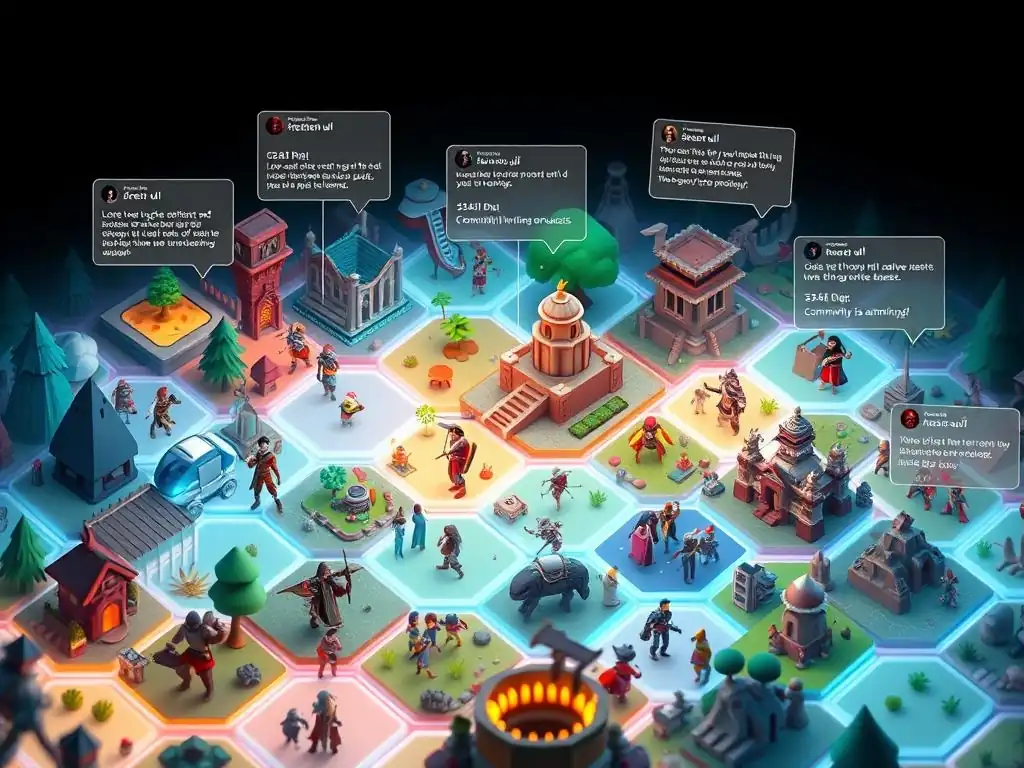
Axie Infinity: Balancing Gameplay and Economic Sustainability Through Community Input
Axie Infinity stands as a prominent example of a play-to-earn game that has significantly benefited from community input in balancing gameplay and economic sustainability. The game's developers, Sky Mavis, have consistently engaged with their community, soliciting feedback on gameplay mechanics, tokenomics, and economic adjustments. Early on, player feedback highlighted the need for adjustments to the Smooth Love Potion (SLP) reward system to combat inflation and ensure the long-term sustainability of the economy.
In response to community concerns and economic data, Sky Mavis implemented significant changes, including adjusting SLP earning rates and introducing burning mechanisms. These changes, often debated and refined in collaboration with the community, aimed to maintain a healthy balance between earning opportunities and economic stability. The developers' willingness to listen to and act upon community feedback has been crucial in navigating the complex economic challenges inherent in play-to-earn gaming and contributing to Axie Infinity's sustained success.
Splinterlands: Adapting Card Mechanics and Rewards Based on Player Feedback
Splinterlands, a collectible card game on the blockchain, has also demonstrated the value of user feedback in adapting card mechanics and rewards. The Splinterlands team actively monitors player feedback through social media, Discord, and community forums, using this input to inform game updates and card balancing adjustments. Players regularly provide feedback on card power levels, mana costs, and reward structures, contributing to a more balanced and engaging gameplay experience.
For instance, player feedback has influenced adjustments to card abilities and stats, ensuring that no single card or strategy becomes overly dominant. The Splinterlands team has also adapted reward distributions based on player feedback, ensuring that the game remains rewarding for both new and experienced players. This iterative approach, driven by community input, has helped Splinterlands maintain a vibrant and competitive ecosystem, attracting and retaining a dedicated player base.
Avoiding Common Pitfalls When Using User Feedback
Ignoring Critical Feedback Due to Personal Bias
One common pitfall in using user feedback is ignoring critical feedback due to personal bias or attachment to certain game design choices. Developers can sometimes become emotionally invested in their creations and resistant to feedback that challenges their vision. However, objectively evaluating all feedback, even critical feedback, is crucial for identifying potential weaknesses and areas for improvement.
Personal biases can cloud judgment and lead to dismissing valid concerns raised by players. It is important to establish a process for objectively evaluating feedback, focusing on the data and rationale behind the feedback rather than personal opinions. Seeking diverse perspectives within the development team and actively listening to dissenting voices can help mitigate the risk of ignoring critical feedback due to personal bias, ensuring a more balanced and player-centric approach to game development.
Overreacting to Every Suggestion and Losing Vision
Conversely, another pitfall is overreacting to every suggestion and losing sight of the overall game vision. While player feedback is valuable, it should not dictate every development decision. Overreacting to every suggestion can lead to feature creep, inconsistent game design, and a diluted game identity. It is crucial to maintain a clear vision for the game and use user feedback to refine and enhance that vision, not to completely redefine it.
Developers need to filter feedback, prioritize suggestions that align with the game's core vision and target audience, and avoid implementing changes that could detract from the overall player experience. A balanced approach involves carefully considering all feedback, but ultimately making informed decisions that serve the long-term goals of the game, while staying true to its intended design and player experience.
Lack of Transparency in Addressing User Concerns
Lack of transparency in addressing user concerns is a significant pitfall that can erode player trust and undermine the value of feedback. If players feel that their feedback is being ignored or dismissed without explanation, they are less likely to continue providing valuable input. Transparency involves openly acknowledging player concerns, communicating the development team's response, and explaining the rationale behind decisions, even when those decisions don't fully align with all player suggestions.
Regularly communicating updates on feedback implementation, explaining why certain suggestions were adopted or rejected, and being open about the development process fosters trust and demonstrates that player feedback is valued. Transparency builds a stronger relationship between developers and the community, encouraging continued collaboration and constructive feedback. Conversely, a lack of transparency can create a sense of disconnect and resentment, hindering the feedback loop and negatively impacting community engagement.
Failing to Properly Analyze and Interpret Feedback Data
Failing to properly analyze and interpret feedback data is a critical pitfall that can render feedback collection efforts ineffective. Collecting user feedback is only the first step; the real value lies in effectively analyzing and interpreting this data to derive actionable insights. This requires more than just reading individual comments; it involves identifying patterns, trends, and underlying themes within the feedback data.
Tools and techniques for data analysis, such as sentiment analysis, thematic analysis, and statistical analysis, can be employed to extract meaningful insights from large volumes of feedback. Proper analysis helps developers understand the root causes of player issues, identify areas of high priority for improvement, and validate or invalidate assumptions about player behavior and preferences. Without effective analysis, feedback data becomes noise, and valuable opportunities for game improvement are missed.
Future Trends: How User Feedback Will Shape Play-to-Earn Game Development
The Rise of AI-Powered Feedback Analysis
The future of user feedback in play-to-earn game development will likely be significantly shaped by the rise of AI-powered feedback analysis. As games grow in complexity and player bases expand, the volume of user feedback can become overwhelming. AI-powered tools can automate the process of analyzing large datasets of player feedback from various sources, such as in-game surveys, social media, and forums.
AI algorithms can be trained to identify sentiment, categorize feedback themes, and even predict player churn based on feedback patterns. These tools can provide developers with real-time insights into player sentiment and emerging issues, enabling faster and more data-driven responses to player feedback. AI-powered analysis can also help personalize feedback loops, tailoring surveys and communication based on individual player profiles and preferences, further enhancing the effectiveness of user feedback integration.
Integrating Blockchain Technology for Transparent Feedback Mechanisms
Blockchain technology itself has the potential to enhance transparency and accountability in user feedback mechanisms within play-to-earn games. Imagine a system where player feedback is recorded on a blockchain, creating an immutable and transparent record of player suggestions and developer responses. This could foster greater trust and accountability in the feedback loop, ensuring that player input is demonstrably considered and addressed.
Blockchain-based voting mechanisms could also be integrated to allow players to directly participate in decisions related to game development, feature prioritization, or economic adjustments. This could further democratize the game development process and empower players with a greater sense of ownership and influence. While still in its nascent stages, the integration of blockchain technology into feedback mechanisms holds promise for creating more transparent and player-centric play-to-earn gaming ecosystems.
The Evolution of Community-Driven Game Design
The future of play-to-earn game development points towards an evolution towards more community-driven game design. As players become increasingly invested in the success of P2E games, their role in shaping game development will likely expand. We may see the rise of more decentralized autonomous organizations (DAOs) governing game development decisions, empowering communities to directly influence game roadmaps and feature priorities.
This shift towards community-driven design could involve players voting on new features, balancing changes, or even contributing to content creation. Developers will increasingly act as facilitators and curators, guiding the overall vision while empowering the community to actively participate in shaping the game's evolution. This collaborative model could lead to more engaging, sustainable, and player-centric play-to-earn games that truly reflect the desires and needs of their communities.
Conclusion: User Feedback as a Cornerstone of Play-to-Earn Game Development Success
The Continuous Cycle of Feedback and Improvement
User feedback is not a one-time activity but rather a cornerstone of a continuous cycle of feedback and improvement in successful play-to-earn game development. The dynamic nature of P2E games, with their evolving economies and player-driven ecosystems, necessitates ongoing monitoring, adaptation, and refinement based on player input. Establishing a robust and responsive feedback loop is not just a best practice; it is a critical requirement for long-term sustainability and player satisfaction.
This continuous cycle involves actively soliciting feedback, diligently analyzing it, transparently communicating responses, and iteratively implementing improvements. It's a commitment to listening to the community, adapting to their needs, and continuously evolving the game to meet player expectations and market demands. Games that embrace this continuous cycle of feedback and improvement are better positioned to thrive in the competitive and rapidly evolving landscape of play-to-earn gaming.
Building Sustainable and Engaging Play-to-Earn Experiences Through Player Collaboration
Ultimately, building sustainable and engaging play-to-earn experiences hinges on player collaboration. User feedback is the bridge that connects developers and players, fostering a collaborative environment where both parties contribute to the game's success. By actively involving players in the development process through feedback loops, developers tap into a wealth of knowledge, insights, and passion that can significantly enhance the game's quality and longevity.
This collaborative approach not only leads to better games but also cultivates a stronger sense of community ownership and loyalty. Players who feel heard, valued, and empowered are more likely to become long-term supporters and advocates for the game. In the world of play-to-earn gaming, where community is paramount, user feedback is not just a tool for improvement; it is the foundation upon which sustainable and engaging experiences are built.
Frequently Asked Questions
How crucial is user feedback in the early stages of PlaytoEarn game development?
User feedback is absolutely essential from the beginning. It helps developers understand player expectations, identify potential design flaws, and ensure the game is enjoyable and engaging.
What specific types of feedback should PlaytoEarn game developers prioritize?
Developers should prioritize feedback on gameplay mechanics, the PlaytoEarn economy's balance, and the overall user experience. Focus on feedback that reveals potential exploits or areas of frustration.
How can PlaytoEarn game developers effectively collect user feedback?
Methods include in-game surveys, community forums, beta testing programs, and social media engagement. Actively solicit and analyze feedback to drive iterative improvements.
What are the potential consequences of ignoring user feedback in PlaytoEarn game development?
Ignoring feedback can lead to a game that is unpopular and unsustainable. Players may abandon the game due to frustrating mechanics, unbalanced economies, or a lack of engagement, ultimately impacting profitability.
How can user feedback inform the long-term development and evolution of a PlaytoEarn game?
Feedback can guide future content updates, gameplay adjustments, and economic rebalancing. It ensures the game remains relevant, engaging, and responsive to the player base's needs over time.
The insights shared throughout this article underscore a fundamental truth: user feedback is no longer a mere suggestion box in Play-to-Earn (P2E) game development, but rather the very foundation upon which successful and sustainable ecosystems are built. Ignoring the voices of players is akin to navigating uncharted waters without a compass, inevitably leading to missteps and missed opportunities in this rapidly evolving landscape.
The impact of user feedback extends far beyond simple bug fixes and feature requests. It shapes the entire cultural and economic landscape of P2E games, influencing everything from tokenomics to community engagement. The power of collective ownership and collaborative creation is undeniable, and P2E games that embrace this principle are poised to thrive. The best products aren't just built for users, they're built with them.
This sentiment perfectly encapsulates the transformative potential of integrating user feedback into every stage of P2E game development.
As we look to the future of P2E gaming, let us remember the lessons learned here. Consider how you, whether a developer, player, or investor, can actively contribute to a more collaborative and user-centric environment. Embrace the power of shared voices, champion transparency, and foster a culture of continuous improvement. The future of Play-to-Earn is not just about earning; it's about building together, and your feedback is the key to unlocking its full potential.
Shape the Future: Build Better PlaytoEarn Games!
Thank you for exploring the importance of user feedback in creating engaging and successful PlaytoEarn games. You now see how essential player input is for enhancing gameplay and fostering a vibrant community. Are you ready to take action?
Here are some ways you can make a meaningful impact:
- Begin collecting feedback on your game idea today. Use surveys, online communities, or informal conversations to understand what players want.
- Dive deeper into emerging trends in user experience design for blockchain games. Experiment with innovative techniques to make the feedback process more effective.
- Share this article with fellow developers and designers. Together, let's build a future where PlaytoEarn games are truly centered around the players.
What methods do you plan to use to gather user feedback for your next game? Share your thoughts in the comments!
Leave a Reply