
The Integration of Smart Contracts in Blockchain Gaming

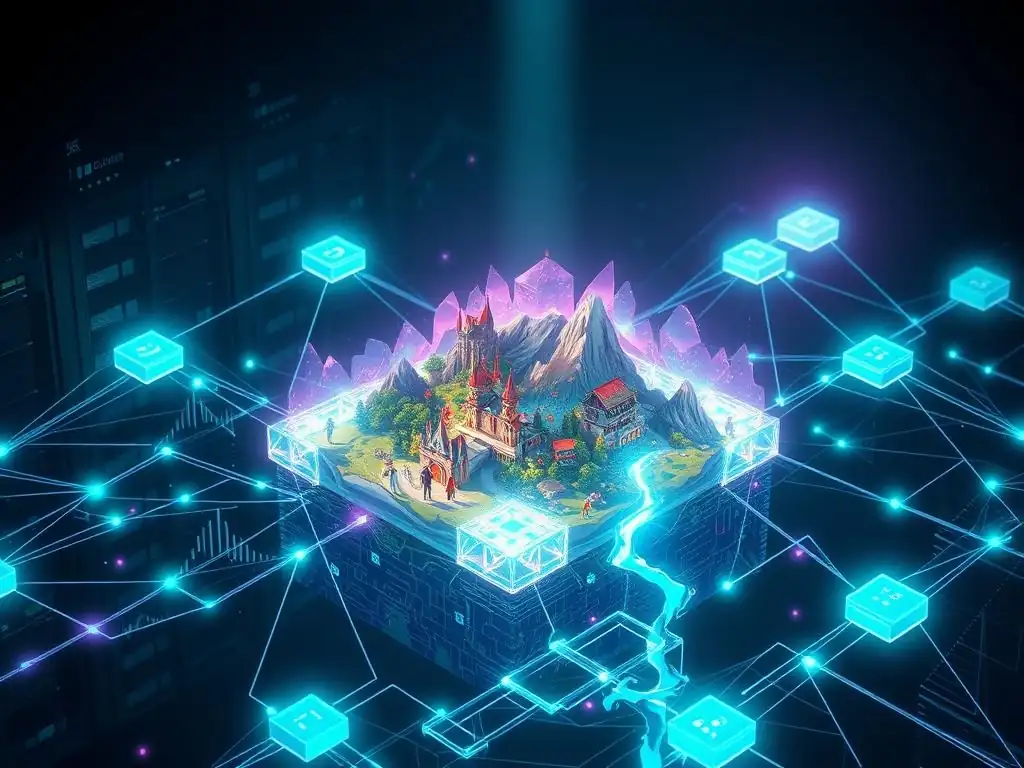
Welcome to Blockchain Trends, your go-to source for unraveling the transformative power of blockchain!
Ever wondered how blockchain is revolutionizing industries beyond just cryptocurrencies? Dive into our exploration of DeFi, enterprise applications, and the future of decentralized systems. Today, we're zeroing in on a particularly exciting development: smart contract blockchain gaming integration. Discover how these intelligent agreements are reshaping the gaming landscape, creating new possibilities and immersive experiences, and leaving you with the question: What's next for this powerful technology? Read on to find out!
- Smart Contract Blockchain Gaming Integration: Revolutionizing the Gaming Landscape
- What are Smart Contracts and Why are They Important for Blockchain Games?
- The Current State of Blockchain Gaming: Challenges and Opportunities
- How Smart Contracts are Transforming Blockchain Games: Use Cases
- Examples of Smart Contract Blockchain Games
- The Future of Smart Contract Integration in Gaming
- Smart Contract Blockchain Gaming Integration: A New Era for Players and Developers
-
Frequently Asked Questions
- What are smart contracts and how are they used in blockchain gaming?
- How does the integration of smart contracts enhance the player experience in blockchain games?
- What are some of the potential benefits of smart contract blockchain gaming integration for game developers?
- What are the main regulatory challenges facing the adoption of smart contract blockchain gaming integration?
- How does DeFi play a role in the future of smart contract blockchain gaming integration?
- Final Reflection: The Dawn of Decentralized Play
- Unleash Your Gaming Future with Smart Contracts!
Smart Contract Blockchain Gaming Integration: Revolutionizing the Gaming Landscape
Understanding the Synergy: Blockchain Gaming and Smart Contracts
The intersection of blockchain technology and the gaming industry has sparked a revolution, promising to reshape how games are developed, played, and experienced. At the heart of this transformation lies the concept of smart contracts. Blockchain gaming, fundamentally, leverages the decentralized and transparent nature of blockchain to introduce new paradigms of ownership, security, and player empowerment within virtual worlds.
Smart contracts act as the crucial bridge, enabling the seamless and automated execution of game mechanics, asset management, and economic systems within these blockchain-based gaming environments. This synergy creates a powerful ecosystem where players gain genuine ownership of in-game assets, participate in decentralized economies, and experience unprecedented levels of transparency and fairness.
The integration of smart contracts into blockchain gaming is not merely about adding a technological layer; it's about fundamentally altering the power dynamics within the gaming ecosystem. Traditional gaming models often place complete control in the hands of game developers and publishers, dictating rules, asset ownership, and in-game economies. Smart contracts, on the other hand, distribute this control, empowering players with verifiable ownership and enabling them to participate in decentralized and transparent systems. This shift towards player-centric gaming experiences is a core driver behind the growing interest and adoption of smart contract blockchain gaming integration across the industry.
What are Smart Contracts and Why are They Important for Blockchain Games?
Defining Smart Contracts: Automated Agreements on the Blockchain
Smart contracts are self-executing contracts with the terms of the agreement directly written into code. These contracts are deployed and stored on a blockchain, making them immutable and transparent. Imagine them as automated digital agreements that automatically execute specific actions when predefined conditions are met.
For instance, a smart contract could be programmed to automatically release funds when a player completes a certain in-game quest or to transfer ownership of a digital asset upon a successful trade. Because they reside on a blockchain, the terms and execution of smart contracts are verifiable by anyone on the network, eliminating the need for intermediaries and fostering trust between parties.
In essence, smart contracts remove the need for reliance on a central authority to enforce agreements or manage transactions. This characteristic is particularly transformative in gaming, where traditionally, game developers and publishers act as the sole arbiters of game rules, asset ownership, and in-game economies. By leveraging smart contracts, blockchain games can offer a more decentralized and transparent environment, where game mechanics and economic interactions are governed by code rather than centralized control. This shift towards code-driven governance is a cornerstone of the revolution brought about by smart contract blockchain gaming integration.
Key Benefits of Smart Contracts in Gaming
Enhanced Security and Transparency in Game Mechanics
Smart contracts significantly enhance the security and transparency of game mechanics. In traditional games, the underlying game logic and rules are often opaque and controlled solely by the game developers. This lack of transparency can lead to concerns about fairness, especially in competitive gaming or in-game economies. Smart contracts address this by making the core game logic and rules transparent and auditable. Because the code of a smart contract is publicly available on the blockchain, players can verify how game mechanics function, ensuring fairness and preventing manipulation.
Furthermore, the immutable nature of smart contracts on the blockchain provides a robust layer of security. Once a smart contract is deployed, its code cannot be altered, guaranteeing that the agreed-upon rules and mechanics will be consistently enforced. This immutability protects players from arbitrary changes to game rules or asset ownership by developers.
For example, if a game uses a smart contract to govern the distribution of rewards, players can be confident that the reward system will function exactly as programmed, without the possibility of hidden modifications or manipulations by the game developers. This enhanced security and transparency builds trust and fosters a more equitable gaming environment.
Automated Payouts and Rewards Systems
Traditional gaming reward systems often rely on centralized servers to track player progress and distribute rewards. This system can be prone to delays, errors, or even manipulation. Smart contracts offer a more efficient and reliable alternative by automating payout and reward distribution. When a player achieves a specific milestone or wins a competition in a smart contract-powered game, the contract automatically triggers the payout of rewards according to predefined conditions. This process is instantaneous, transparent, and eliminates the need for manual intervention.
Consider a tournament within a blockchain game utilizing smart contracts. The rules of the tournament, including prize distribution, are encoded within the smart contract. Upon the tournament's conclusion, the smart contract automatically identifies the winners and distributes the agreed-upon prizes directly to their wallets, without requiring manual processing or verification by the game organizers. This automation not only streamlines the reward process but also ensures fairness and prevents potential disputes or delays in payouts, leading to a smoother and more satisfying player experience.
Immutable Game Logic and Rules
The immutability of smart contracts on the blockchain extends to game logic and rules, offering a significant advantage over traditional gaming models. In conventional games, developers retain the power to modify game rules, economies, and even character attributes at any time, potentially impacting player investments and game balance. Smart contracts, once deployed, ensure that the core game logic and rules are permanently fixed and cannot be unilaterally altered by the developers. This immutability provides players with long-term assurance and stability within the game environment.
This feature is especially crucial for blockchain games that emphasize player ownership and investment in in-game assets. If game rules or asset mechanics were subject to change at the developer's whim, the value and utility of player-owned assets could be undermined. Smart contracts prevent this by enshrining the game's fundamental rules in immutable code, guaranteeing that these rules will remain consistent over time. This stability and predictability fosters player confidence and encourages long-term engagement, as players can be certain that the foundational elements of the game will not be arbitrarily changed, safeguarding their investments and in-game achievements.
The Current State of Blockchain Gaming: Challenges and Opportunities
Limitations of Traditional Gaming Models
Traditional gaming models, while highly successful, face inherent limitations that blockchain gaming and smart contracts are poised to address. A primary limitation is the lack of true ownership for players. In conventional games, players purchase licenses to access and use in-game items, but they do not actually own these digital assets. Game developers retain ultimate control, and in-game items are typically confined to a single game environment, lacking portability or real-world value outside of the game. This centralized control extends to in-game economies, which are managed and regulated by game publishers, often without transparency or player input.
Another significant limitation is the potential for centralized servers to be vulnerable to security breaches, outages, or even game shutdowns. If a traditional game's servers are compromised or shut down, players can lose access to their progress, in-game items, and the entire game experience. Furthermore, the lack of transparency in traditional game mechanics and reward systems can breed mistrust and concerns about fairness. These limitations highlight the need for a more player-centric, secure, and transparent gaming paradigm, which blockchain gaming and smart contract integration aim to deliver.
Addressing Challenges with Smart Contract Integration
Smart contract integration in blockchain gaming directly addresses many of the limitations inherent in traditional gaming models. By enabling true ownership of in-game assets through NFTs (Non-Fungible Tokens) secured by smart contracts, players gain verifiable control and portability of their digital possessions. These NFTs can be traded and utilized across different blockchain platforms and potentially even different games, breaking down the walled gardens of traditional gaming ecosystems. Smart contracts also facilitate the creation of decentralized game economies, where players can actively participate in trading, earning, and governing in-game resources.
Furthermore, the decentralized nature of blockchain itself enhances security and resilience. Blockchain networks are inherently more resistant to single points of failure compared to centralized servers, reducing the risk of game outages and data breaches. Smart contracts, with their transparent and immutable code, foster trust and fairness in game mechanics and reward systems, addressing concerns about manipulation or opaque game operations. By tackling these core limitations, smart contract blockchain gaming integration offers a compelling alternative to traditional gaming, promising a more player-empowering, secure, and transparent gaming future.
How Smart Contracts are Transforming Blockchain Games: Use Cases
In-Game Asset Ownership and Trading (NFTs) via Smart Contracts
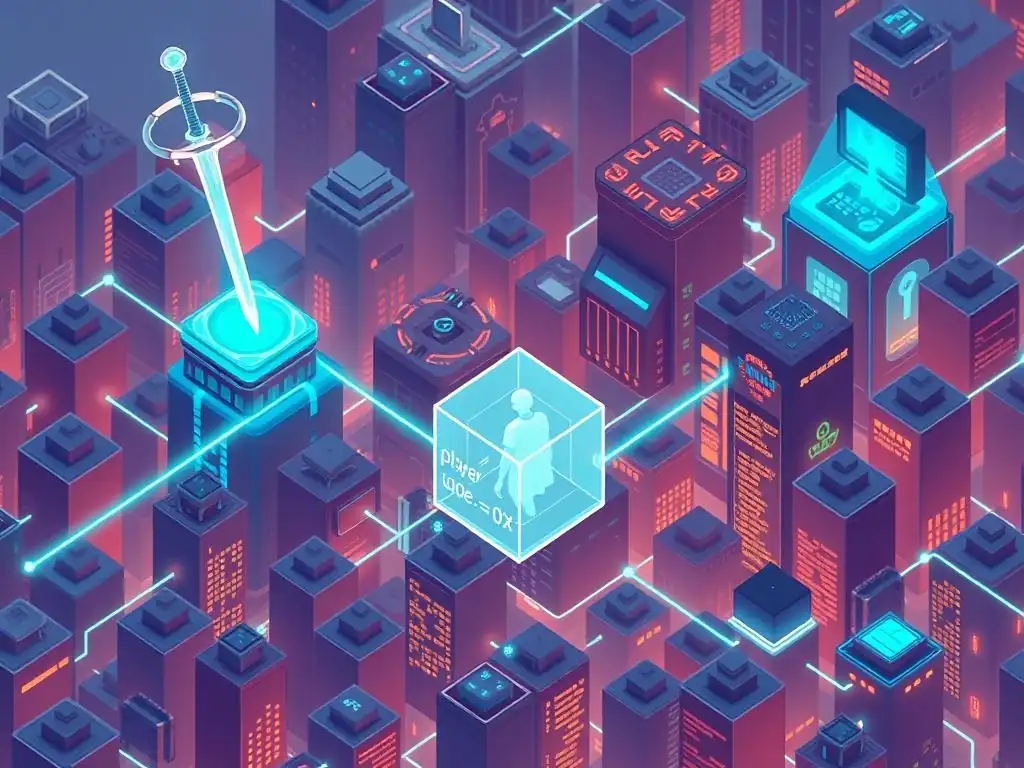
Smart contracts are fundamental to enabling true in-game asset ownership and trading through Non-Fungible Tokens (NFTs). NFTs, representing unique digital assets like characters, items, or virtual land, are secured and managed by smart contracts on the blockchain. These smart contracts define the properties of each NFT, track ownership, and facilitate secure and transparent trading. This system empowers players with genuine ownership of their in-game assets, allowing them to buy, sell, and trade these assets outside of the game's direct control on open marketplaces.
The use of smart contracts for NFT management in games marks a significant departure from traditional gaming models. Players are no longer merely licensing in-game items; they are becoming true owners of digital property, with the ability to control and monetize their assets. This shift towards player-owned assets has profound implications for game economies and player engagement, fostering a more vibrant and dynamic gaming ecosystem where players are not just consumers but also participants in the value creation process.
Smart Contract-Enabled NFT Marketplaces within Games
Smart contracts are not only used to manage NFTs but also to power in-game NFT marketplaces. These marketplaces, often integrated directly into blockchain games, allow players to seamlessly buy, sell, and trade their in-game NFTs with each other. Smart contracts automate the entire trading process, ensuring secure and transparent transactions. When a player buys or sells an NFT on a smart contract-enabled marketplace, the contract automatically executes the trade, transfers ownership of the NFT, and distributes funds according to predefined rules.
These in-game marketplaces, facilitated by smart contracts, create dynamic and player-driven economies within blockchain games. Players can actively participate in trading, speculate on asset values, and build their in-game wealth through skillful gameplay and market participation. The transparency and automation provided by smart contracts ensure fair and efficient trading, fostering a thriving ecosystem of in-game asset exchange and contributing to the overall engagement and longevity of blockchain games.
Verifiable Scarcity and Authenticity of In-Game Items
Smart contracts are instrumental in establishing verifiable scarcity and authenticity for in-game items, addressing a long-standing challenge in digital asset ownership. In traditional games, digital items can be easily duplicated or manipulated, undermining their scarcity and value. Smart contracts, however, enable developers to create NFTs with provably limited supply and verifiable authenticity. The blockchain record of an NFT's creation and ownership, managed by a smart contract, acts as an immutable certificate of authenticity, ensuring that each NFT is unique and cannot be counterfeited.
This verifiable scarcity and authenticity, guaranteed by smart contracts, is crucial for establishing the value and desirability of in-game NFTs. Players can be confident that their rare or limited-edition NFTs are genuinely scarce and authentic, driving demand and supporting robust in-game economies. This trust in scarcity and authenticity, underpinned by smart contracts, is a key factor in the growing appeal of blockchain gaming and the value proposition of player-owned in-game assets.
Decentralized Game Economies and Player-Driven Ecosystems
Smart contracts are the building blocks of decentralized game economies, shifting away from centrally controlled economic models towards player-driven ecosystems. In traditional games, in-game economies are typically managed and regulated by game developers, often with limited transparency or player participation. Smart contracts enable the creation of game economies governed by code and player interactions, fostering greater transparency, fairness, and player agency. These decentralized economies can encompass various aspects of the game, from resource management and item pricing to reward distribution and governance.
By leveraging smart contracts, blockchain games can empower players to actively participate in shaping the game's economic landscape. Players can contribute to the economy through gameplay, trading, and even governance mechanisms, creating a more dynamic and engaging ecosystem. This shift towards player-driven economies is a core tenet of blockchain gaming, fostering a sense of ownership and community participation that is often absent in traditional gaming models.
Smart Contracts for Dynamic Pricing and Supply Management
Smart contracts can be programmed to manage dynamic pricing and supply of in-game resources and items, creating more responsive and balanced game economies. In traditional games, item pricing and resource availability are often fixed or adjusted manually by developers, which can lead to imbalances and inefficiencies. Smart contracts can automate these processes, dynamically adjusting prices and resource distribution based on real-time market demand and supply within the game.
For example, a smart contract could be designed to automatically adjust the price of a particular in-game item based on its trading volume and scarcity. If demand for an item increases, the smart contract could algorithmically raise the price, and vice versa. Similarly, smart contracts can be used to manage the supply of in-game resources, releasing more resources when demand is high and reducing supply when demand is low. This dynamic and automated approach to pricing and supply management, powered by smart contracts, creates more resilient and player-responsive game economies.
Fair and Transparent Distribution of Game Resources
Smart contracts ensure fair and transparent distribution of game resources, addressing concerns about centralized control and potential manipulation in traditional gaming economies. In conventional games, the distribution of in-game resources is often opaque, controlled solely by game developers. Smart contracts can automate and transparently manage resource distribution based on predefined rules and algorithms. For instance, a smart contract could be designed to distribute rewards proportionally based on player contributions to the game ecosystem or to randomly distribute rare items in a provably fair manner.
This transparency and automation, enabled by smart contracts, builds trust and fairness in resource distribution within blockchain games. Players can be confident that resources are being distributed according to predetermined rules, without bias or manipulation. This fair and transparent approach to resource allocation is crucial for fostering a healthy and equitable game economy, encouraging player participation and long-term engagement.
Smart Contract-Based Governance and Community Participation
Smart contracts are enabling new forms of game governance and community participation through Decentralized Autonomous Organizations (DAOs) and player voting mechanisms. In traditional gaming, game governance is entirely centralized, with developers and publishers making all decisions regarding game development, updates, and community management. Smart contracts facilitate the creation of decentralized governance structures where players can have a direct say in the game's future direction.
By leveraging smart contracts for governance, blockchain games are empowering players to become active stakeholders in the game's development and evolution. This shift towards community-driven governance fosters a stronger sense of ownership and engagement, creating a more collaborative and player-centric gaming experience.
Decentralized Autonomous Organizations (DAOs) in Gaming
Decentralized Autonomous Organizations (DAOs), governed by smart contracts, are emerging as a powerful tool for community-driven game governance. A DAO is essentially an organization run by code, with rules and decision-making processes encoded in smart contracts. In the context of gaming, DAOs can be used to manage various aspects of game governance, such as voting on game updates, allocating development funds, or managing community resources. Smart contracts ensure that DAO operations are transparent, auditable, and resistant to manipulation, as all rules and actions are publicly recorded on the blockchain.
DAOs in gaming empower players to collectively govern the game's direction, moving away from top-down, developer-centric control. Players can participate in DAO governance by holding governance tokens, which grant voting rights and allow them to propose and vote on game-related decisions. This decentralized governance model fosters a stronger sense of community ownership and shared responsibility for the game's success.
Player Voting and Game Development Influence
Smart contracts facilitate player voting mechanisms, allowing players to directly influence game development and updates. Using smart contracts, blockchain games can implement voting systems where players can use their in-game assets or governance tokens to vote on proposed changes to the game, such as new features, rule adjustments, or content updates. Smart contracts ensure that voting is transparent, secure, and verifiable, preventing manipulation and ensuring accurate vote counting.
Player voting, enabled by smart contracts, gives players a direct voice in shaping the game's future. This participatory approach to game development fosters a stronger sense of community engagement and alignment between developers and players. By allowing players to directly influence game development, blockchain games are creating more player-centric and community-driven gaming experiences.
Provably Fair Gaming with Smart Contract Audits
Smart contracts are enhancing the fairness and integrity of game outcomes through provably fair gaming mechanisms and smart contract audits. In traditional gaming, particularly in games involving chance or randomness, players often rely on the developer's assurance of fairness, without verifiable proof. Smart contracts can implement provably fair algorithms, where the randomness of game outcomes can be cryptographically verified, ensuring that the game is not rigged or manipulated.
Furthermore, smart contracts themselves can be audited by independent security experts to ensure that the game logic and randomness mechanisms are implemented correctly and securely. These audits enhance trust and transparency, providing players with verifiable assurance that the game is operating fairly and as intended.
Ensuring Randomness and Integrity in Game Outcomes
Smart contracts can incorporate cryptographic techniques to ensure randomness and integrity in game outcomes. Traditional random number generators (RNGs) used in games can be susceptible to manipulation or predictability. Smart contracts can leverage blockchain-based randomness sources, which are cryptographically secure and auditable, to generate truly random outcomes for in-game events, such as loot drops, critical hits, or game progression. This cryptographic randomness ensures that game outcomes are unbiased and unpredictable, enhancing fairness and preventing manipulation.
Provably fair gaming, powered by smart contract-based randomness, provides players with verifiable assurance of game integrity. Players can independently verify the randomness of game outcomes, eliminating reliance on developer claims and fostering trust in the game's fairness.
Smart Contracts as a Source of Trust for Players
Smart contracts serve as a source of trust for players in blockchain games. In traditional gaming, trust is often placed in the game developers and publishers to operate the game fairly and honestly. Smart contracts shift this paradigm by encoding game rules and mechanics into transparent and immutable code. Players can inspect the smart contract code to understand how the game functions and verify that it operates as intended. This code transparency, combined with the immutability of smart contracts on the blockchain, builds a foundation of trust that is not reliant on centralized authorities.
By providing verifiable transparency and immutability, smart contracts empower players with greater confidence in the fairness and integrity of blockchain games. This trust is crucial for fostering player engagement, adoption, and the long-term success of blockchain gaming ecosystems.
Examples of Smart Contract Blockchain Games
Axie Infinity: Breeding, Battling, and Earning with Smart Contracts
Axie Infinity is a prominent example of a blockchain game leveraging smart contracts for its core gameplay and economy. Built on the Ethereum blockchain, Axie Infinity centers around collectible creatures called Axies, which are NFTs managed by smart contracts. Players breed, battle, and trade Axies, earning cryptocurrency tokens (AXS and SLP) through gameplay. Smart contracts govern the breeding mechanics, battle outcomes, and the distribution of rewards, ensuring transparency and fairness in the game's ecosystem.
The Axie Infinity marketplace, also powered by smart contracts, facilitates the trading of Axies and other in-game assets. Players can buy and sell Axies using cryptocurrency, creating a player-driven economy where the value of Axies is determined by market demand and gameplay utility. Axie Infinity exemplifies how smart contract blockchain gaming integration can create engaging gameplay loops, player-owned economies, and opportunities for players to earn real-world value through gaming.
Decentraland: Virtual Land Ownership and Experiences via Smart Contracts
Decentraland is a decentralized virtual world where users can own, develop, and monetize virtual land parcels represented as NFTs on the Ethereum blockchain. Smart contracts are integral to Decentraland, managing the ownership, trading, and functionality of these virtual land parcels. Each LAND parcel is a unique NFT, and smart contracts track ownership, facilitate land sales, and enable users to build and deploy interactive experiences on their virtual land.
The Decentraland marketplace, utilizing smart contracts, allows users to buy and sell LAND parcels and other in-world assets. Smart contracts also govern the in-world economy, enabling users to monetize their virtual land through various means, such as hosting events, creating games, or selling virtual goods and services. Decentraland showcases how smart contract blockchain gaming integration can create persistent, user-owned virtual worlds with thriving player-driven economies and diverse opportunities for creation and monetization.
The Future of Smart Contract Integration in Gaming
Emerging Trends in Smart Contract Development for Games
The future of smart contract development for games is marked by several emerging trends aimed at enhancing scalability, interoperability, and user experience. Layer-2 scaling solutions are gaining prominence to address the limitations of blockchain transaction speeds and costs, particularly on networks like Ethereum. These solutions, such as Polygon and Immutable X, enable faster and cheaper transactions for in-game interactions, making blockchain games more accessible and user-friendly.
Interoperability between different blockchain games is another key trend. Developers are exploring ways to create cross-game compatibility for NFTs and in-game assets, allowing players to utilize their assets across multiple gaming environments. This interoperability would break down the silos of individual blockchain games and create a more interconnected and expansive metaverse. Furthermore, advancements in smart contract programming languages and development tools are simplifying the creation of complex and feature-rich smart contracts for gaming, lowering the barrier to entry for game developers.
Layer-2 Scaling Solutions for Increased Transaction Speed
Layer-2 scaling solutions are crucial for overcoming the limitations of blockchain transaction speed and cost, which can hinder the user experience in blockchain games. Blockchains like Ethereum, while secure and decentralized, can experience network congestion and high transaction fees, particularly during periods of high demand. Layer-2 solutions, built on top of the main blockchain, process transactions off-chain and then batch them onto the main chain, significantly increasing transaction throughput and reducing gas fees.
For blockchain gaming, layer-2 scaling solutions are essential for enabling seamless and affordable in-game transactions, such as NFT trading, asset transfers, and in-game purchases. Solutions like Polygon, Immutable X, and others are being increasingly adopted by blockchain game developers to improve scalability and user experience, paving the way for more mainstream adoption of smart contract blockchain gaming integration.
Interoperability between Different Blockchain Games
Interoperability between different blockchain games is a nascent but highly promising trend that could revolutionize the gaming landscape. Currently, in-game assets and NFTs are typically locked within a single game ecosystem, lacking portability or utility across different games. Interoperability aims to create standards and protocols that would allow NFTs and in-game assets to be used in multiple blockchain games, creating a more interconnected and open metaverse.
Imagine owning a rare sword NFT that could be used in multiple different RPG games or a virtual land parcel that could be accessed and developed from various virtual world platforms. Interoperability would unlock new levels of utility and value for player-owned assets, fostering a more dynamic and interconnected gaming ecosystem. While still in early stages, the development of interoperability standards and technologies is a key area of focus for the future of smart contract blockchain gaming integration.
Challenges and Considerations for Developers
Despite the immense potential, integrating smart contracts into blockchain games presents several challenges and considerations for developers. Smart contract security is paramount, as vulnerabilities in smart contract code can lead to exploits and loss of player assets. Thorough security audits and adherence to best practices are essential to mitigate these risks. Regulatory compliance and legal frameworks surrounding blockchain gaming and NFTs are still evolving and vary across jurisdictions, posing challenges for developers in navigating the legal landscape.
Furthermore, user experience remains a critical consideration. Blockchain technology can be complex for mainstream gamers, and developers need to prioritize user-friendly interfaces and seamless onboarding processes to ensure broad adoption. Balancing decentralization with scalability and performance is also an ongoing challenge, requiring developers to carefully choose appropriate blockchain platforms and scaling solutions.
Smart Contract Security Audits and Best Practices
Smart contract security audits are a crucial step in the development process for blockchain games. Due to the immutable nature of smart contracts and the potential for financial value associated with in-game assets, security vulnerabilities can have significant consequences. Independent security audits, conducted by specialized firms, involve a thorough review of smart contract code to identify potential vulnerabilities and security flaws.
Adhering to smart contract development best practices is also essential. This includes following secure coding guidelines, using established security patterns, and implementing robust testing and verification procedures. Developers should prioritize security throughout the smart contract development lifecycle to minimize risks and ensure the safety of player assets and game integrity.
Regulatory Compliance and Legal Framework
Regulatory compliance and legal frameworks surrounding blockchain gaming and NFTs are still evolving and present a complex landscape for developers. Regulations related to virtual assets, NFTs, and online gaming vary significantly across different jurisdictions, and developers need to navigate these varying legal requirements to ensure compliance. Issues such as taxation, consumer protection, and gambling regulations can impact blockchain game development and operations.
Developers need to stay informed about evolving regulatory landscapes and seek legal counsel to ensure compliance in relevant jurisdictions. Engaging with regulators and industry bodies to shape responsible and clear regulatory frameworks for blockchain gaming is also crucial for the long-term growth and sustainability of the sector.
Smart Contract Blockchain Gaming Integration: A New Era for Players and Developers
Smart contract blockchain gaming integration is heralding a new era for both players and developers in the gaming industry. For players, it unlocks true ownership of in-game assets, fosters decentralized and transparent game economies, and empowers community participation in game governance. This shift towards player-centric gaming experiences is creating more engaging, rewarding, and equitable gaming ecosystems.
For developers, smart contracts provide powerful tools to build innovative and sustainable game models, fostering stronger player communities and new revenue streams. While challenges remain, the transformative potential of smart contract blockchain gaming integration is undeniable, promising a future where gaming is more decentralized, player-owned, and intrinsically linked to the burgeoning world of blockchain technology.
Frequently Asked Questions
What are smart contracts and how are they used in blockchain gaming?
Smart contracts are self-executing agreements written in code and stored on a blockchain. In gaming, they automate processes like asset ownership and reward distribution, ensuring transparency and fairness.
How does the integration of smart contracts enhance the player experience in blockchain games?
Smart contracts enable true ownership of in-game assets, allowing players to trade, sell, or use them across different games. This creates a more dynamic and engaging player experience.
What are some of the potential benefits of smart contract blockchain gaming integration for game developers?
Developers can benefit from new revenue streams through NFT sales and decentralized marketplaces. It also fosters stronger community engagement and reduces the risk of fraud.
What are the main regulatory challenges facing the adoption of smart contract blockchain gaming integration?
Regulatory uncertainty surrounding NFTs and virtual assets is a major hurdle. Governments are still developing clear guidelines for compliance and consumer protection.
How does DeFi play a role in the future of smart contract blockchain gaming integration?
DeFi protocols can be integrated to offer yield farming opportunities with in-game assets, creating new ways for players to earn rewards. This incentivizes participation and fosters a more robust gaming ecosystem.
Okay, here's a final reflection designed for your article "The Integration of Smart Contracts in Blockchain Gaming," optimized for the keyword "Smart contract blockchain gaming integration," and following the structure you outlined:
Final Reflection: The Dawn of Decentralized Play
The journey through the integration of smart contracts in blockchain gaming reveals a transformative shift, and its current relevance is undeniable. The fusion of these technologies is not merely a trend; it's a fundamental restructuring of how games are built, owned, and experienced, promising a future where players truly own their digital assets and participate in a more equitable gaming ecosystem.
This evolution, driven by the power of smart contracts, has profoundly impacted the cultural landscape of gaming. The promise of verifiable scarcity, provably fair gameplay, and player-driven economies is reshaping our expectations of what a game can be. It's a movement towards greater transparency and control, empowering players in ways previously unimaginable. The future of gaming is not just about better graphics or more immersive worlds; it's about ownership, control, and community. Smart contracts are the key to unlocking that future.
As we stand at the cusp of this decentralized revolution, let us not simply be passive observers. Consider how you can engage with this emerging landscape. Explore blockchain games, understand the mechanics of smart contracts, and advocate for a future where players are empowered and rewarded for their contributions. The integration of smart contracts in blockchain gaming is not just a technological advancement; it's an invitation to build a more transparent, equitable, and ultimately, more engaging world of play.
Unleash Your Gaming Future with Smart Contracts!
Thank you for exploring the world of smart contracts and blockchain gaming with us. We hope you've gained valuable insights into how these technologies are transforming the way we play and interact with games. Now, it's time to deepen your understanding and become part of this exciting evolution!
Here are some ways to get started:
- Start building your own simple blockchain game prototype! Use beginner-friendly platforms and tutorials to learn how smart contracts are practically applied. Don't just read about it—create your own!
- Explore existing blockchain games and engage with their communities on platforms like Discord or Telegram. Share your thoughts, ask questions, and contribute to the ongoing discussion.
- Research and share your findings! Write a short blog post or create a video tutorial about a specific smart contract function used in a game, and help expand the community’s collective knowledge.
What innovative blockchain game idea are you most excited to see brought to life with smart contracts, and what role would you like to play in making it happen?
Leave a Reply