
The Intersection of Virtual Reality and Blockchain in Gaming

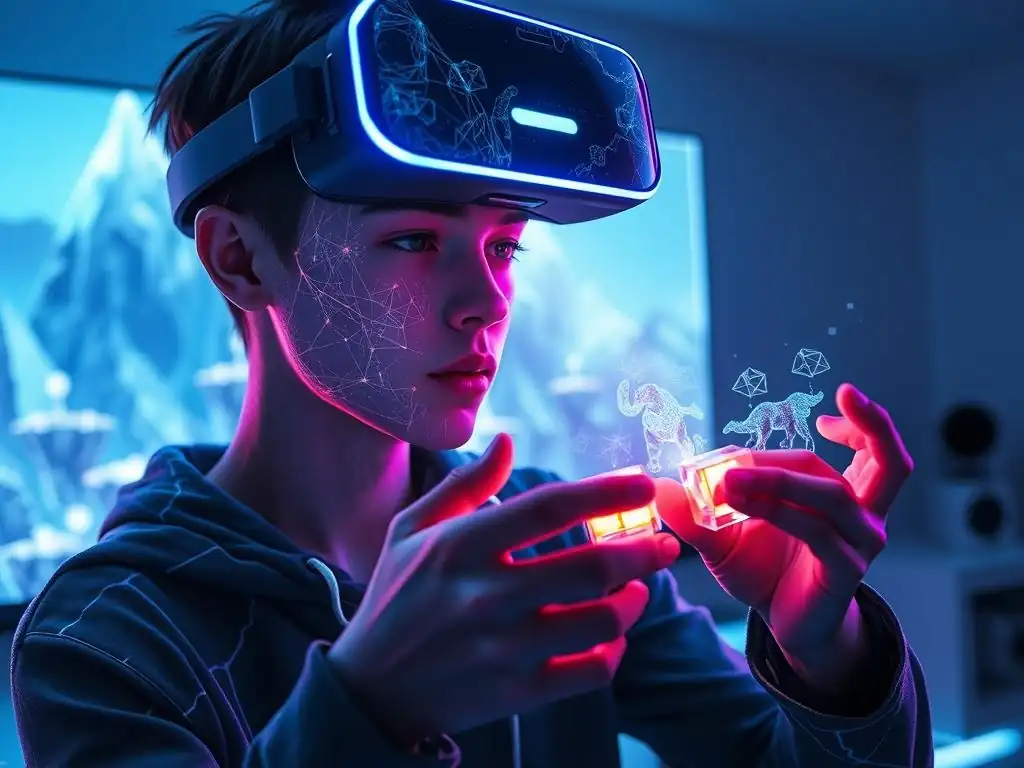
Welcome to Blockchain Trends, your guide to understanding the revolutionary potential of blockchain beyond the hype. This week, we dive deep into the exciting intersection of Virtual Reality and Blockchain in Gaming. But what exactly are the VR blockchain gaming integration benefits? Prepare to discover how this powerful combination is reshaping the gaming landscape, offering unparalleled ownership, security, and immersive experiences. Intrigued? Let's explore the future of gaming, together.
Blockchain Trends: Exploring the Evolution of Gaming with Blockchain and VR
The integration of blockchain technology into virtual reality (VR) gaming represents a significant leap forward in the evolution of digital entertainment. As Blockchain Trends explores the transformative potential of blockchain beyond cryptocurrencies, examining its application within VR gaming provides a compelling illustration of this evolution. This article delves into how blockchain is not just enhancing, but fundamentally reshaping the VR gaming experience, paving the way for more immersive, secure, and player-centric virtual worlds. We will explore the benefits of VR blockchain gaming integration, examining real-world examples and future possibilities within this exciting intersection of technologies.
The gaming industry is constantly seeking innovations to enhance player engagement and create more compelling experiences. Virtual Reality offers immersion unlike any other medium, placing players directly inside digital worlds. Blockchain technology, with its decentralized and secure nature, provides solutions to long-standing challenges in gaming, such as digital asset ownership and in-game economies.
By combining these two powerful technologies, VR blockchain gaming is emerging as a frontier that promises to redefine how we play, interact, and even own digital assets within virtual environments. This exploration is crucial for understanding the next wave of gaming and the broader implications for the metaverse and digital ownership.
- How does blockchain enhance security in VR gaming?
- What are the VR blockchain gaming integration benefits for developers?
- How does blockchain facilitate cross-game interoperability in VR?
- What role does DeFi play in the VR gaming blockchain space?
- What are the regulatory challenges surrounding VR blockchain gaming integration benefits?
Understanding the Fundamentals: VR and Blockchain Technology
What is Virtual Reality (VR) and How Does it Work?
Virtual Reality (VR) is an immersive technology that uses headsets and sensors to create a simulated, three-dimensional environment. Unlike traditional gaming on screens, VR envelops the user's senses, making them feel physically present within the digital world. This is achieved through head-mounted displays (HMDs) that present stereoscopic 3D images, creating depth perception and a wide field of view. Positional tracking sensors monitor the user's movements, allowing them to look around and interact with the virtual environment naturally.
The core of VR technology lies in tricking the brain into believing it is in another place. High refresh rates and low latency are crucial for a comfortable and believable VR experience, minimizing motion sickness and maximizing immersion. Modern VR systems often incorporate hand controllers for interaction, allowing players to reach out and manipulate objects within the virtual world.
Haptic feedback, provided through controllers or suits, further enhances immersion by simulating the sense of touch. Essentially, VR works by creating a closed-loop feedback system where the user's actions in the real world are translated into actions within the virtual world, and sensory information from the virtual world is fed back to the user, creating a powerful sense of presence.
Demystifying Blockchain Technology: A Decentralized Foundation
Blockchain technology, at its core, is a decentralized, distributed ledger system that records transactions across many computers. This decentralized nature is key to its security and transparency. Instead of relying on a central authority, blockchain operates on a network of nodes, each holding a copy of the ledger. Transactions are grouped into "blocks" which are cryptographically linked together, forming a "chain." This chain is immutable, meaning once a block is added, it cannot be altered or removed, ensuring data integrity.
The security of blockchain comes from cryptographic hashing and consensus mechanisms. Hashing ensures that each block is uniquely identifiable and linked to the previous block, making tampering extremely difficult. Consensus mechanisms, like Proof-of-Work or Proof-of-Stake, are algorithms that ensure that all nodes in the network agree on the validity of new transactions, preventing fraudulent activities. This foundation of decentralization, security, and transparency makes blockchain an ideal technology for applications requiring trust and immutability, such as digital currencies, supply chain management, and, increasingly, gaming.
The Synergy Potential: Why VR and Blockchain are a Perfect Match for Gaming
The combination of VR and blockchain technology creates a powerful synergy that addresses key limitations and unlocks new possibilities within the gaming industry. VR offers unparalleled immersion and presence, while blockchain provides solutions for digital ownership, secure economies, and decentralized governance. This synergy is particularly potent in addressing player concerns about the value and control of in-game assets, which have traditionally been locked within centralized game ecosystems.
Blockchain's decentralized nature complements VR's immersive environments by creating virtual worlds that are not only visually engaging but also economically and politically decentralized. Imagine owning land, items, or even characters within a VR game, and having true ownership verified and secured on a blockchain.
This is the promise of VR blockchain gaming integration, offering players more than just entertainment; it offers digital ownership, economic participation, and a greater stake in the virtual worlds they inhabit. This fusion fosters a new paradigm where players are not just consumers of game content, but active participants in the game's economy and governance, driving the evolution of gaming towards more open and player-centric models.
VR Blockchain Gaming Integration Benefits: Transforming the Gaming Landscape
Enhanced Security and Ownership of In-Game Assets through Blockchain
One of the most significant VR blockchain gaming integration benefits is the enhanced security and verifiable ownership of in-game assets. Traditional games often operate on centralized servers, meaning player accounts and in-game items are controlled by the game developer. This system is vulnerable to hacking, server shutdowns, and arbitrary decisions by the game company that can result in players losing access to their purchased or earned items. Blockchain changes this paradigm by allowing in-game assets to be tokenized as Non-Fungible Tokens (NFTs) on a blockchain.
When in-game assets are represented as NFTs, players gain true ownership and control over them. These NFTs are securely recorded on the blockchain, and ownership is cryptographically verifiable. This means that even if a game developer shuts down a game or faces security breaches, players retain ownership of their NFTs, which can potentially be used in other compatible games or traded on NFT marketplaces.
This enhanced security and ownership are crucial for building trust and value within VR gaming ecosystems, as players can invest time and resources into games knowing their digital assets are truly theirs. For instance, if a player spends hundreds of hours earning a rare virtual sword in a VR RPG, blockchain ensures that this sword cannot be duplicated, taken away without permission, or lost due to centralized server issues, offering unprecedented security and peace of mind.
True Digital Ownership in VR Games: NFTs and Blockchain Technology
NFTs are the cornerstone of true digital ownership in VR blockchain games. Representing unique digital assets, NFTs can range from virtual land and in-game items to avatars and even access keys within VR environments. Each NFT is unique and its ownership is transparently and immutably recorded on the blockchain, providing verifiable proof of ownership that is independent of any single game developer or platform. This fundamentally shifts the power dynamic in gaming, empowering players with control over their digital possessions.
Consider a VR metaverse game where players can purchase virtual land parcels as NFTs. This land is not just a visual element within the game; it is a unique digital asset that the player owns outright. They can build on it, rent it out, or sell it to other players, all within a decentralized and transparent framework. This level of ownership extends to in-game items as well.
Imagine acquiring a rare artifact in a VR adventure game, represented as an NFT. This artifact could not only be used within the game but also traded on external NFT marketplaces, potentially holding real-world value. The integration of NFTs into VR gaming creates a new dimension of digital ownership, transforming in-game assets from mere virtual trinkets into potentially valuable and tradable digital property.
Creating Secure and Transparent In-Game Economies using Blockchain
Blockchain technology provides the infrastructure for creating secure and transparent in-game economies within VR environments. Traditional in-game economies are often opaque and susceptible to manipulation, with game developers having complete control over currency issuance, item distribution, and market rules. Blockchain enables the creation of decentralized in-game currencies and marketplaces, fostering greater transparency and fairness.
Cryptocurrencies built on blockchain can serve as the native currency within VR games, enabling peer-to-peer transactions without intermediaries. Smart contracts, self-executing agreements coded on the blockchain, can automate in-game economic processes, such as item trading, quest rewards, and even governance decisions. This automation and decentralization reduce the risk of fraud, manipulation, and unfair practices within the in-game economy.
For example, a VR MMORPG could utilize a blockchain-based token for its in-game currency. Players could earn this currency by completing quests, selling items, or participating in in-game events. All transactions would be recorded on the blockchain, providing a transparent and auditable record of the game's economy, fostering trust and stability within the virtual world.
Exploring Play-to-Earn (P2E) Models in VR: A Revolutionary Approach
Play-to-Earn (P2E) models represent a revolutionary approach to gaming, enabled by VR blockchain gaming integration benefits. Unlike traditional gaming models where players primarily spend money, P2E allows players to earn cryptocurrency or NFTs through gameplay, effectively turning gaming into a potential source of income. This model is particularly impactful in VR environments, where immersion and engagement are heightened, making the earning experience more compelling and rewarding.
In VR P2E games, players can earn by completing quests, winning battles, creating and selling in-game content, or even just by participating in the game's economy. These earnings are typically in the form of blockchain-based tokens or NFTs, which can be traded on cryptocurrency exchanges or NFT marketplaces for real-world value. This model has the potential to democratize access to economic opportunities, particularly in regions where traditional income streams are limited.
Consider a VR farming simulation game built on blockchain. Players could earn tokens by cultivating and selling virtual crops, effectively running a virtual farm and earning real-world income through their in-game activities. This shift towards P2E models in VR gaming is not just about playing games; it's about participating in virtual economies and potentially earning a living within immersive digital worlds.
Immersive Experiences and Decentralized Gaming: The Power of VR and Blockchain
Building Decentralized VR Gaming Worlds: Decentraland and its VR Integration
Decentraland stands as a prominent example of a decentralized VR gaming world leveraging blockchain technology. Built on the Ethereum blockchain, Decentraland is a virtual world where users can buy, sell, and develop virtual land as NFTs. While currently accessible through web browsers, Decentraland is actively developing its VR integration, aiming to provide a truly immersive experience within its decentralized metaverse. This integration is crucial for realizing the full potential of decentralized VR gaming.
Decentraland's VR integration promises to enhance the sense of presence and interaction within its virtual world. Imagine exploring user-created galleries, attending virtual concerts, or socializing with other players in Decentraland, all within a fully immersive VR environment. Because land ownership and in-world assets are recorded on the blockchain, users have true ownership and control over their digital assets within Decentraland.
This decentralized ownership model, combined with VR immersion, creates a powerful combination, fostering a sense of community, creativity, and economic opportunity within the virtual world. Decentraland's continued development of VR integration is a key indicator of the direction of decentralized gaming, showcasing the potential for blockchain to underpin immersive and user-owned virtual worlds.
Enhanced Player Engagement and Interaction in Blockchain-Based VR Environments
VR blockchain gaming integration benefits extend to enhanced player engagement and interaction within virtual environments. Blockchain-based systems can foster stronger communities and more meaningful interactions by empowering players with ownership, governance, and economic participation. The transparency and security of blockchain can build trust among players, encouraging more collaborative and engaging gameplay experiences.
For instance, consider a VR strategy game where players can form alliances and manage resources together. Blockchain can facilitate transparent resource management and fair distribution of rewards within alliances, reducing mistrust and fostering stronger team dynamics. Furthermore, blockchain-based governance mechanisms, such as Decentralized Autonomous Organizations (DAOs), can allow players to participate in shaping the game's development and future, giving them a greater sense of agency and ownership over the game world.
This increased player agency, combined with the immersive nature of VR, can lead to deeper engagement, stronger community bonds, and more rewarding gaming experiences. Players are not just interacting with a game; they are interacting within a player-driven ecosystem where their actions have real and lasting impact.
The Role of DAOs in Shaping the Future of VR Gaming Communities
Decentralized Autonomous Organizations (DAOs) are playing an increasingly important role in shaping the future of VR gaming communities. DAOs are community-led entities with rules encoded on a blockchain, making them transparent, autonomous, and resistant to censorship. In VR blockchain gaming, DAOs can empower players to collectively govern game ecosystems, manage community funds, and even influence game development decisions.
Imagine a VR MMORPG where a DAO governs the game's economy and development roadmap. Token holders within the game community could vote on proposals related to in-game balance, new features, or even the allocation of development resources. This decentralized governance model gives players a direct voice in the game's evolution, fostering a sense of ownership and shared responsibility for the game's success.
DAOs can also manage community treasuries, funded by in-game transactions or token sales, which can be used to support community initiatives, reward content creators, or fund further game development. The integration of DAOs into VR gaming is paving the way for more democratic and player-centric gaming ecosystems, where communities have a direct and meaningful role in shaping the virtual worlds they inhabit.
Use Cases and Examples of VR Blockchain Gaming Integration
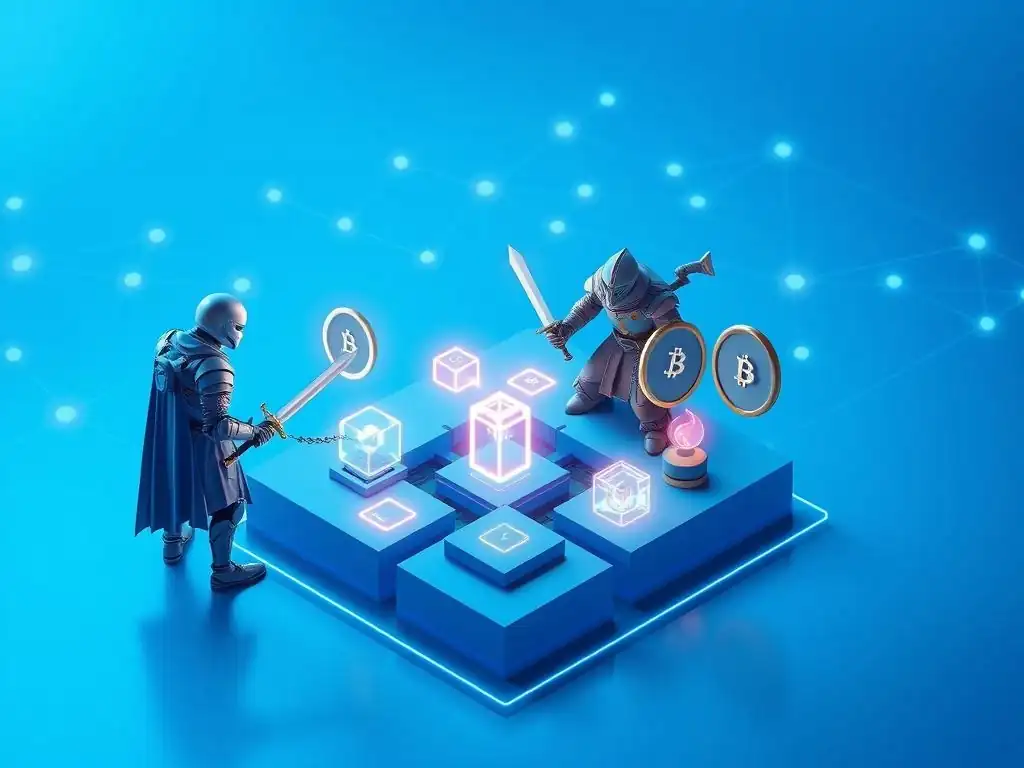
Case Study: Somnium Space: A Persistent, User-Owned VR World on the Blockchain
Somnium Space is a compelling case study in VR blockchain gaming integration. It is a persistent, user-owned VR world built on the Ethereum blockchain, where users can buy, sell, and develop virtual land parcels represented as NFTs. Somnium Space emphasizes user ownership and decentralization, aiming to create a metaverse where users have true control over their digital assets and experiences. Unlike many centralized VR platforms, Somnium Space leverages blockchain to ensure user autonomy and data privacy.
In Somnium Space, users can purchase virtual land parcels, build homes, businesses, or entertainment venues, and monetize their creations. The blockchain ensures that ownership of these digital assets is secure and verifiable. Somnium Space also supports avatars as NFTs, allowing users to truly own and customize their virtual identities.
The platform integrates its own cryptocurrency, CUBE, which is used for in-world transactions and governance. Somnium Space's commitment to user ownership and decentralization, combined with its immersive VR environment, makes it a leading example of the potential of VR blockchain gaming integration. It demonstrates how blockchain can underpin a persistent and user-driven metaverse where digital ownership is paramount.
Exploring Different Genres: VR Blockchain RPGs, Strategy Games, and More
VR blockchain gaming integration benefits are applicable across a wide range of game genres, from Role-Playing Games (RPGs) to Strategy Games and beyond. The core benefits of enhanced ownership, secure economies, and decentralized governance are genre-agnostic, making blockchain a versatile technology for enhancing various types of VR gaming experiences.
In VR RPGs, blockchain can enable true ownership of character progression, in-game items, and even storylines. Imagine a VR MMORPG where character stats, skills, and achievements are recorded as NFTs, representing a player's unique gaming journey. In VR strategy games, blockchain can facilitate transparent and secure in-game resource management, alliance building, and territorial control.
For example, a VR space strategy game could use blockchain to track ownership of planets, starships, and resources, creating a decentralized and player-driven galactic economy. Beyond RPGs and strategy games, genres like VR collectible card games, VR sports games, and even VR social games can benefit from blockchain integration, leveraging NFTs for digital collectibles, secure betting systems, and decentralized community governance. The versatility of blockchain technology makes it a powerful tool for innovation across the entire spectrum of VR gaming genres.
Blockchain technology significantly enhances the social aspect of VR gaming by fostering trust, transparency, and community ownership within virtual environments. Traditional online games often suffer from issues like scamming, account hacking, and lack of trust in in-game economies, hindering social interaction and collaboration. Blockchain addresses these challenges by providing secure and transparent systems for digital ownership, transactions, and governance, leading to more robust and trustworthy social interactions in VR.
The verifiable ownership of digital assets through NFTs creates a foundation of trust, as players can be confident that their possessions are secure and uniquely theirs. Transparent blockchain-based economies reduce the potential for manipulation and unfair practices, fostering a more equitable and collaborative social environment. Furthermore, DAOs empower players to participate in community governance, giving them a voice in shaping the game's social norms and community initiatives.
Imagine a VR social world where users can confidently trade digital art, collaborate on virtual projects, and participate in community events, knowing that the underlying blockchain infrastructure ensures security, transparency, and shared ownership. This enhanced trust and community ownership can lead to more vibrant, engaging, and meaningful social experiences within VR gaming environments.
Challenges and Opportunities in VR Blockchain Gaming
Technical Challenges of Integrating VR and Blockchain Technology
Integrating VR and blockchain technology presents several technical challenges. VR requires high performance and low latency to deliver a smooth and immersive experience. Blockchain transactions, particularly on some networks, can be slow and costly, potentially impacting the real-time responsiveness required for VR gaming. Bridging the gap between the high-performance demands of VR and the current limitations of blockchain technology is a key technical hurdle.
Scalability is another significant challenge. VR games often require handling large numbers of concurrent users and complex interactions. Current blockchain networks may struggle to scale to the demands of massively multiplayer VR environments. Developing efficient and scalable blockchain solutions that can handle the transaction volume and real-time requirements of VR gaming is crucial for widespread adoption.
Furthermore, user experience is paramount. Integrating blockchain functionalities, such as wallet management and NFT transactions, into VR games in a user-friendly and intuitive way is essential to avoid disrupting the immersive gaming experience. Overcoming these technical challenges requires ongoing innovation and development in both VR and blockchain technologies.
Scalability Issues and Solutions for VR Blockchain Games
Scalability is a critical issue for VR blockchain games, as these games often require handling a large number of players and transactions in real-time. Traditional blockchain networks, like Ethereum, can face congestion and high transaction fees when processing large volumes of transactions, which can be problematic for VR gaming environments with active in-game economies. Various scalability solutions are being explored to address these issues.
Layer-2 scaling solutions, such as sidechains and rollups, offer promising approaches to increase transaction throughput and reduce fees on blockchain networks. These solutions operate on top of the main blockchain, processing transactions off-chain and then periodically settling them on the main chain. Another approach is the development of more scalable Layer-1 blockchains designed for high transaction throughput and low latency.
Furthermore, techniques like state channels and sharding are being explored to further enhance blockchain scalability for gaming applications. Choosing the right blockchain infrastructure and implementing appropriate scaling solutions are crucial for VR blockchain game developers to ensure smooth and cost-effective gaming experiences for players. As blockchain technology continues to evolve, scalability solutions will become increasingly important for supporting the growth of VR blockchain gaming.
Regulatory Considerations for Blockchain Gaming and Virtual Worlds
Regulatory considerations are becoming increasingly relevant for blockchain gaming and virtual worlds. As VR blockchain games incorporate in-game economies, NFTs, and cryptocurrencies, they may fall under the purview of various financial regulations, depending on the jurisdiction. Regulations related to securities, money transmission, and gambling may apply to certain aspects of VR blockchain gaming, requiring developers to navigate a complex and evolving legal landscape.
Clarity in regulations surrounding NFTs and virtual assets is still developing in many jurisdictions. The legal classification of NFTs and their tax implications are areas that require further definition. Furthermore, regulations related to data privacy and user protection are also important considerations for VR blockchain games, particularly given the immersive and personal nature of VR experiences.
Game developers need to stay informed about evolving regulations and seek legal counsel to ensure compliance and mitigate potential risks. Engaging with regulators and participating in industry discussions is crucial for shaping a regulatory framework that fosters innovation while protecting players and ensuring responsible development of VR blockchain gaming.
The Future of VR and Blockchain in Gaming: Predictions and Trends
The Metaverse and the Convergence of VR, Blockchain, and Gaming
The metaverse represents a significant convergence point for VR, blockchain, and gaming technologies. The metaverse is envisioned as a persistent, shared, virtual world where users can interact with each other, digital objects, and experiences. VR provides the immersive interface for accessing the metaverse, while blockchain provides the underlying infrastructure for digital ownership, decentralized economies, and governance within the metaverse. Gaming is a natural entry point to the metaverse, driving adoption and innovation in both VR and blockchain technologies.
VR blockchain gaming is at the forefront of metaverse development, showcasing the potential for immersive, user-owned, and economically vibrant virtual worlds. As VR technology becomes more accessible and blockchain solutions mature, the metaverse is expected to expand and evolve, blurring the lines between the physical and digital worlds.
Gaming experiences within the metaverse will likely become more integrated with other aspects of life, such as social interaction, entertainment, commerce, and even work. The convergence of VR, blockchain, and gaming within the metaverse is poised to reshape the future of digital interaction and online experiences, creating new opportunities and challenges for individuals and industries alike.
Emerging Technologies: AI and Cloud Gaming in VR Blockchain Environments
Emerging technologies like Artificial Intelligence (AI) and cloud gaming are further enhancing VR blockchain gaming environments. AI can be used to create more dynamic and engaging VR game worlds, populating them with intelligent non-player characters (NPCs), generating personalized content, and adapting game experiences to individual player preferences. Cloud gaming can address the computational demands of high-fidelity VR experiences by streaming games from powerful servers, making VR gaming accessible to a wider audience without requiring high-end hardware.
Combining AI, cloud gaming, and blockchain creates even more compelling possibilities. AI-powered NPCs in VR blockchain games could have dynamic behaviors and even participate in the in-game economy, creating more realistic and interactive virtual worlds. Cloud gaming can enable complex VR blockchain games to be streamed to a wider range of devices, increasing accessibility and player participation. The integration of these emerging technologies is expected to drive further innovation and enhance the overall quality and accessibility of VR blockchain gaming experiences, pushing the boundaries of immersion and interactivity within virtual worlds.
The Long-Term Impact of VR Blockchain Gaming on the Gaming Industry
The long-term impact of VR blockchain gaming on the gaming industry is expected to be transformative. Blockchain's introduction of true digital ownership, decentralized economies, and player governance is fundamentally changing the power dynamics within gaming, shifting towards more player-centric models. This shift could lead to a more equitable and sustainable gaming ecosystem, where players are not just consumers but also stakeholders in the games they play.
P2E models, enabled by blockchain, have the potential to democratize access to economic opportunities through gaming, particularly in emerging economies. The growth of VR blockchain gaming could also drive innovation in game development, as developers explore new ways to leverage blockchain and VR to create more immersive, engaging, and rewarding experiences.
Furthermore, the interoperability of blockchain-based digital assets could lead to the creation of interconnected metaverse ecosystems, where players can seamlessly move between different VR games and virtual worlds, carrying their digital possessions with them. The long-term impact of VR blockchain gaming is likely to be profound, reshaping the gaming industry and paving the way for a more open, player-driven, and economically empowered future for gaming.
Conclusion: Embracing the Future of Gaming with VR Blockchain Integration
Summarizing the Key Benefits and Opportunities
VR blockchain gaming integration benefits are multifaceted and transformative, offering enhanced security and ownership of in-game assets, true digital ownership through NFTs, secure and transparent in-game economies, and revolutionary P2E models. These benefits combine to create more immersive, engaging, and player-centric gaming experiences within virtual reality environments. The opportunities presented by this integration are vast, ranging from building decentralized VR gaming worlds to empowering player communities through DAOs and fostering new economic models within gaming.
The convergence of VR and blockchain is not just about enhancing existing gaming paradigms; it's about creating entirely new forms of interactive entertainment and digital ownership. The ability for players to truly own their in-game assets, participate in game economies, and even govern game worlds represents a fundamental shift in the gaming industry, empowering players and fostering more sustainable and equitable gaming ecosystems. VR blockchain gaming integration is paving the way for a future where gaming is not just entertainment, but also a platform for digital ownership, economic participation, and community building within immersive virtual worlds.
The Potential of VR Blockchain Gaming to Revolutionize the Industry
The potential of VR blockchain gaming to revolutionize the industry is immense. By combining the immersive power of VR with the decentralized and secure nature of blockchain, a new paradigm for gaming is emerging. This paradigm shifts away from centralized control and towards player empowerment, creating opportunities for more equitable, engaging, and economically rewarding gaming experiences. VR blockchain gaming is not just a niche trend; it represents a fundamental shift in the way games are designed, played, and experienced.
As VR technology becomes more accessible and blockchain solutions mature, VR blockchain gaming is poised to become a major force in the gaming industry. The promise of true digital ownership, P2E models, and decentralized virtual worlds is attracting both players and developers, driving innovation and investment in this space.
The revolution in gaming is underway, and VR blockchain integration is at the forefront, leading the charge towards a future where gaming is more immersive, more player-centric, and more deeply integrated with the emerging metaverse. Embracing VR blockchain gaming integration is embracing the future of gaming, a future defined by player empowerment, digital ownership, and immersive virtual experiences.
Frequently Asked Questions
How does blockchain enhance security in VR gaming?
Blockchain ensures immutable ownership of virtual assets. This means players truly own their in-game items, preventing fraud and duplication. It makes trading safe and transparent.
What are the VR blockchain gaming integration benefits for developers?
Developers can create new revenue streams through NFT sales and play-to-earn models. Blockchain also fosters community engagement and ownership of the game's ecosystem.
How does blockchain facilitate cross-game interoperability in VR?
Blockchain enables transferable assets across different VR games. Players can use their NFTs in multiple virtual worlds, creating a unified metaverse experience.
What role does DeFi play in the VR gaming blockchain space?
Decentralized Finance (DeFi) allows for in-game lending and borrowing, creating new financial opportunities. Players can earn interest on their virtual assets or take out loans.
What are the regulatory challenges surrounding VR blockchain gaming integration benefits?
Regulations surrounding NFTs and cryptocurrencies are still evolving. Compliance with securities laws and data privacy regulations are key considerations for developers.
Final Reflection: Embracing the Future of Immersive Ownership
The exploration of VR blockchain gaming integration benefits reveals more than just technological advancements; it unveils a paradigm shift in how we perceive ownership and engagement within virtual worlds. The convergence of these technologies promises a future where players are not merely consumers, but active participants in a decentralized and truly immersive gaming ecosystem. This shift has the potential to revolutionize the gaming industry, fostering greater transparency, security, and player empowerment.
This intersection of VR and blockchain is not just a fleeting trend; it represents a fundamental change in how we interact with digital assets and virtual experiences. The ability to own, trade, and utilize in-game items across different VR worlds, secured by blockchain technology, offers a level of agency and control previously unimaginable. The future of gaming isn't just about better graphics or more immersive experiences; it's about giving players true ownership and control over their digital lives.
This quote encapsulates the core promise of VR blockchain gaming: a future where players are empowered creators and stakeholders.
As we stand on the cusp of this new era, I invite you to consider the implications of this technology for your own engagement with the digital world. How can you leverage the benefits of VR blockchain gaming to create, connect, and contribute to a more equitable and immersive future? The power to shape this future lies within each of us. Let us embrace the potential of this integration and build a gaming landscape that is truly owned by the players.
Ignite Your Gaming Future: Dive into the VR/Blockchain Revolution!
Thank you for exploring the exciting world of virtual reality and blockchain technology in gaming with us! We hope you now have a clearer understanding of how these innovations are transforming interactive entertainment. Are you ready to take the next step?
Here are a few ways to get more involved:
- Become a pioneer: Try building a simple VR game or asset using blockchain technology.: Don't worry about perfection; the goal is to experiment and learn!
- Share this article with fellow gamers and tech enthusiasts! Let’s start a conversation about the future of gaming and its endless possibilities.
- Join our online community to connect with developers, players, and enthusiasts. Share your thoughts on the intersection of virtual reality and blockchain.
What groundbreaking VR and blockchain gaming concept are you most excited to see become a reality? Share your vision in the comments below!
Leave a Reply