
NFT Gaming and Virtual Land: Owning a Piece of the Metaverse in PlaytoEarn Worlds

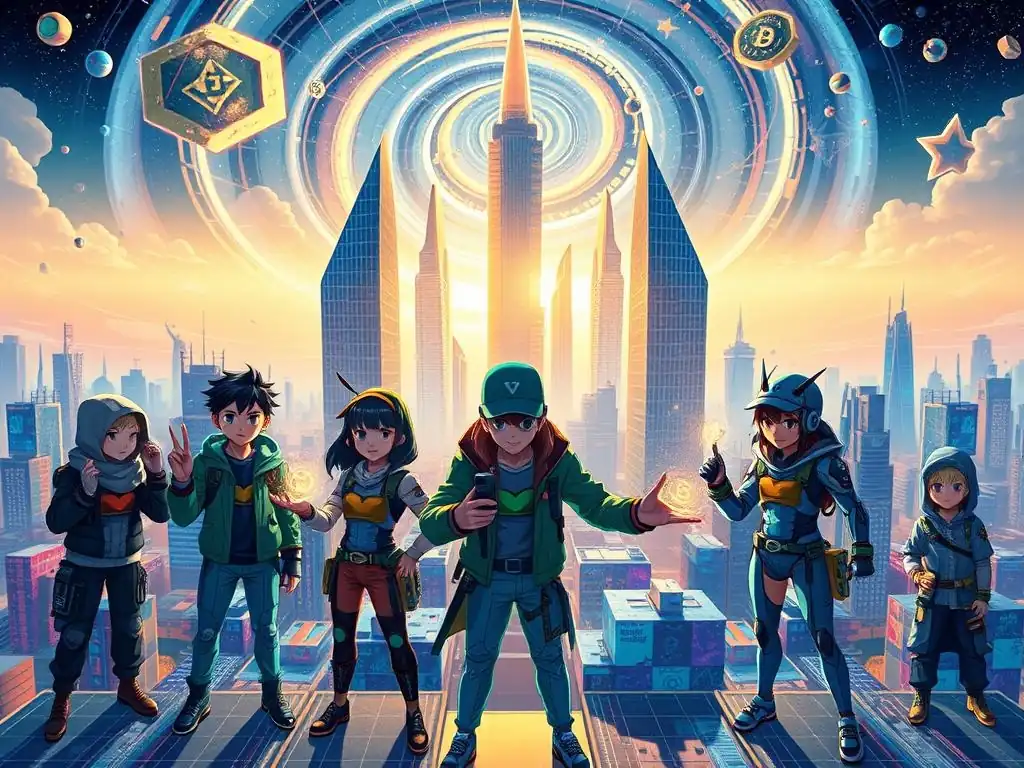
Welcome to Blockchain Trends, your guide to navigating the ever-evolving landscape of blockchain technology. Ever wondered how NFT gaming metaverse investment is shaping the future of digital ownership and immersive gameplay? Dive into our latest analysis to uncover the potential – and the pitfalls – of investing in virtual land and play-to-earn experiences. What opportunities await in this burgeoning digital frontier? Let's explore together.
NFT Gaming and Virtual Land: Owning a Piece of the Metaverse in Play-to-Earn Worlds
- Introduction: The Rise of NFT Gaming and Metaverse Land Ownership
- What is NFT Gaming and How Does it Work?
- Virtual Land in the Metaverse: A Digital Real Estate Boom
- NFT Gaming Metaverse Investment: Opportunities and Risks
- Play-to-Earn (P2E) Mechanics and Virtual Land: A Symbiotic Relationship
- Case Studies: Successful NFT Gaming Metaverse Investments
- The Future of NFT Gaming and Virtual Land: Trends and Predictions
- Conclusion: Navigating the NFT Gaming Metaverse Investment Landscape
-
Frequently Asked Questions
- What is the basic concept of NFT gaming within the metaverse?
- Why is virtual land considered a key investment opportunity in NFT gaming metaverses?
- How does the "Play-to-Earn" model work in these NFT gaming environments?
- What are some potential risks associated with NFT gaming metaverse investment?
- What is the future outlook for NFT gaming and its impact on the broader metaverse?
- Final Reflection: Embracing the Decentralized Future
- Ignite Your Metaverse Adventure!
Introduction: The Rise of NFT Gaming and Metaverse Land Ownership
Understanding the Convergence of NFTs, Gaming, and the Metaverse
The intersection of Non-Fungible Tokens (NFTs), gaming, and the metaverse represents a paradigm shift in digital ownership and online experiences. NFTs, with their ability to prove verifiable scarcity and ownership of digital assets, have found a powerful application within the gaming industry. This synergy is further amplified by the metaverse, persistent shared virtual worlds where users can interact, play, and even conduct business. This convergence creates immersive gaming environments where in-game assets, represented as NFTs, hold real-world value and utility, blurring the lines between play and investment.
The metaverse provides the stage for NFT gaming to flourish. Within these virtual realms, players are not just consumers of content, but active participants in a digital economy. NFTs empower players to truly own their in-game items – characters, weapons, virtual land, and more – outside the confines of a single game.
This ownership transcends traditional gaming models, enabling players to potentially trade, sell, or even utilize their assets across different metaverse platforms, fostering a more open and player-centric gaming ecosystem. This new paradigm is attracting significant attention from gamers, investors, and tech enthusiasts alike, signaling a fundamental evolution in the gaming landscape.
Why Virtual Land is Becoming a Hot Investment in NFT Gaming
Virtual land within NFT gaming metaverses has emerged as a particularly compelling investment opportunity. Mirroring the principles of real-world real estate, virtual land in these digital worlds is finite, often geographically defined, and possesses inherent utility. This scarcity, combined with the increasing popularity of metaverse gaming and play-to-earn mechanics, is driving up demand and consequently, the value of virtual land NFTs. Early adopters who recognized the potential of digital real estate in platforms like Decentraland and The Sandbox have witnessed substantial appreciation in their virtual land holdings.
The investment appeal of virtual land in NFT gaming metaverses stems from its multifaceted utility. Landowners can develop their plots to create engaging experiences, host virtual events, build shops, rent out spaces, or simply hold it for future appreciation. For instance, in Decentraland, users have built virtual casinos, art galleries, and music venues on their land.
In The Sandbox, brands are acquiring land to establish virtual storefronts and interactive experiences. This diverse range of potential uses, coupled with the limited supply of virtual land in popular metaverse platforms, positions it as a potentially lucrative asset class within the broader NFT gaming metaverse investment landscape.
What is NFT Gaming and How Does it Work?
Defining NFT Gaming: Play-to-Earn Mechanics Explained
NFT gaming, at its core, integrates Non-Fungible Tokens into game mechanics, allowing players to own and control in-game assets as verifiable digital collectibles. Unlike traditional gaming models where in-game items are typically owned by the game developers, NFT gaming empowers players with true digital ownership. This ownership is often coupled with "play-to-earn" (P2E) mechanics, which incentivize players to actively participate in the game and earn cryptocurrency or NFTs that can be traded or sold for real-world value. This fundamentally shifts the gaming paradigm from a purely entertainment-focused activity to one that can also provide economic opportunities for players.
The play-to-earn model often works by rewarding players for their time and skill invested in the game. This can take various forms, such as earning tokens for completing quests, winning battles, or contributing to the game's ecosystem. These tokens can then be exchanged for other cryptocurrencies or fiat currencies on exchanges.
Furthermore, valuable in-game assets, represented as NFTs, can be earned through gameplay and traded on NFT marketplaces. Axie Infinity, for example, popularized the P2E model where players breed and battle NFT creatures called Axies, earning Smooth Love Potion (SLP) tokens and valuable Axies that can be sold. This P2E mechanism is a central driver of engagement and investment in NFT gaming.
The Role of NFTs in Enhancing Game Ownership and User Experience
NFTs significantly enhance game ownership and user experience by granting players verifiable control and scarcity of in-game assets. In traditional games, if a game shuts down, players lose access to all their purchased or earned in-game items. With NFT gaming, because assets are represented as NFTs on a blockchain, players retain ownership even if a specific game ceases to exist. This provides a level of permanence and security previously absent in digital gaming ownership.
Furthermore, NFTs can foster a more robust and player-driven in-game economy. The ability to freely trade and sell NFT assets creates dynamic marketplaces and empowers players to participate in the economic value generated within the game ecosystem.
This can lead to increased player engagement and a stronger sense of community, as players are incentivized to contribute to and participate in the game's economy. Beyond ownership and trading, NFTs can also unlock unique in-game functionalities, such as access to exclusive content, special abilities, or governance rights within the game, further enriching the user experience and increasing the utility of these digital assets.
Popular NFT Game Examples: Axie Infinity, Decentraland, The Sandbox
Axie Infinity, a Pokémon-inspired game built on the Ethereum blockchain, is a prime example of a successful NFT game. Players collect, breed, and battle NFT creatures called Axies. The game's play-to-earn mechanics, where players earn SLP tokens and can breed and sell Axies, propelled it to massive popularity, particularly in regions like Southeast Asia. At its peak in 2021, Axie Infinity boasted millions of daily active users and a thriving NFT marketplace, showcasing the potential of P2E NFT gaming.
Decentraland is a decentralized virtual world built on the Ethereum blockchain where users can buy, sell, and develop virtual land represented as NFTs. Within Decentraland, users can explore, interact with others, play games, and participate in virtual events. Landowners have the freedom to create diverse experiences on their parcels, ranging from casinos and art galleries to virtual stores and social hubs. Decentraland exemplifies the concept of a user-owned metaverse powered by NFTs.
The Sandbox is another popular metaverse platform that utilizes NFTs for virtual land and in-game assets. Users can create, own, and monetize their gaming experiences using The Sandbox's tools and NFTs. The platform has attracted partnerships with major brands and celebrities, further driving its adoption. The Sandbox emphasizes user-generated content and provides tools for creators to build and share their own NFT-based games and experiences within its metaverse. These examples highlight the diverse applications and growing popularity of NFT gaming and metaverse platforms.
Virtual Land in the Metaverse: A Digital Real Estate Boom
Exploring the Concept of Virtual Land and its Utility
Virtual land in the metaverse represents digital parcels of land within persistent online worlds, typically represented as NFTs on a blockchain. These parcels are finite, often geographically defined within the metaverse, and confer ownership rights to the holder. Unlike traditional virtual game assets that are controlled by game developers, virtual land NFTs provide verifiable ownership and control to the user, similar to owning real estate in the physical world.
The utility of virtual land is multifaceted and continues to evolve as metaverses develop. Landowners can develop their virtual plots to create various experiences, ranging from hosting virtual events and building virtual storefronts to creating interactive games and social spaces. The value proposition of virtual land stems from its potential to generate revenue, provide social status within the metaverse, and appreciate in value as the metaverse ecosystem grows and attracts more users and businesses. This utility differentiates virtual land from purely collectible NFTs, positioning it as a potentially productive digital asset.
Different Types of Virtual Land in NFT Gaming Metaverses: Parcels, Estates, Districts
Within NFT gaming metaverses, virtual land often comes in different sizes and configurations, typically categorized as parcels, estates, and districts, each offering varying levels of functionality and investment potential. Parcels are the basic units of virtual land, representing individual plots of varying sizes. They are the most common and accessible entry point for virtual land ownership. Estates are formed by combining multiple adjacent parcels, offering larger contiguous areas for more ambitious developments and potentially greater visibility within the metaverse.
Districts, on the other hand, are often thematic or community-driven areas within the metaverse, comprising numerous estates and parcels. They represent larger, organized zones often focused on specific interests or activities, such as entertainment districts, shopping districts, or gaming districts. Districts can offer enhanced network effects and higher foot traffic, potentially increasing the value of land within them. Understanding these different land classifications is crucial for navigating the virtual real estate market and making informed NFT gaming metaverse investment decisions.
The Value Proposition of Owning Virtual Land: Scarcity and Functionality
The value proposition of owning virtual land in NFT gaming metaverses is primarily driven by scarcity and functionality. Like physical real estate, virtual land in most metaverses is finite, with a limited number of parcels available. This scarcity, especially in popular and well-established metaverses, creates inherent demand as user bases grow and more businesses seek a presence in these digital worlds. The limited supply, coupled with increasing demand, is a fundamental driver of value appreciation.
Functionality further enhances the value of virtual land. Land is not just a static digital asset; it's a platform for creating experiences, generating revenue, and building communities. Landowners can develop their plots to host events, build shops, rent out spaces, or create interactive games, all of which can generate income and attract users to their land. This inherent utility transforms virtual land from a purely speculative asset into a potentially productive one, attracting investors seeking both capital appreciation and ongoing revenue streams within the NFT gaming metaverse investment space.
NFT Gaming Metaverse Investment: Opportunities and Risks
Potential Investment Opportunities in NFT Gaming and Virtual Land
The NFT gaming metaverse presents a range of investment opportunities beyond simply purchasing virtual land. Investing in native tokens of successful NFT gaming platforms like SAND (The Sandbox) or MANA (Decentraland) can provide exposure to the growth of the metaverse ecosystem. As these platforms gain popularity and adoption, the demand for their native tokens, used for transactions and governance, can increase, potentially leading to price appreciation.
Another avenue is investing in in-game NFT assets themselves, such as rare characters, valuable items, or even virtual real estate development projects. Identifying promising NFT games early on and acquiring valuable in-game NFTs can be lucrative if the game gains traction. Furthermore, providing services within the metaverse, such as virtual real estate development, event management, or metaverse marketing, can also be a viable investment strategy, capitalizing on the growing demand for metaverse-related services. The NFT gaming metaverse investment landscape is diverse, offering opportunities for various risk appetites and investment strategies.
Analyzing the Risks Associated with NFT Gaming Metaverse Investment
While the potential rewards in NFT gaming metaverse investment are significant, it is crucial to acknowledge and understand the inherent risks. The NFT and metaverse space is still nascent and highly volatile. Market sentiment can shift rapidly, and the value of NFTs and metaverse tokens can experience dramatic fluctuations. Investing in virtual land, while promising, is not without risk. The success of a particular metaverse platform is not guaranteed, and if a platform loses popularity, the value of its virtual land could decline significantly.
Regulatory uncertainty also poses a risk. Governments worldwide are still grappling with how to regulate cryptocurrencies and NFTs, and potential regulatory changes could impact the NFT gaming metaverse industry. Furthermore, security risks, such as scams and hacks, are prevalent in the crypto and NFT space. Investors must be vigilant and exercise caution to mitigate these risks. Understanding these risks is paramount for anyone considering NFT gaming metaverse investment.
Due Diligence Tips for Investing in Virtual Land NFTs
Before investing in virtual land NFTs, thorough due diligence is essential to mitigate risks and make informed decisions. Research the metaverse platform thoroughly. Understand its user base, development team, partnerships, and long-term roadmap. A platform with a strong community, active development, and strategic partnerships is generally a more promising investment. Analyze the specific virtual land parcel you are considering. Location, size, and proximity to popular areas within the metaverse can significantly impact its value.
Assess the utility and potential revenue streams associated with the land. Consider what you can build or develop on the land and its potential to generate income through renting, advertising, or hosting events. Compare prices of similar land parcels within the same metaverse and across different platforms to gauge fair market value. Finally, understand the transaction fees and gas costs associated with buying and selling virtual land NFTs on the chosen blockchain. Thorough due diligence is crucial for navigating the complexities of NFT gaming metaverse investment and maximizing the chances of success.
Play-to-Earn (P2E) Mechanics and Virtual Land: A Symbiotic Relationship

How Play-to-Earn Impacts the Value of Virtual Land
Play-to-earn (P2E) mechanics in NFT gaming have a significant and positive impact on the value of virtual land. P2E games incentivize player participation and engagement, leading to larger user bases and increased activity within the metaverse. As more players flock to a metaverse to participate in P2E opportunities, the demand for virtual land within that metaverse tends to rise. Land becomes increasingly valuable as a location to attract players, host P2E activities, and benefit from the increased foot traffic and economic activity generated by the P2E ecosystem.
Virtual land in P2E games often becomes integral to the earning mechanics themselves. For example, in some games, players may need to own virtual land to access certain resources, participate in specific quests, or build infrastructure that supports P2E activities. This direct integration of virtual land into the P2E loop further enhances its utility and desirability, driving up its value. The symbiotic relationship between P2E mechanics and virtual land creates a powerful driver for land value appreciation within NFT gaming metaverses.
Generating Revenue Through Virtual Land in P2E Games: Renting, Advertising, Hosting Events
Virtual land in P2E games offers multiple avenues for revenue generation, leveraging the active player base and economic activity within these metaverses. Renting out virtual land to other players or businesses is a straightforward revenue stream. Landowners can lease their land to individuals or organizations looking to establish a virtual presence, host events, or operate virtual businesses. The rental income potential depends on the location, size, and desirability of the land within the metaverse.
Advertising on virtual land is another emerging revenue model. Prime locations within high-traffic areas of the metaverse can be valuable advertising spaces for brands and projects looking to reach a metaverse audience. Landowners can sell advertising space on billboards, virtual storefronts, or within experiences built on their land. Hosting virtual events, such as concerts, conferences, or gaming tournaments, on virtual land can also generate revenue through ticket sales, sponsorships, and in-event transactions. These diverse revenue streams make virtual land a potentially productive asset within the P2E gaming ecosystem.
The Future of P2E and its Influence on Metaverse Land Demand
The future of play-to-earn (P2E) mechanics is likely to evolve and mature, further influencing metaverse land demand. As P2E models become more sophisticated and sustainable, attracting a broader audience beyond early adopters, the overall demand for virtual land within P2E-centric metaverses is expected to increase. Innovations in P2E game design, such as more balanced economies, enhanced gameplay, and diverse earning opportunities, will likely drive greater player engagement and investment in these platforms.
Furthermore, the integration of P2E with other metaverse trends, such as social experiences, virtual commerce, and decentralized autonomous organizations (DAOs), could further amplify the demand for virtual land. As metaverses become more integral to daily life and work, the utility and value of virtual land as a digital space for interaction, commerce, and community building are poised to grow. The continued evolution and adoption of P2E mechanics will likely be a significant driver of metaverse land demand in the years to come.
Case Studies: Successful NFT Gaming Metaverse Investments
Axie Infinity Land: Early Adopters and ROI
Axie Infinity, at its peak, provided compelling examples of early adopters who experienced significant returns on investment (ROI) from virtual land. "Lunacia," the Axie Infinity metaverse land, saw substantial price appreciation as the game's popularity surged in 2021. Early investors who acquired Lunacia land parcels when prices were relatively low witnessed exponential growth in their value as demand skyrocketed. Reports indicated land parcels initially purchased for a few hundred dollars appreciating to tens or even hundreds of thousands of dollars at the height of the Axie Infinity boom.
These early adopters capitalized on the network effects and P2E mechanics of Axie Infinity. Land in strategic locations within Lunacia, close to popular arenas or resource nodes, became highly sought after. While the Axie Infinity market has since experienced fluctuations, the early land investments serve as a notable case study demonstrating the potential for substantial ROI in NFT gaming metaverse investment, particularly for those who identify promising platforms early and understand the dynamics of virtual land value appreciation.
Lessons Learned from Metaverse Land Speculation
The metaverse land speculation boom, particularly in 2021 and early 2022, provides valuable lessons for potential NFT gaming metaverse investment. One key takeaway is the importance of understanding the underlying fundamentals of a metaverse platform. Platforms with strong communities, active development teams, and sustainable economic models are more likely to sustain long-term value for their virtual land. Speculating solely on hype without considering these fundamentals can be risky.
Another lesson is the importance of diversification. Investing in virtual land should be part of a broader diversified investment portfolio, rather than putting all capital into a single asset class, especially in the volatile NFT and metaverse space. Furthermore, understanding market cycles is crucial. The rapid price appreciation seen in metaverse land during peak hype periods is often followed by corrections. Timing the market is difficult, but being aware of market trends and potential cycles can help investors make more informed decisions and manage risk effectively in NFT gaming metaverse investment.
Key Takeaways from Real-World NFT Gaming Metaverse Investment Examples
Real-world examples of NFT gaming metaverse investment highlight several key takeaways. Early adoption in promising platforms can yield significant returns, but requires careful research and risk assessment. The utility and functionality of virtual land, driven by P2E mechanics and metaverse ecosystem growth, are crucial drivers of long-term value. Sustainable metaverse platforms with strong communities and active development are more likely to provide enduring investment opportunities.
Volatility is inherent in the NFT and metaverse space, and investors should be prepared for market fluctuations and potential corrections. Due diligence, diversification, and a long-term perspective are essential for navigating the NFT gaming metaverse investment landscape successfully. Learning from past successes and failures, and continuously adapting to the evolving dynamics of this nascent market, is crucial for making informed and potentially profitable NFT gaming metaverse investment decisions.
The Future of NFT Gaming and Virtual Land: Trends and Predictions
Emerging Trends in the NFT Gaming Metaverse Landscape
Several emerging trends are shaping the future of the NFT gaming metaverse landscape. Interoperability between metaverses is gaining traction, with projects exploring ways to allow NFTs and avatars to move between different virtual worlds. This could enhance the utility and value of virtual assets, including land, by expanding their potential use cases across multiple platforms. The integration of virtual reality (VR) and augmented reality (AR) technologies is also poised to enhance metaverse immersion and user experience, potentially driving further adoption and demand for virtual land.
Decentralized Autonomous Organizations (DAOs) are increasingly playing a role in metaverse governance and land management. DAOs can enable community-driven decision-making regarding land use, development, and economic policies within metaverses, potentially fostering more equitable and sustainable virtual economies. Furthermore, the convergence of NFTs with other emerging technologies, such as artificial intelligence (AI) and blockchain-based identity solutions, could unlock new functionalities and use cases for virtual land and NFTs within the metaverse.
The Long-Term Potential of Virtual Land as a Digital Asset
The long-term potential of virtual land as a digital asset remains significant, driven by the continued growth of the metaverse and the increasing digitization of our lives. As metaverses evolve into more immersive and integral parts of our social, economic, and cultural interactions, the demand for virtual space and digital real estate is likely to increase. Virtual land, with its inherent scarcity and potential for utility, is positioned to become a valuable asset class in the digital age.
Beyond gaming and entertainment, virtual land could find applications in various sectors, including education, commerce, and remote work. Virtual campuses, virtual storefronts, and virtual office spaces could become increasingly common, further driving the demand for virtual land. While the metaverse is still in its early stages, the long-term trajectory points towards a future where virtual land plays a significant role in the digital economy and represents a valuable and productive digital asset.
Regulatory Considerations for NFT Gaming Metaverse Investment
Regulatory considerations are becoming increasingly important for NFT gaming metaverse investment. Governments worldwide are beginning to pay closer attention to the crypto and NFT space, and regulations are likely to evolve as the industry matures. Understanding the regulatory landscape and potential future regulations is crucial for investors. Tax implications for NFT transactions and virtual land ownership are becoming more defined, and investors need to be aware of their tax obligations.
Anti-money laundering (AML) and know-your-customer (KYC) regulations are also relevant to NFT and metaverse platforms, and compliance with these regulations is essential for long-term sustainability. The legal classification of NFTs and virtual land is still evolving, and regulatory clarity is needed to provide greater certainty and security for investors. Staying informed about regulatory developments and seeking professional advice regarding legal and tax implications is crucial for navigating the NFT gaming metaverse investment landscape responsibly and effectively.
Key Considerations for Potential Investors in Virtual Land
Potential investors in virtual land within NFT gaming metaverses should carefully consider several key factors before making investment decisions. Thoroughly research the metaverse platform, its community, development team, and long-term vision. Understand the utility and functionality of virtual land within that specific metaverse and its potential for revenue generation. Assess the scarcity and location of the land parcel being considered, as these factors significantly impact value.
Evaluate the risks associated with NFT and metaverse investment, including market volatility, regulatory uncertainty, and security concerns. Diversify investments and avoid putting all capital into a single asset class. Adopt a long-term perspective and be prepared for market fluctuations. Conduct thorough due diligence and seek professional advice when needed. Informed and cautious investment strategies are crucial for navigating the complexities of the NFT gaming metaverse investment landscape.
The Evolving Role of NFTs in Shaping the Future of Gaming and the Metaverse
NFTs are playing a transformative role in shaping the future of gaming and the metaverse. They are empowering players with true digital ownership, fostering player-driven economies, and creating new forms of digital asset utility. As the metaverse continues to evolve, NFTs are likely to become even more integral to its infrastructure and functionality, extending beyond gaming to encompass various aspects of digital ownership and interaction.
The convergence of NFTs with gaming and the metaverse is creating a new paradigm for digital experiences, offering exciting opportunities for innovation, investment, and user engagement. The future of gaming and the metaverse is inextricably linked to the continued development and adoption of NFTs.
Frequently Asked Questions
What is the basic concept of NFT gaming within the metaverse?
NFT gaming in the metaverse involves using non-fungible tokens (NFTs) to represent in-game assets. These assets, such as virtual land or characters, are unique and verifiable on the blockchain, allowing for true ownership.
Why is virtual land considered a key investment opportunity in NFT gaming metaverses?
Virtual land in NFT gaming metaverses is valuable because it provides ownership of digital real estate, offering opportunities for development, monetization, and passive income generation. Its scarcity and potential for appreciation drive investment.
How does the "Play-to-Earn" model work in these NFT gaming environments?
The Play-to-Earn (P2E) model allows players to earn cryptocurrency or NFTs by actively participating in the game. This creates a financial incentive for players and contributes to the growth of the metaverse ecosystem.
What are some potential risks associated with NFT gaming metaverse investment?
Risks include market volatility, the potential for project failure, and the evolving regulatory landscape. It's crucial to conduct thorough research and understand the long-term viability of the project.
What is the future outlook for NFT gaming and its impact on the broader metaverse?
NFT gaming is expected to drive mass adoption of the metaverse by offering engaging experiences and new economic opportunities. It's poised to reshape how we interact, socialize, and transact within digital worlds.
Final Reflection: Embracing the Decentralized Future
The journey through the burgeoning world of NFT gaming and virtual land has revealed a landscape ripe with potential, yet also fraught with challenges. The convergence of gaming, blockchain technology, and digital ownership is no longer a distant dream, but a rapidly evolving reality shaping the future of entertainment and investment. The ability to truly own in-game assets and participate in decentralized economies is fundamentally changing how we interact with virtual worlds.
This shift towards decentralized ownership is profoundly impacting the cultural and social landscape. The idea of owning a piece of the metaverse, of participating in a play-to-earn economy, resonates deeply with a generation seeking new forms of creative expression and financial empowerment. It's more than just gaming; it's about building communities and creating value in a digital realm. The metaverse is coming, and it will affect every product, company, and person that we interact with in the real world.
- Matthew Ball, Metaverse Expert. This quote encapsulates the transformative power that NFT gaming and virtual land hold, extending far beyond the confines of a screen.
As we stand at the cusp of this digital revolution, I invite you to reflect on the possibilities that lie ahead. Consider how you can engage with this evolving landscape, not just as a consumer, but as a creator, an investor, or a builder. The future of the metaverse is not predetermined; it is being shaped by the choices we make today. Embrace the potential, navigate the risks, and become an active participant in building a more decentralized and empowering digital future.
Ignite Your Metaverse Adventure!
Thank you for diving into the exciting world of NFT gaming and virtual land! We hope you're now equipped with a solid understanding of how to own your piece of the play-to-earn metaverse. Ready to take the next step?
Here's how you can jump in:
- Explore acquiring virtual land in a play-to-earn game that resonates with your interests. Start small and learn the ropes before investing heavily!
- Dive deeper: Research different NFT gaming platforms using resources such as playtoearn.net and explore the communities, economics, and gameplay of each.
- Share this article with your friends and family and inspire them to own their virtual piece of the future.
What game are you most excited to explore, and what kind of virtual land will you claim first?
Leave a Reply