
NFTs in Gaming: Revolutionizing Ownership and InGame Assets

Welcome to Blockchain Trends, your go-to source for understanding the real-world impact of blockchain technology!
Ever wondered how blockchain is moving beyond cryptocurrencies? Dive into our latest insights on DeFi, enterprise applications, and the evolving regulatory landscape. Today, we're exploring a particularly exciting frontier: NFTs in gaming. Discover how these unique digital assets are revolutionizing ownership and in-game experiences, potentially reshaping the future of gaming as we know it. Intrigued? Read on to uncover the power of NFTs and their transformative potential within the gaming world!
NFTs in Gaming: Revolutionizing Ownership and In-Game Assets
- Introduction: The Convergence of NFTs and Gaming
- The Problem with Traditional Gaming Models
- NFTs: A Solution for Enhanced Gaming Ownership
- Benefits of NFTs for Gamers
- Benefits of NFTs for Game Developers
- Examples of NFT Gaming Success Stories
- Challenges and Considerations for NFTs in Gaming
- The Future of NFTs in Gaming: A Vision for the Metaverse
- Overcoming Barriers to Mainstream Adoption
- Conclusion: NFTs - Transforming Gaming Ownership
-
Frequently Asked Questions
- What are NFTs and how do they relate to gaming?
- How do NFTs revolutionize ownership of in-game assets?
- How can NFTs enhance the gaming experience beyond just ownership?
- What are some potential risks or challenges associated with using NFTs in gaming?
- How might NFTs shape the future of gaming and decentralized systems?
- Final Reflection: Embracing the Future of Gaming Ownership
- Unlock Your Gaming Future!
Introduction: The Convergence of NFTs and Gaming
Understanding Non-Fungible Tokens (NFTs) and Their Potential in Gaming
Non-Fungible Tokens, or NFTs, have emerged as a groundbreaking technology, extending the applications of blockchain beyond cryptocurrencies and into diverse sectors. At their core, NFTs are unique digital assets representing ownership of a specific item or piece of content. Unlike fungible tokens like Bitcoin or Ethereum, where each unit is interchangeable, NFTs are distinct and indivisible, each possessing unique identifying information recorded on a blockchain. This uniqueness and verifiable scarcity make them particularly well-suited for representing digital collectibles, art, and, crucially, in-game assets.
The potential of NFTs within the gaming industry is transformative. Imagine owning a sword in a game not just as a piece of data within a company's server, but as a unique digital asset that you truly control. NFTs offer this paradigm shift, enabling players to have verifiable ownership of in-game items, characters, virtual land, and more. This concept of digital ownership opens up entirely new possibilities for player engagement, game economies, and the very nature of gaming itself.
The Rise of Blockchain Gaming: A New Era
Blockchain gaming, leveraging the power of distributed ledger technology, represents a significant evolution in the gaming landscape. Traditional gaming models often operate within centralized systems, where game developers retain complete control over in-game assets and economies. Blockchain gaming, in contrast, aims to decentralize aspects of the gaming experience, empowering players and fostering more transparent and equitable ecosystems. This evolution is fueled by the integration of blockchain technology and, most notably, NFTs, into game mechanics and economies.
The emergence of blockchain gaming is not merely a trend; it signifies a fundamental shift in how games are designed, played, and monetized. Games built on blockchain principles often incorporate play-to-earn models, where players can earn cryptocurrency or NFTs through gameplay. This incentivizes participation and creates player-driven economies, contrasting sharply with the traditional pay-to-play or free-to-play models. The integration of NFTs is central to this new era, as they provide the foundation for true digital ownership, enabling players to participate in and benefit from the value they create within game worlds.
The Problem with Traditional Gaming Models
Lack of True Ownership of In-Game Items
In traditional gaming, players invest significant time and sometimes substantial money acquiring in-game items – weapons, skins, characters, virtual currency. However, despite this investment, players do not actually own these digital assets. These items are essentially licenses to use within the game, controlled entirely by the game developers. If a game shuts down, or a player's account is banned, all these accumulated assets are lost, representing a significant lack of true ownership and player rights.
This lack of ownership creates a precarious situation for gamers. They are at the mercy of game companies' decisions regarding in-game economies, item availability, and even the lifespan of the game itself. For instance, consider popular online games where players have spent years collecting rare items. If the company decides to reset the game's servers or change the item system, players have little to no recourse, highlighting the centralized and ultimately fragile nature of digital asset ownership in traditional gaming.
Centralized Control and Limited Interoperability
Traditional gaming models are characterized by centralized control. Game developers dictate the rules, economies, and the entire ecosystem of their games. This centralized authority, while necessary for game operation, often limits player agency and interoperability. In-game items and currencies are typically locked within a single game, unable to be transferred or used in other gaming environments. This creates isolated gaming silos, hindering the potential for a broader, interconnected gaming metaverse.
This limited interoperability restricts the potential value and utility of in-game assets. Imagine acquiring a powerful sword in one game that could be used, traded, or displayed in another game or virtual world. In traditional gaming, this is largely impossible. The value of in-game items is confined to the specific game they belong to, limiting their potential economic and social value beyond that isolated environment. This lack of cross-game functionality represents a significant constraint in the evolution of digital asset utility and player experience.
Monetization Challenges for Gamers
While traditional gaming is a massive industry generating billions in revenue, the monetization opportunities for individual gamers are often limited. Beyond professional esports or content creation, average players typically do not have avenues to directly monetize their in-game efforts and achievements. Even skilled players who invest considerable time honing their skills and acquiring valuable items often find it difficult to recoup their investment or generate income directly from their gameplay within the game's official ecosystem.
The prevalent monetization models in traditional gaming are primarily focused on developers and publishers through game sales, in-app purchases, and subscriptions. While some games might facilitate player-to-player trading, these systems are often limited, controlled, and may not provide a secure or efficient way for players to directly benefit financially from their in-game assets or skills. This disparity in monetization opportunities can lead to frustration among players who invest significant time and effort into games but see limited direct financial returns.
NFTs: A Solution for Enhanced Gaming Ownership
How NFTs Enable True Ownership
NFTs offer a revolutionary solution to the issue of digital ownership in gaming by providing a verifiable and immutable record of ownership on a blockchain. When an in-game item is tokenized as an NFT, it is linked to a unique identifier on the blockchain, establishing its provenance and ownership. This ownership is not controlled by the game developer but by the holder of the private key associated with the NFT, granting players genuine control over their digital assets.
This shift from licensed use to true ownership is fundamental. NFTs empower players to own their in-game assets in the same way they own physical collectibles or digital art. They can freely trade, sell, or transfer their NFTs outside of the game's confines, without needing permission from or being restricted by the game developer. This newfound ownership unlocks a range of possibilities, from creating player-driven economies to enhancing the value and utility of in-game items beyond a single game.
Tokenizing In-Game Items
Tokenizing in-game items as NFTs involves representing digital assets, such as weapons, characters, skins, virtual land, or even in-game currency, as unique tokens on a blockchain. This process transforms these digital items from mere data within a game's database into verifiable and tradable digital assets. Each NFT contains metadata that describes the item, its properties, and its history, all immutably recorded on the blockchain.
The process of tokenization can vary depending on the game and the blockchain used. Game developers can create NFTs for new in-game items or even retroactively tokenize existing items. Once tokenized, these items can be integrated into game mechanics, allowing players to use, trade, or interact with their NFTs within the game environment. This tokenization process forms the basis for creating blockchain-based game economies and player-owned digital asset ecosystems.
Verifiable Scarcity and Authenticity
A key advantage of NFTs in gaming is their ability to ensure verifiable scarcity and authenticity of in-game items. Because each NFT is unique and its ownership is recorded on a transparent blockchain, it becomes possible to create and verify the limited supply of rare or exclusive in-game items. This contrasts with traditional gaming where developers can, and sometimes do, arbitrarily increase the supply of items, diluting their value and rarity.
The inherent scarcity and authenticity of NFTs can significantly enhance the value and desirability of in-game collectibles. For example, a limited-edition NFT sword in a game can be verifiably rare, making it more sought after and potentially more valuable in player-to-player marketplaces. This verifiable scarcity also combats the issue of counterfeiting and duplication of digital items, ensuring that players can trust the authenticity and provenance of the NFTs they acquire.
Benefits of NFTs for Gamers
Enhanced Player Agency and Control
NFTs fundamentally enhance player agency and control within gaming ecosystems. By granting true ownership of in-game assets, NFTs empower players to make decisions about their digital possessions. Players are no longer merely consumers within a game's economy but become active participants with the ability to control, trade, and potentially profit from their in-game investments. This newfound agency fosters a sense of ownership and deeper engagement with the game world.
This enhanced agency translates into tangible benefits for players. They can choose to sell their NFTs on open marketplaces, rent them out to other players, or even use them in different games if interoperability is supported. This level of control is unprecedented in traditional gaming, where players are typically restricted to the game developer's rules and limitations. NFTs shift the power dynamic, giving players more autonomy and influence over their gaming experience.
New Opportunities for Earning (Play-to-Earn)
The integration of NFTs into gaming has given rise to play-to-earn (P2E) models, creating new opportunities for players to earn income while playing games. In P2E games, players can earn NFTs or cryptocurrencies as rewards for gameplay, participation, or contributions to the game ecosystem. These earned assets can then be traded or sold on marketplaces, allowing players to monetize their time and skills invested in the game.
Axie Infinity, for example, is a prominent example of a successful P2E game where players earn cryptocurrency (Smooth Love Potion - SLP) and breed and trade NFT-based creatures called Axies. In some regions, particularly in developing countries, P2E gaming has become a significant source of income for players, demonstrating the potential of NFTs to create new economic opportunities within the gaming industry and beyond.
Cross-Game Compatibility and Interoperability
While still in its early stages, NFTs hold the promise of enabling cross-game compatibility and interoperability of in-game assets. Imagine owning an NFT character or weapon that can be used across multiple different games and virtual worlds. This vision of interoperability, facilitated by the standardized nature of NFTs and blockchain technology, could revolutionize the gaming experience and create a more interconnected metaverse.
The potential for interoperability is immense. It could allow players to build up a collection of digital assets that are not confined to a single game but have utility and value across multiple gaming environments. This could lead to the emergence of true digital identities and portable game assets, breaking down the silos of individual games and creating a more unified and dynamic gaming ecosystem. Projects are emerging that are actively working towards establishing standards and infrastructure to facilitate this cross-game interoperability of NFTs.
Benefits of NFTs for Game Developers
New Revenue Streams and Business Models
NFTs offer game developers innovative new revenue streams and business models beyond traditional game sales and in-app purchases. Developers can earn revenue through initial NFT sales, transaction fees on NFT marketplaces, and royalties on secondary market sales of their NFTs. This creates a more sustainable and potentially more lucrative economic model for game development.
For instance, developers can sell limited-edition NFTs representing rare in-game items or exclusive content. They can also implement smart contracts that automatically collect a percentage of each NFT transaction on secondary marketplaces, ensuring ongoing revenue generation even after the initial sale. These new revenue streams can help developers fund ongoing game development, support community building, and create more engaging and rewarding experiences for players.
Increased Player Engagement and Retention
The integration of NFTs can significantly increase player engagement and retention. The promise of true ownership, play-to-earn opportunities, and the potential for asset appreciation incentivizes players to invest more time and effort into a game. NFTs can create a sense of investment and ownership that goes beyond simply playing a game for entertainment, fostering a stronger connection between players and the game world.
When players have a tangible stake in the game's ecosystem through NFT ownership, they are more likely to be invested in its long-term success and community. The ability to earn, trade, and potentially profit from in-game assets creates a more dynamic and engaging gameplay loop. This increased engagement can lead to higher player retention rates and a more vibrant and active player community.
Community Building and Decentralized Governance
NFTs can facilitate community building and even decentralized governance within gaming ecosystems. NFT holders can be granted exclusive access to communities, events, or even voting rights within the game's development or governance processes. This fosters a sense of shared ownership and empowers the community to participate in shaping the future of the game.
Projects are exploring decentralized autonomous organizations (DAOs) linked to NFT collections, allowing NFT holders to collectively make decisions about game development, resource allocation, or community initiatives. This move towards decentralized governance can create more transparent and player-centric gaming ecosystems, where the community has a greater voice and stake in the game's direction.
Examples of NFT Gaming Success Stories
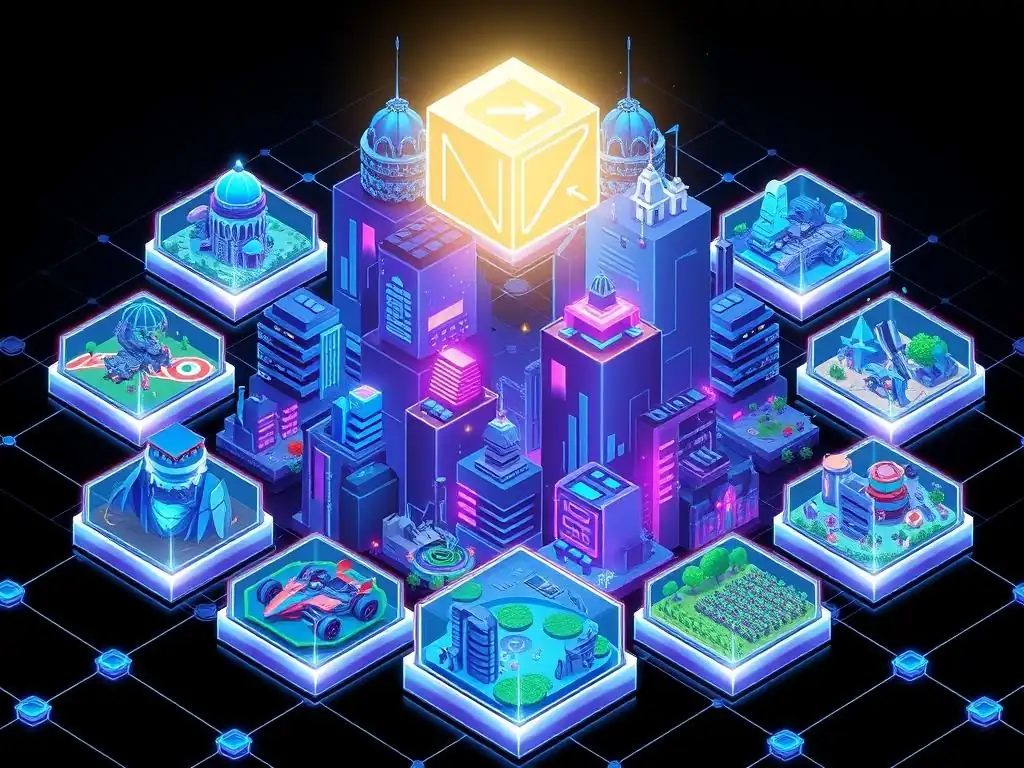
Axie Infinity: An NFT-Based Ecosystem
Axie Infinity stands as a prominent success story in NFT gaming, demonstrating the potential of play-to-earn models and NFT-driven economies. This Pokémon-inspired game revolves around collecting, breeding, and battling NFT creatures called Axies. Players earn cryptocurrency (SLP and AXS) through gameplay, which can be traded or used within the Axie ecosystem.
At its peak, Axie Infinity boasted millions of daily active players and a thriving in-game economy. The game's success highlighted the appeal of P2E mechanics and the potential for NFTs to create viable income opportunities for players, particularly in regions where traditional income sources are limited. Axie Infinity's example showcases the transformative impact of NFTs on gaming and the broader digital economy.
Decentraland: Virtual Land Ownership
Decentraland is a decentralized virtual world built on the Ethereum blockchain, where users can buy, sell, and develop virtual land represented as NFTs. LAND NFTs in Decentraland provide ownership of parcels of virtual space within the metaverse, allowing users to create experiences, host events, or build virtual businesses.
Decentraland exemplifies the concept of virtual land ownership and the potential of NFTs to create decentralized metaverses. The value of LAND NFTs has fluctuated significantly, reflecting the speculative nature of the metaverse and digital real estate. However, Decentraland's continued development and active community demonstrate the ongoing interest in NFT-based virtual worlds and the concept of user-owned digital spaces.
The Sandbox: User-Generated Content Monetization
The Sandbox is another popular metaverse platform leveraging NFTs to empower user-generated content and monetization. Players can create, own, and monetize voxel-based assets and gaming experiences using The Sandbox's tools. These assets, including characters, items, and virtual land (LAND NFTs), can be traded on The Sandbox marketplace.
The Sandbox emphasizes user creativity and economic empowerment. It provides tools for users to build and share their own games and experiences within the metaverse, and NFTs are central to enabling creators to own and monetize their creations. The Sandbox demonstrates the potential of NFTs to foster user-generated content economies and empower creators within gaming and virtual worlds.
Challenges and Considerations for NFTs in Gaming
Scalability and Transaction Fees
Scalability and transaction fees present significant challenges for the widespread adoption of NFTs in gaming. Many popular blockchains, particularly Ethereum, have faced scalability issues, leading to slow transaction times and high gas fees, especially during periods of network congestion. These high fees can make microtransactions, common in gaming, prohibitively expensive and hinder the user experience.
Solutions to scalability challenges are being actively developed, including layer-2 scaling solutions like Polygon and sidechains, which aim to reduce transaction fees and increase transaction throughput. The choice of blockchain infrastructure and scaling solutions is crucial for NFT gaming projects to ensure a smooth and cost-effective user experience, particularly as they scale to larger player bases.
Environmental Impact
The environmental impact of certain blockchains, particularly proof-of-work blockchains like the original Ethereum, has been a significant concern associated with NFTs. The energy-intensive nature of proof-of-work mining has raised questions about the sustainability of NFT technology, especially as adoption grows.
However, the blockchain landscape is evolving. Ethereum has transitioned to a more energy-efficient proof-of-stake consensus mechanism, significantly reducing its energy consumption. Furthermore, many newer blockchain platforms utilize proof-of-stake or other environmentally friendlier consensus mechanisms from the outset. Choosing eco-friendly blockchains and implementing carbon offsetting initiatives are crucial steps for NFT gaming projects to mitigate their environmental footprint.
Regulatory Uncertainty
Regulatory uncertainty surrounding NFTs and cryptocurrencies poses a challenge to the gaming industry's adoption of these technologies. The legal and regulatory landscape for digital assets is still evolving globally, and there is a lack of clear and consistent regulations in many jurisdictions. This uncertainty can create legal risks and compliance challenges for game developers and players involved in NFT gaming.
Game developers need to navigate the evolving regulatory environment and ensure compliance with applicable laws and regulations in different regions. Clarity and harmonization in NFT regulations are needed to foster innovation and responsible growth in the NFT gaming space. Ongoing dialogue between regulators, industry stakeholders, and policymakers is crucial to address these regulatory challenges.
Security Risks in Smart Contracts
Smart contracts, which underpin NFTs and blockchain applications, introduce security risks that need to be carefully considered. Smart contracts are code, and like any code, they can contain vulnerabilities that could be exploited by malicious actors. Bugs in smart contracts can lead to exploits, financial losses, or the theft of NFTs.
Rigorous security audits of smart contracts are essential before deploying NFT gaming projects. Developers need to follow secure coding practices and engage with security experts to identify and mitigate potential vulnerabilities. Players also need to be aware of security best practices and take precautions to protect their digital assets and private keys.
The Future of NFTs in Gaming: A Vision for the Metaverse
NFTs in Creating a Decentralized Metaverse
NFTs are envisioned as a foundational building block for creating a decentralized metaverse – a persistent, shared virtual world where users can interact with each other, digital objects, and experiences. NFTs enable ownership of digital assets within the metaverse, forming the basis for virtual economies, digital identities, and user-owned virtual spaces.
In a decentralized metaverse, NFTs can represent everything from avatars and virtual land to in-game items and virtual experiences. This ownership empowers users to participate in and contribute to the metaverse economy, fostering a more open, interoperable, and user-centric virtual world. NFTs are key to realizing the vision of a metaverse where users have true ownership and agency over their digital lives.
Interoperable Gaming Worlds and Digital Identities
The future of NFT gaming envisions interoperable gaming worlds and digital identities, where players can seamlessly move between different games and virtual environments while retaining their digital assets and identity. NFTs can serve as portable digital identities, allowing players to build a reputation and collection of assets that are not locked into a single game or platform.
This interoperability could revolutionize the gaming experience, creating a more interconnected and persistent gaming metaverse. Players could use their NFT avatars and items across multiple games, build a unified digital identity, and carry their achievements and assets with them as they explore different virtual worlds. This vision of interoperable gaming is a key driver for the development of NFT-based gaming ecosystems.
Virtual Economies and Player-Driven Content
NFTs are driving the development of robust virtual economies within gaming and metaverses, characterized by player-driven content and ownership. Play-to-earn models and NFT marketplaces empower players to participate in the economy, earn income, and contribute to the creation of user-generated content.
In these virtual economies, NFTs function as both in-game assets and financial instruments, creating new economic opportunities for players and creators. Player-driven content, enabled by NFT ownership and monetization tools, can enrich virtual worlds and create more dynamic and engaging experiences. NFTs are fostering a shift towards more decentralized, player-centric virtual economies within gaming and the metaverse.
Overcoming Barriers to Mainstream Adoption
Improving User Experience
Improving user experience is crucial for mainstream adoption of NFTs in gaming. Current NFT interactions can be complex and require technical knowledge, such as managing cryptocurrency wallets and understanding blockchain transactions. Simplifying the user experience is essential to make NFT gaming accessible to a wider audience.
Game developers need to focus on creating user-friendly interfaces and abstracting away the technical complexities of blockchain technology. Integrating NFT functionality seamlessly within the game, providing intuitive wallet management solutions, and offering clear onboarding processes are key steps to improve the user experience and attract mainstream gamers.
Addressing Environmental Concerns
Addressing environmental concerns is vital for the long-term sustainability and mainstream acceptance of NFTs in gaming. The industry needs to proactively adopt eco-friendly blockchain solutions and mitigate the environmental impact of NFT technology. Promoting proof-of-stake blockchains, carbon offsetting initiatives, and educating users about environmentally conscious NFT practices are important steps.
Game developers can choose to build on energy-efficient blockchains and partner with environmental organizations to offset their carbon footprint. Transparency about the environmental impact of NFT gaming and a commitment to sustainability are crucial to address public concerns and ensure the responsible growth of the industry.
Fostering Collaboration
Fostering collaboration across the gaming, blockchain, and traditional finance industries is essential to drive mainstream adoption of NFTs in gaming. Collaboration can help address challenges, standardize protocols, and build a more robust and interoperable NFT gaming ecosystem.
Game developers, blockchain developers, NFT marketplaces, and traditional gaming companies need to work together to develop industry standards, promote interoperability, and educate users about the benefits of NFTs in gaming. Collaboration can accelerate innovation, overcome technical hurdles, and build a more inclusive and thriving NFT gaming ecosystem.
Conclusion: NFTs - Transforming Gaming Ownership
The Long-Term Impact of NFTs
The long-term impact of NFTs on the gaming industry is poised to be transformative. NFTs are not merely a passing trend but represent a fundamental shift in the paradigm of digital ownership and player empowerment. They are reshaping game economies, creating new opportunities for players and developers, and paving the way for a more decentralized and user-centric gaming future.
As NFT technology matures and adoption expands, we can expect to see even more innovative applications of NFTs in gaming, from enhanced in-game experiences to the development of interconnected metaverses. The long-term impact of NFTs will be to fundamentally alter the relationship between players and games, creating a more equitable and rewarding ecosystem for all participants.
Embracing Decentralization
Embracing decentralization is key to unlocking the full potential of NFTs in gaming. Decentralization empowers players, promotes transparency, and fosters innovation. By moving away from centralized control and embracing blockchain-based solutions, the gaming industry can create more open, fair, and sustainable ecosystems.
NFTs are a powerful tool for decentralizing gaming and putting ownership and control back into the hands of players. As the industry continues to evolve, embracing decentralization and leveraging the capabilities of NFTs will be crucial to building the future of gaming – a future that is more engaging, rewarding, and empowering for players worldwide.
Frequently Asked Questions
What are NFTs and how do they relate to gaming?
NFTs, or Non-Fungible Tokens, are unique digital assets that can represent in-game items. This allows players to have verifiable ownership of their digital possessions.
How do NFTs revolutionize ownership of in-game assets?
NFTs provide true digital ownership, unlike traditional in-game items that are controlled by the game developer. This means players can potentially trade, sell, or even use their NFTs across different games.
How can NFTs enhance the gaming experience beyond just ownership?
NFTs can create new economic models within games, allowing players to earn real-world value for their in-game activities. They can also foster stronger community engagement and personalized gaming experiences.
What are some potential risks or challenges associated with using NFTs in gaming?
The use of NFTs in gaming can face challenges related to scalability, environmental impact, and the potential for speculation and scams. Careful implementation is crucial.
How might NFTs shape the future of gaming and decentralized systems?
NFTs could lead to a more decentralized and player-owned gaming ecosystem. This could also influence the broader adoption of blockchain technology across various industries beyond gaming.
Final Reflection: Embracing the Future of Gaming Ownership
The exploration of NFTs in gaming reveals a profound shift, and its impact on ownership and in-game assets is undeniable. We've seen how NFTs are not just a trend, but a fundamental change in how players interact with and value their digital possessions, moving beyond traditional limitations to create truly unique and transferable experiences. This revolution is happening now, shaping the future of the gaming industry.
The concept of true ownership within gaming, empowered by NFTs, has deeply resonated with players and developers alike. This shift towards player agency and verifiable scarcity is not just about collecting; it's about fostering a deeper connection with the games we love and the communities we build around them. The future of gaming is not just about playing the game, but owning a piece of it.
This sentiment underscores the potential for NFTs to transform the gaming landscape into a more equitable and engaging ecosystem.
As we stand at the cusp of this new era, I invite you to consider the implications of NFTs in gaming. How can you, as a player, developer, or investor, embrace this technology to create more meaningful and rewarding experiences? Let us all strive to build a future where digital ownership is not just a concept, but a tangible reality that enriches the gaming world for everyone.
Unlock Your Gaming Future!
Thank you for exploring the exciting world of NFTs in gaming! We hope you now have a clearer understanding of how these digital assets are transforming ownership and the value of in-game items. It's time to put that knowledge into action!
Here are some ways to get started:
- Explore marketplaces dedicated to gaming assets to discover unique digital collectibles and support your favorite developers.
- Join online communities focused on blockchain gaming and NFTs to share insights and connect with others interested in the future of gaming.
- Consider trying out new blockchain-based games or beta testing platforms that incorporate NFTs, allowing you to experience innovative uses of digital assets firsthand.
Are you ready to take control of your in-game possessions and explore the potential of NFT gaming? Share your thoughts in the comments below and tell us which gaming NFT projects excite you the most.
Leave a Reply