
Play, Own, Earn: Unveiling the Economic Revolution in Metaverse Gaming with Blockchain


Welcome to Blockchain Trends, your compass in the ever-evolving world of decentralized technology.
Ever wondered how blockchain is reshaping more than just finance? Dive in with us as we explore the transformative potential of this groundbreaking technology, from enterprise solutions to the future of decentralized systems. Today, we're unlocking a fascinating new frontier: blockchain metaverse gaming economics. Prepare to discover how players are not just playing, but truly owning and earning in the digital worlds of tomorrow. Ready to level up your understanding? Let's begin!
Play, Own, Earn: Unveiling the Economic Revolution in Metaverse Gaming with Blockchain
- Introduction: The Dawn of Blockchain Metaverse Gaming Economics
- Understanding the Fundamentals of Blockchain Gaming Economics
- The "Play, Own, Earn" Model: A Deep Dive
- Real-World Examples of Thriving Blockchain Metaverse Games
- Benefits of Blockchain Integration in Metaverse Gaming
- Challenges and Considerations for Blockchain Metaverse Gaming
- The Future of Blockchain Gaming Economics in the Metaverse
- Conclusion: Embracing the Economic Revolution in Metaverse Gaming
-
Frequently Asked Questions
- How does blockchain technology impact the economics of metaverse gaming?
- What are the key benefits of "Play, Own, Earn" models in blockchain metaverse gaming?
- What are some potential risks associated with blockchain metaverse gaming economies?
- How are NFTs used to represent ownership within blockchain metaverse games?
- What role does Decentralized Finance (DeFi) play in blockchain metaverse gaming economics?
- Final Reflection: Embracing the Decentralized Future of Play
- Ignite Your Metaverse Adventure: Start Earning Today!
Introduction: The Dawn of Blockchain Metaverse Gaming Economics
Redefining Gaming Ownership with Blockchain Technology
The integration of blockchain technology into metaverse gaming is not merely an upgrade; it's a fundamental shift in how we perceive and interact with virtual worlds and in-game assets. Traditionally, in games, players invest time and often money into acquiring items, characters, and virtual lands. However, these assets remain under the complete control of the game developers.
Blockchain disrupts this paradigm by introducing decentralized ownership. Through blockchain, in-game assets are tokenized, often as Non-Fungible Tokens (NFTs), granting players verifiable and immutable ownership outside the game's central authority. This means players truly own their digital possessions, similar to owning physical collectibles, marking a significant departure from the previous model where ownership was essentially a license to use within a closed ecosystem.
This shift towards player ownership is a cornerstone of the burgeoning field of blockchain metaverse gaming economics. Imagine spending hours leveling up a character or acquiring a rare weapon in a game. In a traditional gaming scenario, if the game shuts down or your account is banned, your investment vanishes.
With blockchain, these assets, represented as NFTs, exist on a decentralized ledger. Even if a particular game ceases to exist, the player retains ownership of the NFT, which could potentially be utilized in other compatible metaverses or traded on open marketplaces. This fundamental change in ownership empowers players and fundamentally alters the economic landscape of gaming.
The Promise of "Play, Own, Earn" in the Metaverse
The "Play, Own, Earn" model represents a revolutionary concept in gaming, particularly within the metaverse context, where blockchain technology unlocks unprecedented economic opportunities for players. Unlike traditional "play-to-win" or "pay-to-win" models, "Play, Own, Earn" emphasizes the player's ability to generate real-world value through their engagement and skill within the game.
This model is predicated on the principles of decentralized ownership and open economies facilitated by blockchain. Players are not just consumers of entertainment; they become active participants in the game's economy, capable of earning cryptocurrency or valuable digital assets by playing, contributing to the game ecosystem, and interacting with other players.
Within the metaverse, this "Play, Own, Earn" paradigm takes on a new dimension. Metaverses, by their nature, are persistent, interconnected digital worlds where users can socialize, work, and play. When combined with blockchain's capabilities, these metaverses become fertile ground for robust, player-driven economies.
Players can earn by participating in quests, crafting and trading items, developing and renting virtual land, providing in-game services, and contributing to the metaverse's content creation. The earned digital assets can then be traded on cryptocurrency exchanges or NFT marketplaces, effectively converting in-game achievements into tangible financial value. This creates a powerful incentive loop, attracting players not just for entertainment but also for potential economic gain, thus fueling the growth of blockchain metaverse gaming economics.
Understanding the Fundamentals of Blockchain Gaming Economics
Tokenization and In-Game Assets: A New Era of Ownership
Tokenization is the process of representing real-world or digital assets as tokens on a blockchain. In the context of blockchain metaverse gaming economics, this primarily refers to in-game assets being represented as cryptographic tokens. These tokens can be either fungible (like cryptocurrencies, where one token is interchangeable with another) or non-fungible (NFTs, where each token is unique and represents a specific item). This tokenization process is crucial because it establishes verifiable digital scarcity and ownership. Before blockchain, digital assets within games were essentially lines of code within a centralized database, easily replicable and controlled by the game company.
By tokenizing in-game assets, developers create a system where each asset's ownership is recorded on a public, immutable ledger – the blockchain. For example, a rare sword in a blockchain game might be represented by a unique NFT. This NFT contains metadata that verifies its authenticity and rarity, and its ownership is securely tracked on the blockchain.
This is a paradigm shift from traditional gaming, where players "own" in-game items only in the sense that they have access to them within the game's ecosystem. Tokenization via blockchain provides genuine digital ownership, allowing players to trade, sell, or even lend their assets outside the confines of the game, fostering a new era of player empowerment and contributing significantly to the blockchain metaverse gaming economics.
Smart Contracts: Powering Decentralized Gaming Economies
Smart contracts are self-executing contracts with the terms of the agreement directly written into code. In the realm of blockchain metaverse gaming economics, smart contracts play a pivotal role in automating and decentralizing various aspects of game economies. They eliminate the need for intermediaries in many in-game transactions, fostering trust and transparency.
Imagine a scenario where a player wins a tournament in a blockchain game. Instead of relying on the game developer to manually distribute rewards, a smart contract can be programmed to automatically verify the tournament results and instantly distribute the promised cryptocurrency or NFT prizes to the winners' wallets.
Furthermore, smart contracts can govern complex in-game systems, such as decentralized marketplaces, automated reward distribution mechanisms, and even game logic itself. For instance, a smart contract can manage the rules for crafting new items, ensuring fairness and preventing manipulation. They can also facilitate peer-to-peer trading of in-game assets without the need for a centralized game-controlled marketplace, reducing transaction fees and giving players greater control over their economic interactions. By automating and securing these processes, smart contracts are fundamental to building robust, transparent, and player-centric blockchain metaverse gaming economics.
The Role of NFTs in Blockchain Metaverse Gaming
Non-Fungible Tokens (NFTs) are unique digital assets that are revolutionizing ownership and value within blockchain metaverse gaming economics. Unlike cryptocurrencies like Bitcoin or Ether, where each unit is identical, NFTs are distinct and indivisible, making them perfect for representing unique in-game items, characters, virtual land, and collectibles. Each NFT has a unique identifier and metadata stored on the blockchain, proving its authenticity and ownership. This inherent uniqueness and verifiable scarcity are key to their value proposition in metaverse gaming.
In metaverse games, NFTs can represent anything from a character skin or a powerful weapon to a plot of virtual land or a rare piece of artwork displayed within the metaverse. Because NFTs are owned by the players and not the game developers, they can be freely traded on open NFT marketplaces outside of the game itself. This allows players to monetize their in-game achievements and investments in a way that was never possible in traditional gaming.
For example, a player who acquires a rare NFT in a metaverse game can sell it to another player for cryptocurrency, effectively turning gameplay into a potential income stream. NFTs are therefore not just digital collectibles; they are the building blocks of player-owned economies within the metaverse, driving the growth and innovation of blockchain metaverse gaming economics.
The "Play, Own, Earn" Model: A Deep Dive
How "Play, Own, Earn" Differs from Traditional Gaming Models
The "Play, Own, Earn" model represents a significant departure from traditional gaming models, which are primarily structured around "Play-to-Win" or "Pay-to-Win" paradigms. In traditional "Play-to-Win" games, skill and time investment are the primary drivers of progress and reward. While players can achieve in-game success and recognition, the economic value of their efforts remains within the game's closed ecosystem.
"Pay-to-Win" models, on the other hand, often allow players to accelerate progress or gain advantages by spending real money, creating an uneven playing field and often diminishing the sense of accomplishment through skill. Both models ultimately keep the economic power and asset ownership centralized with the game developers.
"Play, Own, Earn", powered by blockchain, flips this script. It empowers players by granting them true ownership of in-game assets and enabling them to earn real-world value through gameplay. Instead of solely playing for entertainment or in-game progression, players in "Play, Own, Earn" games can actively participate in the game's economy and generate income.
This shifts the player's role from a consumer to a stakeholder. The focus moves from simply consuming content to actively contributing to and benefiting from the game's ecosystem. This fundamental difference positions "Play, Own, Earn" as a revolutionary model within blockchain metaverse gaming economics, fostering a more equitable and engaging gaming experience.
Earning Opportunities within Blockchain Metaverse Games: Quest Rewards, Marketplace Trading, Staking, Land Ownership
Blockchain metaverse games offer a diverse range of earning opportunities for players, far beyond the limited scope of traditional gaming rewards. Quest rewards are a common entry point, where players earn cryptocurrency or NFTs for completing in-game tasks, missions, or challenges. These rewards can be directly converted to other cryptocurrencies or fiat currency on exchanges.
Marketplace trading is another significant avenue, enabling players to buy, sell, and trade their in-game NFTs with other players on decentralized marketplaces. The value of these NFTs can fluctuate based on rarity, utility, and demand, creating opportunities for skilled traders and collectors within the blockchain metaverse gaming economics ecosystem.
Staking mechanisms, borrowed from the broader cryptocurrency world, are also being integrated into some blockchain games. Players can stake their in-game tokens to earn passive income or to participate in governance decisions within the game ecosystem. Land ownership in metaverse games presents another lucrative opportunity.
Players can purchase virtual land as NFTs and develop it, rent it out to other players or businesses, or utilize it for various in-game activities, generating passive income and contributing to the metaverse's economy. These diverse earning streams, ranging from active gameplay to passive investment, illustrate the rich economic potential within blockchain metaverse gaming economics.
The Value Proposition for Players and Developers
The "Play, Own, Earn" model in blockchain metaverse gaming economics offers a compelling value proposition for both players and game developers. For players, the most significant advantage is enhanced ownership and control. They truly own their in-game assets, giving them the freedom to trade, sell, or utilize them as they see fit. This ownership translates to real economic opportunities, allowing players to potentially earn income while engaging in their hobby. Furthermore, "Play, Own, Earn" games often foster stronger community engagement as players are incentivized to participate actively in the game's economy and ecosystem.
For developers, adopting the "Play, Own, Earn" model can lead to increased player retention and engagement. The economic incentives attract a broader player base, including those who are not just seeking entertainment but also economic opportunities. Blockchain integration can also create new revenue streams for developers through marketplace fees, initial NFT sales, and in-game tokenomics.
Moreover, by decentralizing aspects of the game economy, developers can reduce operational costs and foster a more sustainable and player-driven game ecosystem. The "Play, Own, Earn" model, therefore, represents a win-win scenario, creating a more rewarding and engaging experience for players while offering new opportunities and sustainable growth for game developers within the evolving landscape of blockchain metaverse gaming economics.
Real-World Examples of Thriving Blockchain Metaverse Games
Case Study 1: Axie Infinity - A Pioneer in Play-to-Earn Gaming
Axie Infinity, launched by Vietnamese studio Sky Mavis, stands as a pioneering example of a successful "Play-to-Earn" blockchain game, significantly shaping the landscape of blockchain metaverse gaming economics. This Pokémon-inspired game centers around collecting, breeding, battling, and trading digital creatures called Axies, which are represented as NFTs. Players earn two primary cryptocurrencies through gameplay: Smooth Love Potion (SLP) and Axie Infinity Shards (AXS).
SLP is earned through battling and completing daily quests and is primarily used for breeding new Axies. AXS is the governance token of the Axie Infinity ecosystem, earned through staking and top leaderboard placements, granting holders voting rights and a share of the ecosystem's revenue.
Axie Infinity's economic model gained significant traction, particularly in developing countries like the Philippines, where players were able to earn a substantial income by playing the game, especially during the COVID-19 pandemic. At its peak in late 2021, Axie Infinity boasted millions of daily active users and a thriving in-game economy.
The success of Axie Infinity demonstrated the real-world economic potential of "Play-to-Earn" and highlighted the transformative impact of blockchain metaverse gaming economics on players' lives and the gaming industry as a whole. However, it also faced challenges related to economic sustainability and token price volatility, providing valuable lessons for the future development of this model.
Case Study 2: Decentraland - Empowering User-Generated Content and Ownership
Decentraland is a decentralized virtual world built on the Ethereum blockchain, representing a different facet of blockchain metaverse gaming economics. Unlike Axie Infinity, which is primarily game-focused, Decentraland is a metaverse platform where users can buy, develop, and monetize virtual land parcels represented as NFTs called LAND. Within Decentraland, users can create and explore experiences, interact with others, and participate in a user-owned and governed virtual economy. The native cryptocurrency of Decentraland is MANA, used to purchase LAND, avatars, wearables, and other goods and services within the metaverse.
Decentraland empowers users with complete ownership and control over their virtual land and creations. Users can build anything they imagine on their LAND, from virtual stores and art galleries to casinos and interactive games. The platform's decentralized nature means there is no central authority controlling the metaverse; instead, governance is distributed amongst LAND owners through a Decentralized Autonomous Organization (DAO).
Decentraland's economic model emphasizes user-generated content and ownership, showcasing the potential of blockchain metaverse gaming economics to create truly decentralized and player-driven virtual worlds. Its success lies in fostering a vibrant creator economy and empowering users to build and monetize their own metaverse experiences.
Analyzing the Economic Models and Player Engagement
Comparing Axie Infinity and Decentraland highlights the diverse approaches within blockchain metaverse gaming economics. Axie Infinity's model is centered around a game with clear "Play-to-Earn" mechanics focused on battling and breeding, driving player engagement through competitive gameplay and direct financial rewards. Its economy is heavily dependent on the demand for Axies and SLP, making it susceptible to market fluctuations and requiring careful balancing to maintain sustainability. Player engagement is driven by the desire to earn SLP and AXS, creating a strong economic incentive to play.
Decentraland, on the other hand, fosters a broader metaverse economy centered around user-generated content and land ownership. Its economic model is more diverse, relying on land sales, content creation, and in-world commerce. Player engagement in Decentraland is driven by creative expression, social interaction, and the potential to build and monetize virtual spaces.
While Axie Infinity initially saw explosive growth fueled by its direct "Play-to-Earn" mechanics, Decentraland aims for long-term sustainability through a more diverse and user-driven economy. Both examples demonstrate the potential of blockchain metaverse gaming economics but also highlight the different strategies and challenges involved in building successful blockchain-based virtual worlds.
Benefits of Blockchain Integration in Metaverse Gaming
Enhanced Player Ownership and Control
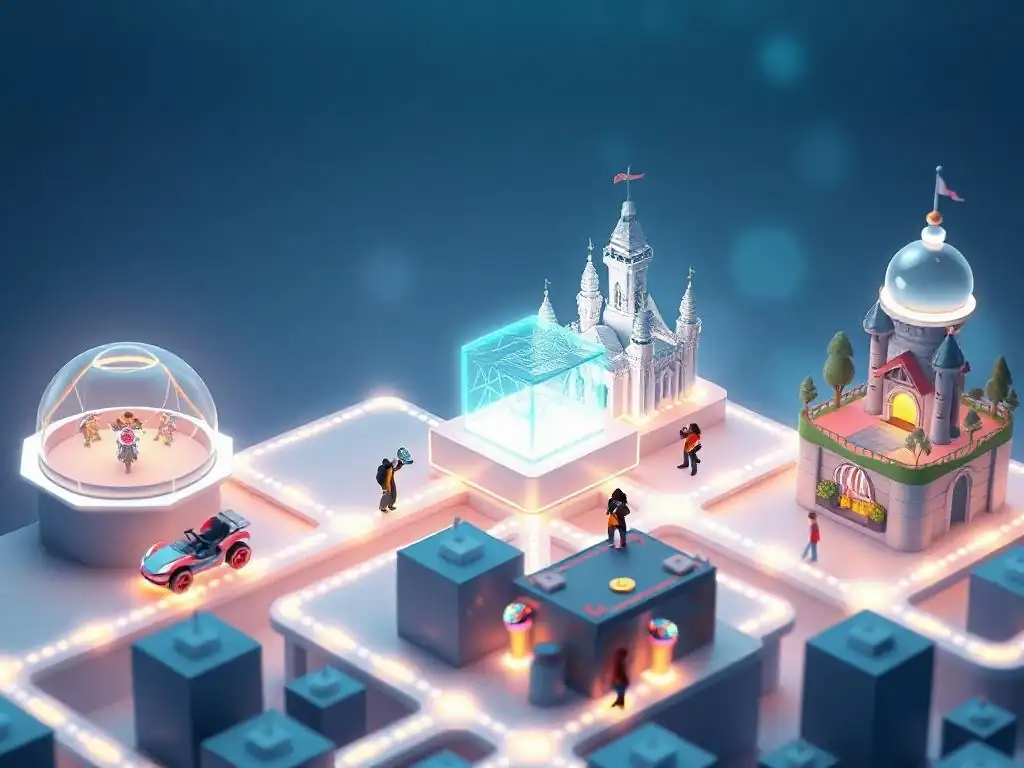
One of the most transformative benefits of blockchain integration in metaverse gaming is enhanced player ownership and control over in-game assets. In traditional gaming, players essentially lease access to digital items and accounts from game companies. Blockchain, through NFTs, fundamentally changes this dynamic by granting players verifiable and immutable ownership. When a player acquires an NFT representing an in-game asset, that asset is recorded on the blockchain, and the player's ownership is cryptographically secured and publicly verifiable. This ownership extends beyond the confines of a single game or platform.
This newfound ownership empowers players in several ways. They have the freedom to trade, sell, or gift their assets without needing the permission of the game developer. They can potentially utilize their assets across different compatible metaverses or games, increasing the utility and value of their digital possessions. Furthermore, ownership reduces the risk of losing assets due to game closures or account bans, as the NFTs exist independently on the blockchain. This enhanced ownership and control is a core tenet of blockchain metaverse gaming economics, fostering a more equitable and player-centric gaming ecosystem.
Secure and Transparent In-Game Transactions
Blockchain technology provides a foundation for secure and transparent in-game transactions within metaverse gaming. Traditional in-game economies often rely on centralized systems that are vulnerable to fraud, manipulation, and lack transparency. Blockchain, with its decentralized and immutable ledger, offers a solution to these issues. Every transaction recorded on the blockchain is cryptographically secured, making it extremely difficult to tamper with or reverse. This immutability ensures that the history of ownership and transactions for in-game assets is permanently recorded and publicly auditable.
Smart contracts further enhance security and transparency by automating transaction processes and eliminating the need for intermediaries. For instance, when a player purchases an NFT on a blockchain marketplace, the smart contract automatically executes the transaction, transferring ownership of the NFT and the corresponding cryptocurrency between the buyer and seller in a secure and transparent manner.
This level of security and transparency builds trust within the blockchain metaverse gaming economics ecosystem, encouraging greater player participation and investment in these virtual economies. It also reduces the potential for illicit activities and creates a more reliable and trustworthy environment for in-game transactions.
Creation of Sustainable and Thriving Gaming Economies
Blockchain integration has the potential to foster the creation of sustainable and thriving gaming economies within metaverses. Traditional game economies are often controlled and managed by game developers, who have the power to alter game rules, inflate in-game currencies, or even shut down the economy entirely. Blockchain introduces decentralization and player ownership, which can lead to more resilient and player-driven economies. The scarcity and verifiable ownership of NFTs can create genuine value for in-game assets, driving demand and fostering active marketplaces.
The "Play, Own, Earn" model itself is designed to incentivize player participation and contribution to the game economy. By allowing players to earn real-world value through gameplay, it creates a virtuous cycle where player engagement fuels economic growth, which in turn attracts more players.
Furthermore, decentralized governance mechanisms, often implemented through DAOs, can empower players to participate in decision-making processes related to the game economy, ensuring that the economy is managed in a way that benefits the community as a whole. This combination of player ownership, economic incentives, and decentralized governance contributes to the long-term sustainability and vibrancy of blockchain metaverse gaming economics.
Challenges and Considerations for Blockchain Metaverse Gaming
Scalability Issues and Solutions
One of the primary challenges facing blockchain metaverse gaming economics is scalability. Many popular blockchains, particularly Ethereum, on which many early blockchain games were built, have limitations in terms of transaction throughput and speed. As metaverse games grow in popularity and involve a large number of players and in-game transactions, these scalability constraints can lead to network congestion, high transaction fees (gas fees), and slow transaction processing times, impacting the user experience.
Several solutions are being explored to address scalability issues. Layer-2 scaling solutions, such as sidechains, rollups, and state channels, are designed to process transactions off the main blockchain, reducing congestion and improving transaction speed and cost-effectiveness. Alternative blockchains with higher transaction throughput, such as Solana, Polygon, and Flow, are also gaining traction in the blockchain metaverse gaming economics space.
Furthermore, sharding, a technique that divides a blockchain into multiple shards to process transactions in parallel, is being developed for Ethereum and other blockchains to enhance scalability. Overcoming scalability challenges is crucial for the widespread adoption and long-term success of blockchain metaverse gaming.
Regulatory Uncertainty and Compliance
Regulatory uncertainty and compliance pose significant challenges for the nascent field of blockchain metaverse gaming economics. The legal and regulatory landscape surrounding cryptocurrencies, NFTs, and blockchain gaming is still evolving and varies significantly across jurisdictions. Governments worldwide are grappling with how to classify and regulate these new technologies and asset classes. This uncertainty creates challenges for game developers and players alike.
Game developers need to navigate complex and often unclear legal requirements related to token sales, NFT distribution, and gambling regulations. Compliance with anti-money laundering (AML) and know-your-customer (KYC) regulations can also be complex and costly. Players may face uncertainty regarding the tax implications of their in-game earnings and transactions. The lack of clear and consistent regulations creates a risk of legal challenges and hinders the growth and mainstream adoption of blockchain metaverse gaming economics. Greater clarity and international cooperation in regulatory frameworks are needed to foster a more stable and predictable environment for this emerging industry.
Security Risks and Mitigation Strategies
While blockchain offers enhanced security compared to traditional centralized systems, security risks still exist within blockchain metaverse gaming economics. Smart contracts, while powerful, can be vulnerable to exploits if not properly audited and tested. NFTs, despite their unique nature, can be susceptible to phishing scams, hacks, and theft if users do not take proper security precautions. Blockchain platforms themselves can also be targets of attacks, although major blockchain networks have proven to be relatively secure.
Mitigation strategies are crucial to address these security risks. Rigorous smart contract audits by reputable security firms are essential to identify and fix potential vulnerabilities before deployment. User education on security best practices, such as using strong passwords, enabling two-factor authentication, and being wary of phishing attempts, is vital to protect player assets. Game developers and blockchain platforms need to implement robust security measures and continuously monitor for and respond to potential threats. Prioritizing security is paramount to building trust and ensuring the long-term viability of blockchain metaverse gaming economics.
The Future of Blockchain Gaming Economics in the Metaverse
Evolution of "Play, Own, Earn" and Beyond
The "Play, Own, Earn" model is likely to evolve significantly as blockchain metaverse gaming economics matures. Future iterations may move beyond simple earning mechanics and incorporate more complex economic systems, such as decentralized autonomous organizations (DAOs) for game governance, player-driven economies with intricate supply and demand dynamics, and deeper integration with decentralized finance (DeFi) protocols. We may see the emergence of "Play, Govern, Earn" models where players not only earn but also actively participate in shaping the game's future through decentralized governance mechanisms.
The concept of interoperability between different metaverse games and platforms could also become more prevalent. Imagine owning an NFT character that can be used across multiple different blockchain-based metaverses, retaining its value and utility across various virtual worlds. This interconnectedness would further enhance the value proposition of player-owned assets and create more dynamic and expansive blockchain metaverse gaming economics. The future likely holds more sophisticated and player-empowering economic models that build upon the foundation of "Play, Own, Earn".
The Impact of Blockchain on the Wider Gaming Industry
Blockchain technology is poised to have a profound impact on the wider gaming industry, extending beyond just blockchain metaverse gaming economics. Traditional game developers are increasingly exploring the potential of NFTs and blockchain to enhance player engagement and create new revenue streams. We may see more hybrid models emerge, where traditional games incorporate blockchain elements, such as NFT-based collectibles or in-game marketplaces, without fully transitioning to a decentralized "Play, Own, Earn" model.
Blockchain could also revolutionize digital asset ownership and trading within the broader gaming industry. Imagine buying a digital skin in a popular game and truly owning it as an NFT, allowing you to trade it on open marketplaces or even use it in other games in the future. This shift towards player ownership could fundamentally alter the relationship between players and game companies, fostering a more equitable and player-centric gaming ecosystem. The integration of blockchain technology, even in incremental steps, has the potential to reshape the future of the entire gaming industry.
Predictions for the Growth of Blockchain Metaverse Gaming
The blockchain metaverse gaming economics sector is predicted to experience significant growth in the coming years. As blockchain technology matures, scalability solutions improve, and regulatory frameworks become clearer, the barriers to entry for both developers and players will decrease. The increasing mainstream adoption of cryptocurrencies and NFTs will further fuel the growth of this sector. Analysts predict substantial market growth in blockchain gaming and metaverse-related investments, indicating strong investor confidence and growing consumer interest.
The "Play, Own, Earn" model is expected to become increasingly popular, attracting a new generation of gamers who are not only seeking entertainment but also economic opportunities. The convergence of gaming, blockchain, and the metaverse is creating a new frontier in digital entertainment and online economies. While challenges remain, the long-term trajectory for blockchain metaverse gaming economics points towards continued expansion, innovation, and a transformative impact on the gaming industry and the broader digital landscape.
Conclusion: Embracing the Economic Revolution in Metaverse Gaming
The Transformative Power of Blockchain Technology in Gaming
Blockchain technology is undeniably wielding a transformative power in the gaming industry, particularly within the emerging metaverse landscape. It's not just about adding cryptocurrencies or NFTs to games; it's about fundamentally rethinking the relationship between players and games, developers and communities, and the very nature of digital ownership and value. The shift from centralized control to decentralized ownership, facilitated by blockchain, is empowering players and creating new economic paradigms within blockchain metaverse gaming economics.
This technological revolution is disrupting traditional gaming models and paving the way for more player-centric, equitable, and engaging gaming experiences. Blockchain is enabling the creation of persistent, player-owned metaverses with thriving virtual economies, where players can not only play but also own and earn, blurring the lines between entertainment and economic opportunity. The transformative power of blockchain in gaming is just beginning to be realized, and its long-term impact promises to reshape the industry in profound ways.
The Potential for a More Equitable and Rewarding Gaming Experience
The rise of blockchain metaverse gaming economics holds immense potential for creating a more equitable and rewarding gaming experience for players worldwide. The "Play, Own, Earn" model, at its core, aims to democratize access to economic opportunities within gaming, allowing players to benefit directly from their time, skill, and contributions to game ecosystems. This is particularly significant in developing economies, where "Play-to-Earn" has already demonstrated its potential to provide meaningful income opportunities.
By granting players true ownership of in-game assets and fostering player-driven economies, blockchain is moving away from the traditional model where value is primarily extracted by game companies. The potential for a more equitable and rewarding gaming experience is not just about financial gains; it's also about empowering players, fostering stronger communities, and creating a more sustainable and player-centric gaming ecosystem. As blockchain metaverse gaming economics continues to evolve, its promise of a fairer and more rewarding gaming future becomes increasingly tangible.
Frequently Asked Questions
How does blockchain technology impact the economics of metaverse gaming?
Blockchain enables true digital ownership of in-game assets through NFTs, allowing players to trade, sell, and earn from their creations and accomplishments. This creates a player-driven economy rather than one controlled solely by game developers.
What are the key benefits of "Play, Own, Earn" models in blockchain metaverse gaming?
"Play, Own, Earn" (P2E) models incentivize player participation by rewarding them with crypto or NFTs for their time and effort. This fosters stronger player communities and creates new income streams for gamers who can monetize their skills and assets.
What are some potential risks associated with blockchain metaverse gaming economies?
Risks include regulatory uncertainty surrounding cryptocurrencies and NFTs, price volatility of in-game assets, and the potential for speculation and scams within the decentralized ecosystem. Careful due diligence is crucial.
How are NFTs used to represent ownership within blockchain metaverse games?
NFTs, or Non-Fungible Tokens, are unique digital assets that represent ownership of in-game items, land, or characters. They are stored on the blockchain ledger, ensuring transparency and verifiable ownership, making them easily tradeable.
What role does Decentralized Finance (DeFi) play in blockchain metaverse gaming economics?
DeFi protocols can provide financial infrastructure within metaverse games, enabling features like lending, borrowing, and yield farming with in-game assets. This creates more sophisticated economic opportunities for players and developers alike.
Final Reflection: Embracing the Decentralized Future of Play
The exploration of blockchain metaverse gaming economics reveals more than just a novel entertainment model; it unveils a fundamental shift in how we perceive ownership, value, and participation in digital worlds. The convergence of gaming, blockchain technology, and decentralized finance is not a fleeting trend but a nascent economic revolution, poised to reshape industries and empower individuals in unprecedented ways.
This paradigm shift has profoundly impacted the cultural landscape, fostering a sense of community and shared ownership within virtual spaces. The ability to earn real-world value through gameplay is not merely a feature; it's a powerful motivator that blurs the lines between entertainment and economic opportunity. The future of work is play, and the future of play is work.
This quote encapsulates the transformative potential of blockchain metaverse gaming, where passion and skill can translate into tangible rewards, fostering a more equitable and engaging digital economy.
As we stand on the cusp of this decentralized future, let us embrace the possibilities that blockchain metaverse gaming offers. Consider how you can leverage these emerging technologies to not only enhance your gaming experience but also to participate in a new era of digital ownership and economic empowerment. The metaverse is not just a game; it's a canvas for innovation, creativity, and a more democratized future.
Ignite Your Metaverse Adventure: Start Earning Today!
Thanks for exploring the exciting intersection of metaverse gaming and blockchain technology with us! We hope you now feel empowered to navigate the new economic landscape within these virtual worlds. Ready to dive in and start reaping the rewards?
Here are a few things you can do right now:
- Dive into a Play-to-Earn game: Commit to playing a blockchain-based game for at least one hour this week and experience the earning potential firsthand! This is your first step to understanding the economic revolution.
- Explore different Metaverse platforms: Research and identify three unique metaverse gaming platforms. Compare their earning models, game mechanics, and community engagement strategies. Share your findings with other enthusiasts.
- Share this article: If you found this information valuable, spread the word! Help others understand and benefit from the economic opportunities within metaverse gaming.
What exciting Play-to-Earn game are you most eager to try, and what's the first item you plan to earn or own in the metaverse? Share your thoughts and strategies in the comments below!
Leave a Reply