
The Rise of PlaytoEarn Models: How Blockchain is Changing Game Monetization

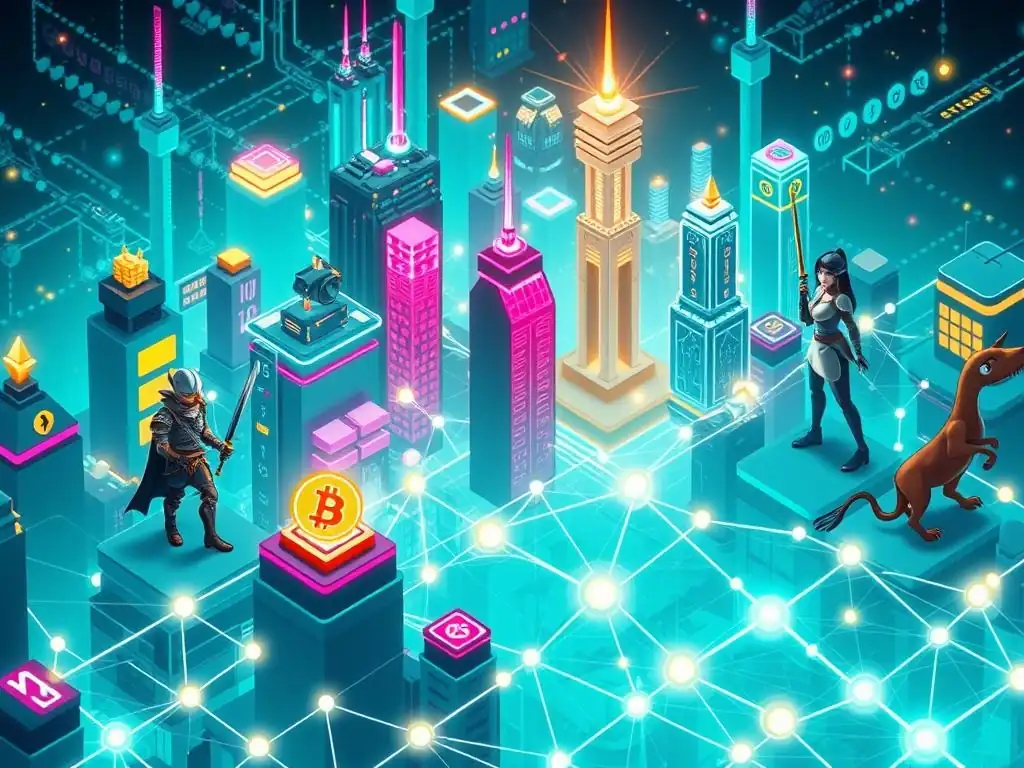
Welcome to Blockchain Trends, your compass in the rapidly evolving world of decentralized technologies. Forget just cryptocurrencies; we delve deep into the real-world applications reshaping industries. Intrigued by the intersection of gaming and blockchain? Then you're in the right place.
Ever wondered how blockchain is revolutionizing the gaming industry? Our feature article explores the groundbreaking shift towards blockchain game monetization strategies, uncovering how Play-to-Earn models are disrupting traditional approaches and empowering players in unprecedented ways. Dive in to discover the future of gaming and unlock the potential of decentralized economies!
The Rise of Blockchain Gaming: Transforming Game Economies
- Understanding the Evolution of Game Monetization
- The Blockchain Revolution: Introducing Decentralized Gaming
- Blockchain Game Monetization Strategies: Exploring Models
- Benefits of Blockchain-Based Game Monetization
- Challenges and Considerations for Blockchain Games
- Successful Examples of Blockchain Games and their Monetization Strategies
- The Future of Game Monetization
- Implementing Effective Blockchain Game Strategies: Best Practices
- The Impact of Blockchain Gaming on the Gaming Industry and Blockchain Adoption
- Conclusion: The Transformative Potential of Blockchain Game Economies
-
Frequently Asked Questions
- How are Play-to-Earn (P2E) models changing the game monetization landscape?
- What are some common Blockchain game monetization strategies?
- How does blockchain technology facilitate these new monetization models in games?
- What are the potential regulatory challenges facing blockchain game monetization?
- What is the future outlook for Blockchain game monetization strategies and P2E models?
- Final Reflection: Embracing the Future of Play
- Unlock Your Gaming Future: Start Earning Today!
Understanding the Evolution of Game Monetization
A Brief History of Game Monetization Models
The journey of game monetization has been a dynamic one, evolving alongside technological advancements and shifting player preferences. In the early days of gaming, the model was straightforward: arcade machines and console games were purchased upfront for a one-time fee. Arcades operated on a pay-per-play basis, while home consoles offered unlimited playtime after the initial purchase.
As gaming transitioned to PCs and online platforms, new models emerged. The shareware distribution method gained traction in the 1990s, offering a portion of the game for free, enticing players to purchase the full version. Subscription models became prominent with the rise of Massively Multiplayer Online Role-Playing Games (MMORPGs) like World of Warcraft, requiring players to pay recurring fees for access to the game world and its content.
The free-to-play (F2P) revolution, fueled by the proliferation of mobile gaming and online browser games, drastically altered the landscape. Initially, F2P games relied heavily on advertising revenue. However, the introduction of microtransactions within these games became the dominant force. Microtransactions allowed players to purchase in-game items, currencies, or cosmetic enhancements, often for small amounts.
This model proved immensely lucrative, with games like Candy Crush Saga and Fortnite generating billions in revenue through in-app purchases. Downloadable content (DLC) and expansion packs also became significant revenue streams for premium games, offering players additional content and extending the lifespan of games beyond their initial release. Each evolution reflected a search for sustainable revenue streams while adapting to changing player habits and technological possibilities.
The Limitations of Traditional Game Monetization Strategies
While traditional game monetization models have generated substantial revenue for the gaming industry, they are not without their inherent limitations and criticisms. The pay-to-win (P2W) aspect, particularly prevalent in microtransaction-heavy F2P games, has become a major point of contention. P2W mechanics often allow players who spend money to gain significant advantages over those who do not, creating an uneven playing field and diminishing the sense of fair competition.
This can lead to player frustration and a feeling that skill is secondary to spending power. Furthermore, players in traditional gaming ecosystems often have limited ownership over the digital assets they acquire within games. Purchased items, characters, or in-game currencies are typically tied to the game developer's platform and cannot be traded or transferred outside of that specific ecosystem.
Another significant limitation is the lack of transparency and control players have over in-game economies. Developers often have unilateral control over game economies, including the supply and distribution of in-game currencies and items. This centralized control can lead to arbitrary decisions that negatively impact players, such as sudden inflation, devaluation of in-game assets, or the removal of purchased items when games are shut down.
Moreover, the revenue generated from traditional game monetization models primarily benefits game developers and publishers, with minimal direct financial benefit for players, even those who invest significant time and resources into games. This disconnect between player investment and financial reward has fueled the desire for more player-centric and equitable monetization models within the gaming industry.
The Blockchain Revolution: Introducing Decentralized Gaming
What is Blockchain Gaming and How Does it Work?
Blockchain gaming represents a paradigm shift in the gaming industry, leveraging blockchain technology to introduce decentralization, player ownership, and new economic models. At its core, blockchain gaming integrates blockchain technology into game mechanics and economies. This means that certain aspects of the game, such as in-game assets, currencies, and even governance, are managed and secured by a decentralized blockchain network, rather than being controlled solely by the game developer. Blockchain, in essence, is a distributed and immutable ledger that records transactions across a network of computers. This decentralized nature is key to the transformative potential of blockchain gaming.
In the context of gaming, blockchain facilitates the creation of unique and verifiable digital assets, typically represented as non-fungible tokens (NFTs). These NFTs can represent in-game items, characters, virtual land, or any other digital asset within the game world. When a player acquires an NFT in a blockchain game, ownership is recorded on the blockchain, making it transparent and verifiable.
Transactions within blockchain games, such as buying, selling, or trading NFTs, are also recorded on the blockchain, ensuring transparency and security. Furthermore, blockchain technology enables the creation of in-game cryptocurrencies that can be used for various purposes within the game ecosystem, including purchasing NFTs, participating in governance, or earning rewards. The integration of smart contracts, self-executing agreements written in code and stored on the blockchain, automates various game mechanics and economic processes, further enhancing decentralization and transparency.
Key Components of Blockchain Games
Blockchain games are characterized by several key components that differentiate them from traditional games. Non-Fungible Tokens (NFTs) are arguably the most crucial element. NFTs are unique digital assets that represent ownership of in-game items. Unlike fungible tokens like cryptocurrencies where one unit is interchangeable with another, each NFT is distinct and indivisible, making them ideal for representing unique in-game assets such as characters, weapons, or land. Cryptocurrencies are another fundamental component, serving as the primary in-game currency for transactions, rewards, and governance. These cryptocurrencies often have their own tokenomics, designed to create sustainable and balanced game economies.
Smart Contracts play a vital role in automating game mechanics and economic interactions. They can be used to manage NFT marketplaces, distribute rewards, govern game rules, and enforce agreements between players and developers. Decentralized Platforms are often used to host and operate blockchain games. These platforms can range from public blockchains like Ethereum or Polygon to more specialized gaming-focused blockchains.
The choice of platform impacts factors like transaction fees, scalability, and the overall ecosystem of the game. Finally, Decentralized Autonomous Organizations (DAOs) are increasingly becoming a component of blockchain games, empowering communities to participate in game governance and development decisions. These components work together to create a more decentralized, transparent, and player-centric gaming experience.
The Role of NFTs in Blockchain Game Economies
Non-Fungible Tokens (NFTs) are the cornerstone of blockchain game economies, revolutionizing how players interact with and perceive in-game assets. NFTs represent verifiable ownership of unique digital items within a game. This ownership is not just a record within the game developer's database, but rather a transparent and immutable record on the blockchain, accessible to anyone.
This fundamental shift in ownership is the key to unlocking new economic possibilities in gaming. NFTs can represent a wide range of in-game assets, from cosmetic items like skins and avatars to functional items like weapons, tools, and virtual land. The scarcity of NFTs can be programmatically controlled, creating digital collectibles with varying levels of rarity and desirability.
The true power of NFTs in game economies lies in their tradability and interoperability. Because ownership is recorded on the blockchain, NFTs can be freely traded on open NFT marketplaces, both within and sometimes even outside of the game ecosystem. This creates a secondary market for in-game assets, allowing players to buy, sell, and trade their NFTs with other players, potentially for cryptocurrency or even fiat currency.
This secondary market introduces a new revenue stream for both players and game developers. Players can potentially earn by actively participating in the game, acquiring valuable NFTs, and then selling them to other players.
Developers can also benefit from transaction fees or royalties on NFT marketplace transactions, creating a more sustainable and player-driven game economy. Furthermore, the potential for interoperability, where NFTs can be used across different games or metaverse platforms, is a developing area that could further enhance the utility and value of these digital assets.
Blockchain Game Monetization Strategies: Exploring Models
Tokenomics in Blockchain Games: Designing Sustainable Economies
Tokenomics, a portmanteau of "token" and "economics," is the study and design of the economic systems that underpin cryptocurrencies and blockchain-based projects, including blockchain games. In the context of blockchain game monetization strategies, robust tokenomics is crucial for creating sustainable and thriving game economies. Tokenomics encompasses various factors, including the token's supply, distribution, utility, and mechanisms for maintaining its value and stability within the game ecosystem. A well-designed tokenomic model should incentivize positive player behaviors, reward participation, and ensure a balanced economy that benefits both players and developers over the long term.
One key aspect of tokenomics is the token supply and distribution. Games typically have a native cryptocurrency token that serves as the primary in-game currency. The total supply of this token can be fixed or inflationary/deflationary, depending on the game's design goals. Distribution strategies vary, with tokens often awarded to players through gameplay, staking, or participation in events.
Token utility is another critical element. A token's utility defines its purpose and use cases within the game ecosystem. This can include using tokens to purchase NFTs, participate in governance, access premium features, or earn staking rewards. The more utility a token has, the higher its demand is likely to be.
Mechanisms for value accrual and stability are also vital. These can include burning tokens to reduce supply, staking mechanisms to lock up tokens and reduce circulating supply, or decentralized exchanges (DEXs) for trading tokens with other cryptocurrencies. Sustainable tokenomics aims to create a positive feedback loop where player participation and economic activity contribute to the overall health and growth of the game economy, benefiting all stakeholders.
In-Game Assets and NFT Marketplaces: A New Revenue Stream
The integration of in-game assets as Non-Fungible Tokens (NFTs) and the emergence of NFT marketplaces have created entirely new revenue streams within blockchain gaming, fundamentally altering the traditional game monetization landscape. In traditional games, in-game items, even those purchased with real money, are often confined to the game's ecosystem and cannot be freely traded or monetized by players outside of limited, developer-controlled channels.
Blockchain games, by utilizing NFTs, empower players with true ownership of their in-game assets, enabling them to participate in open and decentralized marketplaces. These marketplaces, often built on blockchain platforms, allow players to buy, sell, and trade their NFTs with other players, creating a vibrant secondary market for digital collectibles.
This secondary market generates new revenue opportunities for both players and game developers. Players can potentially earn by playing the game, acquiring valuable NFTs through gameplay, and then selling them on marketplaces. This "play-to-earn" model has become a defining feature of many blockchain games, incentivizing player participation and creating new economic opportunities, particularly in regions where traditional income streams are limited.
Game developers can also benefit from NFT marketplaces through various mechanisms. Many marketplaces charge transaction fees on NFT sales, a portion of which can be directed back to the game developers.
Furthermore, developers can implement royalty structures, earning a percentage of each subsequent sale of an NFT on the marketplace, creating a recurring revenue stream from the secondary market activity of their in-game assets. This shift towards player-owned assets and open marketplaces fosters a more decentralized and player-driven game economy, distributing revenue more broadly and creating new avenues for both player earnings and developer monetization.
Decentralized Autonomous Organizations (DAOs) and Community Governance
Decentralized Autonomous Organizations (DAOs) are emerging as a significant element in blockchain game monetization strategies, introducing community governance and shared ownership into game development and economic models. A DAO is essentially an organization run by rules encoded as smart contracts on a blockchain. These rules automate decision-making processes and govern the organization's operations, often without traditional hierarchical management structures. In blockchain gaming, DAOs can be used to empower game communities with a greater say in the game's direction, development, and economic policies.
DAOs in games can grant token holders voting rights, allowing them to participate in decisions related to game updates, feature proposals, economic adjustments, and even the allocation of game resources or treasury funds. This shift towards community governance fosters a sense of shared ownership and responsibility among players, potentially leading to more engaged and loyal player bases. For example, a DAO could be used to vote on changes to the game's tokenomics, adjust NFT rarity distributions, or even propose and fund new game features or expansions.
This decentralized governance model can lead to more transparent and community-driven game development, aligning the interests of developers and players and creating more sustainable and player-centric game economies. While still in its early stages, the integration of DAOs into blockchain games represents a move towards a more democratic and participatory gaming future.
Benefits of Blockchain-Based Game Monetization
Enhanced Player Ownership and Control
One of the most transformative benefits of blockchain-based game monetization is the enhanced player ownership and control over in-game assets. In traditional gaming models, players essentially license digital assets; they do not truly own them. These assets reside within the game developer's ecosystem and are subject to their terms of service.
Blockchain gaming, through the use of NFTs, fundamentally changes this paradigm. When players acquire NFTs in blockchain games, they gain verifiable and immutable ownership of these digital assets, recorded on the blockchain. This ownership is independent of the game developer and is secured by the decentralized nature of the blockchain.
This true digital ownership empowers players with unprecedented control over their in-game assets. They are free to trade, sell, or transfer their NFTs as they see fit, on open NFT marketplaces, without needing permission from the game developer. This control extends beyond just trading; players can potentially utilize their NFTs in other games or metaverse platforms if interoperability is supported.
Furthermore, the transparency of blockchain transactions provides players with greater visibility into the game economy. They can track the provenance and history of their NFTs, verify their scarcity, and understand the dynamics of the in-game asset market. This enhanced ownership and control fosters a more player-centric gaming experience, where players are not just consumers but also stakeholders in the game ecosystem.
New Opportunities for Earning and Participation
Blockchain-based game monetization models have unlocked new and exciting opportunities for players to earn and participate in game economies. The "play-to-earn" (P2E) model, pioneered by blockchain games, allows players to earn cryptocurrency or valuable NFTs through gameplay, incentivizing participation and rewarding skill and time investment. This is a significant departure from traditional gaming, where player effort primarily benefits game developers, with limited direct financial return for players. P2E mechanics can take various forms, such as earning tokens for completing quests, winning battles, participating in tournaments, or contributing to the game ecosystem.
Beyond direct gameplay earnings, blockchain games also offer opportunities for players to participate in the game economy through activities like NFT trading, staking, and yield farming. Players can acquire valuable NFTs and trade them on marketplaces for profit. Staking game tokens can earn players passive income or rewards. Some games even incorporate DeFi (Decentralized Finance) elements, allowing players to earn yield on their in-game assets.
Furthermore, blockchain games often foster strong communities, and active participation in these communities can also be rewarding. Players can contribute to game development, provide feedback, or create content, potentially earning rewards or recognition within the community. These new avenues for earning and participation are attracting a diverse range of players to blockchain gaming, including those seeking alternative income streams or deeper engagement with game ecosystems.
Increased Transparency and Fairness in Game Economies
Blockchain technology inherently brings increased transparency and fairness to game economies, addressing some of the limitations of traditional centralized systems. In traditional games, the inner workings of game economies, such as the distribution of in-game currency and items, are often opaque and controlled solely by the game developer. This lack of transparency can lead to concerns about fairness, potential manipulation, and a lack of player trust. Blockchain, with its immutable and auditable ledger, offers a solution to these issues. Transactions and events within blockchain games are recorded on the blockchain, making them publicly verifiable and transparent.
This transparency extends to various aspects of the game economy. Players can verify the scarcity of NFTs, track the distribution of game tokens, and audit smart contracts governing game mechanics. This reduces the potential for developers to secretly manipulate game economies or engage in unfair practices. Furthermore, the decentralized nature of blockchain can mitigate risks associated with centralized control.
In traditional games, developers have unilateral power over game economies and can make changes that negatively impact players without consultation. Blockchain games, particularly those incorporating DAOs, can distribute governance power to the community, ensuring that economic decisions are more transparent and collectively made. This increased transparency and fairness fosters greater trust and confidence in the game economy, creating a more equitable and sustainable gaming environment for all participants.
Challenges and Considerations for Blockchain Games
Scalability Issues and Blockchain Limitations
While blockchain technology offers numerous benefits to gaming, scalability issues and inherent limitations of current blockchain networks pose significant challenges for the widespread adoption of blockchain games. Many popular blockchain platforms, particularly those used for early blockchain games, were not originally designed to handle the high transaction volumes and low latency requirements of mainstream gaming. Traditional gaming can involve thousands or even millions of concurrent players performing numerous transactions per second. Public blockchains like Ethereum, in their initial iterations, have faced limitations in transaction throughput and speed, leading to network congestion and high transaction fees, known as "gas fees."
These scalability constraints can negatively impact the player experience in blockchain games. High gas fees can make simple in-game transactions prohibitively expensive, hindering gameplay and economic activity. Slow transaction confirmation times can disrupt the flow of gameplay and create delays in receiving rewards or trading assets. While layer-2 scaling solutions, such as sidechains and rollups, are being developed to address these scalability limitations, they are still evolving and not yet universally adopted across all blockchain gaming platforms.
Furthermore, the inherent immutability of blockchain, while beneficial for security and transparency, can also present challenges for game development. Updating game logic or fixing bugs on a blockchain can be more complex and time-consuming compared to traditional centralized game servers. Overcoming these scalability issues and blockchain limitations is crucial for blockchain gaming to reach its full potential and cater to a broader audience.
Regulatory Uncertainty and Legal Frameworks
The nascent nature of blockchain technology and cryptocurrencies has resulted in significant regulatory uncertainty and evolving legal frameworks surrounding blockchain games. Governments and regulatory bodies worldwide are still grappling with how to classify and regulate cryptocurrencies, NFTs, and blockchain-based activities. This lack of clarity creates legal ambiguities and potential risks for blockchain game developers and players alike. The legal status of in-game NFTs and cryptocurrencies can vary significantly across jurisdictions, impacting how they are treated in terms of taxation, securities laws, and consumer protection regulations.
For blockchain game developers, navigating this complex and evolving regulatory landscape can be challenging. They need to consider legal compliance in multiple jurisdictions, potentially facing different rules regarding token sales, NFT distribution, and the operation of in-game economies. Regulatory scrutiny can impact the development and launch of blockchain games, potentially leading to delays or even legal challenges.
For players, regulatory uncertainty can also create risks. The legal status of their in-game assets and earnings may be unclear, and they could face unexpected tax liabilities or regulatory restrictions depending on their location. The lack of harmonized global regulations for blockchain gaming creates a fragmented and potentially risky environment, hindering wider adoption and requiring careful legal considerations for all participants.
Addressing Concerns About Accessibility and Security
Addressing concerns about accessibility and security is paramount for the mainstream adoption of blockchain games. Currently, the technical complexity associated with blockchain and cryptocurrencies can be a significant barrier to entry for many traditional gamers. Setting up cryptocurrency wallets, understanding gas fees, and interacting with decentralized applications (dApps) can be daunting for players unfamiliar with blockchain technology.
Blockchain games often require players to have a certain level of technical proficiency, limiting their accessibility to a niche audience. Improving user experience and simplifying the onboarding process is crucial for making blockchain games more accessible to a wider demographic. This includes developing user-friendly interfaces, streamlining wallet integration, and providing clear educational resources for new players.
Security is another critical concern in the blockchain gaming space. Cryptocurrencies and NFTs are valuable digital assets, making them attractive targets for hackers and scammers. Players need to be aware of security best practices to protect their wallets and assets from phishing attacks, scams, and vulnerabilities in smart contracts or game platforms.
Game developers have a responsibility to implement robust security measures to safeguard player assets and ensure the integrity of their game ecosystems. This includes conducting thorough security audits of smart contracts, implementing secure wallet integrations, and educating players about security risks and best practices. Addressing both accessibility and security concerns is essential for building trust and confidence in blockchain gaming and fostering its broader adoption within the gaming industry.
Successful Examples of Blockchain Games and their Monetization Strategies
Case Study: Axie Infinity - A Deep Dive into its Ecosystem
Axie Infinity, developed by Sky Mavis, stands as a pioneering example of a successful blockchain game that popularized the play-to-earn model. This Pokémon-inspired game, built on the Ethereum blockchain (and later migrated to its own sidechain, Ronin), revolves around collecting, breeding, and battling digital creatures called Axies. Axie Infinity's monetization strategy is deeply intertwined with its tokenomics and NFT ecosystem.
The game features two primary tokens: AXS (Axie Infinity Shards), the governance token, and SLP (Smooth Love Potion), the in-game utility token. AXS holders can participate in governance decisions and stake their tokens for rewards. SLP is earned through gameplay and used for breeding new Axies.
Axies themselves are NFTs, each with unique attributes and abilities. Players need a team of three Axies to participate in battles and earn SLP. The play-to-earn mechanics in Axie Infinity are central to its appeal. Players can earn SLP by battling in player-versus-player (PvP) arenas or completing adventure mode quests.
This SLP can then be used to breed more Axies, which can be sold on the Axie marketplace for cryptocurrency (primarily ETH) or converted to fiat currency through exchanges. Axie Infinity also introduced the scholarship program, where Axie owners ("managers") lend out their Axies to other players ("scholars") who may not have the initial capital to purchase their own team. Scholars play the game, earn SLP, and share a portion of their earnings with the manager.
This innovative model further expanded access to the play-to-earn ecosystem. Axie Infinity's success demonstrates the potential of blockchain games to create vibrant player-driven economies and offer new economic opportunities. However, it also highlighted the challenges of maintaining economic stability and managing inflationary pressures within play-to-earn models, as the game faced economic adjustments in later phases.
Case Study: Decentraland - Empowering User-Generated Content
Decentraland is a decentralized virtual world built on the Ethereum blockchain, showcasing a different approach to blockchain game monetization centered around user-generated content and virtual real estate. Unlike traditional games with developer-created worlds, Decentraland empowers users to own, develop, and monetize virtual land parcels represented as NFTs called LAND. The core monetization strategy in Decentraland revolves around this virtual real estate and the content created on it. LAND owners have complete control over their parcels and can build various experiences, such as games, art galleries, casinos, shops, or social hubs.
Users can monetize their LAND in multiple ways. They can rent out their LAND to creators or businesses. They can develop experiences on their LAND and charge users for access or participation. They can sell virtual goods or services within their virtual spaces.
The MANA token is the native cryptocurrency of Decentraland and is used for transactions within the virtual world, including purchasing LAND, avatars, wearables, and accessing premium content. Decentraland operates a decentralized marketplace where users can trade LAND NFTs and other in-world assets. The platform also utilizes a Decentralized Autonomous Organization (DAO) to govern key decisions related to the virtual world, empowering the community to participate in shaping its future. Decentraland's success lies in its open and user-centric approach, fostering a creator economy within a decentralized metaverse and demonstrating the potential of blockchain to empower user-generated content and virtual economies.
Analyzing the Success Factors of Leading Blockchain Games
Analyzing the success factors of leading blockchain games reveals several common elements that contribute to their popularity and economic viability. Engaging Gameplay remains paramount. While blockchain and play-to-earn mechanics are novel, successful blockchain games still need to offer fun and engaging core gameplay loops to attract and retain players. Games that prioritize gameplay alongside blockchain integration tend to fare better than those solely focused on financial incentives.
Robust Tokenomics is crucial for creating sustainable game economies. Well-designed tokenomics balance supply and demand, incentivize positive player behaviors, and mitigate inflationary pressures. Games with carefully considered token distribution, utility, and value accrual mechanisms are more likely to maintain economic stability and player trust.
Strong Community Building is another key success factor. Blockchain games often thrive on strong communities of players who are actively engaged in the game, its economy, and its governance. Fostering a sense of community ownership and participation is vital for long-term success. Clear Value Proposition for both players and developers is essential.
Players need to understand the value proposition of play-to-earn mechanics, NFT ownership, and community governance. Developers need to demonstrate a sustainable monetization model that benefits both themselves and their player base. Continuous Development and Innovation are also important.
The blockchain gaming space is rapidly evolving, and successful games need to adapt to new trends, technologies, and player expectations. Regular updates, new features, and ongoing development are crucial for maintaining player interest and staying competitive in the market. These factors, combined with effective marketing and strategic partnerships, contribute to the success of leading blockchain games and provide valuable insights for aspiring blockchain game developers.
The Future of Game Monetization
Exploring Emerging Trends in Blockchain Gaming
The future of game monetization within the blockchain space is dynamic and rapidly evolving, with several emerging trends shaping its trajectory. GameFi (Game Finance) is a prominent trend, merging gaming with decentralized finance (DeFi) principles. GameFi integrates DeFi mechanisms like staking, yield farming, and lending into game economies, allowing players to earn passive income on their in-game assets and participate in more complex financial interactions within games. This trend is blurring the lines between gaming and finance, creating new opportunities for player earnings and more sophisticated game economies.
Metaverse Integration is another significant trend. Blockchain games are increasingly being integrated into metaverse platforms, creating interconnected virtual worlds where players can use their NFTs and game assets across different experiences. This interoperability enhances the utility and value of in-game assets and expands the potential for cross-game economies and player identities.
Interoperability and Cross-Chain Functionality are gaining momentum. Projects are working on making NFTs and game assets interoperable across different blockchain platforms, breaking down silos and creating more open and connected gaming ecosystems. This will allow players to utilize their assets in a wider range of games and platforms, increasing their utility and value.
Mobile Blockchain Gaming is poised for growth. As mobile devices become more powerful and blockchain technology becomes more accessible on mobile platforms, we can expect to see a surge in mobile blockchain games, further expanding the reach of play-to-earn models. Social and Casual Blockchain Games are also emerging, catering to a broader audience beyond hardcore gamers.
These games focus on social interaction, casual gameplay, and simpler play-to-earn mechanics, making blockchain gaming more accessible to mainstream players. These emerging trends indicate a future where blockchain gaming becomes more integrated with the broader digital landscape, offering diverse monetization models and attracting a wider range of players.
The Metaverse and its Impact on Game Economies
The metaverse, a persistent, shared virtual world, is poised to have a profound impact on blockchain game economies, amplifying their potential and creating new dimensions for game monetization. Blockchain gaming and the metaverse are intrinsically linked, with blockchain technology providing the foundational infrastructure for decentralized metaverse experiences. NFTs, the cornerstone of blockchain game economies, are also becoming the building blocks of metaverse asset ownership and interoperability.
The metaverse will provide a larger and more interconnected ecosystem for blockchain games to thrive. Players will be able to utilize their in-game assets and identities across different metaverse experiences, increasing the utility and value of these digital assets.
Within the metaverse, blockchain games can evolve into more immersive and integrated experiences. Game economies can become intertwined with broader metaverse economies, creating more complex and dynamic virtual marketplaces. Play-to-earn models can extend beyond individual games and become part of the metaverse's economic fabric, offering new forms of virtual employment and income generation within these virtual worlds.
The metaverse will also facilitate new forms of monetization for game developers and content creators. Virtual land ownership, user-generated content platforms, and metaverse-native economies will create diverse revenue streams beyond traditional game monetization models. The convergence of blockchain gaming and the metaverse is creating a future where virtual economies are more robust, interconnected, and player-driven, blurring the lines between games, social experiences, and digital commerce.
Predictions for the Evolution of Blockchain Gaming
Predicting the future of blockchain gaming is inherently speculative, but several trends and developments point towards potential evolutions in the coming years. Wider Adoption and Mainstream Integration are likely. As blockchain technology becomes more user-friendly and accessible, and as successful blockchain games demonstrate their viability, we can expect to see wider adoption of blockchain gaming by both players and traditional game developers.
Mainstream gaming studios may increasingly integrate blockchain elements into their games, potentially leading to hybrid models that blend traditional gameplay with blockchain-based monetization. More Sophisticated Game Economies are anticipated. As blockchain gaming matures, we can expect to see more sophisticated and nuanced game economies emerge, moving beyond simple play-to-earn models to incorporate more complex DeFi mechanisms, dynamic pricing models, and community-driven governance structures.
Increased Focus on Gameplay and Fun is crucial for long-term success. While play-to-earn mechanics have been a driving force in early blockchain gaming, the focus will likely shift towards creating more engaging and enjoyable gameplay experiences that are enhanced, rather than solely driven by, blockchain elements. Games that prioritize fun and entertainment alongside blockchain integration are more likely to attract and retain a broad player base.
Regulatory Clarity and Maturation of Legal Frameworks are essential for the continued growth of blockchain gaming. As regulators worldwide develop clearer frameworks for cryptocurrencies and NFTs, the legal uncertainties surrounding blockchain gaming will diminish, fostering a more stable and predictable environment for developers and players. These predictions suggest a future where blockchain gaming becomes a more integrated and mainstream part of the gaming industry, offering diverse monetization models, enhanced player ownership, and more immersive and engaging gaming experiences.
Implementing Effective Blockchain Game Strategies: Best Practices
Developing a Robust Token Economy
Developing a robust token economy is paramount for the success and sustainability of any blockchain game. A well-designed token economy ensures a balanced and thriving ecosystem that benefits both players and developers. Clearly Define Token Utility from the outset. The token should have meaningful use cases within the game ecosystem, such as purchasing NFTs, participating in governance, staking, or accessing premium features.
The more utility a token has, the higher its potential demand and value. Carefully Plan Token Distribution and Supply. Consider the total token supply, distribution mechanisms (e.g., gameplay rewards, token sales, staking rewards), and vesting schedules. A balanced distribution strategy should incentivize early adopters, reward active players, and ensure a fair and sustainable token circulation.
Implement Mechanisms for Value Accrual. Design tokenomics that create demand for the token and capture value within the game ecosystem. This can include token burning mechanisms, staking rewards, fees generated from NFT marketplaces, or integration with DeFi protocols. Model and Simulate the Token Economy. Before launching the game, thoroughly model and simulate the token economy to test its dynamics, identify potential imbalances, and refine the tokenomics design. Consider factors like player behavior, token supply and demand, and potential economic shocks.
Continuously Monitor and Adapt. Token economies are dynamic and require ongoing monitoring and adjustments. Track key metrics like token price, trading volume, player participation, and in-game economic activity. Be prepared to adapt tokenomics parameters based on data and community feedback to maintain a healthy and balanced game economy. A robust token economy is the foundation for a successful and sustainable blockchain game.
Creating Engaging Gameplay and Player Experiences
While blockchain technology and play-to-earn mechanics are innovative, creating engaging gameplay and player experiences remains the cornerstone of any successful game, including blockchain games. Prioritize Fun and Enjoyment. Blockchain elements should enhance, not replace, the core gameplay experience. Focus on creating fun, engaging, and rewarding gameplay loops that are intrinsically enjoyable, regardless of the blockchain integration. Design Intuitive and User-Friendly Interfaces. Blockchain technology can be complex, so prioritize user-friendly interfaces and intuitive gameplay mechanics that are accessible to both crypto-native and traditional gamers. Streamline the onboarding process and minimize the technical barriers to entry.
Balance Play-to-Earn with Play-and-Earn. While play-to-earn is a key differentiator of blockchain games, focus on creating a balanced experience where gameplay is rewarding and enjoyable in its own right, not solely driven by financial incentives. Players should be motivated to play for fun and engagement, with earning opportunities as an added bonus. Foster Social Interaction and Community. Games are inherently social experiences. Design gameplay and social features that encourage player interaction, collaboration, and community building.
Strong communities are vital for the long-term success of blockchain games. Continuously Iterate and Improve. Gather player feedback, monitor gameplay data, and continuously iterate on the game design, mechanics, and user experience. Blockchain games are living ecosystems that require ongoing development and improvement to maintain player engagement and stay competitive. Engaging gameplay and positive player experiences are essential for attracting and retaining players in the competitive blockchain gaming landscape.
Building a Strong Community and Fostering Player Retention
Building a strong community and fostering player retention are critical for the long-term success of blockchain games. A vibrant and engaged community is not only a source of player loyalty but also contributes to the game's economy, governance, and overall ecosystem. Early Community Building is Key. Start building your community early in the game development process, even before launch.
Engage with potential players, gather feedback, and create a sense of anticipation and excitement. Foster Open Communication and Transparency. Maintain open communication channels with your community, be transparent about game development, tokenomics, and future plans. Actively listen to community feedback and address concerns promptly.
Incentivize Community Participation. Reward active community members, content creators, and contributors. Recognize and appreciate community contributions to foster a sense of ownership and belonging. Create Social Features and Community Events. Design in-game social features that encourage player interaction and collaboration. Organize regular community events, contests, and tournaments to keep players engaged and connected. Empower Community Governance.
Consider incorporating DAO governance mechanisms to empower the community to participate in game decisions and shape the game's future. This fosters a sense of ownership and shared responsibility. Continuously Engage and Nurture the Community. Community building is an ongoing process. Continuously engage with your community, provide regular updates, and nurture relationships to foster loyalty and long-term player retention. A strong and loyal community is the backbone of a successful blockchain game, contributing to its growth, sustainability, and overall vibrancy.
The Impact of Blockchain Gaming on the Gaming Industry and Blockchain Adoption
Attracting New Users to Blockchain Technology Through Gaming
Blockchain gaming has emerged as a powerful gateway for attracting new users to blockchain technology and cryptocurrencies. Gaming, with its massive global audience and inherent engagement, provides a compelling and accessible entry point for individuals unfamiliar with the complexities of blockchain. Blockchain games simplify the user experience by abstracting away much of the technical jargon and complexities associated with blockchain and cryptocurrencies.
Players can interact with blockchain technology through familiar game mechanics and interfaces, without needing deep technical knowledge. The play-to-earn model offers a tangible incentive for users to engage with blockchain technology. The prospect of earning cryptocurrency or valuable NFTs through gameplay provides a practical and appealing reason for new users to explore and learn about blockchain.
Gaming communities are inherently social and collaborative, providing a supportive environment for new users to learn about blockchain from peers and experienced players. Blockchain game communities often serve as informal educational hubs, where players share knowledge, resources, and support for navigating the blockchain space. The visual and interactive nature of games makes learning about blockchain more engaging and less intimidating compared to traditional educational materials or technical documentation.
Blockchain games demonstrate the real-world utility of blockchain technology in a fun and relatable context. By experiencing the benefits of true digital ownership, play-to-earn mechanics, and decentralized economies within games, new users can grasp the transformative potential of blockchain beyond cryptocurrencies. Gaming's mass appeal and engaging nature make it a highly effective catalyst for driving broader blockchain adoption and introducing a new generation of users to this transformative technology.
Transforming the Relationship Between Developers and Players
Blockchain gaming is fundamentally transforming the traditional relationship between game developers and players, shifting towards a more player-centric and equitable model. In traditional gaming, the relationship is often characterized by a developer-centric approach, where developers have unilateral control over game economies, assets, and player experiences. Blockchain gaming, with its emphasis on player ownership, decentralization, and community governance, is empowering players and creating a more collaborative and mutually beneficial relationship.
Player ownership of in-game assets through NFTs grants players greater control and agency within game ecosystems. They are no longer just consumers but also stakeholders who own and control their digital assets, fostering a sense of empowerment and investment in the game.
Play-to-earn mechanics are redistributing value creation within the gaming industry. Players are no longer just paying customers but also potential earners who can benefit financially from their time and skills invested in games. This shift towards player earnings creates a more equitable distribution of value and incentivizes player participation and contribution.
Decentralized governance mechanisms, such as DAOs, are empowering communities to participate in game development, governance, and economic decisions. This fosters a more collaborative and democratic relationship between developers and players, aligning their interests and creating a more community-driven game development process. Blockchain gaming is fostering a new era of developer-player relationships characterized by greater transparency, player empowerment, and shared ownership, moving away from traditional top-down models towards more collaborative and mutually beneficial ecosystems.
Driving Innovation and Experimentation in the Gaming Sector
Blockchain gaming is acting as a significant catalyst for driving innovation and experimentation within the broader gaming sector. The integration of blockchain technology into gaming has spurred developers to explore new game mechanics, monetization models, and player engagement strategies that were not previously possible in traditional gaming.
Play-to-earn models, pioneered by blockchain games, are challenging traditional free-to-play and premium monetization models, prompting the industry to rethink how games are monetized and how value is distributed. NFTs as in-game assets are introducing true digital ownership and secondary markets for digital collectibles, creating new revenue streams and player economies that are fundamentally different from traditional in-game item systems.
Decentralized governance and community ownership are pushing the boundaries of game development and community engagement, exploring new models for player participation and influence in game ecosystems. The metaverse and interoperability concepts, often driven by blockchain gaming projects, are pushing the industry towards more interconnected and open virtual worlds, blurring the lines between games, social experiences, and digital commerce. Blockchain gaming is fostering a culture of experimentation and innovation within the gaming industry, encouraging developers to push the boundaries of game design, monetization, and player engagement.
This wave of innovation is not limited to blockchain games themselves but is also influencing traditional game development, as studios explore how to incorporate blockchain-inspired concepts and technologies into their own games and platforms. Blockchain gaming is acting as a disruptive force, driving a new wave of creativity and innovation that is reshaping the future of the gaming industry.
Conclusion: The Transformative Potential of Blockchain Game Economies
The rise of blockchain game economies signifies a profound transformation in the gaming industry, moving beyond traditional monetization models towards player-centric, decentralized, and economically vibrant ecosystems. Blockchain technology empowers players with true ownership of digital assets, unlocks new opportunities for earning and participation, and fosters greater transparency and fairness within game economies.
Play-to-earn models, NFT marketplaces, and community governance mechanisms are redefining the relationship between developers and players, creating more collaborative and mutually beneficial gaming experiences. While challenges remain in terms of scalability, regulation, and accessibility, the potential of blockchain gaming to revolutionize game monetization and reshape the gaming industry is undeniable.
Blockchain gaming is not just about adding cryptocurrency to games; it represents a fundamental shift in how games are designed, played, and monetized. It is about empowering players, creating new economic opportunities, and fostering more engaging and sustainable game ecosystems.
As blockchain technology matures and adoption widens, we can expect to see further innovation and evolution in blockchain game economies, leading to a future where gaming is not just entertainment but also a source of economic empowerment and digital ownership for players worldwide. The transformative potential of blockchain game economies extends beyond the gaming industry itself, offering valuable lessons and insights for other digital industries seeking to embrace decentralization, community ownership, and new economic models in the evolving digital landscape.
Frequently Asked Questions
How are Play-to-Earn (P2E) models changing the game monetization landscape?
P2E models are shifting the power dynamic by allowing players to earn real-world value through in-game activities. This contrasts with traditional models where players primarily spend money, leading to a more engaging and potentially lucrative experience.
What are some common Blockchain game monetization strategies?
Common strategies include selling in-game assets as NFTs, rewarding players with cryptocurrency for gameplay, and implementing DeFi mechanisms like staking within the game ecosystem.
How does blockchain technology facilitate these new monetization models in games?
Blockchain enables ownership of digital assets through NFTs, allowing players to truly own and trade their in-game items. It also provides a transparent and secure system for managing in-game economies and distributing rewards.
What are the potential regulatory challenges facing blockchain game monetization?
Regulatory concerns often revolve around the classification of in-game assets (securities vs. commodities), compliance with KYC/AML regulations, and potential risks associated with unregulated cryptocurrency markets.
What is the future outlook for Blockchain game monetization strategies and P2E models?
The future likely involves more sophisticated and sustainable P2E ecosystems, integration with metaverse platforms, and increased adoption by traditional game developers looking to innovate their monetization strategies.
Final Reflection: Embracing the Future of Play
The exploration of PlaytoEarn models and their impact on game monetization reveals a profound shift in the gaming landscape. Blockchain game monetization strategies are no longer a futuristic concept but a present-day reality, reshaping how developers and players interact with virtual worlds and economies. The potential for equitable value exchange and player empowerment is undeniable, marking a significant departure from traditional, often exploitative, monetization practices.
This evolution extends beyond mere financial transactions; it's influencing the very fabric of gaming culture. Witnessing the rise of player-owned assets and decentralized governance has been transformative, highlighting the potential for a more collaborative and rewarding gaming experience. The future of gaming isn't just about playing; it's about owning, creating, and participating in a shared digital economy.
This sentiment encapsulates the profound shift towards player agency and the blurring lines between entertainment and economic opportunity.
As we stand at the cusp of this new era, let us embrace the potential of blockchain technology to foster fairer, more engaging, and ultimately more rewarding gaming experiences. Consider how you can contribute to this evolution, whether as a developer, a player, or simply an advocate for a more equitable digital future. The power to shape the future of gaming lies within our collective hands; let's wield it responsibly and creatively.
Okay, I'm ready to craft a Call to Action (CTA) for the end of your article, "The Rise of PlaytoEarn Models: How Blockchain is Changing Game Monetization," for Blockchain Trends (blockchaintrends.org). Here it is:
Unlock Your Gaming Future: Start Earning Today!
Thanks for diving into the world of PlayToEarn and discovering how blockchain is revolutionizing game monetization. Now that you understand the possibilities, it's time to take action and become a part of this exciting evolution.
Here's how to get started:
- Dive in! Explore existing PlayToEarn games to understand the mechanics and potential rewards. Start with a smaller investment to learn the ropes. (Primary Action)
- Share this article with your gamer friends and spark a conversation about the future of gaming and earning.
- Research emerging blockchain gaming platforms and identify projects that align with your interests and values.
Ready to level up your gaming experience and start earning while you play? Which PlayToEarn game are you most excited to explore first?
Leave a Reply