
The Role of Decentralized Autonomous Organizations (DAOs) in Gaming Communities

Welcome to Blockchain Trends, your compass in the rapidly evolving world of decentralized technologies. Beyond the hype of cryptocurrencies lies a revolution reshaping industries, from finance to supply chains. Intrigued by how blockchain is moving beyond currency? Dive into our exploration of DeFi, enterprise applications, and the regulatory landscape shaping this transformative technology.
Today, we delve into a particularly fascinating intersection: DAOs transforming gaming communities. Discover how Decentralized Autonomous Organizations are empowering players, redefining ownership, and creating entirely new models for collaborative gaming experiences. Are you ready to unlock the next level of gaming evolution?
The Role of Decentralized Autonomous Organizations (DAOs) in Gaming Communities
- Introduction: DAOs Transforming Gaming Communities with Blockchain Technology
- What are Decentralized Autonomous Organizations (DAOs)? A Deep Dive
- DAOs and the Evolution of Gaming Communities: A New Paradigm
- Key Benefits of DAOs for Gaming Communities
- Real-World Examples: DAOs in Action within Gaming
- Challenges and Considerations for DAOs in Gaming
- The Future of DAOs in Gaming: Trends and Predictions
- Conclusion: DAOs - Shaping the Future of Gaming Communities Through Decentralization
-
Frequently Asked Questions
- What are DAOs and how do they relate to gaming communities?
- How can DAOs empower players within gaming communities?
- What are some potential benefits of using DAOs to manage in-game assets?
- What are the regulatory challenges facing DAOs in the gaming industry?
- What is the future outlook for DAOs in transforming gaming communities?
- Final Reflection: Embracing the Decentralized Future of Play
- Unleash Your Inner Gamer: Shape the Future of Gaming with DAOs!
Introduction: DAOs Transforming Gaming Communities with Blockchain Technology
Understanding the Intersection of DAOs and Gaming
The gaming industry, a behemoth of entertainment and digital interaction, is constantly seeking innovative ways to engage players and foster community. Traditionally, game development and management have been centralized processes, controlled by studios and publishers. However, the advent of blockchain technology, particularly Decentralized Autonomous Organizations (DAOs), presents a paradigm shift.
DAOs offer a compelling alternative, promising to reshape gaming communities by introducing decentralized governance, player ownership, and transparent operations. This intersection of DAOs and gaming is not merely a technological upgrade; it represents a fundamental reimagining of how games are built, played, and governed, with the potential to empower players and create more equitable and engaging gaming ecosystems.
The transformative potential of DAOs in gaming lies in their ability to decentralize power and decision-making. In traditional gaming models, players are often passive consumers, with limited influence over game development, rules, or economies. DAOs, conversely, offer a framework for shared ownership and governance, allowing players to actively participate in shaping the games they love.
This shift towards decentralization is particularly relevant in the context of blockchain gaming and play-to-earn models, where players are not just consumers but also stakeholders in the game's ecosystem. As DAOs mature and gaming communities increasingly embrace blockchain technologies, we are witnessing the emergence of a new era where players become integral participants in the evolution of their favorite virtual worlds.
The Rise of Decentralized Governance in Online Games
Decentralized governance in online games, facilitated by DAOs, marks a significant departure from the established norms of the gaming industry. For decades, game governance has been the sole domain of game developers and publishers. They dictate game rules, content updates, in-game economies, and community policies. This centralized approach, while efficient in some aspects, can lead to a disconnect between developers and players, often resulting in decisions that are perceived as unfair or detrimental to the community. Players have limited recourse beyond expressing opinions on forums or social media, with no guarantee of their voices being heard or acted upon.
The integration of DAOs into online games is changing this dynamic. DAOs introduce a system where governance is distributed among community members, typically through token-based voting mechanisms. This means that players who hold a certain amount of the game's governance tokens can propose and vote on changes related to game mechanics, content updates, economic parameters, and even the game's roadmap.
This decentralized approach not only empowers players but also fosters a sense of ownership and responsibility within the community. The rise of decentralized governance in online games is driven by a growing demand for transparency, fairness, and player agency, qualities that DAOs are uniquely positioned to deliver, fundamentally altering the relationship between game developers and their player base.
What are Decentralized Autonomous Organizations (DAOs)? A Deep Dive
Defining DAOs: Core Principles and Characteristics
Decentralized Autonomous Organizations (DAOs) are essentially internet-native organizations governed by rules encoded as computer programs, known as smart contracts, on a blockchain. Unlike traditional organizations with hierarchical structures and centralized authority, DAOs operate transparently and autonomously, with decisions made collectively by their members. The core principle underpinning DAOs is decentralization, distributing power and control across a network rather than concentrating it in the hands of a few. This decentralization extends to decision-making, resource allocation, and overall governance of the organization.
Key characteristics of DAOs include transparency, autonomy, and community-driven governance. Transparency is achieved through the use of blockchain technology, which records all transactions and governance actions on a public ledger, accessible to anyone. Autonomy stems from the smart contracts that automate the execution of rules and decisions, removing the need for intermediaries and ensuring that the organization operates as intended.
Community-driven governance is facilitated by mechanisms that allow members to propose, discuss, and vote on organizational changes, often using tokens as voting rights. These characteristics collectively define DAOs as novel organizational structures capable of fostering trust, efficiency, and inclusivity in various sectors, including the rapidly evolving landscape of online gaming.
How DAOs Function: Smart Contracts and Community Governance
DAOs function through a combination of smart contracts and community governance mechanisms. Smart contracts, self-executing agreements written in code and deployed on a blockchain, are the operational backbone of a DAO. These contracts define the rules of the organization, including how decisions are made, how funds are managed, and how actions are executed. For instance, a smart contract might specify that a proposal must receive a certain percentage of votes to be approved, and upon approval, automatically trigger the execution of the proposed action, such as distributing funds or updating game parameters.
Community governance in DAOs is typically facilitated through token-based voting. Members of the DAO are often granted governance tokens, which represent voting rights and influence within the organization. Proposals for changes or actions are submitted to the DAO, and token holders can then vote to approve or reject these proposals.
The weight of each vote is usually proportional to the number of tokens held. This system ensures that decisions are made collectively by the community, reflecting the distributed nature of the organization. Platforms like Snapshot and Aragon provide tools and frameworks for DAOs to manage their governance processes, including proposal creation, voting, and execution, streamlining the operational aspects of decentralized organizations.
The Benefits of DAOs: Transparency, Autonomy, and Community Ownership
DAOs offer a multitude of benefits compared to traditional organizational structures, particularly in the context of gaming communities. Transparency is a primary advantage, as all transactions and governance decisions are recorded on a public blockchain, making the DAO's operations auditable and verifiable by anyone. This transparency builds trust and reduces the potential for corruption or hidden agendas, fostering a more reliable and equitable environment for community members.
Autonomy is another key benefit. Smart contracts automate the execution of rules and decisions, eliminating the need for intermediaries and reducing the risk of human error or bias. This automated execution ensures that the DAO operates consistently and predictably, according to its pre-defined rules. Furthermore, DAOs foster community ownership by empowering members to participate in governance and decision-making.
This sense of ownership can lead to increased engagement, loyalty, and a stronger sense of community among participants. In gaming, this translates to players having a direct stake in the game's future, leading to more dedicated and invested player bases. The combination of transparency, autonomy, and community ownership positions DAOs as powerful tools for building robust and engaged gaming communities.
DAOs and the Evolution of Gaming Communities: A New Paradigm
From Centralized Control to Decentralized Ownership in Games
The evolution of gaming communities is undergoing a profound shift, moving away from centralized control towards decentralized ownership, largely driven by the introduction of DAOs. Traditionally, game developers and publishers held absolute control over every aspect of a game, from its core mechanics to its virtual economy and community rules. This centralized model, while enabling efficient management, often left players with limited agency and influence. Players were essentially consumers, bound by the decisions made by a central authority.
DAOs are fundamentally altering this paradigm by distributing ownership and governance power to the community. In DAO-governed games, players can become stakeholders, holding governance tokens that grant them voting rights and influence over game development and management. This shift to decentralized ownership empowers players to actively participate in shaping the game's future, fostering a sense of co-creation and shared responsibility.
Examples like DeFi Kingdoms, a play-to-earn game built on blockchain, demonstrate this shift, where players through the $JEWEL token, have governance rights, influencing key decisions about the game's ecosystem, marking a significant move towards player-centric gaming models. This transition from centralized control to decentralized ownership represents a fundamental rethinking of the relationship between game developers and players, paving the way for more collaborative and player-driven gaming experiences.
Empowering Players: DAOs as Drivers of Community Engagement
DAOs are proving to be powerful drivers of community engagement within gaming, offering players unprecedented levels of empowerment and influence. By enabling decentralized governance and shared ownership, DAOs transform players from passive consumers into active participants and stakeholders in the game's ecosystem. This empowerment fosters a deeper sense of investment and loyalty, as players recognize that their voices and contributions directly impact the game's evolution.
The increased player agency provided by DAOs translates to higher levels of community engagement. Players are motivated to actively participate in governance discussions, propose improvements, and vote on key decisions, knowing that their involvement matters. This participatory governance model fosters a stronger sense of community cohesion and shared purpose.
Furthermore, DAOs can facilitate new forms of player collaboration and social interaction within games. For instance, DAOs can manage community-owned assets, organize in-game events, or distribute rewards, fostering a more dynamic and engaging gaming environment. The empowerment offered by DAOs is not only attracting players but also fostering a more vibrant and participatory gaming culture, fundamentally changing how players interact with and within game worlds.
Exploring the Potential of DAOs in Game Development and Management
The potential applications of DAOs extend beyond game governance and into the realms of game development and management, offering innovative approaches to creating and operating games. DAOs can be instrumental in funding game development projects, allowing communities to collectively invest in and support games they believe in. Decentralized funding mechanisms, facilitated by DAOs, can provide an alternative to traditional venture capital, enabling independent developers to secure resources directly from their target player base.
In game management, DAOs can streamline various operational aspects. For example, DAOs can manage in-game economies, distribute rewards, and organize community events in a transparent and automated manner. Smart contracts can automate tasks such as distributing in-game currency, managing NFT assets, or resolving disputes, reducing the need for centralized intermediaries and increasing efficiency.
Moreover, DAOs can facilitate collaborative game development, allowing community members to contribute to game design, content creation, or testing. This collaborative approach can lead to more player-centric game development and ensure that games evolve in ways that resonate with their communities. The exploration of DAOs in game development and management is still in its early stages, but the potential to revolutionize how games are created, funded, and operated is significant, promising a future where games are more community-driven and collaboratively built.
Key Benefits of DAOs for Gaming Communities
Enhanced Player Agency and Influence
One of the most significant benefits of DAOs for gaming communities is the enhanced player agency and influence they provide. In traditional gaming models, players often have limited say in game development or policy decisions. DAOs fundamentally shift this dynamic by granting players a direct voice and vote in the governance of the game. Through governance tokens and voting mechanisms, players can propose and influence changes to game mechanics, content updates, economic parameters, and community rules.
This increased agency empowers players to shape the games they love, fostering a sense of ownership and investment. When players feel their opinions matter and can directly impact the game's direction, they become more engaged and committed to the community. This enhanced influence is particularly crucial in blockchain-based games, where players are often investors in the game's ecosystem.
DAOs ensure that these stakeholders have a say in the game's future, creating a more democratic and player-centric gaming environment. The shift towards enhanced player agency and influence is a key driver in the adoption of DAOs within gaming, promising a more equitable and participatory gaming experience.
Increased Transparency and Fairness in Game Mechanics
DAOs contribute significantly to increased transparency and fairness in game mechanics, addressing a common concern within traditional gaming communities. In centralized systems, game mechanics and algorithms are often opaque, leading to suspicions of unfairness or manipulation, particularly in games with in-game economies or competitive elements. DAOs, with their reliance on blockchain technology and smart contracts, offer a solution by providing a transparent and auditable framework for game operations.
Smart contracts that govern game mechanics are publicly verifiable, allowing players to understand exactly how game systems work and ensuring that rules are applied consistently and fairly. Decisions made through DAO governance, such as changes to game balance or economic parameters, are also transparently recorded on the blockchain, eliminating hidden agendas and fostering trust within the community.
This transparency extends to the distribution of rewards and resources within the game, which can be automated and auditable through smart contracts, further enhancing fairness and reducing the potential for disputes or perceived biases. The increased transparency and fairness offered by DAOs are crucial for building trust and long-term sustainability within gaming communities.
Fostering Stronger Community Bonds and Collaboration
DAOs are instrumental in fostering stronger community bonds and collaboration within gaming environments. By empowering players with shared governance and decision-making responsibilities, DAOs create a sense of collective ownership and shared purpose. This shared ownership naturally encourages players to interact, collaborate, and work together towards common goals, strengthening community ties.
The participatory nature of DAO governance necessitates communication and collaboration among players. Discussions around proposals, voting processes, and community initiatives foster dialogue and interaction, building stronger relationships within the player base. DAOs can also facilitate collaborative projects and initiatives within games, such as community-driven content creation, in-game events, or resource management. By providing platforms and mechanisms for collective action, DAOs transform gaming communities from collections of individual players into cohesive and collaborative units. This fostering of stronger community bonds is a significant social benefit of DAOs in gaming, creating more engaging and supportive gaming environments.
New Revenue Models and Economic Opportunities for Players
DAOs are paving the way for new revenue models and economic opportunities for players within gaming, moving beyond traditional pay-to-play or free-to-play models. In DAO-governed games, players can earn rewards not only for their in-game achievements but also for their contributions to the community and the game's ecosystem. This can include earning governance tokens for participating in voting, contributing to content creation, or providing support to other players.
Play-to-earn models, often facilitated by DAOs, allow players to earn cryptocurrency or NFT assets through gameplay, which can then be traded or sold, creating real economic value for their time and effort. DAOs can also manage community-owned assets, such as virtual land or in-game items, and distribute revenue generated from these assets among DAO members, further enhancing economic opportunities for players.
These new revenue models are shifting the gaming landscape from a purely entertainment-focused industry to one that offers genuine economic opportunities for players, aligning incentives and fostering a more sustainable and rewarding gaming ecosystem. The emergence of these DAO-driven revenue models represents a significant evolution in the economics of gaming, empowering players to benefit financially from their engagement and contributions.
Real-World Examples: DAOs in Action within Gaming
Yield Guild Games: Investing in and Managing NFT Assets in Play-to-Earn Games
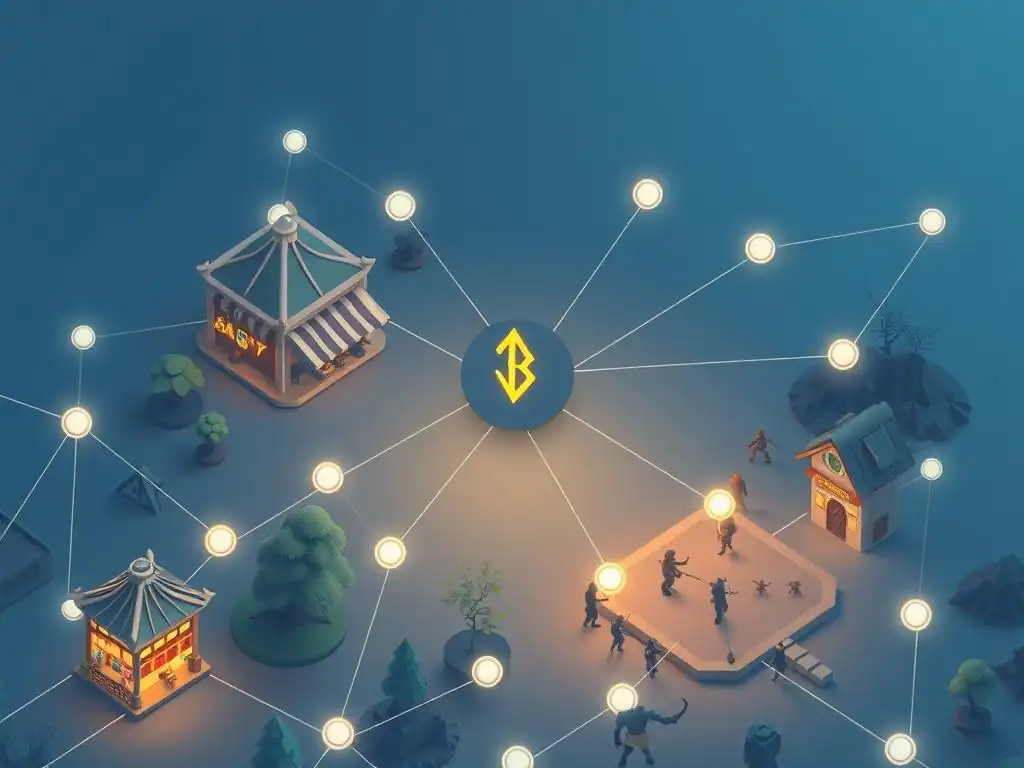
Yield Guild Games (YGG) stands out as a prominent example of a DAO successfully operating within the play-to-earn gaming space. YGG is not a game itself, but rather a decentralized gaming guild that invests in and manages Non-Fungible Tokens (NFTs) used in various blockchain-based games. The DAO's mission is to onboard millions of players into the metaverse and provide them with opportunities to earn income through play-to-earn games. YGG achieves this by acquiring valuable in-game NFT assets, such as virtual land, characters, and items, and then lending these assets to its community members, known as scholars.
These scholars use the lent NFTs to participate in play-to-earn games, earning in-game rewards. A portion of these earnings is then shared with YGG, creating a revenue stream for the DAO and its members. YGG operates through a DAO structure, with $YGG token holders governing the guild's treasury, operations, and strategic direction.
As of late 2023, YGG has a community of over 100,000 scholars and has invested in numerous play-to-earn games, including Axie Infinity and The Sandbox. Yield Guild Games demonstrates how DAOs can facilitate access to and participation in the burgeoning play-to-earn gaming economy, providing economic opportunities for players worldwide.
Merit Circle: A Decentralized Autonomous Organization Focused on Gaming and the Metaverse
Merit Circle is another significant DAO operating in the gaming and metaverse domain, focusing on creating opportunities within the play-to-earn ecosystem. Similar to Yield Guild Games, Merit Circle invests in and manages NFT assets across various blockchain games and metaverse projects. However, Merit Circle distinguishes itself by also developing its own infrastructure and tools to support the play-to-earn ecosystem, aiming to build a comprehensive platform for gaming guilds and players.
Merit Circle operates as a DAO, with $MC token holders governing the organization's treasury, investment strategies, and development initiatives. The DAO's activities include investing in promising play-to-earn games, providing scholarships to players to access these games, and developing tools and platforms to enhance the play-to-earn experience.
As of 2023, Merit Circle has partnered with numerous games and metaverse projects, and its community continues to grow, solidifying its position as a key player in the DAO-driven gaming space. Merit Circle exemplifies how DAOs can not only facilitate player participation in play-to-earn games but also actively contribute to the development and growth of the broader blockchain gaming ecosystem.
Illuvium DAO: Governing the Illuvium Universe and its Tokenomics
Illuvium stands out as a prime example of a game itself being governed by a DAO. Illuvium is an upcoming open-world RPG built on the Ethereum blockchain, known for its high-quality graphics and complex gameplay. Unlike the previous examples which are DAOs operating in the gaming space, Illuvium incorporates a DAO directly into its game structure, granting its community significant governance power over the Illuvium universe. The Illuvium DAO is responsible for governing key aspects of the game, including tokenomics, game mechanics, and the allocation of resources within the Illuvium ecosystem.
$ILV token holders are members of the Illuvium DAO and have the right to vote on proposals related to game updates, economic adjustments, and the game's overall roadmap. This decentralized governance model ensures that the Illuvium community has a direct say in the game's development and evolution. The Illuvium DAO is structured in phases, with governance becoming progressively more decentralized as the game matures.
Illuvium's approach represents a deep integration of DAO principles into game design, demonstrating the potential for games to be truly community-governed and player-driven. By giving players real governance power, Illuvium aims to create a more engaging and sustainable gaming ecosystem, setting a precedent for future DAO-governed games.
Challenges and Considerations for DAOs in Gaming
Regulatory Uncertainty and Legal Frameworks
Despite the exciting potential of DAOs in gaming, regulatory uncertainty and the lack of clear legal frameworks pose significant challenges. The legal status of DAOs is still evolving globally, and many jurisdictions are yet to establish comprehensive regulations specifically addressing decentralized autonomous organizations. This ambiguity creates uncertainty regarding liability, taxation, and legal compliance for DAOs operating in the gaming sector. For game developers and players alike, this regulatory gray area can be a deterrent to fully embracing DAO-based models.
Different countries and regions are taking varying approaches to regulating cryptocurrencies and blockchain technologies, which directly impacts DAOs. The lack of uniformity in regulations across jurisdictions can create complexities for DAOs operating internationally, potentially requiring them to navigate a patchwork of legal requirements. Furthermore, the decentralized and autonomous nature of DAOs challenges traditional legal concepts of corporate governance and liability, requiring new legal frameworks to effectively address the unique characteristics of these organizations. Addressing regulatory uncertainty and establishing clear legal frameworks are crucial steps for fostering the widespread adoption and sustainable growth of DAOs within the gaming industry.
Security Risks and Vulnerabilities in DAO Infrastructure
Security risks and vulnerabilities inherent in DAO infrastructure represent a significant concern for gaming communities considering adopting DAO governance. DAOs rely heavily on smart contracts to automate their operations, and vulnerabilities in these smart contracts can be exploited by malicious actors, potentially leading to financial losses or governance manipulation. The immutability of smart contracts, while a strength in terms of transparency and autonomy, also means that vulnerabilities, once deployed on the blockchain, are difficult to fix and can be exploited repeatedly.
DAO infrastructure, including voting platforms and treasury management systems, can also be targets for cyberattacks. Hacks and exploits targeting DAOs have occurred in the past, demonstrating the real risks involved. For example, the infamous DAO hack in 2016, where millions of dollars worth of Ether were stolen due to a smart contract vulnerability, serves as a stark reminder of the security challenges.
Ensuring the security of DAO infrastructure requires rigorous smart contract audits, robust security protocols, and ongoing monitoring for potential threats. Addressing these security risks is paramount for building trust and ensuring the long-term viability of DAOs in gaming.
Ensuring Equitable Governance and Preventing Manipulation
Ensuring equitable governance and preventing manipulation within DAOs is a complex challenge that needs careful consideration in the context of gaming communities. While DAOs aim to decentralize power, token-based voting systems can be susceptible to issues of wealth concentration and governance capture. Whales, or individuals holding a large number of governance tokens, can disproportionately influence voting outcomes, potentially undermining the principle of equitable governance.
Mechanisms to mitigate these risks, such as quadratic voting, which aims to reduce the influence of large token holders, are being explored and implemented in some DAOs. However, finding the right balance between representation and efficiency in DAO governance remains an ongoing challenge. Furthermore, preventing manipulation, such as vote buying or collusion, is crucial for maintaining the integrity of DAO governance. Implementing robust governance mechanisms, fostering informed participation, and continuously evaluating and adapting governance models are essential steps for ensuring equitable governance and preventing manipulation within DAOs in gaming.
Scalability and Performance Limitations of DAO Systems
Scalability and performance limitations of current DAO systems can pose challenges, particularly for large and active gaming communities. Blockchain technology, which underpins DAOs, can have limitations in terms of transaction throughput and processing speed, especially during periods of high activity. This can impact the responsiveness and efficiency of DAO governance processes, such as voting and proposal execution.
Gas fees, or transaction costs on blockchains like Ethereum, can also be a barrier to participation in DAO governance, especially for players with smaller token holdings. High gas fees can make it expensive to vote or submit proposals, potentially discouraging active participation and creating accessibility issues.
Layer-2 scaling solutions and alternative blockchain platforms with higher throughput and lower fees are being explored to address these scalability and performance limitations. Further advancements in blockchain technology and DAO infrastructure are needed to ensure that DAO systems can effectively scale to meet the demands of large and growing gaming communities, enabling seamless and efficient decentralized governance.
The Future of DAOs in Gaming: Trends and Predictions
Increased Adoption of DAOs by Game Developers and Publishers
The future of DAOs in gaming points towards increased adoption by both independent game developers and established publishers. As the benefits of decentralized governance, player empowerment, and new revenue models become more apparent, game developers are increasingly recognizing the potential of DAOs to enhance player engagement and build more sustainable gaming ecosystems. Independent developers, often seeking alternative funding and community-driven development models, are particularly likely to embrace DAOs to foster closer relationships with their player base and build games in a more collaborative manner.
Even larger game publishers, initially more cautious about decentralized technologies, are starting to explore the integration of DAOs into their games, recognizing the growing demand for player ownership and participatory governance. This trend is likely to accelerate as successful examples of DAO-governed games emerge and as the regulatory landscape for DAOs becomes clearer. The increasing adoption of DAOs by both indie and AAA game developers signals a significant shift towards more decentralized and player-centric gaming models, paving the way for a new era in the industry.
The Emergence of New DAO-Based Gaming Models
The future will likely witness the emergence of entirely new DAO-based gaming models that go beyond current play-to-earn and governance implementations. We can anticipate games designed from the ground up to be fully decentralized and community-owned, with DAOs playing a central role in every aspect of game development, management, and evolution. These new models may explore innovative forms of player participation, such as decentralized game development, where players contribute directly to game creation and earn rewards for their contributions.
DAO-based gaming models could also incorporate decentralized autonomous game economies, where in-game assets and currencies are managed and governed by the community, creating truly player-owned virtual economies. Furthermore, DAOs may facilitate new forms of decentralized gaming guilds and communities, enabling players to organize and collaborate in novel ways. The exploration and development of these new DAO-based gaming models will push the boundaries of what is possible in gaming, leading to more innovative, engaging, and player-driven gaming experiences.
Integration of DAOs with Metaverse and Web3 Platforms
The integration of DAOs with metaverse and Web3 platforms is a key trend shaping the future of gaming. As metaverses become more immersive and interconnected, DAOs are poised to play a crucial role in governing these virtual worlds and their economies. DAOs can manage virtual land ownership, govern metaverse protocols, and facilitate decentralized commerce within metaverse environments. The interoperability of DAOs across different metaverse platforms will also become increasingly important, enabling seamless interactions and governance across multiple virtual worlds.
Web3 technologies, including blockchain and decentralized identity solutions, provide the infrastructure for building and operating DAOs in the metaverse. The combination of DAOs, metaverses, and Web3 technologies is creating a powerful synergy, enabling the development of decentralized, user-owned, and community-governed virtual experiences. This integration will likely lead to the emergence of decentralized metaverses governed by their users, fostering more open, inclusive, and player-centric virtual worlds. The convergence of DAOs, metaverse, and Web3 is a transformative force in gaming, promising to reshape the future of digital interaction and virtual economies.
DAOs as Key Enablers of Player-Owned Economies
DAOs are positioned to be key enablers of player-owned economies within gaming, fundamentally altering the economic power dynamics in the industry. By facilitating decentralized ownership of in-game assets, currencies, and even game governance, DAOs empower players to participate directly in the economic value creation within games. Play-to-earn models, facilitated by DAOs, are already demonstrating the potential for players to earn real income through gaming, shifting the focus from purely entertainment to also include economic opportunity.
DAOs can manage decentralized marketplaces for in-game assets, ensuring fair and transparent trading environments for players. They can also distribute revenue generated within game ecosystems back to the community, rewarding players for their contributions and engagement. The rise of player-owned economies, enabled by DAOs, represents a significant shift towards a more equitable and sustainable gaming industry, where players are not just consumers but also stakeholders and beneficiaries of the value they create within game worlds. DAOs are instrumental in building these player-owned economies, fostering a more balanced and rewarding relationship between game developers, publishers, and players.
Conclusion: DAOs - Shaping the Future of Gaming Communities Through Decentralization
DAOs: A Catalyst for Innovation and Community Empowerment in Gaming
Decentralized Autonomous Organizations are undeniably emerging as a powerful catalyst for innovation and community empowerment within the gaming industry. By introducing decentralized governance, DAOs are transforming gaming communities from passive audiences into active participants and stakeholders. This shift towards player ownership and shared decision-making is not just a technological upgrade; it represents a fundamental reimagining of the relationship between game developers and players. DAOs are fostering a more equitable, transparent, and engaging gaming ecosystem, where players have a direct voice in shaping the games they love.
The impact of DAOs extends beyond governance, driving innovation in game development, revenue models, and community building. The examples of Yield Guild Games, Merit Circle, and Illuvium DAO illustrate the diverse applications and real-world impact of DAOs in gaming. While challenges such as regulatory uncertainty and security risks remain, the potential benefits of DAOs for gaming communities are undeniable. As the technology matures and adoption increases, DAOs are poised to unlock new possibilities and reshape the future of gaming.
Embracing Decentralized Governance for a More Inclusive and Rewarding Gaming Experience
Embracing decentralized governance through DAOs offers a pathway towards a more inclusive and rewarding gaming experience for players worldwide. DAOs empower players to participate in the decision-making processes that directly impact their gaming experience, fostering a sense of ownership and community. This participatory governance model can lead to games that are more aligned with player desires and needs, creating more engaging and sustainable gaming ecosystems. The increased transparency and fairness provided by DAOs can also build trust and reduce conflicts within gaming communities.
Furthermore, DAOs are enabling new economic opportunities for players through play-to-earn models and player-owned economies, transforming gaming from a purely entertainment activity into a potential source of income and economic empowerment. As the gaming industry continues to evolve, embracing decentralized governance through DAOs presents a compelling opportunity to create a more player-centric, inclusive, and rewarding future for gaming communities. The journey towards decentralized gaming is still in its early stages, but the transformative potential of DAOs is clear, promising a future where gaming is more democratic, community-driven, and ultimately, more enjoyable for players around the globe.
Frequently Asked Questions
What are DAOs and how do they relate to gaming communities?
DAOs, or Decentralized Autonomous Organizations, are community-led entities governed by rules encoded on a blockchain. In gaming, they offer a way for players to have a direct say in game development and governance, moving away from traditional centralized control.
How can DAOs empower players within gaming communities?
DAOs empower players by granting them voting rights on key decisions like game updates, resource allocation, and even the direction of the game's narrative. This fosters a sense of ownership and community involvement.
What are some potential benefits of using DAOs to manage in-game assets?
DAOs can facilitate the decentralized management of in-game assets, allowing players to collectively own and trade them. This can lead to more transparent and equitable distribution of resources and rewards.
What are the regulatory challenges facing DAOs in the gaming industry?
The regulatory landscape for DAOs is still evolving, particularly regarding securities laws and liability. Clearer guidelines are needed to ensure compliance and protect both developers and community members.
What is the future outlook for DAOs in transforming gaming communities?
The future looks promising, with DAOs poised to revolutionize how games are developed, governed, and experienced. We expect to see increased adoption and innovation as the technology matures and regulatory clarity emerges.
Final Reflection: Embracing the Decentralized Future of Play
The exploration of Decentralized Autonomous Organizations (DAOs) within gaming communities reveals a profound shift in power dynamics, highlighting the potential for truly player-owned and governed gaming experiences. The insights shared throughout this article underscore the immediate relevance of DAOs in fostering more equitable and engaging environments for gamers worldwide, moving beyond traditional hierarchical structures.
This transformation isn't just theoretical; it's actively reshaping the cultural landscape of gaming. The rise of DAOs in gaming represents a fundamental shift towards community-driven development and ownership, empowering players in ways previously unimaginable. The future of gaming isn't just about playing games; it's about building them, owning them, and shaping them together.
This sentiment perfectly encapsulates the spirit of collaboration and shared governance that DAOs are bringing to the forefront.
As we stand on the cusp of this decentralized revolution, I invite you to consider your role in shaping the future of gaming. How can you leverage the principles of DAOs to build stronger, more inclusive communities? How can you contribute to a gaming ecosystem where players are not just consumers, but active participants in the creation and governance of the worlds they inhabit? The power to transform gaming lies within each of us; let's embrace the opportunity to build a future where play is truly democratized.
Unleash Your Inner Gamer: Shape the Future of Gaming with DAOs!
Thank you for exploring the world of decentralized autonomous organizations and gaming! We hope you've gained insight into how these innovative structures are empowering players and transforming game development. Now, it's time to take action.
Get involved by:
- Joining a gaming DAO to experience firsthand how decentralized communities are shaping the future of gaming. Find a group that shares your favorite titles or values.
- Reviewing existing governance proposals and contributing your ideas. Your input can influence the development of the games you love.
- Starting a discussion on social media or in your preferred gaming forum about the potential of DAOs. Share this article to help raise awareness of the power of decentralized gaming.
Are you ready to deepen your involvement in the gaming community? Which DAO aligns most with your interests, and what unique contribution will you make? Share your thoughts in the comments below!
Leave a Reply