
The Role of Gamification in PlaytoEarn Crypto Experiences


Welcome to Blockchain Trends, your go-to source for understanding the revolutionary applications of blockchain technology!
Dive into the exciting world where gaming meets blockchain and discover how PlaytoEarn crypto gamification benefits are reshaping the future of entertainment and finance. Ever wondered how game mechanics are driving adoption and engagement in the crypto space? Let's explore how these innovative systems are creating new opportunities and transforming the gaming landscape. Read on to unlock the secrets of this rapidly evolving intersection!
The Role of Gamification in PlaytoEarn Crypto Experiences
- Understanding PlaytoEarn (P2E) Crypto Gaming and its Evolution
- Gamification: Enhancing Engagement in PlaytoEarn Crypto Games
-
PlaytoEarn Crypto Gamification Benefits: Exploring the Advantages
- Increased Player Engagement and Retention through Gamified Experiences
- Enhanced Motivation and Goal Achievement in Crypto Games
- Improved User Experience and Accessibility in PlaytoEarn Platforms
- Fostering Community Building and Social Interaction through Gamification
- Driving Adoption and Scalability of PlaytoEarn Crypto Games
-
Key Gamification Strategies for PlaytoEarn Crypto Games
- Reward Systems and Tokenomics: Balancing Incentives and Sustainability
- Leaderboards and Competitions: Driving Performance and Engagement
- Quests and Challenges: Providing Purpose and Progression
- Social Features and Collaboration: Encouraging Community Participation
- Customization and Personalization: Tailoring the Experience to Individual Players
- Case Studies: Successful Implementation of Gamification in PlaytoEarn Crypto Games
- Potential Challenges and Considerations for PlaytoEarn Crypto Gamification
- The Future of Gamification in PlaytoEarn Crypto Gaming
- Conclusion: Maximizing the Potential of PlaytoEarn through Strategic Gamification
-
Frequently Asked Questions
- What are the primary PlaytoEarn crypto gamification benefits for players?
- How does gamification enhance the appeal of PlaytoEarn crypto games?
- What are some examples of successful PlaytoEarn crypto gamification techniques?
- How is the PlaytoEarn crypto gamification landscape being shaped by regulatory changes?
- What is the future potential of PlaytoEarn crypto gamification in the broader blockchain ecosystem?
- Final Reflection: Unlocking the Potential of PlaytoEarn
- Unleash Your Inner Gamer: Dive Deeper into Play-to-Earn!
Understanding PlaytoEarn (P2E) Crypto Gaming and its Evolution
Defining PlaytoEarn: A New Paradigm in Gaming
PlaytoEarn (P2E) gaming represents a significant departure from traditional gaming models, fundamentally altering the relationship between players and games. In conventional gaming, players invest time and money for entertainment, with in-game assets and progress remaining within the game's ecosystem, controlled solely by the game developers. PlaytoEarn disrupts this dynamic by introducing blockchain technology and cryptocurrency, empowering players with true ownership of in-game assets, often represented as NFTs (Non-Fungible Tokens).
This ownership extends beyond mere aesthetics; it translates into real-world value as players can earn cryptocurrency and digital assets through gameplay, which can then be traded or sold on external marketplaces. This shift to player-centric economies marks PlaytoEarn as a novel paradigm, where gaming transcends pure entertainment and becomes a potential source of income, particularly in regions where traditional income opportunities are limited.
The core concept of PlaytoEarn revolves around rewarding players for their time, effort, and skill within a game. Instead of simply purchasing in-game currency or items, players actively participate in the game's economy, contributing to its ecosystem and being compensated for their contributions. This can take various forms, from completing quests and winning battles to participating in governance and contributing to the game's development.
The economic model is designed to be cyclical, with player earnings generated through in-game activities and often reinvested back into the game, fostering a sustainable and engaging environment. This fundamental change, from a purely consumption-based model to a participation-and-reward model, is what distinguishes PlaytoEarn and positions it as a revolutionary force in the gaming industry.
The Rise of Crypto Gaming and Blockchain Integration
The meteoric rise of crypto gaming is intrinsically linked to the integration of blockchain technology. Blockchain provides the foundational infrastructure that enables the core tenets of PlaytoEarn, primarily decentralization, transparency, and verifiable ownership. Prior to blockchain, digital assets within games were centralized and lacked true ownership. Blockchain solves this by immutably recording ownership on a distributed ledger, ensuring that players genuinely own their in-game assets. This newfound ownership is a major driver behind the appeal of crypto gaming, as players are no longer simply renting or licensing digital items but possessing them as tangible digital property.
Furthermore, blockchain facilitates the creation of open and transparent game economies. Transactions within blockchain-based games are typically recorded on-chain, providing a level of transparency and auditability that is absent in traditional gaming. This transparency builds trust within the gaming community and allows for the creation of decentralized marketplaces where players can freely trade their assets.
The integration of cryptocurrency also simplifies cross-border transactions and allows for seamless value transfer within and outside the game ecosystem. The combination of these factors – true digital ownership, transparent economies, and global accessibility – has fueled the rapid expansion of crypto gaming, attracting both gamers and investors alike, and paving the way for innovative gaming experiences that were previously unimaginable.
Key Elements of PlaytoEarn Crypto Games: Ownership, Rewards, and Community
PlaytoEarn crypto games are built upon a triad of key elements: ownership, rewards, and community, each playing a crucial role in shaping the player experience and the game's ecosystem. Ownership, as previously discussed, is paramount. Players in P2E games own their in-game assets as NFTs, granting them control and the potential to monetize their digital possessions.
This ownership model fosters a sense of investment and attachment to the game, as players are not just consumers but stakeholders in the game's economy. The ability to trade, sell, or even lend these assets adds a layer of strategic depth and economic opportunity that is absent in traditional gaming.
Rewards form the backbone of the PlaytoEarn mechanic. Players are incentivized to engage with the game through various reward mechanisms, typically in the form of cryptocurrency tokens or NFTs. These rewards are earned through gameplay activities such as completing quests, winning battles, participating in tournaments, or contributing to the game's ecosystem. The design of these reward systems is critical to the game's long-term sustainability and player engagement.
A well-balanced reward system motivates players without causing excessive inflation or undermining the game's economy. Finally, community is an indispensable element of successful PlaytoEarn crypto games. These games often foster strong communities centered around shared goals, collaborative gameplay, and economic participation. Community-driven initiatives, decentralized governance models, and social features within the game further enhance the sense of belonging and collective ownership, contributing significantly to the overall PlaytoEarn experience.
Gamification: Enhancing Engagement in PlaytoEarn Crypto Games
What is Gamification? Applying Game Mechanics to Non-Game Contexts
Gamification is the strategic application of game design elements and game principles in non-game contexts. It's about taking the mechanics that make games engaging and motivating – such as points, badges, leaderboards, challenges, and narratives – and applying them to real-world activities, processes, or systems. The goal of gamification is to increase user engagement, motivation, and participation by making tasks more enjoyable and rewarding. It leverages the inherent human drive for competition, achievement, and recognition, channeling these motivations towards desired behaviors or outcomes in diverse fields ranging from education and marketing to health and, crucially, PlaytoEarn crypto gaming.
The effectiveness of gamification lies in its ability to tap into intrinsic and extrinsic motivations. Intrinsic motivation comes from within, driven by enjoyment, interest, and personal satisfaction. Gamification can foster intrinsic motivation by making tasks more fun, challenging, and providing a sense of accomplishment.
Extrinsic motivation, on the other hand, is driven by external rewards, such as points, badges, or tangible prizes. Gamification often utilizes both types of motivation to create a powerful and sustainable engagement loop. By carefully designing and implementing game mechanics, gamification transforms mundane or complex tasks into engaging experiences, leading to increased participation, improved performance, and enhanced user satisfaction, making it a potent tool for enhancing PlaytoEarn crypto experiences.
The Power of Gamification: Motivation, Retention, and User Experience
The power of gamification stems from its ability to significantly boost motivation, enhance user retention, and improve overall user experience. Motivation is at the heart of gamification's effectiveness. By introducing game elements like points, badges, and leaderboards, gamification creates a sense of progress and achievement, motivating users to actively participate and engage with the system or activity.
The anticipation of rewards and the desire to climb leaderboards or complete challenges can be strong drivers, particularly in PlaytoEarn crypto games where these achievements often translate into tangible financial rewards. This motivational aspect is crucial for driving initial engagement and encouraging players to invest time and effort into the game.
Beyond initial engagement, gamification plays a vital role in user retention. By making experiences more enjoyable and rewarding, gamification fosters a sense of stickiness and encourages users to return and continue engaging over time. Well-designed gamified systems incorporate elements of progression, novelty, and social interaction, keeping users interested and invested in the long run.
In the context of PlaytoEarn crypto games, retention is particularly critical for maintaining a vibrant and active player base, which is essential for the health and sustainability of the game's economy. Furthermore, gamification significantly improves user experience by making interactions more intuitive, engaging, and enjoyable. By breaking down complex tasks into smaller, more manageable challenges and providing clear feedback and rewards, gamification simplifies processes and makes them more accessible and less daunting, ultimately enhancing the overall PlaytoEarn crypto gamification benefits for players.
Integrating Gamification into Blockchain-Based Games
Integrating gamification into blockchain-based games is a strategic approach to amplify the inherent appeal of PlaytoEarn mechanics and create more engaging and sustainable ecosystems. Blockchain technology provides the foundation for true digital ownership and decentralized economies, while gamification layers on top the motivational and engagement-driving elements that make games inherently fun and addictive. The synergy between these two concepts is powerful. For instance, NFTs can be used not just as tradable assets but also as badges or rewards within a gamified system, adding layers of meaning and value beyond their purely economic function.
Gamification in blockchain games can take many forms, from incorporating traditional game mechanics like quests, achievements, and leaderboards to designing novel crypto-native mechanics that leverage the unique capabilities of blockchain. Smart contracts can automate reward distribution and ensure transparency in gamified systems, while decentralized autonomous organizations (DAOs) can involve the community in shaping the game's gamified elements and reward structures.
Successfully integrating gamification into PlaytoEarn crypto games requires a deep understanding of both game design principles and blockchain technology. It’s about creating a balanced ecosystem where the game mechanics are not just fun and engaging but also strategically aligned with the game's tokenomics and long-term economic sustainability, maximizing the PlaytoEarn crypto gamification benefits for both players and developers.
PlaytoEarn Crypto Gamification Benefits: Exploring the Advantages
Increased Player Engagement and Retention through Gamified Experiences
One of the most significant PlaytoEarn crypto gamification benefits is the marked increase in player engagement and retention. Gamification, by its very nature, is designed to make experiences more captivating and enjoyable. When applied to PlaytoEarn crypto games, it transforms what could be perceived as purely transactional activities into engaging and rewarding gameplay loops. Elements like quests, challenges, and progress bars provide players with clear goals and a sense of accomplishment as they advance, keeping them hooked and invested. Leaderboards and competitive features tap into players' natural desire for recognition and competition, further fueling engagement.
The integration of gamified elements directly combats player churn, a critical concern for any online game, especially in the rapidly evolving crypto gaming space. By making the PlaytoEarn experience more fun and less monotonous, gamification encourages players to return regularly and spend more time in the game.
This sustained engagement is vital for the health of the game's ecosystem, as it contributes to a vibrant in-game economy, a thriving community, and ultimately, the long-term success of the PlaytoEarn crypto game. The enhanced player engagement driven by gamification translates into increased activity within the game's economy, higher transaction volumes, and a more robust and sustainable PlaytoEarn model.
Enhanced Motivation and Goal Achievement in Crypto Games
Gamification significantly enhances player motivation and facilitates goal achievement within crypto games. PlaytoEarn games, while offering financial incentives, can sometimes lack the inherent motivational drivers found in traditional games. Gamification bridges this gap by introducing game mechanics that tap into intrinsic motivation, making the pursuit of crypto rewards more engaging and purposeful. Clear goals, structured progression systems, and rewarding achievements provide players with a sense of direction and accomplishment, making the PlaytoEarn journey more fulfilling.
Gamified systems often break down larger, potentially daunting tasks into smaller, more manageable steps, each with its own reward. This approach makes goals feel more attainable and provides players with a continuous stream of positive reinforcement as they progress. For example, instead of simply stating "earn cryptocurrency," a gamified PlaytoEarn game might present a series of quests or challenges, each rewarding players with tokens upon completion.
This structured approach not only enhances motivation but also improves the overall user experience by making the PlaytoEarn process more intuitive and less overwhelming. The result is a more motivated player base that is actively engaged in pursuing in-game goals and contributing to the game's ecosystem, further highlighting the PlaytoEarn crypto gamification benefits.
Improved User Experience and Accessibility in PlaytoEarn Platforms
Another significant benefit of PlaytoEarn crypto gamification is the improvement in user experience and accessibility, making these platforms more appealing to a broader audience. Crypto and blockchain technologies can be complex and intimidating for newcomers. Gamification can act as a bridge, simplifying the onboarding process and making PlaytoEarn concepts more understandable and approachable. By incorporating game-like interfaces, tutorials, and interactive elements, gamified platforms can guide new users through the complexities of crypto wallets, NFTs, and decentralized economies in an engaging and intuitive manner.
Gamification can also make PlaytoEarn platforms more accessible to players with varying levels of gaming experience. Well-designed gamified systems often offer different levels of challenge and complexity, catering to both casual players and hardcore gamers. This inclusivity is crucial for the mass adoption of PlaytoEarn crypto gaming.
Furthermore, gamification can enhance the overall user interface and user experience (UI/UX) of PlaytoEarn platforms, making them more visually appealing, user-friendly, and enjoyable to navigate. By focusing on user-centric design principles and incorporating gamified elements, PlaytoEarn platforms can overcome the perceived barriers to entry and attract a wider audience, realizing the full potential of PlaytoEarn crypto gamification benefits.
Gamification plays a crucial role in fostering community building and social interaction within PlaytoEarn crypto games. Many gamified elements are inherently social, encouraging players to interact, collaborate, and compete with each other. Leaderboards, guilds, and team-based challenges promote healthy competition and cooperation among players, fostering a sense of community and shared purpose. Social features integrated within gamified systems, such as chat functionalities, forums, and social media integration, further enhance player interaction and community building.
The social aspect of gamification is particularly important in PlaytoEarn crypto games, as these games often rely on strong communities to drive their economies and ecosystems. A vibrant and engaged community can contribute to game development, provide support to new players, and create a more enjoyable and rewarding gaming experience for everyone.
Gamification can also be used to incentivize community participation, rewarding players for contributing to the community through content creation, mentorship, or participation in community events. By strategically incorporating social gamification elements, PlaytoEarn crypto games can cultivate thriving communities, which are essential for long-term success and amplify the PlaytoEarn crypto gamification benefits.
Driving Adoption and Scalability of PlaytoEarn Crypto Games
Ultimately, PlaytoEarn crypto gamification benefits extend to driving adoption and scalability of the entire crypto gaming sector. Gamification makes PlaytoEarn games more appealing and accessible to a wider audience, including players who may not be primarily interested in crypto or blockchain but are drawn in by the engaging gameplay and rewarding experiences. By reducing the perceived complexity and increasing the fun factor, gamification can significantly broaden the appeal of PlaytoEarn games, attracting a larger player base and driving mainstream adoption.
The increased player engagement and retention fostered by gamification also contribute to the scalability of PlaytoEarn crypto games. A larger and more active player base translates into a more robust and sustainable game economy, attracting further investment and development.
Gamification can also be used to design scalable reward systems and mechanisms that can accommodate a growing player population without compromising the game's economic balance. As PlaytoEarn crypto games become more gamified and user-friendly, they are poised to attract a wider range of players, from casual gamers to crypto enthusiasts, ultimately driving the mass adoption and long-term success of the PlaytoEarn gaming model and highlighting the far-reaching PlaytoEarn crypto gamification benefits.
Key Gamification Strategies for PlaytoEarn Crypto Games
Reward Systems and Tokenomics: Balancing Incentives and Sustainability
Designing effective reward systems is paramount for successful PlaytoEarn crypto gamification. The tokenomics of a P2E game are intricately linked to its gamified elements, and a delicate balance must be struck between incentivizing players and ensuring the long-term economic sustainability of the game. Reward systems in gamified P2E games typically revolve around cryptocurrency tokens and NFTs, earned through various in-game activities. The challenge lies in creating a system that is both rewarding enough to motivate players and sustainable enough to prevent hyperinflation or economic collapse.
Strategies for balancing incentives and sustainability include implementing dynamic reward mechanisms that adjust based on player activity and token supply, introducing token burning mechanisms to control inflation, and creating diverse utility for in-game tokens beyond mere speculation. Staking, governance participation, and exclusive in-game content access can add utility and value to tokens, fostering a more robust and sustainable economy.
A well-designed reward system should also consider the different player archetypes, catering to both casual players seeking entertainment and more dedicated players focused on maximizing their earnings. Ultimately, successful PlaytoEarn crypto gamification hinges on a thoughtfully crafted reward system that aligns player incentives with the long-term health and viability of the game's ecosystem.
Leaderboards and Competitions: Driving Performance and Engagement
Leaderboards and competitions are powerful gamification strategies for driving player performance and engagement in PlaytoEarn crypto games. These elements tap into players' natural competitive instincts and desire for recognition. Leaderboards rank players based on various in-game metrics, such as skill, activity, or earnings, creating a visible hierarchy and incentivizing players to strive for higher rankings. Competitions, ranging from daily challenges to large-scale tournaments, provide structured opportunities for players to test their skills against others and earn rewards for top performance.
The effectiveness of leaderboards and competitions lies in their ability to create a sense of urgency, challenge, and social comparison. Players are motivated to improve their skills, strategize effectively, and invest more time in the game to climb the leaderboards or win competitions. In PlaytoEarn crypto games, these competitive elements can be directly linked to token rewards or exclusive NFTs, further amplifying their motivational impact.
However, it's crucial to ensure fairness and prevent manipulation within leaderboards and competitions. Robust anti-cheat measures and transparent ranking systems are essential for maintaining player trust and ensuring that these gamification strategies effectively drive performance and engagement in a positive and sustainable manner.
Quests and Challenges: Providing Purpose and Progression
Quests and challenges are fundamental gamification strategies for providing players with a sense of purpose, progression, and direction within PlaytoEarn crypto games. These elements structure gameplay by offering players specific tasks or objectives to complete, guiding their actions and providing a clear path for advancement. Quests can range from simple fetch quests to complex storylines, while challenges can focus on specific skills or gameplay mechanics. Both quests and challenges typically reward players with tokens, NFTs, experience points, or other in-game benefits upon completion, reinforcing positive behavior and encouraging continued engagement.
The power of quests and challenges lies in their ability to provide a sense of accomplishment and progression. As players complete quests and overcome challenges, they feel a sense of mastery and see tangible evidence of their progress within the game. This feeling of accomplishment is a key driver of intrinsic motivation and player retention.
In PlaytoEarn crypto games, quests and challenges can be strategically designed to introduce players to different aspects of the game, teach them new skills, and guide them towards more advanced gameplay. Well-designed quests and challenges are essential for creating a compelling and engaging PlaytoEarn experience that keeps players motivated, entertained, and invested in the game's world and economy.
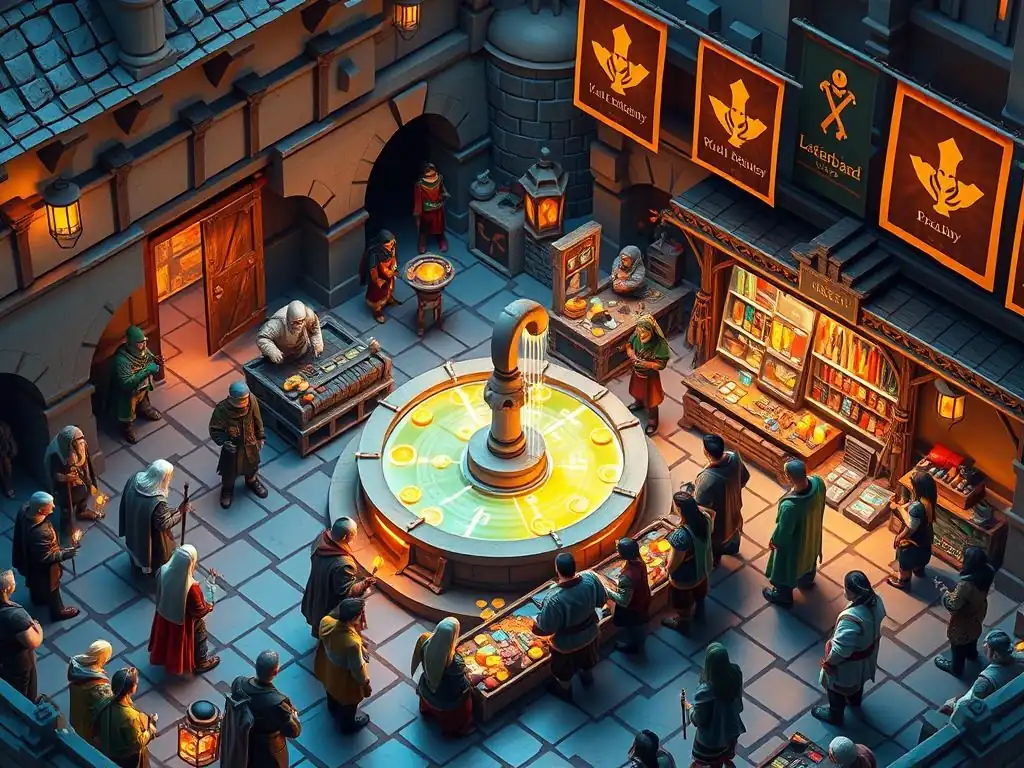
Integrating social features and fostering collaboration are vital gamification strategies for building strong communities and encouraging active participation in PlaytoEarn crypto games. Social features, such as in-game chat, guilds or clans, and social media integration, facilitate communication and interaction among players. Collaboration mechanics, such as team-based quests, cooperative gameplay modes, and shared resources, incentivize players to work together towards common goals. These social and collaborative elements transform PlaytoEarn games from solitary experiences into vibrant social spaces, fostering a sense of belonging and shared community.
The benefits of social gamification are multifaceted. Strong communities enhance player retention, as players are more likely to stay engaged when they feel connected to others and have a social support network within the game. Collaboration promotes teamwork, strategic thinking, and positive social interactions. Furthermore, social features can facilitate player-driven content creation, community events, and decentralized governance initiatives, further empowering the player community and contributing to the game's long-term sustainability. By strategically incorporating social features and collaborative mechanics, PlaytoEarn crypto games can cultivate thriving communities that are essential for their growth, success, and overall PlaytoEarn crypto gamification benefits.
Customization and Personalization: Tailoring the Experience to Individual Players
Customization and personalization are increasingly important gamification strategies for tailoring the PlaytoEarn experience to individual players and enhancing engagement. Customization allows players to modify their in-game avatars, assets, or gameplay preferences, expressing their individuality and creating a sense of ownership over their game experience. Personalization goes a step further by adapting the game content, challenges, and rewards to match individual player skill levels, preferences, and playstyles. This tailored approach ensures that each player feels valued and engaged, regardless of their experience level or preferred gameplay style.
The benefits of customization and personalization are significant. Players are more likely to be invested in a game that allows them to express their individuality and feel a sense of ownership. Personalized experiences are more engaging and relevant, as they cater to individual player needs and preferences.
In PlaytoEarn crypto games, customization and personalization can extend to NFT assets, allowing players to create unique and valuable digital collectibles. By embracing customization and personalization, PlaytoEarn crypto games can create more inclusive, engaging, and rewarding experiences that cater to a diverse player base and maximize the PlaytoEarn crypto gamification benefits for each individual.
Case Studies: Successful Implementation of Gamification in PlaytoEarn Crypto Games
Axie Infinity: Gamified Breeding, Battling, and Land Ownership
Axie Infinity stands as a prominent example of successful gamification in a PlaytoEarn crypto game. Its core gameplay loop revolves around collecting, breeding, and battling digital creatures called Axies, which are represented as NFTs. Gamification is deeply integrated into each of these aspects. Breeding Axies is a strategic and somewhat unpredictable process, influenced by genetics and requiring careful planning, making it more engaging than simple item creation. Battling Axies utilizes a turn-based card game system, demanding skill, strategy, and team composition, rather than being a purely automated process.
Furthermore, Axie Infinity incorporates land ownership as another gamified element. Players can own and develop virtual land plots within the Lunacia metaverse, earning resources and creating experiences for other players. This adds a layer of strategic depth and economic opportunity beyond simply battling.
The game's reward system, based on earning Smooth Love Potion (SLP) tokens through gameplay and AXS tokens through governance participation, is also gamified, with daily quests, arena rankings, and seasonal rewards incentivizing consistent engagement. Axie Infinity's success demonstrates how strategically integrating gamified mechanics into core gameplay loops, asset ownership, and reward systems can create a highly engaging and economically viable PlaytoEarn crypto experience.
Decentraland showcases a different approach to PlaytoEarn crypto gamification, focusing on social interactions, virtual experiences, and user-generated content within a decentralized metaverse. While not primarily a "game" in the traditional sense, Decentraland leverages gamification to drive engagement and participation within its virtual world. Quests and events are regularly organized within Decentraland, encouraging users to explore different areas, interact with each other, and participate in community activities. These events often reward participants with MANA tokens or exclusive NFTs, incentivizing exploration and engagement.
Social interactions are inherently gamified within Decentraland. Users can create avatars, customize their virtual spaces, and interact with others in a persistent virtual environment. The scarcity of land parcels in Decentraland and the ability to build and monetize experiences on that land create a gamified economy where users are incentivized to create engaging content and attract visitors.
Furthermore, Decentraland's DAO structure, which allows MANA token holders to vote on governance proposals, adds a layer of gamification to community governance and decision-making. Decentraland’s approach highlights how gamification can be applied to create engaging and economically vibrant virtual worlds within the PlaytoEarn crypto space, moving beyond traditional game genres.
Lessons Learned: Best Practices for Integrating Gamification in P2E
Analyzing successful cases like Axie Infinity and Decentraland provides valuable lessons for best practices in integrating gamification into PlaytoEarn crypto games. Firstly, gamification should be deeply integrated into the core gameplay loop, not just added as an afterthought. The game mechanics themselves should be engaging and rewarding, not just the crypto rewards. Secondly, reward systems must be carefully balanced to incentivize players without undermining the game's economy. Dynamic reward mechanisms, diverse token utility, and deflationary measures are crucial.
Thirdly, community building should be a central focus of gamification strategies. Social features, collaborative gameplay, and community-driven events are essential for fostering a vibrant and engaged player base. Fourthly, accessibility and user experience are paramount. Gamified onboarding, intuitive interfaces, and clear progression systems are necessary to attract and retain a wider audience.
Finally, continuous iteration and adaptation are key. PlaytoEarn crypto games are constantly evolving, and gamification strategies must be continuously refined and adapted based on player feedback, market trends, and the evolving landscape of blockchain technology. By adhering to these best practices, developers can effectively leverage gamification to create successful and sustainable PlaytoEarn crypto experiences.
Potential Challenges and Considerations for PlaytoEarn Crypto Gamification
Addressing Economic Sustainability and Token Inflation
One of the most significant challenges in PlaytoEarn crypto gamification is ensuring economic sustainability and mitigating token inflation. Many P2E games rely on inflationary token models, where new tokens are constantly generated through gameplay rewards. While this can incentivize early adoption and player engagement, it can also lead to rapid token inflation if not carefully managed, devaluing player earnings and potentially causing the game's economy to collapse. Balancing the influx of new tokens with token sinks and value accrual mechanisms is crucial for long-term sustainability.
Strategies for addressing token inflation include implementing token burning mechanisms, where tokens are permanently removed from circulation, creating diverse token utility beyond simple trading, and designing deflationary tokenomics models. Furthermore, sustainable PlaytoEarn economies often require a balance between player earnings and capital inflow into the game. Reliance solely on new player investment to sustain rewards is inherently unsustainable.
Games need to create intrinsic value within the game ecosystem, driven by player activity, in-game economies, and unique experiences, rather than solely relying on external capital to maintain economic stability. Addressing economic sustainability and token inflation is paramount for the long-term viability of PlaytoEarn crypto gamification.
Ensuring Fairness and Preventing Exploitation within Gamified Systems
Ensuring fairness and preventing exploitation are critical considerations for gamified PlaytoEarn crypto systems. Gamification, while designed to be engaging and rewarding, can also be susceptible to manipulation and exploitation if not carefully implemented. Botting, multi-accounting, and other forms of cheating can undermine the fairness of the game, distort leaderboards, and unfairly impact other players' earnings. Robust anti-cheat measures, fair matchmaking systems, and transparent game mechanics are essential for maintaining a level playing field and ensuring that the gamified experience is fair and enjoyable for all players.
Furthermore, the economic incentives inherent in PlaytoEarn games can create opportunities for exploitation, such as the formation of guilds or "scholarship" programs that may exploit players in developing countries. While scholarship programs can provide access to PlaytoEarn opportunities, they also raise ethical concerns if not managed responsibly. Addressing these potential exploitation risks requires careful consideration of game design, economic models, and community governance. Transparent rules, fair reward distribution mechanisms, and community moderation are crucial for fostering a fair and ethical PlaytoEarn crypto gamification environment.
Maintaining a Balance Between Fun and Profit in PlaytoEarn Games
Maintaining a delicate balance between fun and profit is a persistent challenge for PlaytoEarn crypto games. While the financial incentives are a key differentiator of P2E, overemphasizing the "earn" aspect at the expense of "play" can detract from the overall gaming experience and ultimately harm player engagement and retention.
If a game becomes perceived as primarily a job or a chore rather than an enjoyable pastime, players are likely to lose interest, regardless of the potential financial rewards. Striking the right balance requires prioritizing fun and engaging gameplay first and foremost, with PlaytoEarn mechanics serving as a complementary and rewarding layer on top.
Game developers need to focus on creating compelling gameplay loops, engaging narratives, and rewarding progression systems that are enjoyable in their own right, even without the crypto earning aspect. The PlaytoEarn mechanics should enhance the gameplay experience, not overshadow it. Gamification can play a crucial role in achieving this balance by making the PlaytoEarn process more fun, engaging, and less transactional. Ultimately, successful PlaytoEarn crypto games are those that prioritize player enjoyment and create a sustainable ecosystem where players are both entertained and rewarded for their participation, maintaining a healthy balance between fun and profit.
Overcoming Regulatory Hurdles and Compliance Issues
PlaytoEarn crypto gaming operates at the intersection of gaming, cryptocurrency, and blockchain technology, which brings with it a complex and evolving regulatory landscape. Regulatory hurdles and compliance issues pose significant challenges for P2E games, as governments and regulatory bodies worldwide are still grappling with how to classify and regulate crypto assets, NFTs, and decentralized gaming platforms. Uncertainty surrounding legal frameworks, tax implications, and securities regulations can create barriers to entry, limit market access, and pose compliance risks for P2E game developers.
Navigating these regulatory challenges requires proactive engagement with legal experts, compliance professionals, and regulatory bodies. P2E game developers need to stay informed about evolving regulations in different jurisdictions and adapt their business models and operations accordingly. Compliance with anti-money laundering (AML) regulations, know-your-customer (KYC) procedures, and data privacy laws is increasingly important. Furthermore, fostering open dialogue and collaboration with regulators can help shape a more favorable and predictable regulatory environment for PlaytoEarn crypto gaming, paving the way for wider adoption and sustainable growth while mitigating potential legal and compliance risks.
The Future of Gamification in PlaytoEarn Crypto Gaming
Emerging Trends: NFTs, Metaverse Integration, and Innovative Game Mechanics
The future of gamification in PlaytoEarn crypto gaming is being shaped by several emerging trends, including the evolution of NFTs, metaverse integration, and the development of innovative game mechanics. NFTs are moving beyond simple digital collectibles to become integral components of gamified PlaytoEarn experiences. Dynamic NFTs that evolve based on player actions and in-game achievements, utility NFTs that grant access to exclusive content or features, and fractionalized NFTs that enable shared ownership are becoming increasingly prevalent, adding new layers of depth and engagement to gamified systems.
Metaverse integration is another significant trend. PlaytoEarn crypto games are increasingly being integrated into broader metaverse ecosystems, creating interconnected virtual worlds where players can seamlessly move between games, interact with other users, and utilize their NFTs and crypto assets across different platforms. This metaverse integration enhances the social and interoperable aspects of PlaytoEarn gamification, creating richer and more immersive experiences.
Furthermore, innovative game mechanics are constantly being developed to enhance the PlaytoEarn experience. Decentralized autonomous organizations (DAOs) are being integrated into game governance, allowing players to participate in shaping game development and economic policies. Sophisticated tokenomics models, decentralized finance (DeFi) integrations, and novel gameplay mechanics are pushing the boundaries of PlaytoEarn crypto gamification and creating more engaging and sustainable ecosystems.
The Role of Gamification in the Mass Adoption of Crypto Gaming
Gamification is poised to play a pivotal role in the mass adoption of crypto gaming. As discussed throughout this article, gamification significantly enhances player engagement, improves user experience, and makes PlaytoEarn concepts more accessible to a wider audience.
By bridging the gap between traditional gaming and the complexities of blockchain technology, gamification can lower the barrier to entry for new players and attract mainstream gamers to the PlaytoEarn space. The engaging and rewarding nature of gamified PlaytoEarn experiences can overcome the perceived challenges and uncertainties associated with crypto and blockchain, making crypto gaming more appealing and approachable for the average gamer.
Furthermore, gamification can address some of the negative perceptions surrounding PlaytoEarn gaming, such as the focus on financial incentives over fun gameplay. By prioritizing engaging game mechanics and creating enjoyable experiences, gamification can shift the narrative around PlaytoEarn from being solely about earning crypto to being about having fun and being rewarded for participation. As PlaytoEarn crypto games become more gamified, user-friendly, and entertaining, they are increasingly likely to attract a larger and more diverse player base, driving the mass adoption of crypto gaming and solidifying its place within the broader gaming industry.
Predictions: How Gamification Will Shape the Evolution of PlaytoEarn
Gamification will fundamentally shape the evolution of PlaytoEarn crypto gaming in several key ways. Firstly, gamification will become increasingly sophisticated and personalized. AI-powered gamification systems that adapt to individual player preferences, skill levels, and playstyles will become more common, creating highly customized and engaging experiences. Secondly, gamification will drive the development of more diverse and innovative PlaytoEarn game genres. Beyond traditional RPGs and strategy games, gamification will be applied to a wider range of genres, including social games, simulation games, and even educational games, expanding the appeal of PlaytoEarn to new audiences.
Thirdly, gamification will play a crucial role in creating more sustainable and player-centric PlaytoEarn economies. Well-designed gamified systems will balance player incentives, tokenomics, and community governance, fostering thriving and resilient game ecosystems. Fourthly, gamification will drive the integration of PlaytoEarn crypto gaming into the metaverse.
Gamified experiences will become increasingly interconnected and interoperable across different virtual worlds, creating seamless and immersive metaverse experiences. Finally, gamification will be instrumental in bridging the gap between crypto gaming and traditional gaming, leading to a future where PlaytoEarn mechanics are seamlessly integrated into mainstream gaming experiences, blurring the lines between traditional and crypto gaming and ushering in a new era of player-owned and player-rewarded gaming.
Conclusion: Maximizing the Potential of PlaytoEarn through Strategic Gamification
Gamification is not merely an optional add-on but a critical ingredient for maximizing the potential of PlaytoEarn crypto experiences. Strategic gamification is essential for enhancing player engagement, improving user experience, fostering community building, and driving the mass adoption of crypto gaming. By carefully integrating game mechanics, designing balanced reward systems, and prioritizing player enjoyment, developers can unlock the full potential of PlaytoEarn and create sustainable, thriving, and truly player-centric gaming ecosystems. The future of PlaytoEarn crypto gaming is inextricably linked to the effective and innovative application of gamification, and those who master this art will be at the forefront of this transformative evolution in the gaming industry.
Frequently Asked Questions
What are the primary PlaytoEarn crypto gamification benefits for players?
The primary benefits include earning real-world value through gameplay, owning in-game assets as NFTs, and experiencing more engaging and rewarding gaming experiences.
How does gamification enhance the appeal of PlaytoEarn crypto games?
Gamification introduces elements like leaderboards, rewards, and challenges that increase player engagement and motivation, ultimately driving adoption and retention in P2E crypto games.
What are some examples of successful PlaytoEarn crypto gamification techniques?
Examples include incorporating daily quests, tiered reward systems, and collaborative gameplay elements to encourage consistent participation and a sense of community within P2E platforms.
How is the PlaytoEarn crypto gamification landscape being shaped by regulatory changes?
Regulatory changes are impacting P2E crypto gamification by influencing the classification and trading of in-game assets, requiring greater transparency and compliance, and potentially limiting access in certain regions.
What is the future potential of PlaytoEarn crypto gamification in the broader blockchain ecosystem?
The future holds potential for increased integration with DeFi, wider adoption across various industries, and the creation of more sophisticated and sustainable P2E economies powered by blockchain technology.
Okay, here's a final reflection designed to close your article on "The Role of Gamification in PlaytoEarn Crypto Experiences," optimized for the keyword "PlaytoEarn crypto gamification benefits" and following the structure you outlined:
Final Reflection: Unlocking the Potential of PlaytoEarn
The fusion of gamification and PlaytoEarn crypto experiences is no longer a futuristic concept, but a tangible reality reshaping how we interact with digital assets and online communities. The benefits, as explored throughout this article, are multifaceted, ranging from increased user engagement and retention to the creation of entirely new economic models. The potential for PlaytoEarn crypto gamification to revolutionize industries beyond gaming is immense, and its impact is only just beginning to be felt.
This burgeoning field has profoundly influenced the cultural landscape, blurring the lines between work and play, and offering individuals new avenues for income generation and creative expression. The democratization of earning opportunities through PlaytoEarn is particularly compelling, offering a pathway for individuals worldwide to participate in the digital economy. Play is the highest form of research.
- Albert Einstein. This quote encapsulates the spirit of PlaytoEarn, where experimentation and engagement lead to innovation and tangible rewards.
As we move forward, let us embrace the transformative power of PlaytoEarn crypto gamification. Consider how you can leverage these benefits, whether as a developer, investor, or player, to contribute to a more engaging, equitable, and rewarding digital future. The possibilities are limitless – are you ready to play your part?
Unleash Your Inner Gamer: Dive Deeper into Play-to-Earn!
Thanks for exploring the world of gamification and Play-to-Earn crypto experiences with Blockchain Trends! You've now seen how game design can revolutionize how we engage with blockchain. Ready to take your knowledge to the next level?
- Start playing and earning! Find a Play-to-Earn game that resonates with your interests and skill set. Don't be afraid to experiment with different platforms to discover your niche!
- Join the Blockchain Trends community! Share your experiences, insights, and favorite P2E games on our forum.
- Explore the blockchain! Research the underlying technologies and cryptocurrencies powering your chosen game – knowledge is power (and profit! ).
What exciting Play-to-Earn opportunities are you most eager to explore first? Let us know in the comments!
Leave a Reply