
The Scalability Question: Can Blockchain Handle the Demands of Metaverse Gaming?

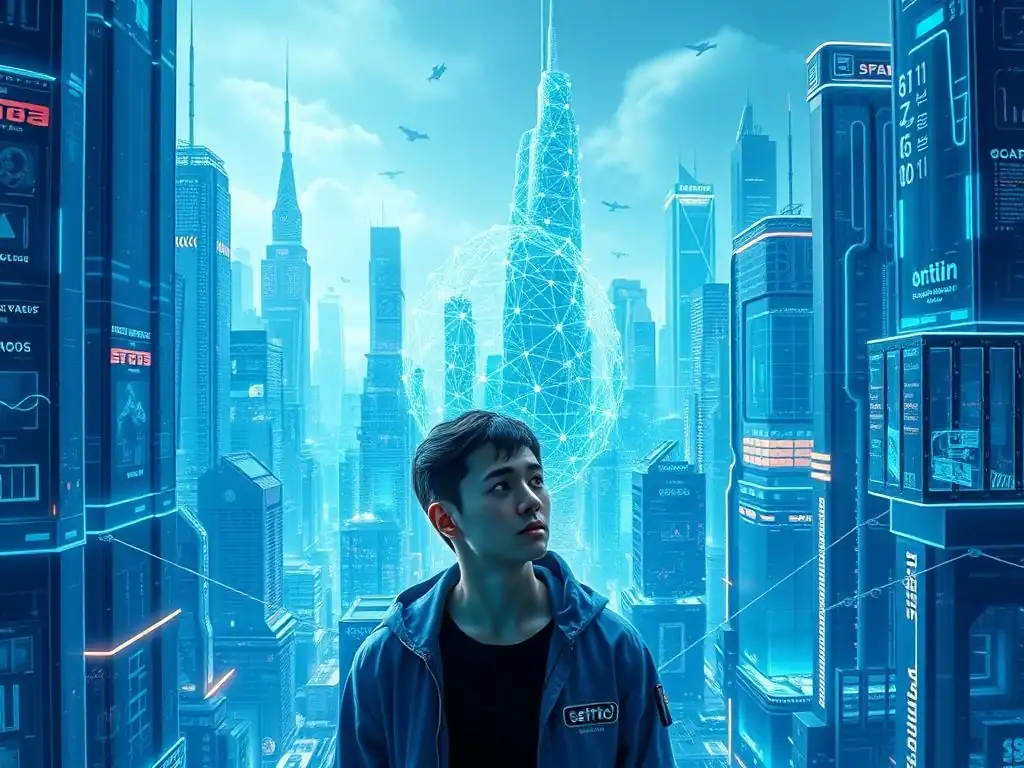
Welcome to Blockchain Trends, your compass in the rapidly evolving world of decentralized technology! Dive in to uncover blockchain's potential beyond the hype, from groundbreaking DeFi solutions to its transformative impact on enterprise.
But can blockchain truly handle the next frontier? Today, we tackle the burning question of blockchain metaverse gaming scalability. Discover the challenges and innovative solutions paving the way for a seamless and immersive decentralized gaming experience. Are we ready to build the metaverse? Explore the article below to find out!
The Scalability Question: Can Blockchain Handle the Demands of Metaverse Gaming?
- Introduction: The Convergence of Blockchain, Metaverse, and Gaming's Scalability Challenge
-
Frequently Asked Questions
- How does blockchain scalability impact metaverse gaming?
- What are the main challenges to achieving blockchain metaverse gaming scalability?
- What are some potential solutions for improving blockchain metaverse gaming scalability?
- How do different blockchain platforms compare in terms of their ability to support metaverse gaming?
- How will regulations impact the development of scalable blockchain metaverse gaming?
- Final Reflection: Scaling the Metaverse Dream
- Unleash Your Metaverse Gaming Potential!
Introduction: The Convergence of Blockchain, Metaverse, and Gaming's Scalability Challenge

Exploring the Potential and Pitfalls of Blockchain Integration in Metaverse Games
The intersection of blockchain technology, metaverse environments, and the gaming industry presents a fascinating frontier, brimming with potential yet fraught with challenges. Blockchain promises to revolutionize metaverse games by introducing true digital ownership, decentralized economies, and enhanced player empowerment through concepts like NFTs and play-to-earn mechanics. Imagine owning unique in-game assets as verifiable NFTs, trading them freely outside the game ecosystem, and participating in player-driven economies within immersive virtual worlds. This vision attracts both gamers and developers eager to explore new paradigms of digital interaction and economic models.
However, integrating blockchain into metaverse gaming is not without its hurdles. One of the most significant is scalability. Metaverse games, by their very nature, demand high levels of interactivity, real-time responsiveness, and the capacity to support massive concurrent user bases.
Traditional blockchain infrastructures, designed for financial transactions, often struggle to meet these demands. The very features that make blockchain appealing – decentralization and security – can sometimes come at the cost of speed and throughput, creating a potential bottleneck for seamless and engaging metaverse gaming experiences. Therefore, understanding and overcoming the scalability limitations of blockchain is paramount to realizing the full potential of blockchain metaverse gaming.
Defining Scalability in the Context of Blockchain Metaverse Gaming Experiences
Scalability in the context of blockchain metaverse gaming goes beyond simply processing a high volume of transactions per second (TPS). It encompasses the ability of a blockchain network to handle the ever-increasing demands of a dynamic, interactive, and massively multiplayer virtual world. This includes not only transaction throughput but also low latency, efficient data management, and the capacity to support a vast number of concurrent users and complex in-game interactions without compromising performance or user experience.
In a typical metaverse game, players are constantly interacting with the environment, each other, and in-game assets. These interactions translate into numerous actions that potentially need to be recorded on the blockchain, from simple item trades to complex in-game events and battles.
Consider a popular massively multiplayer online role-playing game (MMORPG) like World of Warcraft, which at its peak boasted over 12 million subscribers. Imagine replicating such a game on a blockchain, where every loot drop, every character progression, and every in-game trade is potentially recorded as a blockchain transaction. The sheer volume of data and transactions generated would dwarf the capacity of many current blockchain networks.
Scalability in blockchain metaverse gaming, therefore, means not just keeping up with the transactional load, but also ensuring that the network remains responsive, cost-effective, and user-friendly as the metaverse game grows in popularity and complexity. It's about creating a seamless and immersive experience that doesn't feel constrained by the underlying blockchain infrastructure.
Why Scalability is Critical for Mass Adoption of Blockchain-Based Metaverses
Scalability is not merely a technical concern; it is a fundamental prerequisite for the mass adoption of blockchain-based metaverses and games. For blockchain games to attract and retain a mainstream gaming audience, they must offer an experience comparable to, or even exceeding, traditional gaming experiences in terms of fluidity, responsiveness, and overall enjoyment. Imagine a metaverse game where actions are delayed, transactions are slow, and the world feels sluggish and unresponsive due to blockchain congestion.
Such an experience would quickly deter players accustomed to the smooth, real-time interactions of conventional games. Scalability directly impacts the user experience, and a poor user experience is a significant barrier to adoption.
Furthermore, the economic models of blockchain metaverse games, often centered around play-to-earn and digital asset ownership, are intrinsically linked to scalability. If transaction fees are high due to network congestion, or if trading assets becomes cumbersome and slow, the economic incentives that drive player engagement diminish. For instance, if a player earns in-game currency but faces exorbitant transaction fees to withdraw or trade it, the perceived value of that currency decreases.
Scalability ensures that the economic mechanisms within blockchain metaverses function efficiently and remain attractive to players. Ultimately, without robust scalability, blockchain metaverse gaming risks remaining a niche interest rather than achieving widespread mainstream acceptance and realizing its transformative potential within the gaming industry.
Frequently Asked Questions
How does blockchain scalability impact metaverse gaming?
Scalability directly affects the user experience in metaverse games. Low scalability can lead to slow transaction speeds and high gas fees, hindering gameplay.
What are the main challenges to achieving blockchain metaverse gaming scalability?
The primary challenges include transaction throughput, latency, and the computational power needed to process complex in-game interactions on-chain.
What are some potential solutions for improving blockchain metaverse gaming scalability?
Solutions involve layer-2 scaling solutions like rollups and sidechains, sharding, and using more efficient consensus mechanisms to increase transaction processing.
How do different blockchain platforms compare in terms of their ability to support metaverse gaming?
Platforms vary significantly. Some, like Ethereum, face scalability issues, while others, like Solana, are designed with higher throughput capabilities, making them more suitable for demanding metaverse games.
How will regulations impact the development of scalable blockchain metaverse gaming?
Regulations surrounding data privacy, digital assets, and security can influence the design and deployment of blockchain-based games. Compliance can add complexity and potentially impact scalability solutions.
Final Reflection: Scaling the Metaverse Dream
The exploration of blockchain metaverse gaming scalability reveals a critical juncture in the evolution of both technologies. While the promise of decentralized, immersive gaming experiences powered by blockchain is undeniably alluring, the current limitations in scalability pose a significant hurdle to realizing this vision. The challenges we've discussed, from transaction throughput to latency issues, are not merely technical roadblocks; they represent a fundamental question about the feasibility of a truly decentralized and performant metaverse gaming ecosystem.
The ongoing struggle to overcome these scalability limitations profoundly influences the cultural and social landscape of gaming. The dream of true ownership, interoperability, and player-driven economies within the metaverse hinges on finding viable solutions. Without them, the metaverse risks becoming another centralized platform, echoing the very systems blockchain seeks to disrupt. The future of gaming isn't just about better graphics or more immersive worlds; it's about empowering players with real ownership and control.
This quote encapsulates the core value proposition of blockchain in gaming, a promise that can only be fulfilled with scalable infrastructure.
As we stand at this technological crossroads, I invite you to reflect on your own role in shaping the future of blockchain metaverse gaming. Consider the games you play, the communities you engage with, and the technologies you support. Are you contributing to solutions that prioritize decentralization and scalability, or are you passively accepting limitations that could stifle innovation? The metaverse is not a pre-determined destination; it is a collaborative creation. Let us strive to build a future where the promise of blockchain empowers players and unlocks the full potential of immersive gaming experiences.
Unleash Your Metaverse Gaming Potential!
Thank you for exploring the challenges and exciting possibilities of blockchain in metaverse gaming with us! We hope you gained valuable insights into the technological hurdles and potential solutions. Now, let's take that knowledge and put it into action.
Here are a few ways to deepen your understanding and get involved:
- Try out a blockchain-based metaverse game to see firsthand how scalability solutions work in practice. Don't just read about it—experience it yourself!
- Explore the repositories of innovative layer-2 scaling solutions to learn about the technical advancements that enable smoother gameplay. This is a great way to get into the details.
- Share your insights and favorite metaverse gaming platforms on social media using hashtags like #BlockchainGaming and #MetaverseScalability to spark conversations and connect with fellow enthusiasts.
What steps are you taking to contribute to the future of scalable blockchain gaming in the metaverse? Share your thoughts in the comments below!
Leave a Reply