
Smart Contracts and NFTs in Gaming: Automating Ownership and Game Mechanics

Welcome to Blockchain Trends, your guide to the revolutionary world beyond Bitcoin! Curious about how blockchain is reshaping industries? Dive in to explore the transformative potential of decentralized technologies.
Today, we're unlocking the secrets of how NFTs, gaming smart contracts, and automation are converging to redefine the gaming landscape. Discover how these innovations are empowering players, creating new revenue streams, and building truly decentralized gaming ecosystems. Ready to level up your understanding? Let's begin!
Smart Contracts and NFTs in Gaming: Automating Ownership and Game Mechanics
- Introduction: The Convergence of NFTs, Smart Contracts, and Blockchain Gaming
- NFTs in Gaming: Defining Digital Ownership and Scarcity
- Smart Contracts: Automating Game Mechanics and Governance
- Automating Ownership with NFTs and Smart Contracts: A Practical Guide
- Enhancing Game Mechanics with Smart Contract Automation
- The Future of NFTs and Smart Contracts in Gaming: Trends and Predictions
- Challenges and Considerations for Implementing NFTs and Smart Contracts in Games
- Case Studies: Successful Examples of NFT and Smart Contract-Powered Games
- Conclusion: The Transformative Potential of NFTs Gaming Smart Contracts Automation
-
Frequently Asked Questions
- What role do smart contracts play in NFT gaming?
- How can NFTs enhance the player experience in gaming?
- What are some potential automation benefits that smart contracts bring to gaming?
- Beyond ownership, how do smart contracts impact game mechanics?
- What are the regulatory challenges associated with integrating NFTs, smart contracts, and gaming?
- Final Reflection: Embracing the Automated Future of Play
- Unleash Your Gaming Potential: Explore the Future Today!
Introduction: The Convergence of NFTs, Smart Contracts, and Blockchain Gaming
Understanding the Evolution of Gaming with Blockchain Technology
The gaming industry has consistently pushed technological boundaries, evolving from simple arcade games to complex, immersive virtual worlds. Historically, however, in-game assets and economies have been centralized, residing solely within the control of game developers and publishers. Players invest countless hours and sometimes significant sums of money acquiring in-game items, but these digital assets lack true ownership and portability outside the specific game environment. This paradigm is now undergoing a significant shift with the advent of blockchain technology, promising to redefine digital ownership and game mechanics.
Blockchain's decentralized nature offers a compelling alternative to centralized gaming models. By leveraging blockchain, games can transition from closed ecosystems to more open and player-centric environments. This evolution is not just about new technologies; it's about fundamentally changing the relationship between players and games, granting players unprecedented control and ownership over their digital assets and experiences. This shift is being spearheaded by the integration of Non-Fungible Tokens (NFTs) and smart contracts, paving the way for a new era of gaming where automation and true digital ownership are paramount.
The Role of NFTs and Smart Contracts in Revolutionizing Game Ownership
NFTs and smart contracts are the key components driving this revolution in game ownership. NFTs, or Non-Fungible Tokens, provide a mechanism to represent unique digital assets on a blockchain, ensuring their scarcity and verifiable ownership. In the context of gaming, NFTs can represent anything from in-game collectibles and characters to virtual land and equipment. This means that players can truly own these assets, similar to owning physical collectibles, and their ownership is recorded and secured on a public ledger.
Smart contracts, on the other hand, are self-executing agreements written in code and deployed on a blockchain. They automate actions when predefined conditions are met, removing the need for intermediaries. In gaming, smart contracts can automate game rules, manage in-game economies, facilitate peer-to-peer trading of NFTs, and even govern aspects of the game itself.
The combination of NFTs for digital ownership and smart contracts for automation creates a powerful synergy, enabling decentralized gaming ecosystems where ownership is transparent, secure, and player-centric. This convergence of NFTs, smart contracts, and blockchain technology is fundamentally reshaping the landscape of gaming, moving towards a future of automated ownership and player empowerment.
NFTs in Gaming: Defining Digital Ownership and Scarcity
What are NFTs and How Do They Work in the Context of Games?
Non-Fungible Tokens (NFTs) are cryptographic assets on a blockchain that represent unique items. Unlike cryptocurrencies like Bitcoin or Ethereum, which are fungible (interchangeable), each NFT is distinct and has its own unique identification code and metadata. This non-fungibility is crucial for representing unique digital assets within games. NFTs are typically built on blockchain platforms like Ethereum, Solana, or Polygon, and their ownership is recorded and publicly verifiable on the blockchain ledger.
In the context of games, NFTs transform digital items from mere data within a game's database into verifiable, owned assets. When a game item is tokenized as an NFT, it gains properties of scarcity, provenance, and potentially, interoperability.
For instance, a unique sword in a game, represented as an NFT, is verifiably limited in number, its creation and ownership history are transparently traceable on the blockchain, and it can potentially be used across different games if those games support the same NFT standard. This fundamentally changes the nature of in-game assets, moving them beyond the confines of a single game and into the realm of true digital property.
Use Cases of NFTs in Gaming: From Collectibles to In-Game Assets
The applications of NFTs in gaming are diverse and expanding rapidly. Initially, NFTs gained traction as digital collectibles, mirroring physical collectibles like trading cards or rare figurines. Games like CryptoKitties popularized this concept, where players could collect, breed, and trade unique digital cats represented as NFTs. This demonstrated the appeal of digital scarcity and collectible value within a game environment.
Beyond collectibles, NFTs are being used to represent a wide array of in-game assets. These include virtual land in metaverse games like Decentraland and The Sandbox, in-game characters with unique attributes and abilities, weapons, armor, and other equipment that enhance gameplay. NFTs are also used for cosmetic items like skins and avatars, and even for access keys to exclusive game content or features. The versatility of NFTs allows game developers to tokenize almost any aspect of their game, creating new possibilities for player ownership and engagement, and offering a foundation for truly player-driven economies within games.
The Benefits of NFT Ownership for Gamers: True Digital Property
NFT ownership offers gamers a paradigm shift in how they interact with and perceive in-game assets. Traditionally, players purchase or earn in-game items that are ultimately controlled by the game developers. If a game shuts down, or a player is banned, these assets are often lost, representing a significant loss of investment – both time and potentially money. NFTs, however, grant players true digital property rights. Because NFTs reside on a blockchain, they exist independently of any single game company.
This independence translates to several key benefits for gamers. Firstly, true ownership means players have control over their assets. They can trade, sell, or hold their NFTs as they see fit, on open marketplaces, without needing permission from the game developer. Secondly, NFTs introduce scarcity, making rare in-game items genuinely valuable and potentially appreciating in value over time.
Thirdly, NFTs offer portability or interoperability potential. While still in its early stages, the vision is that NFTs could be used across different games and metaverse platforms, allowing players to carry their digital identities and assets with them. Finally, NFTs can facilitate play-to-earn models, where players can earn cryptocurrency or other rewards by playing games and trading their NFT assets, creating new economic opportunities within gaming.
Smart Contracts: Automating Game Mechanics and Governance
Defining Smart Contracts: Self-Executing Agreements on the Blockchain
Smart contracts are self-executing contracts with the terms of the agreement directly written into code. They are deployed and run on a blockchain, making them immutable and transparent. Once a smart contract is deployed, its code cannot be altered, and every transaction or execution of the contract is recorded on the blockchain, ensuring transparency and auditability. Smart contracts operate autonomously; they execute automatically when predefined conditions are met, without the need for intermediaries or manual intervention.
This automation and immutability make smart contracts particularly well-suited for various applications, including supply chain management, voting systems, and, crucially, gaming. In essence, a smart contract acts as a digital vending machine: set the conditions (e.g., a player performs a specific action in the game), define the outcome (e.g., the player receives a reward or unlocks a new level), and the smart contract automatically executes the outcome when the conditions are met. This removes the need for centralized game servers to constantly manage and enforce every rule and interaction, leading to more decentralized and potentially more robust game systems.
How Smart Contracts Automate Game Rules and Interactions
Smart contracts can automate a wide range of game mechanics and interactions, creating more dynamic and trustless gaming environments. Instead of game developers hardcoding every rule and event into the game's software, these rules can be encoded into smart contracts. For example, a smart contract can govern the distribution of rewards in a play-to-earn game, automatically releasing tokens to players based on their in-game achievements or participation.
Smart contracts can also automate in-game marketplaces and trading systems for NFTs. A decentralized marketplace, powered by smart contracts, can facilitate peer-to-peer trading of NFTs directly between players, without requiring a centralized platform to manage transactions or take custody of assets. Furthermore, smart contracts can manage complex game logic, such as character leveling systems, item crafting recipes, or even the outcomes of in-game battles, ensuring fairness and transparency in these processes. By automating these core game mechanics, smart contracts reduce reliance on centralized servers, increase transparency, and empower players with greater control over their gaming experience.
Decentralized Governance and Smart Contract-Based Game Management
Beyond automating game mechanics, smart contracts can also facilitate decentralized governance in gaming. Traditional games are governed entirely by the game developers, who make all decisions regarding game updates, balance changes, and community policies. Smart contracts offer the potential to shift some of this governance power to the players, creating more community-driven and democratic game ecosystems.
Smart contracts can be used to implement decentralized autonomous organizations (DAOs) within games. A game DAO can allow players to vote on proposals related to game development, rule changes, or the allocation of game resources. For instance, players holding a specific game NFT or token could gain voting rights, and smart contracts would automatically execute the decisions based on the outcome of these votes.
This can lead to more transparent and community-responsive game development, where players have a direct say in the direction of the game they play and invest in. While still an evolving concept, decentralized governance through smart contracts represents a significant step towards player empowerment and the creation of truly player-owned and operated games.
Automating Ownership with NFTs and Smart Contracts: A Practical Guide
Minting and Trading NFTs: Smart Contract Implementation
The process of creating and managing NFTs in gaming, known as minting and trading, is heavily reliant on smart contract implementation. Minting refers to the creation of new NFTs on a blockchain. In gaming, this typically happens when a new in-game item is generated or earned by a player.
A smart contract defines the rules for minting, including the metadata associated with the NFT (describing its properties and attributes) and the initial owner (usually the player or the game itself). When a player earns a rare sword, for example, a smart contract is triggered to mint a new NFT representing that sword and transfer ownership to the player's blockchain address.
Trading NFTs also relies on smart contracts, especially in decentralized marketplaces. Smart contracts facilitate peer-to-peer transactions, ensuring secure and trustless trading. When a player wants to sell an NFT, they interact with a marketplace smart contract, which locks the NFT and awaits a buyer.
When a buyer agrees to purchase, the smart contract automatically executes the trade: transferring ownership of the NFT to the buyer and transferring the agreed-upon cryptocurrency to the seller. Platforms like OpenSea and Rarible utilize smart contracts extensively to enable NFT trading, providing the infrastructure for players to buy, sell, and manage their gaming NFTs in a decentralized manner.
Integrating NFTs into Game Mechanics: Examples and Best Practices
Successfully integrating NFTs into game mechanics requires careful consideration of game design and player experience. Simply tokenizing existing in-game items as NFTs without deeper integration can feel superficial. Best practices involve designing game mechanics that genuinely leverage the unique properties of NFTs, such as scarcity, ownership, and interoperability potential.
One example is play-to-earn mechanics, where players earn NFTs or cryptocurrency tokens by playing the game. These rewards, being NFTs, represent true ownership and can be traded or sold, creating economic incentives for gameplay. Another approach is using NFTs to represent unique characters or assets that have persistent value and utility across the game world.
For instance, a rare NFT character could grant access to exclusive areas, abilities, or quests. Furthermore, games are exploring dynamic NFTs, where the properties of an NFT can change based on in-game actions or events, creating evolving and more engaging assets. Successful NFT integration focuses on creating meaningful utility and value for NFT assets within the game ecosystem, enhancing gameplay and player engagement rather than just adding NFTs as a superficial layer.
Smart Contract Audits and Security Considerations for Gaming NFTs
Given the financial value associated with gaming NFTs and the reliance on smart contracts for their management, security is paramount. Smart contracts, while designed to be secure, are still code and can be vulnerable to bugs or exploits if not properly developed and audited. A smart contract audit is a crucial process where independent security experts review the smart contract code to identify potential vulnerabilities, security flaws, or inefficiencies.
For gaming NFTs, smart contract audits are essential to protect players' assets and ensure the integrity of the game economy. Audits can identify vulnerabilities like reentrancy attacks, overflow errors, or logic flaws that could be exploited to steal NFTs or manipulate game mechanics. Reputable NFT gaming projects prioritize smart contract audits conducted by well-known security firms.
Furthermore, best practices include implementing robust security measures in smart contract development, such as using established coding patterns, thorough testing, and ongoing monitoring for potential threats. Security considerations are not just technical; they also encompass user education on safe NFT practices and responsible platform management to minimize risks in the evolving landscape of NFTs gaming smart contracts automation.
Enhancing Game Mechanics with Smart Contract Automation
Dynamic NFTs: Evolving Assets Based on In-Game Actions
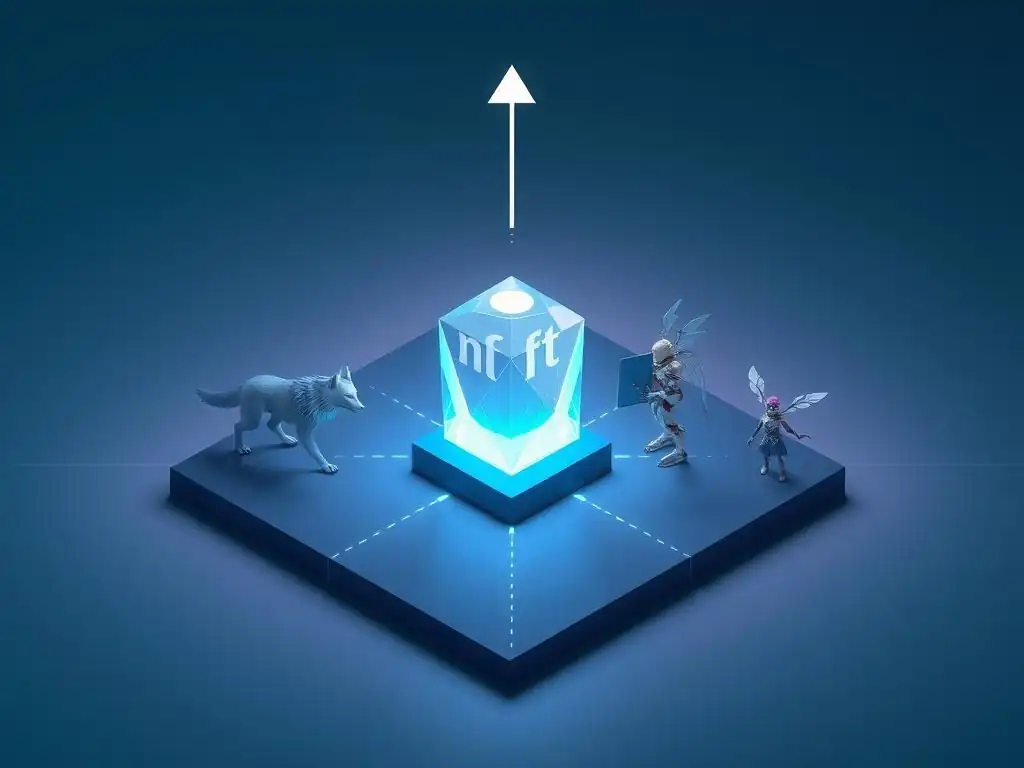
Dynamic NFTs represent a significant evolution in NFT technology, offering the capability for NFTs to change their properties or metadata based on external data or in-game events. Traditional NFTs are static; once minted, their core attributes remain fixed. Dynamic NFTs, however, can be programmed to update based on predefined conditions, creating more interactive and engaging digital assets, particularly within gaming environments.
In gaming, dynamic NFTs can reflect a player's progress, achievements, or in-game decisions. For example, a character NFT could evolve in appearance and stats as a player levels up or completes specific quests. A weapon NFT could gain new abilities or visual enhancements based on its usage or the player's skill.
Dynamic NFTs can even react to external data, such as real-world events or game server conditions, making them truly responsive and evolving assets. This dynamism adds a new layer of depth and engagement to NFT gaming, making digital assets more than just static collectibles but rather living, breathing components of the game experience.
Smart Contract-Driven Events and Challenges: Creating Unique Game Experiences
Smart contracts are not just for automating asset ownership; they can also be leveraged to create unique and dynamic game events and challenges. Traditional in-game events are often pre-scripted and centrally controlled. Smart contracts can introduce more decentralized and unpredictable events, adding an element of surprise and emergent gameplay.
For example, a smart contract could trigger a random in-game event based on certain blockchain conditions, such as the price of a specific cryptocurrency or the number of transactions on the network. Smart contracts can also manage competitive challenges and tournaments, automatically distributing rewards based on performance, as verified by on-chain data.
Furthermore, smart contracts can facilitate community-driven events, where players can collectively contribute to trigger events or unlock new game content. By using smart contracts to drive game events and challenges, developers can create more dynamic, unpredictable, and engaging gaming experiences that move beyond pre-determined narratives and embrace emergent gameplay possibilities.
Decentralized Marketplaces for In-Game Items: Fostering Player Economies
Decentralized marketplaces for in-game items, powered by smart contracts, are crucial for fostering robust player economies in NFT gaming. Traditional in-game marketplaces are often centralized, controlled by game developers, and may impose restrictions on trading or fees. Decentralized marketplaces offer a more open, permissionless, and player-centric alternative.
These marketplaces utilize smart contracts to facilitate peer-to-peer trading of NFTs directly between players. Smart contracts handle escrow, ensuring secure and trustless transactions without the need for intermediaries. Players can list their NFTs for sale, set their prices, and trade directly with other players, with the smart contract automatically managing the transfer of ownership and payment.
Decentralized marketplaces often have lower transaction fees compared to centralized platforms and offer greater control to players over their assets and trading activities. Examples include platforms built on blockchain networks specifically designed for gaming, fostering thriving player-driven economies where NFTs gaming smart contracts automation plays a central role in enabling secure and efficient trading.
The Future of NFTs and Smart Contracts in Gaming: Trends and Predictions
Scalability Solutions for NFT Gaming: Addressing Transaction Costs and Speed
One of the key challenges facing the widespread adoption of NFTs in gaming is scalability. Blockchains like Ethereum, while popular for NFTs, can suffer from high transaction fees (gas fees) and slow transaction speeds, especially during periods of high network congestion. These limitations can hinder the seamless and affordable trading of in-game NFTs and impact the overall user experience in NFT games.
Scalability solutions are actively being developed to address these issues. Layer-2 scaling solutions, such as Polygon, Optimism, and Arbitrum, offer faster and cheaper transactions by processing transactions off the main Ethereum chain while still benefiting from Ethereum's security. Many NFT gaming projects are now adopting Layer-2 solutions to reduce gas fees and improve transaction speed.
Sidechains and alternative Layer-1 blockchains with higher throughput and lower fees, like Solana and Flow, are also gaining traction in the NFT gaming space. Advancements in blockchain technology and the adoption of scalability solutions are crucial for making NFT gaming more accessible and economically viable for a broader audience, paving the way for mass adoption.
Interoperability of NFTs Across Different Games and Blockchains
The vision of NFT interoperability, where NFTs can be used across different games and potentially even metaverse platforms, is a highly anticipated development in the future of NFT gaming. Currently, most NFTs are tied to a specific game or platform, limiting their utility and value to that ecosystem. Interoperability aims to break down these silos, creating a more open and interconnected metaverse of gaming assets.
Achieving NFT interoperability requires standardization efforts and collaboration across different game developers and blockchain platforms. Standardized NFT metadata formats and cross-chain communication protocols are needed to enable games to recognize and utilize NFTs from other games or blockchains. Projects are emerging that focus on building infrastructure and tools to facilitate NFT interoperability.
The benefits of interoperability are significant: players could carry their favorite characters or items across different games, increasing the utility and long-term value of their NFT assets. This could lead to a more fluid and interconnected gaming experience, fostering a true metaverse where digital assets have value and utility beyond the confines of a single game.
The Impact of NFTs on Game Design and Development
NFTs are not just changing the economics of gaming; they are also fundamentally impacting game design and development paradigms. Traditional game design often focuses on centralized control and closed ecosystems. NFTs encourage a shift towards more decentralized, player-centric, and open game designs.
Game developers are exploring new game mechanics and genres that are specifically enabled by NFTs. Play-to-earn models, driven by NFT rewards and player-owned economies, are becoming increasingly popular. NFTs are also fostering new forms of player engagement and community ownership, with players having a greater stake in the game's success and development.
Game design is evolving to incorporate dynamic NFTs, smart contract-driven events, and decentralized governance mechanisms, creating more complex and interactive game worlds. Furthermore, NFTs are influencing game development processes, with developers needing to consider blockchain integration, smart contract development, and NFT asset creation as integral parts of the game development lifecycle. This shift towards NFTs gaming smart contracts automation is leading to a new wave of innovation and creativity in game design and development.
Challenges and Considerations for Implementing NFTs and Smart Contracts in Games
Regulatory Landscape and Legal Implications of NFT Gaming
The regulatory landscape surrounding NFTs and blockchain gaming is still evolving and remains largely uncertain. Governments and regulatory bodies worldwide are grappling with how to classify and regulate NFTs, particularly in the context of gaming and virtual assets. Legal implications related to NFT ownership, intellectual property rights, and taxation are still being debated and clarified.
Concerns exist about the potential for NFTs to be considered securities, especially if they are marketed as investment opportunities. Regulations related to gambling and gaming may also apply to NFT games, particularly those with play-to-earn mechanics. Game developers entering the NFT space need to navigate this complex and evolving regulatory landscape carefully.
Legal compliance is crucial, and projects need to stay informed about regulatory developments in different jurisdictions. The lack of clear and consistent regulations poses a challenge to the widespread adoption of NFT gaming and requires ongoing dialogue between the industry and regulatory bodies to establish a clear and sustainable legal framework.
Security Risks and Vulnerabilities in Smart Contract-Based Games
While smart contracts offer numerous benefits for gaming, they also introduce new security risks and vulnerabilities. Smart contracts are immutable once deployed, meaning that bugs or vulnerabilities in the code cannot be easily fixed after deployment. Exploits of smart contract vulnerabilities can lead to significant financial losses for players and damage the reputation of NFT gaming projects.
Common security risks include reentrancy attacks, overflow/underflow vulnerabilities, and logic errors in smart contract code. Flash loan attacks, where attackers manipulate market prices using borrowed funds, can also be a concern in decentralized finance (DeFi) aspects of NFT gaming. Furthermore, phishing scams and social engineering attacks targeting NFT holders are prevalent. Mitigating these security risks requires rigorous smart contract audits, secure coding practices, ongoing monitoring, and user education on security best practices. The security of smart contract-based games is paramount for building trust and ensuring the long-term sustainability of the NFT gaming ecosystem.
User Adoption and Education: Overcoming Barriers to Entry
Despite the growing excitement around NFT gaming, user adoption still faces significant barriers. Many mainstream gamers are unfamiliar with blockchain technology, NFTs, and cryptocurrencies. The technical complexity of setting up crypto wallets, understanding gas fees, and navigating decentralized marketplaces can be daunting for new users. Concerns about environmental impact, scams, and the perceived "speculative" nature of NFTs can also deter adoption.
Overcoming these barriers requires focused efforts on user education and simplification of the user experience. Game developers need to create user-friendly interfaces and onboarding processes that abstract away the technical complexities of blockchain. Educational resources and tutorials can help players understand the benefits of NFTs and how to safely participate in NFT gaming. Addressing environmental concerns by adopting more energy-efficient blockchain solutions is also important. Furthermore, demonstrating the value proposition of NFTs beyond just speculation, focusing on enhanced gameplay, true ownership, and player empowerment, is crucial for driving wider user adoption and mainstream acceptance of NFT gaming.
Case Studies: Successful Examples of NFT and Smart Contract-Powered Games
Axie Infinity: Play-to-Earn Battling and Breeding Game
Axie Infinity is a prime example of a successful NFT and smart contract-powered game. This play-to-earn game revolves around collecting, breeding, and battling creatures called Axies, which are represented as NFTs. Axie Infinity leverages smart contracts for all core game mechanics, including Axie breeding, battling, marketplace transactions, and reward distribution. Players earn Smooth Love Potion (SLP) tokens by playing the game, which can then be traded on cryptocurrency exchanges or used to breed new Axies.
Axie Infinity's success can be attributed to its engaging gameplay, robust play-to-earn economy, and strong community. The game has demonstrated the potential of NFTs to create viable play-to-earn models, attracting a large player base, particularly in developing countries where players can earn a meaningful income through gameplay. Axie Infinity's marketplace for Axie NFTs has seen significant trading volume, highlighting the demand for in-game NFTs and the potential for player-driven economies. However, Axie Infinity has also faced challenges related to economic sustainability and token price volatility, highlighting the complexities of managing play-to-earn economies.
Decentraland: User-Owned Virtual World Platform
Decentraland is a user-owned virtual world built on the Ethereum blockchain. Land in Decentraland is represented as NFTs called LAND tokens, giving users true ownership and control over their virtual parcels. Users can build, develop, and monetize their LAND parcels, creating a decentralized metaverse platform. Smart contracts are used to manage LAND ownership, marketplace transactions, and in-world interactions.
Decentraland exemplifies the use of NFTs and smart contracts to create user-generated content and virtual real estate within a metaverse environment. The platform allows users to freely trade LAND NFTs and build experiences on their virtual land, fostering a decentralized and player-driven virtual world. Decentraland's success demonstrates the potential of NFTs for creating digital ownership within metaverses and enabling user-created economies. However, challenges remain in scaling the platform, attracting a wider user base, and ensuring content moderation and governance within a decentralized virtual world.
Analyzing the Success Factors and Lessons Learned
Analyzing the success of games like Axie Infinity and Decentraland reveals several key success factors for NFT and smart contract-powered games. Engaging gameplay is paramount; even with NFTs, a game needs to be fun and engaging to attract and retain players. A well-designed and sustainable economy is crucial for play-to-earn games, requiring careful balancing of tokenomics and in-game reward systems. Strong community building and player engagement are essential for fostering a thriving ecosystem around NFT games. User-friendly onboarding and accessibility are important for attracting mainstream gamers and overcoming barriers to entry.
Lessons learned include the importance of robust security measures to protect player assets and prevent exploits, the need for clear and transparent governance mechanisms, and the challenges of managing volatility in play-to-earn economies. Furthermore, long-term sustainability and evolving game mechanics are crucial for ensuring the continued success of NFT games. These case studies highlight the transformative potential of NFTs and smart contracts in gaming but also underscore the importance of careful planning, robust implementation, and community-centric development for success in this evolving space.
Conclusion: The Transformative Potential of NFTs Gaming Smart Contracts Automation
Key Takeaways: The Benefits of Decentralized Gaming
The integration of NFTs and smart contracts is ushering in a new era of decentralized gaming, offering numerous benefits for both players and the gaming industry. True digital ownership through NFTs empowers players with control over their in-game assets, allowing them to trade, sell, and potentially use these assets across different games. Smart contract automation enhances game mechanics, creates transparent and trustless systems, and enables decentralized governance and player-driven economies. Play-to-earn models powered by NFTs and smart contracts create new economic opportunities for players and incentivize engagement and participation.
Decentralized gaming fosters greater transparency and fairness in game economies and rule enforcement, reducing reliance on centralized control. It also promotes community ownership and governance, giving players a greater voice in the direction of the games they play. NFTs gaming smart contracts automation is not just about new technologies; it's about fundamentally shifting the power dynamics in gaming, empowering players and creating more open, equitable, and engaging gaming ecosystems.
The Future of Gaming: Empowering Players Through Blockchain Technology
The future of gaming is increasingly intertwined with blockchain technology, with NFTs and smart contracts at the forefront of this transformation. As scalability solutions mature and interoperability standards emerge, NFT gaming is poised for wider adoption and mainstream integration. We can expect to see more sophisticated game mechanics leveraging dynamic NFTs and smart contract-driven events, creating richer and more interactive gaming experiences. Decentralized governance and player-owned economies will become more prevalent, fostering community-driven game development and player empowerment.
While challenges remain in regulation, security, and user adoption, the transformative potential of NFTs gaming smart contracts automation is undeniable. Blockchain technology is not just about adding new features to games; it's about fundamentally reimagining the relationship between players and games, creating a future where players are not just consumers but also owners, participants, and stakeholders in the gaming worlds they inhabit. This shift towards player empowerment and decentralized gaming represents a significant evolution in the gaming industry, promising a more open, equitable, and engaging future for gamers worldwide.
Frequently Asked Questions
What role do smart contracts play in NFT gaming?
Smart contracts act as the underlying infrastructure for NFTs, automating the transfer of ownership and enforcing game rules. They ensure transparency and trust in the game's asset management.
How can NFTs enhance the player experience in gaming?
NFTs provide players with true ownership of in-game assets, allowing them to trade, sell, or use them across different games. This creates a more engaging and rewarding gaming experience.
What are some potential automation benefits that smart contracts bring to gaming?
Smart contracts can automate tasks like reward distribution, tournament payouts, and in-game event triggers. This reduces the need for manual intervention and ensures fairness and efficiency.
Beyond ownership, how do smart contracts impact game mechanics?
Smart contracts can define the rules and logic of the game, influencing how NFTs behave and interact within the game world. This allows for complex and dynamic gameplay scenarios.
What are the regulatory challenges associated with integrating NFTs, smart contracts, and gaming?
Regulatory bodies are still grappling with the legal implications of NFTs and smart contracts, especially regarding ownership, security, and compliance. This uncertainty could impact the future of NFT gaming.
Final Reflection: Embracing the Automated Future of Play
The exploration of NFTs gaming smart contracts automation reveals a profound shift in how we perceive ownership and interaction within digital worlds. No longer are in-game assets confined to the whims of centralized servers; instead, they are becoming verifiable, tradable, and truly owned by the players themselves. This transformation, driven by the power of smart contracts, is not just a technological advancement, but a fundamental reimagining of the gaming experience.
This burgeoning intersection of blockchain and gaming has already begun to reshape the cultural landscape, fostering a new sense of community and empowering players in unprecedented ways. The potential for creators and players to directly benefit from their contributions is immense, promising a more equitable and engaging ecosystem. The future of gaming is not just about playing games, but about owning a piece of the game.
This sentiment encapsulates the core promise of NFTs and smart contracts: a future where players are active participants in the value creation process.
As we stand on the cusp of this new era, I invite you to consider the implications of decentralized ownership and automated game mechanics. How can you, as a player, a developer, or simply an observer, contribute to shaping this future? Embrace the possibilities, explore the potential, and let us collectively build a gaming landscape that is more transparent, more rewarding, and ultimately, more empowering for everyone involved.
Unleash Your Gaming Potential: Explore the Future Today!
Thank you for exploring the exciting world of smart contracts and NFTs in gaming! You now have a clear understanding of how these technologies are transforming ownership and gameplay mechanics. Are you ready to take the next step and experience their full potential?
Here are some ways to get involved in the gaming revolution:
- Immerse yourself: Play a blockchain-based game that employs NFTs and smart contracts. Experience firsthand how true ownership and automated features enhance your gaming experience. This is the most crucial step.
- Learn and connect: Visit online marketplaces and gaming communities dedicated to blockchain games. Stay updated on emerging trends, connect with fellow players, and discover new projects.
- Share your experience: Write a review or create content—such as videos or blog posts—about your favorite blockchain game and share it with friends and on social media. Help grow the community!
What innovative game mechanic would you love to see automated with smart contracts? Share your ideas in the comments below!
Leave a Reply