
How Smart Contracts are Powering NextGen Gaming Experiences

Welcome to Blockchain Trends, your compass in the rapidly evolving world of decentralized technology. Beyond the hype of cryptocurrencies lies a universe of innovation, and we're here to guide you through it. Ever wondered how blockchain is reshaping industries? Dive into our latest exploration and discover the unexpected benefits driving the smart contracts gaming revolution, and how it's changing the rules of the game – literally. Prepare to level up your understanding!
How Smart Contracts are Powering Next-Gen Gaming Experiences
- Introduction: The Smart Contracts Gaming Revolution
- Understanding Smart Contracts and Blockchain Gaming
- Smart Contracts Gaming Revolution Benefits: Key Advantages
- Use Cases: Smart Contracts in Action in Gaming
- Overcoming Challenges in Smart Contract Gaming Implementation
- The Future of Smart Contracts in Gaming: A Vision for Next-Gen Experiences
- Conclusion: Embracing the Smart Contracts Gaming Revolution
-
Frequently Asked Questions
- What are smart contracts, and how are they used in gaming?
- How do smart contracts enhance in-game asset ownership?
- What are the benefits of decentralized gaming platforms powered by smart contracts?
- How are smart contracts impacting eSports and competitive gaming?
- What regulatory challenges exist for blockchain-based gaming and the use of smart contracts?
- Final Reflection: Embracing the Smart Contracts Gaming Revolution
- Dive Deeper into the Future of Gaming!
Introduction: The Smart Contracts Gaming Revolution
Blockchain Trends: Decentralized Gaming Platforms & Metaverse
Blockchain technology, initially popularized by cryptocurrencies, is rapidly expanding its reach into diverse sectors, with gaming emerging as a particularly fertile ground for innovation. Blockchain Trends, as a platform dedicated to exploring this transformative technology, recognizes the profound shifts occurring within the gaming industry. Specifically, the convergence of decentralized gaming platforms and the metaverse is creating unprecedented opportunities for players, developers, and the overall gaming ecosystem. This article delves into one of the core components driving this revolution: smart contracts, and how they are reshaping the very fabric of next-generation gaming experiences within these decentralized environments and metaverses.
The promise of decentralized gaming platforms extends beyond mere entertainment; it's about fundamentally altering the power dynamics within the industry. Traditional gaming models often place significant control in the hands of centralized game publishers, dictating terms of service, in-game economies, and asset ownership. Decentralized platforms, leveraging blockchain, aim to distribute this power, empowering players with greater control over their digital assets and experiences. The metaverse, with its vision of persistent, shared virtual worlds, further amplifies this potential, creating immersive spaces where smart contracts can orchestrate complex interactions and economies, truly revolutionizing how we play and engage with games.
Exploring the Transformative Potential of Smart Contracts in Gaming
Smart contracts, self-executing agreements written in code and deployed on a blockchain, are at the heart of this gaming revolution. Their transformative potential stems from their ability to automate processes, ensure transparency, and establish trust in decentralized environments. In the context of gaming, this translates to a paradigm shift from centralized control to decentralized autonomy, where game logic, asset management, and player interactions can be governed by immutable code, rather than the whims of a central authority.
The impact of smart contracts extends across various facets of gaming. They facilitate the creation of truly player-owned in-game assets through NFTs (Non-Fungible Tokens), enabling verifiable scarcity and tradability. They automate reward distribution and tournament payouts, ensuring fairness and speed. Furthermore, smart contracts can underpin complex in-game economies, governed by players themselves, fostering vibrant and sustainable gaming ecosystems. By exploring these diverse applications, we can understand how smart contracts are not just incremental improvements, but rather a foundational technology driving a fundamental smart contracts gaming revolution with far-reaching benefits.
Understanding Smart Contracts and Blockchain Gaming
What are Smart Contracts? A Beginner's Guide
Imagine a vending machine: you insert money, select an item, and the machine automatically dispenses your purchase. Smart contracts operate on a similar principle, but in the digital realm and with far greater complexity. In essence, a smart contract is a self-executing contract with the terms of the agreement directly written into code. This code resides on a blockchain, a decentralized and immutable ledger, ensuring that the terms are transparent, verifiable, and cannot be unilaterally altered by any single party.
These contracts are triggered automatically when predefined conditions are met. For example, in a gaming context, a smart contract could be designed to automatically release in-game currency to a player upon completion of a specific quest or achievement. Because they are deployed on a blockchain, smart contracts inherit the inherent security and transparency of the underlying technology.
This eliminates the need for intermediaries and fosters trust between parties, as the contract's logic is auditable and its execution is guaranteed by the network. Think of them as digital agreements that enforce themselves, bringing efficiency and security to a wide range of applications, particularly within the burgeoning field of blockchain gaming.
How Blockchain Technology Enhances Gaming Experiences
Blockchain technology provides a robust and secure foundation for enhancing gaming experiences in several key ways. Firstly, decentralization removes the reliance on central servers, reducing the risk of single points of failure and potential censorship. This means games can operate more reliably and resist external interference, creating a more stable and persistent gaming environment. Secondly, blockchain’s inherent transparency ensures that game rules, probabilities, and asset ownership are publicly verifiable, fostering trust and fairness within the game ecosystem.
Furthermore, blockchain facilitates the creation of truly unique and scarce in-game assets through NFTs. Unlike traditional in-game items that reside within a game developer's database and can be duplicated or altered at will, NFTs are unique digital tokens recorded on the blockchain. This provides players with verifiable ownership and control over their digital assets, allowing them to trade, sell, or utilize them across different platforms, potentially creating interoperable gaming ecosystems.
According to a report by DappRadar, NFT trading volume in gaming reached \$2.3 billion in Q3 2021, demonstrating the growing player demand for true digital ownership in games. This shift towards player ownership is a significant benefit of the smart contracts gaming revolution.
The Synergy Between Smart Contracts and Decentralized Gaming
The true power of blockchain in gaming is unlocked through the synergistic relationship between smart contracts and decentralized gaming platforms. While blockchain provides the infrastructure for secure and transparent transactions and asset ownership, smart contracts provide the programmable logic that governs in-game interactions and economies. Decentralized gaming platforms leverage both to create ecosystems where game rules, asset management, and player governance can be encoded directly into smart contracts, fostering a new level of player empowerment.
This synergy allows for the creation of gaming experiences that are fundamentally different from traditional models. Imagine a massively multiplayer online role-playing game (MMORPG) where the game's economy, governance structure, and even core game mechanics are governed by smart contracts. Players could participate in decentralized autonomous organizations (DAOs) to vote on game updates, resource distribution, or even changes to the game's ruleset. This level of player agency, powered by smart contracts, creates a more engaging and democratic gaming environment, marking a significant step in the smart contracts gaming revolution and its associated benefits for players.
Smart Contracts Gaming Revolution Benefits: Key Advantages
Enhanced Transparency and Fairness in Games
One of the most significant benefits of the smart contracts gaming revolution is the enhanced transparency and fairness they bring to game mechanics. Traditional online games often operate on a "black box" principle, where players have limited visibility into the underlying algorithms that govern gameplay, loot drops, and matchmaking. Smart contracts change this paradigm by making game logic auditable and verifiable on the blockchain.
For instance, consider the concept of loot boxes, a common monetization strategy in many games. In traditional systems, players have to trust that the odds of obtaining rare items from loot boxes are as advertised. With smart contracts, the random number generation (RNG) algorithms that determine loot box contents can be encoded into the contract and made provably fair, ensuring that the odds are transparently and mathematically guaranteed. Similarly, tournament rules and prize distribution can be codified in smart contracts, eliminating any ambiguity or potential for manipulation, fostering a fairer and more trustworthy gaming environment.
Secure and Verifiable In-Game Asset Ownership (NFTs)
Smart contracts are instrumental in enabling secure and verifiable in-game asset ownership through Non-Fungible Tokens (NFTs). Unlike traditional in-game items that are tied to a specific game and controlled by the game developer, NFTs represent unique digital assets that players truly own. These assets are recorded on the blockchain, providing irrefutable proof of ownership and scarcity. This fundamentally transforms the relationship between players and their in-game possessions.
NFTs can represent a wide range of in-game assets, from cosmetic items and weapons to virtual land and characters. Because they are based on blockchain technology, these assets can be traded and transferred outside of the game ecosystem, opening up new avenues for player-to-player trading and the development of secondary marketplaces. The popular game CryptoKitties, launched in 2017, demonstrated the potential of NFTs in gaming, with some digital cats selling for hundreds of thousands of dollars. This exemplifies the benefits of smart contracts gaming revolution in creating real-world value from in-game assets and empowering players with true digital ownership.
Automated Payouts and Rewards Systems
Smart contracts streamline and automate payout and reward systems in gaming, eliminating the need for manual processing and reducing the potential for delays or errors. In traditional gaming ecosystems, prize distribution for tournaments or in-game rewards often relies on manual administrative processes, which can be time-consuming and prone to inefficiencies. Smart contracts offer a more efficient and transparent solution.
By encoding reward conditions and payout mechanisms directly into smart contracts, game developers can automate the entire process. For example, in a smart contract-based esports tournament, the contract can automatically verify match outcomes and distribute prize money to winning players' wallets immediately upon completion of the match.
This not only speeds up the process but also enhances trust and fairness, as players can be confident that rewards will be distributed accurately and promptly, a significant benefit of the smart contracts gaming revolution. This automation is particularly valuable for play-to-earn gaming models where frequent and reliable payouts are crucial for player engagement and economic sustainability.
Player-Driven Economies and Governance
Smart contracts are paving the way for player-driven economies and governance models in gaming, shifting the power dynamic away from centralized game developers and towards the player community. Traditional games typically feature economies and governance structures controlled entirely by the game company. Smart contracts enable the creation of decentralized autonomous organizations (DAOs) within games, allowing players to collectively govern aspects of the game ecosystem.
For instance, a DAO could be implemented to manage the game's treasury, vote on proposed game updates, or even moderate in-game content. Players holding a specific in-game token, often distributed through gameplay or participation, could gain voting rights within the DAO, giving them a direct say in the game's development and direction.
This level of player agency fosters a sense of ownership and community, making games more engaging and sustainable in the long run. Games like Decentraland and The Sandbox are examples of platforms experimenting with player-driven governance, illustrating the potential benefits of the smart contracts gaming revolution in creating truly decentralized and player-centric gaming experiences.
Use Cases: Smart Contracts in Action in Gaming
Decentralized Marketplaces for In-Game Items and Collectibles
Smart contracts are the backbone of decentralized marketplaces for in-game items and collectibles, enabling peer-to-peer trading without the need for centralized intermediaries. Traditional in-game marketplaces are often controlled by game developers, who may charge high transaction fees or restrict trading activities. Decentralized marketplaces, built on blockchain and powered by smart contracts, offer a more open and player-friendly alternative.
These marketplaces utilize smart contracts to facilitate secure and transparent trading of NFTs representing in-game assets. Platforms like OpenSea and Rarible have seen significant growth in the trading of gaming NFTs, with marketplaces dedicated specifically to games like Axie Infinity and Decentraland also emerging.
These platforms leverage smart contracts to automatically handle escrow, payment processing, and asset transfer, ensuring secure and efficient transactions. For example, a player can list an Axie Infinity creature on a decentralized marketplace, and a smart contract will automatically execute the trade when a buyer agrees to the price, transferring ownership of the NFT and the corresponding payment without reliance on a central authority.
Smart Contract-Based Tournaments and Esports Platforms
Smart contracts are revolutionizing esports and gaming tournaments by providing transparent and automated management of prize pools, rules enforcement, and fair play verification. Traditional esports tournaments often rely on centralized organizers to manage prize distribution and ensure fair play, which can be susceptible to delays, disputes, or even manipulation. Smart contract-based platforms address these issues by automating key tournament processes.
Platforms like EsportsToken and Battlefy are exploring the use of smart contracts to manage tournament prize pools. Smart contracts can hold prize funds in escrow and automatically distribute them to winning participants based on verifiable match outcomes. Furthermore, smart contracts can be used to codify tournament rules and enforce them automatically, ensuring consistency and fairness across all participants. Some platforms are even exploring the use of blockchain-based anti-cheat systems that can be integrated with smart contracts to detect and penalize cheating, further enhancing the integrity of esports competitions.
Provably Fair Random Number Generation (RNG) for Gaming
Provably fair Random Number Generation (RNG) is a crucial application of smart contracts in gaming, particularly for games that rely on chance-based mechanics like loot boxes or card draws. In traditional games, RNG algorithms are often opaque, leaving players to trust the developers that the system is truly random and unbiased. Smart contracts enable the implementation of provably fair RNG, where the randomness is cryptographically verifiable.
This is achieved by using cryptographic techniques like commit-reveal schemes or verifiable random functions (VRFs) within smart contracts. These methods ensure that the random outcome cannot be manipulated by the game operator or any other party. For example, in a smart contract-based card game, the shuffling of the deck and the distribution of cards can be governed by a provably fair RNG smart contract, ensuring that each player has a truly random and unbiased experience. This transparency is particularly important for games involving in-game economies or wagering, where trust in the randomness of the system is paramount.
Axie Infinity: Smart Contracts for Play-to-Earn Gaming
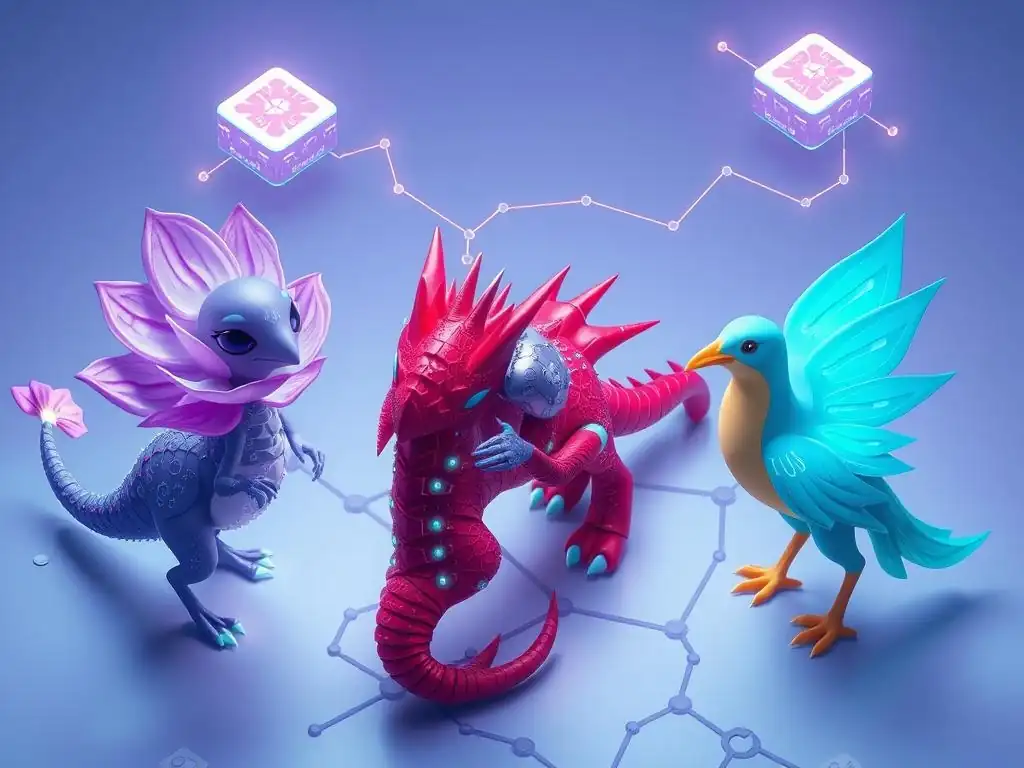
Axie Infinity is a prime example of how smart contracts are powering the play-to-earn gaming revolution. This blockchain-based game, inspired by Pokémon, utilizes smart contracts extensively for various aspects of its gameplay, including asset ownership, breeding mechanics, and marketplace transactions. Players in Axie Infinity collect, breed, and battle digital creatures called Axies, which are represented as NFTs.
Smart contracts on the Ethereum and Ronin blockchains govern the ownership and trading of Axies, ensuring that players have true ownership of their in-game assets. The game's breeding mechanics, which allow players to create new Axies, are also managed by smart contracts, ensuring fair and transparent breeding processes. Furthermore, Axie Infinity's marketplace, where players can buy and sell Axies and other in-game items, is built on smart contracts, facilitating secure and decentralized peer-to-peer trading. Axie Infinity's success, reaching millions of daily active users at its peak, demonstrates the viability and appeal of smart contract-powered play-to-earn gaming models.
Decentraland: Virtual Land Ownership and Monetization
Decentraland is a virtual world built on the Ethereum blockchain that leverages smart contracts to enable virtual land ownership and monetization. In Decentraland, users can purchase, develop, and monetize virtual land parcels, which are represented as NFTs called LAND tokens. Smart contracts are fundamental to the Decentraland ecosystem, governing land ownership, transactions, and interactions within the virtual world.
The ownership of LAND tokens is recorded on the Ethereum blockchain, providing verifiable and immutable proof of ownership. Users can buy and sell LAND tokens on decentralized marketplaces, with smart contracts facilitating secure and transparent transactions. Furthermore, developers can build experiences and applications on their LAND parcels, utilizing smart contracts to create interactive games, virtual stores, or social spaces. Decentraland exemplifies how smart contracts can power the creation of user-owned and user-governed metaverses, where virtual real estate and digital assets have real-world value and utility.
Overcoming Challenges in Smart Contract Gaming Implementation
Scalability Issues and Potential Solutions
While smart contracts offer numerous benefits to the smart contracts gaming revolution, scalability remains a significant challenge for widespread adoption, particularly in gaming. Many popular blockchains, like Ethereum, can experience network congestion and high transaction fees during periods of high demand, which can hinder the performance of blockchain games and increase costs for players. This is due to the limited transaction processing capacity of these blockchains.
Several solutions are being explored to address scalability issues in blockchain gaming. Layer-2 scaling solutions, such as sidechains and rollups, are designed to offload transaction processing from the main blockchain, increasing throughput and reducing fees. Ronin, a sidechain specifically designed for Axie Infinity, is a successful example of a layer-2 solution addressing scalability challenges in a blockchain game.
Furthermore, the development of more scalable layer-1 blockchains, such as Solana and Polygon, offers alternative platforms for building blockchain games with higher transaction processing capabilities. As blockchain technology continues to evolve, scalability solutions will be crucial for enabling the mass adoption of smart contract-powered gaming experiences.
Security Vulnerabilities and Audit Practices
Security vulnerabilities in smart contracts pose a significant risk in blockchain gaming, as exploits can lead to loss of funds or in-game assets. Smart contracts, while designed to be secure, are still susceptible to coding errors or unforeseen vulnerabilities. Given the immutable nature of blockchain, once a vulnerability is exploited, it can be difficult or impossible to rectify. Therefore, robust security practices are paramount in smart contract gaming development.
Thorough auditing of smart contracts by independent security firms is a critical step in mitigating security risks. Audits involve a comprehensive review of the smart contract code to identify potential vulnerabilities and ensure that it functions as intended. Furthermore, developers are adopting best practices in smart contract development, such as using secure coding patterns and implementing rigorous testing procedures. The gaming industry is also seeing the emergence of specialized security tools and frameworks tailored for blockchain game development, further enhancing the security posture of smart contract-based games.
User Experience (UX) Considerations for Blockchain Games
User Experience (UX) is a critical factor for the mainstream adoption of blockchain games, and smart contract implementation can introduce UX challenges that need to be carefully addressed. Traditional gamers are accustomed to seamless and intuitive gaming experiences. Blockchain games, with their reliance on wallets, transaction confirmations, and gas fees, can introduce friction and complexity that may deter non-crypto native players.
Simplifying the onboarding process for new players is crucial. This includes abstracting away the complexities of blockchain interactions, such as gas fees, and providing user-friendly wallet interfaces integrated directly into the game. Game developers are exploring solutions like meta-transactions, which allow players to interact with smart contracts without directly paying gas fees themselves. Furthermore, focusing on gameplay and entertainment value, rather than solely on blockchain technology, is essential for attracting a wider audience. Blockchain elements should enhance, not detract from, the core gaming experience to ensure the successful integration of smart contracts in gaming.
Regulatory Landscape and Compliance
The regulatory landscape surrounding blockchain gaming and smart contracts is still evolving, and compliance with existing and emerging regulations is a crucial consideration for game developers. Regulations related to cryptocurrencies, NFTs, and online gaming vary across jurisdictions, creating a complex compliance environment for blockchain game developers. Issues such as player protection, anti-money laundering (AML), and securities regulations need to be carefully considered.
Game developers need to stay informed about the evolving regulatory landscape in their target markets and ensure that their games comply with applicable laws and regulations. This may involve implementing KYC (Know Your Customer) and AML procedures for player accounts, structuring in-game economies to avoid securities classifications, and seeking legal counsel to navigate the complex regulatory environment. Proactive engagement with regulators and industry bodies is also important to shape the future regulatory framework for blockchain gaming in a way that fosters innovation while protecting players and ensuring responsible development.
The Future of Smart Contracts in Gaming: A Vision for Next-Gen Experiences
Increased Interoperability Between Games and Platforms
The future of smart contracts in gaming envisions increased interoperability between different games and platforms, creating a more interconnected and open gaming metaverse. Currently, in-game assets and progress are typically locked within a specific game ecosystem. Smart contracts and NFTs have the potential to break down these silos, enabling players to utilize their digital assets across multiple games and virtual worlds.
Imagine owning a digital sword represented as an NFT that can be used in multiple different games, each with its own unique gameplay mechanics and aesthetics. This vision of interoperability is being driven by industry initiatives and standards for cross-game asset compatibility. Smart contracts can facilitate this interoperability by providing a standardized framework for asset ownership and transfer across different platforms. This would create a more persistent and valuable gaming metaverse where players' digital assets retain their utility and value across a wider range of experiences, further enhancing the benefits of the smart contracts gaming revolution.
The Rise of Decentralized Autonomous Organizations (DAOs) in Gaming
Decentralized Autonomous Organizations (DAOs) are poised to play an increasingly prominent role in the future of gaming, empowered by smart contracts. DAOs, as discussed earlier, enable player-driven governance and community ownership of game ecosystems. As blockchain gaming matures, we can expect to see more games adopting DAO structures to empower their player communities.
DAOs can be used to govern various aspects of a game, including resource allocation, game development roadmaps, and even the fundamental rules of the game. Players holding governance tokens, often earned through gameplay or participation in the community, will have the power to vote on proposals and shape the direction of the game. This shift towards decentralized governance will foster a stronger sense of community ownership and create more sustainable and player-centric gaming ecosystems. The rise of gaming DAOs represents a significant evolution in the relationship between game developers and players, further driving the smart contracts gaming revolution.
Smart Contracts and the Metaverse: Immersive Gaming Environments
Smart contracts are fundamental to the development of immersive gaming environments within the metaverse. The metaverse envisions persistent, shared virtual worlds where users can interact, socialize, and engage in various activities. Smart contracts provide the infrastructure for managing digital assets, virtual economies, and complex interactions within these metaverse environments.
In metaverse gaming, smart contracts can power virtual land ownership, enabling users to buy, sell, and develop virtual real estate. They can facilitate in-world economies, enabling users to trade goods and services within the metaverse. Furthermore, smart contracts can orchestrate complex interactions between users and virtual environments, creating dynamic and interactive gaming experiences. The metaverse, powered by smart contracts, promises to blur the lines between the physical and digital worlds, creating new forms of entertainment, social interaction, and economic opportunity within immersive gaming environments.
AI-Powered Smart Contracts for Dynamic Game Content
The integration of Artificial Intelligence (AI) with smart contracts holds immense potential for creating dynamic and personalized game content. AI algorithms can be used to generate adaptive game narratives, dynamically adjust game difficulty based on player skill, and even create unique and procedurally generated in-game assets. Smart contracts can then be used to deploy and manage this AI-generated content in a decentralized and transparent manner.
For example, an AI-powered smart contract could dynamically adjust the difficulty of a game level based on a player's performance, ensuring a consistently challenging and engaging experience. AI could also be used to generate unique quests or storylines based on player choices and actions, creating personalized narratives. By combining the power of AI and smart contracts, game developers can create truly dynamic and ever-evolving gaming experiences, pushing the boundaries of interactive entertainment and unlocking new benefits of the smart contracts gaming revolution.
Personalized Gaming Experiences Through Smart Contracts
Smart contracts can facilitate personalized gaming experiences tailored to individual player preferences and playstyles. By leveraging player data and preferences, smart contracts can be used to customize game content, rewards, and even gameplay mechanics to create a more engaging and personalized experience for each player. This goes beyond simple cosmetic customization and delves into dynamically adapting the core gameplay experience.
For example, a smart contract could track a player's preferred game genres, difficulty levels, and social interactions. This data could then be used to recommend personalized game content, match players with compatible teammates, or even dynamically adjust game difficulty to match their skill level. Personalized gaming experiences, powered by smart contracts, promise to create more immersive and engaging games that cater to the unique preferences of each individual player, further solidifying the smart contracts gaming revolution and its player-centric benefits.
Conclusion: Embracing the Smart Contracts Gaming Revolution
The Long-Term Impact of Blockchain on the Gaming Industry
The long-term impact of blockchain and smart contracts on the gaming industry is poised to be transformative. Beyond the immediate benefits of enhanced transparency, asset ownership, and player empowerment, blockchain is fundamentally reshaping the power dynamics within the industry. The shift from centralized control to decentralized autonomy has the potential to create a more equitable and sustainable gaming ecosystem, where players are not just consumers but active participants and stakeholders.
Blockchain is also fostering new business models in gaming, such as play-to-earn and player-owned economies. These models are creating new opportunities for players to earn income from gaming and participate in the economic success of the games they play. Furthermore, blockchain is enabling the development of new genres and game experiences that were previously not possible with traditional gaming technology. As blockchain technology matures and adoption grows, its long-term impact on the gaming industry will be profound, ushering in a new era of decentralized, player-centric, and innovative gaming experiences.
Smart Contracts: A Catalyst for Innovation in Gaming
Smart contracts are not just a technological upgrade to the gaming industry; they are a catalyst for fundamental innovation. They are enabling game developers to reimagine game mechanics, economies, and player interactions in ways that were previously unimaginable. The ability to encode game logic directly into immutable and transparent code opens up a vast landscape of new possibilities for game design and player engagement.
From provably fair RNG and automated reward systems to player-driven economies and decentralized governance, smart contracts are empowering developers to create more transparent, fair, and engaging games. They are also fostering a new wave of innovation in play-to-earn gaming, metaverse experiences, and cross-game interoperability. As the smart contracts gaming revolution continues to unfold, we can expect to see even more groundbreaking innovations that will redefine the future of gaming and create next-generation experiences that are more immersive, rewarding, and player-centric than ever before.
Frequently Asked Questions
What are smart contracts, and how are they used in gaming?
Smart contracts are self-executing agreements written in code and stored on a blockchain. In gaming, they enable transparent and automated processes like in-game item ownership and reward distribution.
How do smart contracts enhance in-game asset ownership?
Smart contracts allow players to truly own their in-game assets by representing them as Non-Fungible Tokens (NFTs) on a blockchain. This provides provable scarcity and ownership that isn't controlled by the game developer.
What are the benefits of decentralized gaming platforms powered by smart contracts?
Decentralized platforms offer greater transparency and fairness compared to traditional gaming models. They also provide new revenue streams for both developers and players through features like play-to-earn mechanics.
How are smart contracts impacting eSports and competitive gaming?
Smart contracts can ensure fair and transparent prize distribution in eSports tournaments. They can also facilitate secure and verifiable betting platforms for competitive gaming events.
What regulatory challenges exist for blockchain-based gaming and the use of smart contracts?
The regulatory landscape for blockchain gaming is still evolving, with concerns around gambling regulations and the legal status of NFTs. Ensuring compliance with existing and future regulations is crucial for the long-term success of the industry.
Final Reflection: Embracing the Smart Contracts Gaming Revolution
The insights shared throughout this article highlight how smart contracts are fundamentally reshaping the gaming landscape, moving beyond simple transactions to create truly decentralized, transparent, and player-centric experiences. This isn't just a technological advancement; it's a paradigm shift that empowers gamers and developers alike, fostering a new era of creativity and ownership within the digital realm. The benefits outlined, from enhanced security to novel gameplay mechanics, are already being realized, signaling the dawn of a smart contracts gaming revolution.
The impact of this revolution extends far beyond mere entertainment. It's about redefining the very nature of digital ownership and community engagement. The ability to truly own in-game assets, to participate in decentralized governance, and to earn real-world value through gameplay is a powerful force. As the legendary game designer Shigeru Miyamoto once said, Video games are bad for you? That's what they said about rock-n-roll.
This quote resonates deeply, as the smart contracts gaming revolution is similarly challenging conventional wisdom and paving the way for a future where gaming is not just a pastime, but a legitimate and rewarding pursuit.
Now, consider the possibilities. How can you, as a gamer, developer, or simply an observer, embrace this revolution? Reflect on the ways smart contracts can enhance your own gaming experiences, support innovative projects, and contribute to a more equitable and engaging digital world. The future of gaming is being written now, and your participation is crucial in shaping a future where creativity, ownership, and community thrive. Let's build that future together.
Dive Deeper into the Future of Gaming!
Thank you for exploring how smart contracts are transforming the gaming industry. We hope you gained valuable insights into the exciting potential at the intersection of blockchain technology and entertainment. Now, it’s time to elevate your understanding and get involved.
Here’s how to get started:
- Explore innovative games built on blockchain technology and try one out to experience the future of gaming firsthand.
- Share this article with a friend or colleague who is interested in blockchain advancements.
- Think of three creative ways you could use smart contracts to enhance your favorite game.
Are you ready to take your gaming experience to the next level? What new possibilities do you envision for smart contracts in gaming?
Leave a Reply