
Blockchain for Birth Certificates and Marriage Licenses: A Modern Approach to Vital Records


Welcome to Blockchain Trends, your guide to understanding the real-world impact of blockchain technology!
Are you ready to discover how blockchain is revolutionizing more than just finance? We're diving deep into its potential across various sectors, including governance. In this article, we explore a groundbreaking application: creating secure, verifiable digital birth records using blockchain. Could this be the future of vital record management? Read on to uncover the possibilities and challenges of this innovative approach!
Blockchain for Vital Records: A Modern Approach
- Introduction: Revolutionizing Vital Records with Blockchain
- Understanding Blockchain Technology for Digital Identity and Verification
- Securing Birth Certificates with Blockchain
- Streamlining Marriage Licenses with Blockchain
- Advantages of Blockchain for Vital Records Management
- Challenges and Considerations for Blockchain Adoption in Vital Records
- Future Trends: The Evolution of Blockchain in Public Records
- Conclusion: Embracing Blockchain for Secure and Efficient Vital Records
-
Frequently Asked Questions
- What are the primary benefits of using blockchain for birth certificates and marriage licenses?
- How does blockchain technology improve the security of vital records compared to traditional methods?
- Is blockchain implementation for vital records compliant with existing privacy regulations like GDPR?
- What challenges exist in the widespread adoption of blockchain for birth certificates and marriage licenses?
- How can individuals access and manage their birth certificates and marriage licenses stored on a blockchain?
- Final Reflection: Embracing Trust in the Digital Age
- Reimagine Your Family's Future: Secure Your Legacy Now!
Introduction: Revolutionizing Vital Records with Blockchain
The Limitations of Traditional Vital Records Management
Traditional systems for managing vital records, such as birth certificates and marriage licenses, often rely on paper-based processes and centralized databases. This approach presents several inherent limitations. Physical documents are susceptible to damage, loss, and forgery. Retrieval of records can be slow and inefficient, requiring manual searches through archives, especially when dealing with historical data or cross-jurisdictional requests.
Furthermore, centralized databases are vulnerable to cyberattacks and data breaches, potentially compromising sensitive personal information. For example, in 2019, a major data breach at a vital records vendor in the United States exposed the personal information of millions of individuals, highlighting the security risks associated with centralized systems. The lack of interoperability between different jurisdictions also creates significant hurdles, making it difficult to verify records across state or national borders.
These traditional systems also suffer from a lack of transparency and can be prone to errors in data entry and transcription. Corrections or updates to records often involve cumbersome bureaucratic processes, sometimes requiring court orders.
The reliance on manual processes also leads to delays in issuing and verifying vital records, impacting individuals who require these documents for various legal and administrative purposes, such as obtaining passports, enrolling in schools, or accessing social services. In many developing countries, the challenges are even more pronounced, with inadequate infrastructure and limited resources further exacerbating the inefficiencies and vulnerabilities of paper-based vital record systems, leading to significant portions of the population lacking official documentation of their birth or marriage.
Exploring Blockchain's Potential in Public Record Keeping
Blockchain technology offers a compelling alternative to these outdated systems, promising to revolutionize the way vital records are managed. At its core, blockchain is a decentralized, distributed, and immutable ledger that records transactions in a secure and transparent manner. This technology has the potential to address many of the shortcomings of traditional vital records management by providing a secure, verifiable, and efficient platform for storing and accessing these critical documents. By leveraging blockchain's inherent security features, governments and record-keeping agencies can significantly reduce the risk of fraud, data breaches, and data loss.
The application of blockchain in public record keeping extends beyond mere data storage. It enables the creation of secure, verifiable digital birth records and marriage licenses that are easily accessible to authorized parties while maintaining privacy and control over personal data. Blockchain's distributed nature eliminates single points of failure, enhancing system resilience and availability.
Furthermore, the transparency inherent in blockchain technology can foster greater public trust in the integrity of vital records systems. Several pilot projects and initiatives around the world are already exploring the use of blockchain for land registries, identity management, and supply chain tracking, demonstrating the broad applicability and potential of this technology to transform public services.
Understanding Blockchain Technology for Digital Identity and Verification
How Blockchain Ensures Data Integrity and Immutability
Blockchain technology achieves data integrity and immutability through a combination of cryptographic hashing, distributed consensus mechanisms, and a chronological chain of blocks. Each block in a blockchain contains a set of transactions and a cryptographic hash of the previous block, creating a chain where each block is linked to its predecessor.
Any attempt to alter data in a block would require changing the hash of that block and all subsequent blocks, which is computationally infeasible due to the cryptographic security and the distributed nature of the network. This inherent immutability ensures that once a vital record, such as a birth certificate, is recorded on the blockchain, it cannot be tampered with or deleted.
The distributed consensus mechanism, such as Proof-of-Work or Proof-of-Stake, further strengthens data integrity. In a blockchain network, multiple nodes independently verify and validate transactions before they are added to a block. This consensus process ensures that no single entity can unilaterally control or manipulate the data.
For example, if a malicious actor attempts to alter a birth record on the blockchain, the other nodes in the network would detect the discrepancy and reject the fraudulent transaction. This distributed validation process makes blockchain networks highly resistant to censorship and single points of failure, ensuring the long-term integrity and availability of secure, verifiable digital birth records and other vital documents stored on the ledger.
Decentralized Identity (DID) and Self-Sovereign Identity (SSI) in Vital Records
Decentralized Identity (DID) and Self-Sovereign Identity (SSI) are crucial concepts in leveraging blockchain for vital records, empowering individuals with greater control over their personal information. In traditional identity systems, individuals rely on centralized authorities to issue and manage their identities, often leading to data silos and privacy risks. DID and SSI, on the other hand, aim to shift control to the individual, enabling them to create and manage their own digital identities without relying on intermediaries. Blockchain provides the underlying infrastructure to support these concepts by offering a secure and verifiable platform for storing and managing identity credentials.
In the context of vital records, SSI allows individuals to hold verifiable credentials representing their birth certificates or marriage licenses directly, rather than relying solely on government agencies to control access. These credentials can be selectively shared with verifiers, such as government agencies, employers, or educational institutions, without revealing unnecessary personal information.
For instance, when applying for a passport, an individual could present a verifiable birth certificate credential stored in their digital wallet, allowing the passport agency to instantly verify its authenticity without accessing the entire birth record on the blockchain. This approach enhances privacy, reduces reliance on centralized databases, and promotes secure, verifiable digital birth records that are controlled by the individual.
Organizations like the Decentralized Identity Foundation (DIF) are actively developing standards and protocols to facilitate the adoption of DID and SSI, paving the way for more user-centric and secure digital identity systems in various sectors, including vital records management.
Securing Birth Certificates with Blockchain
Creating Secure, Verifiable Digital Birth Records on a Blockchain
Implementing blockchain for birth certificates involves creating a digital representation of the birth record and securely storing it on a distributed ledger. This process typically begins with the authorized registrar or hospital recording the birth information, which is then cryptographically hashed and added as a transaction to a new block on the blockchain. The blockchain network, through its consensus mechanism, validates the transaction, ensuring the accuracy and legitimacy of the recorded birth.
Once the block is added to the chain, the birth record becomes permanently and immutably recorded. This creates a secure, verifiable digital birth record that is resistant to tampering and fraud.
The digital birth certificate on the blockchain can be associated with a unique Decentralized Identifier (DID) for the newborn, granting the individual and authorized guardians control over their digital identity from birth. Access to the full birth record can be restricted and controlled through cryptographic keys and permissions, ensuring privacy while allowing authorized parties, such as parents or government agencies, to verify the record when necessary.
For example, Estonia, a leader in digital governance, has explored blockchain applications for various public services, including digital identity and potentially vital records. While Estonia currently uses a different system for vital records, their experience with digital IDs and blockchain provides valuable insights into the feasibility and benefits of such systems.
Benefits of Blockchain-Based Birth Certificates: Enhanced Security and Accessibility
Blockchain-based birth certificates offer numerous advantages over traditional paper-based systems, primarily in terms of enhanced security and accessibility. The immutability of blockchain ensures that birth records are tamper-proof, significantly reducing the risk of fraud and forgery. Unlike paper documents that can be easily altered or lost, digital birth certificates on a blockchain are permanently recorded and verifiable. This is particularly crucial in combating identity theft and ensuring the integrity of legal and administrative processes that rely on birth certificates.
Accessibility is also greatly improved with blockchain-based systems. Secure, verifiable digital birth records can be accessed online by authorized individuals from anywhere in the world, eliminating the need for physical visits to government offices or lengthy retrieval processes. This streamlined access can significantly reduce administrative costs and improve efficiency for both citizens and government agencies.
Furthermore, digital birth certificates can be easily shared and verified electronically, simplifying processes such as school enrollment, passport applications, and healthcare registrations. For instance, consider a scenario where a refugee needs to prove their identity and age in a new country; a blockchain-based birth certificate could provide instant and verifiable proof, overcoming the challenges of lost or inaccessible paper documents.
Addressing Privacy Concerns in Blockchain Birth Certificate Systems
While blockchain offers enhanced security, addressing privacy concerns is paramount when implementing blockchain-based birth certificate systems. The transparency of public blockchains, where all transactions are visible to network participants, requires careful consideration of how sensitive personal information is handled. To mitigate privacy risks, permissioned blockchains or private blockchains can be employed, limiting access to the ledger to authorized participants. Furthermore, techniques like zero-knowledge proofs and homomorphic encryption can be used to enable verification of birth certificates without revealing the underlying personal data.
Another approach to enhance privacy is to store only a hash of the birth certificate on the blockchain, while the actual detailed record is stored securely off-chain, accessible only through authorized channels and encrypted keys. This hybrid approach leverages the immutability and verifiability of blockchain for the hash, while protecting the confidentiality of the full record.
Compliance with data privacy regulations, such as GDPR or CCPA, is also crucial, ensuring that individuals have control over their personal data and that the system adheres to privacy-preserving principles. For example, a blockchain-based system could be designed to allow individuals to grant granular consent for access to their birth certificate information, ensuring that data is only shared with authorized parties for specific purposes, thereby maintaining secure, verifiable digital birth records while upholding privacy.
Streamlining Marriage Licenses with Blockchain
Implementing Blockchain for Transparent and Efficient Marriage License Issuance
Blockchain technology can also significantly streamline the process of marriage license issuance, making it more transparent and efficient. Currently, obtaining a marriage license often involves multiple steps, paperwork, and visits to government offices. Blockchain can digitize and automate many of these processes, reducing bureaucratic hurdles and delays. By implementing a blockchain-based system, couples could apply for marriage licenses online, submit required documents digitally, and receive their licenses electronically upon approval.
Smart contracts, self-executing contracts with predefined rules, can automate the verification process for marriage license applications. For example, smart contracts can automatically check for pre-existing marriages, verify the identities of applicants, and ensure compliance with legal requirements. Once all conditions are met, the smart contract can automatically issue the marriage license and record it on the blockchain, creating a secure, verifiable digital marriage license. This automated and transparent process reduces the potential for human error and bias, making the issuance of marriage licenses faster, more efficient, and more accessible, especially for remote or underserved populations.
Reducing Fraud and Errors in Marriage Records Using Distributed Ledger Technology
Distributed ledger technology inherent in blockchain significantly reduces fraud and errors in marriage records. Traditional paper-based marriage records are susceptible to forgery, alteration, and loss, leading to potential legal disputes and complications. Blockchain's immutability and transparency provide a robust solution to these issues. Once a marriage license is recorded on the blockchain, it becomes a permanent and tamper-proof record, verifiable by anyone with authorized access. This eliminates the possibility of fraudulent alterations or deletions of marriage records.
The distributed nature of blockchain also enhances the security and reliability of marriage record systems. Unlike centralized databases that are vulnerable to single points of failure, a blockchain network is resilient and robust. Even if some nodes in the network are compromised, the integrity of the marriage records remains intact due to the distributed consensus mechanism.
Furthermore, the transparency of blockchain allows for greater accountability and auditability in the marriage license issuance process. All transactions and records are auditable on the blockchain, making it easier to detect and prevent fraudulent activities. By creating secure, verifiable digital marriage licenses, blockchain technology strengthens the integrity of marriage records and protects the legal rights of married couples.
Advantages of Blockchain for Vital Records Management
Enhanced Security and Tamper-Proof Records
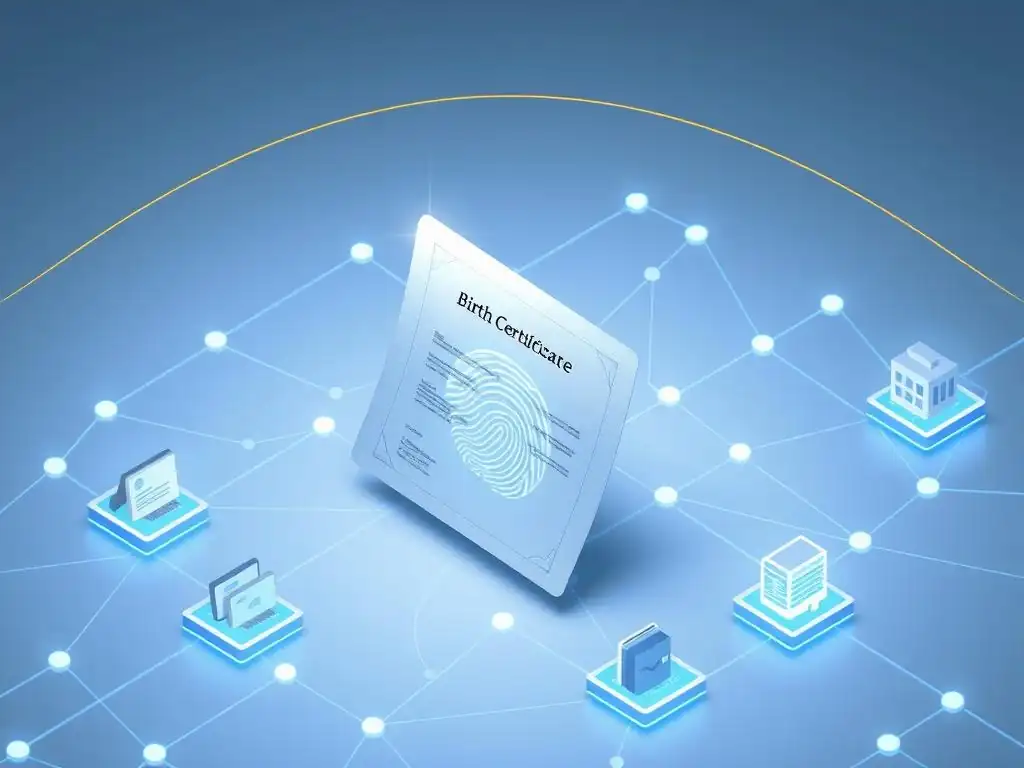
The most significant advantage of using blockchain for vital records management is the enhanced security and tamper-proof nature of the records. Blockchain's cryptographic security and immutability ensure that vital records, once recorded, cannot be altered or deleted. This is crucial for maintaining the integrity and authenticity of birth certificates, marriage licenses, and other critical documents. Traditional paper-based systems and centralized databases are vulnerable to various security threats, including physical damage, theft, cyberattacks, and insider fraud. Blockchain mitigates these risks by providing a distributed and immutable ledger, making it extremely difficult for malicious actors to tamper with records.
The use of cryptographic hashing and distributed consensus mechanisms in blockchain ensures that any attempt to alter a vital record would be immediately detectable by the network. This inherent security significantly reduces the risk of fraud, identity theft, and data breaches associated with vital records. For example, in countries with weak governance and high levels of corruption, blockchain can provide a more trustworthy and secure, verifiable digital system for maintaining vital records, fostering greater public trust and confidence in government institutions.
Improved Accessibility and Reduced Administrative Costs
Blockchain-based vital records systems offer significant improvements in accessibility and can lead to substantial reductions in administrative costs. Digital vital records stored on a blockchain can be accessed online by authorized individuals from anywhere in the world, eliminating the need for physical visits to government offices and cumbersome paper-based processes. This improved accessibility benefits citizens by making it easier to obtain and verify their vital records, saving time and effort.
For government agencies, blockchain can streamline vital records management, reducing administrative overhead and operational costs. Automated processes, enabled by smart contracts, can expedite record issuance, verification, and updates, minimizing manual labor and paperwork. The reduced need for physical storage and handling of paper records further contributes to cost savings.
A study by Accenture estimated that blockchain could reduce infrastructure costs for financial institutions by up to 30%. While this study is in the financial sector, similar principles of efficiency and cost reduction apply to vital records management. Furthermore, the increased efficiency and transparency of blockchain-based systems can improve citizen satisfaction and trust in government services.
Greater Transparency and Accountability in Record Keeping
Blockchain technology promotes greater transparency and accountability in vital record keeping processes. The distributed ledger provides a transparent audit trail of all transactions and record modifications, making it easier to track and verify the history of vital records. This transparency enhances public trust in the integrity of the system and reduces the potential for corruption and abuse. Government agencies can benefit from improved accountability by having a clear and auditable record of all vital record transactions, facilitating better governance and oversight.
The transparency of blockchain can also empower citizens by providing them with greater visibility into how their vital records are managed. Individuals can potentially track the status of their record requests and verify the authenticity of their digital vital records independently. This increased transparency can foster a more trustworthy and accountable relationship between citizens and government agencies responsible for vital records management.
For instance, in land registry applications, blockchain's transparency has been highlighted as a key factor in reducing corruption and improving the security of land ownership records in countries like Georgia. Similar benefits of transparency and accountability can be realized in vital records management by implementing secure, verifiable digital systems.
Challenges and Considerations for Blockchain Adoption in Vital Records
Scalability and Interoperability Issues
Despite the numerous advantages, the adoption of blockchain in vital records management faces several challenges, including scalability and interoperability issues. Public blockchains, while highly secure, can face limitations in transaction throughput and processing speed, especially when dealing with a large volume of vital records transactions nationwide or globally. While solutions like layer-2 scaling solutions are emerging, scalability remains a key consideration for large-scale deployments.
Interoperability between different blockchain platforms and legacy systems is another significant challenge. Vital records systems often need to interact with various government agencies, healthcare providers, and other organizations, each potentially using different technologies and data formats. Ensuring seamless interoperability between blockchain-based vital records systems and existing infrastructure is crucial for effective adoption. Developing open standards and protocols for blockchain interoperability in the public sector is essential to overcome these challenges and facilitate the widespread use of secure, verifiable digital vital records.
Regulatory Compliance and Legal Frameworks
Regulatory compliance and the establishment of clear legal frameworks are crucial for the adoption of blockchain in vital records. Vital records are subject to strict legal and regulatory requirements regarding data privacy, security, and record retention. Blockchain-based systems must comply with these regulations, including data privacy laws like GDPR and HIPAA, which may require specific considerations for data storage, access control, and consent management.
Legal frameworks need to be updated to recognize and accommodate digital vital records stored on blockchain as legally valid and admissible evidence. Current legal frameworks in many jurisdictions may still primarily focus on paper-based vital records, requiring legislative changes to fully embrace digital alternatives.
Furthermore, cross-jurisdictional legal recognition of blockchain-based vital records is essential for international use cases, such as verifying birth certificates for international travel or immigration purposes. Collaboration between legal experts, policymakers, and technology developers is necessary to establish clear regulatory guidelines and legal frameworks that support the secure and compliant use of blockchain for secure, verifiable digital birth records and other vital documents.
Public Perception and Adoption Barriers
Public perception and adoption barriers pose another set of challenges for the widespread implementation of blockchain in vital records. Blockchain is still a relatively new technology for many people, and there may be skepticism or misunderstanding about its security and reliability. Addressing public concerns and building trust in blockchain-based vital records systems is crucial for successful adoption. Effective communication and public education campaigns are needed to explain the benefits of blockchain and address any misconceptions.
Furthermore, digital literacy and access to technology can be barriers to adoption, particularly in underserved communities or developing countries. Ensuring equitable access to digital vital records systems and providing adequate support and training for citizens and government officials are important considerations. Overcoming these public perception and adoption barriers requires a multi-faceted approach that includes clear communication, public education, user-friendly system design, and addressing concerns about privacy and security to foster trust and encourage the widespread acceptance of secure, verifiable digital vital records.
Future Trends: The Evolution of Blockchain in Public Records
Integration with Government Services and Digital Identity Platforms
The future of blockchain in public records is likely to see greater integration with other government services and digital identity platforms. Blockchain-based vital records systems can be seamlessly integrated with national digital identity systems, creating a unified and secure digital identity ecosystem for citizens. This integration can streamline access to various government services, such as online voting, social welfare programs, and healthcare services, by providing a verifiable and trusted digital identity.
Furthermore, vital records systems can be integrated with other public record databases, such as land registries, business registries, and educational credential systems, creating a comprehensive and interoperable public record infrastructure. This integration can enhance efficiency, reduce duplication of efforts, and improve data sharing and collaboration across government agencies. For example, a birth certificate recorded on blockchain could be automatically linked to a national digital identity profile and used to streamline applications for passports, driver's licenses, and other government-issued documents, creating a more seamless and citizen-centric digital government experience focused on secure, verifiable digital information.
The Role of Smart Contracts in Automating Vital Records Processes
Smart contracts will play an increasingly important role in automating vital records processes in the future. Beyond automating marriage license issuance, smart contracts can be used to automate various other aspects of vital records management, such as record updates, corrections, and access control. For example, smart contracts can be programmed to automatically update a birth certificate upon legal name changes or adoptions, ensuring that records are always up-to-date and accurate.
Smart contracts can also be used to automate access control to vital records, granting permissions based on predefined rules and conditions. This can enhance privacy and security by ensuring that only authorized parties can access sensitive personal information. Furthermore, smart contracts can facilitate automated notifications and reminders related to vital records, such as reminding citizens to renew their marriage licenses or update their contact information. The increasing sophistication and adoption of smart contract technology will further streamline and automate vital records management, making it more efficient, transparent, and user-friendly for secure, verifiable digital record keeping.
Cross-Jurisdictional Vital Records Verification using Blockchain
Blockchain has the potential to revolutionize cross-jurisdictional vital records verification, addressing the challenges of verifying vital records across different states, countries, or jurisdictions. Currently, verifying vital records across borders can be a complex and time-consuming process, often involving manual document verification and bureaucratic procedures. Blockchain can provide a secure and interoperable platform for verifying vital records across jurisdictions, eliminating the need for intermediaries and reducing the risk of fraud.
A global or international blockchain network for vital records could enable instant and verifiable verification of birth certificates, marriage licenses, and other vital documents across different countries. This would be particularly beneficial for international travel, immigration, and cross-border legal processes.
For example, a birth certificate issued in one country and recorded on a global blockchain could be instantly verified by authorities in another country, streamlining border control and immigration procedures. While the implementation of a global blockchain for vital records is a complex undertaking, the potential benefits for cross-jurisdictional verification and international cooperation are significant, paving the way for truly secure, verifiable digital vital records that are recognized worldwide.
Conclusion: Embracing Blockchain for Secure and Efficient Vital Records
The Future of Secure, Verifiable Digital Vital Records
The future of vital records management is undoubtedly digital, and blockchain technology offers a powerful solution for creating secure, verifiable digital vital records. As governments and organizations increasingly recognize the limitations of traditional paper-based systems and centralized databases, blockchain is emerging as a promising alternative that can enhance security, improve accessibility, and increase efficiency. The shift towards digital vital records, powered by blockchain, promises to transform how individuals interact with government services and manage their personal information.
The ongoing development and maturation of blockchain technology, coupled with increasing awareness of its benefits, suggest that blockchain adoption in vital records will continue to grow in the coming years. Pilot projects and initiatives around the world are demonstrating the feasibility and value of blockchain-based vital records systems, paving the way for wider implementation and mainstream adoption. The move towards digital and blockchain-based vital records represents a significant step towards modernizing public services and building more trustworthy and efficient governance systems.
Moving Towards a More Transparent and Trustworthy System of Public Record Keeping
Embracing blockchain for vital records is not just about technological innovation; it is about moving towards a more transparent and trustworthy system of public record keeping. Blockchain's inherent transparency, immutability, and security can foster greater public trust in government institutions and enhance citizen engagement. By providing secure, verifiable digital vital records, blockchain empowers individuals with greater control over their personal information and simplifies their interactions with government agencies.
As we move towards a more digital and interconnected world, the need for secure and efficient vital records systems becomes increasingly critical. Blockchain technology offers a compelling solution to meet these evolving needs, providing a foundation for building a more transparent, trustworthy, and citizen-centric system of public record keeping for the future. The journey towards widespread blockchain adoption in vital records may present challenges, but the potential benefits for individuals, governments, and society as a whole are substantial and warrant continued exploration and investment in this transformative technology.
Frequently Asked Questions
What are the primary benefits of using blockchain for birth certificates and marriage licenses?
Using blockchain ensures secure, verifiable digital birth records and marriage licenses, making them tamper-proof and easily accessible to authorized parties. This reduces fraud and streamlines administrative processes.
How does blockchain technology improve the security of vital records compared to traditional methods?
Blockchain's decentralized nature and cryptographic hashing make records immutable and verifiable. Traditional systems are more vulnerable to alteration and loss.
Is blockchain implementation for vital records compliant with existing privacy regulations like GDPR?
Yes, when implemented correctly. Blockchain can be designed with privacy-enhancing features such as access controls and encryption to comply with regulations.
What challenges exist in the widespread adoption of blockchain for birth certificates and marriage licenses?
Challenges include lack of standardization, regulatory uncertainty, and the need for interoperability between different blockchain systems and existing government databases.
How can individuals access and manage their birth certificates and marriage licenses stored on a blockchain?
Individuals can access their records through secure digital wallets or portals, using cryptographic keys to prove their identity and authorize access to their information.
Final Reflection: Embracing Trust in the Digital Age
The promise of secure, verifiable digital birth records is no longer a futuristic fantasy, but a tangible solution within our grasp. As we've explored the potential of blockchain technology in revolutionizing vital records, it's clear that this innovation offers more than just efficiency; it provides a bedrock of trust and security in an increasingly digital world, safeguarding identities and empowering individuals with control over their most sensitive information.
The shift towards blockchain-based vital records isn't merely a technological upgrade; it's a fundamental reimagining of how we interact with institutions and assert our identities. This transformation, while complex, is driven by a deeply human desire for security and autonomy. The best way to predict the future is to create it.
- Peter Drucker. This quote resonates deeply as we consider the proactive steps we can take to build a more secure and equitable future through innovative technologies like blockchain.
As we conclude this exploration, I invite you to consider the implications of this technology for your own life and community. How can we advocate for the responsible implementation of blockchain solutions to ensure that vital records are not only secure but also accessible to all? Let us embrace the potential of this technology to build a future where identity is protected, trust is paramount, and every individual has the power to control their own narrative.
Okay, here's a CTA designed for the end of an article titled "Blockchain for Birth Certificates and Marriage Licenses: A Modern Approach to Vital Records," aimed at readers of blockchaintrends.org:
Reimagine Your Family's Future: Secure Your Legacy Now!
Thank you for exploring the potential of blockchain to revolutionize vital records. We hope this article has illuminated the secure and efficient future awaiting birth certificates and marriage licenses. Now, it's time to translate this knowledge into action.
- Join the Blockchain Revolution: Contact your local representatives and advocate for the exploration of blockchain-based vital record systems.: Let them know you support initiatives that enhance data security and accessibility for all citizens.
- Delve deeper into the possibilities:Research other applications of blockchain technology in government and public services to broaden your understanding of its potential.
- Share this vision! Spread the word by sharing this article with your friends and family on social media and spark a conversation about the future of vital records.
What steps will you take this week to advocate for the secure and efficient management of vital records in your community?
Leave a Reply