
Data Integrity in Government: Blockchain as the Ultimate Source of Truth?


Welcome to Blockchain Trends, your trusted source for understanding the real-world impact of blockchain technology.
Can blockchain truly revolutionize government data integrity? Dive into our latest article, " Data Integrity in Government: Blockchain as the Ultimate Source of Truth?," to explore how this powerful technology is moving beyond cryptocurrency and offering unprecedented transparency and security to governmental systems. Discover the potential, the challenges, and the future of blockchain-based governance. Intrigued? Let's unlock the possibilities together.
- The Critical Need for Data Integrity in Government Operations
-
Frequently Asked Questions
- How can blockchain technology specifically improve data integrity within government operations?
- What are the potential benefits of using blockchain for government data beyond just data integrity?
- What regulations need to be considered when implementing blockchain solutions for government data management?
- How can blockchain address concerns about centralized control of government data, while still maintaining necessary oversight?
- What are the future trends in blockchain adoption for government applications, particularly concerning data integrity?
- Final Reflection: Embracing Trust Through Decentralization
- Embrace Data Integrity: Safeguard Truth with Blockchain!
The Critical Need for Data Integrity in Government Operations
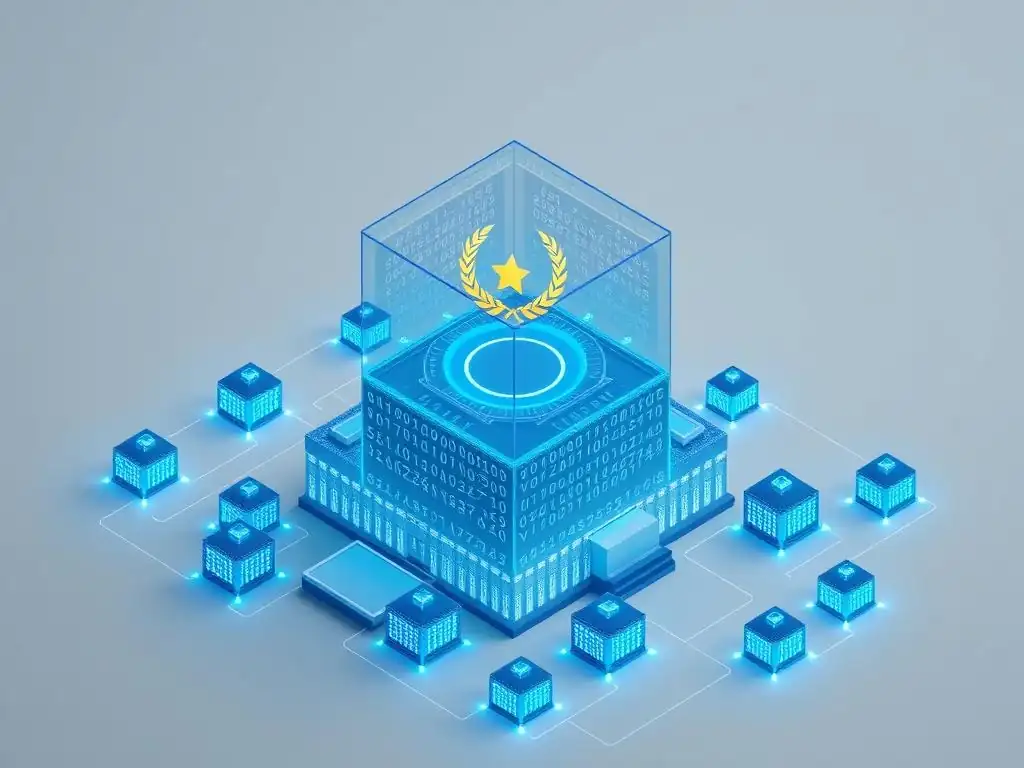
Ensuring Accuracy and Transparency in Public Records
Maintaining the accuracy and transparency of public records is foundational to effective governance and citizen trust. Public records encompass a vast array of information, from birth and death certificates to land titles, judicial decisions, and legislative documents. The integrity of this data is paramount because it directly impacts citizens' rights, entitlements, and access to essential services.
For example, inaccurate land registry data can lead to property disputes and legal battles, while errors in identity records can disenfranchise individuals or hinder access to healthcare and social benefits. Transparency, intrinsically linked to accuracy, ensures that these records are accessible and verifiable, fostering accountability and preventing corruption. When citizens have confidence in the veracity and accessibility of public information, they are more likely to engage with government processes and institutions, strengthening the social contract.
The reliance on accurate public records extends to the very functioning of government operations. Policymaking, resource allocation, and service delivery all depend on reliable data. Consider census data, which informs the distribution of billions of dollars in funding for infrastructure, education, and healthcare. Inaccuracies in this data can lead to misallocation of resources, leaving communities underserved and exacerbating inequalities.
Furthermore, in sectors like public health, accurate disease surveillance data is crucial for timely interventions and effective pandemic response. Without data integrity, government agencies cannot make informed decisions, leading to inefficiencies, wasted resources, and potentially harmful outcomes for the population. The demand for data integrity in government is not merely a matter of bureaucratic efficiency; it is a cornerstone of democratic accountability and public welfare.
The High Cost of Data Breaches and Manipulation in Government
Data breaches and manipulation in government systems carry significant financial and societal costs, often far exceeding those in the private sector due to the sensitive nature and scale of government data. Financially, the direct costs of a breach include incident response, system recovery, legal fees, and potential regulatory fines. A study by IBM and the Ponemon Institute estimated the average cost of a data breach in 2023 to be $4.45 million globally, but breaches involving critical infrastructure, which government systems often are, can be significantly higher.
Beyond direct costs, there are substantial indirect costs, including reputational damage, loss of public trust, and disruption of essential services. For instance, a cyberattack on a government agency could cripple critical infrastructure, leading to economic losses and impacting national security.
Furthermore, data manipulation poses an equally grave, albeit often less visible, threat. Altering public records for political or personal gain undermines the rule of law and erodes public trust in government institutions. Imagine a scenario where election results are tampered with or where environmental impact reports are manipulated to favor certain industries. Such actions can have far-reaching consequences, from social unrest to environmental degradation.
The cost of recovering from such manipulation extends beyond monetary figures. It encompasses the erosion of democratic processes, the breakdown of social cohesion, and long-term damage to the legitimacy of government. Therefore, safeguarding government data integrity is not just about preventing financial losses, but about preserving the foundations of a just and equitable society.
Current Challenges in Maintaining Government Data Integrity
Governments worldwide face numerous challenges in maintaining data integrity due to the sheer volume, complexity, and distribution of their data. Many government agencies still rely on legacy systems that are outdated, fragmented, and vulnerable to cyber threats. These systems often lack robust security features and are difficult to update, creating significant entry points for malicious actors.
A report by the U.S. Government Accountability Office (GAO) in 2021 highlighted that federal agencies were using IT systems with known security vulnerabilities, some dating back decades. This technological debt makes government data a prime target for cyberattacks, ranging from ransomware to state-sponsored espionage.
Another significant challenge stems from the centralized nature of traditional government data management. Centralized databases, while offering a single point of access, also represent a single point of failure. A successful attack on a central server can compromise vast amounts of data simultaneously. Furthermore, internal threats, such as insider access and human error, pose a considerable risk.
Accidental data deletion, unauthorized modifications, or malicious insider activity can all compromise data integrity. Traditional audit trails, while helpful, can be manipulated or are often insufficient to detect subtle data alterations in real-time. The dispersed nature of government operations, with data residing across numerous departments and agencies, further complicates data integrity efforts. Ensuring consistent data management practices and security protocols across such diverse entities is a complex and ongoing undertaking, requiring a shift towards more resilient and decentralized approaches to data governance.
Frequently Asked Questions
How can blockchain technology specifically improve data integrity within government operations?
Blockchain ensures data integrity through its immutable and transparent nature. Each transaction or data entry is linked in a chain, making tampering nearly impossible. This creates a reliable and auditable record.
What are the potential benefits of using blockchain for government data beyond just data integrity?
Beyond data integrity, blockchain can enhance transparency, efficiency, and accountability in government processes. This includes improved citizen engagement, streamlined services, and reduced fraud.
What regulations need to be considered when implementing blockchain solutions for government data management?
Regulations surrounding data privacy, such as GDPR, and legal frameworks for digital signatures are crucial. Governments must also address data security and compliance with existing laws.
How can blockchain address concerns about centralized control of government data, while still maintaining necessary oversight?
Blockchain allows for a decentralized yet auditable system where data is distributed across multiple nodes. This enhances security and prevents single points of failure, while authorized access controls maintain oversight.
What are the future trends in blockchain adoption for government applications, particularly concerning data integrity?
The future involves increased adoption of permissioned blockchains for sensitive government data. We'll also see more integration with AI and IoT to automate processes and enhance data validation.
Final Reflection: Embracing Trust Through Decentralization
The exploration of blockchain's potential to revolutionize data integrity within government underscores a critical need for unwavering transparency and accountability in public service. The challenges of data manipulation and the erosion of public trust demand innovative solutions, and blockchain, with its inherent immutability and distributed ledger technology, offers a compelling path forward. The promise of a verifiable, auditable, and tamper-proof record-keeping system is not just a technological advancement; it's a fundamental shift towards a more trustworthy and efficient government.
The impact of enhanced data integrity extends far beyond mere efficiency gains; it fundamentally reshapes the relationship between citizens and their government. The ability to verify the authenticity and accuracy of government data empowers individuals, fosters greater civic engagement, and strengthens the foundations of democracy itself. Trust is the glue of society. Without it, no institution, no system, no economy can function effectively.
- Kofi Annan. This quote encapsulates the essence of why data integrity, secured by technologies like blockchain, is paramount to a thriving society.
As we stand on the cusp of this technological transformation, let us not shy away from the challenges of implementation and integration. Instead, let us embrace the opportunity to build a more transparent, accountable, and trustworthy government. Consider how you, as a citizen, can advocate for the adoption of blockchain solutions in your local and national governance. Reflect on the power of verifiable truth and its potential to shape a brighter future for all.
Embrace Data Integrity: Safeguard Truth with Blockchain!
Thank you for delving into the potential of blockchain in fortifying data integrity within government systems. We hope you now have a clearer understanding of how this technology can revolutionize transparency and accountability. Ready to take the next step?
Here are a few actionable ways you can further explore this crucial topic:
- Champion pilot programs: Advocate for the implementation of small-scale blockchain projects within your local government to showcase its potential for data integrity.
- Join the Conversation: Share this article with colleagues and discuss how blockchain solutions can address data challenges in your specific field.
- Explore alternative solutions: Research other data integrity frameworks alongside blockchain to get a broader understanding of available strategies.
What specific government process do you believe would benefit most from the implementation of blockchain for enhanced data integrity and why?
Leave a Reply