
Decentralized Voting and the Role of Oracles: Bridging the Gap to RealWorld Data


Welcome to Blockchain Trends, your go-to source for understanding the revolutionary power of blockchain!
Ever wondered how blockchain can ensure truly transparent and verifiable elections? Dive into our latest article exploring Blockchain voting oracle solutions. We'll uncover how these innovative technologies are bridging the gap between decentralized voting systems and real-world data, paving the way for more secure and trustworthy governance. Curious to learn more about the future of elections secured by blockchain? Let's explore the possibilities...
Decentralized Voting and Oracles: Bridging the Gap to Real-World Data
- Introduction: The Promise and the Oracle Challenge
- Understanding Decentralized Voting Systems
- The Role of Oracles in Enhancing Blockchain Voting
- Types of Oracles for Decentralized Voting
- Implementing Blockchain Voting Oracle Solutions: A Practical Guide
- Use Cases of Oracles in Decentralized Voting
- Challenges and Considerations
- The Future of Decentralized Voting with Oracles
- Conclusion: Empowering Decentralized Voting through Reliable Oracle Integration
-
Frequently Asked Questions
- What are Blockchain Voting Oracle Solutions and why are they important?
- How do oracles contribute to the security of decentralized voting systems?
- Beyond security, what other benefits do Blockchain Voting Oracle Solutions offer?
- What are some potential challenges in implementing Blockchain Voting Oracle Solutions?
- What future developments can we expect to see in the field of Blockchain Voting Oracle Solutions?
- Final Reflection: Empowering Democracy Through Trust
- Empower Your Voice: Dive Deeper into Decentralized Democracy!
Introduction: The Promise and the Oracle Challenge
Exploring Decentralized Voting Systems
Decentralized voting systems, leveraging blockchain technology, present a compelling vision for the future of elections and governance. The core promise lies in enhancing transparency, security, and accessibility compared to traditional, centralized voting methods. By distributing the voting process across a network of computers, blockchain aims to eliminate single points of failure and manipulation, fostering greater trust in electoral outcomes.
This innovative approach seeks to address long-standing concerns about voter fraud, lack of transparency in vote counting, and limited access to voting for certain populations. Decentralized voting envisions a future where citizens can participate in elections with greater confidence and ease, potentially revitalizing democratic processes and civic engagement on a global scale.
However, the journey towards fully realized decentralized voting is not without its challenges. While blockchain excels at managing and securing digital data, real-world voting often requires integration with off-chain information. For example, verifying voter eligibility typically involves checking against government-issued identity documents or residency records, data that resides outside the blockchain ecosystem. Similarly, election results ultimately need to reflect the physical votes cast or validated by external authorities. This inherent disconnect between the on-chain realm of blockchain voting and the off-chain reality of voter registration, identity, and external verification presents a significant hurdle to overcome.
The Need for Real-World Data Integration
The effectiveness of any voting system, decentralized or not, hinges on its ability to accurately reflect the will of eligible voters. In practical scenarios, this necessitates integrating with real-world data sources. Consider the fundamental requirement of voter eligibility: ensuring only registered citizens within a specific jurisdiction can cast a ballot.
This information is typically maintained in government databases, which are external to the blockchain. Decentralized voting systems, operating in isolation, lack the inherent mechanism to access and verify such crucial off-chain data. Without a bridge to the real world, these systems risk operating on incomplete or inaccurate information, potentially undermining the very integrity they aim to enhance.
Furthermore, many voting scenarios extend beyond simple candidate selection. Referendums, policy proposals, and organizational governance often require integrating external data to inform the voting process or validate outcomes. For instance, a decentralized autonomous organization (DAO) might vote on a proposal that is contingent on real-time market data or weather conditions.
Similarly, verifying petition signatures in a blockchain-based system requires cross-referencing with existing records to prevent duplicate or fraudulent entries. These examples highlight the critical need for decentralized voting systems to securely and reliably interact with external data sources to be truly functional and applicable to a wide range of real-world voting scenarios.
Introducing Blockchain Voting Oracle Solutions
To bridge the gap between the secure, transparent environment of blockchain and the necessity of real-world data, blockchain voting oracle solutions emerge as a crucial component. Oracles act as intermediaries, connecting decentralized voting platforms to external data sources and systems.
They provide a secure and verifiable way to bring off-chain information onto the blockchain, enabling smart contracts within the voting system to react to and incorporate real-world events and data. These oracles are not simply data feeds; they are sophisticated mechanisms designed to maintain data integrity and prevent manipulation, ensuring that the information used in the voting process is trustworthy and reliable.
By integrating blockchain voting oracle solutions, decentralized voting systems can overcome the limitations of operating in isolation. Oracles empower these systems to verify voter identity, access real-time election results from official sources, integrate external data for complex voting scenarios, and ultimately create a more robust and practical approach to decentralized governance. The effective implementation of oracles is paramount to realizing the full potential of blockchain voting and making it a viable alternative to traditional voting methods in diverse contexts, from local elections to organizational decision-making processes.
Understanding Decentralized Voting Systems
Core Principles of Blockchain-Based Voting
At the heart of blockchain-based voting lies a set of core principles designed to revolutionize traditional electoral processes. Immutability is paramount; once a vote is recorded on the blockchain, it cannot be altered or deleted, creating a permanent and auditable record of every ballot cast. This eliminates concerns about vote tampering and ensures the integrity of the voting process from start to finish.
Transparency is another cornerstone, as the distributed ledger provides a publicly accessible record of all transactions, including votes. While individual voter identities can be anonymized through cryptographic techniques, the overall process and the aggregate results are readily verifiable by anyone, fostering trust and accountability.
Security is inherently enhanced through blockchain's cryptographic foundations. Utilizing advanced encryption and consensus mechanisms, blockchain voting systems are designed to be resistant to hacking and manipulation. The distributed nature of the network further strengthens security by eliminating single points of failure, making it significantly more difficult for malicious actors to compromise the system compared to centralized databases. These fundamental principles – immutability, transparency, and security – collectively form the bedrock of decentralized voting, offering a compelling alternative to traditional systems often criticized for their vulnerabilities and lack of transparency.
Advantages: Security, Transparency, and Accessibility
Decentralized voting systems offer a triad of significant advantages: enhanced security, improved transparency, and increased accessibility. In terms of security, blockchain's cryptographic protection and distributed architecture make it exceptionally resilient to cyberattacks and fraud. Unlike centralized systems that can be compromised through a single point of entry, blockchain's distributed nature requires attackers to simultaneously control a majority of the network, a computationally and practically infeasible task for large, well-established blockchains. This robust security significantly reduces the risk of vote manipulation and ensures the integrity of election outcomes.
Transparency is dramatically improved as every vote is recorded on a public, auditable ledger. While maintaining voter anonymity through cryptographic techniques, the entire voting process, from ballot casting to tallying, becomes transparent and verifiable by any interested party. This radical transparency fosters trust in the electoral process and reduces the potential for perceived or actual corruption.
Accessibility is also enhanced as blockchain-based voting can potentially lower barriers to participation. Voters could cast ballots from anywhere with an internet connection, eliminating geographical limitations and potentially increasing voter turnout, particularly among marginalized or geographically dispersed populations. This increased accessibility could be particularly impactful in remote areas or for citizens living abroad, making democratic participation more inclusive and convenient.
Limitations of Current Implementations
Despite the considerable promise, current implementations of decentralized voting systems face several limitations. A primary challenge is scalability. Many existing blockchain platforms struggle to handle the high transaction volumes required for large-scale national elections. Processing millions of votes efficiently and cost-effectively remains a significant technical hurdle. User adoption is another critical factor. The technical complexity of blockchain and cryptocurrency can be a barrier for many voters. User-friendly interfaces and simplified voting processes are essential for widespread adoption, requiring significant investment in user experience design and voter education.
Furthermore, the issue of digital identity and voter verification remains complex. While blockchain can secure digital identities, integrating these with existing identity systems and ensuring robust voter authentication without compromising privacy is an ongoing challenge. Finally, and crucially for this discussion, the reliance on oracles to bridge the gap to real-world data introduces its own set of complexities and potential vulnerabilities.
The security and reliability of blockchain voting oracle solutions are paramount, as compromised oracles can undermine the entire voting system. Addressing these limitations, particularly in scalability, user adoption, digital identity, and oracle security, is critical for the successful and widespread implementation of decentralized voting systems.
The Role of Oracles in Enhancing Blockchain Voting
What are Oracles and How Do They Work?
Oracles, in the context of blockchain, are essentially bridges that connect the isolated world of blockchain networks to the external, real-world environment. They are third-party services that supply smart contracts with external data, enabling them to interact with information and systems that exist outside the blockchain itself. Smart contracts, the self-executing agreements that power many decentralized applications, are inherently limited to data available within the blockchain network. Oracles overcome this limitation by fetching data from external sources – APIs, databases, IoT devices, and even human input – and relaying it to the blockchain in a verifiable manner.
The process typically involves an oracle listening for specific requests from a smart contract. Upon receiving a request, the oracle queries the designated external data source, retrieves the relevant information, and then cryptographically signs and transmits this data back to the smart contract. The smart contract can then use this external data to trigger specific actions or execute clauses based on real-world events or conditions.
For instance, in a decentralized voting system, an oracle might be tasked with verifying voter eligibility against a government database. The oracle would query the database, retrieve the voter's status, and relay this information to the voting smart contract, allowing it to determine whether the voter is authorized to cast a ballot.
Why are Oracles Essential?
Oracles are not merely optional add-ons; they are essential components for enabling blockchain technology to interact with and impact the real world in meaningful ways, particularly in applications like decentralized voting. Blockchains, by design, operate in a deterministic and isolated environment. They cannot inherently access or verify information that resides outside their own network. Without oracles, smart contracts would be confined to operating solely on data already present on the blockchain, limiting their functionality and real-world applicability. For decentralized voting, this limitation would be particularly crippling.
Imagine a voting system that cannot verify voter identity or access official election results. Such a system would be inherently flawed and impractical. Oracles are the vital link that enables decentralized voting to move beyond theoretical concepts and become functional, real-world solutions. They provide the necessary connection to external data for crucial tasks like voter registration verification, real-time result reporting, and integration of external factors into voting parameters. In essence, oracles empower blockchain voting to transcend its inherent limitations and become a practical tool for enhancing governance and democratic processes by grounding it in verifiable real-world data.
Ensuring Data Integrity and Accuracy
The reliability and trustworthiness of blockchain voting oracle solutions are paramount because the integrity of the entire decentralized voting system hinges on the accuracy of the data provided by these oracles. If an oracle delivers false or manipulated data, the voting system, regardless of its blockchain security, can be compromised. Therefore, ensuring data integrity and accuracy is a critical consideration in oracle design and implementation. Various mechanisms are employed to enhance oracle reliability. Reputable oracle providers build their reputation on providing accurate and timely data, incentivizing them to maintain high standards.
Decentralized oracle networks, where multiple oracles independently verify and report data, are often used to mitigate the risks associated with relying on a single oracle source. By aggregating data from multiple sources and using consensus mechanisms, decentralized oracles reduce the likelihood of a single point of failure or manipulation. Furthermore, cryptographic techniques, such as data signing and verification, are employed to ensure that data transmitted by oracles is tamper-proof and can be reliably attributed to the source.
Auditing and transparency of oracle operations are also crucial for building trust and demonstrating the integrity of the data they provide to decentralized voting systems. These combined strategies are essential for establishing robust and dependable blockchain voting oracle solutions.
Types of Oracles for Decentralized Voting
Centralized Oracles: Risks and Trade-offs
Centralized oracles are the simplest form of oracle, where a single entity acts as the sole source of external data for a blockchain system. In a decentralized voting context, a centralized oracle might be operated by a trusted institution, such as a government agency or a reputable data provider. While offering ease of implementation and potentially lower operational costs, centralized oracles introduce significant risks and trade-offs.
The primary concern is the single point of failure and trust. The entire voting system becomes reliant on the honesty and security of this single entity. If the centralized oracle is compromised, malicious, or simply experiences technical issues, the integrity of the voting process is jeopardized.
Furthermore, the inherent transparency and decentralization benefits of blockchain are diminished when relying on a centralized oracle. Voters must place their trust in the operator of the oracle, essentially reintroducing a centralized point of trust into a system designed to be trustless. While centralized oracles might be suitable for less critical or experimental voting applications where speed and simplicity are prioritized, they are generally not recommended for high-stakes, real-world elections where security and trust are paramount. The trade-off of convenience for increased vulnerability makes centralized oracles a less desirable option for robust blockchain voting oracle solutions.
Decentralized Oracles: Enhancing Trust and Reliability
Decentralized oracles address the inherent risks of centralized oracles by distributing the task of data provision across a network of independent oracles. Instead of relying on a single source, decentralized oracle networks aggregate data from multiple oracles, often using consensus mechanisms to ensure data accuracy and reliability. In a decentralized voting system, this could involve multiple reputable data providers independently verifying voter eligibility or reporting election results.
By using a consensus-based approach, decentralized oracles significantly enhance trust and reliability. The system becomes far more resistant to manipulation or single points of failure, as compromising a majority of independent oracles is significantly more challenging than compromising a single centralized entity.
Decentralized oracles also enhance transparency and auditability. The data sources and methodologies used by each oracle in the network can be publicly verifiable, further increasing confidence in the integrity of the data.
While potentially more complex to implement and operate than centralized oracles, the enhanced security, reliability, and trust offered by decentralized oracle networks make them a preferred choice for robust blockchain voting oracle solutions, particularly for applications demanding high levels of security and integrity, such as national or regional elections. Examples of decentralized oracle networks include Chainlink and Band Protocol, which provide infrastructure for building reliable and secure data feeds for blockchain applications.
Hardware Oracles: Connecting Physical Data
Hardware oracles bridge the gap between the blockchain and the physical world, enabling decentralized voting systems to interact with data originating from physical devices and sensors. These oracles utilize secure hardware to collect data from the real world and transmit it to the blockchain in a verifiable and tamper-proof manner. In the context of voting, hardware oracles could be used in various innovative ways. For instance, biometric sensors could be integrated to enhance voter identity verification, ensuring that the person casting a vote is indeed the registered voter.
IoT (Internet of Things) devices equipped with sensors could also serve as hardware oracles. Consider a scenario where a vote outcome is dependent on a physical event, such as rainfall in a specific region for agricultural policy referendums. Weather sensors, acting as hardware oracles, could provide verifiable data on rainfall levels directly to the blockchain, triggering smart contract execution based on the real-world conditions.
Hardware oracles offer a powerful way to connect decentralized voting systems to physical data and events, expanding their potential applications beyond purely digital information. However, ensuring the security and integrity of the hardware itself is crucial to maintaining the overall trustworthiness of the system.
Computation Oracles: Verifying Complex Calculations
Computation oracles, also known as trusted execution environments (TEEs) or verifiable computation oracles, are specialized oracles designed to perform complex computations off-chain and provide verifiable proofs of the computation's correctness to the blockchain. In decentralized voting, computation oracles can play a crucial role in tasks that require intensive processing or privacy-preserving calculations. For example, zero-knowledge proofs, which allow for verifying information without revealing the underlying data, can be computationally demanding. Computation oracles can handle these complex calculations off-chain and provide a concise, verifiable proof to the blockchain confirming the correctness of the computation.
Another application is in secure multi-party computation (MPC), where multiple parties can jointly compute a result without revealing their individual inputs. Computation oracles can facilitate secure aggregation of votes in a decentralized voting system while maintaining voter privacy. They can also be used for advanced voter eligibility verification processes that involve complex algorithms or access to sensitive data.
By offloading computationally intensive tasks and providing verifiable proofs, computation oracles enhance the efficiency, scalability, and privacy capabilities of blockchain voting oracle solutions, enabling more sophisticated and secure decentralized voting applications. Examples of technologies used for computation oracles include Intel SGX and other trusted execution environments.
Implementing Blockchain Voting Oracle Solutions: A Practical Guide
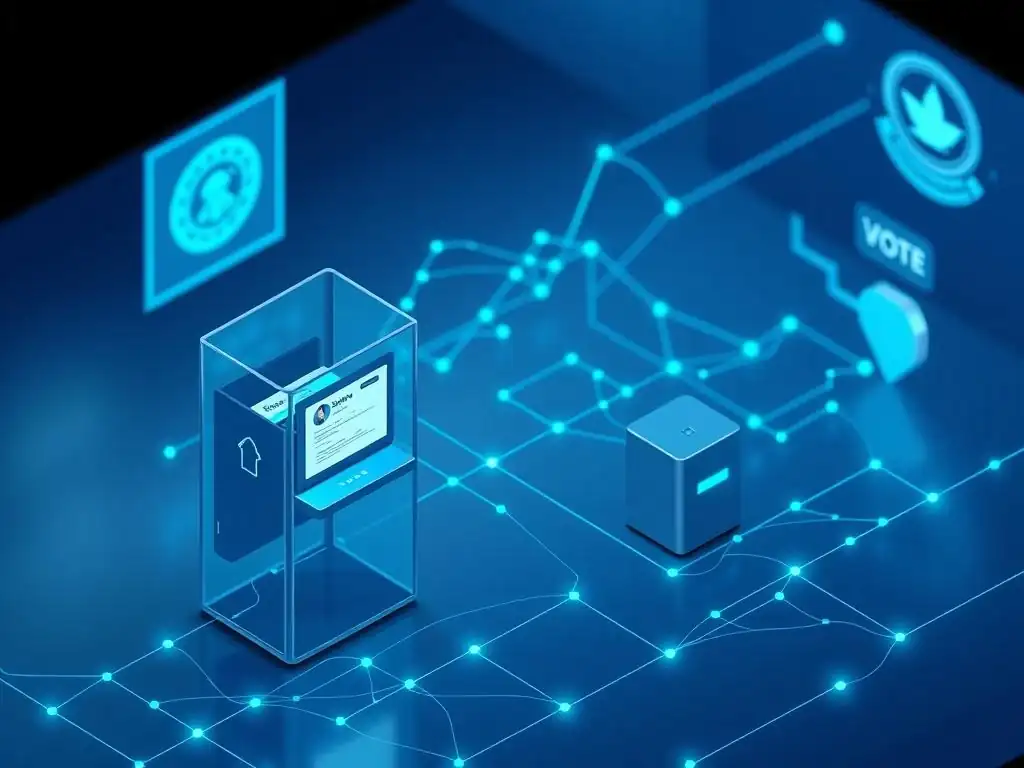
Identifying Data Requirements for Voting Scenarios [Example: Voter Residency Verification]
The first step in implementing blockchain voting oracle solutions is to meticulously identify the specific data requirements for the intended voting scenario. Different types of votes will necessitate different data inputs. For instance, a simple candidate election might primarily require voter eligibility verification, while a referendum on a complex policy might need real-time economic data or public opinion polls. A crucial example is voter residency verification. To ensure only eligible residents of a specific jurisdiction can vote in a local election, the voting system needs to access and verify residency data.
This data typically resides in government databases or official residency records, external to the blockchain. Therefore, an oracle is needed to securely and reliably fetch this information. The data requirement is clear: verifiable proof of residency for each voter attempting to cast a ballot.
The next step is to determine the specific data points needed from the external source – perhaps address, proof of address documents, or unique resident identifiers. Understanding these precise data requirements is fundamental to selecting the appropriate oracle type and designing the integration process effectively. Failing to clearly define data needs upfront can lead to inefficient or inadequate oracle implementations, compromising the functionality and integrity of the decentralized voting system.
Selecting the Appropriate Oracle Type
Once the data requirements are clearly defined, the next critical step is selecting the most appropriate type of oracle for the specific voting scenario. As discussed earlier, various oracle types exist, each with its own strengths and weaknesses. For voter residency verification, a decentralized oracle network might be the most suitable choice for a high-stakes election. Decentralization enhances trust and reduces the risk of relying on a single government database, which could be vulnerable or biased. Multiple independent data providers, perhaps government agencies and reputable data aggregators, could contribute to the residency verification process through a decentralized oracle network.
However, for a less critical internal organizational vote, a centralized oracle operated by a trusted member of the organization might be sufficient and more cost-effective. If the voting scenario involves physical data, such as verifying petition signatures collected offline, hardware oracles integrated with document scanners could be considered.
For complex voter eligibility rules or advanced voting mechanisms, computation oracles capable of performing zero-knowledge proofs or secure multi-party computation might be necessary. The selection process should carefully weigh the trade-offs between security, cost, complexity, and the specific data needs of the voting application to ensure the chosen oracle type aligns with the overall goals and risk tolerance of the decentralized voting system.
Integrating Oracles into a Decentralized Voting Platform
Integrating oracles into a decentralized voting platform involves technical considerations and careful planning. Typically, this integration happens at the smart contract level. The voting smart contracts need to be designed to communicate with the chosen oracle. This usually involves defining specific functions within the smart contract that trigger oracle requests and handle the data returned by the oracle. Standardized oracle communication protocols, such as APIs provided by oracle networks, simplify this integration process. Developers need to implement these protocols within the smart contracts, enabling them to send requests to the oracle network and receive verified data responses.
Security is paramount during integration. The communication channels between the smart contract and the oracle must be secure to prevent man-in-the-middle attacks or data manipulation. Cryptographic signatures and secure communication protocols like HTTPS are essential. Error handling is also crucial.
The smart contract must be designed to gracefully handle scenarios where the oracle fails to respond or returns invalid data. Fallback mechanisms and error logging should be implemented to ensure the voting system remains robust even in the event of oracle failures. Thorough testing and auditing of the oracle integration are essential to identify and address any vulnerabilities before deploying the decentralized voting platform for real-world use.
Security Best Practices
Securing blockchain voting oracle solutions is paramount to ensure the integrity and trustworthiness of the entire decentralized voting system. Several best practices should be implemented. Firstly, prioritize decentralized oracle networks over centralized oracles, especially for high-stakes elections, to mitigate the risks of single points of failure and trust. Secondly, rigorously vet and select reputable oracle providers with a proven track record of accuracy and security. Investigate their data sources, methodologies, and security protocols. Thirdly, implement data encryption and secure communication channels between the smart contract and the oracle to protect data in transit and at rest.
Regularly audit oracle implementations and smart contracts for vulnerabilities. Engage independent security auditors to assess the system's security posture and identify potential weaknesses. Implement redundancy and failover mechanisms for oracles to ensure system availability even if some oracles experience downtime. Consider using multiple oracle networks or diversifying oracle sources to further enhance resilience.
Continuously monitor oracle performance and data accuracy. Implement alerting systems to detect anomalies or suspicious activities. Finally, educate voters and stakeholders about the role of oracles and the security measures in place to build trust and transparency in the decentralized voting process. Adhering to these security best practices is crucial for building robust and reliable blockchain voting oracle solutions.
Use Cases of Oracles in Decentralized Voting
Voter Identity Verification: Preventing Fraud
One of the most critical use cases for oracles in decentralized voting is voter identity verification, a cornerstone of preventing voter fraud. Traditional voting systems rely on manual processes and physical documents, which can be susceptible to manipulation and inefficiencies. Blockchain voting oracle solutions can automate and enhance voter identity verification by securely connecting to external identity databases.
Oracles can be integrated with government-issued digital identity systems, national ID databases, or even decentralized identity solutions. When a voter attempts to cast a ballot, the voting system can use an oracle to query these external identity sources and verify the voter's credentials in real-time.
This process can significantly reduce the risk of impersonation and double voting. For example, an oracle could verify a voter's biometric data against a national ID database or confirm their digital identity credentials. The oracle would then relay a cryptographically signed confirmation of identity verification back to the voting smart contract, allowing the vote to be recorded only if the identity is successfully verified. This automated and secure identity verification process strengthens the integrity of decentralized voting and makes it significantly more resistant to traditional forms of voter fraud.
Real-Time Election Result Reporting
Transparency and timely reporting of election results are crucial for maintaining public trust in democratic processes. Traditional election result reporting can be slow, opaque, and sometimes questioned for accuracy. Oracles can revolutionize election result reporting in decentralized voting by providing real-time, verifiable data from official sources directly onto the blockchain. Oracles can be configured to monitor official election result feeds from electoral commissions or government agencies. As results are officially announced and published, oracles can automatically fetch this data and record it on the blockchain in a tamper-proof manner.
This creates a transparent and auditable record of election results that is publicly accessible and verifiable by anyone. Voters can track the progress of result tallying in real-time and verify the final outcome against the official data recorded on the blockchain. This enhanced transparency and speed in result reporting can significantly improve public confidence in the electoral process and reduce the potential for disputes or allegations of manipulation. Blockchain voting oracle solutions for real-time result reporting contribute to a more open and accountable democratic system.
Integrating External Data for Referendums
Referendums and policy proposals often require integrating external data to inform the voting process or to trigger specific outcomes based on real-world conditions. Oracles are essential for bringing this external data into decentralized voting systems for referendums. Consider a referendum on a policy related to renewable energy adoption, where the policy's implementation might be contingent on achieving certain environmental targets, such as carbon emission reduction levels. Oracles can be used to monitor real-time environmental data from trusted sources, such as environmental agencies or climate monitoring organizations.
If the referendum passes and the environmental targets are subsequently met (as verified by the oracle data), the smart contract governing the referendum can automatically trigger the implementation of the policy. Similarly, for referendums related to economic policies, oracles can provide real-time economic indicators, such as inflation rates or GDP growth, which can be used to inform voters or to trigger policy adjustments based on pre-defined economic thresholds. Blockchain voting oracle solutions enable decentralized voting to be applied to complex referendums that require dynamic data integration and real-world conditionality, making them more relevant and responsive to evolving circumstances.
Verifying Petition Signatures on a Blockchain
Blockchain can be used to create transparent and tamper-proof platforms for online petitions. However, verifying the authenticity of petition signatures and preventing fraudulent entries can be challenging. Oracles can play a crucial role in verifying petition signatures in a decentralized manner. For online petitions, oracles can be integrated with digital identity systems to verify the identity of each signatory, ensuring that each signature is from a legitimate individual and preventing duplicate or bot-generated signatures. For petitions that also involve offline signature collection, hardware oracles can be used in conjunction with document scanning and OCR (Optical Character Recognition) technology.
Scanned images of physical petition sheets can be processed using OCR to extract signature data, which can then be verified against existing records using oracles. Oracles can also be used to cross-reference petition signatures with voter registration databases or other relevant datasets to further validate their authenticity. By automating and decentralizing the signature verification process, blockchain voting oracle solutions enhance the integrity and trustworthiness of online petition platforms, making them a more effective tool for civic engagement and democratic participation. This integration of online and offline signature verification through oracles creates a more comprehensive and robust petitioning system.
Challenges and Considerations
Oracle Scalability and Performance
As decentralized voting systems scale to handle larger populations and more frequent elections, the scalability and performance of oracles become critical considerations. Oracles need to be able to handle a high volume of data requests and responses efficiently without causing bottlenecks or delays in the voting process. For large-scale elections, millions of voters may simultaneously attempt to cast ballots or verify results, placing significant demands on the oracle infrastructure. Centralized oracles might struggle to handle such high loads, potentially leading to performance degradation or system failures.
Decentralized oracle networks offer better scalability by distributing the workload across multiple oracles. However, even decentralized networks need to be designed and optimized for high performance to ensure timely and reliable data delivery during peak voting periods. Scalability solutions for oracles might involve techniques like sharding, load balancing, and optimized data caching.
Performance testing and stress testing of oracle implementations are crucial to identify potential bottlenecks and ensure that the blockchain voting oracle solutions can handle the anticipated load for the intended scale of the voting system. Scalability and performance are key factors in the practical viability of oracles for widespread decentralized voting adoption.
Data Security and Privacy
While oracles enhance the functionality of decentralized voting, they also introduce new data security and privacy considerations. Oracles handle sensitive voter data and election-related information, making them potential targets for cyberattacks and data breaches. Securing the data transmission channels between oracles and smart contracts is paramount. Encryption and secure communication protocols must be implemented to protect data in transit. Furthermore, the data sources accessed by oracles themselves must be secure and reliable. If an oracle relies on a compromised or insecure data source, the integrity of the voting system can be undermined.
Privacy is another crucial concern. Oracles may need to access personal voter information for identity verification or eligibility checks. Minimizing data exposure and implementing privacy-preserving techniques are essential. Zero-knowledge proofs and other privacy-enhancing technologies can be integrated with oracles to enable data verification without revealing the underlying sensitive information. Data minimization principles should be followed, ensuring that oracles only access and transmit the minimum necessary data for the specific voting task. Compliance with data privacy regulations, such as GDPR or CCPA, is also a critical consideration for blockchain voting oracle solutions, particularly when handling voter data.
Regulatory Compliance and Legal Frameworks
The implementation of decentralized voting and blockchain voting oracle solutions needs to navigate the complex landscape of regulatory compliance and legal frameworks. Existing election laws and regulations are primarily designed for traditional voting systems and may not adequately address the unique characteristics of blockchain-based voting. Regulatory clarity is needed to define the legal status of decentralized voting, the responsibilities of oracle providers, and the admissibility of blockchain-based election results in legal proceedings. Compliance with existing election laws, data privacy regulations, and cybersecurity standards is essential.
Jurisdictional variations in regulations pose a challenge for global or cross-border decentralized voting initiatives. Harmonization of regulations and international standards for blockchain voting and oracles would facilitate wider adoption and interoperability. Engaging with regulatory bodies and policymakers is crucial to advocate for clear and enabling legal frameworks that support responsible innovation in decentralized voting. Pilot projects and collaborations with government agencies can help demonstrate the benefits and address the regulatory concerns associated with blockchain voting and oracles, paving the way for broader legal acceptance and adoption.
The Cost of Implementation and Maintenance
Implementing and maintaining blockchain voting oracle solutions involves various costs that need to be carefully considered. Development costs include designing and building the oracle infrastructure, integrating it with the decentralized voting platform, and developing secure smart contracts. Operational costs include oracle fees, data acquisition costs (if oracles rely on paid data feeds), infrastructure maintenance, and ongoing security monitoring. Decentralized oracle networks may have higher operational costs compared to centralized oracles due to the distributed infrastructure and consensus mechanisms.
The cost-effectiveness of oracle solutions needs to be evaluated in relation to the benefits they provide in terms of security, transparency, and efficiency. Cost optimization strategies, such as selecting cost-effective oracle providers, optimizing data usage, and leveraging open-source oracle infrastructure, can help reduce the overall cost. Long-term maintenance costs, including software updates, security patches, and infrastructure upgrades, should also be factored into the budget. A comprehensive cost-benefit analysis is essential to ensure that the investment in blockchain voting oracle solutions is justified and sustainable for the intended voting application.
The Future of Decentralized Voting with Oracles
Emerging Trends in Blockchain Voting Technology
The field of blockchain voting technology is rapidly evolving, with several emerging trends shaping its future. Layer-2 scaling solutions, such as rollups and sidechains, are being explored to address the scalability limitations of main blockchain networks, enabling them to handle larger volumes of votes more efficiently. Privacy-enhancing technologies, like zero-knowledge proofs and homomorphic encryption, are gaining traction to enhance voter privacy and data security in decentralized voting systems. Advancements in decentralized identity solutions are simplifying voter onboarding and verification processes while maintaining user privacy.
Interoperability between different blockchain platforms and voting systems is becoming increasingly important to facilitate cross-jurisdictional voting and data sharing. Research and development in more robust and secure blockchain voting oracle solutions are ongoing, focusing on enhancing data integrity, scalability, and resilience. The integration of AI and machine learning with blockchain voting is being explored for tasks like fraud detection, voter behavior analysis, and personalized voting experiences. These emerging trends collectively point towards a future where blockchain voting becomes more scalable, private, secure, and user-friendly, paving the way for wider adoption in various governance contexts.
The Impact of Oracles on Election Integrity and Voter Turnout
Oracles are poised to have a transformative impact on election integrity and voter turnout in decentralized voting systems. By providing verifiable and reliable real-world data, oracles significantly enhance the security and trustworthiness of electoral processes. Voter identity verification through oracles reduces voter fraud and impersonation, ensuring that only eligible voters cast ballots. Real-time result reporting through oracles increases transparency and accountability, reducing the potential for disputes and allegations of manipulation. Integrating external data for referendums and policy proposals through oracles makes decentralized voting more relevant and responsive to complex real-world issues.
These improvements in election integrity and transparency can, in turn, boost voter confidence in the electoral process. Increased trust and transparency, coupled with the enhanced accessibility of online voting platforms, have the potential to increase voter turnout, particularly among younger generations and digitally savvy populations. Blockchain voting oracle solutions are not just technical components; they are enablers of greater democratic participation and more trustworthy elections, contributing to a more robust and inclusive democratic future.
The Potential for Blockchain Voting to Revolutionize Governance
The potential of blockchain voting extends far beyond traditional political elections. Decentralized voting, empowered by oracles, has the potential to revolutionize governance in various sectors, including corporate governance, organizational decision-making, and community governance. In corporate governance, blockchain voting can streamline shareholder voting processes, increase transparency, and reduce costs associated with proxy voting. Decentralized autonomous organizations (DAOs) are already leveraging blockchain voting for community-driven governance and decision-making.
Online communities and social platforms can use blockchain voting for content moderation, resource allocation, and community policy decisions. The principles of transparency, security, and accessibility offered by blockchain voting, combined with the real-world connectivity provided by oracles, can foster more participatory and democratic governance models across diverse organizations and communities. Blockchain voting oracle solutions are not just tools for elections; they are building blocks for a more decentralized and participatory future of governance, empowering individuals and communities to have a greater say in the decisions that affect their lives.
Conclusion: Empowering Decentralized Voting through Reliable Oracle Integration
Recap of Key Benefits
In conclusion, blockchain voting oracle solutions are indispensable for realizing the full potential of decentralized voting systems. They bridge the critical gap between the secure and transparent world of blockchain and the necessity of real-world data integration. Oracles enable crucial functionalities such as voter identity verification, real-time election result reporting, integration of external data for complex voting scenarios, and verifiable petition signatures. By enhancing security, transparency, and functionality, oracles address key limitations of standalone blockchain voting systems, making them more practical and applicable to a wide range of governance contexts.
Decentralized oracles, in particular, offer enhanced trust and reliability compared to centralized alternatives, mitigating risks associated with single points of failure and manipulation. Hardware and computation oracles further expand the capabilities of decentralized voting, enabling integration with physical data and complex computational tasks. The effective implementation of oracles is not merely a technical detail; it is a fundamental requirement for building robust, trustworthy, and widely adoptable decentralized voting systems.
The Path Forward for Widespread Adoption
The path forward for widespread adoption of decentralized voting and blockchain voting oracle solutions requires a multi-faceted approach. Firstly, continued technological innovation is essential to address challenges related to scalability, privacy, and security. Further research and development in more efficient and robust oracle technologies are crucial. Secondly, standardization efforts are needed to establish interoperability and best practices for blockchain voting and oracle implementations. Industry standards and open-source tools can facilitate wider adoption and reduce development costs.
Thirdly, public education and awareness campaigns are necessary to build trust and understanding of decentralized voting and its benefits among voters and stakeholders. Addressing concerns about security, privacy, and complexity is crucial for gaining public acceptance. Fourthly, pilot projects and real-world deployments of decentralized voting systems in smaller-scale elections or organizational governance settings are essential to demonstrate their viability and identify areas for improvement.
Finally, collaboration between technology developers, policymakers, and election authorities is crucial to establish enabling regulatory frameworks and address legal and compliance considerations. By pursuing these interconnected paths, we can pave the way for the widespread adoption of decentralized voting and unlock its transformative potential for the future of governance.
Frequently Asked Questions
What are Blockchain Voting Oracle Solutions and why are they important?
Blockchain voting oracle solutions are critical for securely and verifiably connecting real-world data needed for voting processes to the blockchain. They ensure that vote results are accurately reflected and cannot be easily manipulated by providing trustworthy external data.
How do oracles contribute to the security of decentralized voting systems?
Oracles enhance security by providing external data verification, preventing malicious actors from injecting false information into the voting process. This verification ensures data integrity and prevents tampering, strengthening the overall security of the system.
Beyond security, what other benefits do Blockchain Voting Oracle Solutions offer?
Blockchain Voting Oracle Solutions offer enhanced transparency by providing a verifiable audit trail of the voting process. They also improve efficiency by automating data collection and validation, reducing the need for manual intervention and reducing the risk of human error.
What are some potential challenges in implementing Blockchain Voting Oracle Solutions?
Potential challenges include the complexity of integrating oracles with existing voting infrastructure. There are also concerns about oracle reliability and the need for robust mechanisms to ensure data accuracy, along with issues surrounding cost and scalability.
What future developments can we expect to see in the field of Blockchain Voting Oracle Solutions?
Future developments will likely focus on improving oracle decentralization and security through advanced cryptographic techniques. We may also see the rise of more specialized oracles tailored to specific voting needs, alongside improved interoperability with various blockchain platforms.
Final Reflection: Empowering Democracy Through Trust
The exploration of decentralized voting and the crucial role of blockchain voting oracle solutions highlights a fundamental shift in how we can approach democratic processes. The promise of verifiable, transparent, and secure elections is no longer a distant dream, but a tangible possibility within our grasp. As we grapple with increasing concerns about election integrity and accessibility, the need for innovative solutions like those discussed in this article becomes ever more pressing.
The impact of blockchain voting oracle solutions extends far beyond simply counting votes; it's about fostering trust and empowering citizens. The potential to eliminate fraud, increase voter turnout, and provide real-time auditability is transformative, offering a pathway to a more engaged and confident electorate. Democracy is not just the right to vote, it is the right to live in dignity.
- Arundhati Roy. This quote reminds us that secure and accessible voting is a cornerstone of a dignified and just society.
As you consider the potential of blockchain voting oracle solutions, I invite you to reflect on your own role in shaping the future of democracy. How can you contribute to the adoption of these technologies? How can you advocate for greater transparency and accountability in our electoral systems? The future of democracy is not predetermined; it is shaped by the choices we make today. Let us strive to build a future where every voice is heard, and every vote counts, secured by the unwavering trust of decentralized technologies.
Empower Your Voice: Dive Deeper into Decentralized Democracy!
Thank you for exploring the crucial connection between decentralized voting and the vital role of oracles. We hope you gained valuable insights into how these technologies are shaping the future of secure and transparent elections. Ready to take the next step?
Here are a few ways you can get involved and deepen your understanding:
- Research existing decentralized voting platforms that utilize oracles. Learn about their strengths, limitations, and real-world impact. This is the most effective way to become informed.
- Share this article with fellow blockchain enthusiasts and spark discussions about the future of voting. Spread awareness and contribute to collective knowledge.
- Consider participating in or proposing a hackathon aimed at enhancing oracle-based voting solutions. This hands-on experience is incredibly valuable!
What real-world challenge could be addressed by implementing decentralized voting with oracles, and how would you approach it? Share your ideas in the comments below!
Leave a Reply