
Decentralized Voting and Voter Privacy: Balancing Transparency and Confidentiality


Welcome to Blockchain Trends, your gateway to understanding the revolutionary impact of blockchain technology beyond the hype.
Dive into the transformative power of decentralized systems as we explore innovative applications across industries. Ever wondered how blockchain can revolutionize democratic processes while safeguarding individual privacy? Our main article delves into Blockchain voting privacy solutions, examining the delicate balance between transparency and confidentiality in decentralized elections. Discover the cutting-edge technologies and challenges shaping the future of secure and verifiable voting. Keep reading to unravel the complexities and explore how blockchain is poised to redefine governance.
Decentralized Voting and Voter Privacy: Balancing Transparency and Confidentiality
- Introduction: The Need for Secure and Private Blockchain Voting
- Blockchain Voting Privacy Solutions: A Deep Dive
- Balancing Transparency and Confidentiality: Key Considerations
- Different Approaches to Decentralized Voting Privacy
- Implementing Blockchain Voting Privacy Solutions: Practical Considerations
- Case Studies: Real-World Applications of Blockchain Voting Privacy
- The Future of Blockchain Voting Privacy: Trends and Innovations
- Overcoming Challenges and Ensuring Trust in Blockchain Voting
- Conclusion: Towards Secure, Transparent, and Private Decentralized Elections
-
Frequently Asked Questions
- How does blockchain technology enhance voter transparency in elections?
- What are the primary privacy concerns associated with using blockchain for voting?
- What are some Blockchain voting privacy solutions being explored to address these concerns?
- How can regulators ensure that blockchain-based voting systems comply with existing data privacy laws?
- What is the future outlook for Blockchain voting privacy solutions, and what are the potential challenges?
- Final Reflection: Embracing Trust in the Digital Ballot Box
- Unveil the Future of Secure Voting!
Introduction: The Need for Secure and Private Blockchain Voting
Understanding the Challenges of Traditional Voting Systems
Traditional voting systems, despite decades of refinement, still grapple with significant vulnerabilities. Centralized databases, often used to manage voter rolls and tally votes, represent a single point of failure susceptible to hacking and manipulation. For instance, the 2020 US Presidential election saw numerous allegations of voter fraud and system irregularities, even though these claims were largely unsubstantiated by evidence from recounts and audits.
However, the very existence of such widespread distrust highlights a core weakness: the lack of readily verifiable transparency in the process. Furthermore, paper-based systems, while offering a physical audit trail, are prone to logistical challenges, human error in counting, and potential for ballot tampering or loss, as seen in various local elections around the world where recounts revealed discrepancies due to manual counting errors. These vulnerabilities, whether real or perceived, erode public trust in democratic processes and necessitate exploration of more robust and secure alternatives.
Beyond security, traditional voting systems also face challenges in accessibility and cost-effectiveness. Remote voting options, like postal ballots, while increasing accessibility for some, introduce new security risks, such as ballot harvesting and coercion, and can be expensive to administer. Physical polling stations require significant resources for staffing, equipment, and logistics, especially in large or geographically dispersed populations.
Emerging democracies and developing nations often struggle to implement and maintain reliable and secure voting infrastructure due to financial constraints and logistical complexities. These factors underscore the need for voting systems that are not only secure and transparent but also more accessible and cost-efficient, prompting the investigation of innovative technologies like blockchain.
The Promise of Blockchain for Transparent and Verifiable Elections
Blockchain technology offers a compelling alternative to traditional voting systems by providing inherent transparency and verifiability. The decentralized and immutable nature of a blockchain ledger means that every vote cast can be recorded and publicly auditable, making it exceptionally difficult to alter or delete votes retroactively. Imagine a scenario where election results are not just announced but are also available for independent verification by any citizen with an internet connection.
This level of transparency can significantly enhance trust in the electoral process and reduce opportunities for fraud. For example, Estonia, a pioneer in digital governance, has been utilizing blockchain-like technology for various government services, including e-voting, showcasing the potential for increased transparency and efficiency.
Furthermore, blockchain's cryptographic security features can enhance the integrity of the voting process. Cryptographic hashing and digital signatures ensure that each vote is securely linked to a voter's identity (in a privacy-preserving manner) and that the integrity of the vote remains intact from casting to counting. This can mitigate risks associated with ballot tampering or electronic manipulation.
Smart contracts, self-executing contracts with the terms of the agreement directly written into code, can automate the voting process, from voter registration to vote tallying, reducing human intervention and potential for errors or biases. This automation can streamline election administration and potentially lower costs, especially in the long term, by reducing reliance on manual processes and extensive infrastructure. The inherent properties of blockchain present a strong case for its application in creating more transparent and verifiable election systems.
The Critical Importance of Voter Privacy in Decentralized Voting
While transparency and verifiability are crucial benefits of blockchain voting, voter privacy is equally, if not more, paramount. The secret ballot is a cornerstone of democratic elections, ensuring that voters can exercise their right to choose without fear of coercion, intimidation, or reprisal. If voter identities and their corresponding votes are publicly linked on a blockchain, it would undermine this fundamental principle and potentially lead to serious societal consequences.
Consider the historical examples of voter intimidation and blacklisting based on political affiliation; a system that publicly reveals voting choices could revive such practices in even more sophisticated forms. Protecting voter privacy is not just about individual rights; it is essential for maintaining a free and fair democratic society.
Therefore, the challenge in implementing blockchain voting systems lies in balancing transparency with confidentiality. The system must be transparent enough to ensure verifiability and prevent fraud, yet private enough to protect voter anonymity and prevent coercion. Simply putting votes on a public blockchain without privacy measures is not a viable solution.
Instead, effective "blockchain voting privacy solutions" are needed to leverage the benefits of blockchain while safeguarding voter anonymity. This necessitates the integration of privacy-enhancing technologies alongside blockchain to create systems that are both transparent and confidential, ensuring the integrity of the vote and the secrecy of the voter's choice. The development and implementation of such solutions are critical for the responsible and ethical adoption of blockchain in democratic processes.
Blockchain Voting Privacy Solutions: A Deep Dive
Homomorphic Encryption for Enhanced Voter Confidentiality
Homomorphic encryption (HE) is a powerful cryptographic technique that allows computations to be performed on encrypted data without decrypting it first. In the context of blockchain voting privacy solutions, HE enables the tallying of votes while keeping individual votes encrypted and confidential throughout the process. Imagine votes being cast in encrypted form and then aggregated and counted, still in their encrypted state, with only the final tally being decrypted.
This eliminates the need to reveal individual votes to anyone, including election administrators, until the final results are ready. Different types of homomorphic encryption schemes exist, offering varying levels of performance and security, such as Partially Homomorphic Encryption (PHE) and Fully Homomorphic Encryption (FHE). PHE allows for either addition or multiplication on encrypted data, while FHE supports both, offering greater computational flexibility.
While incredibly promising, HE in practical blockchain voting systems faces challenges in terms of computational overhead. Performing computations on encrypted data is significantly more resource-intensive than on plaintext data, which can impact the scalability and efficiency of a blockchain voting system, especially for large-scale elections. Research and development are ongoing to improve the efficiency of HE algorithms and hardware acceleration to make them more practical for real-world applications.
Despite these challenges, HE represents a significant advancement in "blockchain voting privacy solutions" by offering a robust method to maintain voter confidentiality while enabling verifiable vote aggregation on a public ledger. The potential of HE to safeguard voter privacy is a key area of focus in the evolution of secure decentralized voting.
Zero-Knowledge Proofs: Enabling Verification Without Revealing Data
Zero-knowledge proofs (ZKPs) are cryptographic protocols that allow one party (the prover) to prove to another party (the verifier) that a statement is true without revealing any information beyond the validity of the statement itself. In the context of blockchain voting, ZKPs can be used to prove that a vote is valid (e.g., cast by a registered voter, conforms to voting rules) without revealing the voter's identity or their actual vote choice.
For example, a voter could use a ZKP to prove they are eligible to vote without revealing their specific voter ID or personal information, or to prove their vote is included in the tally without revealing the content of their vote. This is achieved through complex mathematical algorithms and interactive or non-interactive protocols that demonstrate the validity of a claim without disclosing the underlying secret.
ZKPs are highly valuable for "blockchain voting privacy solutions" because they enable verification of the voting process at various stages without compromising voter anonymity. They can be used for verifying voter eligibility, vote validity, and the correctness of the final tally, all while maintaining voter privacy. Different types of ZKPs, such as zk-SNARKs (zero-knowledge succinct non-interactive arguments of knowledge) and zk-STARKs (zero-knowledge scalable transparent arguments of knowledge), offer varying trade-offs between proof size, verification speed, and setup complexity.
zk-SNARKs are known for their small proof sizes and fast verification but require a trusted setup phase, while zk-STARKs are transparent (no trusted setup) but generate larger proofs. The choice of ZKP scheme depends on the specific requirements and constraints of the voting system, but the core principle of enabling verification without information disclosure remains central to enhancing privacy in blockchain voting.
Ring Signatures: Anonymizing Voter Identities in Blockchain Elections
Ring signatures are a type of digital signature that allows a user to sign a message on behalf of a group (a "ring") of users without revealing which specific member of the group actually signed the message. In blockchain voting, ring signatures can be employed to anonymize voter identities. When a voter casts their vote, they can use a ring signature to sign the transaction, making it verifiable that the vote came from a valid registered voter (within the ring of registered voters) but obscuring the specific voter's identity.
This creates a layer of anonymity while still ensuring that only authorized voters can participate in the election. The anonymity set is the group of possible signers, which, in the case of voting, would be all registered voters.
Ring signatures provide a practical approach to achieving voter anonymity in "blockchain voting privacy solutions" by decoupling the vote from the specific voter's identity on the blockchain. The verifier can confirm that the signature is valid and originates from a registered voter, but cannot pinpoint the exact voter who cast the vote.
This is different from techniques like mixing or coinjoin used in cryptocurrencies, as ring signatures are directly integrated into the signature scheme itself, offering a more native and potentially more efficient privacy solution for voting. However, it's important to note that ring signatures primarily focus on anonymizing the sender, and additional privacy measures might be needed to protect the content of the vote itself, which can be combined with other technologies like homomorphic encryption for a more comprehensive privacy solution.
The use of ring signatures represents a valuable tool in the arsenal of techniques for building private and secure blockchain voting systems.
Balancing Transparency and Confidentiality: Key Considerations
Defining Acceptable Levels of Anonymity in Blockchain Voting
Determining the "acceptable levels of anonymity" in blockchain voting is a crucial and complex societal and technical challenge. Complete anonymity, where no link whatsoever exists between a voter and their vote, might seem ideal for privacy but could also create challenges for auditing and preventing certain types of fraud. For example, in a completely anonymous system, it might be harder to detect or prevent double voting if malicious actors manage to obtain multiple voting credentials.
On the other hand, insufficient anonymity could expose voters to coercion or intimidation, undermining the secret ballot principle. Finding the right balance requires careful consideration of the specific context, potential risks, and societal values.
One approach is to aim for unlinkability, meaning that while the system might be able to verify that a vote came from a registered voter, it should be computationally infeasible to link a specific vote to a specific voter's identity. This level of anonymity allows for auditability and fraud detection while still providing strong privacy protections. Another consideration is the concept of "conditional anonymity," where voter identities remain anonymous under normal circumstances but can be revealed under specific, predefined conditions, such as a court order or a proven case of election fraud requiring investigation.
Defining these conditions and the authority to trigger them is a critical aspect of designing responsible "blockchain voting privacy solutions". The level of acceptable anonymity is not a one-size-fits-all answer and needs to be tailored to the specific needs and legal frameworks of each voting context.
The Role of Auditing and Verification in Maintaining Trust
Auditing and verification mechanisms are paramount in maintaining trust in any voting system, and blockchain-based systems are no exception. While blockchain inherently offers transparency, the privacy solutions implemented must not compromise the ability to audit and verify the integrity of the election. Independent audits, conducted by trusted third parties or even by the public, are essential to ensure that the voting system functions as intended and that the results are accurate and trustworthy. These audits need to be able to verify various aspects of the voting process, including voter registration, vote casting, vote tallying, and the overall system security.
For "blockchain voting privacy solutions," the challenge is to design auditing mechanisms that are compatible with privacy-enhancing technologies. For instance, when using homomorphic encryption or zero-knowledge proofs, auditors need to be able to verify the correctness of the computations and proofs without decrypting individual votes or revealing voter identities. Techniques like audit trails based on cryptographic commitments and verifiable computation can be employed to enable transparent and privacy-preserving audits.
Furthermore, open-source software and publicly auditable smart contracts are crucial for allowing independent scrutiny of the code and logic underlying the voting system. The ability for independent auditors and the public to verify the integrity of the election process is a cornerstone of building trust and confidence in blockchain voting systems.
Addressing Potential Attack Vectors on Blockchain Voting Privacy Solutions
Even with sophisticated privacy-enhancing technologies, "blockchain voting privacy solutions" are not immune to potential attack vectors. Understanding and mitigating these risks is critical for ensuring the security and reliability of decentralized voting systems. One potential attack vector is metadata leakage.
While encryption and anonymity techniques might protect the vote content and voter identity on the blockchain, metadata associated with voting transactions, such as timestamps, IP addresses, or transaction patterns, could potentially be used to deanonymize voters or infer voting patterns. Careful design and implementation are needed to minimize metadata leakage and employ techniques like traffic anonymization (e.g., using Tor or VPNs) where appropriate.
Another attack vector is coercion or bribery. Even with strong technical privacy, voters could still be coerced or bribed to reveal their votes outside of the voting system, for example, by taking a picture of their screen or revealing their vote to a coercer. Technical solutions alone cannot completely eliminate this risk, and social and legal measures, such as voter education, anti-coercion laws, and secure voting environments, are also necessary.
Furthermore, vulnerabilities in the underlying blockchain platform or the smart contracts implementing the voting logic could be exploited to compromise privacy or manipulate votes. Rigorous security audits, penetration testing, and formal verification of smart contracts are crucial to identify and address potential vulnerabilities. A multi-layered security approach, combining technical privacy measures with social and legal safeguards, is essential for building robust and resilient "blockchain voting privacy solutions".
Different Approaches to Decentralized Voting Privacy
Fully Anonymous Blockchain Voting Systems: Advantages and Disadvantages
Fully anonymous blockchain voting systems aim to provide complete unlinkability between voters and their votes. In such systems, it should be practically impossible to determine who voted for whom, even after the election. Techniques like anonymous credentials and mixnets can be employed to achieve this level of anonymity.
Anonymous credentials allow voters to authenticate and cast votes without revealing their identity, while mixnets route and shuffle voting transactions through a network of servers to obscure the link between the sender and receiver of each transaction. These systems prioritize maximum voter privacy and aim to replicate the secrecy of traditional paper-based voting in a digital environment.
However, fully anonymous "blockchain voting privacy solutions" also present disadvantages. Auditing and verification can become more challenging in fully anonymous systems, as it can be harder to trace and investigate potential irregularities or fraud without compromising anonymity. Preventing double voting or ensuring voter eligibility also becomes more complex.
Furthermore, fully anonymous systems might be perceived as less transparent by some stakeholders, as the complete anonymity can raise concerns about potential manipulation hidden behind a veil of secrecy. The trade-off between maximal privacy and auditability needs careful consideration when opting for fully anonymous approaches. The complexity of implementing and securing such systems also tends to be higher compared to less anonymous approaches.
Partially Anonymous Blockchain Voting Systems: A Pragmatic Approach
Partially anonymous blockchain voting systems strike a balance between privacy and transparency, offering a more pragmatic approach for many real-world applications. These systems typically aim for unlinkability rather than full anonymity, meaning that while linking a specific vote to a specific voter is computationally infeasible, the system retains some mechanisms for auditability and fraud prevention.
Techniques like ring signatures, zero-knowledge proofs, and homomorphic encryption can be combined to achieve this balance. For example, ring signatures can anonymize voter identities, while zero-knowledge proofs can enable verification of vote validity without revealing vote content, and homomorphic encryption can allow for privacy-preserving vote tallying.
Partially anonymous "blockchain voting privacy solutions" offer several advantages. They provide a strong level of voter privacy while maintaining a degree of transparency and auditability that is often considered necessary for public trust and election integrity. They are generally less complex to implement and manage compared to fully anonymous systems, making them more practical for deployment in various contexts.
Furthermore, they can be designed to be more flexible and adaptable to different regulatory requirements and societal preferences regarding privacy and transparency. This pragmatic approach often represents a more viable and widely applicable solution for implementing secure and private blockchain voting in real-world elections.
Hybrid Solutions Combining Blockchain with Privacy-Enhancing Technologies
Hybrid solutions for "blockchain voting privacy solutions" combine the strengths of blockchain technology with various privacy-enhancing technologies (PETs) to create robust and adaptable voting systems. These solutions recognize that no single technology is a silver bullet and that the optimal approach often involves integrating multiple techniques to address different privacy and security requirements.
For example, a hybrid system might combine blockchain for transparent vote recording and immutability with homomorphic encryption for confidential vote tallying, and zero-knowledge proofs for voter eligibility verification and auditability. Mixnets or secure multi-party computation (MPC) could also be integrated to further enhance voter anonymity and system security.
The advantage of hybrid approaches is their flexibility and adaptability. They can be tailored to the specific needs and constraints of different voting scenarios, allowing for optimization of privacy, transparency, security, and efficiency. For instance, a high-stakes national election might require a more robust combination of PETs compared to a smaller-scale local election or internal organizational vote.
Hybrid solutions also allow for incremental improvements and upgrades as new privacy technologies emerge and mature. By combining different techniques, hybrid "blockchain voting privacy solutions" can offer a more comprehensive and resilient approach to building secure, private, and transparent decentralized voting systems, leveraging the best features of various privacy-enhancing technologies alongside the benefits of blockchain.
Implementing Blockchain Voting Privacy Solutions: Practical Considerations
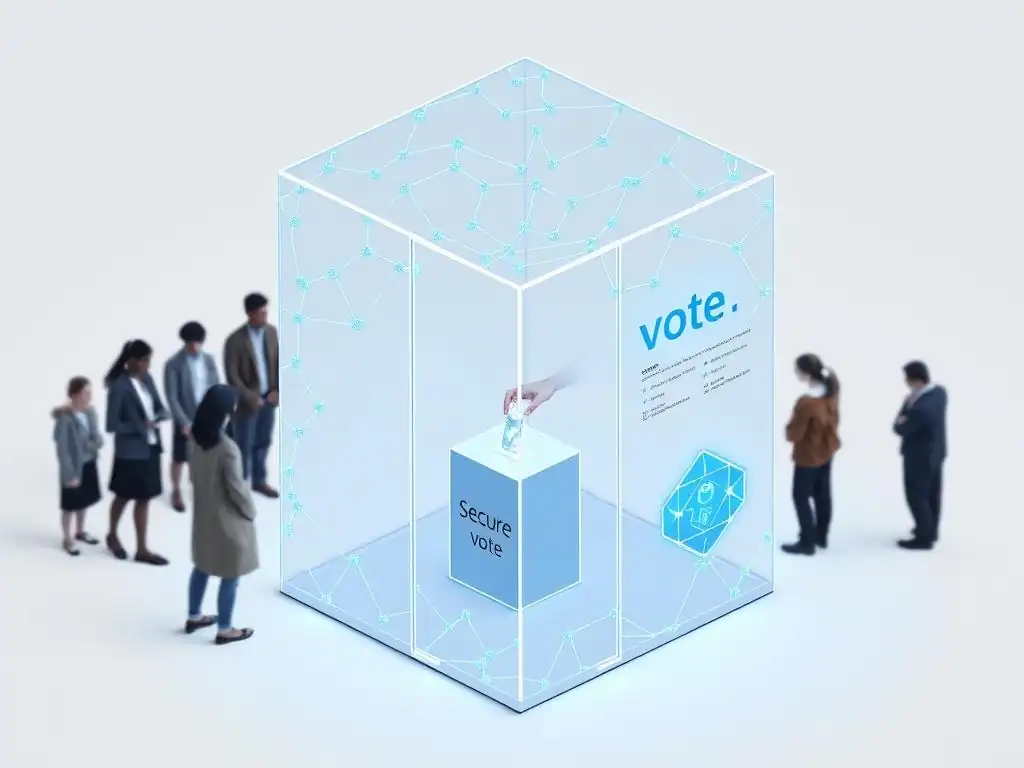
Key Management and Secure Storage of Voting Credentials
Key management and secure storage of voting credentials are critical practical considerations for implementing "blockchain voting privacy solutions". In blockchain-based voting systems, voters typically use cryptographic keys to authenticate themselves and cast their votes. The security and privacy of these keys are paramount. If voter keys are compromised, it could lead to unauthorized vote casting, vote manipulation, or deanonymization of voters. Therefore, robust key management practices and secure storage mechanisms are essential. This includes secure key generation, distribution, storage, and recovery procedures.
Different approaches to key management exist, ranging from voter-managed keys to system-managed keys. Voter-managed keys give voters more control over their credentials but require them to be responsible for securely storing and managing their private keys, which can be challenging for less technically savvy users. Solutions like hardware wallets or secure software wallets can help voters manage their keys securely.
System-managed keys, on the other hand, place the responsibility for key management on the voting system operators, which can simplify the user experience but raises concerns about centralized key storage and potential vulnerabilities. Hybrid approaches that combine elements of both voter-managed and system-managed keys might offer a good balance between security, usability, and control. Regardless of the approach, strong encryption, secure hardware or software enclaves, and robust backup and recovery mechanisms are crucial for ensuring the secure storage and management of voting credentials in "blockchain voting privacy solutions".
Smart Contract Design for Privacy-Preserving Voting Protocols
Smart contract design is fundamental to implementing privacy-preserving voting protocols on blockchain. Smart contracts are self-executing contracts written in code and deployed on a blockchain. They automate the voting process according to predefined rules and logic. For "blockchain voting privacy solutions", smart contracts need to be carefully designed to incorporate privacy-enhancing technologies and ensure that the voting process is both transparent and confidential. This includes implementing the logic for voter registration, vote casting, vote tallying, and result verification in a privacy-preserving manner.
Smart contracts can be designed to integrate techniques like homomorphic encryption, zero-knowledge proofs, and ring signatures. For example, a smart contract could use homomorphic encryption to tally votes confidentially, or use zero-knowledge proofs to verify voter eligibility without revealing voter identities. The design of these smart contracts needs to be meticulously reviewed and audited to ensure correctness, security, and privacy. Vulnerabilities in smart contract code could be exploited to compromise the voting process or reveal voter information.
Formal verification techniques can be used to mathematically prove the correctness and security properties of smart contracts. Furthermore, gas optimization and efficiency considerations are important in smart contract design, as complex privacy-preserving computations can be resource-intensive on some blockchain platforms. Careful smart contract design is crucial for building secure, efficient, and privacy-preserving "blockchain voting privacy solutions".
User Interface and User Experience for Accessible and Secure Voting
User interface (UI) and user experience (UX) are often overlooked but are crucial for the successful adoption of "blockchain voting privacy solutions". Even the most secure and privacy-preserving voting system will fail if it is too complex or confusing for voters to use. The UI/UX design needs to be intuitive, accessible, and user-friendly for voters of all technical backgrounds. This includes clear instructions, easy navigation, and accessible design principles to accommodate voters with disabilities. The voting process should be as simple and straightforward as possible, minimizing the cognitive load on voters.
Security considerations also need to be integrated into the UI/UX design. Voters need to be guided on how to securely cast their votes and protect their voting credentials. Clear warnings and prompts about potential security risks, such as phishing attacks or malware, are important.
The UI should also provide visual cues and feedback to reassure voters that their votes are being cast securely and privately. For example, visual confirmations of successful vote casting and clear indicators of encryption and privacy mechanisms in action can enhance voter confidence. Usability testing with diverse groups of voters is essential to identify and address any UI/UX issues and ensure that the "blockchain voting privacy solutions" are not only secure and private but also accessible and user-friendly for all eligible voters.
Case Studies: Real-World Applications of Blockchain Voting Privacy
Voatz: Mobile Blockchain Voting Platform for Secure Elections
Voatz is a mobile blockchain voting platform that has been used in various elections, primarily in the US, for overseas military personnel, voters with disabilities, and union elections. Voatz utilizes blockchain technology to provide a secure and verifiable voting process through mobile devices. It employs biometric voter authentication, end-to-end encryption, and blockchain-based audit trails to enhance security and transparency. In West Virginia, Voatz was used in the 2018 and 2020 elections for military personnel stationed overseas, aiming to improve accessibility and security for this demographic. However, Voatz has also faced scrutiny and criticism regarding its security and privacy claims.
Independent security audits have raised concerns about potential vulnerabilities in Voatz's architecture and security practices. Researchers have pointed out potential weaknesses in its key management, source code transparency, and reliance on centralized components. Critics argue that while Voatz utilizes blockchain, its overall architecture is not fully decentralized and still relies on centralized servers and proprietary software, which could be points of failure or manipulation.
Despite these criticisms, Voatz represents a notable real-world example of applying blockchain to mobile voting, highlighting both the potential and the challenges of implementing "blockchain voting privacy solutions" in practice. The case of Voatz underscores the importance of rigorous security audits, open-source development, and careful consideration of the trade-offs between usability, security, and decentralization in blockchain voting systems.
Follow My Vote: Open-Source Blockchain Voting Solution
Follow My Vote is an open-source blockchain voting solution that emphasizes transparency and verifiability. Unlike Voatz, Follow My Vote is designed to be fully open-source, allowing for public scrutiny and community-driven development. It aims to create a voting system that is transparent, auditable, and resistant to manipulation. Follow My Vote utilizes blockchain to record votes and employs cryptographic techniques to ensure vote integrity and voter privacy. They have focused on developing a system that is not only secure but also accessible and understandable to the public, promoting trust and confidence in the voting process.
Follow My Vote has been involved in various pilot projects and demonstrations, showcasing its technology and advocating for the adoption of blockchain voting. Their open-source approach allows for community audits and contributions, potentially leading to more robust and secure code. However, as an open-source project, Follow My Vote faces challenges in terms of funding, adoption, and large-scale deployment.
While it offers a transparent and auditable platform, real-world adoption in large-scale elections requires overcoming logistical and regulatory hurdles. Follow My Vote exemplifies the open-source approach to "blockchain voting privacy solutions", emphasizing transparency, community involvement, and the potential for building trust through open and verifiable systems. Their ongoing development and advocacy contribute to the broader exploration of decentralized voting technologies.
Lessons Learned and Best Practices for Deploying Secure Voting Systems
The case studies of Voatz and Follow My Vote, along with other blockchain voting initiatives, provide valuable lessons learned and highlight best practices for deploying secure voting systems. One key lesson is the paramount importance of security and rigorous auditing. Any voting system, especially one utilizing new technologies like blockchain, must undergo thorough security audits by independent experts to identify and address potential vulnerabilities. Open-source code and transparent development processes can facilitate public scrutiny and community-driven security improvements, as exemplified by Follow My Vote.
Another best practice is to prioritize voter privacy and incorporate privacy-enhancing technologies from the design phase. Balancing transparency and confidentiality is crucial, and solutions should be tailored to the specific context and requirements of each election. Usability and accessibility are also critical. Voting systems must be user-friendly and accessible to all eligible voters, regardless of their technical skills or disabilities.
Furthermore, regulatory compliance and legal frameworks need to be considered. Blockchain voting systems must comply with existing election laws and regulations, and new legal frameworks might be needed to address the unique challenges and opportunities presented by decentralized voting technologies. Finally, public education and stakeholder engagement are essential for building trust and confidence in blockchain voting. Educating voters, election officials, and the public about the benefits and security features of blockchain voting is crucial for fostering wider adoption and acceptance of "blockchain voting privacy solutions".
The Future of Blockchain Voting Privacy: Trends and Innovations
Research and Development in Advanced Encryption Techniques
The future of "blockchain voting privacy solutions" is closely tied to ongoing research and development in advanced encryption techniques. Areas like fully homomorphic encryption (FHE), post-quantum cryptography, and more efficient zero-knowledge proof systems are actively being researched and developed. Advancements in FHE could make it more practical for large-scale vote tallying while maintaining complete confidentiality.
Post-quantum cryptography is becoming increasingly important to protect against potential threats from quantum computers that could break current encryption algorithms. Research into more efficient ZKP systems aims to reduce the computational overhead and proof sizes, making them more practical for real-time verification in voting systems.
Furthermore, research into secure multi-party computation (MPC) is relevant to blockchain voting privacy. MPC allows multiple parties to jointly compute a function over their inputs while keeping those inputs private. MPC could be used in decentralized vote tallying, where multiple election authorities jointly compute the final results without revealing individual votes to each other.
The development of more efficient and robust encryption techniques is crucial for enhancing the privacy and security of blockchain voting systems in the future. These advancements will pave the way for more sophisticated and practical "blockchain voting privacy solutions" that can address the evolving challenges of digital elections.
The Potential of Federated Learning for Privacy-Preserving Election Data Analysis
Federated learning (FL) is an emerging machine learning technique that enables training machine learning models on decentralized data sources without directly accessing or sharing the raw data. In the context of blockchain voting, FL has the potential to enable privacy-preserving election data analysis. Election data, while anonymized, can still contain valuable insights for improving election processes, detecting anomalies, and understanding voter behavior. However, sharing raw election data, even anonymized, raises privacy concerns. Federated learning offers a solution by allowing analysis to be performed on decentralized election data while keeping the data itself private.
For example, FL could be used to train models to detect potential voting irregularities or anomalies across different voting districts without aggregating or centralizing sensitive voter data. Models can be trained locally on each district's data, and only model updates (not raw data) are shared and aggregated to build a global model. This approach enhances privacy while still enabling valuable data analysis for improving election integrity and efficiency.
The application of federated learning to election data analysis represents a promising avenue for leveraging the power of data while respecting voter privacy in "blockchain voting privacy solutions". Further research and development in this area could lead to new tools and techniques for enhancing election integrity and understanding voter dynamics in a privacy-preserving manner.
The Evolution of Regulatory Frameworks for Blockchain Voting Systems
The evolution of regulatory frameworks is a crucial factor shaping the future of "blockchain voting privacy solutions". As blockchain voting technology matures and gains wider attention, regulatory bodies and governments are starting to consider its implications and potential for electoral processes. Existing election laws and regulations were primarily designed for traditional paper-based or electronic voting systems and may not adequately address the unique characteristics of blockchain-based systems, especially concerning privacy, transparency, and security. Therefore, the development of new regulatory frameworks specifically tailored to blockchain voting is essential for its responsible and ethical adoption.
These regulatory frameworks need to address various aspects of blockchain voting, including voter registration, vote casting, vote tallying, auditing, security standards, and data privacy. They need to define acceptable levels of anonymity, establish clear guidelines for data protection, and ensure compliance with privacy regulations like GDPR or CCPA. Furthermore, regulatory frameworks need to address issues of interoperability, standardization, and cross-jurisdictional recognition of blockchain voting systems.
Collaboration between technology developers, election officials, legal experts, and policymakers is crucial for developing effective and balanced regulatory frameworks that foster innovation while safeguarding democratic principles and voter rights. The evolution of these regulatory frameworks will significantly impact the trajectory and adoption of "blockchain voting privacy solutions" in the future.
Overcoming Challenges and Ensuring Trust in Blockchain Voting
Addressing Concerns about Voter Coercion and Bribery
Addressing concerns about voter coercion and bribery is paramount for ensuring trust in blockchain voting systems. While "blockchain voting privacy solutions" can enhance technical privacy, they cannot entirely eliminate the social and behavioral risks of coercion and bribery. Voters might still be pressured or incentivized to reveal their votes outside of the voting system, regardless of the technical privacy measures in place. Therefore, a multi-faceted approach is needed to mitigate these risks, combining technical safeguards with social and legal measures.
Technical measures can include designing voting systems that minimize opportunities for vote verification by coercers. For example, systems that do not provide receipts or proofs of vote casting that can be shown to a coercer can reduce the effectiveness of coercion attempts. However, completely eliminating receipts can also hinder legitimate vote verification by voters themselves.
Social and legal measures are equally important. These include voter education campaigns to raise awareness about coercion and bribery tactics and to empower voters to resist such pressures. Strong legal frameworks and enforcement mechanisms are needed to deter and punish voter coercion and bribery.
Furthermore, promoting a culture of civic responsibility and ethical voting behavior is essential for fostering a democratic environment where voters feel free to exercise their right to vote without fear of coercion or undue influence. Addressing voter coercion and bribery requires a holistic approach that combines technical design, legal frameworks, and social awareness initiatives.
Building Public Confidence in the Security and Reliability of Blockchain Elections
Building public confidence in the security and reliability of blockchain elections is crucial for wider adoption and acceptance. Blockchain technology, while promising, is still relatively new to many people, and there can be skepticism and mistrust regarding its use in critical democratic processes like elections. Overcoming this skepticism and building public confidence requires transparency, education, and demonstrable evidence of security and reliability. Transparency in the design, development, and auditing of "blockchain voting privacy solutions" is essential. Open-source code, public audits, and clear explanations of the system's security features can help build trust.
Education and awareness campaigns are needed to inform the public about how blockchain voting works, its benefits, and the security measures in place to protect voter privacy and election integrity. Addressing common misconceptions and concerns about blockchain technology is also important. Demonstrable evidence of security and reliability can be built through pilot projects, successful real-world deployments, and independent evaluations.
Showcasing successful case studies and highlighting positive outcomes can help demonstrate the viability and trustworthiness of blockchain voting systems. Furthermore, engaging with civil society organizations, election integrity groups, and the media to build consensus and address concerns is crucial for fostering public trust and confidence in blockchain elections. Building public confidence is a long-term process that requires continuous communication, transparency, and demonstrable performance.
Promoting Education and Awareness about Blockchain Voting Privacy Solutions
Promoting education and awareness about "blockchain voting privacy solutions" is vital for fostering informed public discourse and enabling wider adoption. Many people, including voters, election officials, and policymakers, may lack sufficient understanding of blockchain technology and its potential applications in voting. Education and awareness initiatives are needed to bridge this knowledge gap and promote a more informed understanding of the benefits, challenges, and privacy considerations of blockchain voting. These initiatives should target diverse audiences, including the general public, voters, election administrators, policymakers, and technology developers.
Educational materials, workshops, and online resources can be developed to explain the fundamentals of blockchain technology, the principles of decentralized voting, and the importance of voter privacy. Highlighting the privacy-enhancing technologies used in "blockchain voting privacy solutions", such as homomorphic encryption, zero-knowledge proofs, and ring signatures, can help demystify these complex concepts and build understanding. Engaging with media outlets, social media platforms, and community organizations can help disseminate information and reach wider audiences.
Furthermore, fostering dialogue and discussion among stakeholders, including technology experts, election officials, civil society groups, and the public, is crucial for building consensus and addressing concerns. Promoting education and awareness is an ongoing process that is essential for fostering informed decision-making and responsible adoption of blockchain voting privacy solutions.
Conclusion: Towards Secure, Transparent, and Private Decentralized Elections
The Transformative Potential of Blockchain for Democratic Processes
Blockchain technology holds transformative potential for democratic processes by offering the prospect of more secure, transparent, and private elections. "Blockchain voting privacy solutions" can address many of the challenges facing traditional voting systems, such as lack of transparency, vulnerability to fraud, and concerns about voter privacy. By leveraging the inherent properties of blockchain – decentralization, immutability, and cryptography – and combining them with privacy-enhancing technologies, it is possible to create voting systems that are more trustworthy, verifiable, and accessible. This transformation has the potential to strengthen democratic institutions, enhance voter participation, and increase public confidence in electoral processes.
The potential benefits extend beyond just improving the technical aspects of voting. Increased transparency and verifiability can help combat misinformation and disinformation surrounding elections, fostering greater trust in election outcomes. Enhanced security can reduce the risk of cyberattacks and manipulation, protecting the integrity of the democratic process.
Improved accessibility, particularly through mobile and online voting options enabled by blockchain, can increase voter turnout and make voting more convenient for citizens, especially those in remote areas or with mobility limitations. The transformative potential of blockchain for democratic processes is significant, and realizing this potential requires continued innovation, collaboration, and responsible implementation of "blockchain voting privacy solutions".
The Importance of Ongoing Innovation and Collaboration
Ongoing innovation and collaboration are crucial for realizing the full potential of "blockchain voting privacy solutions" and addressing the remaining challenges. The field of blockchain technology and privacy-enhancing technologies is rapidly evolving, and continuous research and development are needed to improve the security, efficiency, usability, and scalability of blockchain voting systems. Innovation is needed in areas such as advanced encryption techniques, more efficient zero-knowledge proof systems, secure multi-party computation, and user-friendly interfaces for blockchain voting.
Collaboration is equally important. Effective development and deployment of "blockchain voting privacy solutions" require collaboration among technology developers, election officials, policymakers, legal experts, security researchers, and civil society organizations. Sharing knowledge, expertise, and best practices is essential for building robust and interoperable systems.
Collaboration across disciplines and sectors can help address the complex technical, legal, social, and ethical challenges associated with blockchain voting. Furthermore, international collaboration can facilitate the development of global standards and best practices for blockchain voting, promoting wider adoption and interoperability. Ongoing innovation and collaborative efforts are essential for advancing the field of "blockchain voting privacy solutions" and realizing their transformative potential for democratic processes worldwide.
Ensuring Ethical and Responsible Implementation of Blockchain Voting Technologies
Ensuring ethical and responsible implementation of blockchain voting technologies is paramount for safeguarding democratic values and protecting voter rights. While "blockchain voting privacy solutions" offer significant potential benefits, their implementation must be guided by ethical principles and responsible practices. This includes prioritizing voter privacy, ensuring accessibility and inclusivity, promoting transparency and accountability, and mitigating potential risks. Ethical considerations should be embedded in every stage of the design, development, and deployment of blockchain voting systems.
Responsible implementation requires careful consideration of the potential social and political impacts of blockchain voting. Addressing concerns about voter coercion, digital divide, and the potential for misuse of technology is crucial. Robust security measures and privacy safeguards must be implemented to protect voter data and prevent manipulation.
Independent audits, public scrutiny, and transparent governance mechanisms are essential for ensuring accountability and building public trust. Furthermore, ongoing monitoring and evaluation are needed to assess the impact of blockchain voting systems and adapt them to evolving needs and challenges. Ethical and responsible implementation of "blockchain voting privacy solutions" is not just a technical challenge but also a societal responsibility, requiring careful deliberation, stakeholder engagement, and a commitment to upholding democratic principles and voter rights in the digital age.
Frequently Asked Questions
How does blockchain technology enhance voter transparency in elections?
Blockchain provides an immutable and auditable ledger of votes, making it significantly harder to tamper with election results. This increased transparency builds trust in the electoral process. The distributed nature also reduces single points of failure.
What are the primary privacy concerns associated with using blockchain for voting?
The main concern revolves around linking voter identities to their votes. If a voter's identity can be traced to their ballot on the blockchain, vote secrecy is compromised, potentially leading to coercion or discrimination. Data protection is paramount.
What are some Blockchain voting privacy solutions being explored to address these concerns?
Solutions like zero-knowledge proofs allow voters to prove their eligibility without revealing their identity. Other approaches include homomorphic encryption to process encrypted votes and ring signatures to mask voter identities.
How can regulators ensure that blockchain-based voting systems comply with existing data privacy laws?
Regulators need to establish clear guidelines for data anonymization and voter identification. They must also ensure compliance with GDPR and other privacy regulations, focusing on data minimization and purpose limitation. Regular audits are essential.
What is the future outlook for Blockchain voting privacy solutions, and what are the potential challenges?
The future looks promising, with ongoing research focusing on advanced cryptographic techniques. Challenges include scalability, usability, and public acceptance. Interoperability with existing systems is also a key hurdle.
Final Reflection: Embracing Trust in the Digital Ballot Box
The exploration of decentralized voting and voter privacy culminates in a crucial understanding: the future of democracy hinges on our ability to reconcile transparency with confidentiality. The promise of blockchain voting privacy solutions lies not just in technological innovation, but in the restoration of trust in electoral processes, a trust that has been eroded by concerns over manipulation and accessibility.
The ongoing quest to perfect blockchain voting privacy solutions has profoundly shaped the discourse around electoral integrity. It's a journey that demands constant vigilance and adaptation, ensuring that technological advancements truly serve the democratic ideal. The best argument against democracy is a five-minute conversation with the average voter.
- Winston Churchill. This quote, while cynical, underscores the importance of ensuring every voter feels empowered and protected, knowing their voice is both heard and secure. Blockchain voting privacy solutions offer a pathway to that empowerment.
As we stand at the precipice of a new era in democratic participation, let us not shy away from the challenges that lie ahead. Instead, let us embrace the potential of blockchain voting privacy solutions to build a more secure, transparent, and accessible future for all. Consider how you can contribute to this evolution, whether through advocating for responsible implementation, educating yourself and others, or simply engaging in informed discussions about the future of democracy. The power to shape this future rests in our collective hands.
Unveil the Future of Secure Voting!
Thank you for exploring the complexities of decentralized voting and its impact on voter privacy. We hope you've gained valuable insights into balancing transparency and confidentiality. Now, it's time to shape the future of secure elections.
Here's how you can contribute:
- Contribute to the development of open-source decentralized voting platforms. Your skills can directly enhance the security and accessibility of future elections!
- Share this article with your network to encourage discussions about privacy-focused voting solutions.
- Explore existing decentralized governance initiatives and consider how their mechanisms could be adapted for voting systems.
What innovative security measures do you believe are essential for building trust in decentralized voting systems? Share your thoughts in the comments below!
Leave a Reply