
Education Credentials Secured: Blockchain for Verifiable Academic Records

Welcome to Blockchain Trends, your compass navigating the revolutionary world of distributed ledger technology!
Imagine a future where verifying academic credentials is instant, secure, and tamper-proof. In this article, we delve into how blockchain verifies academic credentials, exploring the innovative ways this technology is reshaping education and creating a more trustworthy ecosystem. Discover the potential of blockchain in governance and how it's impacting the future of learning. Are you ready to unlock the possibilities? Let's explore...
Digital Credentials: Securing Academic Records with Blockchain
- Introduction: Enhancing Trust in Education Through Blockchain Credentials
- Understanding Blockchain in Academic Credential Verification
- Limitations of Traditional Academic Credentials
- Blockchain Solution: A Secure and Efficient Verification System
- Real-World Implementations of Blockchain Academic Credentialing
- Benefits for Stakeholders
- Challenges and Considerations for Implementation
- The Future of Education Credentials
- Conclusion: Blockchain's Impact on Academic Credentialing
-
Frequently Asked Questions
- What are the primary benefits of using blockchain to verify academic credentials?
- How does blockchain technology ensure the authenticity of academic records?
- Can employers easily verify credentials stored on a blockchain?
- What are some potential challenges in adopting blockchain for academic credential verification on a large scale?
- How might blockchain-verified academic credentials impact the future of education and employment?
- Final Reflection: Empowering Trust Through Immutable Records
- Claim Your Future: Embrace Verifiable Education!
Introduction: Enhancing Trust in Education Through Blockchain Credentials
The Demand for Secure and Verifiable Academic Records
In an increasingly digital world, the authenticity and integrity of academic credentials have become paramount. Globalization and online education have led to a surge in the mobility of students and professionals, making the verification of qualifications more complex than ever. Employers, institutions, and governments require reliable and efficient methods to confirm the legitimacy of educational achievements.
The traditional paper-based system is struggling to keep pace with these demands, often proving slow, costly, and vulnerable to fraud. This need for a robust and trustworthy system for verifying academic records is driving the exploration of innovative solutions, particularly those offered by blockchain technology.
The rise of online learning platforms and MOOCs (Massive Open Online Courses) has further emphasized the need for digital credentials. While these platforms provide access to education for millions globally, the value of the credentials they issue hinges on their verifiability. In a competitive job market, candidates need to readily demonstrate the legitimacy of their qualifications to potential employers, regardless of where or how they were obtained. The current landscape demands a shift towards digital, secure, and universally verifiable academic records to foster trust and efficiency in the global education ecosystem.
Blockchain Technology's Solution to Traditional Credentialing Issues
Blockchain technology, initially famed for powering cryptocurrencies, offers a compelling solution to the challenges plaguing traditional academic credentialing. Its inherent characteristics – decentralization, immutability, and transparency – are perfectly suited to create a secure and verifiable system for educational records. By leveraging a distributed ledger, blockchain ensures that academic credentials are recorded in a tamper-proof manner, making them virtually impossible to forge or alter. This eliminates the risk of fraudulent diplomas and transcripts, significantly enhancing the credibility of educational qualifications.
Furthermore, blockchain facilitates a more efficient and streamlined verification process. Instead of relying on slow and often cumbersome manual checks, institutions and employers can instantly verify credentials directly on the blockchain. This not only saves time and resources but also reduces the administrative burden on educational institutions. The adoption of blockchain in academic credentialing represents a move towards a more transparent, secure, and efficient education ecosystem, building greater trust in the qualifications individuals present and fostering global recognition of educational achievements.
Understanding Blockchain in Academic Credential Verification
Blockchain Explained: Application in Education
Blockchain, at its core, is a distributed, immutable ledger that records transactions across many computers. Imagine it as a shared digital database that is duplicated and distributed across an entire network of computer systems. Each block in the chain contains a set of transactions, and once a block is added to the chain, it cannot be altered or removed.
This immutability is achieved through cryptographic hashing, which links each block to the previous one, creating a chain of records that is extremely secure. In the context of education, each academic credential, such as a degree, diploma, or certificate, can be recorded as a transaction on the blockchain.
Applying blockchain to academic credentials means transforming traditional paper-based records into digital assets that are permanently recorded on this secure ledger. When an institution issues a degree, for instance, the details of this degree – student name, degree title, date of issue, and institution – are cryptographically signed and added as a new block of data to the blockchain. This digital record becomes the official, verifiable credential.
The distributed nature of the blockchain ensures that no single entity controls the data, making it resistant to manipulation and single points of failure. This decentralized approach offers a significant upgrade from centralized, often vulnerable, databases used by traditional systems.
Key Advantages of Blockchain-Based Academic Credentials
Enhanced Security and Tamper-Proof Records
One of the most significant advantages of blockchain-based academic credentials is the enhanced security they offer. Traditional paper credentials are susceptible to forgery, alteration, and loss. Digital credentials stored on a centralized database, while more convenient, can still be vulnerable to hacking and data breaches.
Blockchain’s decentralized and cryptographic nature effectively mitigates these risks. Once a credential is recorded on the blockchain, it becomes virtually tamper-proof. Any attempt to alter the record would require changing the data on the majority of the nodes in the network, which is computationally infeasible, making blockchain a highly secure platform for storing sensitive academic information.
This enhanced security translates into greater trust in the authenticity of academic qualifications. Employers and institutions can be confident that a blockchain-verified credential is genuine and has not been fraudulently obtained. This robust security feature is especially crucial in combating the growing problem of diploma mills and counterfeit credentials, which undermine the integrity of the education system. By leveraging blockchain, institutions can issue credentials that are not only digital and easily accessible but also inherently secure and trustworthy, safeguarding the value of educational achievements.
Increased Transparency and Trust
Blockchain technology inherently promotes transparency, which is a crucial benefit in the context of academic credential verification. While the sensitive personal data within a credential can be protected through privacy measures, the verification process itself is transparent and auditable. Anyone with permission can independently verify the authenticity of a credential directly on the blockchain, without needing to rely solely on the issuing institution. This increased transparency builds trust among all stakeholders—students, institutions, and employers.
Traditional verification processes often involve contacting the issuing institution, which can be time-consuming and opaque. With blockchain, the verification process becomes immediate and transparent. Employers, for example, can use a blockchain explorer or a dedicated verification application to check the validity of a candidate's credentials in real-time, simply by referencing the credential's unique identifier on the blockchain. This level of transparency reduces ambiguity and fosters greater confidence in the entire credentialing process, ensuring that qualifications are recognized and respected based on verifiable, publicly auditable records.
Streamlined Verification Processes
The traditional process of verifying academic credentials is often cumbersome and inefficient. It typically involves manual requests to educational institutions, which can take days or even weeks to process, incurring administrative costs and delays for all parties involved. Blockchain technology offers a significantly more streamlined and efficient verification process. By storing credentials on a blockchain, verification can be automated and completed almost instantaneously.
Employers or credential verification agencies can directly access the blockchain to validate a candidate's qualifications. This eliminates the need for intermediaries and reduces the administrative burden on educational institutions, freeing up resources that can be better allocated to core educational activities. The streamlined verification process not only saves time and reduces costs but also enhances the overall efficiency of the education and employment ecosystem, enabling faster hiring decisions and smoother transitions for individuals seeking to leverage their academic qualifications.
Limitations of Traditional Academic Credentials
Vulnerabilities of Physical Certificates and Transcripts
Physical certificates and transcripts, the cornerstone of traditional academic credentialing, are inherently vulnerable to a range of issues that undermine their reliability and security. One of the most significant vulnerabilities is their susceptibility to forgery and counterfeiting. High-quality printing and scanning technologies have made it increasingly easy to create realistic-looking fake diplomas and transcripts. The physical nature of these documents also makes them prone to damage, loss, or alteration over time, jeopardizing the integrity of the record.
Furthermore, verifying physical documents is a manual and time-consuming process. It often requires contacting the issuing institution, which may involve navigating bureaucratic procedures and waiting for responses. This process is not only inefficient but also costly for both the individual seeking verification and the institution tasked with providing it. The limitations of physical credentials in terms of security, durability, and verifiability highlight the pressing need for more robust and modern solutions in the digital age.
The Issue of Diploma Mills and Fraudulent Credentials
Diploma mills, also known as degree mills, represent a serious threat to the integrity of the academic credentialing system. These are fraudulent organizations that offer fake academic degrees and diplomas for a fee, often without requiring any legitimate coursework or academic rigor. The proliferation of diploma mills undermines the value of genuine educational qualifications and poses risks to employers and society by allowing unqualified individuals to misrepresent their credentials. Estimates suggest that the fraudulent credential industry is a multi-billion dollar global problem, with thousands of fake institutions operating online and offline.
Traditional paper-based systems make it easier for diploma mills to operate because verifying the legitimacy of an institution and its credentials can be a complex and resource-intensive process. Employers and verification agencies may struggle to distinguish between genuine institutions and fraudulent ones, especially when dealing with institutions from different countries or less regulated educational systems. The existence of diploma mills underscores the urgency for more secure and verifiable credentialing systems that can effectively combat fraud and protect the reputation of legitimate educational institutions and the qualifications of deserving individuals.
Inefficient Verification Processes for Stakeholders
The traditional verification process for academic credentials is often inefficient and burdensome for all stakeholders involved: students, educational institutions, and employers. For students, obtaining official transcripts and requesting verification can be a lengthy and bureaucratic process, especially if they need to provide credentials from multiple institutions or from institutions located in different countries. This can cause delays in job applications, further education admissions, and professional licensing.
Educational institutions bear a significant administrative burden responding to verification requests. Staff time is spent retrieving records, preparing transcripts, and responding to inquiries from employers and verification agencies. This diverts resources away from core educational activities. For employers, verifying credentials using traditional methods can be slow, costly, and unreliable. Background checks and manual verification processes can delay hiring decisions and may not always provide conclusive proof of a candidate's qualifications. The inefficiency of traditional verification processes highlights the need for a more streamlined, automated, and reliable system that benefits all stakeholders in the education and employment ecosystem.
Blockchain Solution: A Secure and Efficient Verification System
Creating Permanent and Verifiable Academic Records on the Blockchain
Blockchain technology provides a robust solution for creating permanent and verifiable academic records. By recording academic credentials on a blockchain, institutions can generate digital records that are immutable, transparent, and easily verifiable. Each credential issued becomes a permanent entry on the blockchain, timestamped and cryptographically secured, guaranteeing its authenticity and integrity over time. This eliminates the risk of data loss, tampering, or unauthorized alteration, ensuring that the record remains a reliable source of truth throughout the credential holder's career.
The permanence of blockchain records is particularly advantageous for long-term credential verification. Unlike paper records that can be lost or damaged, and centralized databases that can be vulnerable to data breaches or system failures, blockchain records are distributed and resilient. This ensures that credentials remain accessible and verifiable for decades, benefiting individuals throughout their professional lives and providing employers with a reliable source of information for verifying qualifications, regardless of when or where they were issued.
Issuance and Verification Process on a Blockchain
Issuing Institutions: Creating and Publishing Credentials
For educational institutions, the process of issuing blockchain-based credentials begins with integrating blockchain technology into their existing student information systems or using dedicated blockchain credentialing platforms. When a student completes a program and earns a credential, the institution creates a digital record of this achievement, including relevant details such as student name, degree title, date conferred, and institution details. This data is then cryptographically signed by the institution using its private key, ensuring authenticity and non-repudiation.
The signed credential data is then added as a transaction to the blockchain network. This process effectively "publishes" the credential on the blockchain, making it permanently recorded and verifiable. The institution retains control over the issuance process and can manage permissions and access as needed. The use of blockchain APIs and standardized protocols simplifies the integration of blockchain credentialing into existing institutional workflows, making the issuance process efficient and scalable.
Students: Managing and Sharing Digital Credentials
Students who receive blockchain-based academic credentials gain greater ownership and control over their educational records. Once a credential is issued and recorded on the blockchain, students typically receive a digital wallet or application that allows them to access and manage their credentials. This digital wallet acts as a secure repository for all their blockchain-verified academic achievements, providing a single, convenient location to store and share their qualifications.
Students can easily share their digital credentials with employers, educational institutions, or verification agencies as needed. Sharing is typically done through secure, permission-based mechanisms, such as generating a verifiable link or QR code that recipients can use to access and verify the credential directly on the blockchain. This puts students in control of their credentials, empowering them to manage and share their academic achievements efficiently and securely, while maintaining privacy and data control.
Employers and Verifiers: Accessing and Validating Credentials
Employers and credential verification agencies benefit significantly from blockchain-based academic credentialing through a simplified and rapid verification process. To verify a blockchain credential, employers or verifiers simply need to access the blockchain network and check the validity of the credential using the student-provided verifiable link or QR code. This process can be automated and integrated into existing HR systems or background check workflows.
The verification process involves cryptographic validation of the institution's digital signature and confirmation that the credential record exists and is unchanged on the blockchain. This provides instant and definitive proof of the credential's authenticity, eliminating the need for manual inquiries to educational institutions. Blockchain explorers and dedicated verification applications provide user-friendly interfaces for accessing and validating credential data, making the verification process accessible and efficient for employers and verifiers, reducing time, costs, and the risk of fraudulent credentials.
Real-World Implementations of Blockchain Academic Credentialing
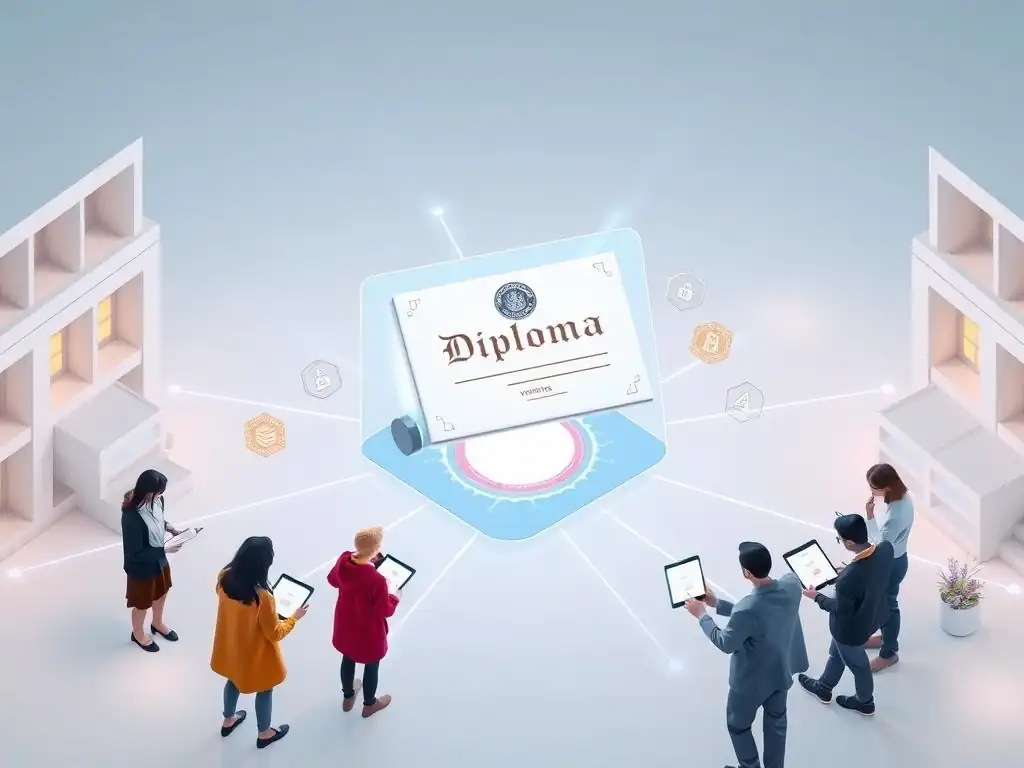
Case Study 1: University of Nicosia's Blockchain Diploma Program
The University of Nicosia (UNIC), located in Cyprus, is a pioneering institution in the adoption of blockchain technology for academic credentialing. In 2017, UNIC became one of the first universities globally to issue blockchain-based diplomas to its graduates. This initiative aimed to enhance the security and verifiability of their diplomas and provide students with a modern, portable, and tamper-proof record of their academic achievements. UNIC utilizes the Bitcoin blockchain to anchor the digital diplomas, leveraging its robust security and widespread recognition.
By issuing diplomas on the blockchain, UNIC empowered its graduates with verifiable credentials that can be easily shared and verified worldwide. This initiative not only enhanced the reputation of the university as an innovator but also provided its graduates with a distinct advantage in the global job market. The University of Nicosia's blockchain diploma program serves as a prominent early example of how blockchain technology can be successfully implemented in higher education to improve credentialing and benefit both institutions and students.
Case Study 2: Learning Machine's Digital Credential Platform
Learning Machine is a technology company that has been at the forefront of developing blockchain-based digital credentialing solutions. Their platform, now part of Parchment, provides institutions with the tools to issue, manage, and verify digital credentials on the blockchain. Learning Machine has partnered with numerous educational institutions, government agencies, and organizations worldwide to implement blockchain credentialing systems. Their platform is designed to be user-friendly and scalable, making it accessible to institutions of various sizes and types.
One notable example of Learning Machine's impact is their work with the Massachusetts Institute of Technology (MIT). MIT has used Learning Machine's platform to issue blockchain-based digital diplomas since 2017. This partnership showcases the credibility and robustness of Learning Machine's technology and demonstrates the growing adoption of blockchain credentialing among leading educational institutions. Learning Machine's platform has played a significant role in driving the adoption of blockchain for academic credentials and establishing best practices in the field.
Impact and Outcomes of Blockchain-Based Systems
The real-world implementations of blockchain-based academic credentialing, such as those by the University of Nicosia and through platforms like Learning Machine, have demonstrated significant positive impacts and outcomes. These systems have demonstrably enhanced the security and verifiability of academic records, reducing the risk of fraud and increasing trust in educational qualifications. Students benefit from having greater control over their digital credentials, which are portable, easily shareable, and tamper-proof. Institutions experience streamlined administrative processes and reduced costs associated with traditional verification methods.
Early adopters have reported significant efficiency gains in credential verification, with processes that previously took days or weeks now completed in minutes. The enhanced security and transparency of blockchain-based systems have also contributed to improved institutional reputation and increased student satisfaction. While still in the early stages of widespread adoption, these real-world examples clearly indicate the transformative potential of blockchain technology to modernize and improve academic credentialing systems globally.
Benefits for Stakeholders
For Students: Ownership, Control, and Portability
Blockchain-based academic credentials offer significant benefits to students, primarily through increased ownership, control, and portability of their educational records. With traditional paper credentials, students have limited control and often rely on institutions to provide transcripts and verifications. Blockchain empowers students by giving them direct access to their digitally signed credentials through secure digital wallets. They become the custodians of their own verified academic records, rather than relying solely on institutional intermediaries.
This ownership translates into greater control over how their credentials are used and shared. Students can selectively share their credentials with employers, educational institutions, or other relevant parties, granting permission-based access as needed. The portability of digital credentials is another key advantage. Unlike bulky paper documents, digital credentials can be easily accessed and shared electronically from anywhere in the world, facilitating seamless transitions between educational institutions and employment opportunities across geographical boundaries.
For Educational Institutions: Reduced Costs and Enhanced Reputation
Educational institutions also stand to gain significantly from adopting blockchain-based academic credentialing systems. One of the most compelling benefits is the potential for reduced administrative costs. The traditional process of responding to verification requests is labor-intensive and resource-draining. By issuing credentials on the blockchain, institutions can significantly reduce the volume of verification requests they need to handle manually, as employers and verifiers can directly access and validate credentials on the blockchain.
Furthermore, embracing blockchain technology can enhance an institution's reputation as innovative and forward-thinking. Adopting cutting-edge technologies like blockchain signals a commitment to modernization and providing students with the best possible tools for success in the digital age. This can be a significant differentiator for institutions in a competitive educational landscape, attracting prospective students and enhancing their standing within the global academic community.
For Employers: Faster and More Reliable Verification
Employers are major beneficiaries of blockchain-based academic credential verification due to the promise of faster and more reliable verification processes. Traditional methods of verifying academic credentials can be time-consuming, costly, and sometimes unreliable. Blockchain offers a streamlined and efficient alternative. Employers can verify credentials instantly and with greater certainty by directly accessing the blockchain, eliminating the delays and uncertainties associated with manual verification processes.
The increased reliability of blockchain-verified credentials reduces the risk of hiring candidates with fraudulent qualifications. This can save employers significant costs associated with bad hires and protect their organizations from potential reputational damage. Faster verification processes also speed up the hiring cycle, allowing employers to fill positions more quickly and efficiently, improving overall organizational productivity and competitiveness.
Challenges and Considerations for Implementation
Scalability and Interoperability
While blockchain technology offers numerous advantages for academic credentialing, there are challenges and considerations to address for successful widespread implementation. Scalability is a key concern. As the number of institutions issuing blockchain credentials and the volume of credentials issued grows, the blockchain network needs to be able to handle the increasing transaction load efficiently without compromising speed or cost. Choosing the right type of blockchain and optimizing its architecture are crucial for ensuring scalability.
Interoperability is another important consideration. For blockchain-based credentialing to be truly effective, different blockchain systems and platforms need to be able to communicate and exchange information seamlessly. Standards and protocols for interoperability are essential to prevent the creation of fragmented and isolated credentialing systems. Collaboration among institutions, technology providers, and standards bodies is necessary to ensure that blockchain-based credentials are universally recognized and verifiable across different platforms and systems.
Data Privacy and Security
Data privacy and security are paramount concerns when implementing blockchain for academic credentials, as educational records contain sensitive personal information. While blockchain itself offers strong security features, careful consideration must be given to how personal data is handled and stored within the blockchain system. Compliance with data privacy regulations, such as GDPR (General Data Protection Regulation) and similar laws, is essential.
Techniques like data anonymization, pseudonymization, and zero-knowledge proofs can be employed to protect student privacy while still enabling credential verification. Institutions need to implement robust security measures to protect the private keys used to sign credentials and ensure the overall security of the credentialing system. Balancing the need for transparency and verifiability with the imperative to protect student data privacy is a critical challenge in the design and implementation of blockchain-based academic credentialing systems.
Regulatory and Legal Landscape
The regulatory and legal landscape surrounding blockchain technology and digital credentials is still evolving. Clarity and legal frameworks are needed to provide a solid foundation for the widespread adoption of blockchain-based academic credentials. Issues such as the legal validity of digital credentials, cross-border recognition, and data governance need to be addressed by policymakers and regulatory bodies.
Collaboration between educational institutions, technology providers, and government agencies is crucial to shape the regulatory environment in a way that fosters innovation while ensuring consumer protection and data security. Addressing legal and regulatory uncertainties will be essential to build confidence and facilitate the mainstream adoption of blockchain technology in academic credentialing and other areas of education.
The Future of Education Credentials
Decentralized Learning and Micro-Credentials
The future of education credentials is intertwined with the broader trends of decentralized learning and the rise of micro-credentials. Blockchain technology is particularly well-suited to support these evolving models of education. Decentralized learning platforms, which leverage blockchain for governance and content delivery, can issue blockchain-based credentials that are directly owned and controlled by learners. Micro-credentials, which recognize specific skills and competencies gained through shorter, more focused learning experiences, can also be effectively issued and managed on the blockchain.
Blockchain's ability to track and verify granular learning achievements makes it ideal for supporting the growing demand for micro-credentials. These credentials, often focused on specific skills relevant to the job market, can provide learners with more flexible and targeted pathways for professional development. Blockchain can create a transparent and verifiable ecosystem for micro-credentials, enabling learners to build a lifelong learning portfolio of skills and competencies that are readily recognized and valued by employers.
Integrating Blockchain with Educational Technologies
The future of academic credentialing will likely involve deeper integration of blockchain technology with other educational technologies. Learning Management Systems (LMS), student information systems (SIS), and other educational platforms can be enhanced by incorporating blockchain-based credentialing capabilities. This integration can streamline workflows, automate credential issuance, and provide a more seamless experience for students and institutions.
Furthermore, blockchain can be integrated with emerging technologies like AI and machine learning to create more personalized and adaptive learning experiences. AI-powered learning platforms can leverage blockchain-verified credentials to tailor educational pathways to individual learner needs and goals, and to provide more granular and relevant skills recognition. This convergence of blockchain and other educational technologies has the potential to transform the entire education ecosystem, making it more learner-centric, efficient, and responsive to the evolving needs of the 21st-century workforce.
Evolution of Academic Credentialing
The evolution of academic credentialing is moving towards a more digital, decentralized, and learner-centric model, and blockchain technology is poised to play a central role in this transformation. The future of academic credentials is likely to be characterized by increased emphasis on digital formats, enhanced security and verifiability through blockchain, greater learner ownership and control, and seamless portability across educational and employment contexts. Traditional paper-based credentials may gradually become less prevalent, replaced by digital credentials that are anchored on blockchain and readily verifiable in the digital age.
This evolution will require ongoing collaboration among educational institutions, technology providers, policymakers, and employers to establish standards, address challenges, and realize the full potential of blockchain to revolutionize academic credentialing. As blockchain technology matures and adoption expands, it is expected to fundamentally reshape the way academic qualifications are issued, verified, and recognized globally, creating a more trustworthy and efficient education ecosystem.
Conclusion: Blockchain's Impact on Academic Credentialing
Key Advantages of Blockchain for Secure and Verifiable Records
Blockchain technology offers a compelling and transformative solution for enhancing the security and verifiability of academic records. Its core features of decentralization, immutability, and transparency address the limitations of traditional paper-based and centralized digital systems. Blockchain-based academic credentials provide enhanced security against fraud and tampering, increase transparency and trust in the verification process, and streamline verification workflows, benefiting students, educational institutions, and employers alike. Real-world implementations and case studies demonstrate the practical viability and positive impact of blockchain in academic credentialing.
The key advantages of blockchain for secure and verifiable records include its tamper-proof nature, which minimizes the risk of fraudulent credentials; its transparent verification process, which builds trust among stakeholders; and its efficiency, which reduces administrative burdens and costs. These advantages position blockchain as a powerful tool for modernizing academic credentialing and fostering a more trustworthy and efficient global education ecosystem.
Future of Blockchain in Education
The future of blockchain in education extends beyond academic credentialing. Its potential applications encompass various aspects of the education sector, including decentralized learning platforms, micro-credentialing systems, intellectual property management, and secure data sharing. As blockchain technology continues to mature and become more widely adopted, its impact on education is expected to grow significantly.
The evolution of academic credentialing towards digital, decentralized, and learner-centric models will be driven by blockchain, paving the way for a more innovative, efficient, and equitable education landscape. The ongoing development and implementation of blockchain solutions in education promise to reshape the future of learning and credential recognition in the digital age.
Frequently Asked Questions
What are the primary benefits of using blockchain to verify academic credentials?
The main benefits include enhanced security against fraud, increased transparency in verifying credentials, and improved accessibility for students and institutions.
How does blockchain technology ensure the authenticity of academic records?
Blockchain creates a tamper-proof and immutable record of each credential. Every transaction is cryptographically secured and distributed, making it virtually impossible to alter the data.
Can employers easily verify credentials stored on a blockchain?
Yes, employers can quickly and easily verify credentials. They can use a dedicated verification portal or application to access the blockchain and confirm the authenticity of a candidate's academic record without needing to contact the institution directly.
What are some potential challenges in adopting blockchain for academic credential verification on a large scale?
Challenges include the initial costs of implementation, the need for industry-wide standardization, and ensuring data privacy and compliance with regulations like GDPR.
How might blockchain-verified academic credentials impact the future of education and employment?
It can lead to a more efficient and trustworthy system for verifying skills and qualifications, potentially impacting hiring processes and the recognition of international credentials. It could also encourage more lifelong learning by providing a verifiable record of continuous professional development.
Final Reflection: Empowering Trust Through Immutable Records
The journey of exploring how blockchain technology can revolutionize academic credentialing culminates in a powerful realization: the future of education verification is inextricably linked to trust and transparency. The potential to eliminate fraud, streamline verification processes, and empower individuals with control over their own academic data is not just a technological advancement; it's a fundamental shift in how we perceive and validate knowledge.
This shift has profound implications for the cultural and social landscape. The ability to instantly and securely verify academic achievements levels the playing field, offering equal opportunities to individuals regardless of their background or location. It fosters a meritocratic system where skills and knowledge are accurately represented and easily accessible to employers and institutions worldwide. Education is the most powerful weapon which you can use to change the world.
- Nelson Mandela. Blockchain, in this context, becomes a tool to wield that weapon more effectively, ensuring its power is distributed fairly and transparently.
As we conclude this exploration, I invite you to consider the implications of this technology in your own life. How can you leverage the principles of transparency and immutability to build trust in your own endeavors? How can you advocate for the adoption of blockchain-based solutions to create a more equitable and verifiable world? The power to shape the future of education, and indeed, the future of trust, lies within each of us. Let us embrace the potential of blockchain to build a world where knowledge is not just acquired, but also securely and verifiably recognized.
Claim Your Future: Embrace Verifiable Education!
Thank you for exploring how blockchain technology can secure your educational credentials. We hope you now understand its potential to create a future where your academic achievements are clearly verifiable and easily accessible. Here's how you can take action:
- Contact your educational institution to ask about their plans for implementing blockchain-based credentialing. Be a part of driving this change!
- Consider other ways blockchain could benefit education, such as secure online examinations or tamper-proof research data.
- Share this information with fellow students, educators, and administrators to promote a broader discussion about the future of academic credentials.
What steps will you take today to support the adoption of blockchain technology in education and your career? Share your thoughts below!
Leave a Reply