
Enhancing Data Privacy in Public Records: Exploring BlockchainBased Solutions


Welcome to Blockchain Trends, your compass in the rapidly evolving world of decentralized technology. Beyond the hype, blockchain holds the key to revolutionizing industries and reshaping our digital future. Intrigued by how blockchain can enhance security and transparency? Dive in as we explore cutting-edge blockchain data privacy solutions, particularly their application in public records, and uncover the potential to build more secure and trustworthy systems. Discover how this technology is shaping the future of blockchain and governance and prepare to be enlightened.
- Introduction: The Challenge of Data Privacy in Public Records
- The Limitations of Traditional Public Record Systems
- Blockchain Data Privacy Solutions: A Paradigm Shift for Public Records
- Specific Blockchain Approaches for Data Privacy in Public Records
- Use Cases: Blockchain Data Privacy Solutions in Action
- Benefits of Implementing Blockchain for Data Privacy in Public Records
- Challenges and Considerations for Blockchain Adoption
- Overcoming the Challenges: Strategies for Successful Implementation
- The Future of Blockchain Data Privacy Solutions in Public Records
- Conclusion: Embracing Blockchain for Data Privacy in Public Records
-
Frequently Asked Questions
- What are the primary benefits of using blockchain for data privacy in public records?
- How can blockchain-based solutions address the challenge of data breaches in public record systems?
- What are some regulatory considerations when implementing blockchain for public records, specifically concerning data privacy?
- Beyond public records, where else can Blockchain data privacy solutions be applied?
- What are the limitations of blockchain-based data privacy solutions, and what are potential solutions for overcoming them?
- Final Reflection: Embracing Decentralized Trust
Introduction: The Challenge of Data Privacy in Public Records
Understanding the Tension: Public Access vs. Individual Privacy
Public records are fundamental to transparent governance and societal accountability. They provide citizens with the ability to scrutinize government actions, verify property ownership, and access vital information. However, the very nature of public records – their accessibility – inherently clashes with the growing demand for individual data privacy. This tension arises because public records often contain sensitive personal information, ranging from addresses and dates of birth to financial details and family relationships. While public access serves the crucial purpose of transparency, unrestricted exposure of this data can lead to significant privacy risks, including identity theft, stalking, and discrimination.
The challenge lies in striking a delicate balance. Society needs public records to function effectively, but individuals also have a right to control their personal information and prevent its misuse. Traditional public record systems, often designed in a pre-digital era, struggle to navigate this complexity. The ease of digital access and the sheer volume of data now available online have amplified the risks associated with exposing personal information in public records. Therefore, innovative approaches are urgently needed to modernize public record management, ensuring both transparency and robust data privacy.
The Growing Need for Enhanced Privacy Measures
The urgency for enhanced privacy measures in public records is driven by several converging factors. Firstly, the digital age has dramatically increased the accessibility and dissemination of public information. What was once contained in physical archives can now be accessed globally with a few clicks, exponentially increasing the potential for misuse.
Data breaches are becoming increasingly common and sophisticated, highlighting the vulnerability of centralized databases that often underpin traditional public record systems. According to a report by IBM and Ponemon Institute, the average cost of a data breach in 2023 reached \$4.45 million globally, demonstrating the significant financial and reputational damage associated with compromised data.
Secondly, public awareness of data privacy rights is growing. Regulations like GDPR in Europe and CCPA in California reflect a global trend towards empowering individuals with greater control over their personal data. Citizens are increasingly concerned about how their data is collected, used, and protected by government entities. This heightened awareness extends to public records, where individuals are demanding greater transparency and security. The demand for robust blockchain data privacy solutions is not just a technological trend, but a societal imperative driven by the need to protect individual rights in an increasingly data-driven world.
The Limitations of Traditional Public Record Systems
Centralized Databases: A Single Point of Failure for Data Breaches
Traditional public record systems predominantly rely on centralized databases, creating a single point of failure susceptible to data breaches and cyberattacks. These databases, managed by governmental bodies, store vast amounts of sensitive personal information in a single location, making them attractive targets for malicious actors. A successful breach can expose the records of millions of individuals, leading to identity theft, financial fraud, and other serious harms.
For example, in 2015, the US Office of Personnel Management (OPM) suffered a massive data breach that compromised the personal data of over 22 million individuals, including social security numbers, security clearance investigation details, and fingerprints. This incident highlighted the devastating consequences of relying solely on centralized security measures for public records.
Furthermore, the very architecture of centralized systems often lacks the resilience needed to withstand persistent and sophisticated cyber threats. Security measures, while often in place, can be circumvented, and insider threats also pose a significant risk. Even with robust security protocols, the concentration of data in a single location inherently increases vulnerability.
The reliance on older technologies and legacy systems in many public record offices further exacerbates these risks, making them prime targets for attackers exploiting known vulnerabilities. This inherent weakness of centralized databases underscores the need for exploring decentralized and more secure alternatives, such as blockchain data privacy solutions.
Lack of Transparency and Auditability in Existing Systems
Many traditional public record systems suffer from a lack of transparency and auditability. Changes to records may not be easily tracked, and there is often limited visibility into who accessed or modified data and when. This opacity can erode public trust and create opportunities for manipulation, errors, or even corruption. In centralized systems, audit trails, if they exist, are often controlled by the same entity managing the data, raising concerns about impartiality and potential for tampering. Citizens and oversight bodies may find it difficult to independently verify the integrity and accuracy of public records.
This lack of auditability becomes particularly problematic when dealing with sensitive public records, such as land titles or vital statistics. Disputes over record authenticity or accuracy can be protracted and costly to resolve in systems lacking transparent audit trails. For instance, in regions with weak governance, land record manipulation is a significant issue, leading to property disputes and hindering economic development.
The inability to easily audit and verify public records undermines the very purpose of transparency and accountability that these systems are intended to serve. Blockchain data privacy solutions, with their inherent transparency and immutable audit logs, offer a potential remedy to these shortcomings.
Inefficient Data Management and Access Control
Traditional public record systems often struggle with inefficient data management and cumbersome access control mechanisms. Data may be stored in disparate systems, making it difficult to search, retrieve, and integrate information. Access control is often based on outdated or overly complex procedures, leading to delays and frustration for both citizens and government officials. Requesting public records can involve lengthy bureaucratic processes, physical visits to record offices, and significant waiting times. This inefficiency not only burdens citizens but also hinders government operations and can limit the effective use of public data for research and policy making.
Moreover, traditional systems often lack granular access control, meaning that individuals may have broader access than necessary, increasing the risk of unauthorized data disclosure or misuse. Updating and correcting records in these systems can also be a slow and error-prone process. The lack of interoperability between different public record systems further exacerbates these inefficiencies, creating data silos and hindering seamless information sharing. The need for more efficient, user-friendly, and secure data management and access control in public records is clear, and blockchain data privacy solutions offer promising avenues for improvement in this area.
Blockchain Data Privacy Solutions: A Paradigm Shift for Public Records
Leveraging Blockchain for Secure and Transparent Public Record Management
Blockchain technology presents a transformative paradigm shift for public record management, offering the potential to enhance both security and transparency simultaneously. Unlike traditional centralized databases, blockchain utilizes a decentralized, distributed ledger system, where data is replicated across multiple nodes in a network.
This inherent decentralization eliminates the single point of failure vulnerability of centralized systems, making blockchain networks significantly more resilient to cyberattacks and data breaches. Furthermore, blockchain's cryptographic foundation ensures data integrity and immutability, meaning that once data is recorded on the blockchain, it cannot be altered or tampered with, providing a robust audit trail and enhancing trust in the authenticity of public records.
The application of blockchain data privacy solutions to public records can revolutionize how governments manage and share information with citizens. By leveraging blockchain, public record systems can transition from opaque, centralized repositories to transparent, auditable, and secure platforms. This shift can foster greater public trust in government institutions and enhance the efficiency and accessibility of public services. The transparent and immutable nature of blockchain can also streamline processes such as record verification, dispute resolution, and regulatory compliance, leading to cost savings and improved governance.
Key Features of Blockchain Enhancing Data Privacy
Immutability: Ensuring Data Integrity and Preventing Tampering
Immutability is a core feature of blockchain technology that is particularly valuable for enhancing data privacy and integrity in public records. Once data is recorded on a blockchain, it becomes virtually impossible to alter or delete. This is achieved through cryptographic hashing and consensus mechanisms that ensure every block of data is linked to the previous block in a tamper-proof chain.
Any attempt to modify a record would require altering all subsequent blocks in the chain, a computationally infeasible task in a well-established blockchain network. This immutability provides an unparalleled level of data integrity, ensuring that public records remain accurate and authentic over time.
In the context of public records, immutability is crucial for preventing fraud, corruption, and accidental data alteration. For example, in land title registries, immutability can prevent fraudulent claims and ensure the ownership history of a property is permanently and verifiably recorded. Similarly, in vital records like birth certificates, immutability safeguards against unauthorized modifications and ensures the authenticity of these critical documents. By leveraging the immutability of blockchain, blockchain data privacy solutions can significantly strengthen the trustworthiness and reliability of public record systems.
Decentralization: Reducing the Risk of Centralized Attacks
Decentralization is another fundamental characteristic of blockchain that significantly enhances data privacy and security. In a decentralized blockchain network, data is distributed across multiple nodes rather than being stored in a single centralized location. This distributed architecture eliminates the single point of failure inherent in centralized systems, making blockchain networks far more resistant to cyberattacks.
If one node is compromised, the data remains secure and accessible on other nodes in the network. Attacking a decentralized blockchain requires compromising a significant portion of the network simultaneously, a task that is exponentially more difficult and costly than targeting a single centralized database.
The decentralization of blockchain data privacy solutions for public records offers a significant advantage in protecting sensitive personal information from data breaches and unauthorized access. By distributing data across a network, the risk of a catastrophic data loss or a large-scale data breach is drastically reduced. This inherent resilience makes blockchain a more secure and reliable platform for managing and storing public records compared to traditional centralized systems.
Transparency: Enabling Auditability and Trust
While often associated with privacy concerns, transparency in blockchain, when implemented thoughtfully, can actually enhance data privacy and build public trust in public record systems. Blockchain's transparency stems from the fact that all transactions and data records on a public blockchain are visible to all participants in the network. However, in the context of blockchain data privacy solutions, transparency is carefully managed through permissioned blockchains and cryptographic techniques to ensure that sensitive personal information is protected while still allowing for necessary auditability and verification.
For public records, transparency can be implemented in a way that allows for public auditability of record integrity and provenance without revealing the underlying sensitive data itself. For instance, cryptographic proofs can be used to verify the authenticity and validity of a record without disclosing the content of the record. This selective transparency enables independent verification and oversight, fostering greater public trust in the accuracy and fairness of public record systems. The ability to audit public records transparently, while protecting personal information, is a key advantage of blockchain data privacy solutions.
Cryptographic Techniques: Protecting Sensitive Information
Cryptography is the bedrock of blockchain data privacy solutions, providing the tools to protect sensitive information while still enabling secure and transparent data management. Blockchain utilizes various cryptographic techniques, including hashing, digital signatures, and encryption, to secure data and control access. Hashing ensures data integrity by creating a unique fingerprint of each record, making any unauthorized modification immediately detectable. Digital signatures verify the authenticity and origin of transactions, preventing impersonation and fraud. Encryption protects the confidentiality of data by rendering it unreadable to unauthorized parties.
In the context of public records, cryptographic techniques can be employed to implement privacy-preserving features such as data anonymization, pseudonymization, and secure multi-party computation. For example, sensitive personal identifiers can be hashed or encrypted before being recorded on the blockchain, ensuring that only authorized parties with the decryption keys can access the raw data. Zero-knowledge proofs and homomorphic encryption, as discussed later, are advanced cryptographic techniques that further enhance data privacy in blockchain-based public record systems, allowing for data verification and computation without revealing the underlying sensitive information.
Specific Blockchain Approaches for Data Privacy in Public Records
Permissioned Blockchains: Balancing Access and Privacy
Permissioned blockchains offer a balanced approach to data privacy and access control in public record systems. Unlike public blockchains, which are open to anyone, permissioned blockchains restrict network participation to a select group of authorized entities. This controlled access allows for greater privacy and confidentiality, as only authorized participants can view and transact on the blockchain. Permissioned blockchains are particularly well-suited for applications where data privacy is paramount, such as government records, healthcare data, and financial transactions.
In the context of blockchain data privacy solutions for public records, permissioned blockchains can be implemented to allow government agencies, authorized personnel, and potentially citizens with specific permissions to access and manage records. Fine-grained access control mechanisms can be implemented within permissioned blockchains to further restrict access to specific types of data or records based on roles and responsibilities.
This approach allows for the benefits of blockchain technology – security, transparency, and immutability – to be leveraged while maintaining necessary levels of data privacy and control within a defined ecosystem. Examples of permissioned blockchain platforms include Hyperledger Fabric and R3 Corda, which are often favored for enterprise and government applications.
Zero-Knowledge Proofs: Verifying Data Without Revealing It
Zero-knowledge proofs (ZKPs) are a revolutionary cryptographic technique that allows one party to prove to another party that a statement is true without revealing any information beyond the truth of the statement itself. In the context of public records, ZKPs offer a powerful mechanism for verifying the validity of records or accessing specific information without disclosing sensitive personal data. For example, a citizen could use a ZKP to prove they are of legal voting age based on their birth certificate recorded on a blockchain, without revealing their actual birth date.
Blockchain data privacy solutions incorporating ZKPs can significantly enhance privacy in public record systems. ZKPs enable selective disclosure of information, allowing individuals to control what information they share and with whom. This is particularly valuable in scenarios where verification or authentication is required without compromising privacy. For instance, ZKPs can be used to verify professional licenses, educational qualifications, or identity attributes stored on a blockchain without revealing the underlying details of these credentials. The adoption of ZKPs in public record systems can empower individuals with greater control over their personal information while still enabling necessary verification processes.
Homomorphic Encryption: Performing Computations on Encrypted Data
Homomorphic encryption (HE) is an advanced cryptographic technique that allows computations to be performed on encrypted data without decrypting it first. This groundbreaking technology has significant implications for data privacy, as it enables data analysis and processing to be conducted securely without exposing sensitive information. In the context of public records, HE can be used to perform statistical analysis, data aggregation, or machine learning on encrypted public record data while maintaining the confidentiality of the underlying information.
Blockchain data privacy solutions leveraging homomorphic encryption can unlock new possibilities for data-driven insights from public records while preserving privacy. For example, government agencies could use HE to analyze trends in public health data, crime statistics, or demographic information stored on a blockchain without ever directly accessing the raw, unencrypted personal data.
This capability is particularly valuable for applications involving sensitive public records where data analysis is needed for policy making or research purposes, but privacy concerns limit data sharing and access. While computationally intensive, advancements in HE are making it increasingly practical for real-world applications, offering a powerful tool for privacy-preserving data processing.
Differential Privacy: Adding Noise to Protect Individual Identities
Differential privacy (DP) is a technique for protecting individual identities in datasets by adding a carefully calibrated amount of statistical noise to the data. This noise makes it difficult to identify specific individuals within the dataset while still allowing for accurate aggregate-level analysis. In the context of public records, DP can be applied to anonymize datasets before they are made publicly available for research or statistical purposes. This allows researchers and policymakers to gain valuable insights from public data while minimizing the risk of re-identification and privacy breaches.
Blockchain data privacy solutions can incorporate differential privacy to enhance the privacy of public record datasets that are intended for public consumption or analysis. By applying DP techniques to data stored on a blockchain, government agencies can release anonymized datasets that are statistically useful for research and policy making without compromising the privacy of individuals whose records are included in the data.
This approach balances the need for data accessibility with the imperative to protect individual privacy, enabling the responsible and ethical use of public data for societal benefit. Differential privacy is particularly relevant for public health data, census data, and other datasets that contain sensitive personal information but are valuable for public interest research.
Use Cases: Blockchain Data Privacy Solutions in Action
Real Estate Title Management: Secure and Transparent Property Records
Blockchain technology is being explored and implemented in various jurisdictions to revolutionize real estate title management. Traditional land registries often suffer from inefficiencies, lack of transparency, and vulnerability to fraud. Blockchain data privacy solutions offer a secure and transparent alternative by creating an immutable and auditable record of property ownership and transactions.
For example, Sweden's land registry, Lantmäteriet, has been piloting a blockchain-based system for land title registration, aiming to streamline processes, reduce fraud, and increase transparency. Similarly, Georgia has partnered with blockchain technology companies to secure land titles on a blockchain, aiming to improve the efficiency and security of its property registry.
In a blockchain-based real estate title management system, each property title is represented as a digital asset on the blockchain, and all transactions related to the property, such as sales, transfers, and mortgages, are recorded on the blockchain in an immutable and transparent manner. This creates a single, verifiable source of truth for property ownership, reducing disputes and streamlining title searches and transfers. Furthermore, blockchain can enhance data privacy by controlling access to sensitive property owner information and providing secure mechanisms for verifying title ownership.
Birth Certificate Management: Protecting Personal Information in Public Databases
Birth certificates are critical public records containing highly sensitive personal information, including names, dates of birth, places of birth, and parental details. Traditional birth certificate management systems, often paper-based or centralized digital databases, are vulnerable to fraud, loss, and privacy breaches. Blockchain data privacy solutions offer a more secure and efficient way to manage and verify birth certificates while protecting personal information. For instance, UNICEF has explored using blockchain to create digital birth certificates for children in developing countries, aiming to improve access to vital services and protect children's identities.
A blockchain-based birth certificate management system can issue digital birth certificates that are securely stored on a blockchain and can be easily verified by authorized parties, such as healthcare providers, schools, and government agencies. Individuals can control access to their digital birth certificates and share them securely when needed, reducing the risk of fraud and identity theft. Blockchain can also enhance data privacy by encrypting sensitive information within birth certificates and implementing access control mechanisms to ensure only authorized parties can access the full record.
Vaccination Records: Ensuring Patient Privacy and Data Security
Vaccination records are another type of sensitive public record that require robust data privacy and security measures. Traditional paper-based vaccination records are easily lost, damaged, or falsified. Centralized digital vaccination databases, while more efficient, are vulnerable to data breaches and privacy concerns. Blockchain data privacy solutions offer a secure, interoperable, and patient-centric approach to managing vaccination records, ensuring data integrity and protecting patient privacy. During the COVID-19 pandemic, various initiatives explored blockchain-based digital vaccine passports to facilitate secure and verifiable proof of vaccination.
A blockchain-based vaccination record system can issue digital vaccination certificates that are securely stored on a blockchain and controlled by the individual patient. Patients can share their vaccination status with healthcare providers, employers, or travel authorities as needed, while maintaining control over their personal data. Blockchain can enhance data privacy by encrypting patient information and implementing consent-based access control, ensuring that vaccination records are only accessed by authorized parties with patient permission. Interoperability is another key benefit, as blockchain-based vaccination records can be designed to be compatible across different healthcare systems and jurisdictions.
Campaign Finance Disclosures: Enhancing Transparency and Preventing Fraud
Campaign finance disclosures are essential for ensuring transparency and accountability in political campaigns. Traditional campaign finance disclosure systems often lack transparency, are prone to errors, and can be manipulated. Blockchain data privacy solutions can enhance transparency and prevent fraud in campaign finance disclosures by creating an immutable and auditable record of campaign contributions and expenditures. While privacy concerns exist regarding donor information, blockchain can be implemented in a way that balances transparency with necessary privacy protections.
A blockchain-based campaign finance disclosure system can record all campaign contributions and expenditures on a public or permissioned blockchain, creating a transparent and auditable record for public scrutiny. This can help to deter illegal campaign financing, increase accountability, and enhance public trust in the electoral process.
While donor identities may need to be protected in some jurisdictions, blockchain can still provide transparency regarding the amounts and sources of campaign funds without necessarily revealing individual donor details in all cases. Cryptographic techniques like zero-knowledge proofs can potentially be used to verify compliance with campaign finance regulations without revealing sensitive donor information publicly.
Benefits of Implementing Blockchain for Data Privacy in Public Records
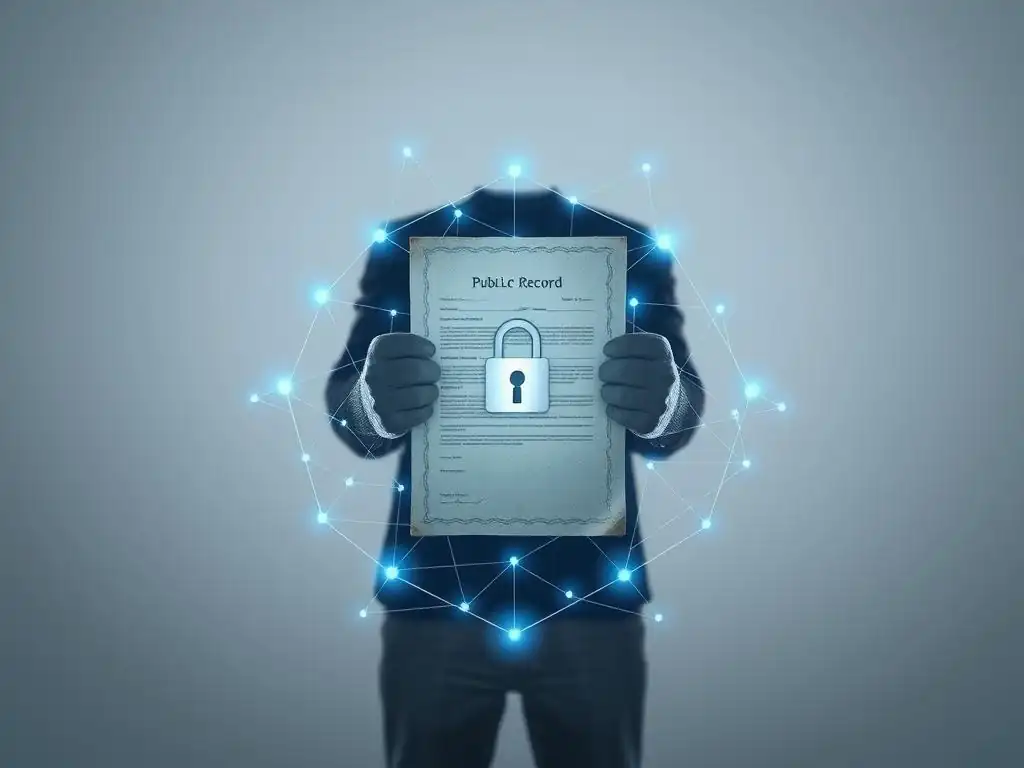
Enhanced Security and Data Integrity
Implementing blockchain data privacy solutions in public record systems offers significant enhancements in security and data integrity. Blockchain's decentralized and distributed architecture eliminates the single point of failure vulnerability of centralized databases, making it far more resilient to cyberattacks and data breaches. The cryptographic hashing and consensus mechanisms inherent in blockchain ensure data immutability, preventing tampering and unauthorized modifications. These features combine to create a more secure and trustworthy environment for managing sensitive public records, reducing the risk of data loss, corruption, and unauthorized access.
The enhanced security and data integrity provided by blockchain translate to greater protection of personal information within public records. By reducing the risk of data breaches and ensuring the authenticity and accuracy of records, blockchain helps to safeguard individual privacy and prevent identity theft, fraud, and other harms associated with compromised public data. The robust security of blockchain is a key benefit for public record systems that handle sensitive personal information.
Improved Transparency and Accountability
While focusing on data privacy, blockchain data privacy solutions also inherently improve transparency and accountability in public record systems. The immutable and auditable nature of blockchain provides a transparent record of all transactions and data modifications, allowing for independent verification and oversight. This increased transparency can foster greater public trust in government institutions and enhance accountability for public officials and record keepers. The ability to track the provenance and history of public records on a blockchain strengthens accountability and reduces the potential for manipulation or corruption.
The transparency of blockchain can be selectively implemented to balance public access with data privacy. While sensitive personal information may be protected through encryption or access controls, the overall integrity and history of public records can be made transparently auditable, ensuring accountability and building public confidence in the system. This balance between transparency and privacy is a key advantage of blockchain for public record management.
Increased Efficiency and Reduced Costs
Contrary to common perceptions of blockchain as inefficient, blockchain data privacy solutions can actually lead to increased efficiency and reduced costs in public record systems in the long run. By streamlining processes such as record verification, data sharing, and dispute resolution, blockchain can eliminate redundancies and reduce bureaucratic overhead. The automation and digitization enabled by blockchain can significantly improve the speed and efficiency of public record management operations. For example, smart contracts can automate record updates and transfers, reducing manual processing and errors.
The long-term cost savings associated with blockchain implementation can be substantial, particularly by reducing fraud, errors, and administrative overhead. While initial implementation costs may be involved, the increased efficiency, reduced risk of data breaches, and streamlined processes can lead to significant cost reductions over time. Furthermore, the improved data integrity and transparency can reduce the costs associated with dispute resolution and litigation related to public records.
Greater Public Trust and Confidence
Ultimately, the implementation of blockchain data privacy solutions in public record systems aims to build greater public trust and confidence in government institutions and public services. By demonstrating a commitment to data privacy, security, and transparency, governments can enhance their credibility and legitimacy in the eyes of citizens. The secure and auditable nature of blockchain can reassure the public that their personal information in public records is protected and that government processes are fair and accountable.
Increased public trust and confidence are essential for effective governance and citizen engagement. By adopting innovative technologies like blockchain to modernize public record systems and address data privacy concerns, governments can foster a more positive and trusting relationship with the public. This increased trust can translate to greater citizen participation in civic processes and improved public perception of government services.
Challenges and Considerations for Blockchain Adoption
Scalability Issues: Addressing the Limits of Blockchain Technology
Scalability remains a significant challenge for blockchain technology, particularly for public blockchain networks. Many blockchain platforms currently have limitations on the number of transactions they can process per second, which can become a bottleneck for high-volume applications like large-scale public record systems. While permissioned blockchains can offer better scalability than public blockchains, scalability still needs to be carefully considered and addressed when designing blockchain data privacy solutions for public records.
Various scalability solutions are being developed and implemented in the blockchain space, including layer-2 scaling solutions like sidechains and rollups, sharding, and consensus mechanism optimizations. Choosing the right blockchain platform and scalability solutions is crucial for ensuring that a blockchain-based public record system can handle the required transaction volume and data storage needs without performance degradation. Scalability planning and testing are essential steps in the adoption process.
The regulatory landscape for blockchain technology is still evolving globally. There is currently no uniform legal framework for blockchain, and regulations vary significantly across jurisdictions. This regulatory uncertainty can pose challenges for the adoption of blockchain data privacy solutions in public record systems, as government agencies need to ensure compliance with relevant laws and regulations, including data privacy laws, record retention laws, and cybersecurity regulations.
Navigating the regulatory landscape requires careful legal analysis and engagement with regulatory bodies. Government agencies need to work with legal experts to understand the regulatory implications of using blockchain for public records and to ensure that their blockchain implementations comply with all applicable laws and regulations. Engaging in dialogue with regulators and participating in industry standards development efforts can help to shape a more favorable and clear regulatory environment for blockchain adoption in the public sector.
Technical Expertise: Building and Maintaining Blockchain Systems
Building and maintaining blockchain systems requires specialized technical expertise that may not be readily available within government agencies. Blockchain technology is complex, and developing and deploying blockchain data privacy solutions requires skills in cryptography, distributed systems, smart contract development, and cybersecurity. The lack of in-house blockchain expertise can be a barrier to adoption for many public sector organizations.
Addressing the technical expertise challenge requires investment in training and education for government personnel, as well as strategic partnerships with blockchain technology companies and experts. Building internal blockchain development teams or outsourcing blockchain development and maintenance to specialized firms are common approaches. Knowledge transfer and capacity building are essential for ensuring the long-term sustainability of blockchain-based public record systems.
Interoperability: Integrating with Existing Public Record Systems
Integrating blockchain-based systems with existing legacy public record systems presents a significant interoperability challenge. Many public record systems are based on older technologies and proprietary data formats, making seamless integration with new blockchain platforms complex and costly. Interoperability is crucial for ensuring that blockchain data privacy solutions can effectively interact with existing infrastructure and data sources without creating data silos or disrupting existing workflows.
Addressing interoperability requires careful planning and the adoption of open standards and APIs. Developing interoperability layers or gateways to connect blockchain systems with legacy systems is often necessary. Data migration and data transformation processes may also be required to ensure data compatibility between different systems. Adopting open and standardized blockchain platforms and protocols can facilitate interoperability and reduce integration complexities.
Overcoming the Challenges: Strategies for Successful Implementation
Choosing the Right Blockchain Platform
Selecting the appropriate blockchain platform is a critical first step in overcoming the challenges of implementing blockchain data privacy solutions for public records. The choice of platform should be based on a careful assessment of the specific requirements of the public record system, including scalability needs, data privacy requirements, regulatory compliance considerations, and interoperability needs. Permissioned blockchains are often preferred for public sector applications due to their enhanced privacy and control features.
Factors to consider when choosing a blockchain platform include the platform's scalability, security features, privacy capabilities, maturity, community support, and cost. Conducting thorough platform evaluations and pilot projects can help government agencies make informed decisions about the best blockchain platform for their specific use case. Considering open-source blockchain platforms can also offer greater flexibility and transparency compared to proprietary solutions.
Developing Robust Data Governance Policies
Robust data governance policies are essential for successful implementation of blockchain data privacy solutions in public record systems. Data governance policies should define clear rules and procedures for data access, data sharing, data security, data quality, and data privacy. These policies should align with relevant data privacy regulations and ethical principles and should be transparent and publicly accessible. Establishing a data governance framework that addresses data ownership, data stewardship, and data accountability is crucial for building trust and ensuring responsible data management.
Data governance policies should also address issues related to data retention, data deletion, and data rectification in the context of blockchain's immutability. Developing mechanisms for handling data errors and ensuring data accuracy within a blockchain environment is important. Regular review and updates of data governance policies are necessary to adapt to evolving technologies and regulatory requirements.
Investing in Training and Education
Investing in training and education is crucial for building the necessary technical expertise within government agencies to successfully implement and maintain blockchain data privacy solutions. Training programs should be developed to educate government personnel on blockchain technology, cryptography, smart contract development, and cybersecurity best practices. These programs should be tailored to different roles and responsibilities within the organization, from technical staff to policy makers and legal experts.
Partnerships with universities, research institutions, and blockchain industry organizations can provide access to specialized training and educational resources. Encouraging continuous learning and professional development in blockchain technologies is essential for building a skilled workforce capable of managing and evolving blockchain-based public record systems. Knowledge sharing and collaboration across government agencies can also help to disseminate blockchain expertise and best practices.
Collaborating with Stakeholders
Collaboration with various stakeholders is essential for successful implementation of blockchain data privacy solutions in public records. Stakeholders include other government agencies, technology vendors, legal experts, privacy advocates, and the public. Engaging with stakeholders early and throughout the implementation process can help to address concerns, build consensus, and ensure that the blockchain solution meets the needs of all parties involved. Collaborative pilot projects and proof-of-concepts can provide valuable insights and feedback for refining blockchain implementations.
Public consultation and transparency are important for building public trust and acceptance of blockchain-based public record systems. Communicating the benefits of blockchain, addressing privacy concerns, and providing opportunities for public feedback can help to foster a more supportive environment for blockchain adoption in the public sector. Collaborative governance models that involve multiple stakeholders in decision-making can enhance the legitimacy and effectiveness of blockchain implementations.
The Future of Blockchain Data Privacy Solutions in Public Records
Emerging Trends and Technologies
The field of blockchain data privacy solutions is rapidly evolving, with several emerging trends and technologies shaping the future of public record management. Advancements in zero-knowledge proofs, homomorphic encryption, and differential privacy are making privacy-preserving blockchain applications increasingly practical and powerful. Layer-2 scaling solutions are improving the scalability and performance of blockchain networks, making them more suitable for large-scale public record systems. The development of interoperability standards and protocols is facilitating seamless integration between different blockchain platforms and legacy systems.
The rise of decentralized identity solutions and self-sovereign identity (SSI) is also relevant to the future of blockchain in public records. SSI empowers individuals with greater control over their digital identities and personal data, which can be integrated with blockchain-based public record systems to enhance data privacy and user autonomy. The convergence of blockchain with other technologies like artificial intelligence (AI) and the Internet of Things (IoT) is also creating new opportunities for innovative public record applications.
Potential for Widespread Adoption
The potential for widespread adoption of blockchain data privacy solutions in public records is significant. As governments increasingly recognize the limitations of traditional public record systems and the growing importance of data privacy, blockchain is emerging as a promising alternative. The benefits of enhanced security, data integrity, transparency, and efficiency offered by blockchain are compelling for public sector applications. As blockchain technology matures and becomes more accessible, and as regulatory frameworks become clearer, wider adoption in public record systems is expected.
The increasing number of pilot projects and proof-of-concepts in various jurisdictions demonstrates the growing interest in and feasibility of blockchain for public records. Success stories and best practices from early adopters will likely encourage broader adoption across different levels of government and across various types of public records. The push for digital transformation and modernization of government services will further drive the adoption of innovative technologies like blockchain.
The Role of Blockchain in Building a More Secure and Transparent Society
Ultimately, the adoption of blockchain data privacy solutions in public records contributes to building a more secure and transparent society. By enhancing data privacy, security, and integrity in public record systems, blockchain helps to protect individual rights and prevent fraud and corruption. The increased transparency and accountability enabled by blockchain can foster greater public trust in government institutions and enhance democratic processes. Blockchain has the potential to empower citizens with greater control over their personal data and to promote more responsible and ethical data governance practices in the public sector.
As blockchain technology continues to evolve and mature, its role in shaping a more secure, transparent, and privacy-preserving digital society will likely become even more profound. The application of blockchain to public records is just one example of its transformative potential to improve governance, enhance public services, and build a more trustworthy and equitable digital future.
Conclusion: Embracing Blockchain for Data Privacy in Public Records
The Transformative Potential of Blockchain
In conclusion, blockchain data privacy solutions offer a transformative potential for enhancing data privacy, security, and transparency in public record systems. By leveraging the inherent features of blockchain technology – decentralization, immutability, cryptography, and transparency – governments can modernize their public record infrastructure, address the limitations of traditional systems, and build greater public trust and confidence. While challenges and considerations exist for blockchain adoption, strategic planning, careful platform selection, robust data governance policies, investment in training, and stakeholder collaboration can pave the way for successful implementation.
As blockchain technology continues to evolve and mature, its role in shaping a more secure, transparent, and privacy-preserving future for public records and beyond is poised to become increasingly significant. Embracing blockchain for public records is not just a technological upgrade, but a step towards building a more trustworthy and accountable digital society.
Frequently Asked Questions
What are the primary benefits of using blockchain for data privacy in public records?
Blockchain offers enhanced security through its immutable ledger and decentralized nature. This makes it significantly harder for unauthorized individuals to tamper with or alter public records, improving data integrity and building trust.
How can blockchain-based solutions address the challenge of data breaches in public record systems?
By implementing permissioned blockchains, access to sensitive data can be strictly controlled. Further, cryptographic techniques like zero-knowledge proofs allow verification of data without revealing the underlying information, mitigating breach risks.
What are some regulatory considerations when implementing blockchain for public records, specifically concerning data privacy?
Compliance with regulations like GDPR and CCPA is crucial. Solutions must incorporate mechanisms for data minimization, right to be forgotten (though challenging), and transparent data handling policies to remain compliant.
Beyond public records, where else can Blockchain data privacy solutions be applied?
Blockchain data privacy solutions are applicable across various industries, including healthcare, supply chain management, and identity verification. These solutions can ensure data security and privacy in sensitive data transactions.
What are the limitations of blockchain-based data privacy solutions, and what are potential solutions for overcoming them?
Blockchain's inherent immutability can make data deletion difficult, posing challenges for privacy regulations. Solutions include using off-chain storage for sensitive data and employing advanced encryption techniques to ensure data remains private even if compromised.
Final Reflection: Embracing Decentralized Trust
The exploration of blockchain-based solutions for enhancing data privacy in public records is not merely a technological exercise; it is a fundamental shift towards empowering individuals with greater control over their personal information. In an era defined by data breaches and privacy concerns, the potential of blockchain to revolutionize how we manage and protect sensitive information is more relevant than ever.
This journey into decentralized trust has profoundly influenced my understanding of the digital landscape. It's clear that the future of data management hinges on our ability to balance transparency with privacy, and blockchain offers a compelling pathway forward. Privacy is not an option, and it shouldn't come at a price; it's a fundamental right.
- Apple CEO Tim Cook. This quote encapsulates the essence of our pursuit: to build systems where privacy is inherent, not an afterthought.
As we conclude this exploration, I invite you to reflect on the implications of these advancements. Consider how you can advocate for and embrace solutions that prioritize data privacy in your own life and community. Let us collectively strive to build a future where technology empowers us all, safeguarding our rights and fostering a more just and equitable society.
Revolutionize Public Records: Secure Your Privacy Today!
Thank you for exploring the possibilities of blockchain for enhanced data privacy in public records. We hope you now have a clearer understanding of how this technology can transform transparency and security. Ready to take the next step?
Here are a few ways you can become part of the solution:
- Start exploring blockchain-based identity solutions that you or your organization could implement to control who has access to your public records.
- Delve deeper into specific blockchain consensus mechanisms, such as Proof-of-Authority, to see how they balance speed and security for public record applications.
- Share this article with your network on social media, sparking discussions about the future of secure and transparent public records management.
What blockchain-based privacy enhancement do you find most promising for public record management, and how can we collectively accelerate its adoption?
Leave a Reply