
The Future of Identity is SelfSovereign: Powered by Blockchain Innovation


Welcome to Blockchain Trends, your guide to the revolutionary world beyond cryptocurrency! Are you ready to dive into the cutting-edge applications of blockchain technology?
In this article, we explore the fascinating realm of Selfsovereign identity blockchain solutions. Discover how this innovative approach is poised to reshape the future of digital identity, giving individuals unparalleled control over their personal data. Intrigued? Let's unlock the potential together...
Transforming Digital Trust: Self-Sovereign Identity on Blockchain
- Introduction: The Evolution of Identity Management
- Self-Sovereign Identity (SSI): Principles and Advantages
- Blockchain Technologies for Self-Sovereign Identity
- Real-World Applications of Blockchain-Based SSI
- Decentralized Identity in Web3 and the Metaverse
- Challenges and Future Directions for Self-Sovereign Identity
- The Future of Digital Identity: A Decentralized and User-Centric Approach
- Conclusion: Empowering Individuals with Self-Sovereign Identity
-
Frequently Asked Questions
- What exactly is Self-Sovereign Identity (SSI), and why is it gaining traction?
- How does blockchain technology facilitate Self-Sovereign Identity?
- Beyond personal use, how can enterprises benefit from adopting Self-Sovereign Identity blockchain solutions?
- What are some of the current challenges hindering the widespread adoption of Self-Sovereign Identity blockchain solutions?
- What is the regulatory landscape surrounding Self-Sovereign Identity, and how might it impact the future of these blockchain solutions?
- Final Reflection: Embracing the Dawn of Self-Sovereign Identity
- Embrace Your Self-Sovereign Future!
Introduction: The Evolution of Identity Management
Limitations of Centralized Identity Systems
Centralized identity systems, which are the current norm, place control of personal data in the hands of institutions and organizations. This model presents several inherent vulnerabilities. Data breaches are a significant risk, as demonstrated by the Equifax breach in 2017, which exposed the sensitive information of nearly 150 million individuals. These breaches not only compromise personal data but also erode trust in the organizations responsible for safeguarding it. Furthermore, centralized systems create single points of failure, making them attractive targets for cyberattacks and potentially leading to widespread identity theft and fraud.
Another critical limitation is the lack of user autonomy. Individuals have limited control over how their data is collected, used, and shared. Often, users are required to create multiple accounts and passwords across various platforms, leading to password fatigue and insecure practices like password reuse. This fragmented identity landscape is inefficient and cumbersome for users, while also creating privacy concerns as personal data is scattered across numerous databases, each with its own security protocols and privacy policies.
The Need for User-Centric, Secure Identity Solutions
The increasing digitalization of our lives, coupled with the limitations of centralized identity systems, necessitates a shift towards user-centric and secure identity solutions. Individuals require greater control over their digital identities and personal data. This need is driven by growing concerns about data privacy, security, and the potential for misuse of personal information.
The European Union's General Data Protection Regulation (GDPR), enacted in 2018, exemplifies the global movement towards empowering individuals with more control over their data. GDPR grants citizens rights such as the right to access, rectify, and erase their personal data, highlighting the increasing importance of user agency in the digital realm.
A user-centric approach to identity management should prioritize security, privacy, and interoperability. Solutions must be designed to minimize data breaches, protect sensitive information, and allow individuals to seamlessly manage their identities across different platforms and services. This necessitates moving away from siloed, centralized systems towards more decentralized and user-empowering models that place individuals at the center of their digital identity ecosystem, giving them agency over their data and how it is used.
Self-Sovereign Identity (SSI): Principles and Advantages
Defining SSI: User Control, Independence, and Trust
Self-Sovereign Identity (SSI) represents a paradigm shift in how digital identity is managed. At its core, SSI empowers individuals with complete control over their digital identities. This means users, not institutions, are the primary custodians of their identity data.
They decide what information to share, with whom, and for what purpose, without relying on central authorities for permission or validation every time they need to prove their identity. This user-centric approach is built upon principles of independence, meaning identities are not tied to or controlled by any single organization, and trust, which is established cryptographically rather than through reliance on intermediaries.
SSI is not just about individual empowerment; it’s also about establishing a more trustworthy and secure digital ecosystem. By giving users control, SSI reduces the risks associated with centralized data storage, such as mass data breaches and single points of failure. The independence from central authorities fosters greater resilience and reduces the potential for censorship or manipulation of identity information. Trust in SSI systems is rooted in cryptographic proofs and decentralized technologies, providing a more verifiable and transparent foundation for digital interactions compared to traditional, authority-based models.
Benefits of SSI: Enhanced Privacy, Security, and Interoperability
Self-Sovereign Identity offers a multitude of benefits across privacy, security, and interoperability. From a privacy perspective, SSI minimizes data exposure. Users only share specific, verifiable credentials necessary for a particular transaction, rather than divulging broad personal information.
This concept of selective disclosure reduces the attack surface for data breaches and limits the amount of personal data stored in various databases, aligning with the principles of data minimization and privacy by design. For example, to prove age for an online purchase, a user could share a verifiable credential confirming they are over 18, without revealing their birth date, full name, or address.
Security is enhanced through the decentralized nature of SSI and the use of cryptographic keys. Identity data is typically stored locally on a user's device or in a personal data vault, rather than in centralized databases vulnerable to large-scale attacks. Cryptographic signatures and verifiable credentials ensure the authenticity and integrity of identity claims, making it significantly more difficult for malicious actors to impersonate individuals or tamper with identity information.
Interoperability is a key advantage as SSI standards are designed to be universally applicable across different systems and organizations. This allows for seamless identity verification and data exchange across various platforms, reducing the need for multiple accounts and streamlining digital interactions. Imagine using the same verified professional credentials to access different industry portals or apply for jobs across various platforms without needing to re-verify your qualifications each time.
Blockchain's Role in Enabling Decentralized Identity
Blockchain technology is a cornerstone of Self-Sovereign Identity, providing the foundational infrastructure for decentralization, security, and trust. Blockchains, particularly permissioned and permissionless distributed ledgers, offer immutable and transparent record-keeping, crucial for establishing and verifying digital identities without relying on central authorities. The inherent properties of blockchain, such as cryptographic hashing and distributed consensus mechanisms, ensure data integrity and tamper-resistance, which are fundamental for secure identity management.
Blockchain acts as a secure and decentralized registry for Decentralized Identifiers (DIDs) and Verifiable Credentials (VCs), key components of SSI. DIDs, which are unique and persistent digital identifiers, can be anchored on a blockchain, making them globally discoverable and resolvable. The blockchain provides a public and auditable record of DID registration and updates, enhancing trust and transparency.
Similarly, VCs, which are digitally signed attestations of identity attributes, can be verified against the issuer's DID on the blockchain, ensuring their authenticity and preventing forgery. Therefore, blockchain provides the necessary infrastructure to move away from centralized identity silos and towards a more user-controlled and trustworthy digital identity ecosystem, enabling the realization of Self-Sovereign Identity principles.
Blockchain Technologies for Self-Sovereign Identity
Exploring Permissioned and Permissionless Blockchains for SSI
Both permissioned and permissionless blockchains offer distinct advantages and are being explored for Self-Sovereign Identity solutions. Permissionless blockchains, like Bitcoin and Ethereum, are public and open to anyone to participate in transaction validation. Their strength lies in their high degree of decentralization and censorship resistance. For SSI, this can be beneficial for ensuring global accessibility and trust, as no single entity controls the network. However, permissionless blockchains can face challenges in scalability and transaction costs, which might be relevant for high-volume identity verification scenarios.
Permissioned blockchains, on the other hand, restrict network participation to authorized entities. This model offers greater control over network governance, improved scalability, and potentially lower transaction costs. Consortia blockchains, a type of permissioned blockchain where multiple organizations govern the network, are particularly relevant for SSI applications in specific sectors, such as finance or healthcare.
For instance, a consortium of banks could use a permissioned blockchain to manage KYC (Know Your Customer) processes using SSI principles, benefiting from enhanced efficiency and security while complying with regulatory requirements. The choice between permissioned and permissionless blockchains for SSI depends on the specific use case, the required level of decentralization, and the performance needs of the application.
Decentralized Identifiers (DIDs): Unique and Persistent Digital Identities
Decentralized Identifiers (DIDs) are fundamental to Self-Sovereign Identity, serving as user-controlled, globally unique, and persistent digital identities. Unlike traditional identifiers that are managed by central authorities, DIDs are owned and controlled by the individual or entity they represent. A DID is a URI (Uniform Resource Identifier) that refers to a DID document, which contains public keys, service endpoints, and other information necessary to interact with the DID subject. This DID document is typically stored in a decentralized system, such as a blockchain or a distributed ledger.
The persistence of DIDs is crucial for long-term digital identity management. Once created, a DID remains under the control of its owner, regardless of changes in service providers or organizational affiliations. This contrasts sharply with traditional identifiers that can be revoked or changed by the issuing authority.
The uniqueness of DIDs ensures that each individual or entity has a distinct digital identity, preventing collisions and enabling unambiguous identification in digital interactions. Furthermore, DIDs are designed to be resolvable, meaning that anyone can look up a DID and retrieve its associated DID document from the decentralized system, enabling verifiable and trustworthy interactions in the digital realm.
Verifiable Credentials (VCs) are digital representations of identity attributes or claims that are cryptographically signed and verifiable. They are analogous to digital versions of physical credentials like driver's licenses or diplomas, but with enhanced security and portability. VCs are issued by a trusted entity, known as an issuer, and held by the individual or entity they pertain to, the holder. When the holder needs to prove a specific attribute or claim, they can present the VC to a verifier, who can then cryptographically verify its authenticity and integrity.
The tamper-proof nature of VCs is ensured through digital signatures. Issuers use their private keys to sign VCs, and verifiers can use the issuer's public key (typically obtained from the issuer's DID document) to verify the signature and confirm that the VC has not been altered since it was issued. VCs are also designed to be shareable and interoperable. They can be presented selectively, allowing holders to disclose only the necessary information for a particular interaction, enhancing privacy.
For example, a university could issue a VC representing a degree earned by a student. The student can then share this VC with potential employers or other institutions to prove their qualification, without needing to provide physical copies of their diploma or contacting the university for verification each time. This streamlined and secure process is a key advantage of using Verifiable Credentials in Self-Sovereign Identity systems.
Real-World Applications of Blockchain-Based SSI
SSI in Healthcare: Secure Patient Records and Data Sharing
Self-Sovereign Identity has transformative potential in healthcare, addressing critical issues related to patient data security, privacy, and interoperability. Currently, patient records are often fragmented across different healthcare providers, making data sharing cumbersome and inefficient. SSI enables patients to control access to their medical records and selectively share them with doctors, hospitals, and other healthcare professionals. This patient-centric approach enhances data privacy and empowers individuals to manage their health information effectively.
Imagine a scenario where a patient visits multiple specialists and hospitals. With SSI, their medical history, including allergies, medications, and previous diagnoses, can be securely stored and accessed only with their consent. This can significantly improve the quality of care by providing healthcare providers with a comprehensive view of the patient's medical background, reducing the risk of medical errors and improving treatment coordination.
Furthermore, blockchain-based SSI can streamline processes like insurance claims and medical research, while ensuring patient data remains secure and under their control. For example, Estonia's e-Health system, while not fully SSI-based, demonstrates the benefits of digital health records and provides a glimpse into the potential of SSI in revolutionizing healthcare data management.
SSI in Finance: Streamlined KYC/AML and Secure Transactions
The financial sector faces significant challenges related to Know Your Customer (KYC) and Anti-Money Laundering (AML) compliance. Financial institutions spend billions of dollars annually on KYC/AML processes, often duplicating efforts as customers need to repeatedly verify their identity with different institutions. Self-Sovereign Identity offers a solution by enabling individuals to create and control their digital identities, which can be used for KYC/AML verification across multiple financial service providers.
With SSI, users can obtain verifiable credentials from trusted issuers, such as government agencies or accredited KYC providers, attesting to their identity and compliance status. These credentials can then be presented to financial institutions for KYC/AML verification, eliminating the need for repeated and redundant verification processes. This not only reduces costs and improves efficiency for financial institutions but also enhances the customer experience by streamlining onboarding and reducing friction.
Furthermore, SSI can enhance the security of financial transactions by providing a more robust and user-controlled identity framework, reducing the risk of identity theft and fraud in online banking and payments. Several financial consortia are exploring blockchain-based SSI solutions to address KYC/AML challenges and improve efficiency in the financial ecosystem.
SSI in Supply Chain: Enhanced Traceability and Product Authentication
Supply chains are complex networks involving numerous stakeholders, making traceability and product authentication challenging. Counterfeit goods and lack of transparency are significant issues in many industries. Self-Sovereign Identity can enhance supply chain transparency and product authentication by providing verifiable digital identities for products, organizations, and individuals involved in the supply chain.
Using SSI, manufacturers can issue verifiable credentials for their products, containing information about their origin, production process, and certifications. These credentials can be linked to digital identities of entities involved in the supply chain, creating an auditable and transparent record of product provenance and ownership. Consumers can then verify the authenticity of products by checking their verifiable credentials, combating counterfeiting and building trust in product origins.
For instance, in the pharmaceutical industry, SSI can be used to track medications from manufacturing to dispensing, ensuring authenticity and preventing the distribution of counterfeit drugs, which is a major concern globally. This enhanced traceability and product authentication can significantly improve supply chain integrity and consumer trust.
SSI in Education: Verifiable Credentials for Academic Achievements
The education sector can greatly benefit from Self-Sovereign Identity, particularly in issuing and verifying academic credentials. Traditional paper-based diplomas and certificates are prone to forgery and are cumbersome to verify. Blockchain-based SSI enables educational institutions to issue verifiable credentials for degrees, diplomas, and certifications, making academic achievements easily verifiable and portable.
Universities and schools can issue verifiable credentials to graduates, which students can then store in their digital wallets and share with employers or other educational institutions as needed. These credentials can be instantly verified by recipients, eliminating the need for time-consuming and costly manual verification processes. This streamlines the process of verifying academic qualifications for employment, further education, and professional licensing.
Moreover, verifiable credentials can empower learners by giving them control over their academic records and enabling lifelong learning portfolios that are easily accessible and verifiable across different institutions and countries. Organizations like the Learning Economy Foundation are actively promoting the adoption of verifiable credentials in education, recognizing their potential to transform how academic achievements are recognized and utilized.
Decentralized Identity in Web3 and the Metaverse
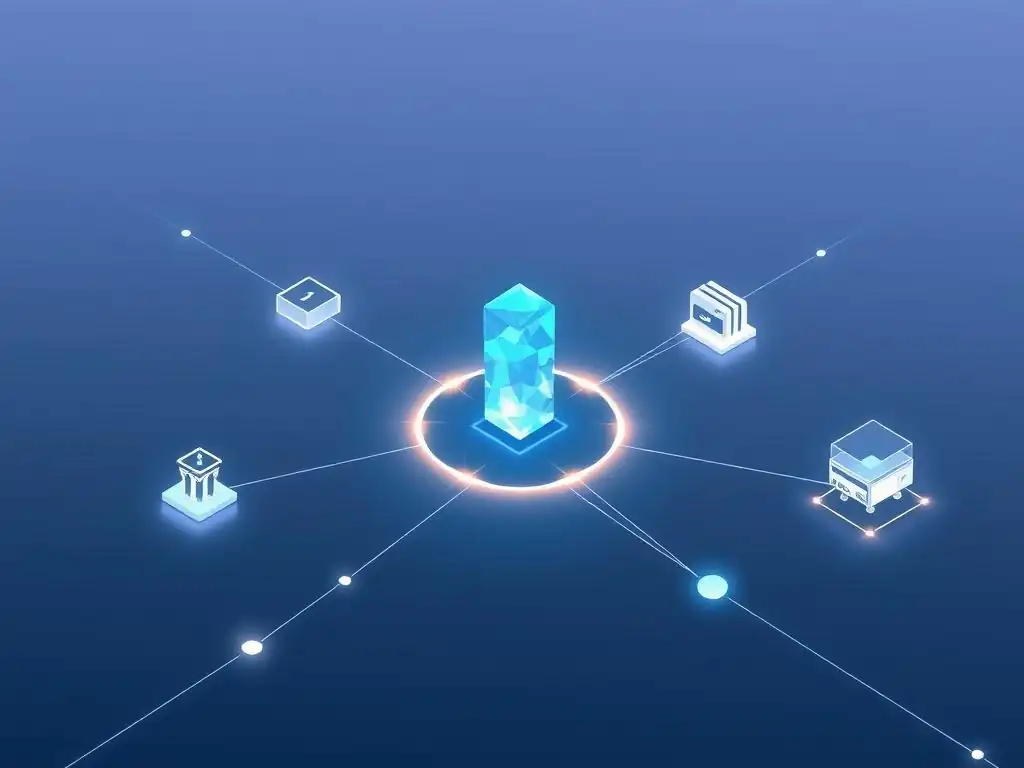
SSI for Digital Ownership and User Authentication in Virtual Environments
Web3 and the Metaverse represent a new paradigm of the internet, characterized by decentralization, user ownership, and immersive virtual experiences. Self-Sovereign Identity is crucial for enabling digital ownership and user authentication in these emerging digital realms. In Web3, users are meant to own their data and digital assets. SSI aligns perfectly with this vision by giving individuals control over their digital identities and enabling them to manage their digital assets and interactions in a self-sovereign manner.
In metaverse environments, where users interact through avatars and digital representations, SSI can provide secure and private authentication mechanisms. Users can use their SSI credentials to access metaverse platforms and applications, proving their identity and ownership of digital assets without relying on centralized platform providers. This is essential for creating a truly decentralized and user-centric metaverse, where individuals have agency over their digital identities and experiences. For example, users could utilize SSI to prove ownership of NFTs (Non-Fungible Tokens) representing virtual land or digital collectibles within a metaverse, ensuring secure and verifiable ownership in these virtual environments.
Protecting User Privacy and Data Sovereignty in Web3
Privacy and data sovereignty are paramount concerns in Web3 and the Metaverse. Self-Sovereign Identity plays a critical role in protecting user privacy and ensuring data sovereignty in these decentralized ecosystems. By giving users control over their identity data and enabling selective disclosure of information, SSI minimizes data exposure and reduces the risks associated with centralized data collection and surveillance prevalent in Web2.
In Web3, users should be able to interact and transact without their personal data being constantly tracked and monetized by platform providers. SSI facilitates this by enabling pseudonymous or anonymous interactions when desired, while still allowing for verifiable identity when required for specific purposes like transactions or age verification.
This user-centric approach to privacy aligns with the core principles of Web3, aiming to create a more equitable and user-empowering internet. Furthermore, SSI can empower users to control how their data is used and shared in metaverse environments, preventing data exploitation and ensuring that individuals retain ownership and sovereignty over their digital identities and data in these emerging digital spaces.
Challenges and Future Directions for Self-Sovereign Identity
Scalability, Interoperability, and Standardization of SSI Systems
While Self-Sovereign Identity offers significant promise, several challenges need to be addressed for its widespread adoption. Scalability is a key concern, particularly as SSI systems need to handle potentially billions of digital identities and transactions globally. Blockchain technologies, while foundational for SSI, can face scalability limitations. Layer-2 solutions and alternative decentralized technologies are being explored to improve the scalability of SSI systems and ensure they can handle mass adoption.
Interoperability is another critical challenge. For SSI to be truly effective, different SSI systems and implementations need to be interoperable, allowing users to seamlessly use their identities across various platforms and services. Standardization efforts are crucial to ensure interoperability and prevent fragmentation of the SSI ecosystem. Organizations like the Decentralized Identity Foundation (DIF) and the W3C Credentials Community Group are working on developing open standards and protocols for SSI to promote interoperability and facilitate wider adoption. Achieving seamless interoperability across different SSI solutions is essential for realizing the full potential of Self-Sovereign Identity.
Regulatory Landscape and Compliance Considerations for SSI
The regulatory landscape for Self-Sovereign Identity is still evolving. While SSI aligns with principles of data privacy and user control emphasized in regulations like GDPR, specific legal frameworks and guidelines for SSI are still being developed in many jurisdictions. Compliance considerations are crucial for organizations implementing SSI solutions, particularly in regulated sectors like finance and healthcare. Understanding and navigating the evolving regulatory landscape is essential for ensuring that SSI systems are legally compliant and can be adopted with confidence.
Regulators are increasingly recognizing the potential of SSI and are engaging in discussions with industry stakeholders to develop appropriate frameworks. Balancing innovation with regulatory compliance is key to fostering the responsible development and adoption of SSI. Clarity on legal recognition of digital identities, data protection requirements, and cross-border interoperability of SSI systems are important aspects that need to be addressed by regulators to facilitate the widespread adoption of Self-Sovereign Identity.
User Education, Adoption, and Accessibility of SSI Solutions
User education, adoption, and accessibility are critical for the success of Self-Sovereign Identity. SSI represents a significant shift in how individuals manage their digital identities, and user understanding and acceptance are essential for its widespread adoption. Educating users about the benefits of SSI, how it works, and how to use SSI wallets and credentials is crucial. User-friendly interfaces and intuitive user experiences are also vital for making SSI accessible to a broad range of users, including those who are not technically savvy.
Addressing the digital divide and ensuring accessibility for all users is another important consideration. SSI solutions need to be designed to be inclusive and accessible to individuals with varying levels of digital literacy and access to technology. Efforts to promote user education, improve user experience, and enhance accessibility are essential for bridging the gap between the potential of SSI and its real-world adoption. Successful implementation of SSI requires not only technological advancements but also a focus on user-centric design and widespread user empowerment.
The Future of Digital Identity: A Decentralized and User-Centric Approach
Projections for the Growth and Adoption of SSI Technologies
The future of digital identity is increasingly pointing towards a decentralized and user-centric approach, with Self-Sovereign Identity poised for significant growth and adoption. Industry analysts predict substantial growth in the SSI market in the coming years, driven by increasing concerns about data privacy, security, and the need for more user control over digital identities. Factors such as the rise of Web3, the Metaverse, and the growing recognition of the limitations of centralized identity systems are accelerating the adoption of SSI technologies.
Projections indicate that various sectors, including finance, healthcare, government, and supply chain, will increasingly adopt SSI solutions to address their specific identity management challenges. Early adopters are already demonstrating the benefits of SSI in pilot projects and real-world deployments, paving the way for wider adoption. As standards mature, interoperability improves, and user awareness grows, the adoption of SSI is expected to accelerate, transforming how digital identity is managed and utilized across various aspects of our digital lives.
The Integration of SSI with AI, IoT, and other Emerging Technologies
The integration of Self-Sovereign Identity with other emerging technologies like Artificial Intelligence (AI) and the Internet of Things (IoT) holds immense potential. SSI can enhance the security and privacy of AI systems by providing verifiable and user-controlled identities for AI agents and algorithms. This can improve trust and transparency in AI applications, particularly in sensitive domains like healthcare and finance.
In the IoT space, SSI can enable secure device identity and data management. IoT devices can have their own DIDs and verifiable credentials, allowing for secure authentication and data exchange within IoT networks. This can improve the security and privacy of IoT data and enable new use cases, such as decentralized device management and secure data sharing. Furthermore, the combination of SSI with other emerging technologies like decentralized autonomous organizations (DAOs) and decentralized finance (DeFi) can create new paradigms for digital governance and user empowerment, shaping the future of the decentralized web and beyond.
Conclusion: Empowering Individuals with Self-Sovereign Identity
Self-Sovereign Identity represents a fundamental shift in the landscape of digital identity, moving away from centralized, institution-centric models towards a user-empowering and decentralized approach. By placing individuals at the center of their digital identity ecosystem, SSI promises enhanced privacy, security, and control over personal data. Powered by blockchain innovation and driven by the principles of user autonomy and verifiable trust, SSI has the potential to transform various sectors, from finance and healthcare to supply chain and education.
While challenges related to scalability, interoperability, regulation, and user adoption remain, the momentum behind SSI is undeniable. As standards mature, technologies advance, and user awareness grows, Self-Sovereign Identity is poised to play a pivotal role in shaping the future of digital interactions and empowering individuals in the increasingly digital world. The journey towards a truly decentralized and user-centric digital identity future is underway, with Self-Sovereign Identity at its forefront, promising a more secure, private, and equitable digital experience for all.
Frequently Asked Questions
What exactly is Self-Sovereign Identity (SSI), and why is it gaining traction?
SSI refers to a system where individuals have complete control over their digital identity and related data. It's gaining traction due to growing concerns about data privacy and security, offering a more empowering alternative to centralized identity systems.
How does blockchain technology facilitate Self-Sovereign Identity?
Blockchain provides a decentralized and immutable ledger for storing verifiable credentials. This allows individuals to securely share and verify their identity information without relying on intermediaries.
Beyond personal use, how can enterprises benefit from adopting Self-Sovereign Identity blockchain solutions?
Enterprises can benefit through reduced compliance costs, improved data security, and enhanced customer trust. SSI allows for streamlined onboarding processes and more secure data sharing with partners.
What are some of the current challenges hindering the widespread adoption of Self-Sovereign Identity blockchain solutions?
Challenges include lack of standardization across different blockchain platforms and the need for greater user education on managing digital identities securely. Scalability and interoperability are also crucial considerations.
What is the regulatory landscape surrounding Self-Sovereign Identity, and how might it impact the future of these blockchain solutions?
Regulations are still evolving, but the focus is on data privacy and security, with GDPR and similar laws playing a significant role. Clarity in regulation is crucial for fostering trust and adoption of SSI blockchain solutions.
Final Reflection: Embracing the Dawn of Self-Sovereign Identity
The journey towards self-sovereign identity blockchain solutions is not merely a technological advancement; it's a fundamental shift in power dynamics. As we've explored the potential of blockchain to revolutionize identity management, it's crucial to recognize that this innovation is arriving at a critical juncture, where data privacy and individual autonomy are increasingly under threat. The promise of returning control of personal data to its rightful owner is no longer a futuristic aspiration, but a pressing necessity in today's interconnected world.
The impact of self-sovereign identity extends far beyond the technical realm. It touches upon the very core of our digital existence, shaping how we interact with institutions, conduct business, and even define ourselves online. The ability to selectively disclose information, verify credentials without intermediaries, and own our digital footprint has profound implications for social equity and individual empowerment. Identity is not just a piece of data; it's the essence of who we are, and we must protect it.
This quote underscores the ethical imperative driving the development and adoption of self-sovereign identity solutions.
As we stand on the cusp of this transformative era, let us not be passive observers. Consider how you can champion the principles of self-sovereignty in your own life. Explore the available blockchain solutions, advocate for policies that prioritize data privacy, and most importantly, demand greater control over your digital identity. The future of identity is not predetermined; it is shaped by the choices we make today. Embrace the power of self-sovereignty, and help build a future where individuals are truly in control of their own digital destiny.
Okay, I'm ready. Here's a Call to Action (CTA) based on the article title "The Future of Identity is SelfSovereign: Powered by Blockchain Innovation" for the website "Blockchain Trends" (domain: blockchaintrends.org):
Embrace Your Self-Sovereign Future!
Thanks for exploring the transformative potential of Self-Sovereign Identity (SSI) and blockchain with us! We hope you've gained valuable insights into how this technology can empower individuals and revolutionize the way we interact. Now, let's put that knowledge into action and build a more secure and private digital future together.
- Dive Deeper: Begin researching and understanding decentralized identity wallets. Find one that aligns with your needs and start experimenting with managing your own digital credentials.: (Primary Action - bold)
- Explore: Share this article with your network and spark a conversation about the importance of self-sovereign identity. Let's get more people thinking about this important shift!
- Consider: Contributing to open-source SSI projects or platforms. Even small contributions can have a big impact on the development and adoption of this revolutionary technology.
What's one immediate step you can take today to begin reclaiming control over your digital identity? Share your plans in the comments below!
Leave a Reply